2024-10-24 00:27
MANILA, Oct 24 (Reuters) - Tropical Storm Trami has killed at least 26 people and forced more than 150,000 to flee their homes in the Philippines, officials said on Thursday, as it made landfall on the northeastern coast. Trami, locally known as severe tropical storm Kristine, dumped heavy to torrential rain on the main island of Luzon triggering widespread flooding and landslides. With maximum sustained winds of 95 kph (59 mph), the storm was moving westward across the mountainous northern region of Cordillera towards the South China Sea, the state weather agency said in its 11 a.m. (0300 GMT) weather bulletin. It warned of heavy to intense rainfall, flooding, landslides and storm surges for some northern provinces. Most of the deaths from the storm over the past few days were due to drowning and landslides in the central Bicol region, including Naga city where 14 were reported dead on Thursday, officials said. Trami made landfall in the northeastern town of Divilacan in Isabela province. The town's disaster chief, Ezikiel Chavez, said no fatalities had been reported. The government ordered businesses and schools in the path of the storm to close in anticipation of heavy rain and floods. Over 163,000 people were sheltering in evacuation centres, the civil defence office said, most of whom were in Bicol as residents fled their homes after floodwaters reached as high as the roofs of bungalow houses. The civil aviation regulator said on Thursday at least a dozen flights across the country had been cancelled due to the storm. The central bank cancelled foreign exchange trading and monetary operations for a second straight day. The Philippines typically records an average of 20 tropical storms annually, often resulting in heavy rains, strong winds, and deadly landslides. Sign up here. https://www.reuters.com/world/asia-pacific/tropical-storm-trami-makes-landfall-floods-northern-philippine-provinces-2024-10-24/

2024-10-24 00:06
Tesla sees 20%-30% growth in vehicle sales next year Tesla's Q3 profit beats estimates, shares surge 12% Costs of making a car fell to record low, boosting profit margins This month's robotaxi unveiling failed to impress investors Oct 23 (Reuters) - Tesla (TSLA.O) , opens new tab CEO Elon Musk said he expects vehicle sales to grow 20% to 30% next year, reassuring investors the company was improving its core business of selling electric vehicles profitably, and reducing concerns about when it could produce a robotaxi. The forecast, building on a target for "slight growth" in deliveries this year, pushed the company's shares up 12% in post-market trading on Wednesday. This set up Tesla to add about $80 billion in stock market value. A drop in the cost of making vehicles added comfort for investors who saw Musk focusing on boosting Tesla's industry-leading margin, even as he talked about a future dominated by autonomous cars. Tesla's long-awaited unveiling of its robotaxi on Oct. 10 failed to impress investors. "No EV company is even profitable," Musk told analysts on a conference call on Wednesday. "And to the best of my knowledge, there was no EV division of any company, of any existing auto company that is profitable. So it is notable that Tesla is profitable despite a very challenging automotive environment." Shares of Tesla's smaller EV rivals Rivian (RIVN.O) , opens new tab and Lucid (LCID.O) , opens new tab both rose 2% after-hours. Musk said Tesla would roll out driverless vehicles offering paid rides next year, after the company received regulatory approval in California and Texas. He said adoption - and sales - of the company's supervised autopilot software, known as Full Self-Driving, increased substantially after the robotaxi event. Tesla this month again offered FSD free for a month to its current customers, for the second time this year. The company said in a statement earlier it remained focused on expanding its vehicle lineup, cutting costs and making critical investments in AI projects and production capacity, despite uncertain demand and rivals pulling back on EV investments. "Preparations remain underway for our offering of new vehicles – including more affordable models – which we will begin launching in the first half of 2025," it said. 'SWEET SPOT' Tesla's third-quarter profit margin from vehicle sales, excluding regulatory credits, grew to 17.05% from 14.6% in the prior three-month period, according to Reuters calculations. Wall Street had expected 14.9%, according to 24 analysts polled by Visible Alpha. But Tesla's finance boss, Vaibhav Taneja, said it would be "challenging" to sustain these margins in the fourth quarter ending December. The EV giant said that the labor and material costs of making vehicles, known as the cost of goods sold per vehicle, dropped to its lowest-ever level, about $35,100. Adjusted profit of 72 cents per share in the third quarter beat an average estimate of 58 cents. Prices of raw materials used to make EV batteries have been falling and Tesla has said its costs will decline as a result this year, with the effect diminishing over time. Taneja forecast more than $11 billion in capital expenses for next year. "The improving numbers across the board signal the company may have finally found a nice sweet spot for the pricing-versus-production-costs equation," said Thomas Monteiro, senior analyst at Investing.com. "The report also diminishes the urgency for a cheaper model." INCENTIVES After slashing prices last year, Tesla started offering lucrative financing options this spring to boost demand. It has already delivered 1.29 million vehicles in the first nine months of this year. It needs to hand over another 514,925 vehicles to beat last year's record. "The fear going into results was that the huge incentives effort to push volumes into the tough EV market would materially dent margins – that doesn’t look the be the case," said Matt Britzman, a senior equity analyst at Hargreaves Lansdown who also personally owns Tesla shares. Revenue for the July-September quarter was $25.18 billion, compared with estimates of $25.37 billion, according to data compiled by LSEG. It reported sales of $23.35 billion in the corresponding quarter of 2023. Tesla said it recognized its second-highest quarter of regulatory credit revenue. This metric was up 33% year-over-year to $739 million, but down from $890 million in the second quarter. Sign up here. https://www.reuters.com/business/autos-transportation/teslas-third-quarter-profit-margin-beats-estimates-2024-10-23/

2024-10-24 00:03
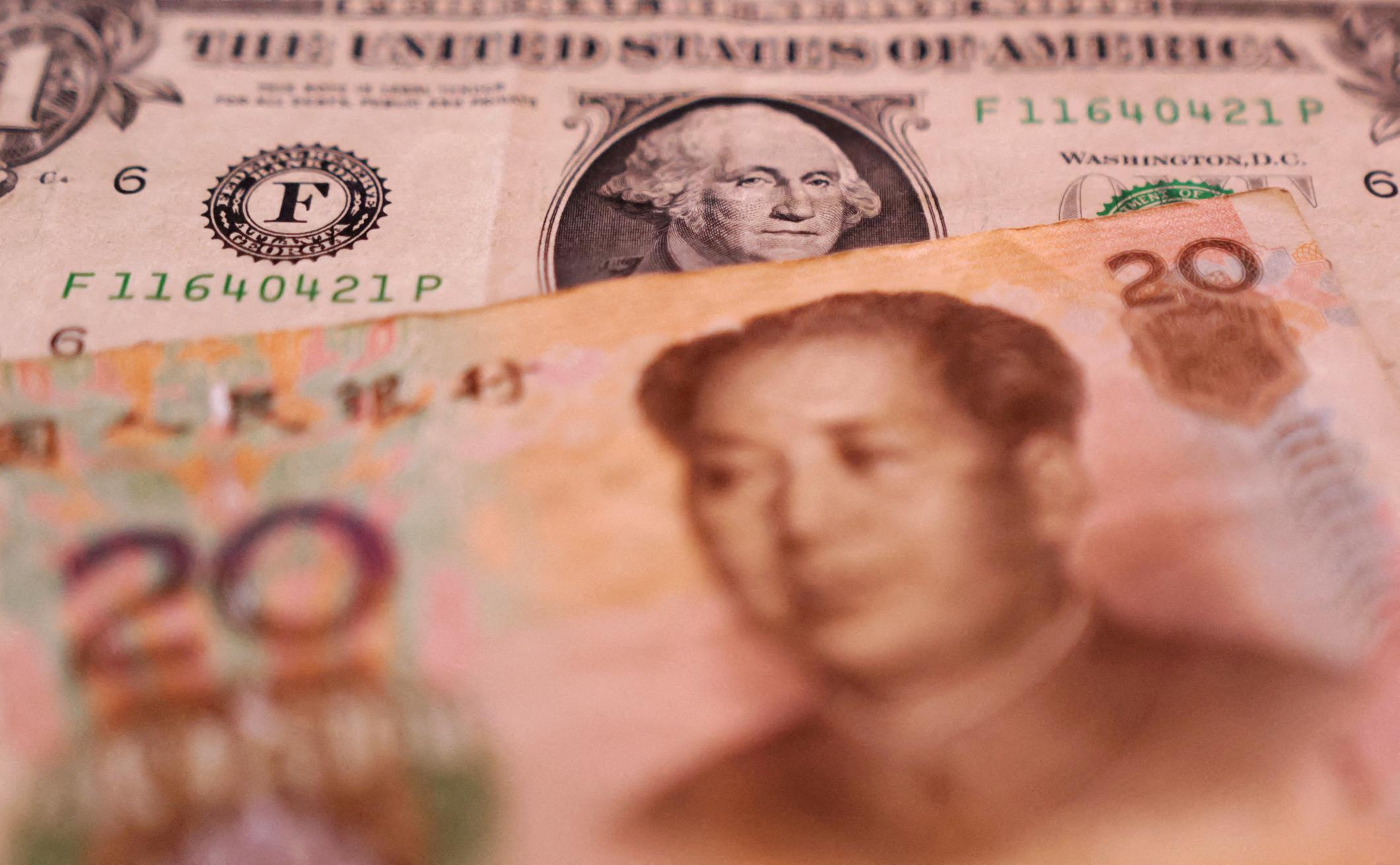
Yuan hit by Trump's potential White House return, trade tariff threats Chinese exporters hoard dollars, stashing money abroad Authorities prefer weak yuan to protect export revenues SINGAPORE, Oct 24 (Reuters) - China's currency is feeling the pressure from a possible return of Donald Trump as U.S. president, not just from speculators shorting the currency but also mainland exporters who have been hoarding dollars. The yuan has been weak since early 2023, bearing the brunt of China's anaemic economy and low yields. The heavily managed currency has spent the past 17 months on the weaker side of the 7-per-dollar level and fallen roughly 2%. Now, even as mainland stock markets celebrate Beijing's sweeping stimulus plans and investors rush back into the country, the prospect of Trump winning the November presidential election and his threats of bigger trade tariffs on China are heaping more pressure on the yuan. It has weakened some 1.5% on a three-week rolling basis, the sharpest such fall in over a year. "In the next 12 to 18 months, as China faces the prospect of higher trade tariffs from every direction, the easiest policy adjustment mechanism for the economy is likely to be currency depreciation," said Rong Ren Goh, a fixed income portfolio manager at Eastspring Investments. It's a policy choice the country has made before. During Trump's first presidency, the yuan weakened about 5% against the dollar during the initial round of U.S. tariffs on Chinese goods in 2018, and fell another 1.5% a year later when trade tensions escalated. Market participants say the People's Bank of China (PBOC) allowed the yuan to weaken then, ostensibly to offset the impact of tariffs through better export revenues. As part of his pitch to boost American manufacturing, Trump has this time promised voters he will impose tariffs of 60% or more on goods from China. Brad Bechtel, global head of FX at Jefferies, reckons the yuan could shed as much as 12% over several months if Trump returns to the White House and Republicans win control of Congress. Lemon Zhang, a macro and FX strategist at Barclays, sees the offshore yuan trading at around 7.10 per dollar in the fourth quarter of this year, in the middle of the 7.00-7.30 range it has been in since June. LOOKING OFFSHORE Depressed bond yields at home are also undermining the yuan. Yields on 10-year U.S. Treasury notes are double that on their Chinese counterparts , which merely return 2% a year. Domestic investors and exporters have been stashing money abroad. Some of that sits as FX deposits at commercial banks, which had risen to $849 billion at the end of September, and the rest in overseas assets including dollar bonds issued by Chinese state-owned enterprises (SOEs). Chinese buyers are piling into the Chinese SOE bonds because "if the onshore bond yield is so much lower than the offshore bond yield, it seems like a very easy decision for them," said Yifei Ding, a portfolio manager at Invesco. Faced with the threat of more U.S. trade tariffs and the prospect of a weaker yuan, businesses are in no hurry to repatriate the cash kept abroad. "Tariffs and Trump mean higher U.S. rates and a more expensive dollar, right?" said Ms Zhu, owner of a Shanghai-based electronic components exporter, who declined to give her full name. "We do have accounts offshore, in Hong Kong. And we have kept some dollar deposits there, which I don't think we will convert any time soon." Authorities seem to prefer a weak yuan. Major state-owned banks were seen buying dollars to slow down the yuan's ascent when it strengthened to an eight-month high in August, possibly to help protect export revenues. The PBOC did not immediately respond to Reuters' request for comment. While the yuan is on track for a third straight year of losses against the dollar, it has risen 1.8% on a trade-weighted basis (.CFSCNYI) , opens new tab. "If Trump does what he says he's going to do... he's talking about a 60% tariff on China, that's bad," said Tony Sycamore, a market analyst at IG. "I suspect it's probably the reason why Chinese authorities started to get ahead of the curve there - lowering monetary policy, talking about fiscal stimulus. Because if those tariffs do start to get implemented, it's not going to be good for Chinese growth, and you want to have a cushion there." Sign up here. https://www.reuters.com/markets/currencies/bears-circle-chinas-yuan-gearing-trump-win-2024-10-24/
2024-10-23 23:49
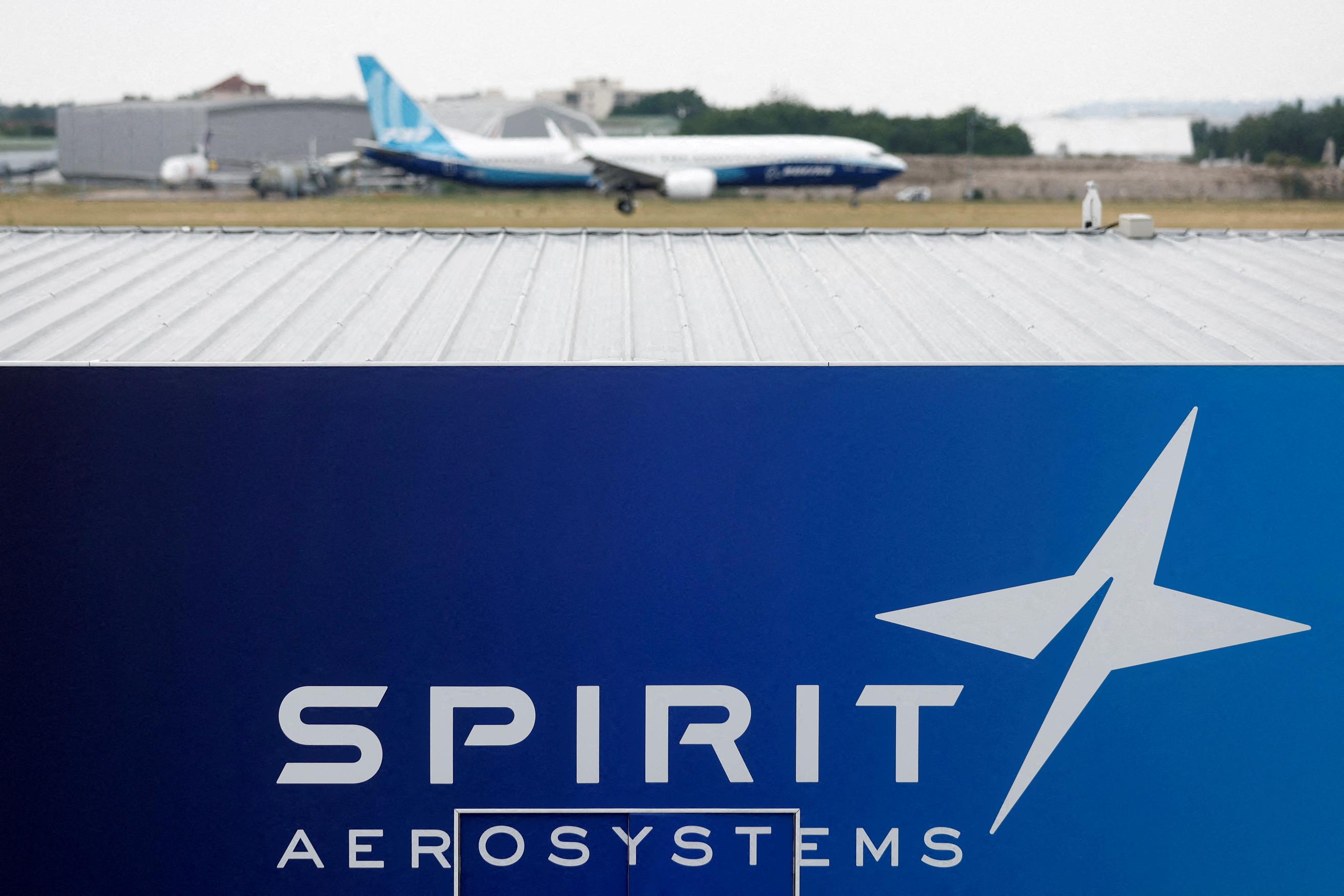
Spirit has drawn down $350 mln loan but had only $218 mln cash at end of Q3 Spirit has announced worker furloughs to conserve cash Shares fall 4% in after-hours trading Oct 23 (Reuters) - (This Oct. 23 story has been corrected to clarify that Spirit did receive $425 million cash from Boeing, and that the amount was increased and partly repaid, in paragraph 3 and in a bullet point) Spirit AeroSystems (SPR.N) , opens new tab posted deeper quarterly losses on Wednesday and said it was burning through dwindling cash reserves, as a strike by Boeing (BA.N) , opens new tab U.S. factory workers hammered the finances of its biggest supplier. Spirit said in its third-quarter results that it had drawn down an entire $350 million bridge loan set up when Boeing agreed to acquire the supplier in June, confirming an earlier report from Reuters. The supplier said it received $425 million through an MOU with Boeing announced in April that was increased by $40 million in June. Spirit said in its financial filings that it has since repaid $40 million of the advances to Boeing, but the other amounts remain unpaid. It had $218 million in reserves at the end of the third quarter after the loan was drawn. Spirit shares fell 4% in after-hours trading following the release of its results. On Wednesday, Boeing CEO Kelly Ortberg said on an earnings call that there was "no change" to its planned acquisition and integration of Spirit. Wichita, Kansas-based Spirit said this month it would implement a 21-day furlough for 700 workers as a five-week strike at Boeing eats into the supplier's cash and inventory space. Boeing suppliers that invested heavily on materials and tooling to support the planemaker's planned ramp-up of jets have been furloughing workers in recent weeks and holding off on investments due to the strike. Spirit said its furloughs would take effect from Oct. 28 onwards and warned of possible layoffs and additional furloughs if Boeing's strike continued. Striking Boeing factory workers voted on Wednesday on a new proposed wage deal that could end the work stoppage, although analysts warn that union members may reject the deal. Spirit posted a net loss of $217 million for the third quarter, compared with $101 million in the same period a year earlier. Boeing agreed in July to repurchase Spirit, which it had spun off in 2005, for $4.7 billion in stock, while Airbus (AIR.PA) , opens new tab moved to take on the supplier's loss-making Europe-focused activities. Spirit reiterated on Wednesday that Boeing's acquisition remained on track to close by mid-2025. Spirit said its backlog at the end of the third quarter stood at $48 billion, including work on commercial aircraft for Boeing and Airbus. Sign up here. https://www.reuters.com/business/aerospace-defense/spirit-airlines-implement-21-day-furlough-approximately-700-employees-2024-10-23/
2024-10-23 23:30
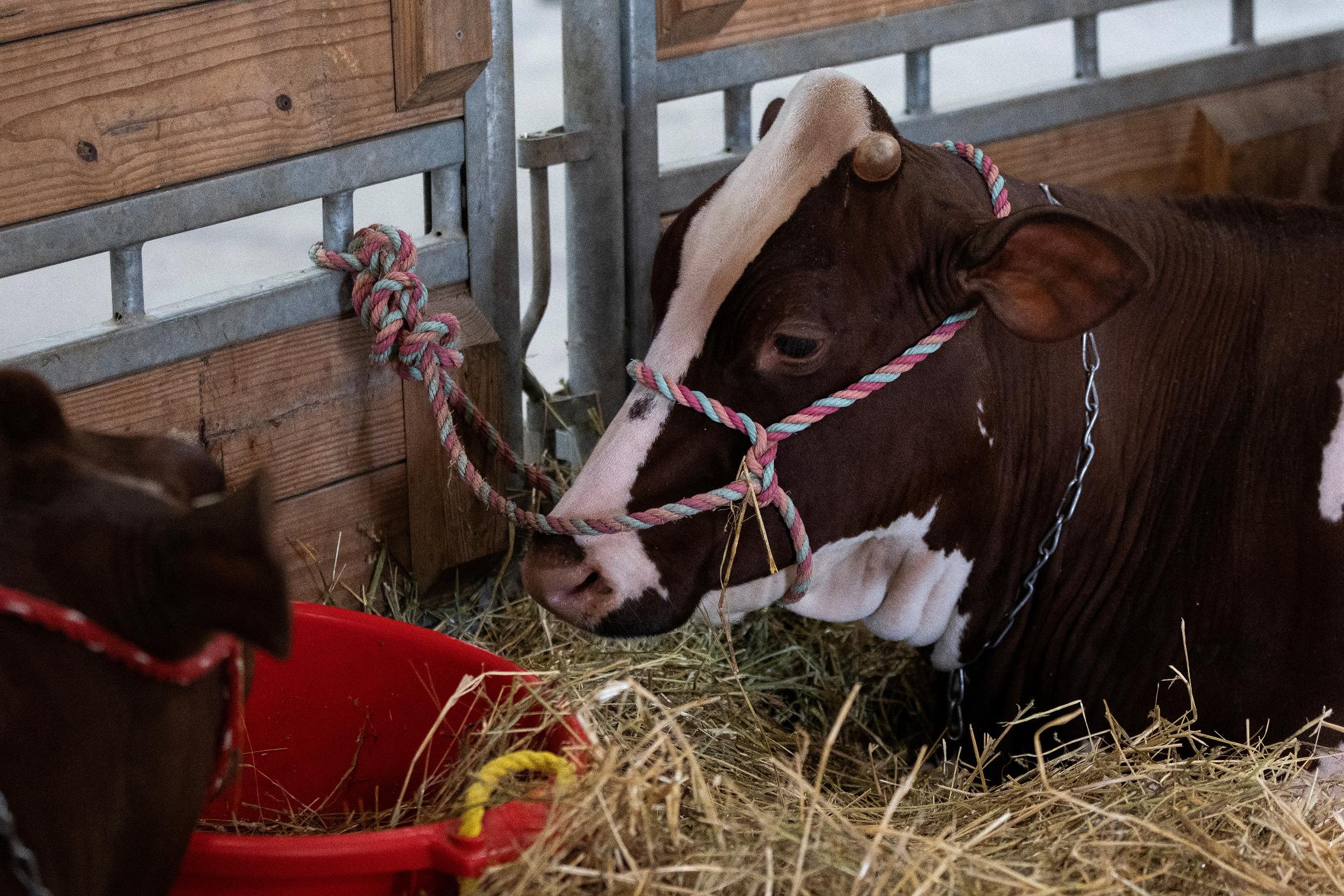
USDA contemplated 3-day time frame for testing cows Agency allowed 7-day window after industry pushback States objected to USDA rule for some cows sent to slaughter Kansas Farm Bureau asked state to influence Nebraska policy Oct 23 (Reuters) - The U.S. Department of Agriculture weakened an emergency order last spring designed to prevent the spread of bird flu among the nation's dairy cattle after pushback from state and industry officials, according to state and federal records seen by Reuters. The communications, which have not previously been reported, show how the early federal response to the U.S. bird flu outbreak was shaped in part by industry interests reluctant to cooperate with burdensome regulation, and potentially contributed to transmission of the disease across state lines. The USDA's order, released in April after bird flu cases were discovered in cows in eight states, requires milk-producing dairy cattle moving across state lines to secure a negative bird flu test no more than seven days prior to travel. It also allows non-producing cattle headed to slaughter to cross state lines without a veterinarian's clean bill of health. The USDA had initially contemplated more stringent requirements, including a three-day time frame for testing, but responded to industry feedback urging leniency before releasing the order, according to documents contained in the records request. Relaxing the order may have enabled more spread of the virus, two veterinarians and one dairy industry representative told Reuters. They noted logistical constraints to testing animals in the shorter window. When the agency issued the April 24 order, 33 herds had tested positive. The outbreak has since ballooned to more than 330 herds across 14 states and human cases in 17 dairy workers. "Any changes or clarifications to the Federal Order have been made with the objective of protecting animal and public health by following scientific best practices, using the best available data, and ensuring the appropriate balance between compliance and feasibility for producers," a USDA spokesperson said in an email. The agency has conducted more than 16,000 pre-movement tests and is supporting an investigation in California into whether improper cattle movement introduced the virus to the state, the spokesperson said. The rapid spread of bird flu among dairy herds and infections of 27 people this year have alarmed some public health experts, who say the USDA is not responding aggressively enough. The order remains the only national requirement to curb transmission of the virus. MEMOS AND MEETINGS USDA chief veterinarian Rosemary Sifford met with the Livestock Marketing Association to discuss the planned federal order on the morning of April 24, according to a memo the industry group sent to USDA officials released in a public records request. "The 72-hour pre-movement time frame we have heard is being contemplated is simply not accomplishable," wrote LMA's vice president of government and industry affairs Chelsea Good, suggesting a 7- to 14-day testing window instead. The farm agency did not include a time frame for testing in the initial order or supplemental information issued on April 25. A guidance document released on April 26 allowed dairies seven days for testing. In an ideal world, testing would happen within 24 hours, said Keith Poulsen, a veterinarian and director of the Wisconsin Veterinary Diagnostic Laboratory. The rural location of dairy farms makes it difficult to transport samples to a lab, he added. During the same April week, state animal health officials told USDA it should allow states to agree on alternative documentation in lieu of a veterinary bill of health for non-lactating dairy cows moving across state lines to slaughter, the records show. Older dairy cattle are often processed into ground beef. In the April 26 guidance document, USDA said states would be able to accept alternative documentation, which can include such basic information as addresses of cattle owners and shippers. Requiring veterinary documents is too expensive for dairies operating on slim margins, said Bob Seiler, president of the Central Equity Milk Cooperative in Kansas. He said he has not been required to provide alternative documentation when sending non-lactating cows to slaughter. Side-stepping the veterinary sign-off could have allowed for further spread of the virus, said Gail Hansen, a former Kansas state veterinarian. "The chances of something slipping through the cracks is a lot bigger," she said. A shortage of rural veterinarians could make it difficult for farmers to get their herds inspected before every shipment, Poulsen said. The USDA spokesperson said cows moving to slaughter are considered a lower risk for spreading bird flu and that alternative documentation allows for traceability if there are infections. 'NO UPSIDE TO TEST' California is examining how the virus entered the state, including whether imports of cows met legal requirements, the state agriculture department said. More than 130 herds and 13 dairy workers in the top dairy state have been infected since the end of August. Even before the federal order, the farm sector was leaning on state officials to fend off calls for restrictions on cattle movement, according to the records obtained by Reuters. In a March 26 email, the CEO of the Kansas Farm Bureau, Terry Holdren, asked Kansas Agriculture Secretary Mike Beam and Justin Smith, the state's animal health officer, if they could apply "any leverage or pressure" to keep Nebraska accepting cattle, after hearing Nebraska may turn cattle away. Nebraska on April 1 began requiring a permit for female breeding dairy cows coming from other states. Farmers in some cases have shunned testing of cows. "There's been no upside to a dairy producer to report and test," said Rick Naerebout, CEO of the Idaho Dairymen's Association. Sign up here. https://www.reuters.com/business/healthcare-pharmaceuticals/state-industry-input-led-us-farm-agency-relax-bird-flu-testing-order-cows-2024-10-23/
2024-10-23 22:03
LONDON, Oct 23 (Reuters) - Europe's data centre power consumption is expected to almost triple by 2030 and will require a big rise in electricity supply mostly from low-carbon sources, and grid infrastructure upgrades, a McKinsey report showed. WHY IT'S IMPORTANT Investment in data centres has risen over the past couple of years as digitalisation and artificial intelligence (AI) has gained momentum. This has raised questions about how countries can meet the expected rise in electricity demand which the growing number of huge data centres will create. CONTEXT According to the International Energy Agency, much of the growth in data centres will be in the United States but other economies such as China and Europe will also experience more data centre installation over the coming years. BY THE NUMBERS In Europe - the European Union, Norway, Switzerland and Britain - the total IT load demand for data centres in the region is expected to grow to around 35 gigawatts (GW) by 2030 from 10 GW today, according to the McKinsey report. Based on the current rate of adoption, Europe's data centre power consumption is expected to almost triple to more than 150 terawatt hours (TWh) by the end of the decade from around 62 TWh today. Data centres are expected to account for around 5% of total European consumption in the next six years compared to around 2% today. Meeting data centre demand will require at least $250-300 billion in data centre infrastructure investment, excluding power generation capacity, the report added. KEY QUOTE "Meeting (the rise in electricity) demand will require an extensive increase in electricity supply; a notable shift for Europe, where aggregate power demand has remained relatively stagnant since 2007," the McKinsey report said. Sign up here. https://www.reuters.com/technology/europes-data-centre-power-demand-expected-triple-by-2030-mckinsey-report-says-2024-10-23/