2024-10-22 17:20
US, Brazil, Britain growth forecasts for 2024 raised Forecasts for China, Japan, euro zone lowered Wars, new trade conflicts pose threat to global economy WASHINGTON, Oct 22 (Reuters) - The U.S. economy will continue to provide most of the thrust for global growth through the balance of this year and in 2025, led by robust consumer spending that has held up through a wrenching bout of inflation and the high interest rates used to tame it, the International Monetary Fund said on Tuesday. In its latest World Economic Outlook, the IMF raised its 2024 and 2025 economic growth forecasts for the U.S. - the only developed economy to see its outlook marked up for both years - and its chief economist said the "soft landing" sought by the Federal Reserve in which inflation eases without big damage to the job market had largely been achieved. Emerging market powerhouses India and Brazil also stood out on the upside of the IMF forecasts, while it dialed back growth expectations for China for this year and left next year's forecast for the world's No. 2 economy at a below-trend 4.5%. Still, it warned that risks abound from armed conflicts, potential new trade wars and the hangover from the tight monetary policy employed by the Fed and other central banks to rein in inflation. "Today, the IMF reported that the United States is leading the advanced economies on growth for the second year in a row," Lael Brainard, the director of the White House's National Economic Council, said in a statement. The IMF's latest World Economic Outlook said the shifts will leave 2024 global GDP growth unchanged from the 3.2% projected by the global lender in July, setting a lackluster tone for growth as world finance leaders gather in Washington this week for the IMF and World Bank annual meetings. Global growth is projected to be 3.2% in 2025, one-tenth of a percentage point lower than forecast in July, while medium-term growth is expected to fade to a "mediocre" 3.1% in five years, well below its pre-pandemic trend, the report showed. Nonetheless, the IMF's chief economist, Pierre-Olivier Gourinchas, said some countries, including the U.S., were showing resilience. "The news on the U.S. is very good in a sense," Gourinchas said at a press conference in Washington. "The labor market picture remains one that is fairly robust, even though it has cooled off." "I think the risks of a recession in the U.S. in the absence of a very sharp shock would be somewhat diminished," he said. Although Gourinchas said it looked as if the global inflation battle had largely been won, he told Reuters in an interview there is a risk that monetary policy could "mechanically" become too tight without interest rate cuts in some countries as inflation subsides, weighing on growth and jobs. CONSUMER STRENGTH The IMF revised its 2024 U.S. growth forecast upward by two-tenths of a percentage point to 2.8% due largely to stronger-than-expected consumption fueled by rising wages and asset prices. The global lender also upgraded its 2025 U.S. growth outlook by three-tenths of a percentage point to 2.2%, slightly delaying a return to trend growth. Brazil got a sharp upgrade of nine-tenths of a percentage point, raising its projected growth rate this year to 3.0%, also on the back of stronger private consumption and investment. Mexico's growth, however, was marked down by seven-tenths of a percentage point to 1.5% because of the effects of tighter monetary policy. The IMF cut China's 2024 growth rate by two-tenths of a percentage point to 4.8%, with a boost from net exports partly offsetting continued weakness in the property sector and low consumer confidence. The IMF's 2025 China growth forecast, which was unchanged, does not include any impact from Beijing's recently announced fiscal stimulus plans, which are still largely undefined. Germany will see zero growth this year, a markdown of two-tenths of a percentage point, as its manufacturing sector continues to struggle, the IMF projected. The reduction helped to drag down the forecast for overall euro zone growth slightly to 0.8% for 2024 and 1.2% for 2025 despite a half-percentage-point upgrade that pushed Spain's projected growth to 2.9%. Britain's long-suffering growth outlook got a boost of four-tenths of a percentage point to 1.1% for 2024 as falling inflation and lower interest rates are expected to stoke consumer demand. The growth forecast for Japan was lowered by four-tenths of a percentage point to 0.3% due to the lingering effects of supply disruptions. India continues to be a bright spot, with the strongest projected growth among major economies at 7.0% in 2024 and 6.5% in 2025, unchanged from the July outlook. TRADE RISKS In counting risks to the outlook, the IMF report flagged the potential for major tariff increases and retaliatory measures, but it did not single out U.S. Republican presidential candidate Donald Trump's vow to impose tariffs of 10% on global imports to the U.S., and 60% on goods from China. Instead, it contained a proxy adverse scenario that includes 10% two-way tariffs among the U.S., euro zone and China plus 10% U.S. tariffs on the rest of the world, reduced migration to the U.S. and Europe, and financial market turmoil that tightens financial conditions. Were this to occur, the IMF said it would reduce the overall global GDP output level by 0.8% in 2025 and 1.3% in 2026. Other risks outlined in the report included the potential for a spike in the prices of oil and other commodities should conflicts in the Middle East and Ukraine widen. The IMF also cautioned countries against pursuing industrial policies to protect domestic industries and workers, saying that they often fail to deliver sustained improvements in living standards. Sign up here. https://www.reuters.com/markets/us/imf-lifts-us-growth-forecast-marks-down-china-sees-lackluster-global-economy-2024-10-22/

2024-10-22 16:49
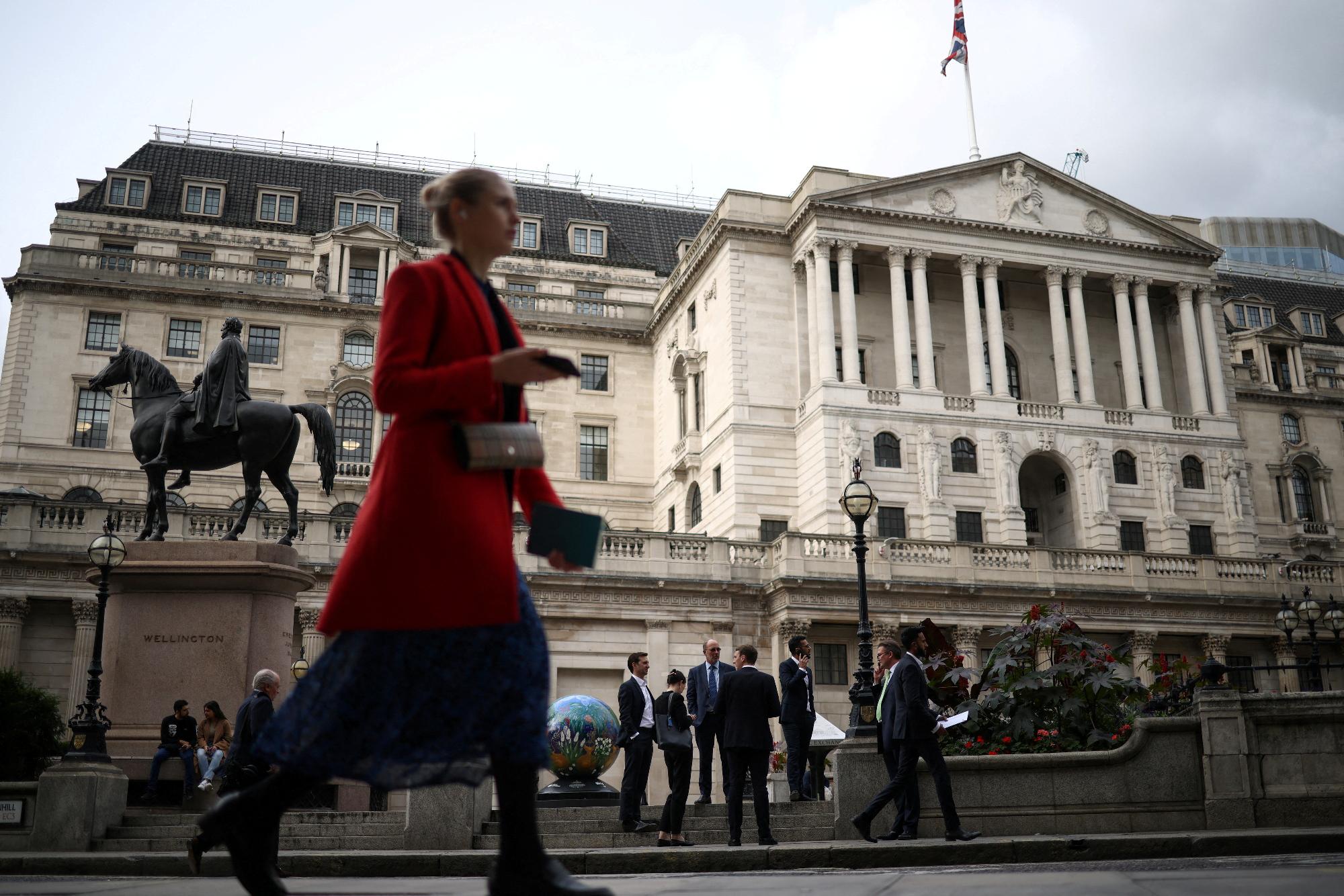
WASHINGTON, Oct 22 (Reuters) - A sharp fall in British consumer price inflation in September was driven by more volatile components, Bank of England rate-setter member Megan Greene said on Tuesday, a day after she said she favoured a gradual approach to cutting interest rates. Consumer price inflation fell to a three-year low of 1.7% in September from 2.2% in August, below forecasts in a Reuters poll of economists. The services component - which the BoE generally views as giving a better sense of long-term inflation pressures - dropped to 4.9% from 5.6%. "Services inflation ... was the biggest surprise, actually in the latest print," she said in a discussion with the Atlantic Council think-tank on the sidelines of the International Monetary Fund's annual meetings in Washington. "The biggest driver of that, though, was volatile accommodation, transport categories so I wouldn't weight too much on that," she said. Greene voted against the BoE's first rate cut of its current loosening cycle in August and on Monday she said she still favoured a cautious approach to cutting borrowing costs. The BoE kept rates on hold at 5% in September, but financial markets think another quarter-point cut in November is almost certain and see a high chance of a further move in December. Greene said inflation pressures were fading, but perhaps not as fast as other BoE policymakers thought, and growth could turn out stronger as well as weaker than expected. "I think, in the interest of not generating volatility, I tend to favour more of a gradualist approach," she said. Sign up here. https://www.reuters.com/world/uk/bank-englands-greene-says-september-inflation-fall-driven-by-volatile-components-2024-10-22/
2024-10-22 15:48
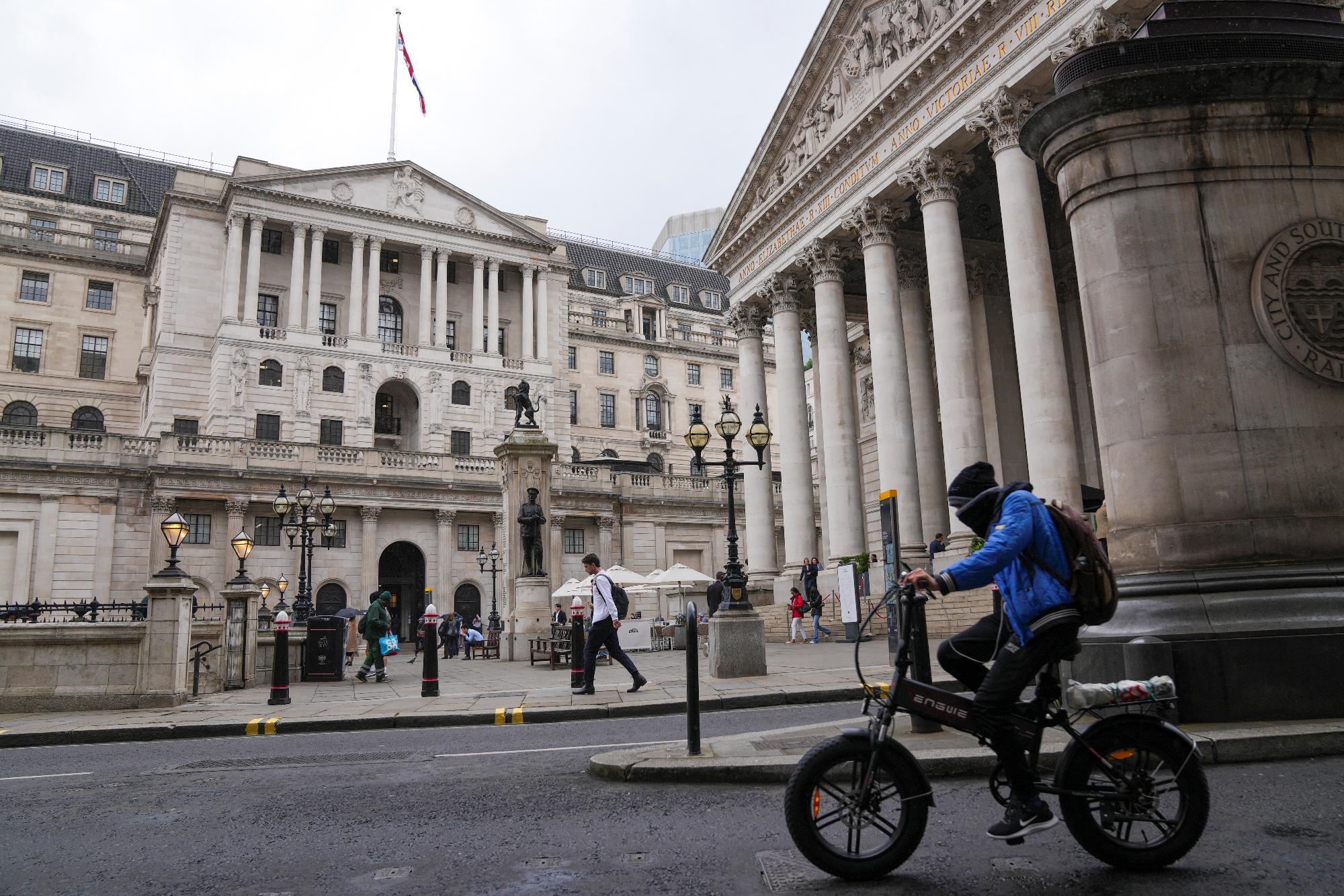
ORLANDO, Florida, Oct 22 (Reuters) - U.S. and European interest rates have followed parallel paths this year, even as the regions' economic and inflationary outlooks have veered in different directions. Money markets expect this to continue. Economic logic says they're wrong. The amount of implied easing from the Federal Reserve, Bank of England and European Central Bank through the end of next year is almost identical, with money markets currently pricing in 135 basis points of policy easing from the Fed, 134 bps from the BoE, and 133 bps from the ECB. True, the Fed and ECB had a modest head start on the BoE, with the latter cutting by only 25 bps so far this cycle compared to 50 bps for its two peers. And the ECB obviously had a lower starting point. But this still doesn't explain why markets expect all three central banks to move in lockstep through 2025. CONSCIOUS DECOUPLING The most dramatic divergence will likely be between the Fed's and ECB's respective paths. While the Fed may need to take its foot off the policy-easing pedal in the coming year, the ECB will likely need to step on it harder than markets currently expect. The U.S. remains a global outlier given its surprisingly strong economic growth and resilient labor market. While the Fed may end up easing another 150 bps by the end of next year if inflation falls back to target, that's a big "if". U.S. growth is tracking north of 3.0%, GDP forecasts are being revised upward, and the labor market refuses to crack. The risks are skewed toward a shallower rate-cutting cycle, and the Fed's terminal rate is steadily inching up closer to 4% than 3%. Meanwhile, aggregate euro-zone inflation is already below the ECB's 2% target, with price gains in countries such as Ireland even below 1%. And Germany is flirting with its second consecutive annual GDP contraction - a remarkable development for the bloc's economic powerhouse that, for many investors, overshadows stronger growth in other euro-zone countries. FALLING R-STARS While euro-zone money markets are currently pricing in a terminal rate of around 1.80% - well below the ECB's current policy rate of 3.25% - economists at several global banks think the ECB will need to go further and potentially slash rates by 50 bps per meeting in the first half of next year. "We see risks that markets might eventually price a terminal rate of marginally below 1.50%," wrote Nomura's European economists last week. Economists at Morgan Stanley note that the ECB's nominal neutral rate might even be as low as 1.0-1.4%. This factors in a 2% inflation target as well as estimates of "R-star" – the inflation-adjusted neutral rate of interest that neither slows or accelerates economic activity – between minus-60 bps and minus-100 bps. True, the journey to a lower terminal rate might be "more of a slow burn rather than a quick pivot", as Citi's economists recently wrote. But the longer euro-zone inflation and growth remain below target, the more the current terminal rate pricing will look out of whack. Across the channel, Britain's growth and inflation dynamics aren't nearly as weak, but it's still something of a head-scratcher that traders think the BoE will ease by the same amount as the Fed through 2025, given how much stronger U.S. fundamentals appear to be. Goldman Sachs analysts have run analysis of five different models of R-Star for Britain, which imply that the country's nominal neutral rate is around 2.75% - which, like the U.S., is at least 75 bps below where traders are currently placing the terminal rate. The upshot is policy could still be restrictive even after the easing cycle ends where traders expect it to, meaning the BoE, according to Goldman, should cut rates more. IMPLICATIONS If rates in the U.S. fall far less than they do in Europe, this would upend the consensus market view that the dollar will weaken in the coming year, meaning the greenback's recent rebound has more room to run. This wouldn't necessarily be bad news for the euro zone. It could do with a cheaper currency. As recently as August, the euro's trade-weighted value was at a record high, having risen more than 10% in the preceding two years. A weakening currency could put a floor under inflation and give a boost to exports currently suffering due to the economic malaise blighting the bloc's third-largest customer, China. In the short term, this interest-rate synchrony may persist, as traders might be loath to change their forecasts when there is so much uncertainty surrounding the upcoming U.S. election. But once this uncertainty clears up, something has got to give. (The opinions expressed here are those of the author, a columnist for Reuters.) Sign up here. https://www.reuters.com/markets/us-europe-matching-rate-paths-must-diverge-mcgeever-2024-10-22/
2024-10-22 15:28
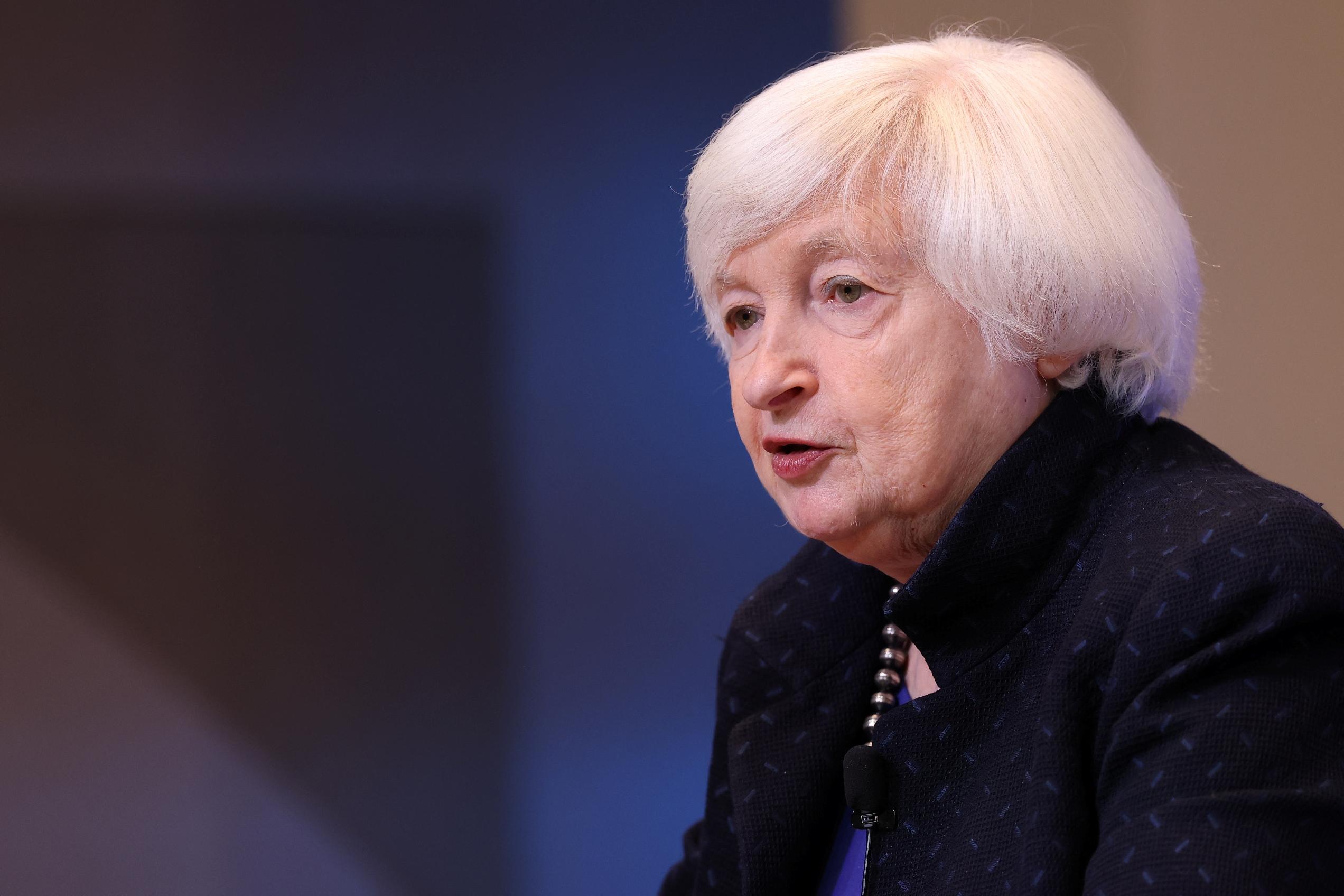
Oct 22 (Reuters) - U.S. Treasury Secretary Janet Yellen on Tuesday said she has not yet seen policies announced by China that would address its low level of consumer spending as a share of its economy. "Our view has been that raising consumer spending in China as a share of GDP (gross domestic product) is really important, along with measures to address problems in the property sector," Yellen said at a press conference at the start of the International Monetary Fund and World Bank annual meetings in Washington. "So far I would say I haven't really heard any policies on the Chinese side that address that." Sign up here. https://www.reuters.com/world/china/yellen-havent-yet-seen-china-policy-fix-its-low-consumer-spending-2024-10-22/
2024-10-22 14:23
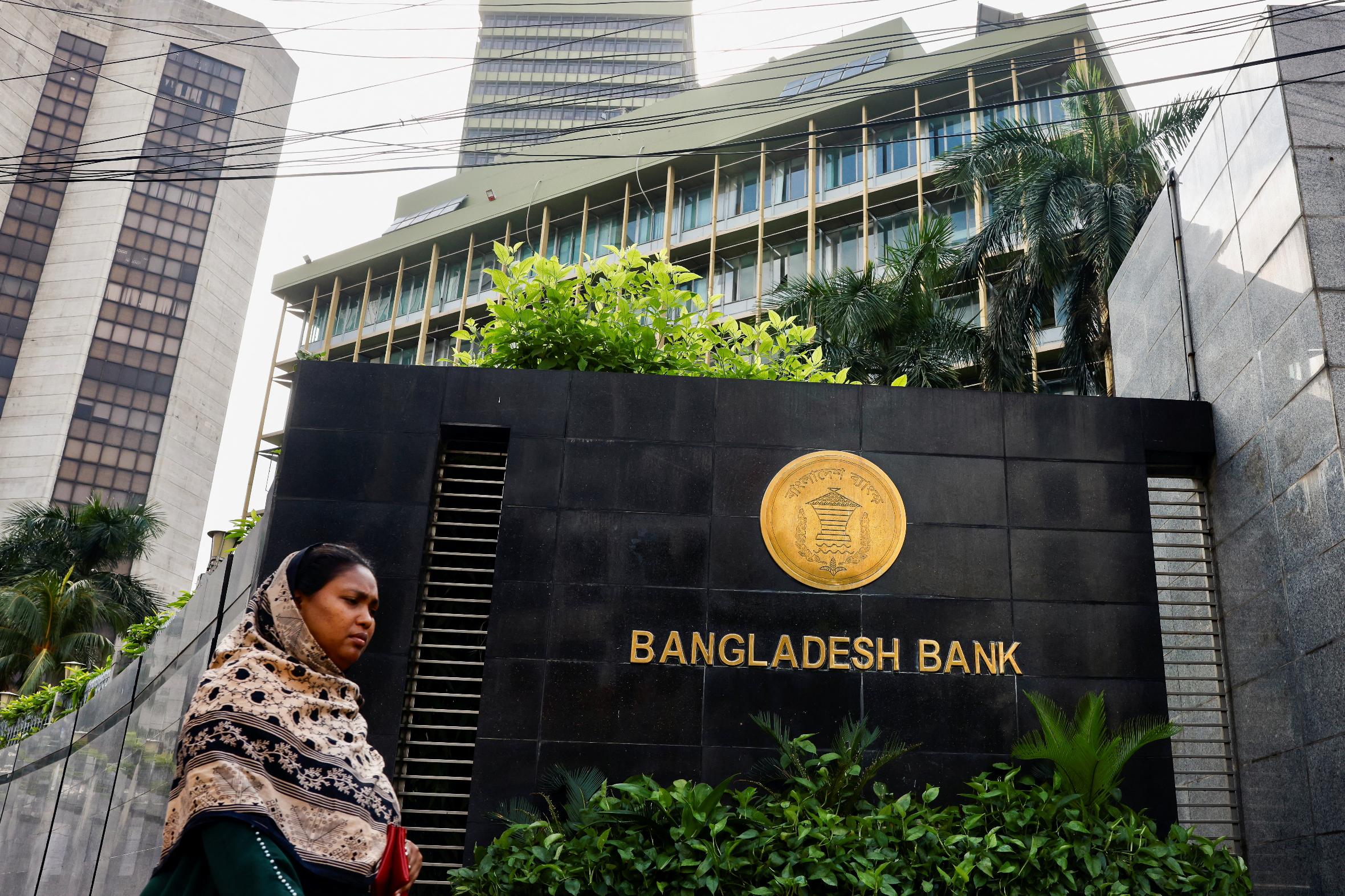
DHAKA, Oct 22 (Reuters) - Bangladesh’s central bank said on Tuesday it would raise its key interest rate by half a percentage point, its fourth hike this year as it battles stubbornly high inflation. The decision comes amid rising inflationary pressures, exacerbated by recent political unrest and challenges facing the country’s crucial garments industry. The central bank said it would raise the repo rate, which it uses to inject money into the banking system, by 50 basis points to 10%, which will take effect from Oct. 27. The upper limit of the policy interest corridor, the Standing Lending Facility, will rise by 50 basis points to 11.50%, while the lower limit, the Standing Deposit Facility, will rise by 50 basis points to 8.50%. Bangladesh Bank’s governor, Ahsan H. Mansur, appointed in August, has said that while inflation is expected to decrease significantly over the next year, reducing interest rates may take longer. Mansur was appointed by Bangladesh's interim government led by Nobel-prize winning economist Muhammad Yunus that was sworn in following the ouster of Prime Minister Sheikh Hasina, who fled to India on August 5 after a violent uprising against her. Despite a slight decrease in the general inflation rate in September, food inflation remains stubbornly high, exceeding 12%, which is hitting the country's 170 million people hard. The interim government has sought $5 billion in financial aid from international lenders to stabilise its dwindling foreign exchange reserves and revive the economy, which was one of the fastest-growing in the world just a few years ago. The country has been struggling to pay its bills due to more costly fuel and goods imports since the 2022 war in Ukraine, forcing the South Asian country to seek a $4.7 billion bailout from the International Monetary Fund. Sign up here. https://www.reuters.com/world/asia-pacific/bangladesh-announces-policy-rate-rise-combat-inflation-2024-10-22/
2024-10-22 12:46
Oct 22 (Reuters) - Miner Freeport-McMoRan (FCX.N) , opens new tab reported a third-quarter profit on Tuesday that beat analysts' estimates, helped by higher copper prices. Average copper prices rose in the third quarter on signs of better demand in top consumer China, falling inventories and as the country unleashed wide-ranging stimulus measures to boost its flagging economy. Freeport's quarterly average realized price for copper was $4.30 per pound, compared with $3.80 per pound a year earlier. On an adjusted basis, the company earned 38 cents per share in the quarter, compared with the average analyst estimate of 35 cents per share, according to data compiled by LSEG. Sign up here. https://www.reuters.com/markets/commodities/freeport-mcmoran-beats-third-quarter-profit-estimates-2024-10-22/