2024-10-21 22:12
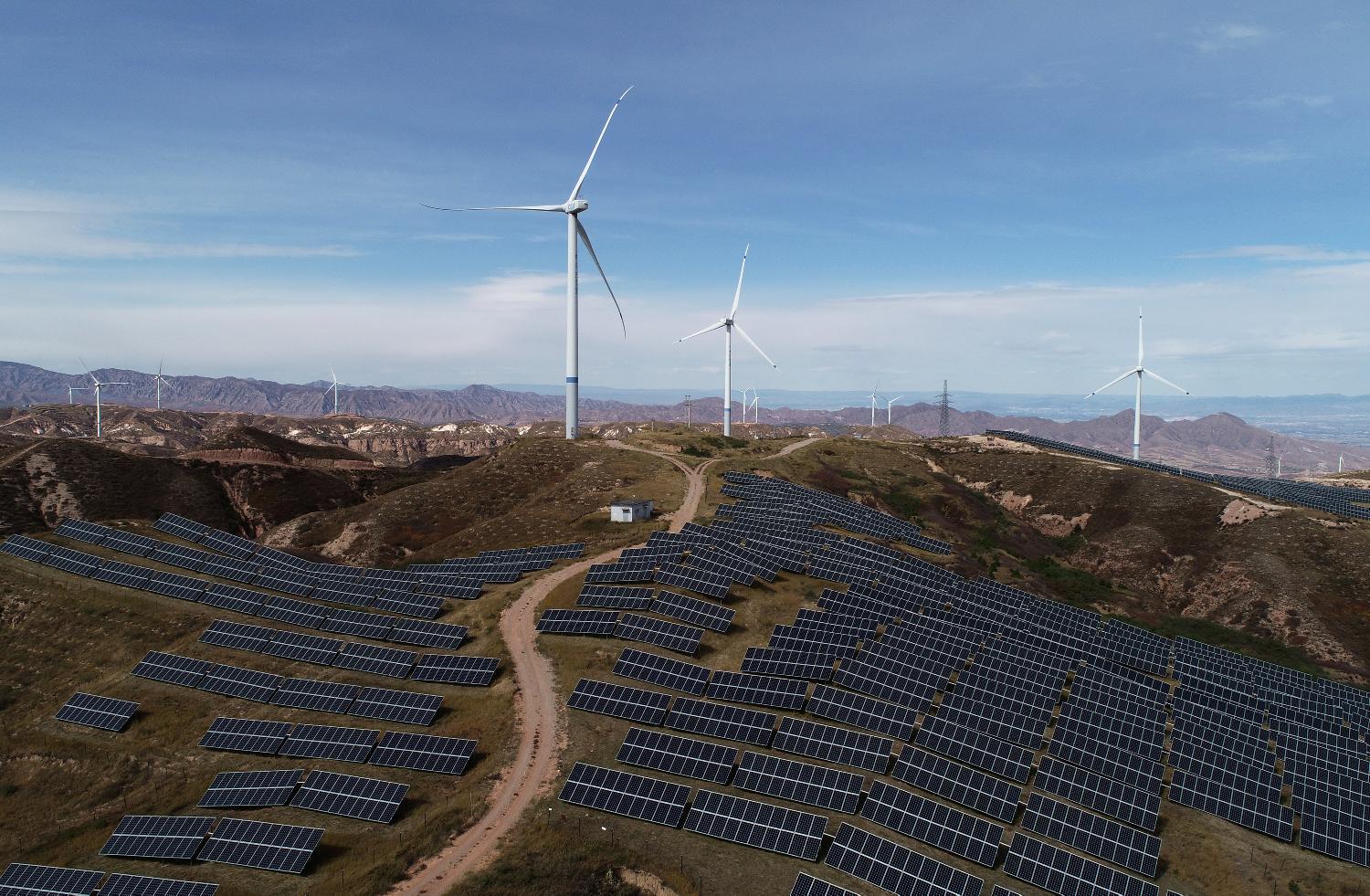
SINGAPORE, Oct 22 (Reuters) - Southeast Asia needs to increase clean energy investments to $190 billion, about five times the current level, by 2035 to achieve its climate goals, the International Energy Agency said on Tuesday. Ramping up energy investments needs to be accompanied by strategies to reduce emissions from the region's relatively young fleet of coal-fired plants, the IEA said in a report. It added that rapid economic expansions were expected to pose challenges for energy security and climate goals. However, a push to close coal power plants in emerging markets, backed by rich Western nations, is facing delays after a July deadline passed without a deal on the early closure of an Indonesian pilot project. Electricity demand in Southeast Asia is set to grow at an annual rate of 4% in the coming years, with clean energy sources such as wind and solar, alongside modern bioenergy and geothermal power, projected to meet more than a third of the growth in energy demand in the region by 2035, the IEA report says. Still, it would not be enough to rein in the region's energy-related carbon dioxide (CO2) emissions, which are set to increase by 35% between now and mid-century, it says. "Clean energy technologies are not expanding quickly enough and the continued heavy reliance on fossil fuel imports is leaving countries highly exposed to future risks," the IEA's executive director Fatih Birol said. The region as a whole attracts only 2% of global clean energy investment despite accounting for 6% of global GDP, 5% of global energy demand and being home to 9% of the world's population, according to the report. Expanding and modernising the region's power grids to support greater shares of variable renewable energy will require annual investment to double to nearly $30 billion by 2035, the IEA said. Sign up here. https://www.reuters.com/sustainability/southeast-asia-needs-boost-investments-five-fold-by-2035-meet-climate-goals-iea-2024-10-21/
2024-10-21 21:50
Oct 21 (Reuters) - Nucor (NUE.N) , opens new tab reported a nearly 78% slump in third-quarter profit on Monday as the company recorded impairment charges related to its steel products and raw materials businesses, sending its shares down 3% after the bell. U.S. steelmakers are facing a sluggish pricing environment as distributors hold back on purchases beyond immediate inventory needs because of an oversupply. Nucor expects further sequential decline in fourth-quarter net earnings in its steel mills and products segments. The company posted a quarterly profit of nearly $250 million, or $1.05 per share, for the third quarter, accounting for impairment charges of $123 million. Excluding items, the steelmaker earned $1.49 per share, beating the average analyst estimate of $1.47, according to data compiled by LSEG. Revenue fell more than 15% to $7.44 billion as the company struggled with weak prices and soft demand. That compared with estimates of $7.28 billion. Average sales price per ton in the third quarter decreased 6% from the second quarter and 15% from a year earlier. Last month, the North Carolina-based company forecast third-quarter profit to range between $1.30 and $1.40 per share. Sign up here. https://www.reuters.com/markets/commodities/steelmaker-nucors-third-quarter-profit-dented-by-impairment-charges-2024-10-21/

2024-10-21 21:45
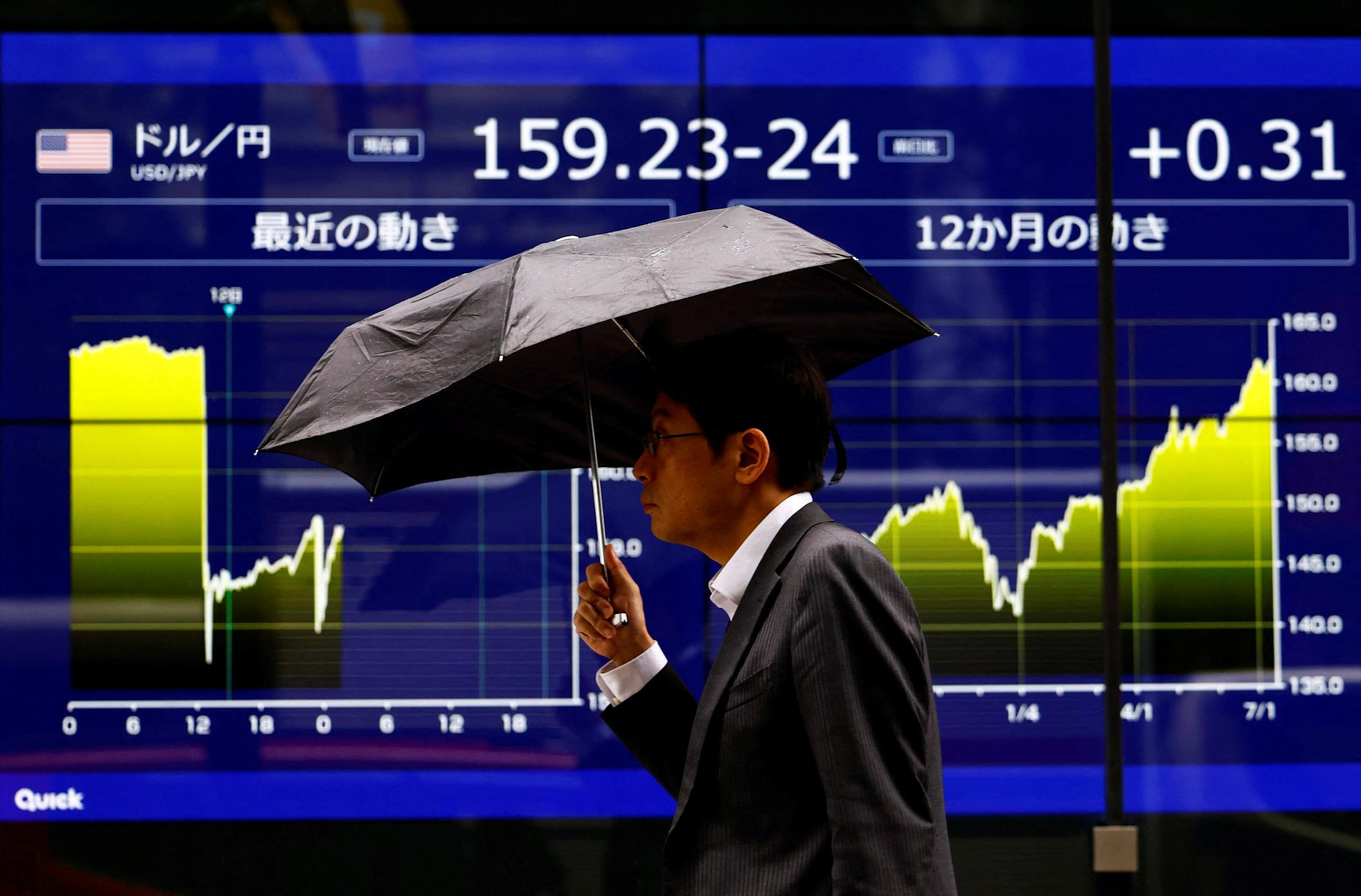
Oct 22 (Reuters) - A look at the day ahead in Asian markets. Asian markets on Tuesday will be hoping to rebound from Monday's fairly lackluster start to the week, with Japanese equities particularly well-positioned to move up a gear or two after the yen slid to its lowest level in nearly three months. The dollar leaped nearly 1% to 150.90 yen, its highest since Aug. 1. It was the most notable aspect of the greenback's broad rise on Monday to its strongest level against a basket of major currencies in nearly three months. The yen's correlation with Japanese stocks has turned deeply negative over the past month or so, meaning when the yen weakens stocks tend to rise, and vice versa. The simple rolling 25-day correlation between dollar/yen and the Nikkei 225 index is now the most inverse since 2005. On that basis, the yen's latest dip should mean a leg up for the Nikkei, right? A buoyant dollar, however, is not good news for emerging markets, especially when accompanied by rising Treasury yields. And U.S. bond yields are rising. The 10-year yield rose 11 basis points to a three-month high of 4.19% on Monday. Inflation concerns? Debt and deficit concerns? Election concerns? Strong growth? Whatever the mix, it is a tightening of financial conditions that is often a red flag for emerging markets. According to Bespoke Investment Group, of the 35 times the Fed has cut rates since 1994, the increase of more than 50 bps in the 10-year yield after the most recent cut ranks as the third largest. Chinese markets have had a positive start to the week after the People's Bank of China cut benchmark lending rates by 25 bps and after Beijing flagged new measures to support innovative tech companies. Export figures from Taiwan were a reminder, however, of China's economic predicament. Export orders in September fell short of expectations due to faltering demand from top trading partner China. Tuesday's calendar in Asia is light, with Hong Kong consumer inflation, South Korean producer price inflation and New Zealand trade the main highlights. Pipeline price pressures in South Korea appear to be cooling pretty rapidly. Annual PPI in August slumped to 1.6% from 2.6% in July - the steepest month-to-month fall since May last year - and monthly PPI has been negative in two of the last three months. The International Monetary Fund and World Bank October meetings get underway in Washington, with finance ministry and central bank officials from around the world descending on the U.S. capital to discuss economic and policy issues. There will be a flurry of press conferences, panel discussions and bilateral meetings over the coming days that will undoubtedly yield market-moving headlines. Here are key developments that could provide more direction to markets on Tuesday: - Hong Kong consumer price inflation (September) - South Korea producer price inflation (September) - Reserve Bank of New Zealand assistant governor Karen Silk speaks Sign up here. https://www.reuters.com/markets/asia/global-markets-view-asia-graphic-2024-10-21/
2024-10-21 21:24
Oct 21 (Reuters) - Citi Research raised its three-month forecast for gold prices, citing possible further U.S. labor market deterioration, interest rate cuts by the Federal Reserve, and physical and ETF buying, it said in a note on Monday. The bank upgraded its three-month gold price view to $2,800 per ounce from $2,700 previously, adding that its 6 to 12-month forecast is $3,000. It revised its 6 to 12-month forecast for silver prices upward to $40 per ounce from $38 per ounce. "We note that gold and silver have performed extremely well despite weakening China retail physical demand and rising U.S. interest rates since the Fed cut 50 (basis points) and payrolls beat last month," the note said. Gold should also rise in the scenario that oil spikes on near-term Middle East escalation, it added. Gold surged to a record high on Monday while silver struck a near 12-year peak, as growing uncertainties surrounding the U.S. presidential election and the Middle East war added to gold's rally already fueled by expectations of interest rates easing. Citi said it remains neutral-bullish on platinum with a three-month point price target of $1,025 per ounce and a 6 to 12-month target of $1,100 per ounce. It added that it leans bearish palladium following the recent price gain with a three-month target of $1,000 per ounce and a 6 to 12-month target of $900 per ounce. Citi also said that oil fundamentals point to $60 per barrel average prices in 2025, but that the potential for very near-term geopolitical escalation in the Middle East is high. Sign up here. https://www.reuters.com/markets/commodities/citi-stays-bullish-gold-hikes-price-3-month-outlook-2800-per-ounce-2024-10-21/

2024-10-21 21:07
Oct 21 (Reuters) - Ukrainian Foreign Minister Andrii Sybiha said on Monday he and Turkish President Tayyip Erdogan had discussed safe navigation for shipping in the Black Sea. "I conveyed Ukraine's interest in further developing cooperation between Ukraine and Türkiye, especially in defense area," Sybiha wrote on the social platform X. "I also underscored the importance of ensuring freedom of navigation in the Black Sea. We also discussed ways to a comprehensive, just, and lasting peace." Sybiha had earlier called for support to stop intensified Russian strikes on Ukrainian Black Sea port infrastructure, in comments made while on a visit to Turkey on Monday. He said such strikes in recent weeks had damaged four civilian vessels. Turkey has offered to act as an intermediary to end the more than 2-1/2-year old war sparked by the Kremlin's invasion of Ukraine and has endeavoured to maintain good ties with both Moscow and Kyiv. "We see benefit in once again discussing initiatives that could serve peace, like the Black Sea grain initiative," Turkish Foreign Minister Hakan Fidan said, referring to the deal Turkey helped broker to allow Black Sea exports from Ukraine's ports. "I discussed this with my counterpart as well, we admire Ukraine's positive stance on this." The Black Sea grain initiative remained in force for about a year until Russia backed out of the accord in July 2023, saying provisions of the agreement were not being fulfilled. Sign up here. https://www.reuters.com/world/europe/ukraine-foreign-minister-calls-support-stop-russian-strikes-its-black-sea-ports-2024-10-21/

2024-10-21 21:07
Oct 21 (Reuters) - Kansas City Federal Reserve Bank President Jeffrey Schmid said on Monday he supports a "cautious and deliberate" approach to interest rate cuts now that inflation is heading back to the Fed's 2% target and the labor market is normalizing. "While I support dialing back the restrictiveness of policy, my preference would be to avoid outsized moves, especially given uncertainty over the eventual destination of policy and my desire to avoid contributing to financial market volatility," Schmid said in remarks prepared for delivery to the Certified Financial Analysts Society of Kansas City, in Missouri. "Lowering rates in a gradual fashion would provide time to observe the economy's reaction to our interest rate adjustments and give us the space to assess at what level interest rates are neither restricting nor boosting the economy." The Fed last month cut the policy rate by a bigger-than-expected half of a percentage point, and signaled that most Fed policymakers expect that further, likely smaller, interest-rate reductions will be appropriate. In his prepared remarks on Monday, Schmid did not lay out exactly how fast or how far he thinks the Fed should cut rates, but his remarks show he is among those who feel the central bank need not be too aggressive about it. The economy, he said, likely grew at a 3% pace last quarter, supported by strong consumer spending and a labor market that is cooling but not deteriorating. In view of that strength, he said, "it seems unlikely that monetary policy is all that restrictive." Indeed, the level at which interest rates are likely to settle is probably "well above" what it was during the decade before the pandemic, he noted. Big Fed interest rate cuts, he said, could feed into the idea that the U.S. central bank will continue to cut rates rapidly, raising the risk of heightened financial market volatility, he said. "My belief is that a cautious and gradual approach to policy adjustments would be best suited for this uncertain environment," Schmid said. Sign up here. https://www.reuters.com/markets/us/feds-schmid-wants-cautious-gradual-deliberate-rate-cuts-2024-10-21/