2024-10-21 11:47
ABUJA, Oct 21 (Reuters) - Nigeria has approved the sale of Exxon Mobil Corp's (XOM.N) , opens new tab onshore assets to Seplat Energy (SEPLAT.LG) , opens new tab, the chief executive officer of the country's upstream regulator said on Monday, more than two years after the $1.28 billion deal was first agreed. The sale had been under scrutiny as it awaited regulatory approval since it was first announced in February 2022. President Bola Tinubu said on Oct. 1 the deal would receive ministerial approval in a matter of days after getting clearance from the regulator. Nigerian Upstream Petroleum Regulatory Commission (NUPRC) CEO Gbenga Komolafe said on Monday at an event in the capital Abuja that the ministerial approval had been granted. Under the deal, Seplat will own 40% of four oil mining leases and associated infrastructure, including the Qua Iboe export terminal, and 51% of Bonny River natural gas liquids recovery plant previously owned by Mobil Producing Nigeria Unlimited, Exxon's local unit. Oil majors operating in Nigeria - Africa's largest oil exporter - have been retreating from onshore operations hampered by theft and sabotage, opting to focus future investments on newer and more lucrative deep offshore fields. In July the NUPRC approved the sale of onshore assets by Eni's (ENI.MI) , opens new tab local unit to Oando and another from Equinor (EQNR.OL) , opens new tab to new entrant Project Odinmim. The regulator offered in May faster approvals for pending asset sales by oil majors if they took responsibility for oil spills and compensated impacted communities rather than wait for authorities to apportion liability. Sign up here. https://www.reuters.com/business/energy/nigeria-approves-exxon-seplat-128-billion-deal-oil-regulator-says-2024-10-21/

2024-10-21 11:35
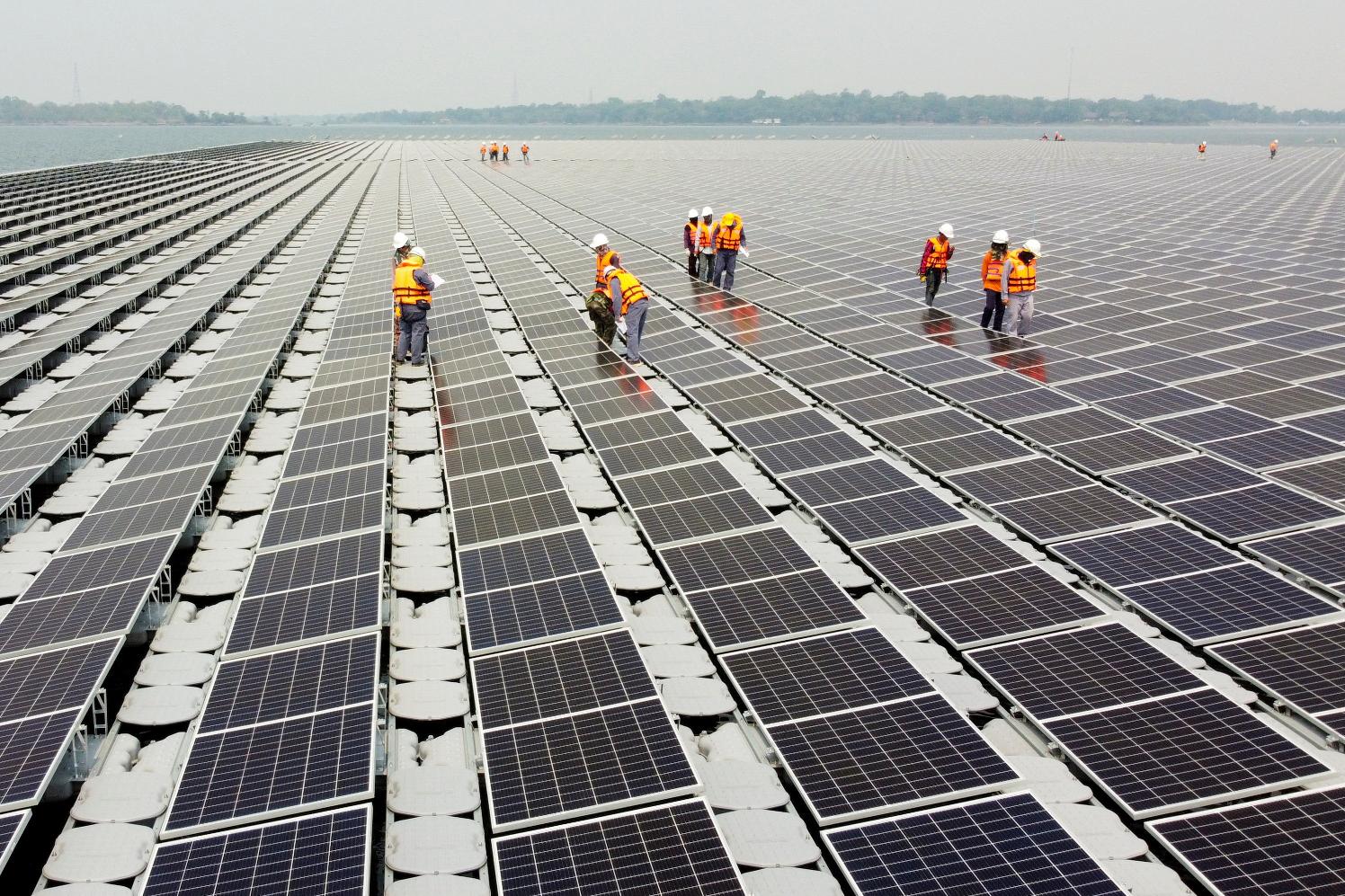
SINGAPORE, Oct 21 (Reuters) - Cambodia plans to import over 600 megawatts (MW) of clean power from neighbouring Laos, Vietnam and Thailand, its energy minister Keo Rottanak told Reuters, increasing its contracted import capacity by over 50%. The southeast Asian nation will import 300 MW of solar and hydro capacity from Laos starting in 2026. It is in the final stages of approval to almost double a 300 MW import deal with Vietnam and could potentially import another 100 MW from Thailand, Rottanak said. "We just signed last week more than 300 megawatt combined hydro and solar with Laos. So this is going to come to Cambodia in 2026," Rottanak told Reuters in an interview at the Singapore International Energy Week (SIEW). Cambodia currently has contracts to import 1,030 MW of power from Thailand, Vietnam, and Laos, according to the U.S. International Trade Administration, accounting for nearly a quarter of total capacity used to supply power to the country. Rottanak said he expects to contract another 200-plus MW from Vietnam, and potentially more than 100 MW from Thailand. Imports from Vietnam are set to begin "as soon as possible," as the Cambodian and Vietnamese national electric utilities have already wrapped up discussions on the deal, and were waiting for final government approvals, he said. Rottanak said Cambodia's contracted imports with its neighbours highlighted the potential for boosting interconnection in southeast Asia, adding that it provided flexibility amid increasing volatility of hydropower output due to increasingly frequent weather-related disruptions. The 10-member of the Association of Southeast Asian Nations (ASEAN) has been trying for decades to form a regional grid to facilitate multilateral power trade, but progress has been limited to bilateral deals. Rottanak said he expects the regional grid to become a reality by 2035. Sign up here. https://www.reuters.com/business/energy/cambodia-boost-power-import-capacity-by-over-50-next-two-years-2024-10-21/
2024-10-21 11:27
Trump's policies could increase volatility in region, with focus on Mexico Harris win may lower tariff risk, benefiting EM assets in general Remittance tax of 10% would hurt Central America Oct 21 - Latin America is anxiously counting the days to Nov. 5, when U.S. voters will choose between relative continuity under Vice President Kamala Harris or a return to policies that triggered volatility in the region's largest markets and economies under former president Donald Trump. Trade and tariffs, as well as monetary policy's effect on global interest rates, are likely the largest avenues for the election to jolt the U.S.'s neighboring region. Washington's economic war with China could particularly rock Mexico and boost Brazil, especially in a tit-for-tat scenario. On a broader level, a Trump victory would likely send shockwaves through the region, potentially putting the squeeze on some currencies and central banks even as countries that are more tied to commodities or trade with China could emerge largely unscathed. While the Biden administration did not roll back tariffs imposed by Trump on China, Harris' plan to keep them roughly as they are makes her a dove toward the world's No. 2 economy. Under Trump, tariffs on Chinese products would jump to around 60%. China will also hover over talks to revise the U.S., Mexico and Canada trade deal (USMCA), scheduled for 2026, as some goods including from Chinese companies' transplant factories could stop being treated as Mexican. Automotive sector content requirements, known as "rules of origin," are likely to loom large in those talks. Trump said weeks ago that he would slap a tariff as high as 200% on vehicles imported from Mexico. "A trade war (with China) would likely intensify in the case of a Trump presidency, and I think that the most affected country in Latin America could be Mexico," said Carlos de Sousa, emerging markets strategist and fixed income portfolio manager at Vontobel. "If Trump wins, he would probably try to leverage that (USMCA) sunset clause as some stronger negotiating position, potentially to change the rules of origin." He added that the increased scrutiny on the trade rules regarding Mexico could mean "We'll go back, in terms of Mexican asset prices, to a higher volatility level than what we have seen in the last five or six years." Lazard said in a recent client note that a universal 10% tariff like the one proposed by Trump could be used as leverage to prevent countries from skirting tariffs by setting up shop in U.S. trading partners. Other instances of its use as leverage could include policy around migration, as remittances make a big contribution to several regional economies, especially in Central America. South American countries may be in a better position to dodge a stricter U.S. trade regime. The investment bank places copper and lithium powerhouse Chile on a list of countries with high exposure to the US market that could be largely spared based on the less replaceable nature of their exports. Such calculations would become much less relevant in the case of a Harris victory. "If the Democratic candidate Vice President Kamala Harris wins, likely with a divided government, tariff risk would likely decline and we would expect lower growth and investment conditions in the United States, which could lead to sustained outperformance of EM assets," the investment bank said in its October outlook for emerging markets, published last week. While Mexico's industrial export economy would likely feel the squeeze under a second Trump administration, other countries that are primarily commodities exporters could even benefit. South America could also benefit from its lower reliance on remittances from the U.S., which under a Trump scenario may be taxed at 10% if U.S. Senator JD Vance, Trump's running mate, follows through on his proposed tax , opens new tab. Some Central American countries such as Honduras and El Salvador receive more than 20% of their GDP from remittances, meaning the tax could translate into a couple percentage points of GDP lost per year. In the case of Mexico, the largest remittance recipient in the region by dollar amount, it could shave over $6 billion in inflows per year based on the 2023 estimate. As trade tensions with Beijing ballooned under Trump in 2018, China replaced all its U.S. soybean imports with Brazilian ones. China is already Brazil's largest trade partner, and South America's largest economy would further benefit from even more China commerce. "There can be a tariff outcome that helps Latin America if, as a result of tit-for-tat dynamic, it redirects purchases of primary products away from the U.S. into other suppliers like Brazil and Argentina," said Alejo Czerwonko, CIO for emerging markets in the Americas at UBS Global Wealth Management. "The rhetoric that tariff uncertainty can only hurt Latin America might be overly simplistic." A Trump presidency is expected to raise the U.S. budget deficit more than a Harris administration, driving inflation, as well as interest rates, higher. Tighter financial conditions globally could also weigh on Latin American assets. "If Trump wins and the deficits are a bit larger, then the disinflation process could be a bit slower, and that could translate into a slightly slower monetary policy easing" in the U.S., Vontobel's De Sousa said. Tighter monetary policy in the U.S. has historically translated into subdued financial asset prices across emerging markets, including Latin America. Lastly, Argentina's President Javier Milei, who shared a stage with Trump earlier this year at a conservative gathering outside Washington, could see his Trump-like abrasive style rewarded. Milei could benefit from added U.S. support if Trump were to be elected as the South American grains exporter seeks to extend or renew its loan program with the International Monetary Fund, of which the U.S. is the largest shareholder. Trump would have a "higher decibel approach to different countries, less institutional and more personal," said Francisco Campos, chief economist for Latin America at Deutsche Bank. "Because of the ideological affinity and similar governing style between Milei and Trump, maybe Argentina could find itself with a little tailwind under a Trump scenario." Sign up here. https://www.reuters.com/world/americas/latin-america-braces-us-election-impact-trade-tariffs-2024-10-21/
2024-10-21 10:57
LONDON, Oct 21 (Reuters) - The pound fell on Monday as investors focused on the relative strength of the U.S. economy, pushing up the dollar. Sterling was last down 0.2% at $1.3023, just above Thursday's two-month low of $1.2975. The euro was up 0.1% at 83.35 pence, although it remained near its lowest level in 2-1/2 years against Britain's currency. The U.S. dollar has climbed against its peers in recent weeks as the economy has fared better than expected. Last week, data showed retail sales grew more than anticipated in September and jobless claims fell the previous week, helping moderate investors' bets on Federal Reserve rate cuts and pushing up Treasury yields. By contrast, figures released last Wednesday showed British inflation fell more than expected in September to 1.7%, below the Bank of England's 2% target, causing traders to increase their bets on deeper rate cuts in the UK. British 10-year bond yields fell below those on U.S. bonds for the first time since mid-August last week , making dollar-denominated U.S. debt look more attractive and boosting the dollar. This week, investors will be focused on comments from Bank of England Governor Andrew Bailey, starting with a speech tomorrow, and purchasing managers' index data on the private sector's performance in October. "We still think the market is under-pricing the pace of the BoE easing cycle," said Chris Turner, global head of markets at ING. "Should Bailey add to some of his rare comments that the BoE could become more 'activist' in its easing, sterling could come under pressure." Turner added: "Thursday's release of the UK PMI should also have a big say on whether sterling continues to outperform or perhaps succumbs to some dovish BoE rhetoric." The pound has fared better against the euro in recent weeks as data has shown the euro zone economy performing worse than expected. The euro fell to a 2-1/2 year low against the pound at 82.96 pence on Friday. Sign up here. https://www.reuters.com/markets/currencies/sterling-dips-us-dollar-rides-economy-higher-2024-10-21/
2024-10-21 10:56
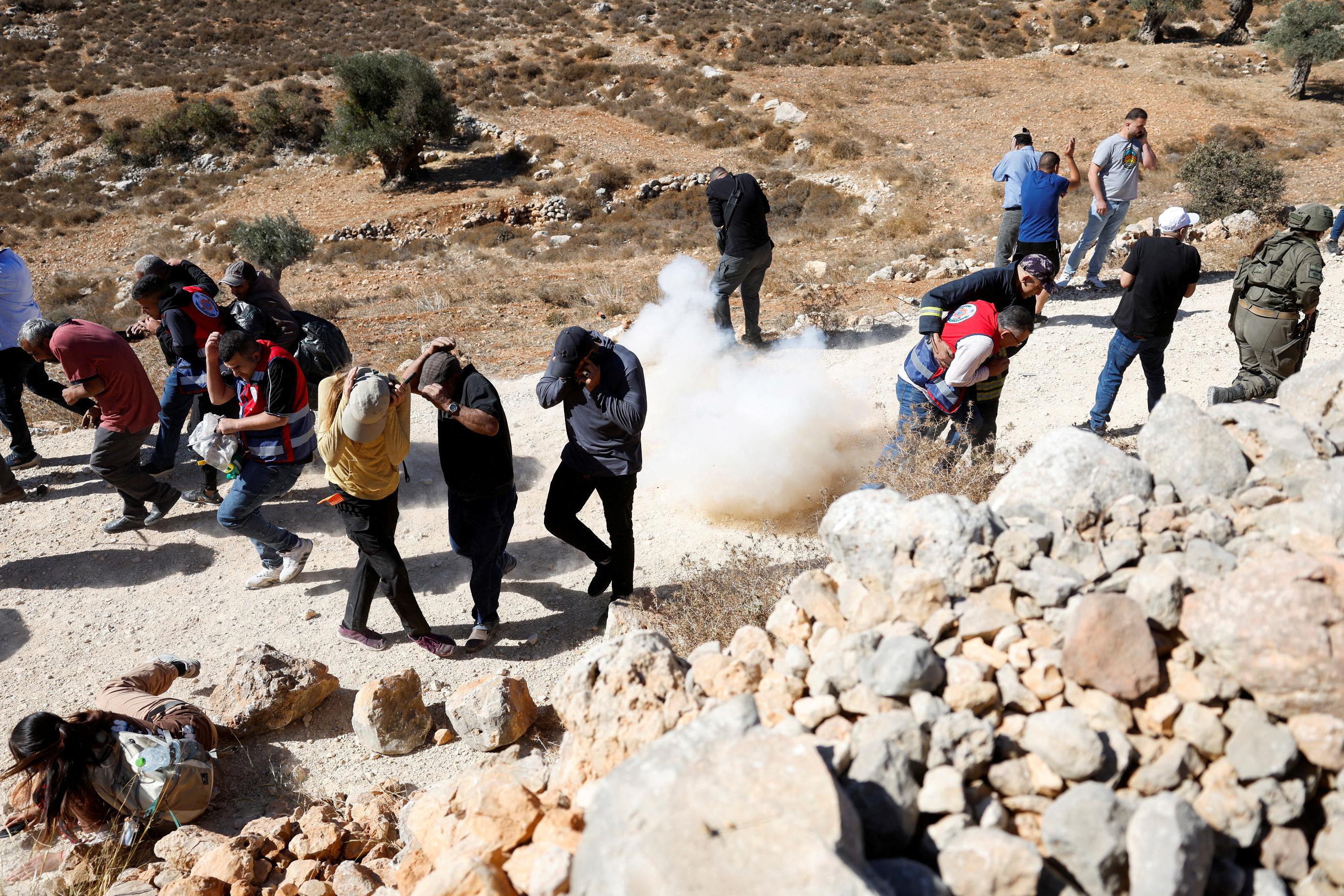
Israeli settlers assault Palestinians harvesting olives Army blocks farmers from reaching their land Uptick in violence in occupied West Bank during Gaza war BURIN, West Bank, Oct 21 (Reuters) - Palestinian olive farmer Khitam Najjar dreams of just one season where she can gather the harvest in peace. But it’s not this year. As she and her son approached their olive groves near the village of Burin in the occupied West Bank last week, Israeli soldiers stopped them, telling them they weren’t allowed to harvest in that part of the valley, she said. "This is our land. I came with my son alone, we came to harvest. If we cannot harvest our own olives from our lands, where should we go?” Najjar said. In more violent incidents since the beginning of the harvest this month, armed Israeli settlers have assaulted Palestinian farmers, cut down trees and set fire to olive groves. The latest spate of attacks by settlers and blockages by the army is part of a trend that, rights groups say, is worsening as the Gaza war rages on, with settlers appearing emboldened by some far-right Israeli government ministers who seek to annex the West Bank. The Israeli military did not immediately comment when asked by Reuters about accusations that soldiers bar olive farmers from accessing their land. The military says it tries to ensure Palestinians can harvest while avoiding clashes with settlers, and says the war in Gaza has raised tension in the West Bank, causing a security situation that is harder to manage. Many Palestinians, as well as Israeli human rights groups, believe the army has abetted settler attacks. “Since the start of the (Gaza) war, the army has prevented farmers access to their lands here. They say it’s a closed military zone and for security reasons. Now, when I pick olives from the trees in front of my house, it feels like I’m having to steal them,” said Musab Sufan, another Burin resident. The Gaza Strip, a separate coastal territory around 100 km (65 miles) from the landlocked West Bank, has been largely razed by Israel’s year-old war against Palestinian militant group Hamas. But the West Bank has in parallel suffered its worst violence for years. Hundreds of Palestinians - including armed militants, stone-throwing youths and civilian bystanders - have been killed in clashes with Israeli security forces. Dozens of Israelis have also been killed in Palestinian street attacks over the past year. The olive harvest, which runs roughly between September and November, has been caught up in that violence. The U.N. says hundreds of olive trees have been burnt, vandalised or stolen by settlers this year since the start of the harvest. A group of Western states including France, Britain and Germany issued a joint statement on Oct. 14 saying olive-picking had become "dangerous" due to settler violence and calling on Israel to allow Palestinians to join the harvest. SCORCHING THE EARTH For Palestinians, olive trees represent a deep connection with their land, a crucial source of income and an important feature of their national cuisine. Palestinian writers and poets like the famous Mahmoud Darwish have long infused their work with the symbolism of Palestinian olive trees. The harvest is a time for rural families, and sometimes visitors from urban centres, to work together on the land. “This season is a bad one. They (settlers) have been burning trees already. It’s as if they’re implementing a scorched-earth policy to turn this land into a barren desert, to empty it of its inhabitants," said Ibrahim Omaran, head of the Burin municipal council. The right-wing cabinet of Prime Minister Benjamin Netanyahu, which includes settlers who run parts of Israel’s security, finances and administration of occupied Palestinian territories, has recently presided over "unprecedented" land grabs of areas which Palestinians want for a future state, the Israeli rights group Peace Now said in a report this month. Settler violence is meanwhile a source of growing concern among Israel's Western allies. A number of countries, including the United States, have imposed sanctions on violent settlers and urged Israel to do more to stop the attacks. Many settlers believe Jews have a God-given right to land in territories that Israel captured in the 1967 Middle East war and where settlements have been expanding for decades. Palestinians say they will not leave. “My land is my identity. If I don’t have a land, then what is my life for?” Najjar said. Sign up here. https://www.reuters.com/world/middle-east/attacked-by-settlers-blocked-by-soldiers-palestinians-face-grim-olive-harvest-2024-10-21/
2024-10-21 10:53
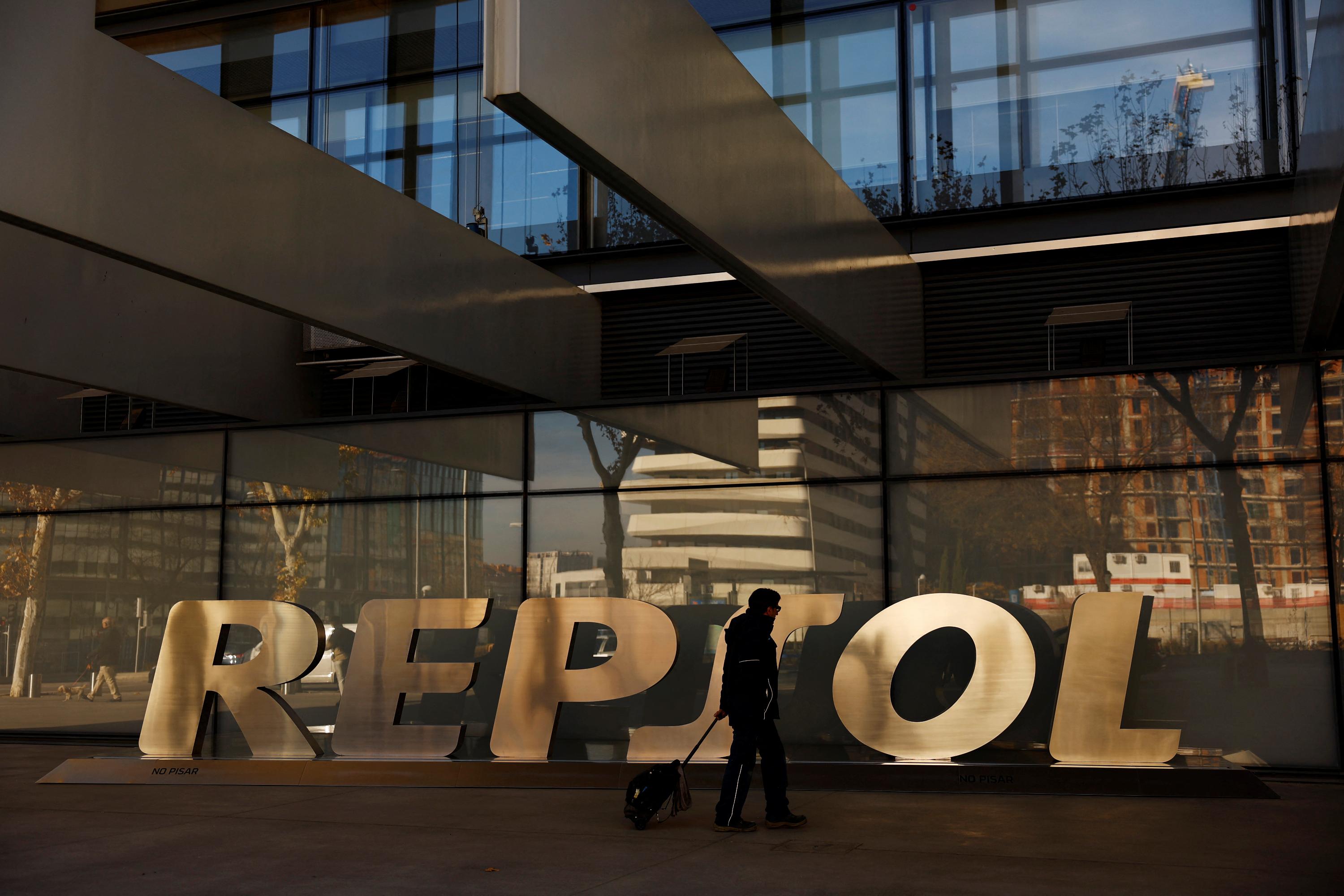
MADRID, Oct 21 (Reuters) - Spanish oil major Repsol (REP.MC) , opens new tab has put on hold planned green hydrogen projects in Spain with an electrolysis capacity of 350 megawatts (MW) due to an unfavourable regulatory environment, a spokesperson told Reuters on Monday. The company had already warned that regulatory uncertainty, including the possibility that a windfall tax on energy companies and banks could be redesigned and become permanent, could affect its investment in the nascent industry. With Spain targeting 12 gigawatts (GW) of green hydrogen production capacity by the end of the decade, Repsol's move, first reported by El Mundo newspaper, may have broader implications for the country's green agenda. A 100 MW project in Cartagena, with a planned investment of more than 200 million euros ($217 million) is among those put on hold, along with projects in Tarragona and the Basque country, with capacities of 150 MW and 100 MW respectively. Repsol's next electrolyser will be built in Portugal, the spokesperson said. Oil companies such as Repsol and Cepsa have been among the most vocal critics of Spain's windfall tax, which has also drawn criticism from the likes of utility Endesa. Last year, a lobby group representing the country's main oil companies warned that an extension of the tax could put at risk 16.5 billion euros in investments linked to the energy transition. Green hydrogen - hydrogen produced using renewable electricity - is seen as key to decarbonising Europe's economy. However, given its cost, green hydrogen projects in general are not competitive without subsidies. ($1 = 0.9219 euros) Sign up here. https://www.reuters.com/business/energy/repsol-freezes-green-hydrogen-projects-spain-2024-10-21/