2024-10-21 05:16
SINGAPORE, Oct 21 (Reuters) - Political risks due to potential loss of public support over rising power tariffs are a major impediment to transitioning to cleaner electricity sources, ministers from New Zealand and Cambodia told an energy industry event on Monday. "It's incredibly important to take the public with you, given that end of the day, they have to believe that what you're doing is enhancing their lives," Shane Jones, Associate Minister for Energy, New Zealand, said at the Singapore International Energy Week conference (SIEW). Jones said New Zealand's power tariffs are comparable to Singapore's, ranking among the highest in the Asia-Pacific region. "If the public feel that they can't see the upside of the medium- to long-term climate-positive outcomes, and they're suffering disproportionately on the journey, it leads to political mayhem," Jones said. Cambodia's energy minister, Keo Rottanak, said the transition in Southeast Asia towards net zero would be costly and take a long time. "If we don't bring costs down, we may lose the public support, and therefore it will just make the whole thing go away," he said. At the same event, Amin Nasser, CEO of Saudi Aramco, the world's largest oil producing company, cited limitations of current transition plans. "In a transition that requires staggering amounts of front-end capital investment, the cost of capital is more than twice as high in developing countries where the need is greater," he said. "Let us be clear: all sources of energy will be required for decades to come. Planners must also abandon the belief that a single plan can meet the needs of more than 200 countries," he said. The transition "would be expensive for everyone," he said. Nasser said existing plans have not even been able to reduce demand for carbon-intensive coal. "Trying to force an unworkable, unaffordable transition plan on them will only threaten their economic progress and even social cohesion," he said, referring to the global South. Sign up here. https://www.reuters.com/business/energy/new-zealand-cambodia-cite-political-risks-due-high-energy-transition-costs-2024-10-21/

2024-10-21 05:10
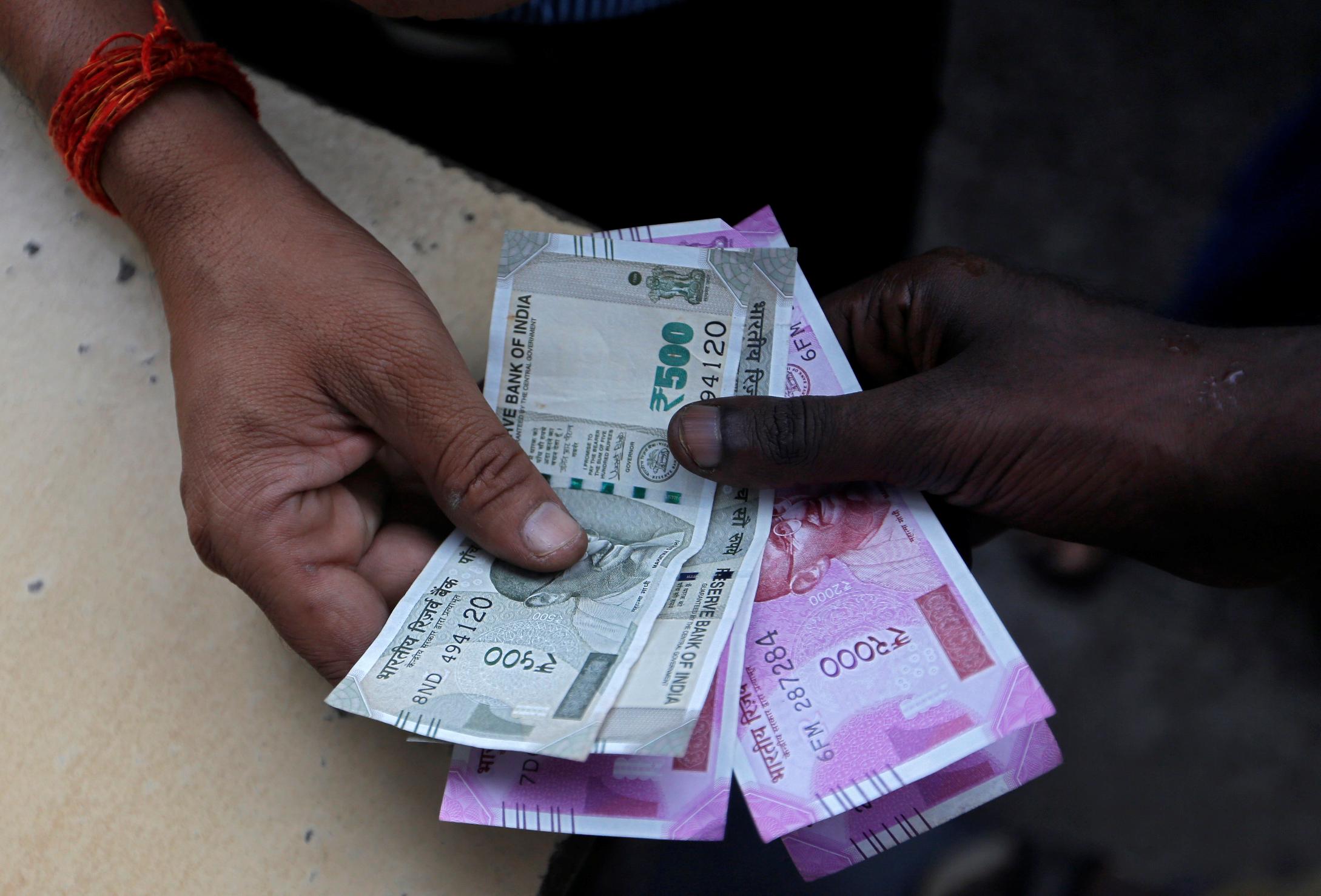
MUMBAI, Oct 21 (Reuters) - The Indian rupee was nearly unchanged on Monday as pressure on account of outflows was blunted by dollar offers from state-run banks, with traders expecting the Reserve Bank of India (RBI) to defend the currency against sharp declines. The rupee was at 84.07 against the U.S. dollar as of 10:30 a.m. IST, compared to its close at 84.0650 in the previous session. The local unit declined to its all-time low of 84.0775 on Friday, but its losses were contained on account of intervention by the RBI. The rupee has remained under pressure through much of October due to a sharp pickup in outflows from local stocks and elevated oil prices earlier this month. While oil prices have since cooled, foreign outflows from local stocks are on track for a record monthly high, having touched $9.2 billion in October so far. Despite the sharp upswing in outflows, the rupee has outperformed most of its Asian peers this month as routine central bank interventions have prevented sharp losses. On Monday, state-run banks were spotted offering dollars near 84.07 levels, most likely on behalf of the RBI, a trader at a foreign bank said. The rupee is likely to stay under pressure through much of the session but it is unlikely that the RBI will let it weaken below 84.10, the trader added. The RBI's interventions are "evident from the significant drop in (FX) reserves," Amit Pabari, managing director at FX advisory firm CR forex, said. India's foreign exchange reserves dropped to a one-month low of $690.43 billion as of Oct. 11, central bank data showed. Asian currencies and the dollar index were largely rangebound, while U.S. bond yields were a tad higher during Asia trade. Sign up here. https://www.reuters.com/markets/currencies/rupee-flat-wedged-between-outflows-state-run-banks-offers-2024-10-21/
2024-10-21 05:03
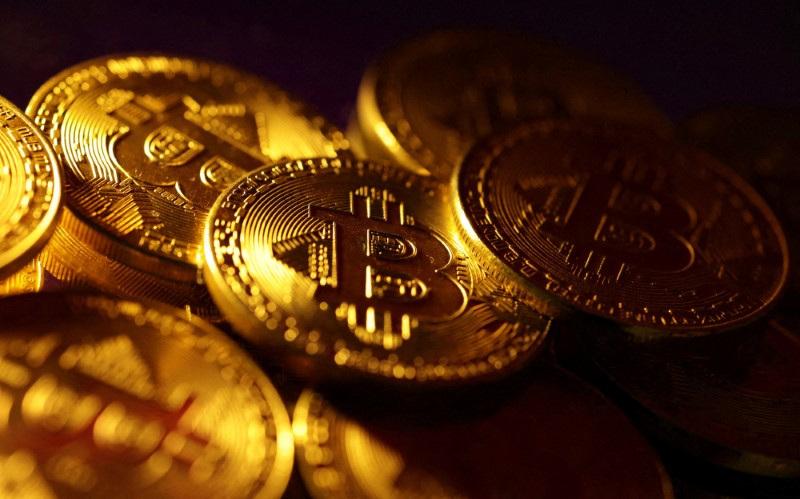
Fed officials suggest gradual rate cuts ahead Investors position for Nov. 5 US presidential election NEW YORK, Oct 21 (Reuters) - The dollar climbed on Monday, buoyed by a rise in U.S. bond yields, as a run of solid U.S. economic data suggested the Federal Reserve can afford to be patient in cutting rates while investors positioned for the Nov. 5 presidential election. The greenback has risen for three straight weeks and 14 of the past 16 sessions as a run of positive economic data led investors to scale back expectations about the size and speed of rate cuts from the Fed. Markets are pricing in an 87% chance for a cut of 25 basis points (bps) at the Fed's November meeting, with a 13% chance of the central bank holding rates steady, according to CME's FedWatch Tool , opens new tab. The market was completely pricing in a cut of at least 25 bps a month ago, with a 50.4% chance of a 50 bps cut. "It's not so much about the Fed as the market correcting itself and once again converging with the Fed," said Marc Chandler, chief market strategist at Bannockburn Global Forex in New York. "The economic data has been robust and we'll see that next week when we get the GDP figure." The yield on benchmark U.S. 10-year notes jumped 10.5 basis points to 4.18% after hitting a 3-month high of 4.186%. Last week, the Atlanta Fed raised its estimate , opens new tab for third quarter GDP growth to 3.4%. Federal Reserve Bank of Dallas President Lorie Logan said on Monday she sees more gradual rate cuts ahead for the central bank and suggested she sees no reason why the Fed can’t also press forward with shrinking its balance sheet. In addition, Minneapolis Federal Reserve Bank President Neel Kashkari again said he expects "modest" interest rate cuts over the next several quarters, though a sharp deterioration of labor markets could move him to call for faster cuts. The dollar index , which measures the greenback against a basket of currencies, rose 0.53% to 104.01, on track for its biggest daily percentage gain since Oct. 4, with the euro down 0.5% at $1.0811. Sterling 0.54% to $1.2977. The European Central Bank (ECB) last week cut rates for the third time this year. On Monday, Slovak central bank chief Peter Kazimir said eurozone inflation is increasingly likely to return to target next year but a bit more evidence is needed before the European Central Bank can declare victory. Data on Monday showed German producer prices fell more than expected in September, declining 1.4% year-on-year, mainly due to a drop in energy costs. Investors were also positioning as the U.S. election on Nov. 5 grew closer. Chandler said a Trump victory is likely to bring about tariffs that would affect those that are closest and most exposed to the U.S. in trade partner terms, such as Canada, Mexico, China and Japan. Against the Japanese yen , the dollar strengthened 0.84% to 150.77 after hitting a more than 9-week high of 150.83. Japan will hold a general election on Sunday, Oct. 27. While opinion polls vary on how many seats the ruling Liberal Democratic Party (LDP) will win, markets have been optimistic that the LDP along with junior coalition partner Komeito will prevail. The Mexican peso < MXN=> was 0.33% weaker versus the dollar at 19.972. The Canadian dollar declined 0.3% versus the greenback to 1.38 per dollar and the Chinese yuan fell 0.26% to 7.138 per dollar. In cryptocurrencies, bitcoin fell 1.79% to $67,521.00. Sign up here. https://www.reuters.com/markets/currencies/bitcoin-3-month-high-trump-odds-drive-currencies-2024-10-21/
2024-10-21 04:35
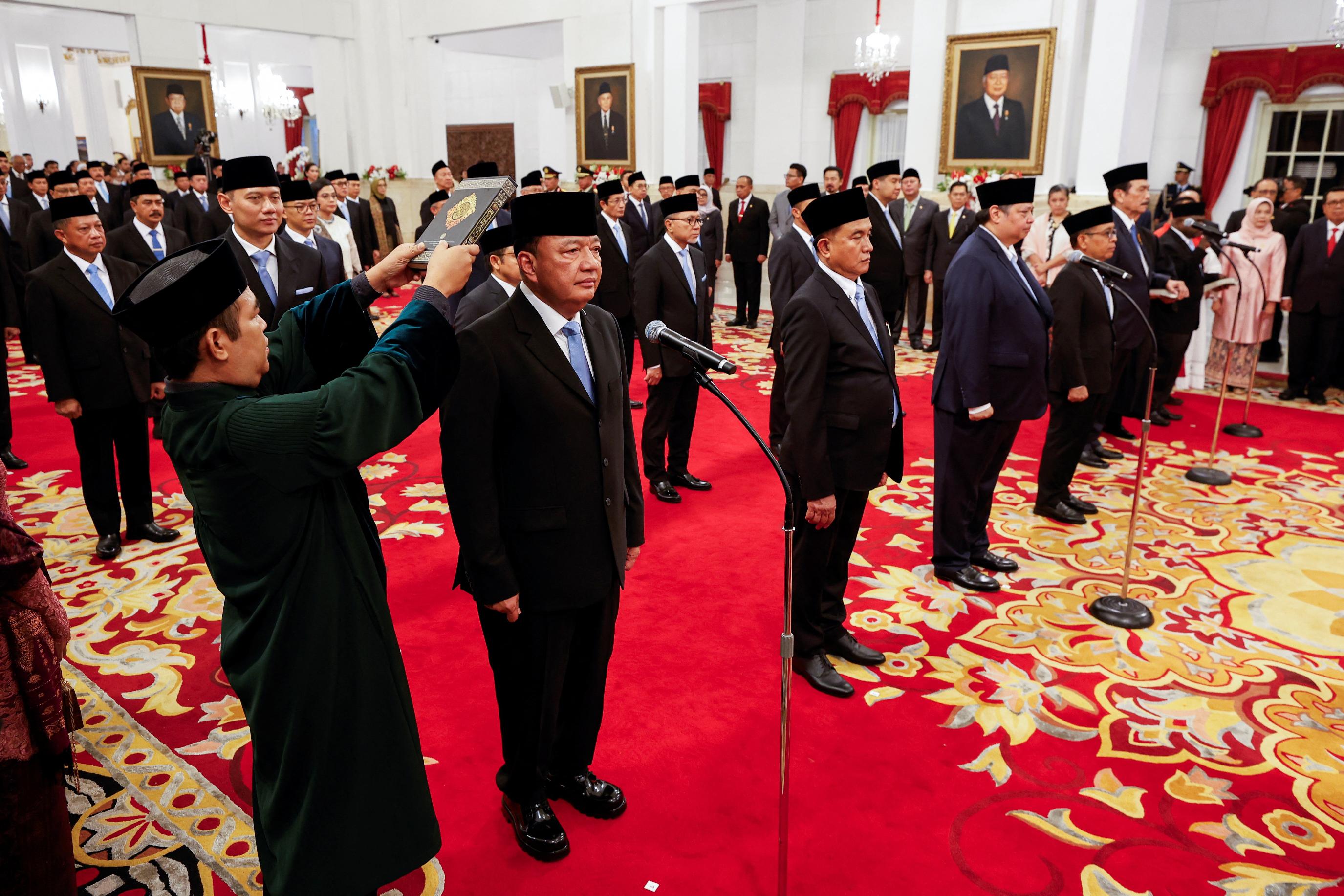
JAKARTA, Oct 21 (Reuters) - Indonesian President Prabowo Subianto's new cabinet consists of a mix of professional and political appointees with some names remaining on the job after serving for Prabowo's predecessor, Joko Widodo. Below are short biographies of the key ministers: SRI MULYANI INDRAWATI, FINANCE MINISTER Indonesia's first woman finance minister, Sri Mulyani, 62, is already one of the country's longest serving finance ministers, working under presidents Yudhoyono and Widodo. She has won international recognition for reforming Indonesia's tax system and steering Southeast Asia's largest economy through the global financial crisis in 2008 and the pandemic. A former World Bank managing director, she studied economics at the University of Indonesia before pursuing a master's degree and a doctoral degree from University of Illiniois Urbana-Champaign in the United States. Sri Mulyani is regularly listed as among 100 most powerful women in the world by Forbes magazine. AIRLANGGA HARTARTO, COORDINATING MINISTER FOR ECONOMIC AFFAIRS Airlangga, 62, is continuing on from his role as Widodo's chief economic affairs minister. He is a senior politician, and until earlier this year, the chairman of Indonesia's second largest political party Golkar. Airlangga, whose father was a minister for late authoritarian leader Suharto, holds a master's degree from Australia's Monash University. When serving for Widodo, Airlangga has been a staunch defender of palm oil - an important industry in Indonesia - in global markets, exchanging barbs with critics and diplomats. Prior to his public roles, he held senior jobs with local companies in finance, and the paper-making and chemical industries. AGUS GUMIWANG KARTASASMITA, INDUSTRY MINISTER The 55-year-old Golkar politician was also Widodo's industry minister and son of a former minister under Suharto. Agus was previously an executive at high-end property developer Asiana Lintas Development. A graduate of the U.S. Pacific Western University, he also has a doctoral degree from Indonesia's Padjadjaran University. BAHLIL LAHADALIA, ENERGY MINISTER Bahlil, 48, is one of Widodo's loyalists and the chairman of Golkar party. Widodo moved him from the post of investment minister to energy minister months before Prabowo's inauguration. Growing up in the restive region of Papua, Bahlil says he has worked in jobs ranging from driving a bus to selling fish, before he built a fortune in wood trading. Prior to joining the government, his business interests included investment in coal and nickel mining. Last week, Bahlil obtained a doctoral degree from the University of Indonesia after defending a paper about the governance of nickel refining. BUDI SANTOSO, TRADE MINISTER Budi, 56, has spent his career as a bureaucrat at the trade ministry. His last position was the ministry's secretary general, after previously working in Taiwan as the head of Indonesia's Economic and Trade Office and in India as a trade attache. He has a master's degree from the University of Indonesia and a PhD from Sahid University in Jakarta. SUGIONO, FOREIGN AFFAIRS MINISTER Sugiono, 45, is a former member of the army's special forces. After leaving the army, he joined Prabowo's Gerindra party, rising through the ranks to become its deputy chair. He was a member of parliament in a commission overseeing foreign affairs, defence and security. Once Prabowo's private secretary, Sugiono, a Norwich University graduate, has kept a low profile, rarely appearing in the media. State news agency Antara described Sugiono as Prabowo's "ideological child" and one of his most trusted aides. ERICK THOHIR, STATE ENTERPRISES MINISTER Thohir, 54, comes from a wealthy family that has businesses in entertainment, food and media. His brother, Garibaldi Thohir, runs one of the world's biggest coal exporters, Adaro Energy. As Widodo's state enterprises minister, Thohir, who holds a master's degree from National University in the U.S., closed down unprofitable state companies and oversaw high-profile debt restructuring of companies like airline Garuda (GIAA.JK) , opens new tab, Krakatau Steel (KRAS.JK) , opens new tab and some construction firms. A former chairman of Italian soccer club Inter Milan, Thohir now is one of the owners of Oxford United and the chairman of Indonesia's football association PSSI. ROSAN ROESLANI, INVESTMENT MINISTER Before joining the government as Indonesia's ambassador in Washington in 2021, Rosan, 55, was a businessman. He successfully led Prabowo's presidential campaign and was named Widodo's investment minister months before the transition of government. Rosan co-founded investment firm Recapital Group, which gained momentum by selling debt-restructured companies after the Asian financial crisis of the late 1990s. The company has business in asset management and property, among others, now. He holds a master's degree from Antwerpen European Unversity in Belgium. SJAFRIE SJAMSOEDDIN, DEFENCE MINISTER Retired Lt Gen. Sjafrie, 71, has been friends with Prabowo since their military academy days and is considered one of Prabowo's closest allies. Like Prabowo, he has been barred from entering the United States and he faces allegations of human rights abuses during the 1998 Jakarta riots and when Indonesia occupied East Timor. He has never been charged and has denied wrongdoing. Sjafrie was former president Susilo Bambang Yudhoyono's deputy defence minister. Sign up here. https://www.reuters.com/world/asia-pacific/key-ministers-indonesias-president-prabowo-2024-10-21/
2024-10-21 04:34
A look at the day ahead in European and global markets from Vidya Ranganathan Europe's heavyweight software maker SAP (SAPG.DE) , opens new tab reports third-quarter earnings today. The behemoth will set the tone for German and wider stock markets, since it comprises 15% of Deutsche Boerse's , opens new tab DAX index (.GDAXI) , opens new tab with a 261 billion euro ($284 billion) market value. SAP's cloud and business-planning software businesses have been doing well this year and driven its share price up 53%. That's key context, given how stock markets have been whipsawed in the past week by a string of reports from big U.S. banks and chipmakers such as ASML (ASML.AS) , opens new tab. It's unlikely Monday's earnings report will produce any new information on another long-running issue for SAP: a probe by U.S. prosecutors into the firm and its contractors for potential price-fixing in government contracts. Broader markets are meanwhile counting down to the Nov. 5 U.S. presidential election, and putting on trades aligned with opinion polls that show odds improving for former President Donald Trump over Vice President Kamala Harris. China's steady rollout of stimulus measures has also helped sentiment, the latest being a quarter point lending rate cut on Monday. Bitcoin hit a three-month high and has risen 18% since Oct. 10 on Trump's improving prospects, since his administration would be seen as taking a softer line on cryptocurrency regulation. The dollar has been rising, too, driven by the view that Trump's proposed tariff and tax policies could keep U.S. interest rates high and undermine the currencies of its trading partners. Analysts say rising U.S. real rates are driving the dollar up. But more so is the fact that interest rates elsewhere are falling fast, giving the dollar a yield advantage. The euro is down more than 3% in three weeks and has fallen through its 200-day moving average. It is now parked near a 2-1/2 month low. The closely watched gap between U.S. and German 10-year bond yields has widened to around 189 basis points (bps) as U.S. yields have climbed in recent weeks while the German ones have declined. Key developments that could influence markets on Monday: Data: German producer prices inflation, UK house prices Speakers/events: Fed's Lorie Logan, Neel Kashkari, Jeffrey Schmid, and Mary Daly; ECB's Gediminas Simkus; World financial leaders gather for the IMF-World Bank Annual Meetings. Earnings: SAP SE (SAPG.DE) , opens new tab, Unipol Gruppo (UNPI.MI) , opens new tab, Bollore SE (BOLL.PA) , opens new tab, Sandvik AB (SAND.ST) , opens new tab, Nucor Corp ($1 = 0.9203 euros) Sign up here. https://www.reuters.com/markets/europe/global-markets-view-europe-2024-10-21/

2024-10-21 04:07
SINGAPORE, Oct 21 (Reuters) - Singapore's Energy Market Authority (EMA) will co-fund selected carbon capture and storage (CCS) feasibility storage studies proposed by power generation companies and energy firms to help achieve the city-state's net zero emissions target by 2050. The EMA said in a statement on Monday it aims to study two CCS pathways - post-combustion carbon capture for combined-cycle gas turbines (CCGTs) and pre-combustion carbon capture to produce hydrogen for power generation. The agency, however, did not provide a value for the grant. Post-combustion carbon capture refers to the installation of an onsite unit to capture carbon dioxide from waste gas produced during the combustion of natural gas in CCGTs. Pre-combustion carbon capture refers to the installation of an onsite unit to capture carbon dioxide generated during the production of hydrogen from natural gas. The Singapore government is also developing a CCS project to aggregate carbon dioxide emissions on Jurong Island for overseas storage, with Phase 1 likely to start around 2030. Sign up here. https://www.reuters.com/business/energy/singapore-co-fund-ccs-studies-some-power-plants-aid-net-zero-emissions-target-2024-10-21/