2024-10-20 12:14
CAIRO, Oct 20 (Reuters) - Egypt has revised its renewable energy target for 2040 down to 40% from a previous goal of 58%, Petroleum Minister Karim Badawi said on Sunday, underscoring that natural gas will remain a key part of the country's energy mix for years. Before hosting the COP27 climate summit in 2022, Egypt pledged to raise renewable energy production to 42% of its energy mix by 2035, later advancing that target to 2030. In June 2024, then-Electricity Minister Mohamed Shaker announced an ambitious plan to raise this to 58% by 2040, a target now abandoned. "This is a message to all of us to work together to increase discoveries and attract more investments through the bids being offered for exploration, aiming to achieve new discoveries in the region, which holds more wealth, particularly natural gas," Badawi said in the opening session of the Mediterranean Energy Conference 2024. The continued reliance on fossil fuels comes as Egypt works to rebuild trust with foreign oil firms, whose local operations slowed after a hard currency shortage left the country with billions of dollars in arrears. Since taking office in July, Badawi has met numerous international energy companies, including Italy’s Eni, which plans to start drilling new wells in Egypt's largest gas field, Zohr, in early 2025 to boost production. Zohr's gas production peaked at 3.2 billion cubic feet per day (bcf/d) in 2019, enabling the country to become a net exporter. But output declined to 1.9 bcf/d by early 2024, forcing Egypt to increase gas imports through a pipeline linking it with Israel as well as liquefied natural gas (LNG) shipments to avoid a load shedding scheme that went on for months. Egypt also imports high-sulphur fuel oil, with imports spiking to 255,000 barrels per day (bpd) in September, the highest since at least 2016. Sign up here. https://www.reuters.com/sustainability/climate-energy/egypt-cuts-2040-renewable-energy-target-40-keeps-focus-natural-gas-2024-10-20/

2024-10-20 10:04
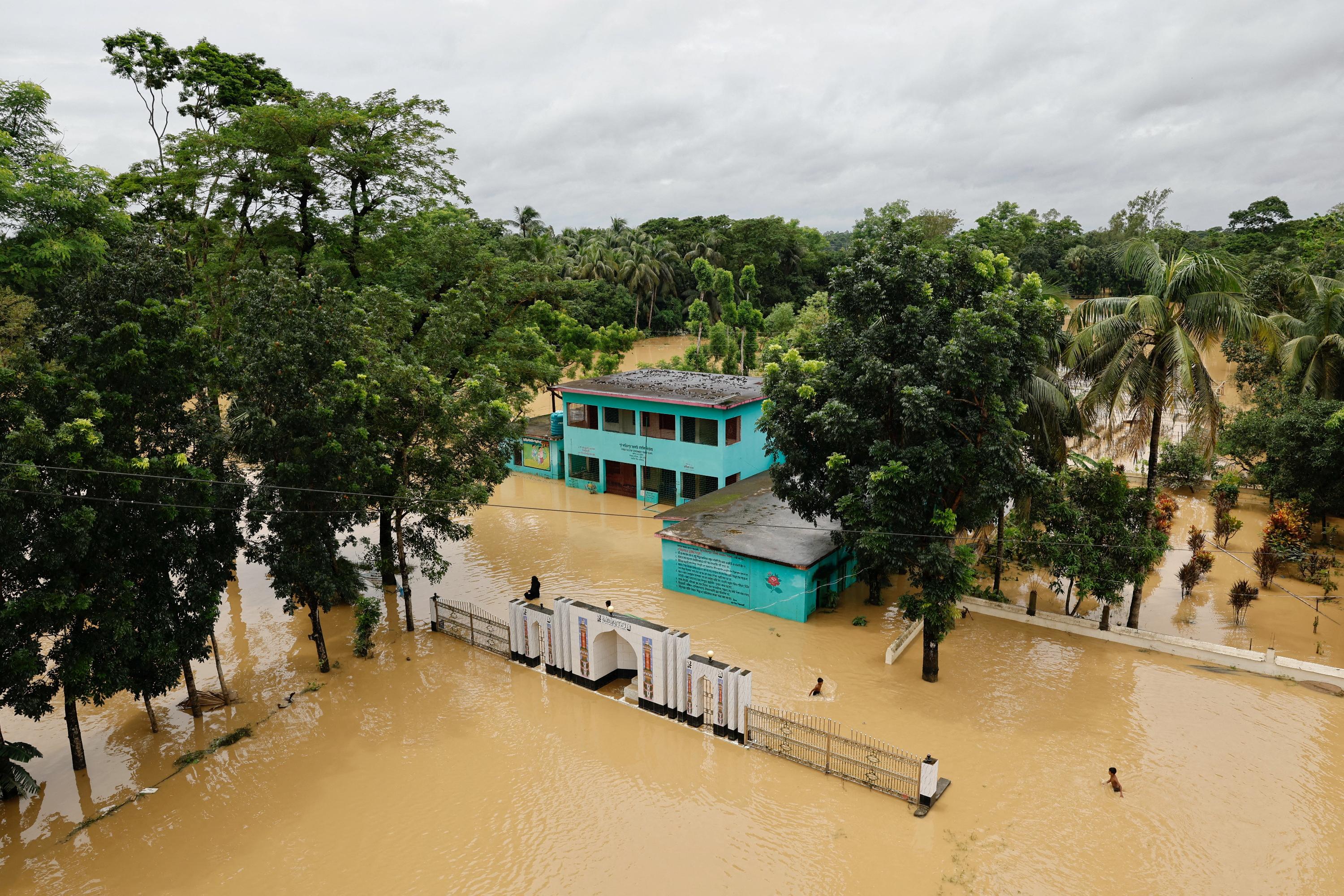
DHAKA, Oct 20 (Reuters) - Floods in Bangladesh have destroyed an estimated 1.1 million metric tons of rice, according to data from the agriculture ministry, prompting the country to ramp up imports of the staple grain amid soaring food prices. Floods brought by heavy monsoon rains and torrential upstream runoff struck the country in two major waves in August and October, claiming at least 75 lives and affecting millions, particularly in the eastern and northern regions where crop damage has been the most severe. The agriculture ministry said this year's flooding has resulted in a substantial loss of rice production. In response, the government is moving quickly to import 500,000 tons of rice and is expected to permit private sector imports soon, a food ministry official said. The interim government, which took power in August after deadly protests forced former Prime Minister Sheikh Hasina to flee to India, has been struggling to stabilize food prices that have surged nearly 20% in recent months. Higher imports by Bangladesh could lift shipments from neighbouring India, the top global rice exporter, which last month cut the duty on parboiled rice exports to 10%. The floods have also severely impacted other agricultural products, including more than 200,000 tons of vegetables. Total nationwide agricultural losses due to the flooding are estimated at around 45 billion taka ($380 million). Bangladesh, the world's third-largest rice producer, typically produces nearly 40 million tons of rice a year to feed its population of 170 million. However, natural disasters often disrupt production and lead to increased dependency on imports. The floods this year have underscored Bangladesh's vulnerability to climate change. A 2015 World Bank Institute analysis estimated 3.5 million people in Bangladesh are at risk of annual river flooding, a risk scientists say is worsening due to global climate change. "To ensure food security in the face of increasing climate challenges, it is essential to develop more flood- and drought-tolerant crop varieties, along with short-duration varieties," said Khandakar Mohammad Iftekharuddaula, chief scientific officer at the Bangladesh Rice Research Institute. He said investing in agricultural research is crucial for developing these resilient crops. "By focusing on flood- and drought-resistant traits, we can help farmers adapt to changing weather patterns and stabilize yields even in difficult conditions." ($1 = 119.0000 taka) Sign up here. https://www.reuters.com/world/asia-pacific/floods-destroy-11-mln-tons-rice-bangladesh-2024-10-20/
2024-10-20 09:37
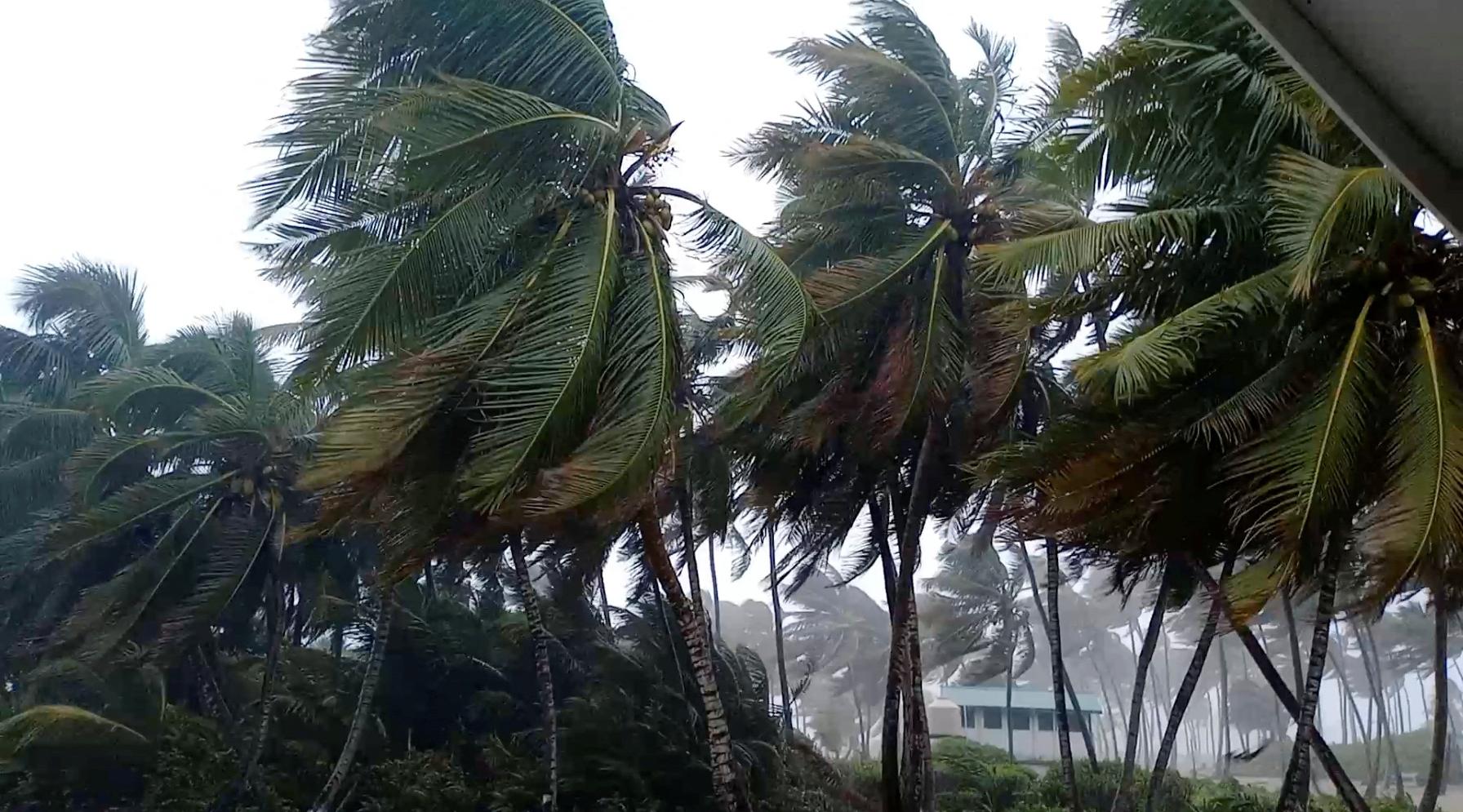
Oct 20 (Reuters) - Hurricane Oscar is expected to reach Guantanamo or Holguin in Cuba later on Sunday as the island country struggles to restore power after its worst blackout in years, the U.S. National Hurricane Center said. Oscar is currently located about 115 miles (185.07 km) east-northeast of Guantanamo, Cuba, with maximum sustained winds of 80 mph (130 km/h), the Miami-based forecaster said. Cuba's government on Saturday restored power to nearly one-fifth of the island's 10 million people after the national grid collapsed twice in 24 hours. Hurricane Oscar made landfall on Great Inagua island in the Bahamas earlier in the day. NHC expects Oscar to weaken after making landfall on the northeastern coast of Cuba, but it could still be a tropical storm when it moves north of Cuba late Monday and across the central Bahamas on Tuesday. According to the NHC, rainfall amounts of 5 inches to 10 inches (13-25 cm) with isolated amounts of 15 inches are expected across eastern Cuba through Tuesday. The government of the Bahamas has discontinued its tropical storm warning for the Turks and Caicos Islands, NHC said. Hurricane warnings for the Southeastern Bahamas, the north coast of the Cuban provinces of Holguin, Guantanamo and Las Tunas are still in place, it added. Sign up here. https://www.reuters.com/business/environment/hurricane-oscar-makes-landfall-bahamas-nhc-says-2024-10-20/

2024-10-20 07:42
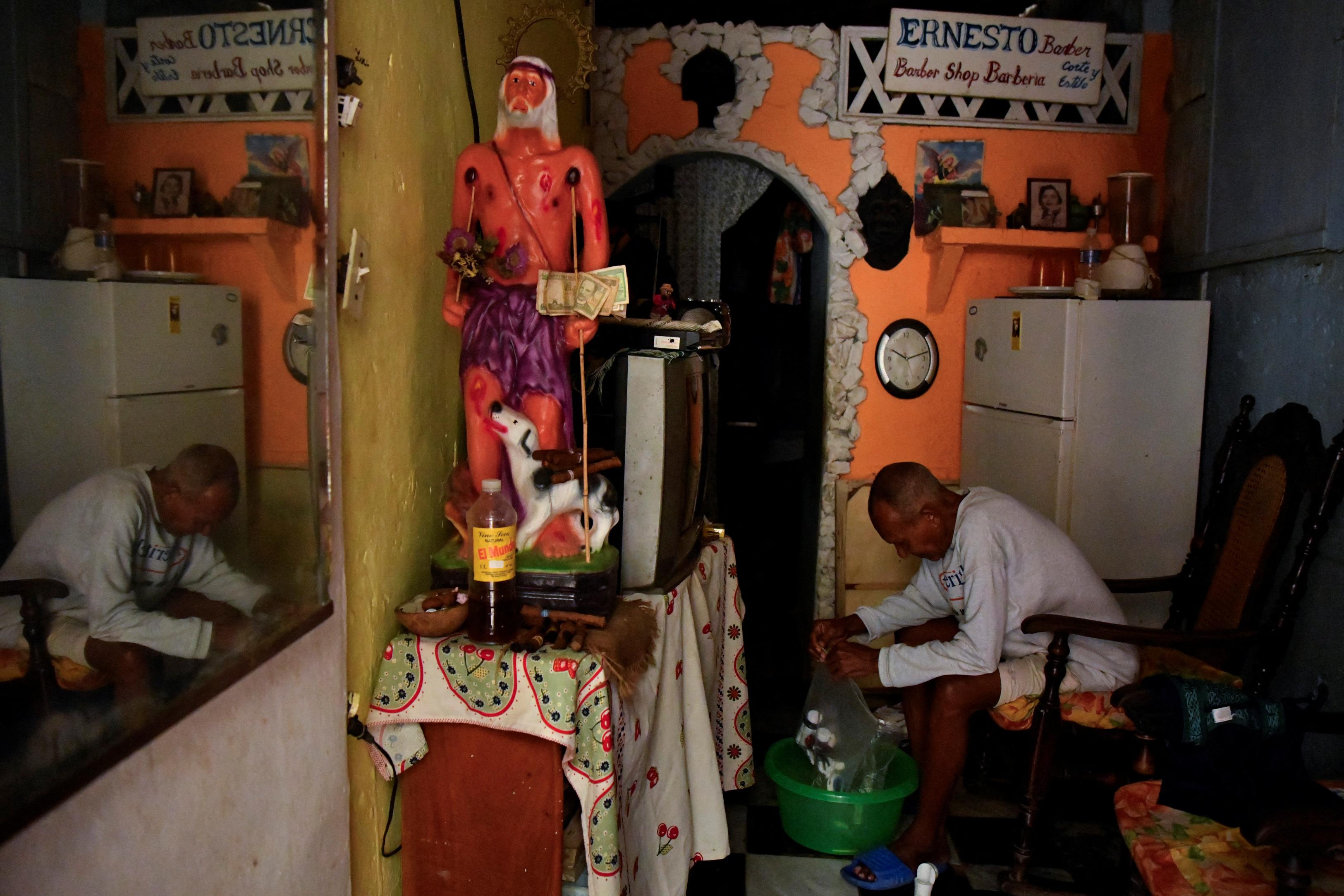
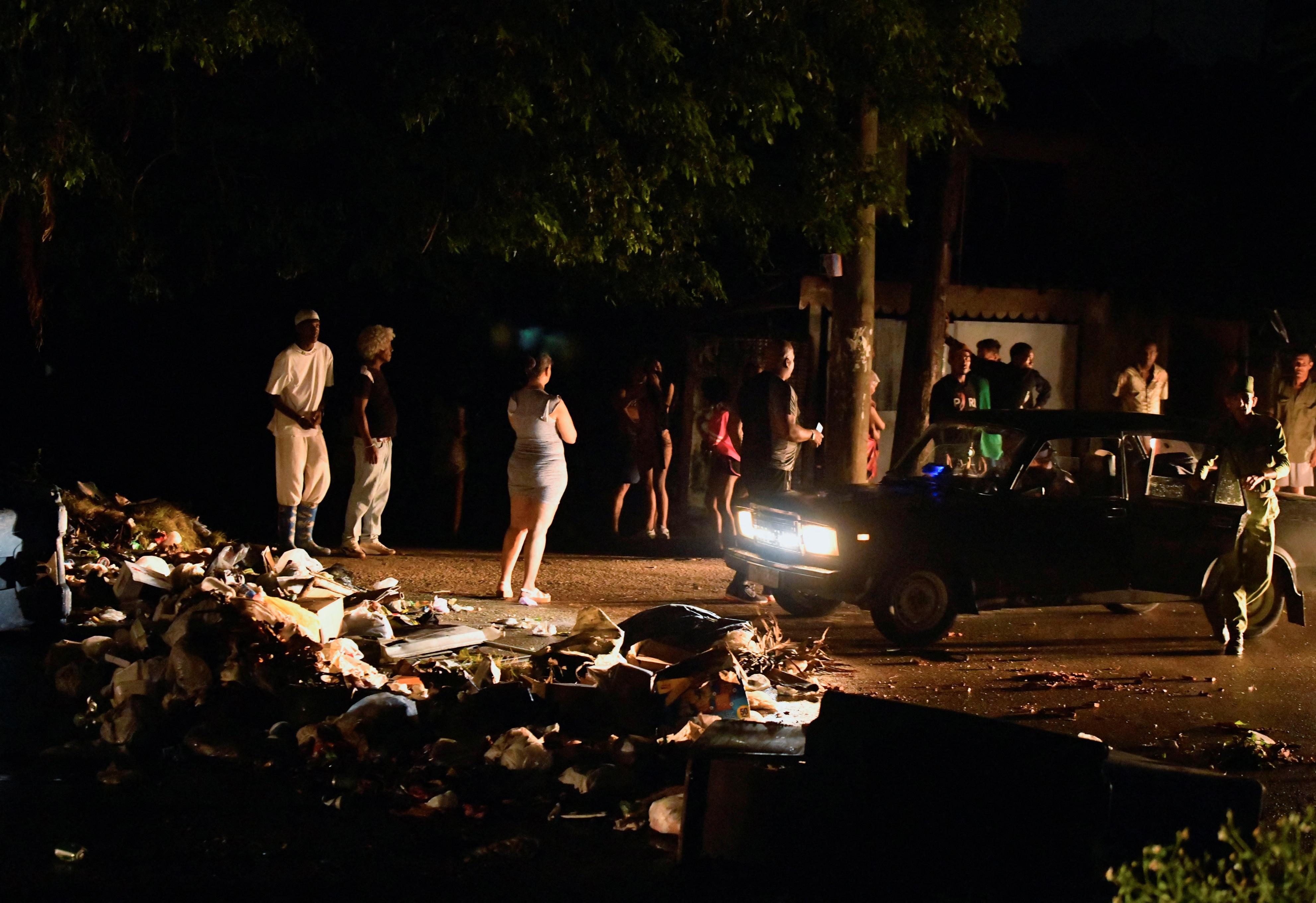
Authorities made progress on restoring power before collapse Internet traffic dropped off sharply - NetBlocks Small protests break out over outages - Reuters witnesses Tropical Storm Oscar grazes eastern end of island HAVANA, Oct 20 (Reuters) - Cuba's electrical grid collapsed again on Sunday, the fourth such failure in 48 hours, raising fresh doubts about a quick fix on an island already suffering from severe shortages of food, fuel and medicine. The blackout, after weeks of rolling outages, sparked some small protests around the Caribbean island, where a tropical storm threatened to hamper efforts to restore power. Cuba's national electrical grid first crashed around midday on Friday after the island's largest power plant shut down, sowing chaos and leaving around 10 million people in the dark. The grid has collapsed three times since, underscoring the precarious state of the country's infrastructure. The repeated failures mark a major setback in the government's efforts to quickly restore power to exhausted residents, a majority of which have already suffered from months of blackouts through the Caribbean`s sultry summer. Cuban president Miguel Diaz-Canel appeared Sunday evening on national television dressed in olive drab military attire, encouraging Cubans to air their grievances over the situation with discipline and civility. "We are not going to accept nor allow anyone to act with vandalism and much less to alter the tranquility of our people," said Diaz-Canel, who is rarely seen in uniform. The capital Havana was entirely blacked out on Sunday evening, with only scattered businesses, bars and homes running on small fuel-fired generators. Most of the city of two million was quiet. Residents played dominoes on the sidewalk, listened to music on battery-powered radios and sat on doorsteps. A heavy police presence was visible at points throughout the city. Reuters journalists witnessed several "cacerolazos" - pot-banging protests common in Latin America - in neighborhoods on the outskirts of Havana. Protesters angry over shortages of food, water and electricity blocked roads with trash heaps in San Miguel de Padron, a poor neighborhood on the outskirts of the city before being dispersed by security forces. Energy and mines minister Vicente de la O Levy said on Sunday he recognized the blackouts were bothersome to residents, but said most Cubans understood and supported government efforts to restore power. "It is Cuban culture to cooperate," O Levy told reporters on Sunday. "Those isolated and minimal incidents that do exist, we catalog them as incorrect, as indecent." Earlier on Sunday, Cuba had restored power to 160,000 clients in Havana just prior to the grid's Sunday collapse, giving some residents a glimmer of hope. The day took a turn for the worse late in the afternoon, however, when another total grid collapse forced authorities to start again from scratch, raising the specter of a several more days of widespread outages. Officials initially said power would be restored by Monday or Tuesday. It was not immediately clear how much the latest setback would delay the government's efforts. Those efforts were also hampered by Tropical Storm Oscar, which made landfall on the Caribbean island on Sunday, bringing strong winds, a powerful storm surge and rain to parts of eastern Cuba. The Communist-run government canceled school through Wednesday - a near unprecedented move in Cuba - citing the hurricane and the ongoing energy crisis. Officials said only essential workers should report to work on Monday. RISING TENSIONS Housewife Anabel Gonzalez, of old Havana, a neighborhood popular with tourists, said she was growing desperate after three days without power. "My cell phone is dead and look at my refrigerator. The little that I had has all gone to waste," she said, pointing to bare shelves in her two-room home. Others complained they had not received water since blackouts began. Internet traffic dropped off sharply in Cuba over the weekend, according to data from internet monitoring group NetBlocks, as vast power outages made it all but impossible for most island residents to charge phones and get online. The government has blamed weeks of worsening blackouts - as long as 10 to 20 hours a day across much of the island - on deteriorating infrastructure, fuel shortages and rising demand. Cuba also blames the U.S. trade embargo, as well as sanctions instituted by then-President Donald Trump, for ongoing difficulties in acquiring fuel and spare parts to operate and maintain its oil-fired plants. The U.S. has denied any role in the grid failures. Cuba depends on imports to feed its largely obsolete, oil-fired power plants. Fuel deliveries to the island have dropped significantly this year as Venezuela, Russia and Mexico, once important suppliers, have slashed their exports to Cuba. Ally Venezuela - struggling to supply its own market - cut by half its deliveries of subsidized fuel to Cuba this year, forcing the island to search for more costly oil on the spot market. Mexico, another frequent supplier, appeared also to have cut fuel flows to Cuba during a presidential election year. Recently elected President Claudia Sheinbaum has not said if the state-supported supply to Cuba will continue under same terms under her administration. Sign up here. https://www.reuters.com/world/americas/cuba-suffers-third-major-setback-restoring-power-island-millions-still-dark-2024-10-20/
2024-10-20 00:38
BELIZE CITY, Oct 19 (Reuters) - Storm Nadine weakened to a tropical depression on Saturday as it chugged across Guatemala, after dumping heavy rain and bringing strong winds to neighboring Belize and the Yucatan Peninsula in Mexico. The storm is expected to swirl across Guatemala and into Mexico's southeastern states of Chiapas and Tabasco through early Sunday, a forecast from the U.S. National Hurricane Center showed. Nadine, moving west at about 13 mph (21 kph), was blowing maximum winds that had slowed to near 35 mph (56 kph), the NHC said. In Guatemala, the nation's disaster agency released a video of a river swollen with rain, threatening to spill its banks. It recommended some residents self-evacuate, while others should reinforce their roofs, doors and windows. Earlier in the day, strong winds were blowing as far north as 195 miles from Nadine's center. The NHC's tropical storm warning had stretched from Belize City to Mexican beach resorts Cancun and Cozumel. Cancun's beaches were empty on Saturday as tourists were advised to stay indoors. The storm system is expected to dump four to eight inches (102 mm to 204 mm) of rain through Belize, Guatemala and Mexico, according to the NHC, with some isolated areas expected to receive more than 12 inches (305 mm) through Tuesday. In Belize, low-lying bridges and sections of the Coastal Highway south of Belize City were at risk of being submerged, according to the nation's principal hydrologist. Nadine began lashing the Central American nation with rains late on Friday night, with showers and thunderstorms bringing up to 2 inches (51 mm) of rain, Belize's chief meteorologist Ronald Gordon told Reuters. Popular tourist destinations off mainland Belize - including San Pedro, Ambergris Caye and Caye Caulker - were also likely facing storm damage. Nadine will likely continue to weaken through Saturday and should dissipate over southern Mexico on Sunday, the NHC said. Sign up here. https://www.reuters.com/business/environment/tropical-storm-nadine-expected-make-landfall-belize-nhc-says-2024-10-19/
2024-10-19 20:51
Authorities made progress on restoring power before collapse Internet traffic dropped off sharply - NetBlocks Small protests break out over outages - Reuters witnesses HAVANA, Oct 20 (Reuters) - Cuba's efforts to restore power to the island were derailed for a third time late on Saturday, Cuban authorities said shortly before midnight, leaving millions in the dark and raising fresh questions over the viability of the government's bid to reestablish electrical service. Cuba's national electrical grid first crashed around midday on Friday after the island's largest power plant shut down. The grid collapsed again on Saturday morning, state-run media reported. By early evening, authorities reported some progress restoring power before announcing the grid had once again collapsed. "Tonight at 10:25 p.m. the total disconnection of the national electro-energetic system occurred again," the Havana Electric company said on Telegram late on Saturday. The post was later removed from the company's Telegram feed. It was not immediately clear why the post was removed, but millions were still without power on early on Sunday. Cuba's energy ministry said shortly after the Havana Electric post that it was working to reestablish service, adding that "another disconnection" had occurred in the "western sub-system," which includes the capital Havana. "The process of reestablishing the electrical system continues to be complex," the ministry said on X. A third grid collapse marks a major setback in the government's efforts to quickly restore power to exhausted residents already suffering from severe food, medicine and fuel shortages. Reuters reporters witnessed two small protests overnight, one in Marianao and the other in the Cuatro Caminos area of Havana. Various videos of protests elsewhere in the capital began to crop up on social media late on Saturday, though Reuters was not able to verify their authenticity. Internet traffic dropped off sharply in Cuba on Saturday, according to data from internet monitoring group NetBlocks, as vast power outages made it all but impossible for most island residents to charge phones and get online. "Network data show that Cuba remains largely offline as the island experiences a second nationwide power outage," Netblocks said on Saturday. Even before the grid failures, a dire electricity shortfall on Friday had forced Cuba's Communist-run government to send non-essential state workers home and cancel school for children as it sought to conserve fuel for power generation. The government has blamed weeks of worsening blackouts - as long as 10 to 20 hours a day across much of the island - on deteriorating infrastructure, fuel shortages and rising demand. Cuba also blames the U.S. trade embargo, as well as sanctions instituted by then-President Donald Trump, for ongoing difficulties in acquiring fuel and spare parts to operate and maintain its oil-fired plants. The U.S. has denied any role in the grid failures. Sign up here. https://www.reuters.com/world/americas/cubas-electrical-grid-collapses-second-time-entire-country-again-without-power-2024-10-19/