2025-12-19 15:04
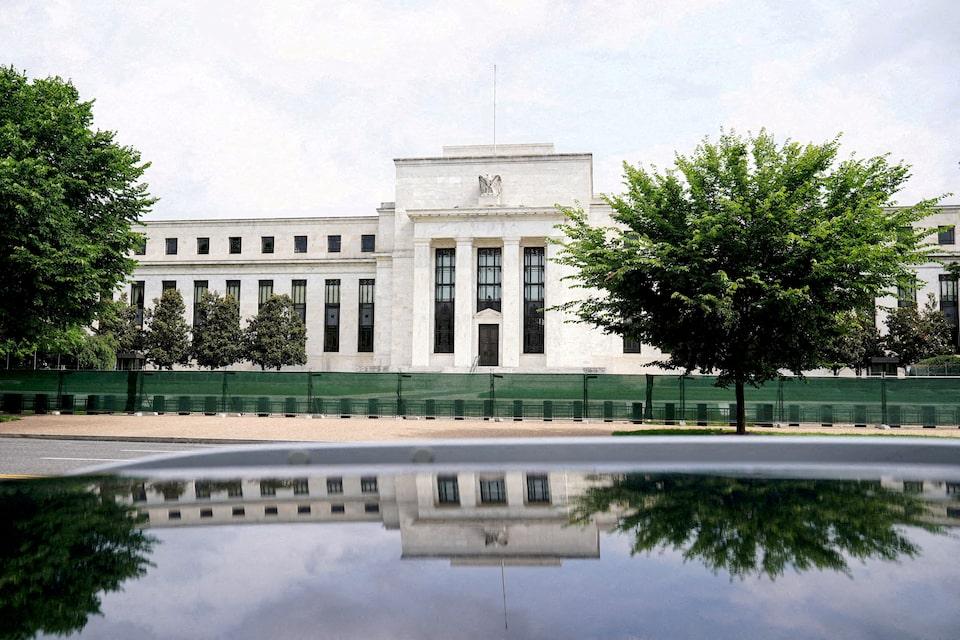
WASHINGTON, Dec 19 (Reuters) - The U.S. Federal Reserve announced Friday it was seeking feedback on establishing limited "payment accounts" for some financial firms, that would grant access to Fed payments services for clearing and settling payments, but without the broader set of benefits currently provided to banks. Fed Governor Christopher Waller said such accounts could "support innovation" while protecting the payments system. Such accounts, if established, would be distinct from Fed master accounts, and would not pay interest or provide access to Fed credit. Such accounts would also be subject to balance caps. Waller first floated the idea of such accounts in October, as the central bank searches for a balance that could provide broader access to Fed payment services to firms like fintechs, without granting full master accounts to less intensely regulated institutions. Sign up here. https://www.reuters.com/sustainability/boards-policy-regulation/fed-seeks-feedback-limited-payment-accounts-some-firms-2025-12-19/
2025-12-19 12:56
Dec 19 (Reuters) - Union Pacific (UNP.N) , opens new tab and Norfolk Southern (NSC.N) , opens new tab on Friday filed an application with the U.S. transport regulator to review their $85 billion proposed merger, which would create the nation's first coast-to-coast freight railroad. The merger, announced in July, is set to face intense scrutiny from the Surface Transportation Board and the process could take about 12 to 18 months. Sign up here. The companies are targeting an early-2027 close. The board, created in 1996, rarely rejects mergers outright. However, in 2021 it rejected Canadian National's (CNR.TO) , opens new tab plan to place Kansas City Southern in a temporary "voting trust" that would have allowed Kansas City Southern shareholders to receive the deal's consideration without having to wait for full regulatory approval. The proposed merger, which allows for faster shipping by cutting handoffs and delays, has faced criticism from unions, lawmakers, and rival railroads since its announcement. The two companies received shareholder approval in November. https://www.reuters.com/sustainability/boards-policy-regulation/union-pacific-norfolk-submit-papers-regulatory-review-85-billion-merger-2025-12-19/
2025-12-19 12:37
PARIS, Dec 19 (Reuters) - The French government on Friday called for a Christmas truce with protesting farmers, warning against further blockades during the holiday season, a move the country's main union said depended on the prime minister's response to their demands. Farmers have been blocking roads, dumping manure and holding demonstrations in France for over a week to protest against the government's management of cattle lumpy skin disease and a trade deal with the South American bloc Mercosur. Sign up here. Farmers gathered with tractors early on Friday in front of President Emmanuel Macron's residence in the seaside resort of Le Touquet in northern France, placing a coffin labelled "RIP Agri" and "NO Mercosur". Meanwhile, in the southern town of Avignon, farmers threw potatoes at public buildings. Protesters argue that the government's policy of culling an entire herd when lumpy skin disease is detected is excessive and cruel. They also claim the EU-Mercosur deal whose signing has been postponed to January would allow massive imports of products not meeting French standards. Prime Minister Sebastien Lecornu is holding meetings with the main farm unions. The head of the FNSEA, the country's largest, said Lecornu committed to sending a letter by evening with answers to a range of agricultural issues. "This letter will be decisive," FNSEA Chairman Arnaud Rousseau told reporters, adding that the union would then make a decision on whether to suspend the protests. Government spokesperson Maud Bregeon said on RTL radio that the government would no longer tolerate further blockades and would do "everything necessary" to avoid them. Young Farmers union President Pierrick Horel said it would observe a Christmas truce. However, it was still unclear if unions Coordination rurale and the Confederation Paysanne, which have led the blockades, would call off protests. Agriculture Minister Annie Genevard was due to travel to a farm near Paris later in the day. https://www.reuters.com/world/french-government-calls-christmas-truce-farmer-protests-2025-12-19/

2025-12-19 12:35
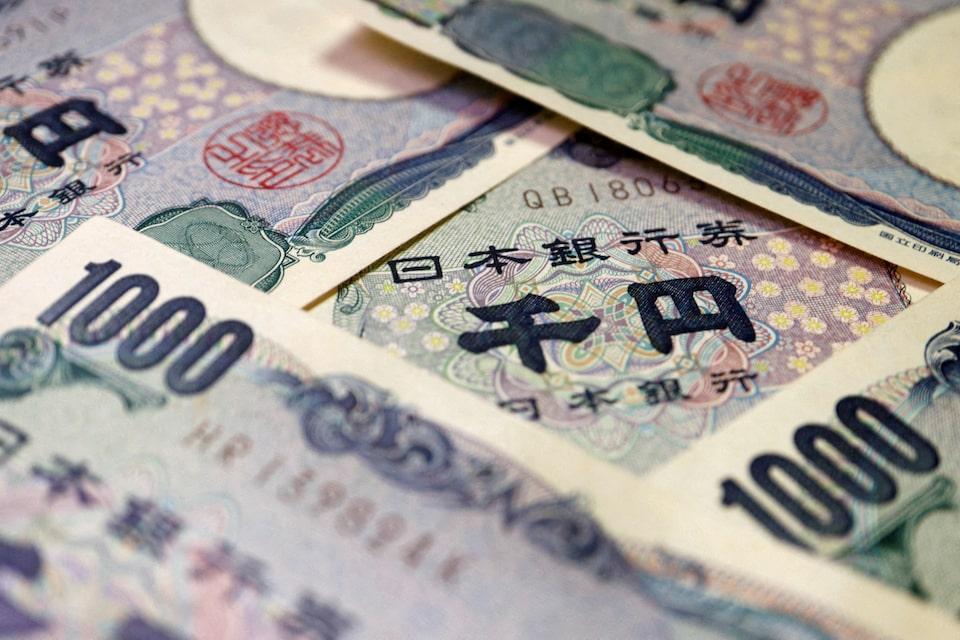
Investors see BOJ taking further hikes slowly Yen slides past 157 per dollar Euro/yen, Aussie/yen favoured carry bets SINGAPORE, Dec 19 (Reuters) - A vague outlook from Bank of Japan Governor Kazuo Ueda on Friday has given investors the nerve to add to their bets against the yen, which could soon put Japan's currency back at uncomfortably low levels for a government concerned it may already be too cheap. These bets are particularly concentrated in euros and Australian dollars, dealers said, and grew after a well-telegraphed hike came with little sense of urgency to raise rates further. Sign up here. After the Bank of Japan took its benchmark rate to a three-decade high of 0.75% earlier in the day, Ueda told reporters future decisions would be data-dependent and made on a meeting-by-meeting basis, and he offered no new details about where Japan's neutral rate may lie. That left investors feeling relaxed about so-called "carry" positions, where they borrow yen cheaply and sell it to pay for income-earning assets elsewhere. It's a potential headache for policymakers and Prime Minister Sanae Takaichi because a falling currency raises the local prices of sensitive imports like energy and food, and it comes as concerns swirl over Japanese assets due to worries about the government's plans to borrow and spend. The yen fell around 1% to 157 per dollar in the London session and skidded to a record low at 183.99 per euro , despite yields in Japan rising to new highs. "While the market acknowledges more hikes could come, it's not fully buying into a fast or aggressive path," said Tareck Horchani, head of prime brokerage dealing at Maybank Securities in Singapore. He said that shorting the yen against crosses avoids "getting tangled in USD dynamics" and that the Aussie and South African rand offer attractive carry while the euro play is about policy divergence as Japan is only raising rates slowly. Japan's last rate hike was in January and, according to LSEG data, the next move is not fully priced in by traders until November 2026. Data on speculative dollar/yen positioning was delayed by the U.S. government shutdown - and is still a little stale - but shows that a record long yen position amassed in April had collapsed by early December to reasonably close to neutral. Bart Wakabayashi, branch manager at State Street in Tokyo, said clients were choosing to take yen views in other currencies, with overweight positions in Aussie/yen and euro/yen near their biggest in five years. "I think that the yen will remain under pressure," he said. CARRY ON Friday's selling has the yen right back where it started the year and in a zone where domestic companies and Japan's government have been uncomfortable. Last month Finance Minister Satsuki Katayama said the negative effects of yen weakness had started to become more pronounced than the positives, and as the dollar exchange rate neared 158 yen officials have repeatedly warned of possible intervention. A Tokyo Shoko Research poll published a week ago that surveyed more than 6,000 Japanese companies found that 41.3% felt the yen was too cheap and that domestic firms were looking for a rate around 133.5 per the dollar, roughly 18% stronger than current levels. Turning around a currency that has been sliding fairly relentlessly for five years is also likely to be a task beyond just the central bank, strategists said. "The weak yen is more of a delayed effect of the over-easing of the last 10 years, before Ueda stepped in, and it's really hard for Ueda to crack that just by a few hikes," said Naka Matsuzawa, Japan macro strategist at Nomura in Tokyo. "We need more messages coming from Takaichi or the government side," he said, on structural reform, deregulation and measures to drive growth and inbound investment. To be sure, in the near term the finance ministry can sell dollars to stop yen falls and scare off speculators, but many analysts don't see that as a durable strategy - especially if the shift in tone that preceded the hike hasn't boosted the yen. "I don't really see a lot of signal or a continuation of hawkishness or hawkish skew towards future hikes," said Peiqian Liu, Asia economist at Fidelity International in Singapore. As one trading head from a large bank put it, the lack of any surprises on Friday was encouraging for carry traders: "For those who already have carry positions, they can get relaxed and go on holidays." https://www.reuters.com/world/asia-pacific/yen-bears-emboldened-by-no-surprises-boj-2025-12-19/
2025-12-19 12:31
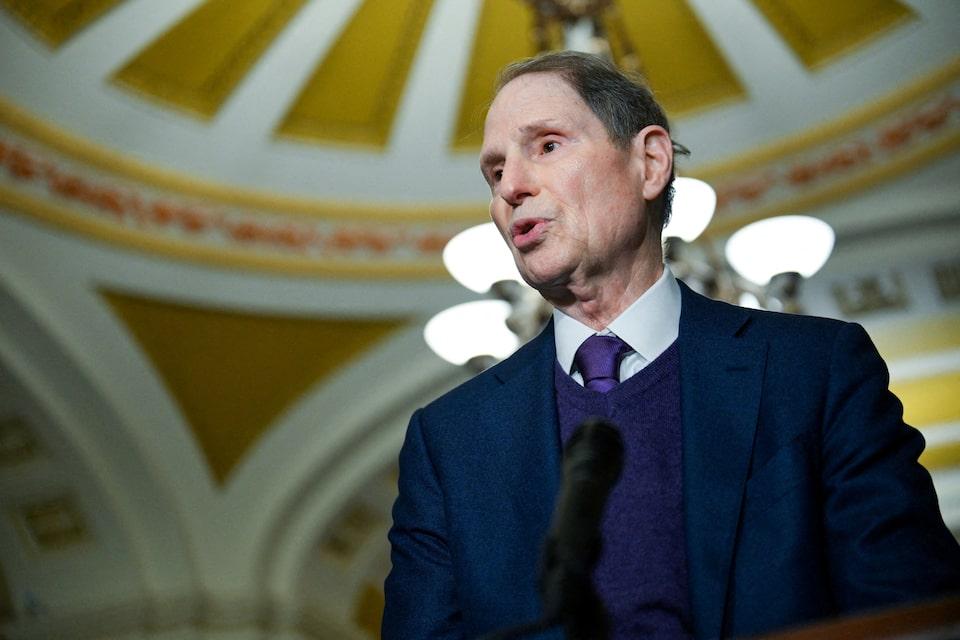
Dec 19 (Reuters) - U.S. Senator Ron Wyden has contacted seven maritime shipping companies as part of an inquiry into cartel-linked fuel smuggling between the United States and Mexico, asking the firms to explain their vetting procedures for ensuring their tankers aren't used to transport illicit hydrocarbons, according to copies of the letters seen by Reuters. The letters from Wyden, who is the most senior Democratic member of the Senate Finance Committee, were dated Friday. They come as stolen crude and bootleg fuel have become the second-largest revenue source for Mexican cartels after drugs, according to the U.S. Treasury. Sign up here. Narcos have done it by embedding themselves inside North America's vast energy sector and mastering the logistics of moving petroleum products by truck, rail and most recently tankers. It's an audacious display of ingenuity by Mexico's cartels, which have enlisted a variety of legitimate oil industry players to help them procure and transport the products, some unwittingly, others actively participating, law enforcement sources say. "I want to be sure both shipping companies and the U.S. government are doing everything in their power to shut off this revenue stream," Wyden, the senior senator from Oregon, told Reuters by email. "These letters are the first step in my effort to learn more about how these criminal networks operate, and where existing controls are failing." Wyden's letters referenced a Reuters investigation which pieced together how the alleged scheme works and how it exploits loopholes in the vast and complex U.S. energy sector, touching a host of entities including oil majors, shipping companies and government agencies. The letters were sent to seven of the biggest players in the global oil tanker business: Torm, International Seaways, Norden, CMB.Tech, Frontline, Teekay and Scorpio. Wyden has requested detailed information by Jan. 10, 2026, about the due diligence each company conducts "to ensure its oil tankers are not utilized to transport illicit fuel," the letter said. None of the firms has been charged with wrongdoing. Torm was the manager of two vessels that were allegedly used for oil smuggling earlier this year, according to the October 22 Reuters investigation, which cited documents and security sources. CMB.Tech said it practices due diligence, follows know-your-customer standards and complies with all applicable regulations. The Belgium-based company said it would be responding to Wyden's questions. Norden confirmed receipt of Wyden's letter and said its sea carriages are performed in compliance with applicable laws. The other companies did not immediately respond to requests for comment regarding Wyden's inquiry. Mexican cartels have increasingly muscled their way into the multi-billion dollar trade of smuggling fuel from the United States to Mexico, the news agency found. The scheme largely boils down to a lucrative tax dodge. Mexico slaps a levy known as IEPS on a wide variety of goods, including imported diesel and gasoline. Crooks evade the tax, charged by the liter and often costing upwards of 50% of the cargo's value, by declaring the foreign fuel to be some other type of petroleum product that's exempt from the duty. A single tanker load can save millions of dollars in taxes, a Reuters calculation based on the tax rate and volumes typically carried by these vessels showed. The Jalisco New Generation Cartel, one of Mexico's most powerful and violent cartels, is the unquestioned leader in fuel and crude oil smuggling and the only cartel using tankers, according to Mexican and U.S. security sources. Fuel smuggling has grown so fast that bootleg imports now account for as much as one-third of Mexico's diesel and gasoline market, swiping profits from some of the biggest names in the oil industry, five current and former Mexican government sources told Reuters earlier this year. Illegal fuel entering the country is now valued at more than $20 billion a year, according to one of the people who helped Mexico's treasury calculate the size of the illicit trade. "The scope of these illicit fuel smuggling operations is staggering," Wyden wrote in the letters. "Cracking down on this illicit industry is critical to blunt cartels' ability to manufacture and distribute fentanyl, cocaine, and other deadly drugs in the United States, and the international shipping industry must play its part to end this lawless practice." https://www.reuters.com/business/energy/us-senator-presses-tanker-giants-over-cartel-linked-fuel-smuggling-sea-2025-12-19/
2025-12-19 12:12
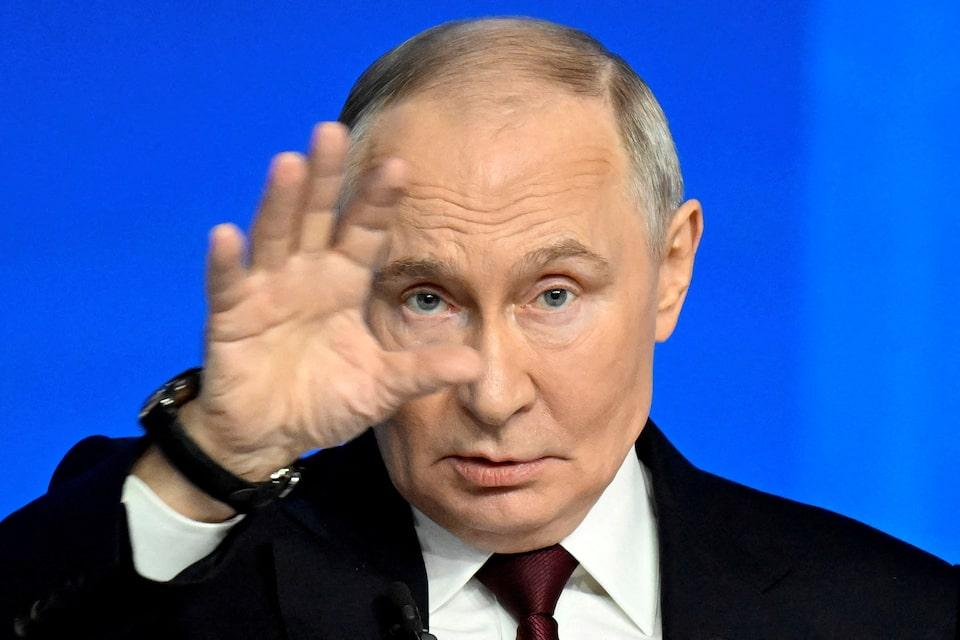
Dec 19 (Reuters) - Sarcastic messages briefly flashed up on a big screen in the hall where Russian President Vladimir Putin was holding his annual press conference and "direct line" phone-in on Friday. "Not a direct line, but a circus," said one such comment. Sign up here. Another, using Putin's first name and patronymic, read: "Vladimir Vladimirovich, it's Friday already, can we break out the booze?" The rogue comments appeared on screens showing incoming text messages intended for Putin at the marathon annual event, for which ordinary Russians are encouraged to submit questions. The Kremlin did not immediately comment on their appearance at what is a meticulously planned and choreographed press conference watched by millions of Russians. Putin did not refer to them. One message, alluding to the state of Russia's economy, asked why ordinary Russians were worse off than people in Papua New Guinea. Another, referring to Putin's governing United Russia party, said: "Looking at life in the country, it is strange that (it) wins a majority in elections! Maybe elections are a fiction?" https://www.reuters.com/world/sarcastic-messages-flash-up-big-screen-russias-putin-speaks-2025-12-19/