2024-10-18 11:32
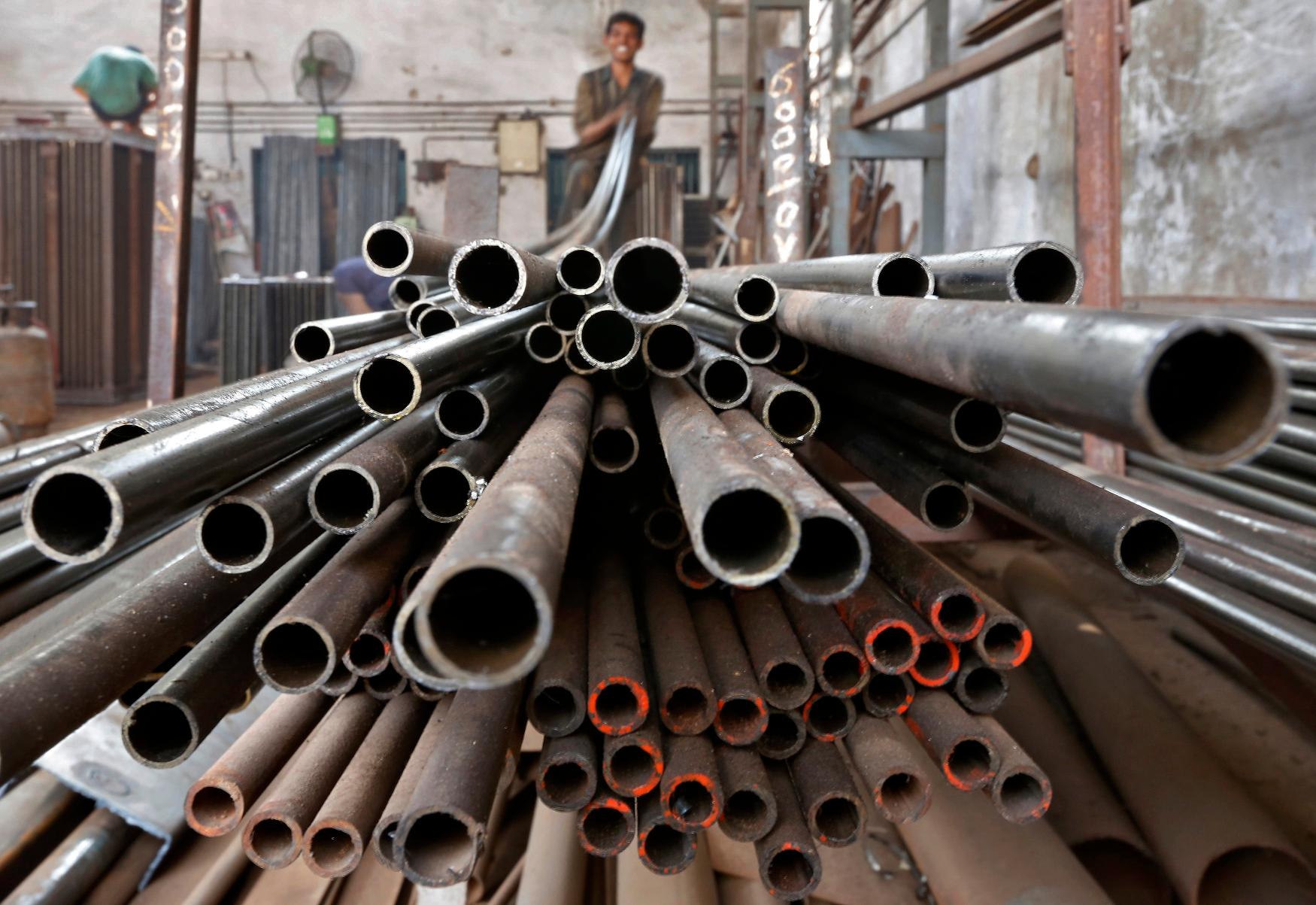
NEW DELHI, Oct 18 (Reuters) - India's steel ministry favours a temporary tax to curb rising steel imports, a senior official with direct knowledge of the matter said, as it seeks to protect steelmakers reeling from a surge in cheaper Chinese imports. A temporary "safeguard duty" would help curb Chinese imports, and a process to impose the duty would start soon, said the official, who requested anonymity as the deliberations are not public. India, the world's second-biggest crude steel producer, became a net importer of the alloy in the fiscal year to March 31, 2024, and the trend has continued since then, with imports from China rising steadily. India's finished steel imports from China, the world's biggest steel producer, reached a seven-year high during April-August. Prime Minister Narendra Modi's government has so far resisted calls to curb imports from China, partly to ensure sufficient supplies to meet strong demand in the world's fastest-growing major economy. But the authorities now believe the government needs to impose curbs to avoid a crash in local prices and any major financial harm to steel producers, the official said. India's top steel producers such as JSW Steel (JSTL.NS) , opens new tab, Tata Steel (TISC.NS) , opens new tab and ArcelorMittal Nippon Steel India have raised concerns about cheaper steel imports from China. Rapid economic growth and higher infrastructure spending have turned India into the world's biggest steel consumer as demand tapers in Europe and the United States. Indian steel companies need to be financially healthy to invest and boost capacity to meet future demand, the official said. India's steel ministry did not respond to a Reuters email seeking comment. Ruling out the option of raising basic import or customs duty, the official said the move would not cover two-thirds of India's overall steel imports from Japan and South Korea because of New Delhi's free trade agreements with Tokyo and Seoul. And he ruled out anti-dumping investigations against China because they would take about one to two years. "The quickest, effective way is a safeguard duty," the official said. A safeguard duty is a temporary tariff to protect local industries from cheaper imports. The steel industry will write to the commerce ministry and safeguard measures could be in place in four to six months, he said. India would also tweak its quality standards to curb Chinese steel imports, the official said. China has a lot of surplus steel capacity. Beijing's crude steel output in September slid for a fourth consecutive month. Separately, the official said the steel ministry has rejected an industry request to curb exports of low-grade iron ore, a key steelmaking ingredient, citing adequate stocks. Sign up here. https://www.reuters.com/markets/commodities/indias-steel-ministry-favours-temporary-tax-check-imports-source-says-2024-10-18/
2024-10-18 11:31
Grid collapse follows previous day's outage, affecting over 10 million people Government blames blackouts on infrastructure, fuel shortages, and rising demand US trade embargo and sanctions cited as factors in fuel and parts shortages HAVANA, Oct 19 (Reuters) - Cuba's government said late on Saturday it had restored power to nearly one-fifth of the island's people after the national grid collapsed twice in 24 hours, plunging millions of people into darkness. The unprecedented nationwide blackout is the latest blow in the nation of 10 million, already suffering from dramatic shortages of food, medicine and fuel. Cuba's top electricity official, Lazaro Guerra, said the grid operator was working to restore electricity but that the process would be slow and rushing the job could lead to more blackouts and a deterioration of service. "I cannot assure you that we will be able to complete linking the system today, but we are estimating that there should be important progress today," Guerra said on a TV newscast earlier in the day. The capital Havana was still largely in the dark on Saturday evening. Strong winds and rain began to buffet much of the Caribbean island ahead of the arrival of Hurricane Oscar, which was expected to graze northeastern Cuba in the coming days. The hurricane caps a dramatic series of events in Cuba over several days that has raised tensions among the island's already exhausted residents. Cuba's electrical grid first failed around midday on Friday after one of the island's largest power plants shut down. The grid collapsed again on Saturday morning, state-run media reported. Even before the two grid failures, a dire electricity shortfall on Friday had forced Cuba's Communist-run government to send non-essential state workers home and cancel school for children as it sought to conserve fuel for power generation. The government has blamed weeks of worsening blackouts - as long as 10 to 20 hours a day across much of the island - on deteriorating infrastructure, fuel shortages and rising demand. Strong winds that began with Hurricane Milton last week had also complicated Cuba's ability to deliver scarce fuel from boats offshore to feed its power plants, officials have said. Cuba also blames the U.S. trade embargo, as well as sanctions instituted by then-President Donald Trump, for ongoing difficulties in acquiring fuel and spare parts to operate and maintain its oil-fired plants. "There are those who sing victory and join the ambition of seeing Cuba on its knees with the interruption of the electrical system," said Vice Foreign Minister Carlos Fernandez de Cossio on X on Saturday. "They support the ruthless U.S. aggression," he posted. "We respond with the talent and commitment of our (grid) workers and executives." FUEL WOES The United States on Friday denied any role in Cuba's grid collapse. "As we have seen over the past few years, Cuba's economic conditions, stemming from long-term mismanagement of its economic policy and resources, have increased hardships on the Cuban people," a State Department official said. "The United States obviously is not to blame for today's blackout on the island, or the overall energy situation in Cuba." Cuban officials have said even if the immediate grid collapse is resolved, the electricity crisis will continue. Cuba produces little of its own crude oil, and fuel deliveries to the island have dropped significantly this year, as Venezuela, Russia and Mexico, once important suppliers, have reduced their exports to Cuba. Ally Venezuela slashed by half its deliveries of subsidized fuel to Cuba this year, forcing the island to search for more costly oil on the spot market. Some Cubans, accustomed to hardship, said they were coping. Rene Duarte, 60, strolled through Old Havana on a rainy Saturday morning to get fresh air, he said, after a night of little sleep, a result of the muggy weather. "We're used to taking everything in stride, because we have no other choice," he said. Later on Saturday, Havana remained largely quiet. Reuters observed a small group of people banging pots and blockading a road in Marianao on the outskirts of the capital. The protesters scattered when police arrived. Following Hurricane Ian in September 2022, Cuba's grid collapsed, leaving the entire country without power for several days. Authorities eventually re-established service, but not before protests broke out in various cities, including Havana. Sign up here. https://www.reuters.com/world/americas/cuba-implements-emergency-measures-millions-go-without-electricity-2024-10-18/

2024-10-18 11:03
BARCELONA, Oct 18 (Reuters) - As New Zealand and Britain set out to sea for their latest America's Cup head-to-head, both crews will be scanning the surface for wind shifts to gain an edge in the tricky Mediterranean conditions off Barcelona. Back ashore, viewers are able to track the breeze on screen thanks to a software developed by one of the America's Cup sponsors to try to attract a wider audience. This "visualisation of the wind" also links up with a race boat simulator to include a "ghost boat" showing which team is likely to gain an upper hand, giving commentators a crucial advantage over the two teams vying to win the "Auld Mug". Although their state-of-the-art AC75 boats have every type of electronic gizmo giving them their speed, direction and "flying" height on their foils above the water, the one thing the crews are not allowed on board is live weather data. The wind "Lidar" system IT company Capgemini has set up in Barcelona uses pulses of light which reflect back off particles in the air, enabling them to calculate speed and direction. "Each of the Lidars that we've got emits 10,000 pulses per second. We've got three of these machines, so we're effectively pulsing the Barcelona bay with 30,000 beams every second," said Keith Williams, Capgemini's chief engineer for WindSight IQ. The beams are "completely eye safe", Williams added of the equipment, which he said is often used for planning wind farms or to detect significant wind shear at the end of a runway. "We're effectively putting just under a quarter of a million wind sensors on the course," Williams, who is a keen sailor, told Reuters, adding that the system uses an algorithm to give an accurate representation of the wind field in real time. The big question is: are the crews getting it right? "Quite often we look at it and say: 'that was not the right call'," Williams said of being able to watch the tactics as the races unfold and the wind patterns develop. "For people who are not familiar with the sport, understanding what the wind is like on the course, that makes a big difference," Williams said, adding that the application could be used by almost any sport where wind is a factor. "I think you've got applications both in the broadcast of sport, but also in the R&D (research and development) inside sport," he said, naming American Football, Formula One, golf, rugby and even ski-jumping as some sports where the technology could be used. Other potential applications include air taxis in built-up urban areas and tackling wild fires, he said. Sign up here. https://www.reuters.com/sports/americas-cup-viewers-get-see-wind-shifts-before-crews-2024-10-18/

2024-10-18 10:57
LONDON, Oct 18 (Reuters) - The pound rallied by as much as 0.5% on Friday, after data showed UK consumer spending was surprisingly strong last month, offering some reassurance about the strength of the economy, although the currency was still set for its third weekly drop. British retail sales unexpectedly rose in September, according to official data which contradicted signs that consumers were downbeat about possible tax rises ahead of the new government's first budget later this month. Sales volumes increased by 0.3% in September, beating economists' expectations for a monthly 0.3% fall. "Coming out of a period where elevated inflation led consumers to spend more but receive less, we are thankfully back on a path of seeing higher spending met with higher volumes of goods received," Scope Markets strategist Joshua Mahony said. "With markets still making up their mind over the likeliness of a rate cut at both November and December BoE meetings, improved spending metrics could see dovish expectations fade somewhat," he said. The data showed that, combined with stronger gains in July and August, sales rose by 1.9% rise in the third quarter, the joint largest increase since mid-2021. Sterling , which rose to a session high of $1.307 earlier in the day, was last up 0.2% at $1.3037. Against the euro , the pound was up 0.1% at 86.615 pence. It was still heading for a third weekly drop against the dollar, which has rallied over the last few weeks, as investors have grown increasingly convinced the U.S. economy is holding up well and will not need more large rate cuts to support it. The Federal Reserve delivered a jumbo 50-basis point cut in September, but signalled no alarm about the outlook for growth, which prompted traders to reduce their bets on another similar move any time soon. Meanwhile, the Bank of England is expected to cut UK rates at least once more this year, almost certainly in November but with a possibility of a further cut in December. But given that inflation has proven more stubborn in Britain than in the United States, particularly in the services sector, and economic activity is not dropping off dramatically, the BoE is likely to be more cautious when it comes to lowering borrowing costs. As such, the pound has been the best-performing major currency against the dollar so far this year, with a 2.45% gain, compared with a near-1.8% loss in the euro , or a decline of over 6% in the Japanese yen . Sign up here. https://www.reuters.com/markets/currencies/pound-gets-boost-uk-consumer-spending-2024-10-18/

2024-10-18 10:12
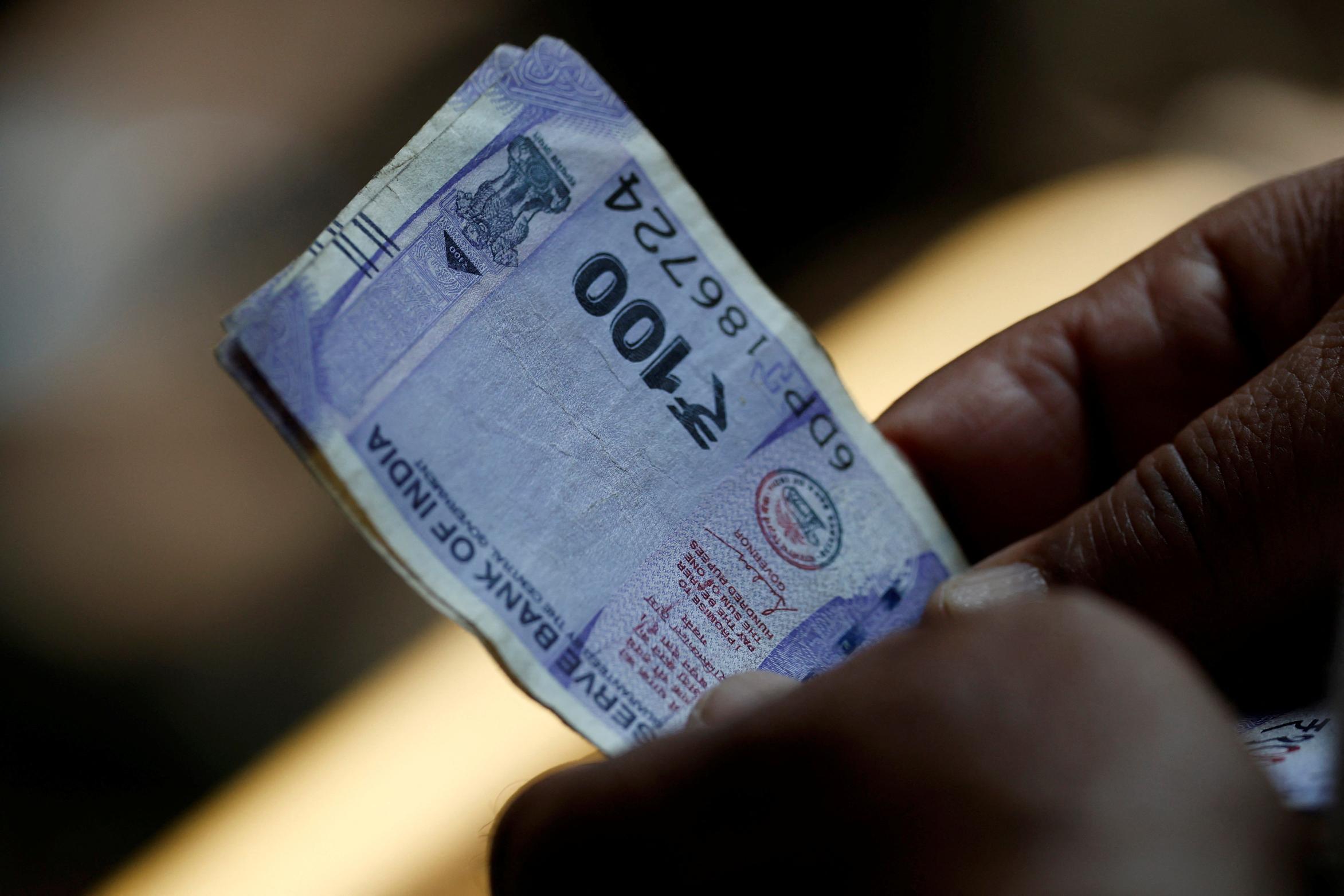
MUMBAI, Oct 18 (Reuters) - The Indian rupee hit its all-time low on Friday pressured by equity outflows but managed to avert a sharp fall on account of sustained dollar sales from state-run banks, most likely on behalf of the Reserve Bank of India. The rupee closed at 84.0650 against the U.S. dollar, barely changed from its close of 84.0675 in the previous session. It hit a record low of 84.0775 earlier in the session, inching past its previous all-time low of 84.0750 hit on Monday. While Asian currencies rose on Friday, the rupee was unable to benefit from the positive cue in face of dollar bids from foreign banks and local oil companies, traders said. Foreign investors have pulled out $8.4 billion so far this month from local stocks on a net basis, surpassing the previous record monthly outflow of $8.35 billion, recorded in March 2020. However, foreigners' holding of Indian stocks has also ballooned over the last four years, with equities held by overseas investors having risen to more than $1 trillion at the end of last month. Benchmark Indian equity indices ended the day in the green but notched their third weekly decline on the trot and are down more than 5% from their record highs hit in the last week of September. The dollar index, meanwhile, dipped to 103.7 after hitting an 11-week high on Thursday, boosted by resilient U.S. economic data and growing odds of a Donald Trump victory in the upcoming U.S. presidential election. "Unless markets regain some confidence in Fed cuts, the dollar will hardly face downward corrections in the near term," ING Bank said in a note. Interest rate futures are currently pricing in 44 basis points worth of rate cuts across the Federal Reserve's two remaining policy meetings in 2024. Sign up here. https://www.reuters.com/markets/currencies/rupee-slips-record-low-cenbank-intervention-thwarts-sharp-fall-2024-10-18/
2024-10-18 10:07
A look at the day ahead in U.S. and global markets by Harry Robertson From U.S. small-cap stocks to bitcoin to the dollar, some investors are seeking out assets that can prosper under a second Donald Trump presidency. The former president has taken the lead over Vice President Kamala Harris in betting markets, although Harris held a marginal lead in a Reuters/Ipsos poll this week. So-called Trump trades focus on those parts of the global economy likely to feel the force of tariff hikes, deregulation, and bigger deficits. The Mexican peso , for example, is down 4% from its September high as investors fret about tariffs. Shares in Trump Media & Technology Group (DJT.O) , opens new tab are up more than 140% since Sept. 23. Some analysts see the Trump effect in the recent rise in bond yields and the dollar. The difficulty is separating politics from economics. Data on Thursday showed U.S. retail sales increased 0.4% in September, more than anticipated, while weekly jobless claims fell unexpectedly. Treasury yields rose as investors slightly moderated their bets on further Federal Reserve rate cuts, boosting the dollar . The figures bolstered hopes of a "soft landing" for the U.S. economy, helping the Dow Jones (.DJI) , opens new tab index hit a record high and keeping the S&P 500 (.SPX) , opens new tab near a record too. S&P 500 futures were higher on Friday, while European stocks (.STOXX) , opens new tab climbed - tech companies in particular. Netflix (NFLX.O) , opens new tab added to a broadly upbeat start to the third-quarter earnings season on Thursday, topping subscriber targets. Oil prices held steady on Friday even after Hezbollah said it would escalate its conflict with Israel following the killing of Hamas leader Yahya Sinwar. CHINESE GROWTH SLOWS While the U.S. economy hums, China's sputters, at least by its standards. Data on Friday showed China's economy grew at the slowest pace since early 2023 in the third quarter. It expanded 4.6% in July-September, above a 4.5% forecast in a Reuters poll but below the 4.7% pace in the second quarter. Industrial output and retail sales rose and beat expectations, but the property sector remained mired in a downturn. Chinese stocks (.CSI300) , opens new tab jumped 3.6%, however, as investors were focused on the start of two of Beijing's stimulus measures that will initially pump as much as 800 billion yuan ($112.38 billion) into the equity market. Europe has been feeling the effects of China's slowdown, with weakness in Germany one of the factors pushing the European Central Bank to cut interest rates by 25 basis points to 3.25% on Thursday. The gap between U.S. and euro zone benchmark German bond yields jumped to its highest since late June as investors moved to price in more ECB cuts. Key developments that should provide more direction to U.S. markets later on Friday: * U.S. earnings include American Express and Procter & Gamble * U.S. housing starts and building permits data * Fed officials Raphael Bostic and Christopher Waller are due to speak, while Neel Kashkari moderates a panel Sign up here. https://www.reuters.com/markets/us/global-markets-view-usa-2024-10-18/