2024-10-18 06:09
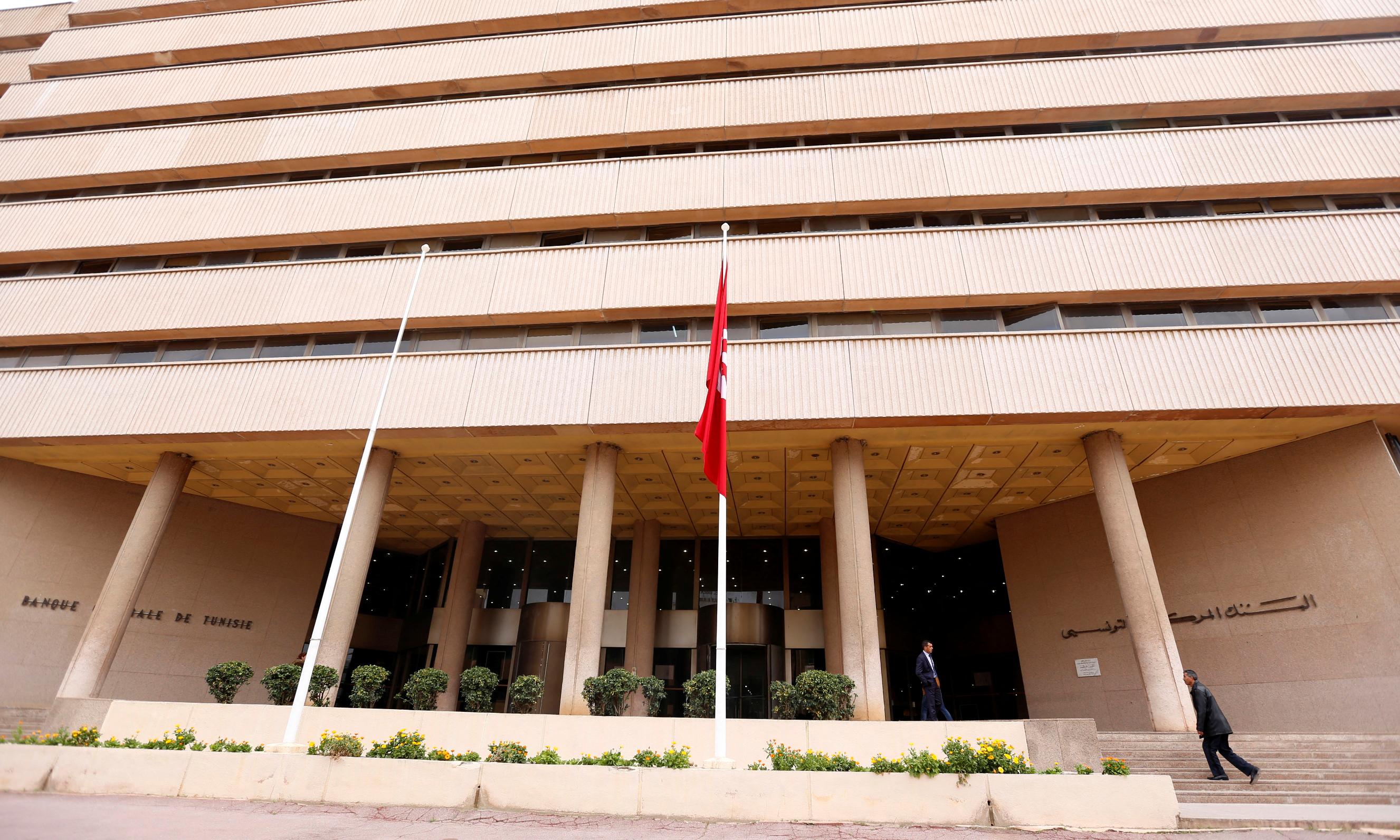
TUNIS, Oct 18 (Reuters) - Tunisia's central bank will no longer have the exclusive power to adjust interest rates or foreign exchange policy, and must only take such action in consultation with the government, but it will be allowed to finance the treasury, a bill proposed by lawmakers showed on Friday. The step is the latest move that will completely undermine the central bank's independence after continuous criticism by President Kais Saied, who has said that the bank should not be a state within a state. The potential major change in the central bank law comes as public finances face a severe crisis. The country has been unable to secure Western funding since Saied seized nearly all power in 2021, ruling by decree, in a move the opposition has called a coup. Twenty-seven lawmakers warned that Tunisia would inevitably go bankrupt if the bank law was not changed. They said that the current law, adopted in 2016, which does not allow the central bank to make loans to the public treasury or direct bond purchases, has led to huge losses for the state estimated at $36.6 billion. The bill also proposes that the bank will not be allowed to sign agreements with foreign oversight authorities without the president’s approval. Saied rejected last year the independence of the central bank, saying it should lend directly to the state treasury to avoid costly loans through banks. In January, the government asked the central bank to provide $2.25 billion of direct funding to the treasury to fill a budget deficit. Former central bank governor Marouan Abassi has warned that buying treasury bonds had risks, including upward pressure on inflation, and a drop in the value of Tunisia's currency. Earlier this year, Saied replaced Abassi with Zouhair Nouri. Since 2016, the central bank has had absolute power to control monetary policy, reserves and gold. But the proposed bill showed that the central bank could adjust interest rates, operations related to gold and exchange in consultation with the government. Under the bill, the central bank will be allowed to buy government bonds from banks and lend directly the treasury up to 3% of GDP with maturities exceeding five years. Financial sources told Reuters that the move will likely pave the way for a new government request for the central bank to provide up to $2.6 billion in direct facilities and loans to the treasury. Sign up here. https://www.reuters.com/world/africa/tunisian-mps-propose-bill-stripping-central-bank-exclusivity-interest-rates-2024-10-18/
2024-10-18 06:08
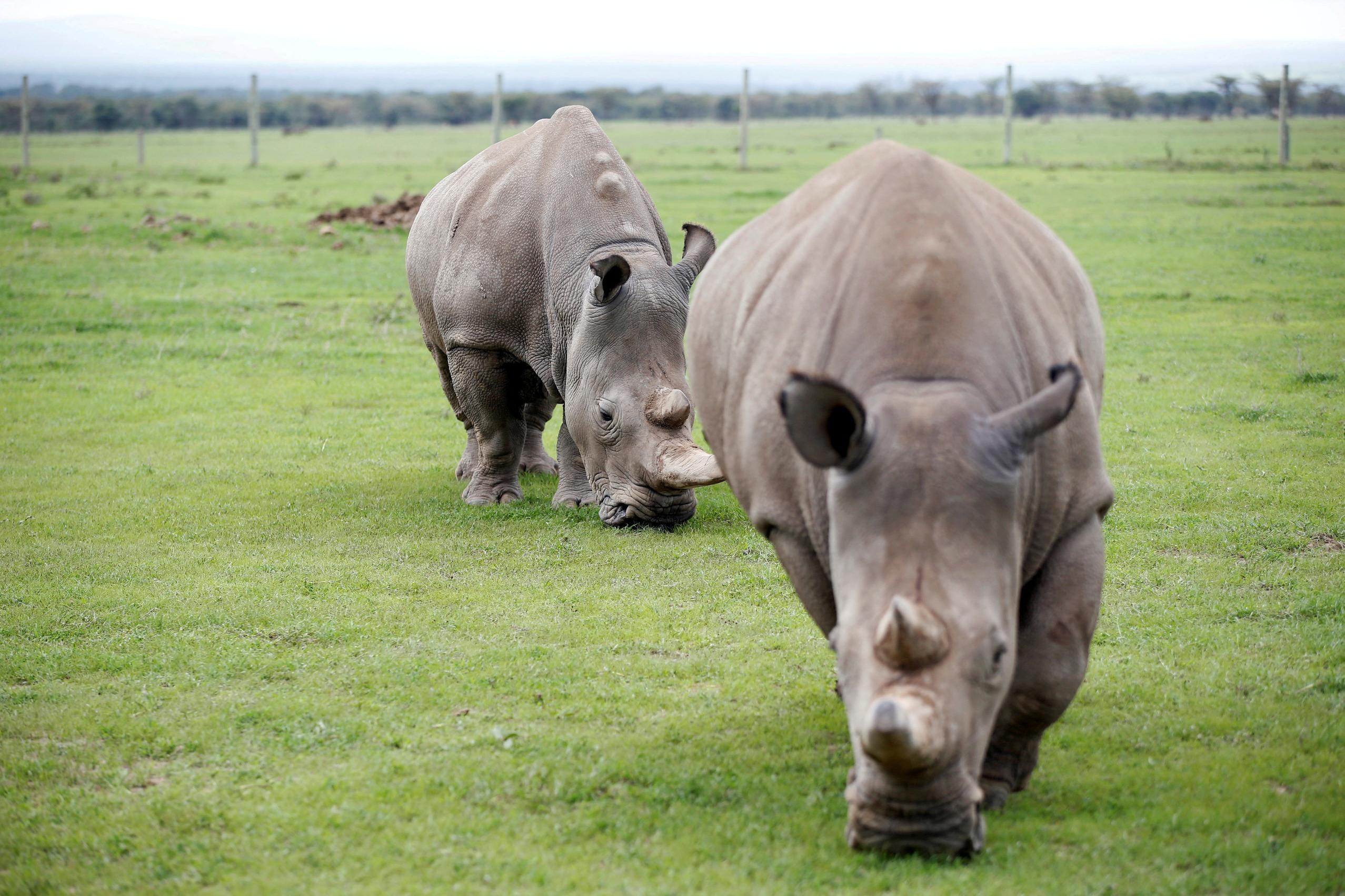
Oct 18 (Reuters) - Global destruction of nature has reached unprecedented extremes. As the United Nations two-week COP16 biodiversity summit kicks off on Monday in Cali, Colombia, here is what you need to know about nature's rapid decline - and its importance to the global economy. ANIMALS AND PLANTS Plants and animals play significant parts in keeping nature humming, from cycling nutrients throughout an ecosystem to aerating soils and engineering rivers. Without plants and animals, the world would not be habitable for humans. However, more than a quarter of the world's known species, or a total of about 45,300 species , opens new tab, are now threatened with extinction, according to the International Union for Conservation of Nature and Natural Resources (IUCN). Animals on the verge of extinction include Mexico's vaquita porpoise, northern white rhinoceros in Africa, and the red wolf in the United States. Monitored populations of wild animals had shrunk by 73% , opens new tab globally by 2020 compared with 1970 figures, according to the World Wide Fund for Nature (WWF). FORESTS Because forests are home to the most plant and animal species in any ecosystem, including 68% of mammal species , opens new tab, scientists consider deforestation levels to be a good proxy for nature destruction. In 2021, more than 100 countries pledged to halt deforestation and woodland degradation by 2030. As of 2023, the amount of land deforested was 45% higher than where it should be in order to meet the 2030 goal, according to the Forest Declaration Assessment , opens new tab, an annual analysis released by a coalition of research and civil society organisations. While the rate of deforestation has declined in Brazil's Amazon, it has gone up in Bolivia, Indonesia and the Democratic Republic of Congo, the analysis shows. Scientists also worry about woodland degradation, with fires, logging and other destructive forces damaging forests but not completely destroying them. The assessment showed that the goal of ending degradation is 20% off track. FISHING & OCEANS Fishing is the leading cause , opens new tab of marine wildlife destruction, according to the Intergovernmental Science-Policy Platform on Biodiversity and Ecosystem Services (IPBES), the top global science authority on nature. More than 40 countries, with a combined population of 3.2 billion people, rely on seafood for at least 20% of their nutritional protein , opens new tab, according to the U.N. Food and Agriculture Organization (FAO). Roughly 38% of fish stocks are being overfished, compared with about 10% in the mid-1970s, according to the FAO. WWF says overfishing is also destabilizing coral reef ecosystems, which provide shelter, food and nursing grounds to a quarter of the world's marine life. This year has seen the world's fourth mass bleaching of corals, with more than half of the reef areas globally bleaching from high sea temperatures. FARMING Agriculture drives some 90% of tropical deforestation, according to WWF, as jungles make way to soy farms, cattle ranches, palm oil plantations and other mass production of commodities. Governments pay at least $635 billion annually in subsidies for agriculture , opens new tab that are harmful to the environment, and likely several trillion dollars more in indirect subsidies, according to the World Bank. Countries agreed at COP15 in 2022 to identify harmful subsidies by 2025 and to slash them by at least $500 million a year starting in 2030. Environmentalists have also urged banks to stop offering credit to commodities sectors linked to deforestation. Between January 2023 and June 2024, banks offered a total of about $77 billion in credit to these firms, according to the Forest & Finance Coalition of research and advocacy groups. ECONOMIC IMPACTS Whether it is insects pollinating crops, plants filtering fresh water supplies, or forests providing timber for construction, nature and its critters deliver a wealth of materials and services to the global economy for free. About $44 trillion of the world's annual economic output - or roughly half the total - relies on these natural resources and services , opens new tab, according to the World Economic Forum. That includes $2.1 trillion in the United States, $2.4 trillion in the European Union and $2.7 trillion in China. The World Bank estimates that the collapse of certain ecosystem services, such as fisheries or native forests, could cost the world economy $2.7 trillion , opens new tab annually by 2030, about 2.3% of global output. The U.N. Environmental Programme estimates spending on nature , opens new tab needs to increase to $542 billion annually by 2030, up from $200 billion as of 2022, to halt nature loss and meet climate goals. Sign up here. https://www.reuters.com/business/environment/cop16-forests-oceans-nature-dire-state-2024-10-18/
2024-10-18 05:55
All three major US stock indexes end higher Crude prices drop on worries about weaker demand Gold hits record $2,700 per ounce Netflix, Procter & Gamble post results NEW YORK, Oct 18 (Reuters) - Tech stocks powered Wall Street stocks to a higher close and crude prices posted their biggest weekly drop in a month on Friday as investors looked past mixed earnings and focused on solid Netflix results and Beijing's policy steps to boost Chinese demand. Gold, meanwhile, muscled past the $2,700 mark for the first time ever. "Gold is having a strong run because of the breadth of uncertainties," Greg Bassuk, chief executive officer at AXS Investments in New York. "It’s the safe-haven play, and investors would be prudent to diversify their portfolios' safe-haven allocations amid this deep level of uncertainty." Tech-adjacent megacap momentum stocks (.NYFANG) , opens new tab boosted the Nasdaq, while the S&P 500's and the Dow's gains on the day were more modest. The S&P 500 and the Dow, however, nabbed record closing highs. All three indexes notched their sixth consecutive week of gains, their longest weekly winning streaks since late 2023. A spate of earnings ran the gamut from upbeat to dour, with streaming platform Netflix (NFLX.O) , opens new tab showing strong subscriber additions, while consumer products company Procter & Gamble (PG.N) , opens new tab reported a surprise drop in sales due to slowing demand for its products. "Netflix got the tech sector going, and when one sector is strong, usually people sell the other sectors, so the Nasdaq is leading and the Dow is lagging," said Jay Hatfield, chief executive officer at Infrastructure Capital Management in New York. "But a few days ago the exact opposite was happening, So it's a classic market melt-up." "People are responding to global (interest) rate cuts, and the U.S. economy is strong," Hatfield added. "The only uncertainty is the (U.S. presidential) election, but it seems like people are getting more comfortable with that outcome as well." The Dow Jones Industrial Average (.DJI) , opens new tab rose 36.86 points, or 0.09%, to 43,275.91; the S&P 500 (.SPX) , opens new tab rose 23.20 points, or 0.40%, to 5,864.67; and the Nasdaq Composite (.IXIC) , opens new tab rose 115.94 points, or 0.63%, to 18,489.55. European stocks closed higher, helped by a resurgence in tech stocks at the conclusion of a choppy week, which included mixed earnings and a rate cut from the European Central Bank. The STOXX 600 logged its second weekly advance. A rally in Chinese stocks in reaction to Beijing's latest policy steps to boost demand also gave investor sentiment a boost. MSCI's gauge of stocks across the globe (.MIWD00000PUS) , opens new tab rose 5.04 points, or 0.59%, to 857.11. The STOXX 600 (.STOXX) , opens new tab index rose 0.21%, while Europe's broad FTSEurofirst 300 index (.FTEU3) , opens new tab rose 4.81 points, or 0.23% Emerging market stocks (.MSCIEF) , opens new tab rose 19.59 points, or 1.73%, to 1,154.72. U.S. Treasury yields dropped as the market consolidated following large increases over the last month as market participants grew accustomed to a less dovish Fed in the face of stronger-than-expected economic data. The yield on benchmark U.S. 10-year notes fell 2.1 basis points to 4.075%, from 4.096% late on Thursday. The 2-year note yield, which typically moves in step with interest rate expectations, fell 3.7 basis points to 3.95%, from 3.987% late on Thursday. The dollar dipped after five straight sessions of gains as risk appetite improved in the wake of Beijing's stimulus announcement. But the greenback looked set to log its third consecutive weekly gain. The dollar index , which measures the greenback against a basket of currencies including the yen and the euro, fell 0.28% to 103.49, with the euro up 0.3% at $1.0864. Against the Japanese yen , the dollar weakened 0.45% to 149.53. Front-month oil futures dropped and were on course for their biggest weekly slide since early September due to mounting concerns about Chinese demand and investors parsed a mixed outlook regarding the Middle East conflict. U.S. crude fell 2.05% to $69.22 a barrel, while Brent fell to $73.06 per barrel, down 1.87% on the day. Gold prices busted through the $2,700 mark for the first time as the safe haven metal continues to benefit from global uncertainties. Spot gold rose 1.01% to $2,719.75 an ounce. Sign up here. https://www.reuters.com/markets/global-markets-wrapup-1-2024-10-18/

2024-10-18 05:37
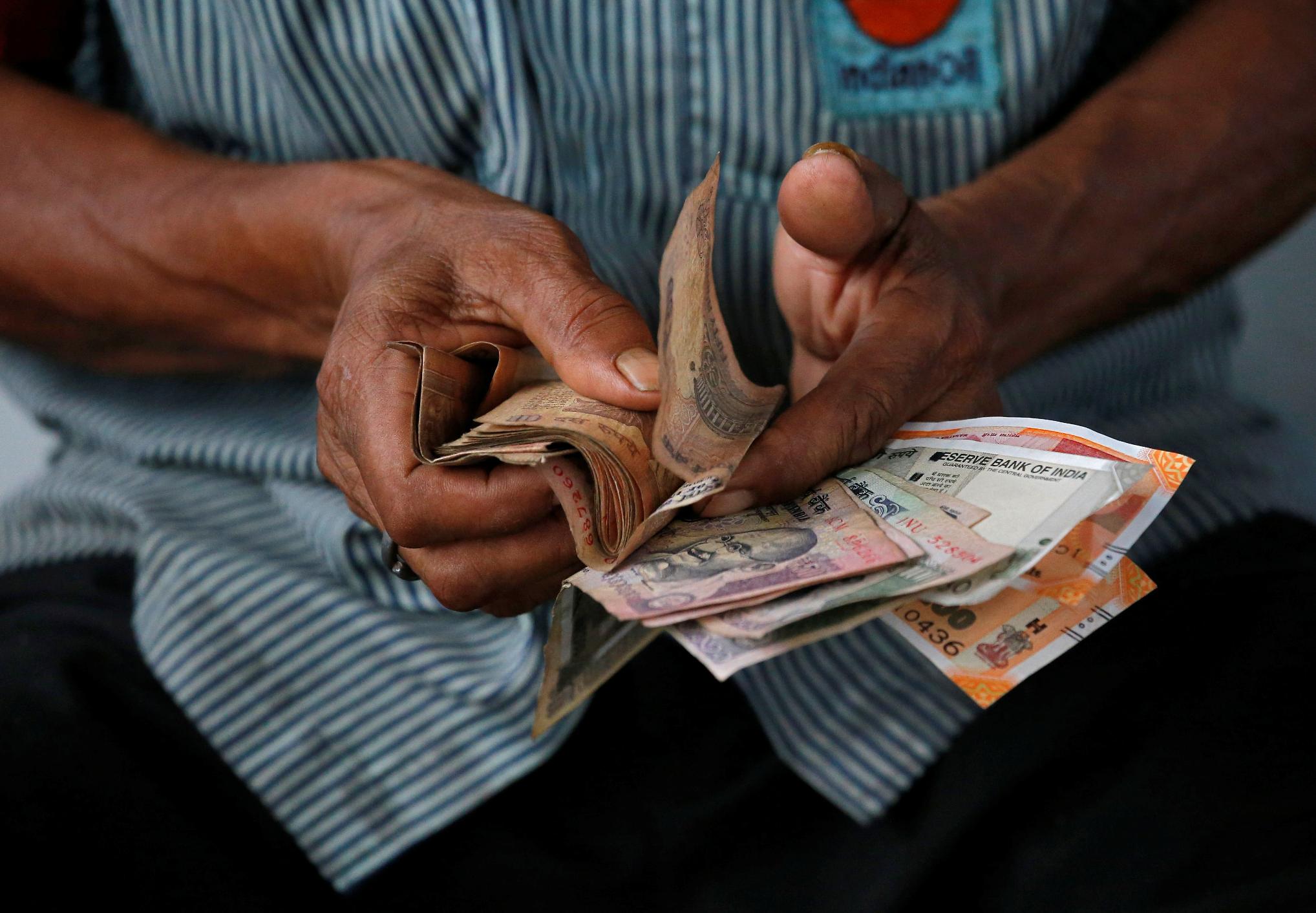
MUMBAI, Oct 18 (Reuters) - The Indian rupee slipped to an all-time low on Friday, weighed down by persistent outflows from local equities while mild dollar sales from state-run banks, likely on behalf of the Reserve Bank of India, curbed sharp losses. The rupee declined to a record low of 84.0775 against the U.S. dollar, inching past its previous lifetime low of 84.0750 hit on Monday. Dollar bids from foreign banks, likely related to outflows from local stocks, pressured the rupee on Friday while state-run banks were spotted offering dollars, traders said. The rupee slipped below the 84 handle for the first time last week but interventions by the Reserve Bank of India have helped avert sharp declines despite hefty foreign outflows. Overseas investors have sold $8.4 billion of Indian stocks on a net basis so far in October, a reversal from the more than $8 billion of inflows last month. This month's outflows are on track to be the highest since at least 2002. Equity assets under custody of foreign portfolio investors had crossed $1 trillion as of end-September. Benchmark Indian equity indices, the BSE Sensex (.BSESN) , opens new tab and Nifty 50 (.NSEI) , opens new tab were down about 0.2% each on the day, on course for their third weekly decline on the trot. The rupee is likely to see "slow and steady depreciation", with the central bank expected to strongly protect against a decline below 84.20 in the near-term, Dilip Parmar, a foreign exchange research analyst at HDFC Securities, said. Asian currencies were mostly up between 0.1% to 0.4% while the dollar index was a tad lower at 103.6 after touching an 11-week high on Thursday. Sign up here. https://www.reuters.com/markets/currencies/indian-rupee-weakens-record-low-hurt-by-sustained-outflows-equities-2024-10-18/
2024-10-18 05:09
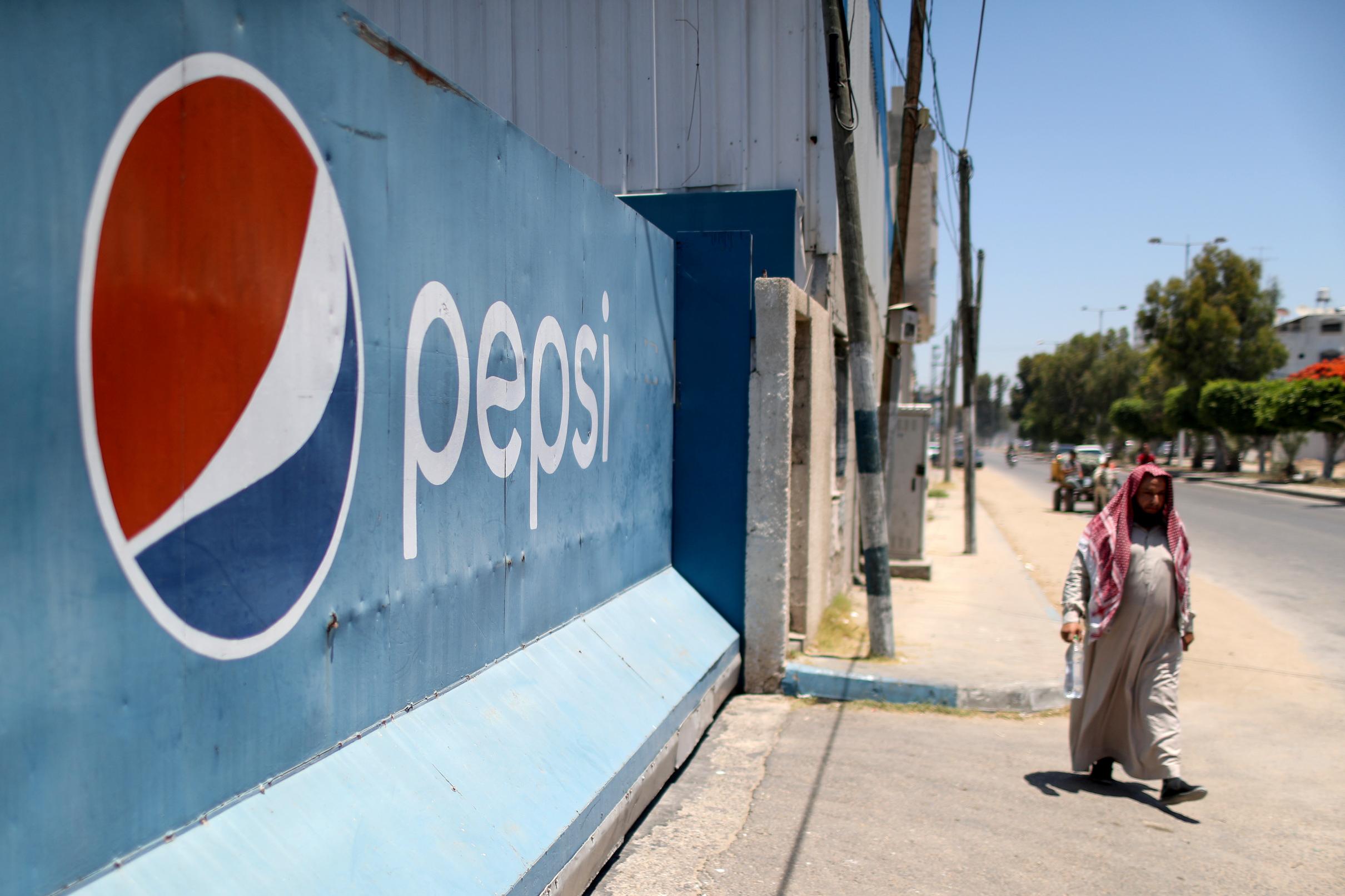
NEW YORK, Oct 18 (Reuters) - PepsiCo (PEP.O) , opens new tab and Coke bottlers in the West Bank are running out of cans and sugar, blocked by the prolonged closure of a Jordan border crossing, managers of two soda-bottling plants in the occupied Palestinian territory said. In the latest global supply chain snarl due to the conflict in the Middle East, a crucial trade crossing at the Allenby bridge has been largely closed to commercial traffic since early September after a Jordanian gunman shot and killed three Israeli civilians. Sugar and cans previously were transported to West Bank bottlers from Jordan via the bridge, according to Hatim Omari, manager of a plant that bottles Pepsi, 7UP and Mirinda for sale in the Palestinian territories and neighboring countries. The Pepsi facility, located in Jericho, ran out of materials for its canned soft drinks about 15 days ago, Omari said, and has not been able to get new shipments of cans or sugar for more than one month. Its sugar came from Saudi Arabia, he said. A Coke bottler based in Ramallah has been running low on some soft drink flavors and is without its usual supplies of sugar and cans, according to Imad Hindi, general manager of National Beverage Company. "If the situation continues this way, most of the private sector players including us will reach a dead end," Hindi said in a WhatsApp message. Pepsi did not immediately respond to a request for comment. Coca-Cola declined to comment. The bottlers are separate businesses, but sometimes the U.S.-based companies hold stakes in them. GAZA, WEST BANK COSTS SOAR The bottlers are the latest businesses to be hit by supply chain disruptions due to the conflict in the Middle East over the past year. Houthi attacks on cargo ships in the Red Sea have prompted some global consumer companies to reroute their merchandise from Asia to sail around Africa. "From Beirut to Iran to Gaza, it’s really hard to just run a normal business and no one is immune to it," said Paul Musgrave, an associate professor of government at Georgetown University in Qatar. "You need sugar, you need cans, you need people, you need electricity, and it’s all being disrupted." The cost of doing business in the Palestinian territories is roughly five times greater than in surrounding countries, according to Hindi, manager of the Coke bottler in the West Bank. At the Pepsi bottling franchise, which previously made 60 million liters of beverages annually, production is down roughly 35%, Omari said. Without cans, it continues to use plastic bottles, but he said margins on plastic-bottled drinks are lower. High unemployment in the densely populated West Bank, where he said Pepsi is a dominant cola, hurts local families' ability to buy Pepsi drinks, he said. "Our supply is weak now, and our sales are weaker." The plant now runs one shift per day for its 200 total workers, down from three previously, Omari added. Beyond supply shortages, consumer-led boycotts of U.S.-based brands like Coca-Cola (KO.N) , opens new tab and Pepsi have hurt companies' sales in Muslim-majority countries, where some consumers shun the soft drinks. PepsiCo CEO Ramon Laguarta said on Oct. 8 in a call with investors that "geopolitical tensions" have affected the company's business in the Middle East. "I don't think that's going to change in the coming months," Laguarta said. Coca-Cola reports its financial results for the third quarter of 2024 on Oct. 23. Israel launched an assault on Hamas in Gaza last October after an unprecedented Hamas raid of Israel killed 1,200 people and resulted in another 250 being abducted. More than 41,000 Palestinians have been killed in Gaza over the past year. In the Gaza Strip, a $25 million Coca-Cola plant was destroyed. A partly-damaged Pepsi bottling plant ceased operations last October, a spokesperson for the plant said. Sign up here. https://www.reuters.com/business/retail-consumer/west-bank-pepsi-coke-bottlers-face-can-sugar-shortage-2024-10-18/
2024-10-18 05:06
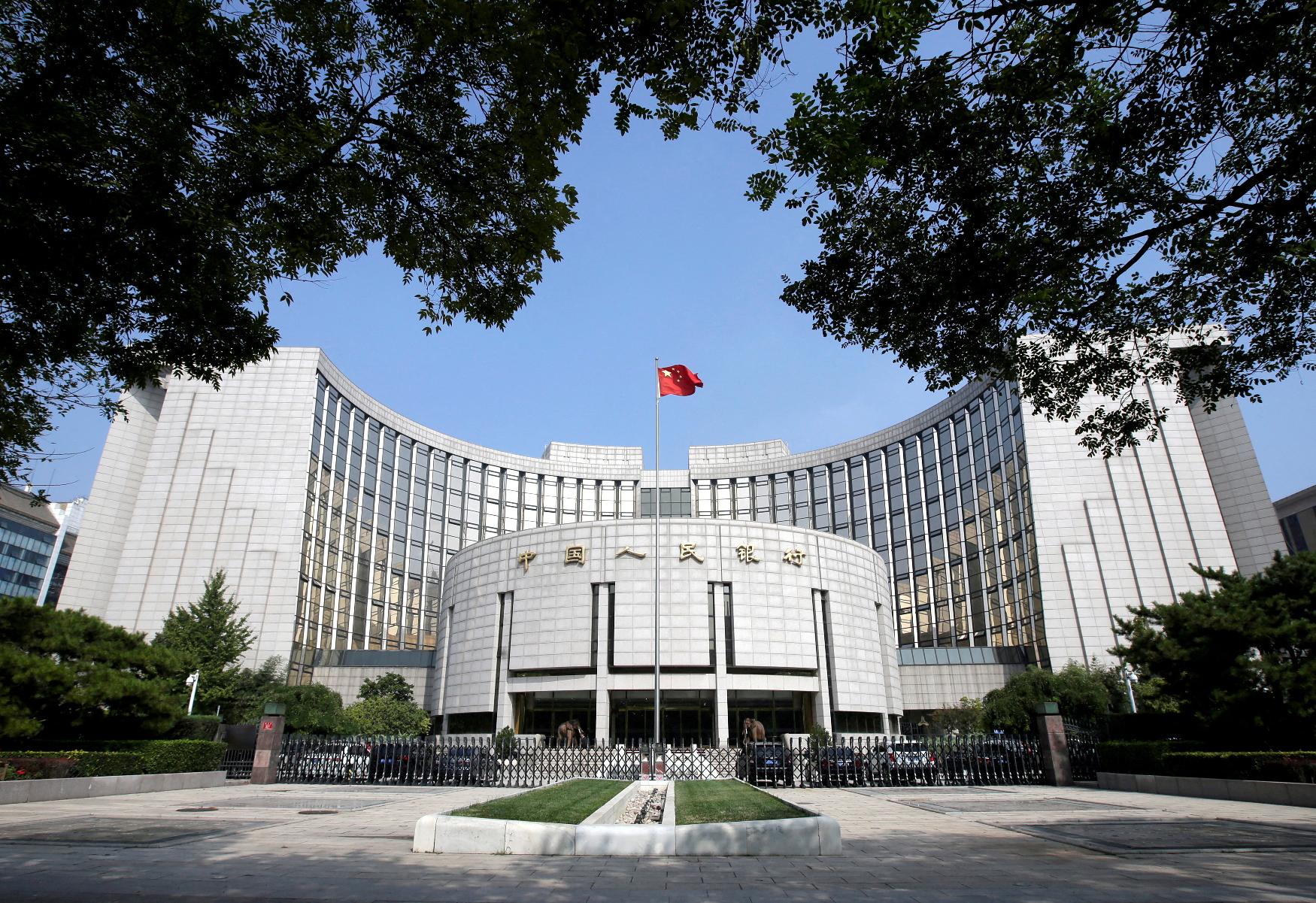
BEIJING, Oct 18 (Reuters) - China's central bank governor said on Friday the reserve requirement ratio for commercial lenders could be cut further by 25 to 50 basis points by the year-end depending on liquidity conditions, keeping the door open to more policy easing steps. The benchmark seven-day reverse repurchase rate has been lowered by 20 basis points and the medium-term lending facility rate has been reduced by 30 basis points, People's Bank of China (PBOC) Governor Pan Gongsheng told a financial forum in Beijing. On Oct. 21, the Loan Prime Rate (LPR) will decrease by 20 to 25 basis points, the official Xinhua news agency quoted Pan as saying. Pan had previously flagged more potential stimulus steps to support the faltering economy after announcing in late September measures to stabilise the housing sector and rekindle capital market confidence. At the financial forum on Friday, Pan also warned against any illegal fund flows into the stock market. The PBOC introduced two new tools in September to support markets. These were a swap programme giving funds, insurers and brokers easier access to funding for stock buys, and relatively cheap PBOC loans to help banks finance listed companies' share purchases and buybacks. Pan said the two measures were based entirely on market-oriented principles, and the swap facility was not a form of direct financial support from the central bank. The bank's provisions regarding stock buybacks and purchases have specific directional aims, and the fundamental bottom line was that loan funds must not unlawfully enter the stock market, Pan added. (This story has been corrected to say that the 7-day repo rate is already cut by 20 bps, and that the MLF rate is already cut by 30 bps, in paragraph 2) Sign up here. https://www.reuters.com/markets/asia/china-cenbank-chief-warns-against-any-illegal-fund-flows-into-stock-market-2024-10-18/