2024-10-17 11:33
MILAN, Oct 17 (Reuters) - Italian natural gas grid operator Snam (SRG.MI) , opens new tab sees a growing role for decarbonised gases and is getting ready to transport different substances, including biomethane and hydrogen, it said on Thursday. Snam confirmed it would invest 14.5 billion euros ($15.8 billion) between 2028 and 2032 to support the energy transition, including repurposing its infrastructure. In its first transition plan, the state-controlled group said that the repurposing of its gas infrastructure to make it ready for hydrogen and carbon dioxide, is "technically feasible and cost effective". This comes after a warning from environmental groups that gas and oil companies risk creating stranded assets by investing in new liquefied natural gas (LNG) capacity. Snam is Europe's leading operator in gas transport, with a network of approximately 38,000 kilometres. It also has more than 17% of the total gas storage capacity in Europe and will reach a regasification potential of 18.5 billion cubic metres of gas next year. "A risk assessment (run by the group) indicated that only 1% of pipelines may run the risk of being stranded by 2040, with this figure remaining under 10% by 2050," Snam said. Among its transition efforts, Snam is promoting the setting up of a green hydrogen corridor to bring the fuel from Africa and southern Italy to northern Europe. Under Snam's plan, between 60% and 70% of the current natural gas network would be repurposed to make it ready for green hydrogen. The group is also working with Italian energy group Eni (ENI.MI) , opens new tab to develop a hub to store carbon dioxide in Italy. In addition it is managing assets for the production of biomethane, which is the purified version of gas made from organic waste, and supporting green renovation of buildings through a unit called Renovit. Snam confirmed its commitments to reach carbon neutrality on Scope 1 and 2 emissions by 2040 and net zero by 2050. It aims at having a net positive impact on biodiversity by 2027 through landscape restoration activities where it builds infrastructure. The group plans to increase the portion of sustainable finance to 85% of total by 2027 from 80% in 2023. ($1 = 0.9203 euros) Sign up here. https://www.reuters.com/business/energy/italys-snam-invest-prepare-gas-grid-green-fuels-2024-10-17/

2024-10-17 11:30
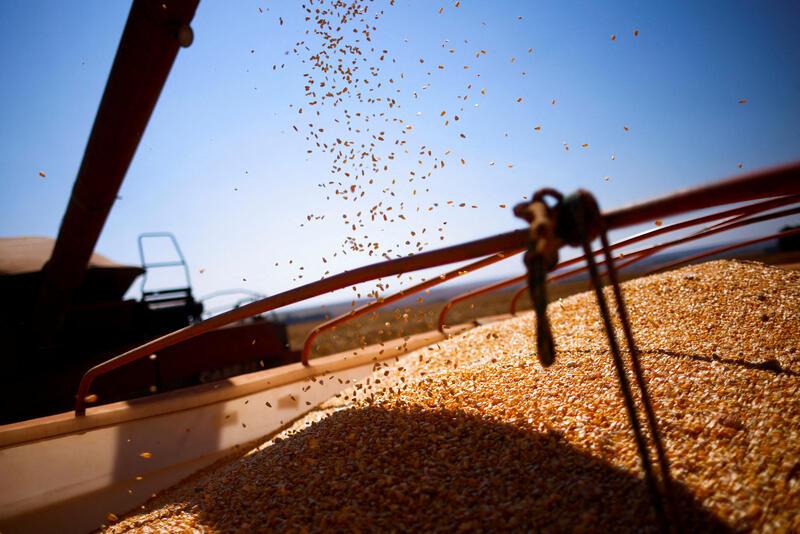
NAPERVILLE, Illinois, Oct 16 (Reuters) - Controversy over Brazil’s crop estimates commanded the market’s attention earlier this year as the U.S. Department of Agriculture and its Brazilian counterpart established drastically different views on the corn and soybean harvests. These 2023-24 crop disparities were unusually large and involved volumes significant enough to impact global trade given that Brazil is the leading soy exporter and No. 2 in corn. This discussion could resurface this year as the 2024-25 crop views between USDA and Brazilian statistics body Conab are misaligned once again. Luckily for soybeans, the two agencies’ early 2024-25 outlooks would represent the smallest disparity in four years. But their 2024-25 corn crop estimates are even further apart than in prior seasons, and this estimate margin has only widened over the past three years. Peeling back the layers reveals some explainable differences in each agency’s forecasts, suggesting the overall assumptions may be more similar than it appears. But it is important to understand what is driving those deviations. CORN NOTABLES In its first official outlook published on Tuesday, Conab pegged Brazil’s total 2024-25 corn crop at 119.74 million metric tons, up 3.5% from 2023-24. USDA since May has maintained a view of 127 million tons, some 6% higher than Conab. That disparity of 7.3 million tons (286 million bushels) represents more than one-quarter of all Brazilian corn exports so far in 2024. USDA’s estimate of the 2023-24 corn crop is more than 5% above Conab’s, driven by larger figures for both area and yield. On a year-to-year basis, however, USDA sees the 2024-25 crop up 4.1%, somewhat consistent with Conab’s view. The area trend is where the agencies disagree. Conab sees 2024-25 corn plantings down fractionally on the year while USDA has harvested area up 3.7%. That is a difference of 1.3 million hectares (3.2 million acres). Almost 80% of Brazil’s total corn output comes from the second crop, planted immediately after the soybean harvest. Conab actually pegs 2024-25 second corn area to rise 1% on the year, though USDA does not break out its estimates past the total crop level. This is important because Brazil’s second corn crop is the one primarily used for exports, so a bigger area coupled with strong yields could maintain or increase its presence on the world market, keeping pressure on U.S. exporters. In its biannual data users’ meeting on Wednesday, USDA officials said its corn crop differences with Conab are attributable to varying demand assumptions. An examination of the numbers shows the corn crop disparities are largely offset by exports and use. USDA sees Brazil’s 2024-25 corn exports up 6% on the year while Conab pegs them down 5%, placing more emphasis on domestic use. NARROWER SOYBEANS The soybean estimates are what originally got the market talking earlier this year, as USDA’s projection for Brazil’s 2023-24 soy harvest had been more than 8 million tons (5% or 294 million bushels) above Conab’s. Those numbers have since moved closer together, but on average over the previous three seasons, USDA’s soy crop views are more than 4% larger than Conab’s. USDA’s 2024-25 forecast of 169 million tons is only 1.8% larger than Conab’s 166 million, which is a larger deviation than in most years but smaller than ones seen recently. This year, the difference is rooted in yield assumptions. Both agencies are optimistic for record Brazilian soybean exports in 2024-25 on strong demand from top buyer China, and a record crop would help facilitate that. However, if Brazil experiences mostly favorable weather over the next couple of months, both agencies could be underestimating soybean crop potential, which they commonly do in good weather years. Karen Braun is a market analyst for Reuters. Views expressed above are her own. Sign up here. https://www.reuters.com/markets/commodities/brazilian-corn-heads-up-latest-usda-conab-forecast-disparity-2024-10-17/
2024-10-17 11:28
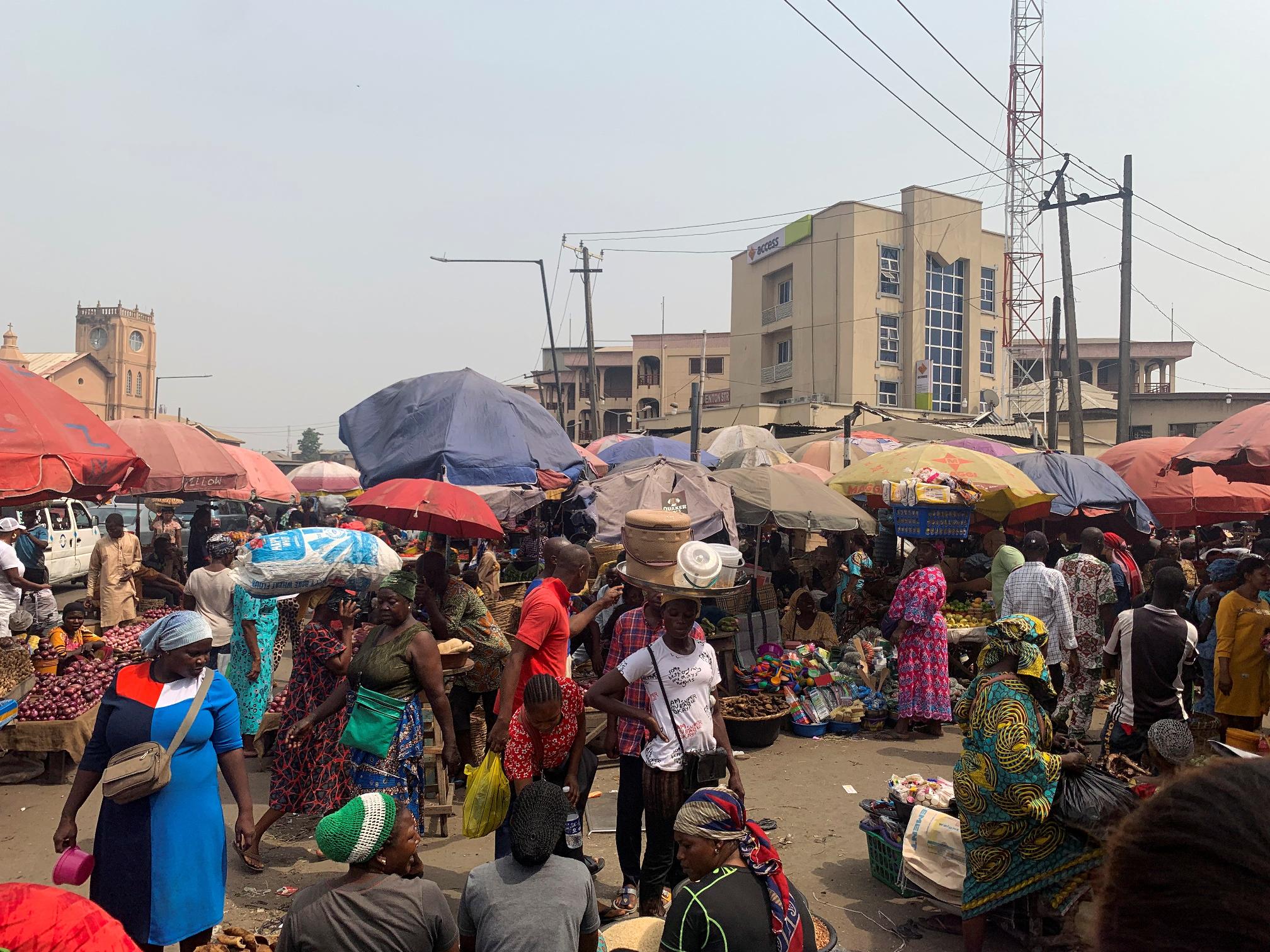
ABUJA, Oct 17 (Reuters) - Nigeria is beginning to reap the benefits of significant policy reforms following a near fiscal crisis in 2020, but must stay the course, the World Bank said on Thursday. President Bola Tinubu has instituted reforms including ending a decades-old petrol subsidy and devaluing the currency to try to boost output, which has been sluggish for about a decade. World Bank lead economist for Nigeria Alex Sienaert said that Nigeria's fiscal deficit has reduced from 6.2% of Gross Domestic Product (GDP) in the first half of last year to 4.4% in the first half of this year, with the reforms leading to robust growth in service sectors, stability in the oil sector, and improvements in the foreign exchange market. "We are seeing a fiscal consolidation underway with the fiscal deficit shrinking and that's driven by a combination of expenditure being roughly constant in real terms, and revenues which are surging," Sienaert said during a presentation in the capital Abuja. "This surge in revenues is largely due to the removal of the implicit forex subsidy that was happening before, which was even larger than the petrol subsidy, which we talk a lot about," he said. The World Bank expects Nigeria's economy to grow at 3.3% this year, rising to 3.6% in 2025. Nigeria's fiscal crisis had been mounting following two economic recessions in the last eight years due to a combination of economic mismanagement and policy challenges. The recent reforms, including a focus on price stability and a unified market-reflective exchange rate by the central bank, have proven critical in stemming an economic downturn, but they have stoked inflation. "The ultimate purpose here, of course, is jobs and opportunities," Sienaert said. Sign up here. https://www.reuters.com/world/africa/nigeria-seeing-positive-results-fiscal-reforms-world-bank-says-2024-10-17/
2024-10-17 11:11
LONDON, Oct 17 (Reuters) - Britain has imposed sanctions on 18 further Russian oil tankers and four liquefied natural gas vessels, the largest batch of sanctions to date against the country's so-called "shadow fleet," the government said on Thursday. Britain says the 'shadow fleet' uses illicit practices to avoid Western restrictions on Russian oil. The government said it was working with maritime authorities to demand that Russian vessels with suspected dubious insurance provide details of their insurance status as they pass through the English Channel. "Any actor that facilitates and supports Russia's malign activities could be exposing themselves to sanctions," the government said. Russia rejects Western pressure to limit its oil exports, and in the past year, there has been growth in the number of tankers transporting cargoes that are not regulated or insured by conventional Western providers. The 18 oil tankers , opens new tab will be barred from UK ports and unable to access British maritime services, bringing the total number of sanctioned Russian oil tankers to 43. The vessels included NS Bora, Atlas and Moskovsky Prospect. "The UK's relentless action against the shadow fleet is putting grit into the system and starving (Russian President Vladimir) Putin's war machine of crucial revenues," the government said. The targeted oil tankers transported an estimated 4.9 billion pounds ($6.37 billion) worth of oil last year, it said. As part of Thursday's action, the UK also sanctioned Russian gas company Rusgazdobycha JSC. "We must combat malign Russian activity at every turn, whether illicit tactics to bolster Putin’s war chest, their use of cyber-attacks or barbarism on the front line in Ukraine," Foreign Secretary David Lammy said in a statement. The Russian Embassy in London did not immediately respond to a Reuters request for comment on the sanctions. ($1 = 0.7692 pounds) Sign up here. https://www.reuters.com/business/energy/uk-imposes-sanctions-russian-oil-lng-vessels-2024-10-17/

2024-10-17 10:10
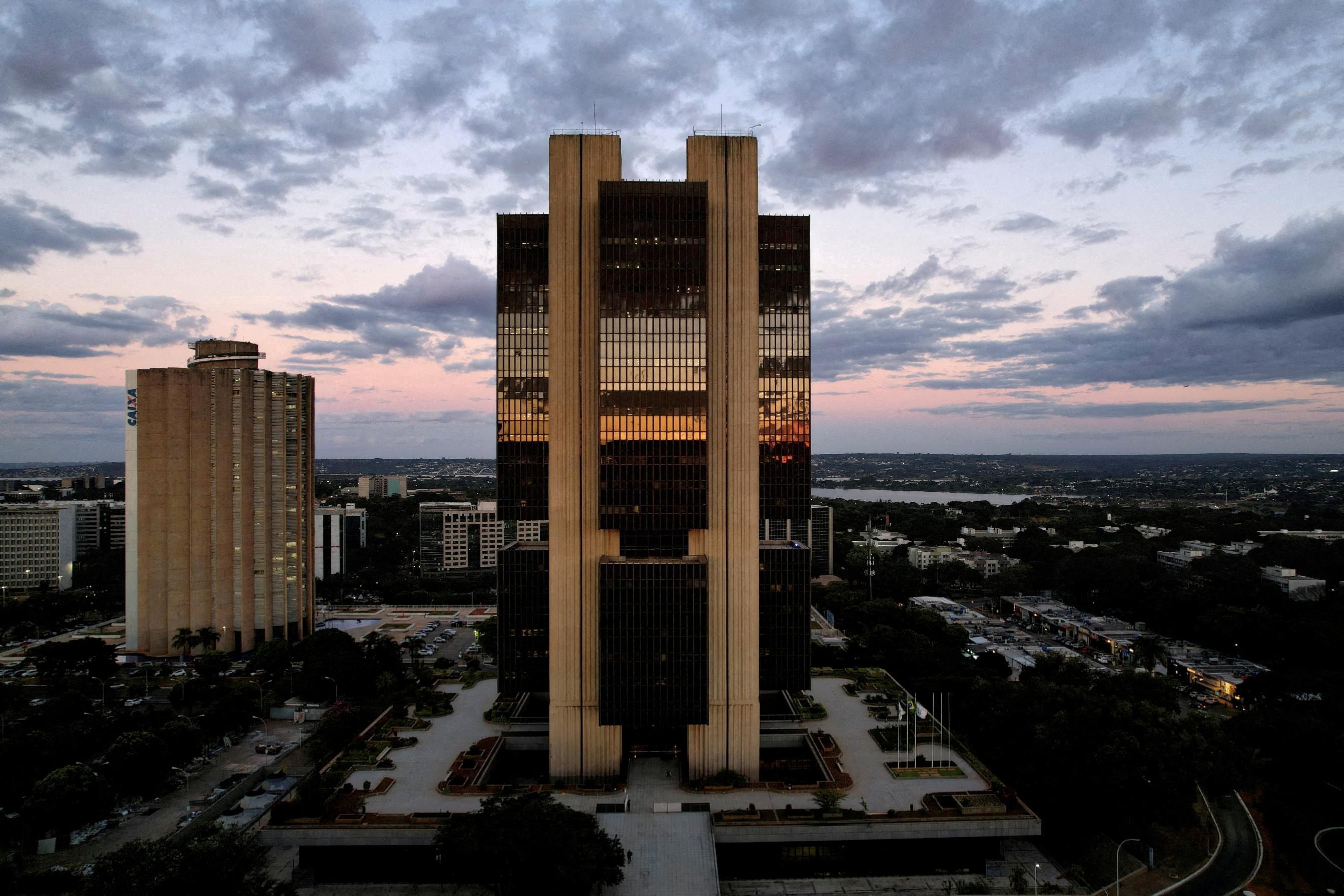
Government, central bank have been at odds over some regulatory issues in recent years Better cooperation will improve 'tone' of relationship, source says Central bank's autonomy law has led to policy coordination challenges BRASILIA, Oct 17 (Reuters) - Brazil's government is preparing to cooperate more closely with the central bank on regulatory issues like cryptocurrencies and meal vouchers next year when the bank gets new leadership, following occasional differences over policy on such matters. Incoming central bank chief Gabriel Galipolo, whose term starts in January following his appointment by President Luiz Inacio Lula da Silva, has delivered a hawkish message on monetary policy, showing he is not shy about hiking interest rates despite Lula's repeated demands for lower borrowing costs. However, the two are likely to find more common ground on regulatory matters, where the central bank has sometimes been at loggerheads with the Finance Ministry in recent years. Three Finance Ministry officials described on condition of anonymity a series of frustrated discussions with the central bank on matters ranging from regulation of crypto assets to allowing global trading platforms to list Brazilian public debt. Two of the ministry sources said collaboration had suffered as the central bank became more withdrawn from policy discussions since gaining formal autonomy under a 2021 law. "The central bank confused autonomy with the idea that it wasn't a government body and couldn't have a joint agenda with the Finance Ministry. That should change," said one ministry source. That law also staggered the terms of the central bank president to straddle national elections, so central bank chief Roberto Campos Neto, appointed by right-wing ex-President Jair Bolsonaro, has served for the first two years of Lula's term. While berating Campos Neto publicly over high interest rates, Lula has called his successor Galipolo a "golden boy." The Finance Ministry and the central bank did not respond to requests for comment. The ministry sources expressed hopes for more collaboration with Galipolo in charge. A central bank source said improved cooperation would reset the "tone" of the relationship. "I really hope we'll have more integration on issues that don't affect the central bank's core (inflation) mandate," said another ministry source. "I'm not saying we want a seat on the Monetary Policy Committee - that's not it." IMPASSES One official pointed to concerns about crypto asset regulation, which is being handled by the central bank without coordination with the government. That has complicated Finance Ministry policy on regulating online gambling, since many sites are operating with cryptocurrencies, the source said. The central bank said earlier this year it expected to finalize its proposed crypto regulations by the end of the year. On another front, the government plans to resolve a long-standing impasse over new regulations to open up competition in the 150 billion reais ($26.5 billion) meal voucher market. For years, tech companies including Mercado Libre (MELI.O) , opens new tab have been looking to take a bigger bite of the market dominated by companies such as Sodexo (EXHO.PA) , opens new tab and Edenred (EDEN.PA) , opens new tab for meal cards that firms must provide for full-time workers. Although legislation passed in 2022 should allow workers to transfer the balance of their meal cards between providers and use them at any participating restaurants, it remains unclear which regulator will issue and oversee the new rules. The Finance Ministry sees the central bank as the natural regulator for the payment system. But the bank has resisted taking on the responsibility, citing a lack of staff and resources to regulate a market that serves 22 million workers while posing no systemic risk, according to sources. During a meeting with industry groups last month, Finance Minister Fernando Haddad suggested the regulations would be in place by early next year, according to one attendee. However, the issue remains unresolved within the central bank, said one source from the institution. The Finance Ministry has also failed to advance discussions with the central bank on a plan to allow Treasury bonds to be traded directly on the Belgium-based Euroclear platform, a plan the government unveiled in 2023. Today that trading is done only on a local platform. Trading on Euroclear would simplify access for foreign investors to Brazilian debt, but it is being blocked by "bureaucratic" resistance and "corporate interests" from the central bank, said one ministry source. The bank has argued that it needs real-time control over information regarding debt issuance and holders to monitor and prevent money laundering, added the source. The central bank and Finance Ministry did not respond to questions about cryptocurrency and meal voucher regulations or allowing public debt securities on the Euroclear platform. ($1 = 5.6588 reais) Sign up here. https://www.reuters.com/world/americas/brazil-eyes-closer-regulatory-cooperation-with-new-central-bank-leadership-2024-10-17/
2024-10-17 10:08
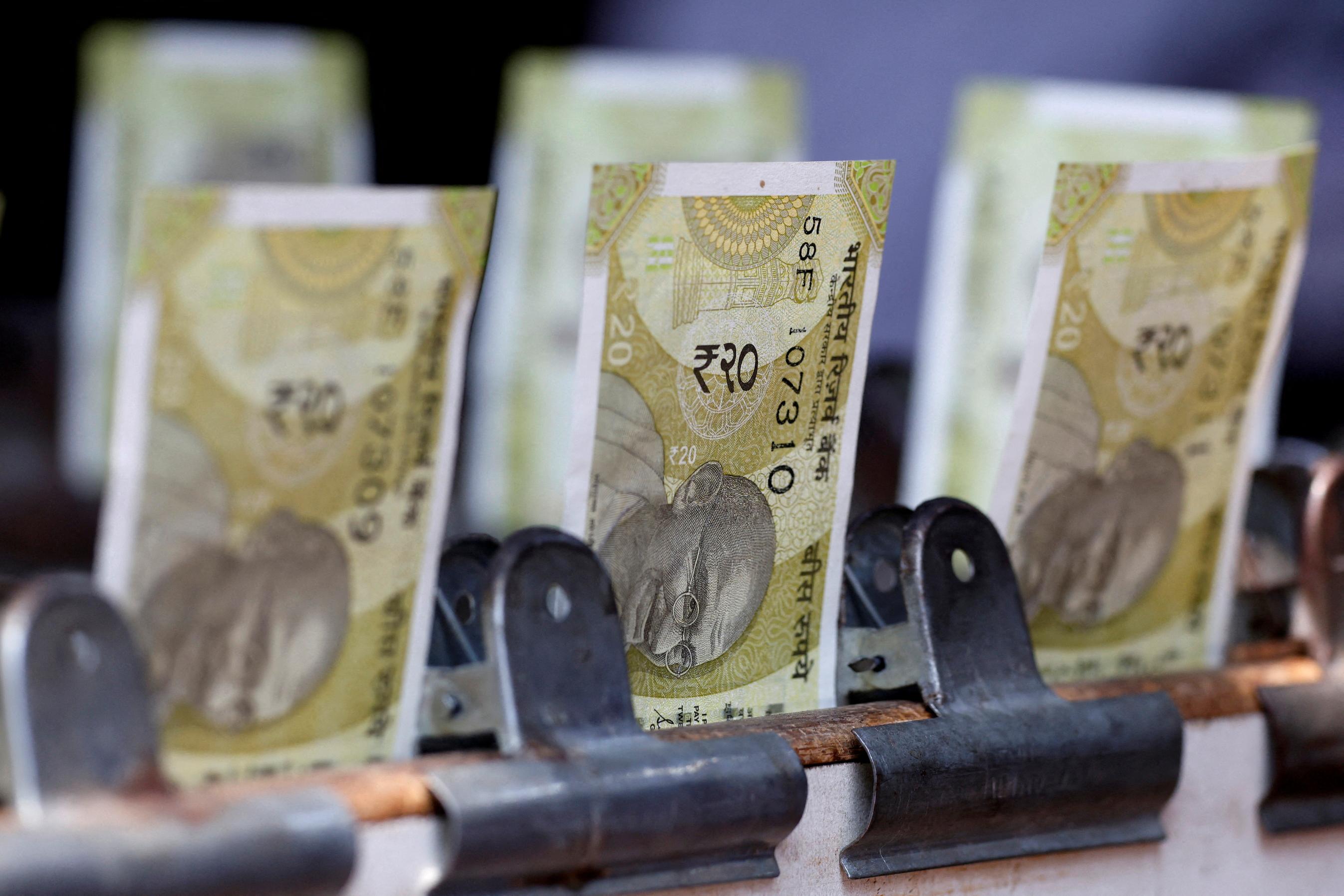
MUMBAI, Oct 17 (Reuters) - The Indian rupee ended at its weakest closing level on record on Thursday, weighed down by strong dollar demand from foreign banks, likely due to outflows from equities, and the weakness in regional peers as the U.S. dollar rose to an eleven-week high. The rupee closed at 84.0675 against the dollar, down about 0.1% from its closing level of 83.9950 in the previous session. The currency is just shy of its all-time low of 84.0750 hit on Monday. The benchmark Indian equity indices, the BSE Sensex (.BSESN) , opens new tab and Nifty 50 (.NSEI) , opens new tab, closed down by 0.6% and 0.9%, respectively, on the day and are set for their third weekly decline on the trot amid a sustained exodus of foreign money. Two large U.S. headquartered banks and some state-run banks were bidding for dollars on Thursday, a trader at a state-run bank said. "If outflows continue at this pace, it's quite likely that the rupee will weaken towards 84.20," the trader said. Foreign investors have pulled out $8.1 billion, on a net basis, from local stocks over October so far, a sharp reversal from inflows of nearly $7 billion in the previous month. Asian currencies were mostly weaker, with the Korean won down 0.5% and leading losses. The dollar index was a tad higher at 103.6, hovering close to its highest level since August. "The dollar continues to firm and emerging currencies stay largely offered as the spectre of another possible Trump term of tariffs hangs over global FX markets," ING Bank said in a note, referring to the heightened odds of a victory for Donald Trump in the upcoming U.S. presidential election. Investors await U.S. retail sales and jobless claims data later in the day for cues on the future of Federal Reserve policy rates. Sign up here. https://www.reuters.com/markets/currencies/rupee-ends-record-closing-low-pressured-by-outflows-weak-asia-fx-2024-10-17/