2024-10-17 07:47
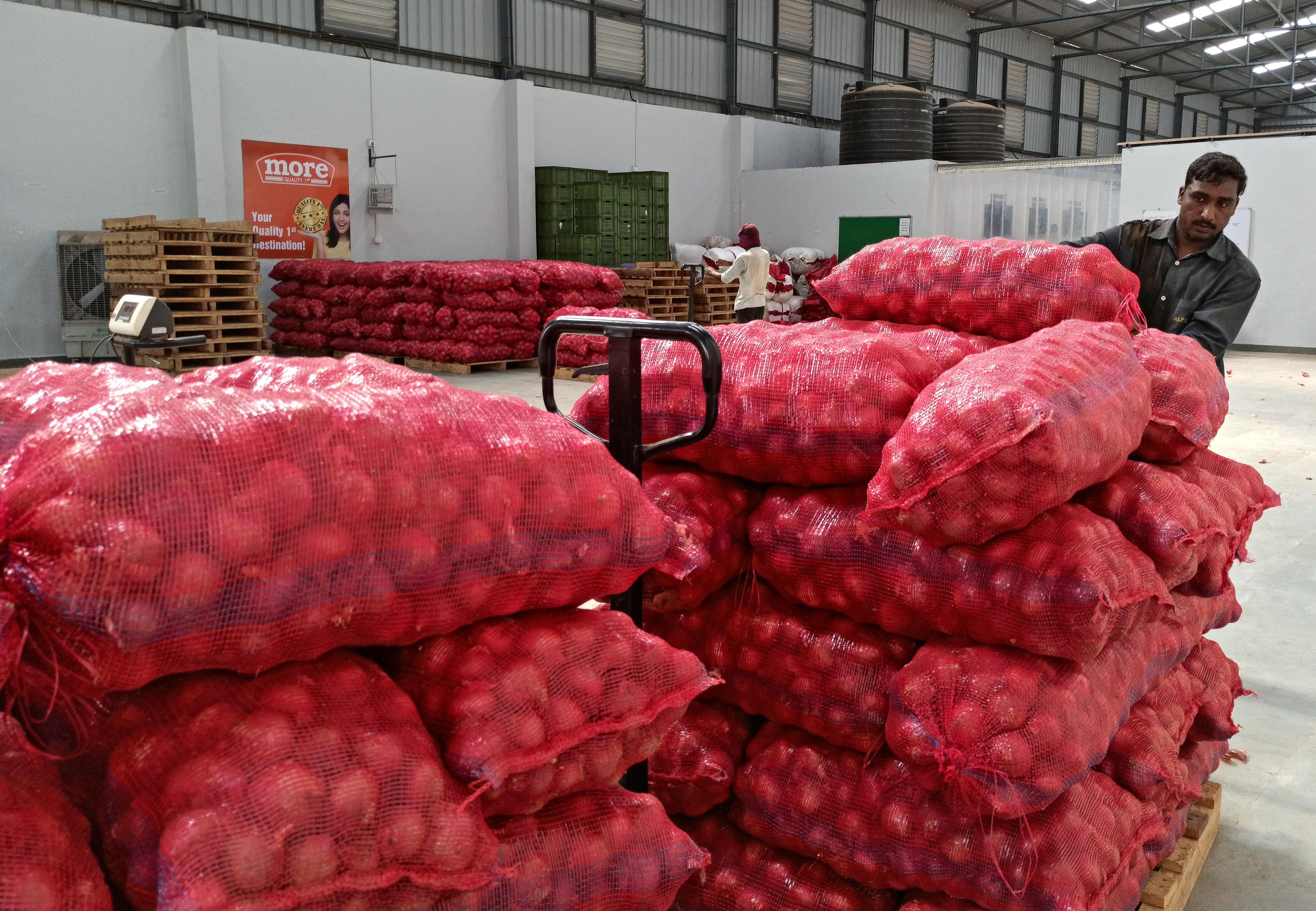
Oct 17 (Reuters) - India will sell onions from government reserves to bring down prices of the vegetable, consumer affairs secretary said on Thursday. India's retail inflation in September accelerated to its highest in nine months, due to higher food prices, according to government data released on Monday. Sign up here. https://www.reuters.com/markets/commodities/india-sell-onions-reserves-check-prices-2024-10-17/
2024-10-17 07:40
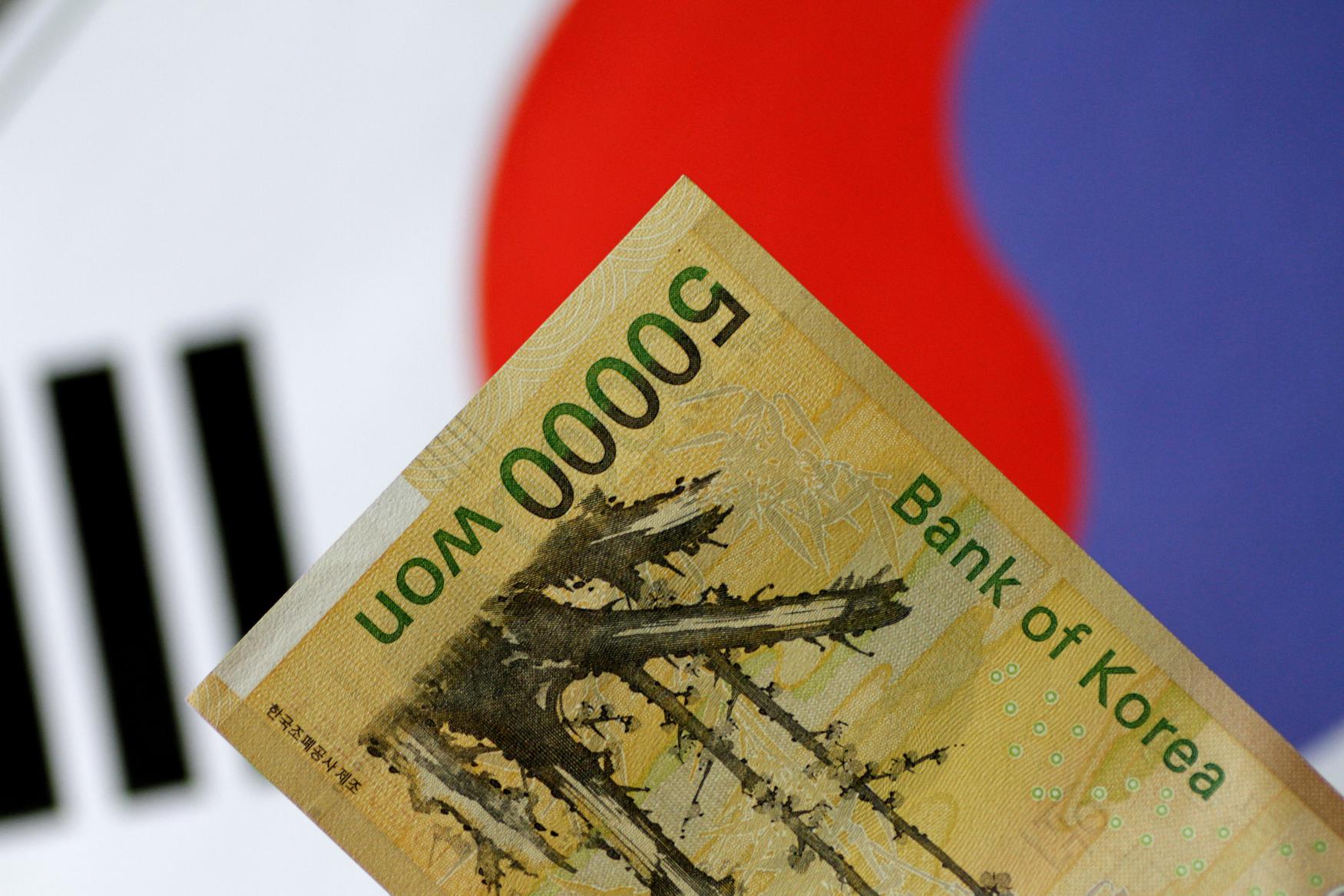
Bears on Asian FX creep up on dollar strength Indian rupee most-shorted currency among peers Bullish bets on most Asian FX ease markedly Oct 17 (Reuters) - Analysts turned bearish on most Asian currencies, with short bets on the Indian rupee at a one-year high, as expectations the Federal Reserve would cut rates less aggressively strengthened the dollar and took the shine off riskier Asian assets. Short positions in the South Korean won , the Philippine peso and the Indonesian rupiah are at their highest since July 25, a fortnightly poll of 11 analysts showed on Thursday. Bullish bets in the Chinese yuan , Singapore dollar , Malaysian ringgit , and Thailand's baht also reduced significantly from early October. Rising demand for the dollar in the backdrop of waning expectations of outsized Fed rate cuts and uncertainties over the U.S. elections has weakened investor confidence in Asian currencies. The dollar index , which measures the greenback against six major rivals, has risen 3% so far since Sept. 30. The index is currently trading at 103.57, a high last seen in late July. In India, the rupee declined past 84 per U.S. dollar last week - a level the Reserve Bank of India had defended for more than two months - as the recent spike in oil prices could increase bills for the net-importer, and as the exodus of foreign money from the domestic equity market pressured the local unit. Responses to the poll were received before central banks in Thailand, the Philippines, and Indonesia made interest rate decisions on Wednesday. The Bank of Thailand and Bangko Sentral ng Pilipinas (BSP) cut rates while the Bank Indonesia maintained status quo. "Though fundamentals show that rates should be cut towards neutral now, the weakening in the peso should keep the BSP cautious with the pace of easing, careful to go faster than the Fed," said Eugenia Victorino, head of Asia strategy at Skandinaviska Enskilda Banken. In Thailand, despite government support for the rate cut, the baht remains the second-best performing currency in Asia this year, up nearly 3% so far this year and surpassed only by the Malaysian ringgit. Oil price volatility faltered investor confidence in the ringgit - also called a proxy to the yuan due to trade relations with China - as Malaysia stands out as the only net oil and gas exporter among the major emerging Asian economies. Meanwhile, short positions on the Taiwanese dollar were at their highest since Aug. 8. Confidence in Taiwan's export-dependent, tech-heavy economy came under pressure after a report said the Biden administration was considering capping sales of advanced artificial intelligence processors to some countries. The Asian currency positioning poll is focused on what analysts and fund managers believe are the current market positions in nine Asian emerging market currencies: the Chinese yuan, South Korean won, Singapore dollar, Indonesian rupiah, Taiwan dollar, Indian rupee, Philippine peso, Malaysian ringgit and the Thai baht. The poll uses estimates of net long or short positions on a scale of minus 3 to plus 3. A score of plus 3 indicates the market is significantly long U.S. dollars. The figures include positions held through non-deliverable forwards (NDFs). The survey findings are provided below (positions in U.S. dollar versus each currency): Sign up here. https://www.reuters.com/markets/currencies/investors-turn-short-most-asian-fx-dollar-strength-prevails-2024-10-17/
2024-10-17 07:26
LONDON, Oct 17 (Reuters) - The new Labour government will not revive a plan to build a high speed railway line from the central English city of Birmingham to northern England, a source said, denying an earlier media report. LBC Radio said earlier on Thursday the government was set to announce that the HS2 high speed railway line would run as far as Crewe in northern England, in a reversal of the previous administration's decision to cancel the project's second phase. But that was not on the cards, a government source said. "We have always said we won't be taking plans for HS2 phase 2 back off the shelf," the source said, adding that the government was, however, committed to improving rail connectivity in northern England. "Transport is an essential part of the government's mission to rebuild Britain and grow our economy," the source said. The high speed project, originally announced in 2012, was designed to connect London to northern England, adding capacity to Britain's railway network and helping the country's infrastructure catch up with other European countries which have extensive faster modern tracks. But HS2's costs spiralled to over 100 billion pounds ($130 billion) forcing previous prime minister Rishi Sunak to cancel the northern leg between Birmingham and Manchester in 2023. The LBC report had said the extension to Crewe, about 40 miles south of Manchester, would not be overseen by state-owned HS2 Ltd and the project would be handed to a private sector consortium instead. ($1 = 0.7705 pounds) Sign up here. https://www.reuters.com/world/uk/uk-say-hs2-railway-will-run-northern-england-lbc-reports-2024-10-17/

2024-10-17 06:58
US crude stocks, fuel inventories fall, EIA says ECB cuts interest rates for the third time this year Dollar jumped to an 11-week high on Thursday NEW YORK, Oct 17 (Reuters) - Oil prices inched up on Thursday, bouncing back from two-week lows, after data showed falling crude and fuel inventories in the United States. Brent crude futures settled at $74.45 a barrel, up 23 cents, or 0.31%. U.S. West Texas Intermediate crude futures settled down 28 cents, or 0.4%, at $70.67 a barrel. Both benchmarks had settled down on Wednesday, closing at their lowest levels since Oct. 2 for a second day in a row, after OPEC and the International Energy Agency cut demand forecasts for 2024 and 2025. U.S. crude inventories fell by 2.2 million barrels to 420.6 million barrels in the week ended Oct. 11, the Energy Information Administration said on Thursday, compared with analysts' expectations in a Reuters poll for a 1.8 million-barrel rise. Gasoline and distillate inventories also fell last week. "This tells me operational efficiencies are still improving," said Tim Snyder, chief economist at Matador Economics. "Markets are normalizing." Oil output in North Dakota, the third-largest producing state in the U.S., fell by around 500,000 barrels through October, after wildfires crossed into key producing counties this month, a state regulator said. The European Central Bank cut interest rates for the third time this year on Thursday, indicating that inflation in the euro zone is now increasingly under control and the economic outlook has worsened. That decision is expected to boost oil prices as it makes borrowing cheaper, potentially boosting demand. But fears that a retaliatory attack by Israel on Iran for the latter's Oct. 1 missile strike could disrupt oil supplies kept prices steady, though uncertainty remains over how the conflict in the Middle East will develop. "The country's forthcoming retaliatory measures against Iran are still not clear," said John Evans of oil broker PVM. Evans added that the Middle East "will certainly provide enough reason to move oil prices again soon enough and investors today will also be preoccupied with an abundance of financial data." The dollar jumped to an 11-week high on Thursday, also offsetting some gains. A firmer U.S. currency can hurt demand for dollar-denominated oil from buyers using other currencies. Investors are also waiting for further details from China on broad plans announced on Oct. 12 to revive its ailing economy, including efforts to shore up the ailing property market. Sign up here. https://www.reuters.com/business/energy/oil-inches-up-after-surprise-drop-us-crude-stockpiles-2024-10-17/

2024-10-17 06:48
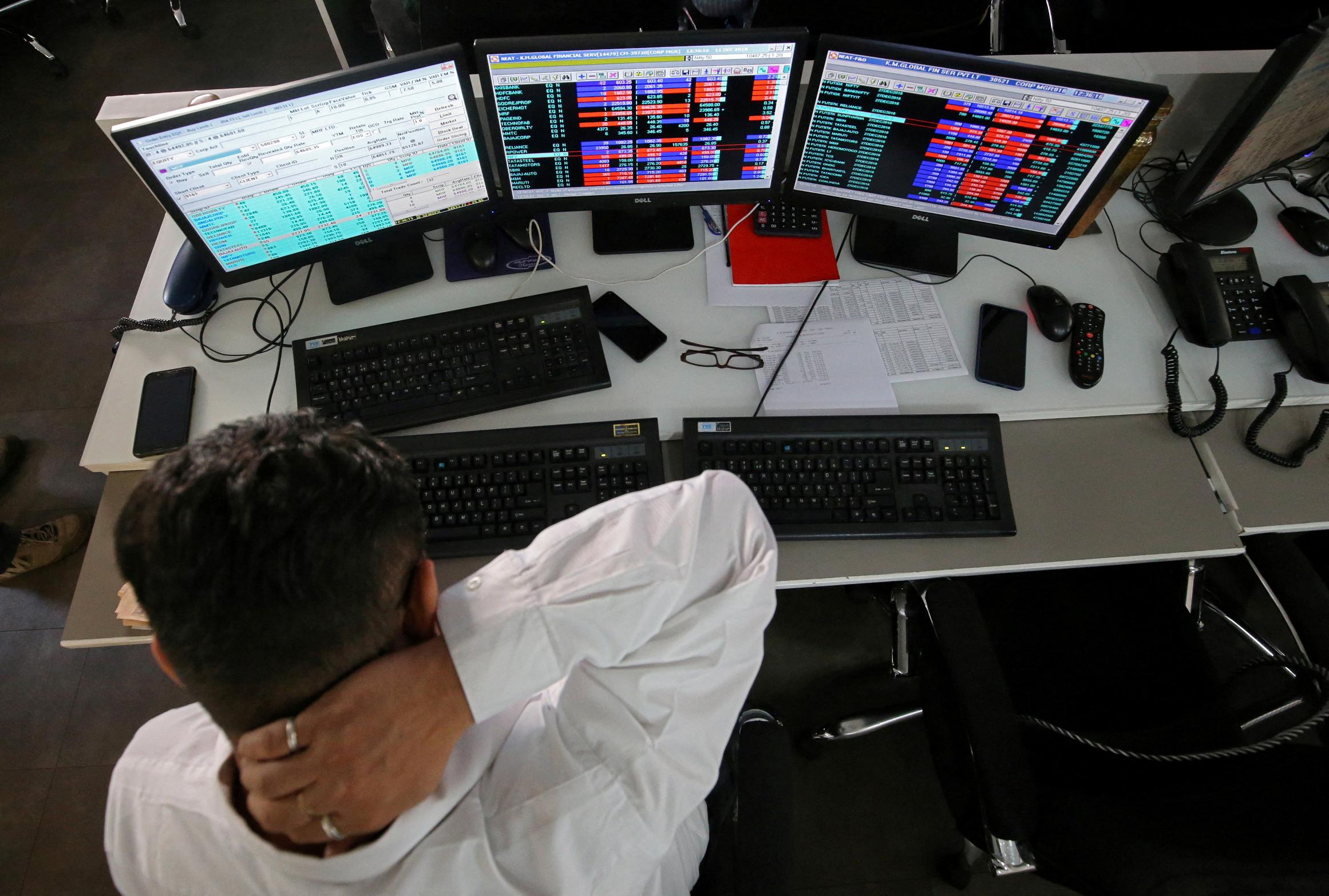
MUMBAI, Oct 17 (Reuters) - Millions of Indian retail traders are exploring alternative ways to earn profits ahead of stricter regulations on trading equity derivatives next month, but their transition is unlikely to be smooth, investors and brokers say. Derivatives trading in India has boomed in the past few years, with short-term index options bets pushing up the notional value of options traded on the country's exchanges to the highest globally. Regulatory data show retail traders contributed to more than a third of volume in the derivatives market, leading the Securities and Exchange Board of India (SEBI) to warn of risks and reduce the number of contracts offered by exchanges. The regulator also tripled the minimum trading amount. The new rules go into effect on Nov. 20. Commodity derivatives, foreign exchange and intraday equity bets, alongside holding options contracts for longer, are some alternatives traders could tap, according to nine retail traders and top brokerages Reuters spoke to. Zerodha, India's second-largest online brokerage, estimates trading volumes for equity options are likely to drop about 30% after the new rules kick in. The new rules "are sufficient enough to make retail traders want to trade less," Faisal Mohammed, vice president of trading operations at Zerodha, said. He expects intra-day equity trading to pick up and reckons that the "commodity side" may increase too. For Saurav Samant, 26, trading options was a way out of his job in the merchant navy, where he spent months at sea on a cargo ship. He quit his job a year ago and made money by trading options linked to the NSE bank index - a popular weekly contract which will be phased out next month. Samant said he now intends to trade the available weekly options and has been learning how to trade FX. India's largest exchange NSE will only offer a weekly options contract linked to the Nifty 50 (.NSEI) , opens new tab index while older peer BSE will offer weekly contracts linked only to the Sensex 30 (.BSEN) , opens new tab, the exchanges have said. HOUSEHOLDS FINANCES AT RISK Last month, a SEBI study showed that nearly all traders in the equity derivatives segment in the 12 months through March were retail, and more than 90% of these traders incurred losses. These losses, coupled with the unchecked growth in futures and options trading prompted Finance Minister Nirmala Sitharaman to warn of risks to household finances. The monthly notional value of derivatives traded was 10,923 trillion rupees ($130 trillion) across two exchanges in August - the highest globally, data from the regulator showed. Cusrow Sadri, 50, is among the few retail traders for whom options trading was profitable. Trading profits surpassed what he was earning from his corporate job, prompting him to quit and trade full time. Sadri, who was selling options that expire the next day, is now considering holding options contracts for longer and moving to commodity derivatives, which are not covered by the new rules, he said. However, traders are not expected to have a smooth transition from options trading to other segments. "There is no market in India which can remotely match the liquidity, the depth that the equity options provide," Amit Sahita, a director at Fincode Advisory Services, a wealth management firm, said. "That is why a part of the option volumes that is lost (because of the new rules) will not find a home anywhere at all." ($1 = 84.0120 Indian rupees) Sign up here. https://www.reuters.com/world/india/india-equity-option-traders-hunt-new-playgrounds-tighter-rules-loom-2024-10-17/
2024-10-17 06:39
MEXICO CITY, Oct 17 (Reuters) - Mexico's Senate voted to amend the country's constitution late on Wednesday to give dispatch preferences to state electricity company CFE, cementing the national power generator's preferential status above foreign or private competitors. The initiative passed the upper chamber of Congress with 86 votes to 39, meeting the requirement of two-thirds support to change the constitution. The constitutional reform will require national grid operator Cenace to prioritize power generated from the CFE's power plants, even if it is more costly than power supplied by private producers. The proposal already passed the lower house of Congress last week, with support from the leftist ruling Morena party of President Claudia Sheinbaum. The constitutional overhaul of dispatch rules will take effect once it passes a majority of state legislatures, and is then published in the government's official gazette. Like her predecessor, former President Andres Manuel Lopez Obrador, Sheinbaum has sought to give more control of Mexico's energy market to state-owned power company Comision Federal de Electricidad (CFE). Lopez Obrador sought to enact the same change during his term, but was thwarted by legal challenges. Sign up here. https://www.reuters.com/world/americas/mexican-senate-votes-give-constitutional-preference-state-power-company-2024-10-17/