2024-10-17 06:36
MADRID, Oct 17 (Reuters) - Spanish steel maker Sidenor sent a letter stating it was considering a tender offer for part or all the shares of train manufacturer Talgo (TLGO.MC) , opens new tab, the latter said late on Wednesday in a filing to the stock market regulator. Talgo did not say whether Sidenor disclosed the stake it intends to buy or at what price. Privately owned Sidenor, which is headquartered in the Basque Country and runs several steel mills in northern Spain, did not respond to a request for comment. Its move comes two months after Hungarian consortium Ganz-Mavag last month withdrew a previous tender offer for the Spanish train maker following the Spanish government's veto on the deal. Ganz-Mavag had launched a tender bid in March offering 619 million euros ($671.74 million), or 5 euros per share, for the maker of Spain's signature AVE high-speed trains. The offer represented a 17% premium over Talgo's value at the time. The Spanish government decided to block the transaction saying it entailed risks to national security, public order and public health. Officials said Talgo was a strategic company given its access to sensitive information on the country's railway network and, by extension, national security. ($1 = 0.9215 euros) Sign up here. https://www.reuters.com/markets/commodities/spanish-steel-maker-sidenor-announces-tender-offer-talgo-shares-2024-10-17/

2024-10-17 06:36
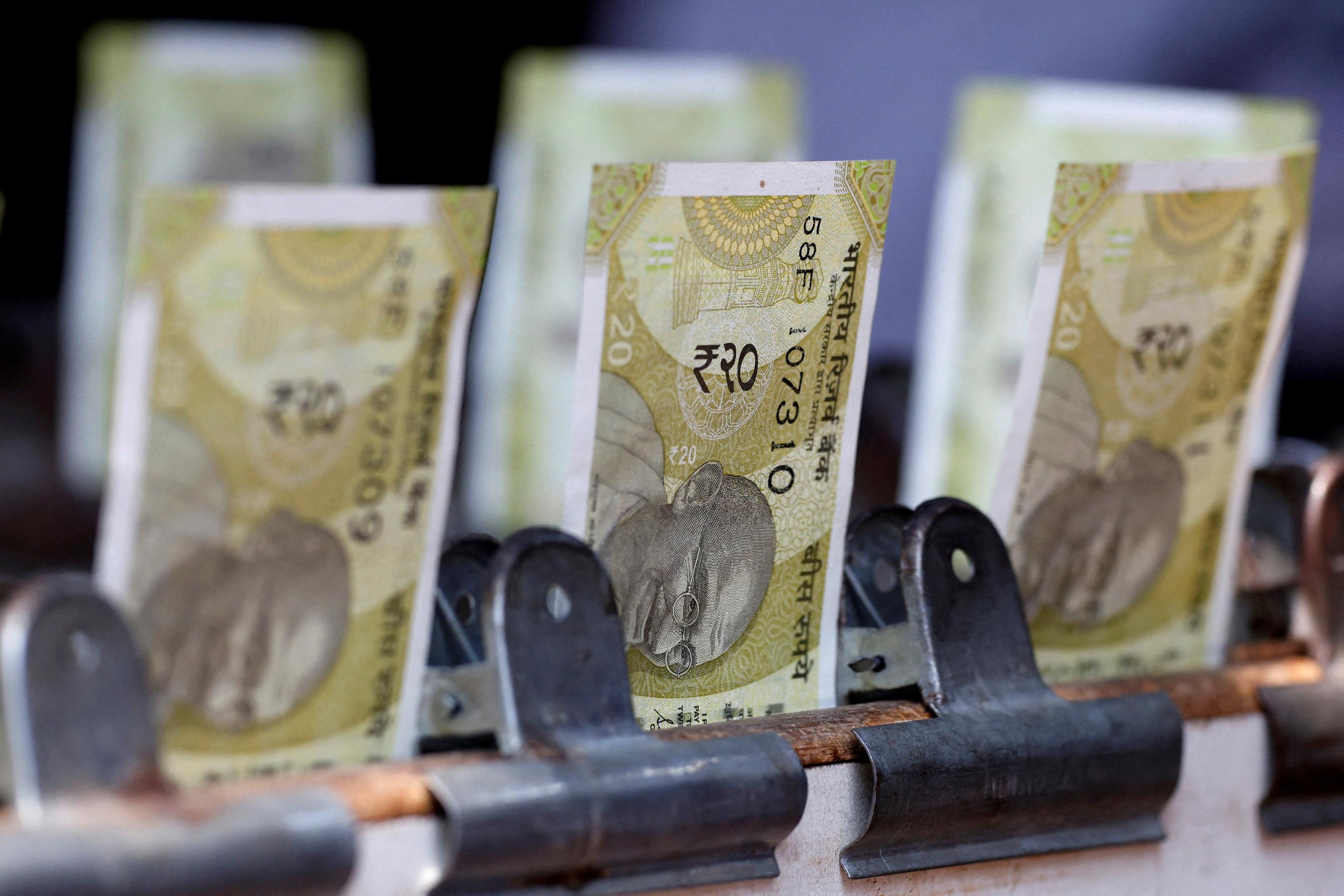
MUMBAI, Oct 17 (Reuters) - The Indian rupee hovered close to a key level on Thursday as its Asian peers declined and local stocks remained under pressure in the backdrop of a foreign fund exodus. The rupee was at 84.01 against the U.S. dollar as of 11:40 a.m. IST, a tad weaker than its close at 83.9950 in the previous session. Asian currencies were down between 0.1% to 0.4% as the dollar hovered close to its highest level in 11 months, boosted by heightened odds of U.S. election victory for former President Donald Trump and near certainty of a 25-bps Federal Reserve rate cut next month. Benchmark Indian equity indices, the BSE Sensex (.BSESN) , opens new tab and Nifty 50 (.NSEI) , opens new tab were lower by 0.3% and 0.5% respectively on the day, pegged back by a sharp fall in Bajaj Auto (BAJA.NS) , opens new tab shares and foreign investors continued sale of local stocks. Overseas investors have sold $8 billion worth of domestic stocks over October so far, the highest monthly outflow in over four years. While price-action on Thursday may be lacklustre, the dollar-rupee pair remains a "buy on dips," given the recent gains for the dollar and upcoming U.S. elections, Dilip Parmar, a foreign exchange research analyst at HDFC Securities said. Meanwhile, inflows related to Hyundai Motor India's IPO undershot market expectations, with traders pointing to muted overnight dollar-rupee swap rates that signalled muted inflows. The "sentiment is slightly negative on equities," which is likely to keep the rupee under pressure but declines below 84.08-84.10 are unlikely given the RBI's firm defence of the currency near those levels, a trader at a foreign bank said. Investors now await the European Central Bank's policy decision due later in the day alongside U.S. retail sales and jobless claims data. Sign up here. https://www.reuters.com/markets/currencies/rupee-hovers-near-84usd-dip-regional-peers-tepid-local-equities-2024-10-17/
2024-10-17 06:26
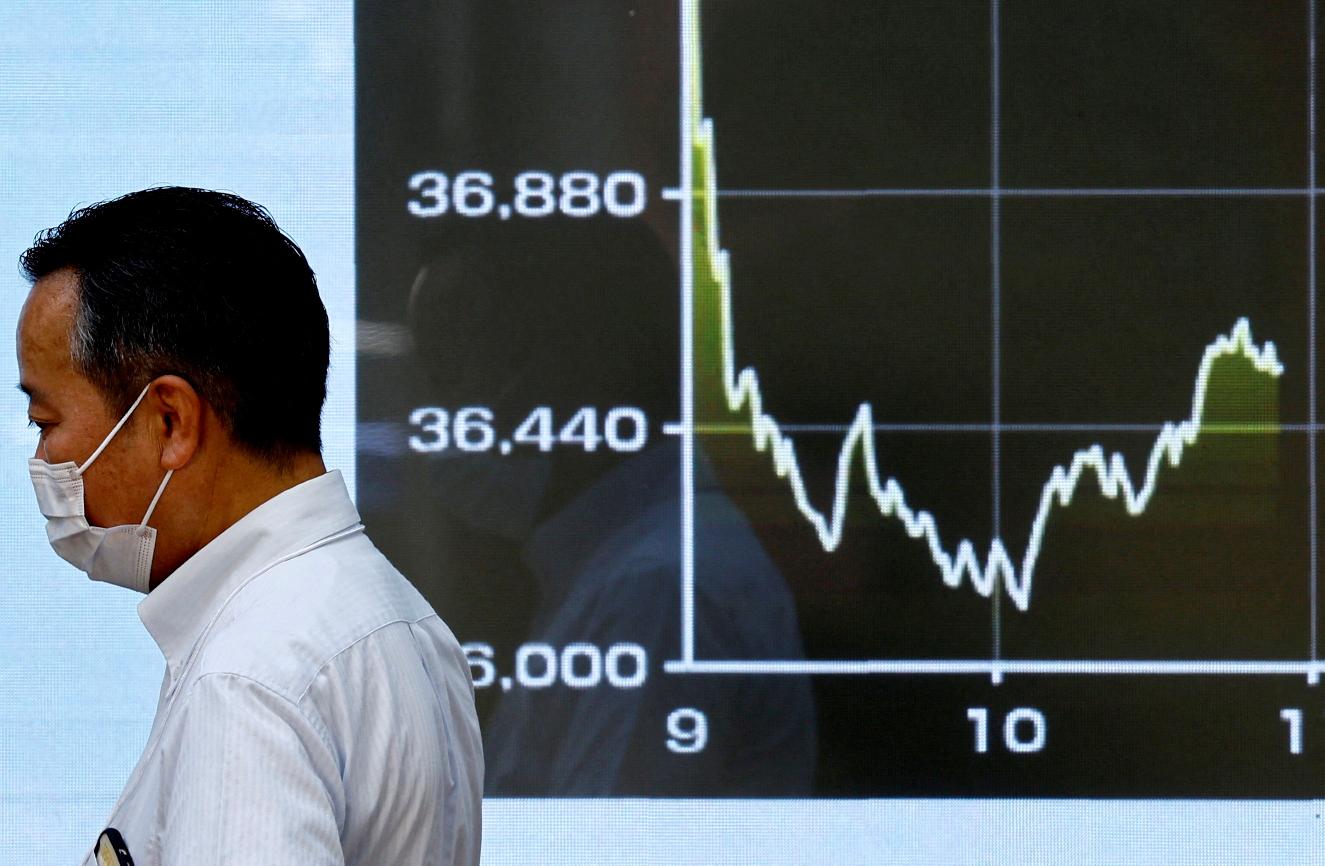
U.S. retail sales beat estimates Gold touches record high ECB cuts rates by 25 bps NEW YORK, Oct 17 (Reuters) - The S&P 500 and the Nasdaq pared their gains to end essentially unchanged on Thursday, while the Dow notched a record closing high as investors parsed an array of mixed quarterly earnings and digested a series of robust economic reports. Gold hit a record high as the safe-haven metal benefited from looming U.S. election uncertainties. Technology shares (.SPLRCT) , opens new tab, particularly chips (.SOX) , opens new tab outperformed after Taiwan Semiconductor Manufacturing (2330.TW) , opens new tab, beat earnings estimates and forecast a jump in fourth-quarter revenue, helping to ease fears of softening demand in the sector. "By far the biggest contributor to today’s rally is TSMC's upward guidance, and that the much-telegraphed semiconductor slowdown associated with potential oversaturation of AI is not emerging, at least in their order books," said Michael Green, chief strategist at Simplify Asset Management in Philadelphia. "So that leadership from the semiconductor space, when it hits the largest-cap companies, is going to push the headline indices higher," Green said. "That, and the response to retail sales data," has added support to U.S. stocks, Green added. The S&P 500 closed nominally lower and the Nasdaq ended the session slightly higher, giving up earlier gains driven by a stronger-than-expected retail sales report, and jobless claims data that landed below economists' estimates. Growth shares (.IGX) , opens new tab outperformed value (.IVX) , opens new tab, while regional banks (.KRX) , opens new tab were ahead of the pack in the wake of upbeat earnings from M&T Bank (MTB.N) , opens new tab, KeyCorp (KEY.N) , opens new tab and others. The Dow Jones Industrial Average (.DJI) , opens new tab rose 161.35 points, or 0.37%, to 43,239.05; the S&P 500 (.SPX) , opens new tab fell 1.00 point, or 0.02%, to 5,841.47; and the Nasdaq Composite (.IXIC) , opens new tab rose 6.53 points, or 0.04%, to 18,373.61. European shares rallied, closing within 1% of record high levels after the European Central Bank implemented a broadly expected 25-basis-point interest rate cut, while offering scant clues regarding its next move. The move marked the ECB's third rate cut this year as the central bank has shifted its focus from reining in inflation to shoring up the EU's sputtering economy. MSCI's gauge of stocks across the globe (.MIWD00000PUS) , opens new tab rose 0.21 points, or 0.02%, to 852.43. The STOXX 600 (.STOXX) , opens new tab index rose 0.83%, while Europe's broad FTSEurofirst 300 index (.FTEU3) , opens new tab rose 17.82 points, or 0.87%. Emerging market stocks (.MSCIEF) , opens new tab fell 8.88 points, or 0.78%, to 1,135.16. U.S. Treasury yields gained ground after data suggested the U.S. economy is on solid footing, but left the Fed with enough room to move forward on a slower path to lower rates. The yield on benchmark U.S. 10-year notes rose 8.2 basis points to 4.098%, from 4.016% late on Wednesday. The 30-year bond yield rose 9.8 basis points to 4.3972% from 4.299% late on Wednesday. The 2-year note yield, which typically moves in step with interest rate expectations, rose 4.8 basis points to 3.983%, from 3.935% late on Wednesday. The dollar touched an 11-week high after retail sales data beat expectations, boosting confidence in the health of the U.S. economy. The dollar index , which measures the greenback against a basket of currencies including the yen and the euro, rose 0.24% to 103.79, with the euro down 0.3% at $1.0828. Against the Japanese yen , the dollar strengthened 0.41% to 150.23. Crude oil prices edged higher as investors juggled developments in the Middle East conflict and falling U.S. inventories with sturdy economic data. U.S. crude rose 0.40% to $70.67 a barrel and Brent rose to $74.45 per barrel, up 0.31% on the day. Gold prices hit a record high on firming expectations for additional rate cuts from the Fed and mounting uncertainties surrounding the Nov. 5 U.S. presidential election. Spot gold rose 0.7% to $2,691.97 an ounce. Sign up here. https://www.reuters.com/markets/global-markets-wrapup-1-2024-10-17/
2024-10-17 06:06
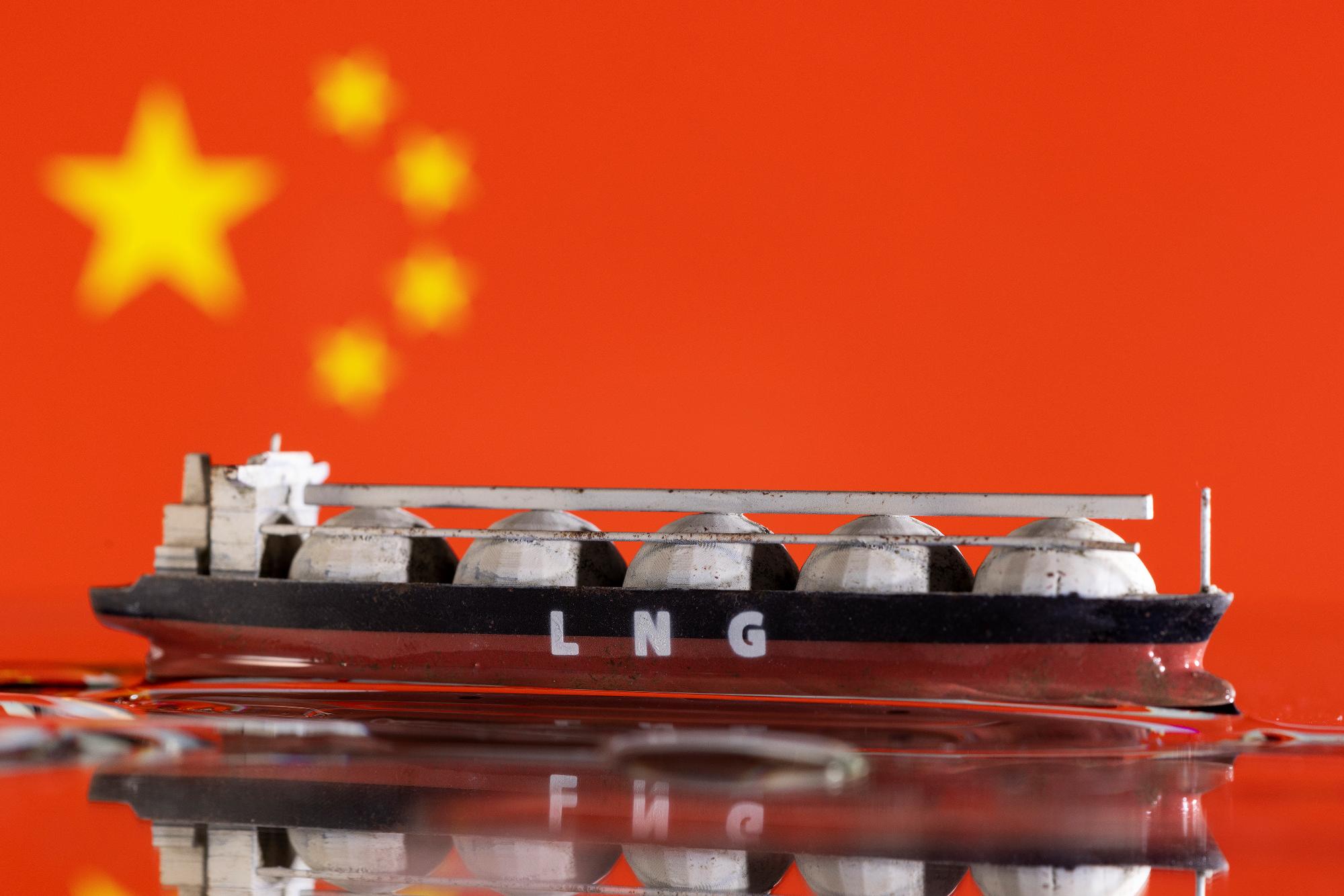
LITTLETON, Colorado, Oct 17 (Reuters) - China has boosted imports of liquefied natural gas (LNG) this year to the highest since 2021 and has lifted natural-gas fired electricity generation to record levels. At a high level, rising purchases and use might suggest that China is starting to rely more on gas to generate power and electricity in the country, and that further increases in both gas imports and consumption are looming. However, a closer look at China's electricity trends reveal that gas plays only a minimal role in the generation mix, and that renewables and other clean power sources hold much greater prominence when it comes to electricity production. What's more, gas prices remain elevated compared to power produced from coal and renewables, which is undermining gas' appeal as a power source among industrial firms which have been hit by China's enduring property crisis and economic slowdown. If smokestack firms continue to favour cheaper fuels for industrial applications while utilities prioritise renewables, there may be only very limited scope for further natural gas consumption increases in China over the near to medium term. A SMALLER SLICE OF A BIGGER PIE Natural gas-fired electricity generation in China hit a record 188 terawatt hours (TWh) over the first eight months of 2024, Ember data shows. That total was 1.5% up from the same months in 2023, and for natural gas bulls was a sign of continued expansion of natural gas in China's electricity generation system following a 6.4% rise in gas-fired generation in 2023. However, natural gas's share of total utility-scale electricity generation declined to a seven-year low of 2.8% so far in 2024, which is down from a 3% share in 2023. The erosion of gas's slice of China's generation mix clearly indicates that electricity producers have other priorities when it comes to boosting electricity supplies. Indeed, only bioenergy plants have a smaller share of national utility-scale electricity supply, while production from solar, wind and hydro assets are all at least three times larger than gas-fired output. LNG IMPORTS China's imports of LNG so far this year have jumped by nearly 15% from the same months in 2023, according to LSEG. That growth pace handily exceeded the roughly 5% rise seen into South Korea and the 2.5% growth posted by Japan over the same period. The cumulative total of LNG shipped to China so far this year was just shy of 80 billion cubic meters, according to LSEG, and the highest since 2021 for the same period. That upturn in LNG demand does indicate greater gas use by both power firms and other end users such as factories and industrial plants. However, the power generated from imported LNG is estimated to be roughly $30-$40 more expensive per megawatt hour than that produced using coal, according to the Institute for Energy Economics and Financial Analysis (IEEFA). That means that only those firms that have already replaced coal-fired boilers with gas-fired set-ups are burning that gas, while those plants that can still use coal or other fuels for power are burning that instead and keeping clear of pricey gas. A sustained recovery in overall industrial demand will likely trigger further LNG imports and use in China going forward, especially by those firms that don't have the means to use coal instead. But unless LNG costs come materially lower over the near term, few other Chinese industrial users are expected to sign up for a switch to gas - especially if China's overall economy remains wobbly and industrial profits scarce. OUTGROWN Gas's usage prospects also look limited in the electricity production realm. Since 2018, Chinese utilities have boosted output from solar farms by 378% and by 163% from wind farms, but have lifted gas-fired generation by only 36%. What's more, utilities have added nearly 14 times more renewables generation capacity as gas-fired capacity since 2018, and continue to accelerate the build-out of solar and wind farms across the country. The resulting electricity production network is clearly geared to prioritise clean power over fossil power, even though coal remains the largest single fuel source in China's generation system. Indeed, collective electricity output from solar, wind, hydro and nuclear plants hit new highs so far this year, and has climbed 20% from the same months in 2023. That strong jump pushed clean power's share of the overall generation mix to a new high of 38%, and helped cut fossil fuel's share to a record low 62%. Given Beijing's pledge to become carbon neutral by 2060, further steep increases in clean energy generation are required, while only limited increases in fossil power are expected. Further, China's utilities intend to rely more on coal than other fossil fuels as the main pillar of electricity output, and are building new coal capacity to replace outdated plants and ensure grid stability as total power demand continues to grow. That leaves little scope for any substantial rise to natural gas's generation footprint in China, even if LNG imports and gas-fired output continue to nudge slowly higher in the near to medium term. Sign up here. https://www.reuters.com/business/energy/dont-get-too-excited-about-chinas-growing-natural-gas-use-maguire-2024-10-17/
2024-10-17 05:36
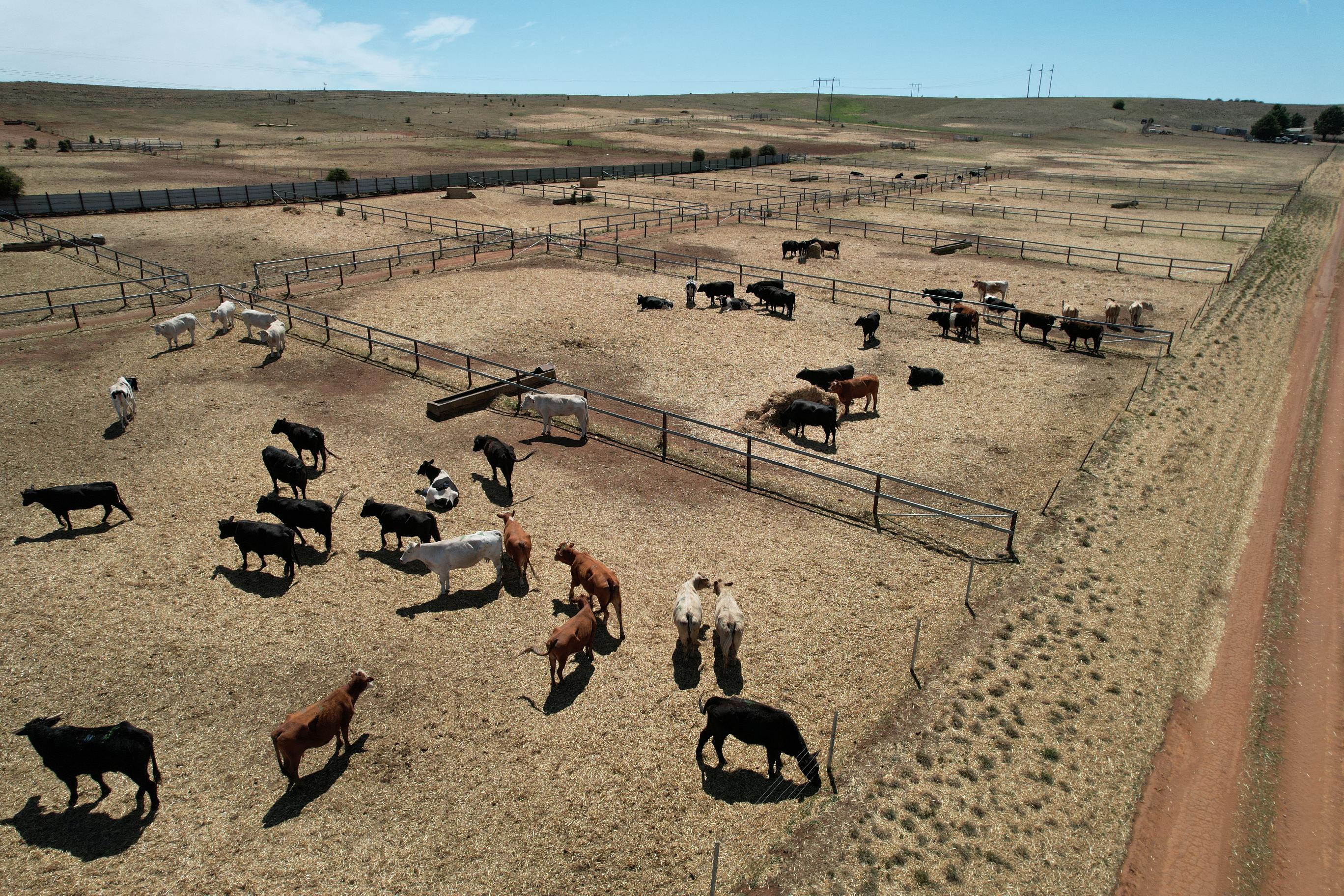
U.S. beef production dwindling after drought Australia is best placed to take market share from U.S. U.S. exports should recover by the end of the decade COOMA, Australia, Oct 17 (Reuters) - In a refrigerated room, around two dozen staff in hats, gloves and blue plastic aprons carve and pack carcasses into boxes within minutes of their slaughter. The Monbeef slaughterhouse, owned by Bindaree Food Group and located about 100 kilometres south of Canberra, processes some 200 cattle a day, up from 30-40 two years ago, and could ramp up to 220 in the coming months. "It's an ideal time," said Ryan McDonald, the plant's livestock manager. "Demand out of the U.S. export market is driving the prices up in abattoirs, which then drives the market up for cattle." A slump in U.S. beef production has opened the door for Australia to export record amounts of meat, growing its market share in North America and Asia and channelling billions of dollars to cattle processors and farmers. Australia and the United States are among the world's largest beef exporters. Each accounts for a little over 10% of the global beef trade, sending around a million metric tons worth some $8 billion overseas every year, trade data show. Drought has shrunk U.S. cattle numbers to their smallest since the 1950s, prompting the country to import more beef and export less. Analysts expect U.S. beef exports to fall further as farmers hold back cattle to breed and rebuild herds, creating a growing market opportunity for rivals. Most big beef exporters, including top shipper Brazil, have limited ability to take this opportunity either due to production downturns or limited market access. South American producers face tariffs in the United States and most are barred from shipping to Japan and South Korea, the biggest recipients of U.S. beef, due to rules on foot and mouth disease. But Australia is flush with cattle after four mostly wet years and has trouble-free trade access to the United States, Japan and South Korea. Australia's feast will not last forever. Cattle markets move in cycles of de-stock and rebuild and by the late 2020s, Australia's herd will likely be depleted while U.S. cattle numbers should have recovered. But for now, there's money to be made Down Under, said Ben Theurer, a Barclays analyst in Mexico City. "Australia is going to have a golden few years. It's going to be very, very profitable," he said. At the country's top processor, the Australian arm of Brazilian multinational JBS (JBSS3.SA) , opens new tab, EBITDA rose by 57% year-on-year to $226 million in the second quarter, financial statements show. Farmers are winning too. Cattle prices typically tumble when supply of animals is plentiful, but heavy steers are worth around A$3.50 ($2.35) a kilo, data from industry body Meat & Livestock Australia show, below recent peaks but above last year's low of A$2, when farmers struggled to break even. "We're benefiting," said George King, a farmer near Carcoar in southeast Australia. "Without that international demand, we'd be desperate." MARKET SHARE Australia's shipments to the United States have rocketed from an average of 11,000 tons worth $100 million a month in 2022 to nearly 40,000 tons worth $290 million in August, the most for any month since 2015, customs figures accessed via Trade Data Monitor show. Australia's share of U.S. beef imports has risen from 12% in 2022 to 22% in the first eight months of this year. Exports to Asia's biggest importers, Japan, China, and South Korea, have also increased as U.S. shipments declined. Australia's market share has grown from 38% in 2022 to 47% this year in Japan and from 35% to 45% over the same timeframe in South Korea, while the U.S. share fell from 40% to 34% in Japan and 55% to 48% in South Korea. In China, where Brazil and Argentina are the biggest suppliers, Australia's share has risen from 7% to 8% while the U.S. share slipped from 7% to 5%. Meat & Livestock Australia predicts that Australia's exports measured by shipped weight will rise from 1.08 million metric tons in 2023 to a record 1.36 million tons this year and 1.37 million tons in 2025 before dipping in 2026. However, the United States will eventually expand production and reclaim market share, said Angus Gidley-Baird, an analyst at Rabobank in Sydney. "This isn't a permanent shift," he said. "But it's a good opportunity." Sign up here. https://www.reuters.com/markets/commodities/australia-cashes-beef-exports-us-cattle-herd-shrinks-2024-10-17/
2024-10-17 05:18
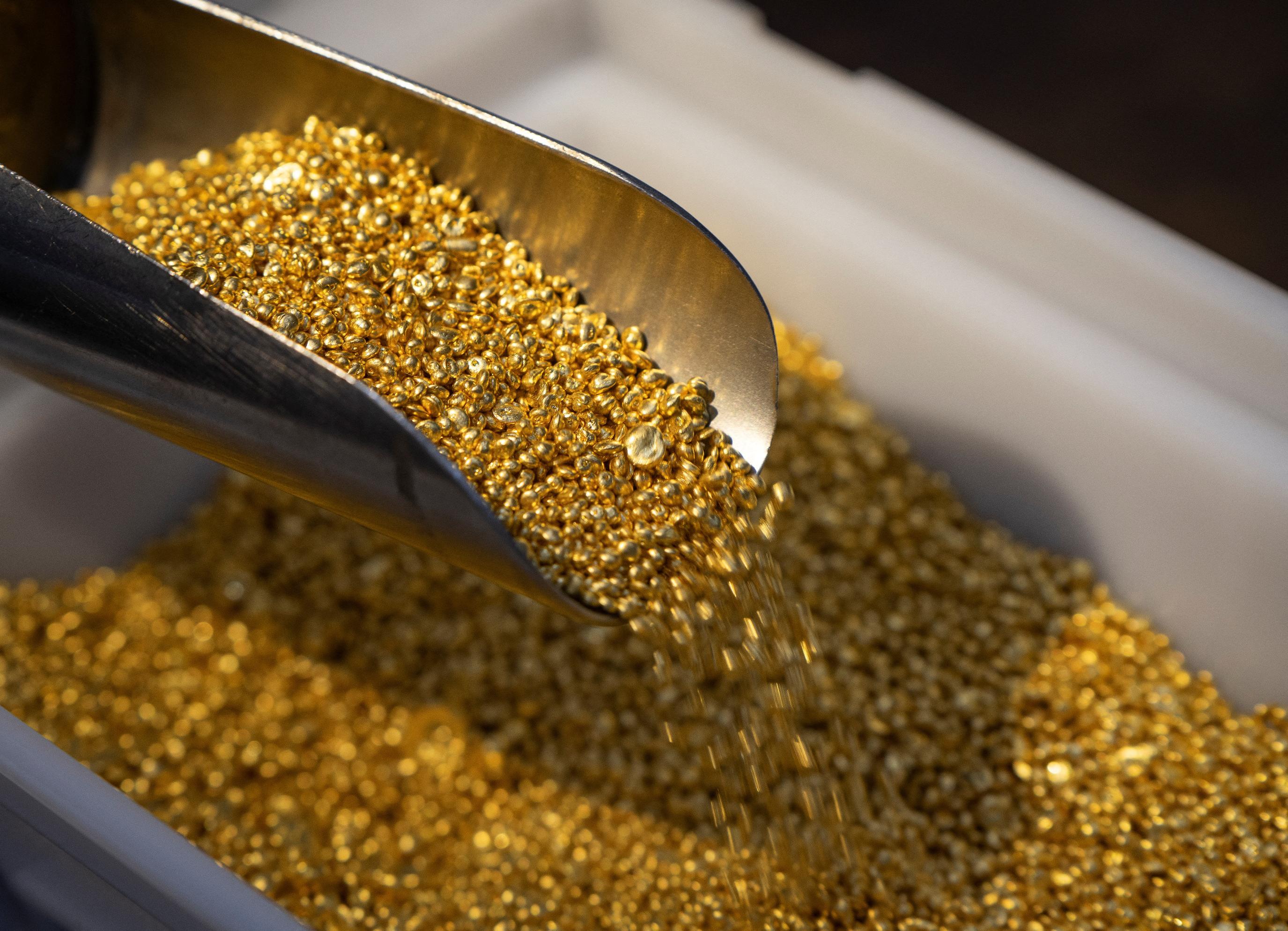
Gold hit record high of $2,688.82 an ounce ECB set for second straight rate cut US retail sales, weekly jobless claims due later in the day Oct 17 (Reuters) - Gold prices charged to an all-time high on Thursday, as expectations of more interest rate cuts by the U.S. Federal Reserve and uncertainty over the U.S. presidential election boosted demand for bullion. Spot gold rose 0.5% to $2,686.46 per ounce by 1126 GMT, after hitting a record high of $2,688.82 earlier in the day. U.S. gold futures gained 0.4% to $2,702.20. "With the U.S. election less than three weeks away, market caution is likely to remain a key theme. Given the tight race between Donald Trump and Kamala Harris, this adds another layer of uncertainty – stimulating demand for safe haven assets," said FXTM senior research analyst Lukman Otunuga. Gold has risen over 30% so far this year in a record-breaking rally driven by expectations that the Fed will cut rates further after a jumbo reduction in September, along with ongoing geopolitical uncertainties. The European Central Bank is also expected to make its first back-to-back rate cut in 13 years later in the day. Lower interest rates and geopolitical tensions tend to support bullion, which yields no interest and is considered a safe asset. "The LBMA poll that came out from Miami earlier in the week, where the base look for gold prices was to rally near $3,000 in the next year and silver doing even better, I think that potential is also just attracting a bit of attention," said Ole Hansen, head of commodity strategy at Saxo Bank. Gold prices are expected to rise to $2,941 a troy ounce over the next 12 months, delegates to the London Bullion Market Association's annual gathering predicted earlier this week. Meanwhile, traders are on the lookout for U.S. retail sales and weekly jobless claims data due later in the day. "A set of disappointing U.S. data may fuel bets around Fed rate cuts," Otunuga said. Spot silver rose 0.6% to $31.85 per ounce. Platinum gained 1.2% to $1,004.75 and palladium rose 1.1% to $1,034.25. Sign up here. https://www.reuters.com/markets/commodities/gold-flirts-with-record-highs-ahead-us-data-2024-10-17/