2025-12-19 10:57
German government deficit seen at 4.8% in 2028 Bundesbank urges action to control public spending Debt-to-GDP ratio to remain relatively low FRANKFURT, Dec 19 (Reuters) - Germany is heading for its largest deficit since the reunification between the east and west three decades ago due to the government's spending plans, the Bundesbank said on Friday, calling for urgent action to keep public finances in check. Berlin is planning to plough hundreds of billions of euros into infrastructure and defence in the coming years, moving away from its long-held focus on fiscal discipline in a bid to revive an economy that has lost competitiveness. Sign up here. The central Bundesbank estimates these investments, combined with tax cuts and transfers, will push the government's deficit to 4.8% of economic output in 2028, the highest level since 1995 after the reunification with East Germany. The German central bank, which advises the government on economic policy, said this would violate fiscal rules enshrined in the constitution and urged the government to take action. "It is currently unclear how central government intends to deal with the urgent need for action to ensure compliance with national fiscal rules by 2028," the Bundesbank said in its monthly report. Even with the higher deficits, Germany's debt-to-GDP ratio will remain relatively low at 68% in 2028 from 63% this year. Italy and France are both well into triple digits. DEBT BRAKE Germany's debt brake limits borrowing to 0.35% of gross domestic product. The German government, a coalition between the centre-right Christian Democrats and centre-left Social Democrats, has secured an exemption for defence spending and for a special 500-billion euro ($585.60 billion) infrastructure fund. But the Bundesbank estimates much of the 2028 deficit will come from social spending and other types of investment. "There will be revenue shortfalls due to various tax cuts and additional expenditure as a result of transfers," the Bundesbank said. On the upside, the cumulative overall effect of infrastructure and defence spending will add around 1.3 percentage points to GDP between 2025 and 2028, the Bundesbank said. It estimates that every euro invested in those sectors will add roughly 70 cents to economic output. ($1 = 0.8538 euros) https://www.reuters.com/business/finance/germany-headed-biggest-deficit-since-reunification-bundesbank-says-2025-12-19/

2025-12-19 10:56
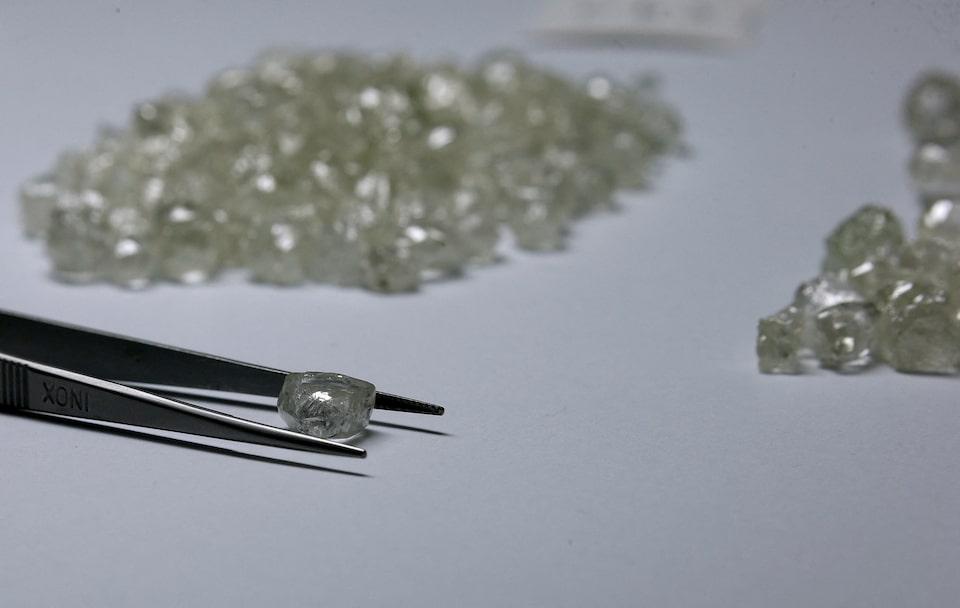
GABORONE, Dec 19 (Reuters) - Botswana's government now forecasts an economic contraction of almost 1% this year as its key diamond sector continues to struggle, its finance minister said in a budget review on Friday. When the main budget was presented in February the Southern African country's government had hoped for a 3.3% gross domestic product (GDP) expansion this year, rebounding from last year's 3% contraction. Sign up here. But by mid-year it was projecting almost no growth as a prolonged downturn in the global diamond market showed no sign of abating. Diamonds normally contribute around one-third of Botswana's national revenues and three-quarters of its foreign exchange receipts. "The macroeconomic outlook for the whole of 2025 remains fragile, with GDP projected to contract by 0.9%. This forecast reflects continued weakness in the diamond sector," Finance Minister Ndaba Gaolathe said. "Debt risks are mounting as persistent fiscal imbalances have necessitated increased borrowing, leading to a structurally higher debt trajectory," he added. Gaolathe said the government had responded with austerity measures to try to rein in expenditure, including by restricting an overtime allowance for civil servants and placing a moratorium on domestic and foreign travel. He said more austerity measures would be announced in next year's budget speech to redirect funds to areas that could generate future growth. https://www.reuters.com/world/africa/botswanas-economy-seen-shrinking-almost-1-2025-due-diamond-sector-woes-2025-12-19/
2025-12-19 10:54
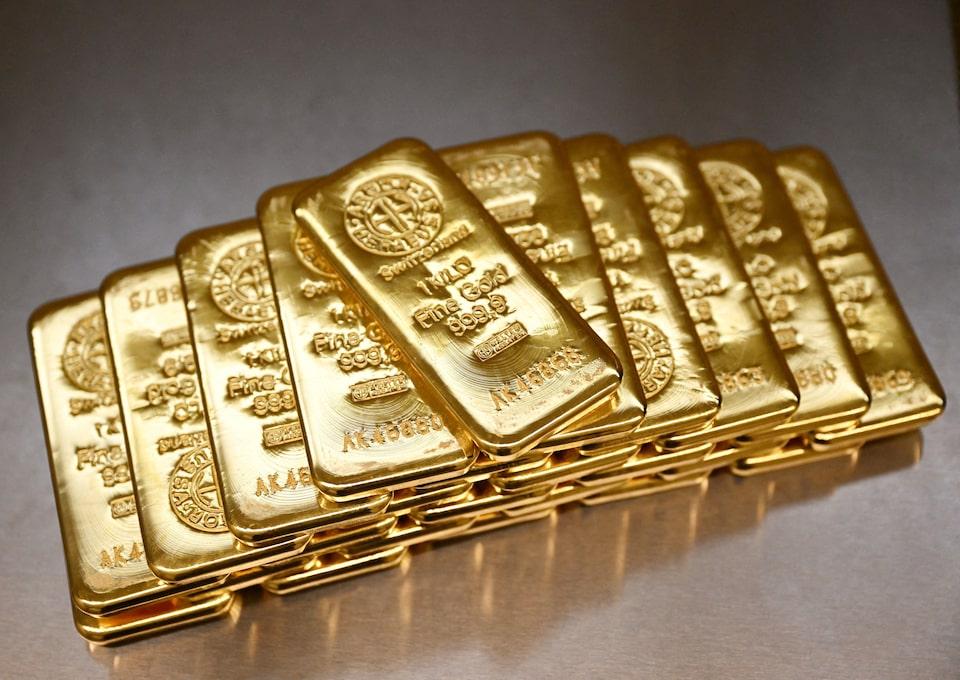
Bank of Italy sits on world's third-largest gold pile ECB twice criticised the parliamentary initiative Italy denies plans to use gold reserves to cut debt ROME, Dec 19 (Reuters) - An Italian parliamentary committee has approved an amendment to next year's budget stating that the gold reserves held by the country's central bank belong to "the people," lawmakers said, ignoring criticism from the European Central Bank. Since the amendment was presented last month by Giorgia Meloni's right-wing Brothers of Italy party, the ECB has intervened on two occasions to warn that it could undermine the Bank of Italy's independence. Sign up here. "Gold reserves managed and held by the Bank of Italy, as recorded on its balance sheet, belong to the Italian people," said the text approved on Friday by the budget committee of the upper house of parliament, the Senate. The proposed legislation, which still needs various approval steps before entering into force, contains wording aimed at clarifying that it does not override European Union rules protecting central bank independence. The text is, however, broadly in line with the draft criticised by the ECB in its second legal opinion. Economy Minister Giancarlo Giorgetti said on Monday he and ECB chief Christine Lagarde had resolved the issue last week, on the sidelines of a meeting of euro zone finance ministers in Brussels. "We believe that the matter can be considered closed," the minister said in parliament. Meloni's party has justified the initiative by arguing that foreign entities who are among the stakeholders of Italy's central bank should not be able to claim rights over the gold reserves. An initial, stronger proposal presented to parliament before being reworded by the government, stated that "the gold reserves managed and held by the Bank of Italy belong to the state, on behalf of the Italian people." The Bank of Italy says on its website it owns the world's third-largest national gold stockpile, behind those of the United States and Germany. Its 2,452 metric tons of gold are worth $300 billion, roughly 13% of Italy's national output. Giorgetti denied last week any plan to transfer the gold off the Bank of Italy's balance sheet, a move that would circumvent the prohibition on central banks financing the public sector. He said the amendment was merely aimed at stating "a political principle." Both houses of parliament are due to approve the budget before the end of the year. https://www.reuters.com/business/finance/italy-parliamentary-panel-approves-peoples-claim-central-banks-gold-2025-12-19/
2025-12-19 09:53
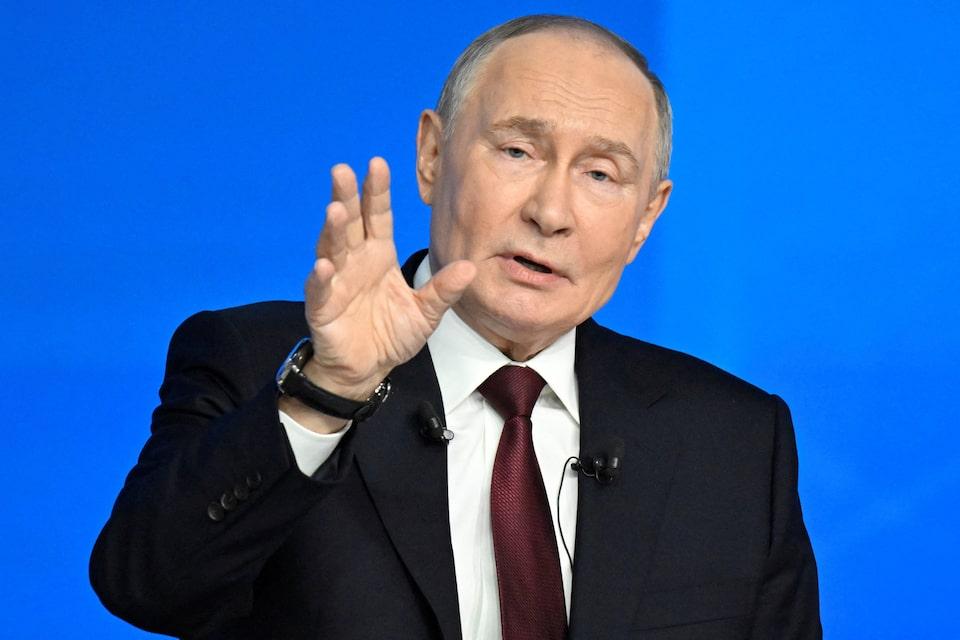
MOSCOW, Dec 19 (Reuters) - An economic slowdown in Russia this year to 1% growth from 4.3% in 2024 was the result of conscious actions by the central bank to bring down the inflation rate, President Vladimir Putin said on Friday. Putin told his annual press conference that, as a result of these actions, the inflation rate will slow to between 5.5% and 5.7% in 2025 from 9.5% last year. He said all the armed forces' needs could be financed from the state budget. Sign up here. https://www.reuters.com/business/russias-putin-says-cooling-economy-2025-is-conscious-decision-2025-12-19/
2025-12-19 07:54
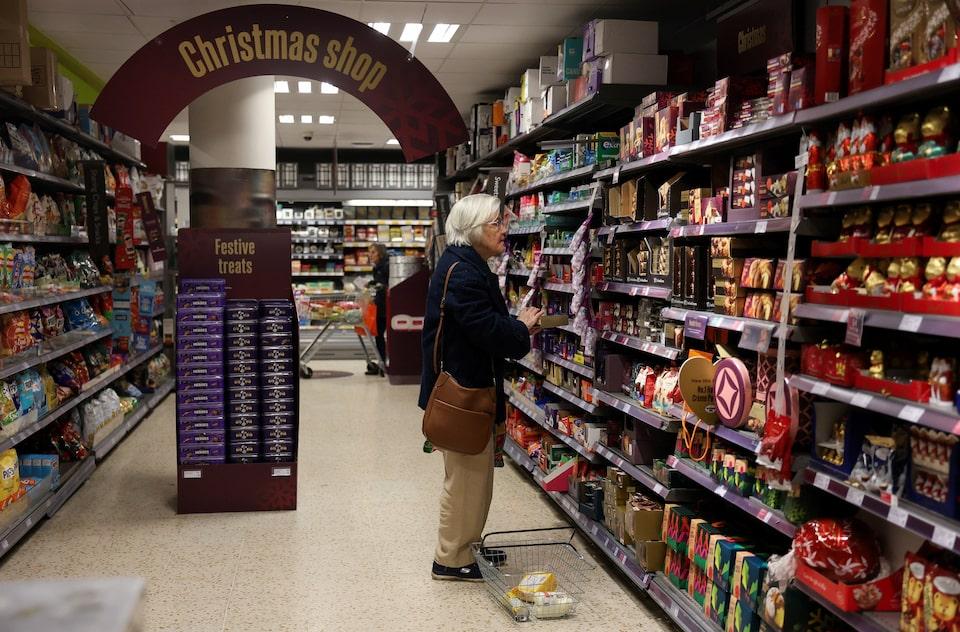
UK retail sales drop by 0.1% in November Reuters poll had pointed to a rise of 0.4% Supermarket sales fall for 4th month Demand for gold dips, jewellers say Data adds to signs of slowdown ahead of budget LONDON, Dec 19 (Reuters) - British retail sales fell last month, official figures showed on Friday, the latest in a string of data suggesting a slowdown in the broader economy ahead of finance minister Rachel Reeves' budget at the end of last month. Sales volumes dropped by 0.1% in November from October, as a boost from the Black Friday promotional offers failed to match the impact of previous years. Sign up here. In October, sales fell by a revised 0.9%, a slightly less severe fall than a drop of 1.1% which was initially reported, the ONS said "A second consecutive month of decline in retail sales will be a big disappointment for retailers, particularly with Black Friday and early Christmas shopping captured in these figures," Oliver Vernon-Harcourt, head of retail at Deloitte, said. Economists polled by Reuters had expected sales volumes to rise by 0.4% in month-on-month terms last month. "This year November's Black Friday discounts did not boost sales as much as in some recent years," Office for National Statistics senior statistician Hannah Finselbach said. "Meanwhile, our separate household survey showed that although some people said they were planning to do more shopping this Black Friday than last, almost twice as many said they were planning to do less." In the three months to November, sales rose but the 0.6% rise was the weakest reading since the three months to August. Supermarket sales volumes fell for a fourth consecutive month and jewellers reported lower demand for gold items as prices of the precious metal stabilised after their surge. The November data was collected between November 2 and 29. Reeves announced her budget on November 26. Previously released figures from the ONS have shown a drop in economic output and rise in the unemployment rate to its highest since 2021 in the three months to October. Paul Dales, chief UK economist at Capital Economics, said Friday's weak reading of retail sales supported his view that soft consumer spending would contribute to a slowing of economic growth to about 1.0% in 2026 from around 1.4% this year. Earlier on Friday, Britain's longest-running consumer survey showed only a slight pick-up in confidence in the days after Reeves announced 26 billion pounds ($34.8 billion) of tax increases but delayed the introduction of most of them. Borrowing data published separately by the ONS on Friday underscored the scale of Reeves' challenge to repair the public finances. Recent updates from UK retailers have highlighted tough market conditions ahead of Christmas, with clarity about the budget having done little to lift the mood. Card and gift retailer Card Factory (CARDC.L) , opens new tab warned on its profits. Frasers (FRAS.L) , opens new tab, a sportswear and fashion retailer, said excess inventory was weighing on the industry. Electricals retailer Currys (CURY.L) , opens new tab said spending and confidence was "muted" and it did not expect an improvement in 2026. ($1 = 0.7475 pounds) https://www.reuters.com/world/uk/uk-retail-sales-fall-01-november-2025-12-19/
2025-12-19 07:48
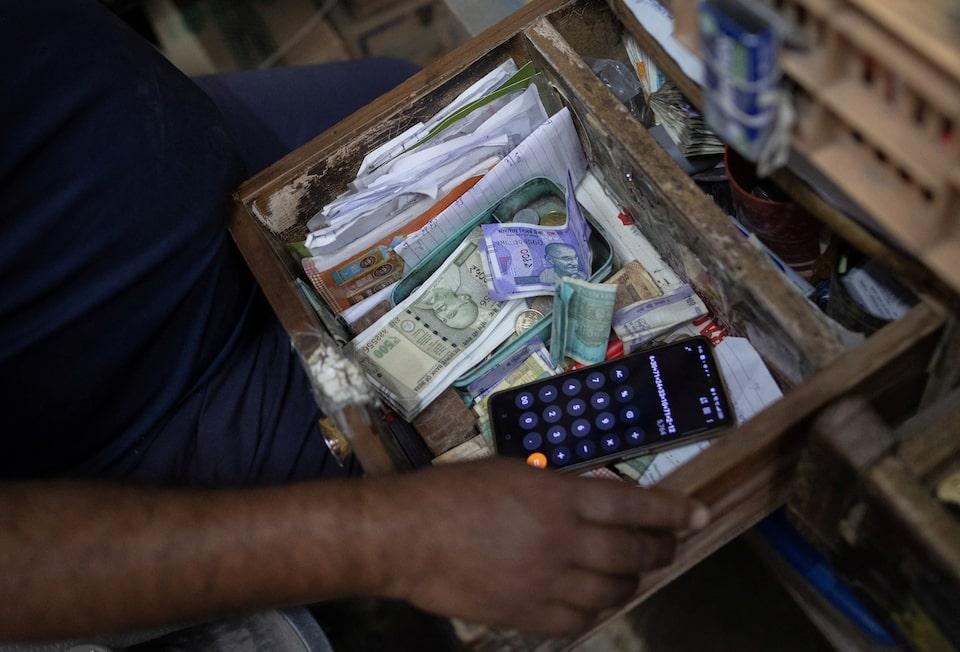
MUMBAI, Dec 19 (Reuters) - U.S. dollar/Indian rupee forward premiums rose to three-year peaks on Friday, spurred by excess dollar liquidity, traders unwinding positions and hedging demand in the non-deliverable forward market, bankers and FX advisors said. The one-year annualised dollar-rupee premium climbed to 2.84% on Friday, the highest since October 2022 and up over 60 basis points in December so far. Sign up here. Forward premiums initially jumped this month after the rupee repeatedly slid to record lows, prompting increased hedging and speculative interest. However, they have continued to climb over the past three sessions despite the currency's recovery, bankers said, on concerns over excess dollar liquidity, which is reflected in last-day December/first-day January swap points hitting 14 paisa. On Friday, the rupee climbed to 90 per U.S. dollar, extending a recovery that was spurred largely by the Reserve Bank of India's intervention. It had slipped to an all-time low of 91.0750 on Tuesday. UNABATED SURGE Banks can place dollar deposits to manage excess liquidity, but regulatory constraints inhibit them from doing so at the end of calendar years and quarters, bankers and analysts said. So banks manage exposure limits around the turn of the year by using dollar-rupee sell/buy swaps, a dynamic that had led to a similar spike in swap points on December 31 last year. This has impacted most tenors and is leading to heavy paying interest from foreign banks in near-term maturities, bankers said. Such exposure-related pressures tend to have the greatest impact on very short-dated maturities. The 1-month forward points rose to 40 paisa, highest since March 2022. A rise in dollar/rupee forward premiums makes hedging more expensive for importers but it also raises the incentive for exporters to hedge future receivables. "There is a dollar glut as RBI's (dollar) selling in spot does not seem to have been sterilised to the full extent," said Abhishek Goenka, CEO at FX advisory firm IFA Global. Analysts also cited the unwinding of received positions for the higher premiums. Meanwhile, offshore participants have continued hedging and are betting on further weakness in the rupee, which pushes premiums higher as well. https://www.reuters.com/world/india/indian-rupee-forward-premiums-hit-3-year-high-year-end-adjustments-hedging-2025-12-19/