2024-10-16 07:26
MANILA, Oct 16 (Reuters) - The Philippine central bank cut its key interest rate by 25 basis points (bps) to 6.0% on Wednesday, its governor said, reducing the overnight borrowing rate for a second straight meeting as expected. Bangko Sentral ng Pilipinas (BSP) Governor Eli Remolona said the decision to cut rates was based on the central bank's assessment that price pressures remained manageable. All 23 economists polled by Reuters had expected the central bank to cut its target reverse repurchase rate (PHCBIR=ECI) , opens new tab by 25 bps, and a majority have forecast another quarter-point cut in December. The cut took the target rate to its lowest since February 2023. The BSP slightly lowered its risk-adjusted inflation forecast for 2024 to 3.1% from 3.3% previously, but it raised the inflation estimates for 2025 and 2026 to 3.3% and 3.7% from 2.9% and 3.3%, respectively. Sign up here. https://www.reuters.com/markets/asia/philippine-central-bank-cuts-policy-rate-by-25-bps-expected-2024-10-16/
2024-10-16 07:24
NEW DELHI, Oct 16 (Reuters) - India has extended the mandate for India's imported coal-based power plants to operate at full capacity until Dec. 31 in anticipation of higher power demand, according to a government circular reviewed by Reuters. Previously, the government had allowed the imported coal-based plants to operate at full capacity until Oct. 15. The order is not yet public and the federal power ministry did not immediately respond to Reuters request for comments. Sign up here. https://www.reuters.com/markets/commodities/india-extends-operation-imported-coal-based-power-plants-circular-2024-10-16/
2024-10-16 07:15
UniCredit has pressed for a possible tie-up with Commerzbank Germany has said it was surprised by UniCredit's move UniCredit declines to comment FRANKFURT, Oct 16 (Reuters) - UniCredit (CRDI.MI) , opens new tab executives had conversations with top German government officials, including from the chancellery and the finance ministry, in the months before buying part of the state's stake in Commerzbank (CBKG.DE) , opens new tab, according to a parliamentary document reviewed by Reuters. The details of the meetings are presented in a government response to Matthias Hauer, a German lawmaker, and are the fullest account yet of contact between Germany and UniCredit before the Italian bank swooped to buy a large stake in Commerzbank. The German government has said it was surprised by UniCredit's move. UniCredit has since pressed for a possible tie-up in what would be the most ambitious attempt yet at a pan-European bank merger, but it faces considerable political hurdles in Germany ahead of national elections. Florian Toncar, the state secretary in charge of the stake sale, spoke with Marion Hoellinger, the head of UniCredit's German arm, on Sept. 4 about a government agency announcement on the stake sale and again on Sept. 10, the document showed. UniCredit Chairman Pier Carlo Padoan met with Joerg Kukies, a top official in the German chancellery, on the sidelines of a conference in Paris on May 16, according to the government's answer, that also flagged two further exchanges with chancellery officials, on June 7 and May 30. While the document sheds light on various meetings, it offers few details of the content of the discussions. Hauer, a Christian Democrat lawmaker, said the answer showed a "lively exchange" between the German government and the Italian bank, urging a further inquiry into how the government had sold the entire stake for sale to UniCredit rather than a number of investors. "The German government ... make out as if they have nothing to do with the chaos at Commerzbank. But they caused it," he said. The finance ministry declined to comment on such criticism, but government sources have said the state's stake sale was carried out in the usual way and officials were caught off guard by UniCredit's swoop. UniCredit declined to comment. The German government became the top shareholder in Commerzbank after a bailout during the global financial crisis more than a decade ago. Commerzbank is one of Germany's few major privately owned banks and a big lender to the country's so-called Mittelstand of medium-sized companies that form the backbone of Europe's largest economy. The document provides some details on the timeline in the days and hours ahead of the Sept. 11 announcement that UniCredit had amassed its 9% stake in Commerzbank. For the first time, UniCredit's Hoellinger also emerges as a central figure in communication with the government. Her Sept. 4 call with Toncar came a day after Germany's Finance Agency, an arm of the finance ministry, said that it would begin to sell shares in Commerzbank. The document provides no detail on the content of that conversation. But Toncar told Hoellinger to speak with the finance agency, which was overseeing the sale, a person with direct knowledge of the conversation said. On the evening of Sept. 10, at 8:13 pm, just hours after the finance agency announced it was gathering bids for Commerzbank from investors, Hoellinger and Toncar spoke on the phone about UniCredit's investment in Commerzbank, the document said. The call was very short, a finance ministry spokesperson said. Only then did Toncar learn that UniCredit had built up a large stake, a separate official said. When UniCredit announced that it had acquired its 9% stake - half from the German government and half on the open market - it also said it would apply to regulators to buy more. That immediately prompted Commerzbank executives to launch a defence strategy as they pursued independence as a stand-alone bank. Commerzbank's management, employees and the nation's chancellor, Olaf Scholz, have all voiced opposition to a potential takeover, but at least one big investor and some business leaders favour talks. UniCredit CEO Andrea Orcel, who has long held an interest in a tie-up with Commerzbank, has recently said that a combination would be the best outcome , opens new tab. But he's also said he could sell its stake. The document said that Kukies attended an event with Orcel in June but that there had been no bilateral talks. Sign up here. https://www.reuters.com/business/finance/unicredit-talked-top-german-officials-before-stake-buy-documents-show-2024-10-16/
2024-10-16 06:53
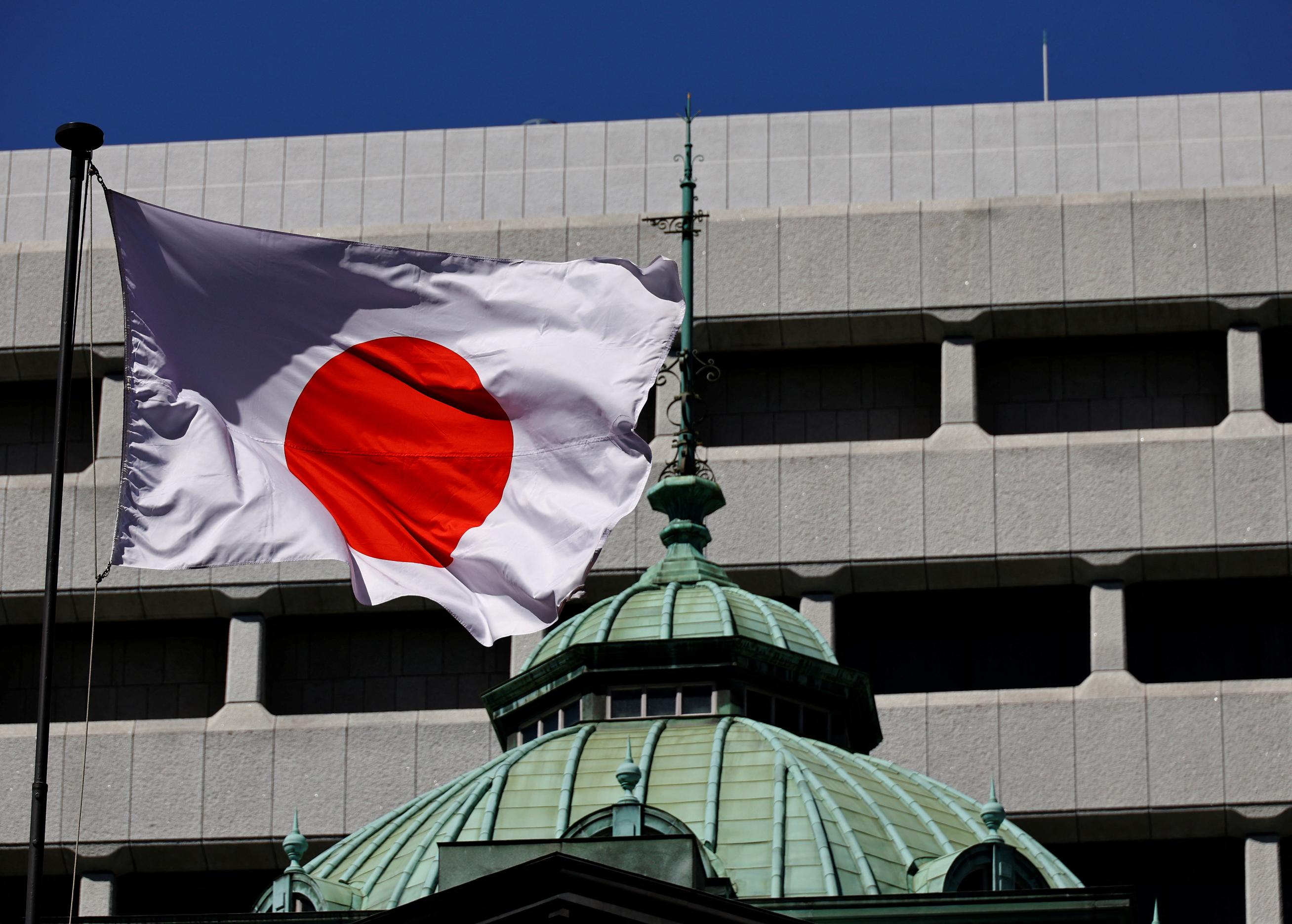
Yen may keep rising and weigh on inflation, Adachi says Adachi warns of uncertainty over next year's wage talks BOJ must scrutinise risks, avoid premature rate hike BOJ will eventually raise rates to levels deemed neutral TOKYO/TAKAMATSU, Japan, Oct 16 (Reuters) - The Bank of Japan must raise interest rates at a "very moderate" pace and avoid hiking prematurely, its policymaker Seiji Adachi said on Wednesday, warning that further yen rises and slowing global demand may weigh on inflation and wage growth. Adachi said Japan's economy has already met the conditions for normalising ultra-loose monetary policy, with the economy remaining on a firm footing and price rises broadening. But he warned of various economic uncertainties that required taking a cautious approach in raising interest rates. The yen may keep rising from multi-decade lows as the U.S. Federal Reserve enters a full-fledged monetary easing cycle, which would push down Japanese import costs and weigh on consumer inflation, he said in a speech to business leaders in Takamatsu, western Japan. There is also doubts on whether Japanese firms will keep raising wages sufficiently next year due to lingering global risks such as uncertainty over the outcome of the U.S. presidential election, as well as slowing Chinese and U.S. demand. "Given high uncertainty surrounding global developments, there is significant uncertainty over next year's wage developments in Japan. We must carefully monitor the situation," Adachi said, signalling the need to spend time scrutinising such risks before raising rates again. The remarks by Adachi, a former economist seen as taking a neutral approach on monetary policy, follow those by governor Kazuo Ueda suggesting the BOJ was in no rush to raise rates. When asked at a news conference what would be deemed "sufficient" pay increases, Adachi said Japan would need to see wages rise in 2025 at least around the pace seen this year. A meeting of BOJ regional branch managers, to be held in January, could offer enough clues on next year's wage outlook, he added, suggesting his preference to wait at least until the start of next year before raising rates again. Japan's largest union group Rengo is considering demanding wage hikes of 5% or more in 2025, maintaining the level of their request made in 2024, Jiji news agency reported on Wednesday. 'VERY MODERATE PACE' The BOJ ended negative interest rates in March and raised its short-term policy rate to 0.25% in July on the view Japan was on track to stably meet the bank's 2% inflation target. No policy change is expected at the BOJ's next rate review on Oct. 30-31, though markets are divided on whether the bank could hike rates in December or wait until January. A slim majority of economist polled by Reuters saw the BOJ forgoing a hike this year, with most expecting the central bank to raise rates again by March next year. Adachi said the BOJ should raise rates gradually and in several stages before inflation durably hits 2%, to avoid being forced to hike sharply by waiting too long. But he added policymakers must proceed cautiously to prevent a return to deflation. "Until underlying inflation sustainably and stably achieves our 2% target, we must basically maintain an accommodative financial environment and raise our policy rate at a very moderate pace," he said. The BOJ will eventually raise its policy rate to a level that neither cools nor overheats the economy, which is called the natural rate of interest. The BOJ does not have an official estimate on Japan's natural rate of interest. But it publishes as reference several academic estimates that put the natural rate of interest in a range of between -1% to +0.5%. Many analysts see the natural rate of interest as lying somewhere around 1%. "I believe we should avoid raising rates prematurely, so think we can use the most conservative estimate. Even so, our current, real policy rate is sufficiently below the natural rate of interest," Adachi said. "This means an accommodative financial environment remains in place," he said. Sign up here. https://www.reuters.com/markets/asia/boj-must-raise-rates-very-moderate-pace-says-board-member-adachi-2024-10-16/
2024-10-16 06:50
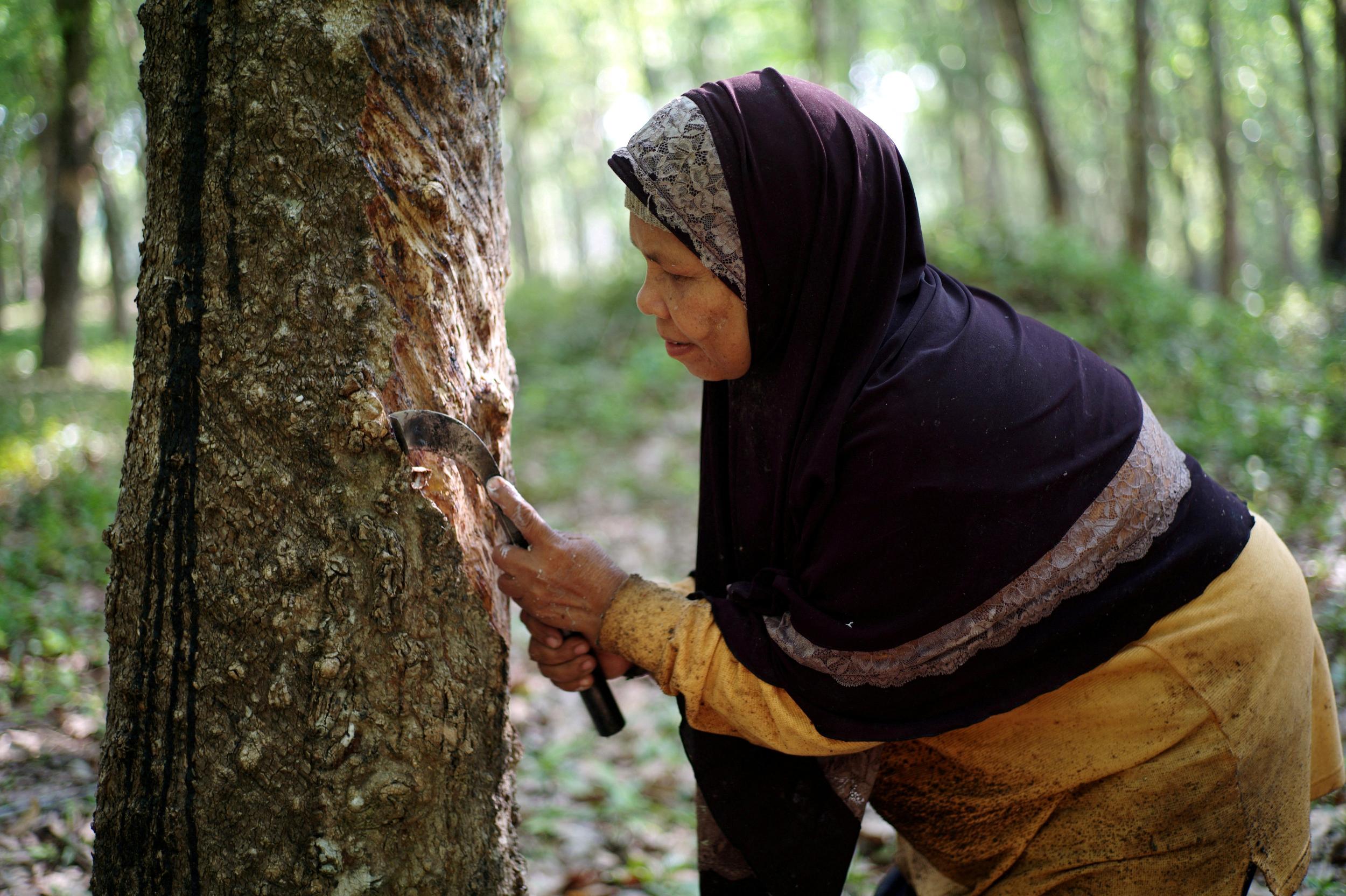
Heavy rains, floods hurt top producer Thailand after drought Typhoon Yagi hit 2% of Chinese rubber plantation area Prices jump despite dismal demand in top buyer China SINGAPORE, Oct 16 (Reuters) - Excessive monsoon rains following a drought in the world's top rubber producer Thailand and typhoon damage in No. 5 grower China are reducing output of the tyre-making material, dragging down production prospects and lifting prices to 13-year highs. The output of natural rubber, which is largely produced in Asia, is forecast to fall by up to 4.5% in 2024 to around 14 million metric tons, estimates from four analysts and traders show. Expectations of lower output have driven up prices of rubber more than 50% this year, making it one of the top-performing commodities in 2024. The benchmark Osaka contract hit a a 13-year high of 419.7 yen ($2.81) last week. Prices of physical rubber have risen in tandem with futures markets, with Thailand's benchmark export-grade block rubber climbing more than 31% since the start of the year, according to data from Helixtap Technologies. Rubber crops usually undergo a wintering season of low production from February to May, before a peak harvesting period that lasts until September. However, scorching temperatures of around 40 degrees Celsius (104 degrees Fahrenheit) in the first quarter may have led to a prolonged wintering season, as rubber trees can experience stunted growth in extremely hot conditions, said Farah Miller, founder of rubber-focused data firm Helixtap in Singapore. The heatwave was followed by heavy rains and flooding in rubber producing regions in Thailand in recent months. "These fluctuations can drastically impact the tapping frequency of rubber trees and overall latex production," Miller said. As a result, output in Thailand, which accounts for about one-third of global production, is expected to decline by 10%-15%, according to Helixtap. With this year's peak harvest season disrupted by an unusually excessive number of rainy days and floods, rubber crops may have been damaged by leaf diseases, said Jom Jacob, chief analyst at Indian analysis firm WhatNext Rubber. He estimated global rubber production in 2024 would likely fall short of consumption by 1.2 million metric tons. CHINA HIT Typhoon Yagi, Asia's most powerful storm this year, worsened the supply strain, tearing through the major Chinese producing region of Hainan and damaging 16,000 hectares of rubber trees, or 2.1% of China's total rubber area, according to WhatNext Rubber estimates. This year's reduced rubber output may be felt well into 2025, said Vijeth Shetty, senior vice president and global head of rubber at Olam Agri, as producers normally build inventories in the second half of the year before peak demand season begins the next year. However, that comes against the backdrop of subdued demand in top consumer China amid slowing economic growth, although financial stimulus measures have raised hopes of improved demand. ($1 = 149.2600 yen) Sign up here. https://www.reuters.com/markets/commodities/adverse-weather-curbs-thai-chinese-rubber-output-lifting-prices-13-year-high-2024-10-16/
2024-10-16 06:47
Global oil demand to peak before 2030 at less than 102 mb/d LNG demand growth to be outpaced by capacity growth to 2030 Surplus fossil fuel could increase focus on clean energy Fossil fuel to make up 75% of energy mix in 2030 LONDON, Oct 16 (Reuters) - The world is on the brink of a new age of electricity with fossil fuel demand set to peak by the end of the decade, meaning surplus oil and gas supplies could drive investment into green energy, the International Energy Agency said on Wednesday. But it also flagged a high level of uncertainty as conflicts embroil the oil and gas-producing Middle East and Russia and as countries representing half of global energy demand have elections in 2024. “In the second half of this decade, the prospect of more ample – or even surplus – supplies of oil and natural gas, depending on how geopolitical tensions evolve, would move us into a very different energy world,” IEA Executive Director Fatih Birol said in a release alongside the agency's annual report. Surplus fossil fuel supplies would likely lead to lower prices and could enable countries to dedicate more resources to clean energy, moving the world into an "age of electricity," Birol said. In the nearer term, there is also the possibility of reduced supplies should the Middle East conflict disrupt oil flows. The IEA said such conflicts highlighted the strain on the energy system and the need for investment to speed up the transition to "cleaner and more secure technologies". A record high level of clean energy came online globally last year, the IEA said, including more than 560 gigawatts (GW) of renewable power capacity. Around $2 trillion is expected to be invested in clean energy in 2024, almost double the amount invested in fossil fuels. However, growth in clean power generation has not kept pace with rising global electricity demand and this trend is expected to continue from 2023-2030, meaning coal power use will decrease more slowly than previously expected, the IEA said. Taking that into consideration, the share of fossil fuel in the global energy mix is forecast to be 75% in 2030 under the current policy scenario, compared with 80% today. In last year's report, the same scenario forecast fossil fuel making up 73% of the energy mix in 2030. PEAK OIL DEMAND In its scenario based on current government policies, global oil demand peaks before 2030 at just less than 102 million barrels/day (mb/d), and then falls back to 2023 levels of 99 mb/d by 2035, largely because of lower demand from the transport sector as electric vehicle use increases. The report also lays out the likely impact on future oil prices if stricter environmental policies are implemented globally to combat climate change. In the IEA’s current policies scenario, oil prices decline to $75 per barrel in 2050 from $82 per barrel in 2023. That compares to $25 per barrel in 2050 should government actions fall in line with the goal of cutting energy sector emissions to net zero by then. Although the report forecasts an increase in demand for liquefied natural gas (LNG) of 145 billion cubic metres (bcm) between 2023 and 2030, it said this would be outpaced by an increase in export capacity of around 270 bcm over the same period. “The overhang in LNG capacity looks set to create a very competitive market at least until this is worked off, with prices in key importing regions averaging $6.5-8 per million British thermal units (mmBtu) to 2035,” the report said. Asian LNG prices, regarded as an international benchmark are currently around $13 mmBtu. Sign up here. https://www.reuters.com/business/energy/age-electricity-follow-looming-fossil-fuel-peak-iea-says-2024-10-16/