2024-10-16 06:47
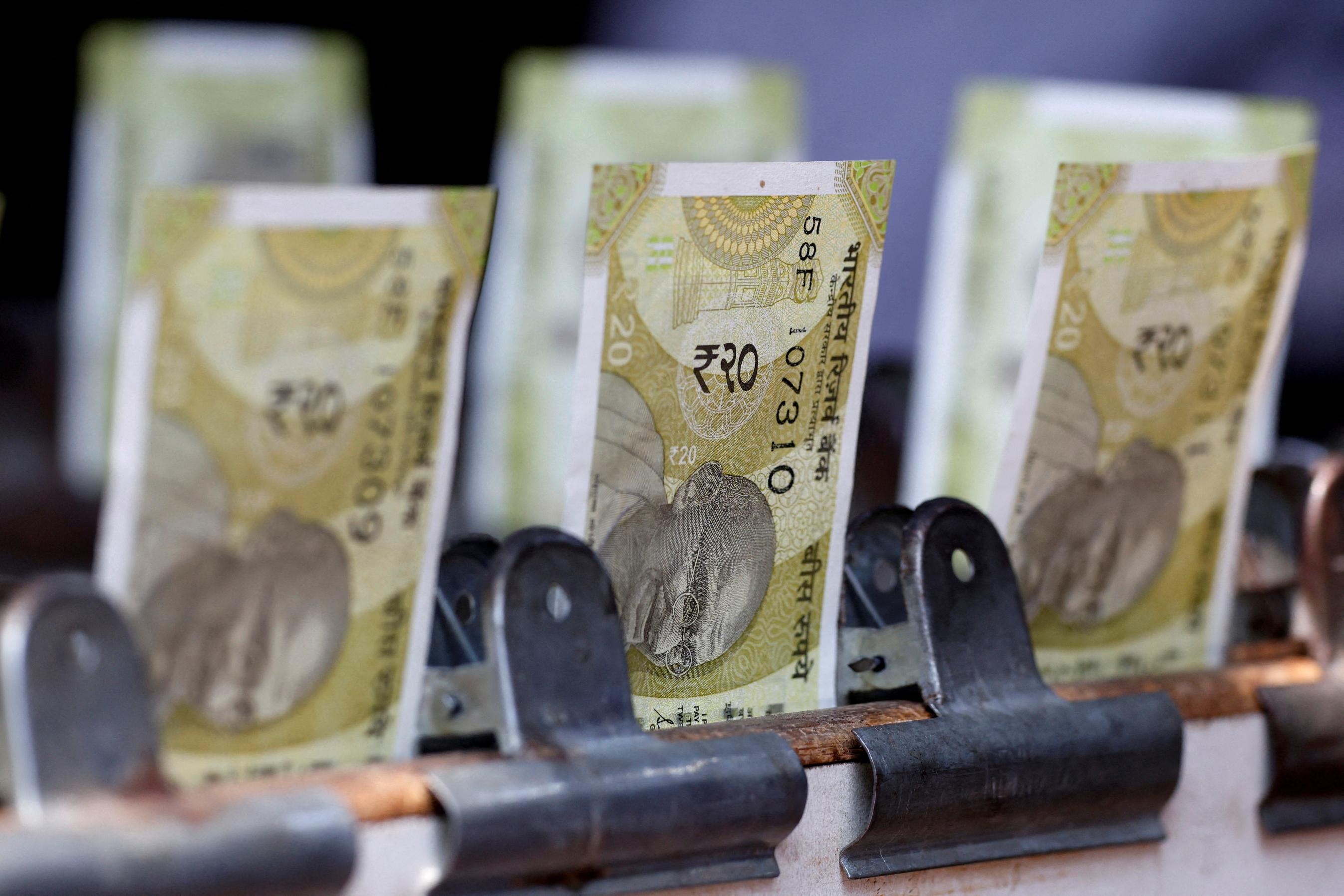
MUMBAI, Oct 16 (Reuters) - The Indian rupee fell marginally on Wednesday, despite the rise in regional peers and lower crude oil prices, as dollar demand from foreign banks and importers weighed on the currency. The rupee was at 84.05 against the U.S. dollar as of 11:30 a.m. IST, against its close at 84.0375 in the previous session. Asian currencies were up between 0.1% to 0.4% ahead of closely watched central bank policy decisions in Indonesia, Thailand and Philippines. Brent crude oil prices were last quoted at $74.5 per barrel, down 6% so far this week amid easing concerns about supply disruptions due to the Middle East conflict. "While this decline in oil prices offers some relief for the rupee, the bigger factor in the near term will likely be foreign institutional investor flows," Amit Pabari, managing director at FX advisory firm CR Forex, said. Persistent outflows from equities have hit the rupee, which slipped to a record low of 84.0750 on Monday. Overseas investors have pulled out nearly $8 billion from Indian stocks so far in October, the highest monthly outflow in more than 4 years. On Wednesday, foreign banks were spotted bidding for dollars, likely on behalf of custodial clients, while importers were also active, a trader at a foreign bank said. Investors await U.S. retail sales and jobless claims reports, due on Thursday, for cues on the future path of U.S. policy rates. Interest rate futures have nearly priced in a 25-basis-point rate cut by the Federal Reserve in November. Sign up here. https://www.reuters.com/markets/currencies/rupee-edges-lower-despite-rise-asian-peers-subdued-crude-oil-prices-2024-10-16/
2024-10-16 06:43
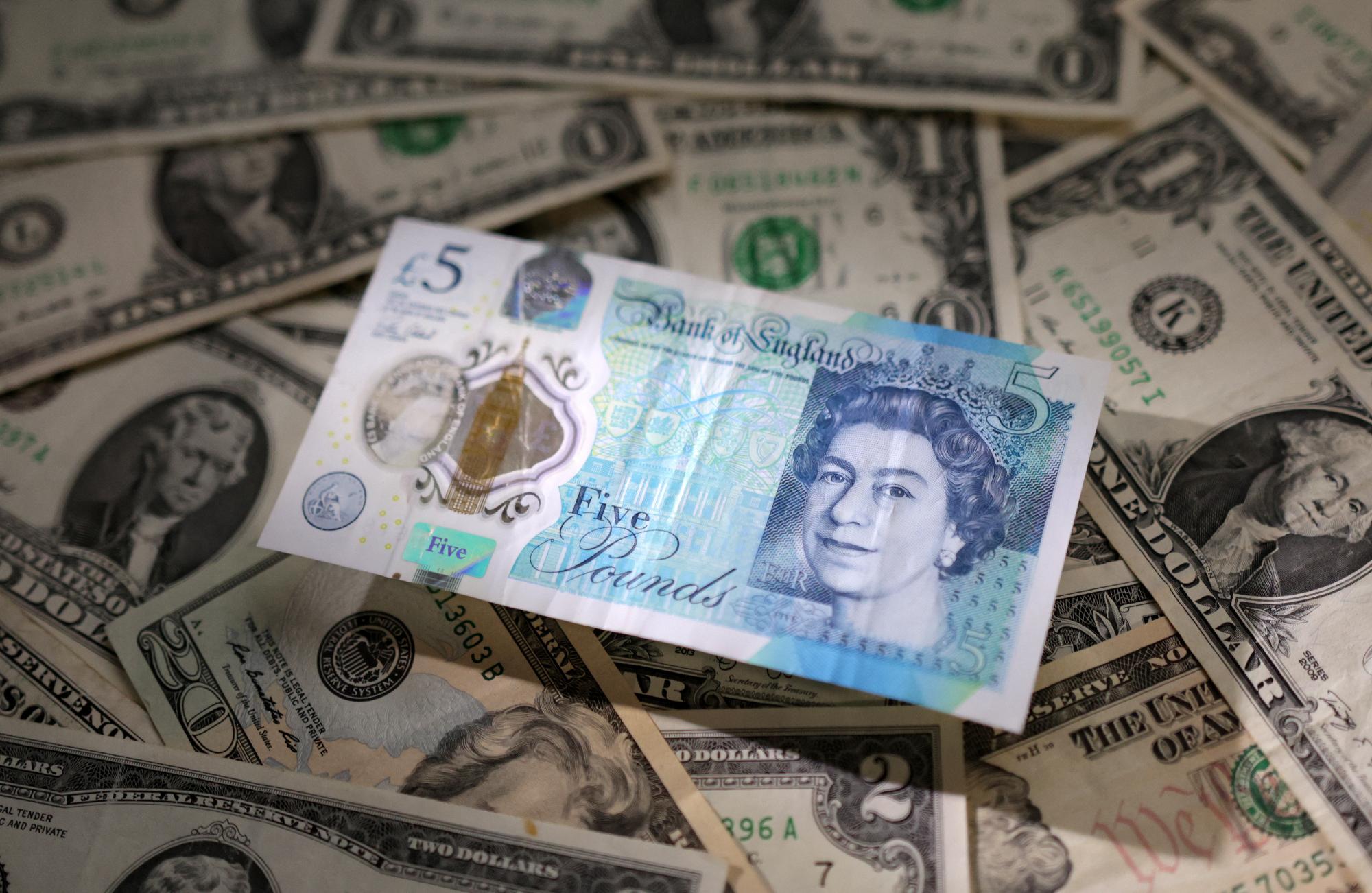
LONDON, Oct 16 (Reuters) - The pound dropped on Wednesday after data showing British inflation slowed more than expected in September, making it easier for the Bank of England to cut interest rates further this year. The pound dropped 0.5% on the dollar to $1.30075, having been flat before the data. Sterling also weakened versus the euro, which rose 0.4% to 83.63 pence. , British inflation was 1.7% year-on-year in September from 2.2% in August, the lowest reading since April 2021 and below a Reuters poll which expected 1.9%. Headline CPI was flat month-on-month, and closely-watched services inflation slowed to 4.9% year-on-year. “The dip in inflation confirmed today suggests a November cut to interest rates is likely, with the question now whether borrowers can look forward to another one after that before the year is out," said Ed Monk, associate director, Fidelity International. The BoE cut borrowing costs from a 16-year high of 5.25% to 5.0% in August but has signalled it will move carefully on further reductions as wage growth - a big driver of inflation in the services sector - is slowing only gradually. Expectations that the BoE would cut rates more slowly than the Federal Reserve and the European Central Bank supported the pound earlier this year, though the gap has narrowed somewhat. The European Central Bank meets on Thursday, and is expected to cut rates by 25 bps, with investors' focus on whether President Christine Lagarde will give any hints about policymakers longer term expectations, important for the euro's future path, including against the pound. Sign up here. https://www.reuters.com/markets/currencies/pound-falls-after-cooler-than-expected-british-inflation-2024-10-16/
2024-10-16 06:42
U.S. dollar hits fresh 11-week high Sterling falls to two-month low Fed rate futures now fully pricing in 25-bp rate cut NEW YORK, Oct 16 (Reuters) - The U.S. dollar firmed on Wednesday, hitting an 11-week high, as investors ruled out a hefty interest rate cut from the Federal Reserve at the next policy meeting and priced in a potential election victory by former President Donald Trump. Sterling, meanwhile, tumbled to its lowest in two months after softer-than-expected British inflation data offered scope for the Bank of England to cut rates more forcefully, while the euro slid to an 11-week low ahead of a European Central Bank meeting. But with U.S. presidential elections a few weeks away, investors' focus has shifted to the highly-anticipated race, along with the Fed's interest rate path. Trump's plan to implement tax cuts, looser financial regulations, and higher tariffs is viewed as positive for the dollar. Higher tariffs, for instance, would have negative implications for growth in Asian and European exporters that could force their central banks lower their interest rates, undermining their currencies, while lifting the dollar. Amo Sahota, executive director at FX consulting firm Klarity FX in San Francisco pointed out that several major central banks are expected to undertake bigger rate cuts than the Fed because their economies are slowing much quicker than that of the United States. That has provided support for the dollar. He also cited Trump's interview with Bloomberg News Editor-in-Chief John Micklethwait at the Economic Club of Chicago on Tuesday, where the former president doubled down on his plan to impose high tariffs on U.S. trading partners. "Trump really went hard into the tariff conversation...although I think he's just making a point that he'll do whatever it takes to stop people from," flooding the market with foreign products at the expense of U.S.-made goods. "Combined that with overnight polling showing Trump necking ahead here...and that's enough to leave the dollar at the top of the billing." In afternoon trading, the dollar rose 0.3% to 103.59 , after hitting an 11-week high of 103.60. The euro, the dollar index's biggest component, fell 0.4% to $1.0855 , after earlier sliding to $1.0853, its lowest since early August. Investors will be closely watching Thursday's ECB meeting, though if policymakers deliver the currently priced 25-bp cut and President Christine Lagarde refrains from giving too many clues about its rate outlook, the market impact could be muted. STERLING PRESSURE The pound, meanwhile, was one of the biggest movers among major currencies, dropping 0.7% to $1.2982 . It dipped under the $1.30 level for the first time since Aug. 20, after data showing the rate of annual consumer price inflation dropped to 1.7% in September from 2.2% in August. That was the lowest reading since April 2021, and under the 1.9% forecast by a Reuters poll of economists. It reinforced bets on a BoE interest rate cut next month and made a further cut in December more likely. The euro was last 0.5% higher against the pound at 83.62 pence. . In the United States, traders have priced in a 97% chance of a 25-bp cut when the Fed next decides policy on Nov. 7, with a 3% probability of a pause, according to LSEG estimates. A month ago, traders saw 50-50 odds of a super-sized 50-bp reduction. Against the yen, the dollar added 0.4% against the yen to 149.765 yen , not far from Monday's high of 149.98 yen, the strongest since Aug. 1. Bank of Japan board member Seiji Adachi said on Wednesday the central bank must raise rates at a "very moderate" pace and avoid hiking prematurely given uncertainties about the global outlook and domestic wage developments. In other currencies, the Australian and New Zealand dollars sagged as scepticism widened over stimulus from top trading partner China. The Aussie dropped to US$0.6659, the lowest since Sept. 12, and last traded at US$0.6663, down 0.6%. The New Zealand unit sank to US$0.6041, a level last seen on Aug. 19, and was last down 0.4% at US$0.6057 . Sign up here. https://www.reuters.com/markets/currencies/aussie-hit-by-china-stimulus-scepticism-us-dollar-firm-fed-outlook-2024-10-16/
2024-10-16 06:39
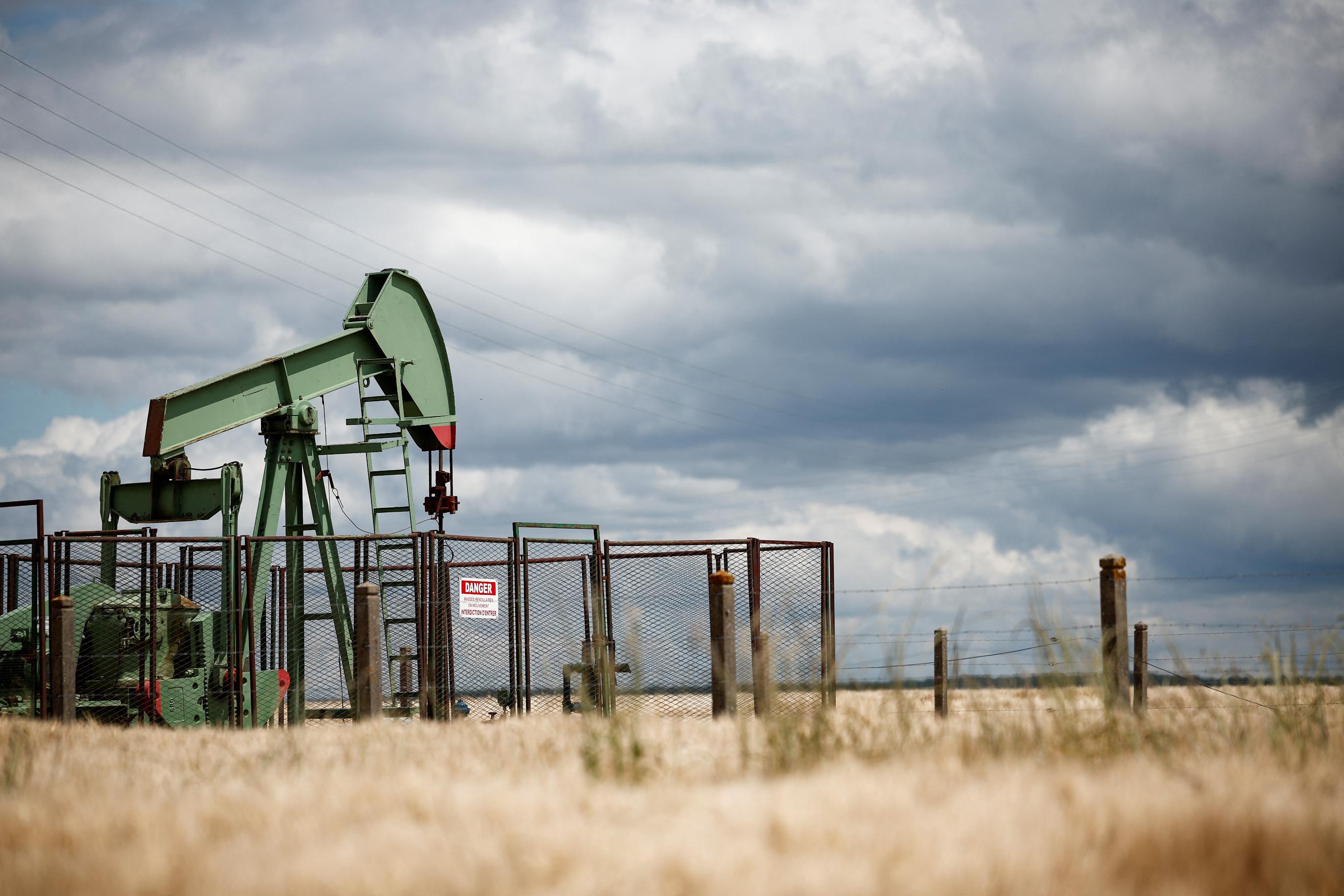
OPEC+ cuts tighten market U.S. crude inventories likely rose last week Product inventories expected to have fallen OPEC and IEA cut 2024 oil demand growth forecasts LONDON, Oct 16 (Reuters) - Oil steadied on Wednesday, supported by OPEC+ cuts and uncertainty over what may happen next in the Middle East conflict, although an outlook for ample supply next year added downward pressure. Crude fell more than 4% to a near two-week low on Tuesday in response to a weaker demand outlook and after a media report said Israel would not strike Iranian nuclear and oil sites, easing fears of supply disruptions. Brent crude oil futures were down 33 cents, or 0.4%, at $73.92 a barrel by 1110 GMT. U.S. West Texas Intermediate crude futures lost 38 cents, or 0.5%, to $70.20. Still, concern about an escalation in the conflict between Israel and Iran-backed militant group Hezbollah persists. OPEC+ supply curbs remain in place until December when some members are scheduled to start unwinding one layer of cuts. "We would be somewhat surprised if the geopolitical risk premium has disappeared for the time being," said Norbert Ruecker of Julius Baer. "We see the market heading towards a supply surplus by 2025," he added. On the demand side, the Organization of the Petroleum Exporting Countries and the International Energy Agency this week cut their 2024 global oil demand growth forecasts, with China accounting for the bulk of the downgrades. Economic stimulus in China has failed to give oil prices much support. China may raise an additional 6 trillion yuan ($850 billion) from special treasury bonds over three years to stimulate a sagging economy, local media reported. "Monetary and fiscal efforts to revive the Chinese economy are proving a damp squib," said Tamas Varga at oil broker PVM. Coming up is the latest U.S. oil inventory data. The American Petroleum Institute's report is due later on Wednesday, followed by the government's figures on Thursday. Both reports are published a day later than normal following a federal holiday. Analysts polled by Reuters expected crude stockpiles rose by about 1.8 million barrels in the week to Oct. 11. Sign up here. https://www.reuters.com/business/energy/oil-steadies-after-sharp-falls-middle-east-uncertainty-persists-2024-10-16/
2024-10-16 06:11
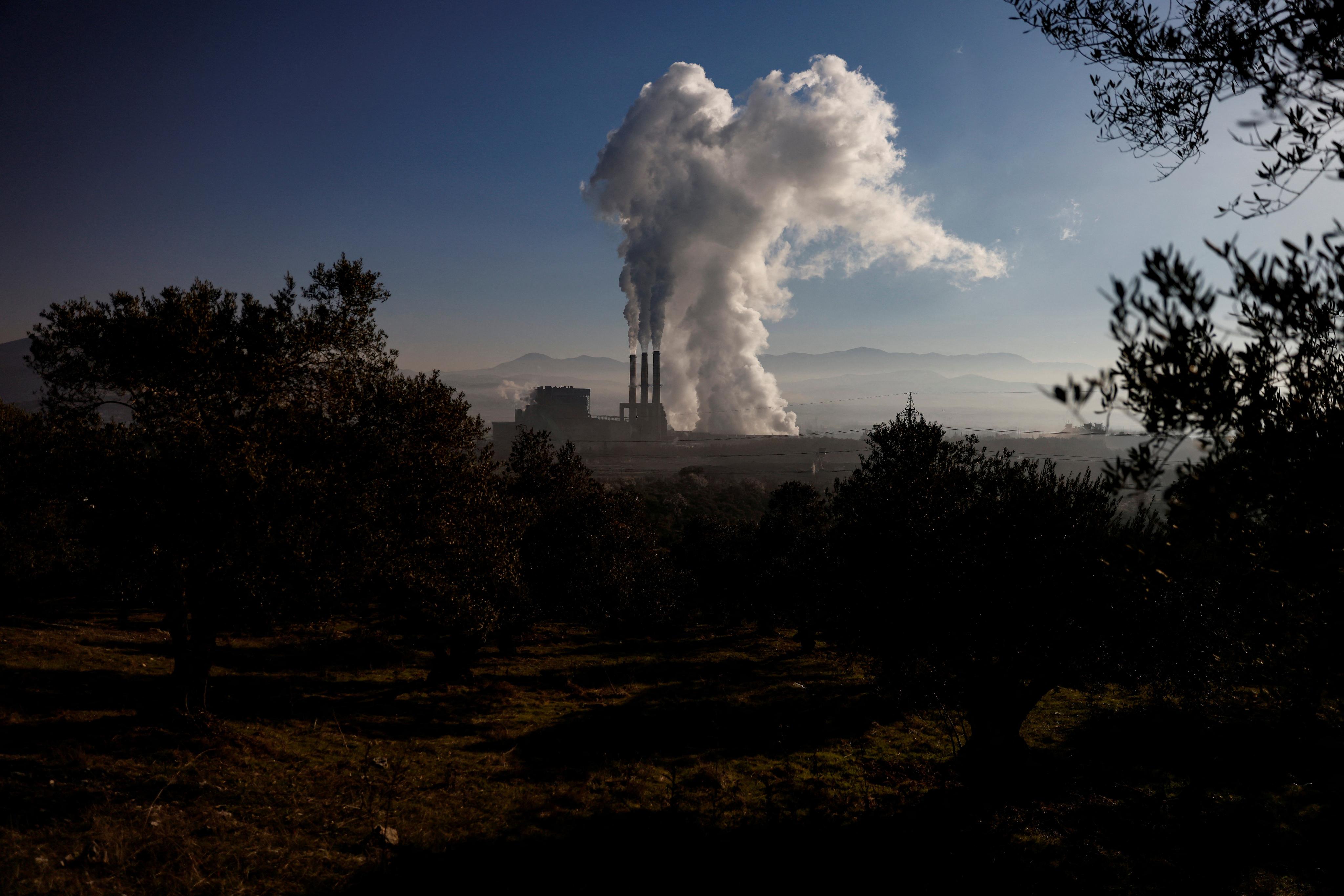
LITTLETON, Colorado, Oct 16 (Reuters) - Turkey has spent eight of the first nine months of 2024 as Europe's largest producer of coal-fired electricity, overtaking Germany and Poland as it cranked coal burning for power. Turkey generated a record 88 terawatt hours (TWh) of electricity from coal during January through September, according to energy think tank Ember, which was 2% more than during the same period in 2023. That total was 28% above the 69 TWh generated in Germany and 36% above the 65 TWh generated in Poland, Europe's next largest coal-fired power producers. With power systems across Northern Europe set to make further cuts to coal use in power generation going forward, Turkey's lead in Europe looks set widen, and may establish southern Europe as a major hub for coal use in the region. EMISSIONS IMPACT Turkey's emissions from coal-fired power also scaled new highs so far in 2024, hitting 88.4 million tons of carbon dioxide and 1.5 million tons more than in the same months last year. Coal-fired emissions in Germany were 71.5 million tons of CO2, and were 67 million tons in Poland, which in both cases were the lowest on record for the January to September period. With coal-fired generation and emissions declining in most other European nations, Turkey's share of the region's coal-fired use and emissions climbed to a record of just over 19% so far this year, Ember data shows. Continued coal burning during the winter - when demand for heating in Turkey peaks - may push Turkey's share of regional emissions above 20% for the first time, especially if power systems elsewhere continue to curb coal use during that period. IMPORT RELIANCE Around 35% of Turkey's electricity so far this year was generated from coal, which was the country's largest single power fuel source. That share was down from around 37% in 2023, due to higher output this year from both hydro dams and solar farms which allowed power firms to lift output from clean energy sources. However, both hydro and solar output are set to fall to their annual lows over the coming winter in Turkey, which will force power suppliers to boost coal use towards year-end to meet system demand. And Turkey has to import coal to meet roughly 40% of its coal-fired needs, due to a persistent shortfall in domestic coal supply compared to domestic coal demand. Over the first nine months of 2024, Turkey's total coal imports were 16.7 million metric tons, according to ship-tracking data from Kpler. That total is 5% less than during the same months in 2023, but volumes are likely to climb over the final months of the year as power firms stock up ahead of peak heating demand. Russia is Turkey's main coal supplier, accounting for around 70% of Turkey's coal imports, followed by Colombia, Australia and the United States. RISING DEMAND Turkey's dependence on coal for 35% of its electricity is greater than the 20% share in Germany and 13% share for Europe as a whole, but is less than the 56 % coal-share in Poland. However, Poland's coal share is down from close to 74% in 2022, and looks set to continue falling rapidly as Poland's power firms deploy growing volumes of renewable power across the country's grids. In contrast, Turkey's reliance on coal for power looks set to keep rising, especially as the country's total power demand continues to rise more quickly than power firms can lift clean supplies. So far in 2024, Turkey's electricity demand has climbed by 5% from the same months in 2023, compared to 2.4% growth for Europe as a whole, 3% growth in Poland and 0.4% growth in Germany. Over the longer term, Turkey's electricity demand growth has outpaced peer nations by an even larger degree. Turkey's electricity demand has grown by 13.3% since 2019, which contrasts sharply with a 1.7% contraction in electricity demand for Europe over the same period, and an 8.2% contraction in demand in Germany. Continued growth in Turkey's export-oriented manufacturing economy looks set to maintain pressure on power firms to keep developing cheap energy supplies. However, Turkey's private sector has high levels of foreign debt that look set to keep company spending in check, and may mean that only limited upgrades to power generation systems may be seen over the near term. That suggests that coal's place as Turkey's main power source may continue to grow over the near to medium term, and will likely result in the country further widening its coal usage lead over nations elsewhere in Europe. The opinions expressed here are those of the author, a columnist for Reuters. Sign up here. https://www.reuters.com/business/energy/turkey-cements-position-europes-top-coal-fired-power-system-maguire-2024-10-16/
2024-10-16 06:08
Morgan Stanley beats estimates, stock touches record high Upbeat United results boosts airlines, transports Crude extends its slide Focus on retail sales NEW YORK, Oct 16 (Reuters) - U.S. stocks ended higher in opposition to their global counterparts on Wednesday, and crude extended its decline on projected softening demand. Megacap growth stocks faltered, limiting the tech-heavy Nasdaq's advance. Economically sensitive sectors helped propel the S&P 500 and the Dow to more substantial gains, with the latter eking out its third record closing high over the last four days. "We're making up for the losses yesterday, yet investors are still cautious ahead of a slew of earnings, along with retail sales on Thursday morning," said Ryan Detrick, chief market strategist at Carson Group in Omaha. Large banking firms have reported a string of upbeat earnings. Most recently, Morgan Stanley (MS.N) , opens new tab reported consensus-beating quarterly profit, sending its shares to a record high. Upbeat earnings from United Airlines (UAL.O) , opens new tab boosted commercial air carrier stocks (.SPCOMAIR) , opens new tab by 6.5%. But on Tuesday, chip equipment maker ASML (ASML.AS) , opens new tab forecast weaker than expected 2025 sales, prompting demand concerns. "It’s early this earnings season but financials have done extremely well, of course we have many other industries coming up soon, but it is a nice start to this earning season," Detrick added. "After ASML’s disappointing guidance yesterday, worries are jumping regarding AI (artificial intelligence) and tech in general. "The bar is set quite high and they have an important job to do, to show that the overall growth they continue to see is justified," Detrick said. The Dow Jones Industrial Average (.DJI) , opens new tab rose 337.28 points, or 0.79%, to 43,077.70, the S&P 500 (.SPX) , opens new tab rose 27.21 points, or 0.47%, to 5,842.47 and the Nasdaq Composite (.IXIC) , opens new tab rose 51.49 points, or 0.28%, to 18,367.08. European stocks settled lower in the wake of disappointing results from ASML. Luxury goods maker LVMH (LVMH.PA) , opens new tab weighed on sentiment as investors remained cautious ahead of the European Central Bank's (ECB) policy decision on Thursday. MSCI's gauge of stocks across the globe (.MIWD00000PUS) , opens new tab rose 0.73 points, or 0.09%, to 851.98. The STOXX 600 (.STOXX) , opens new tab index fell 0.19%, while Europe's broad FTSEurofirst 300 index (.FTEU3) , opens new tab fell 4.37 points, or 0.21%. Emerging market stocks (.MSCIEF) , opens new tab fell 6.09 points, or 0.53%, to 1,143.64. Benchmark U.S. Treasury yields eased as financial markets cemented bets for a smaller interest rate cut from the Federal Reserve at the conclusion of next month's policy meeting. The yield on benchmark U.S. 10-year notes fell 2.2 basis points to 4.014%, from 4.038% late on Tuesday. The 30-year bond yield fell 3 basis points to 4.2983% from 4.328% late on Tuesday. The 2-year note yield, which typically moves in step with interest rate expectations, fell 2.1 basis points to 3.936%, from 3.956% late on Tuesday. The dollar touched a 10-week high as investors ruled out a hefty policy rate cut at the Fed's next meeting, and began to consider the possibility that Republican Donald Trump could win the Nov. 5 presidential election. The dollar index , which measures the greenback against a basket of currencies including the yen and the euro, rose 0.28% to 103.55, with the euro down 0.29% at $1.0858. Against the Japanese yen , the dollar strengthened 0.34% to 149.69. Oil prices were slightly lower, having dropped about 7% over the prior three days. Worries have eased about the Middle East conflict disrupting supply, while 2025 demand forecasts have disappointed oil traders U.S. crude fell 0.27% to $70.39 a barrel and Brent fell to $74.22 per barrel, down 0.04% on the day. Gold prices extended recent gains, boosted by a pull-back in U.S. bond yields. Spot gold rose 0.49% to $2,674.10 an ounce. Sign up here. https://www.reuters.com/markets/global-markets-wrapup-1-2024-10-16/