2024-10-16 05:39
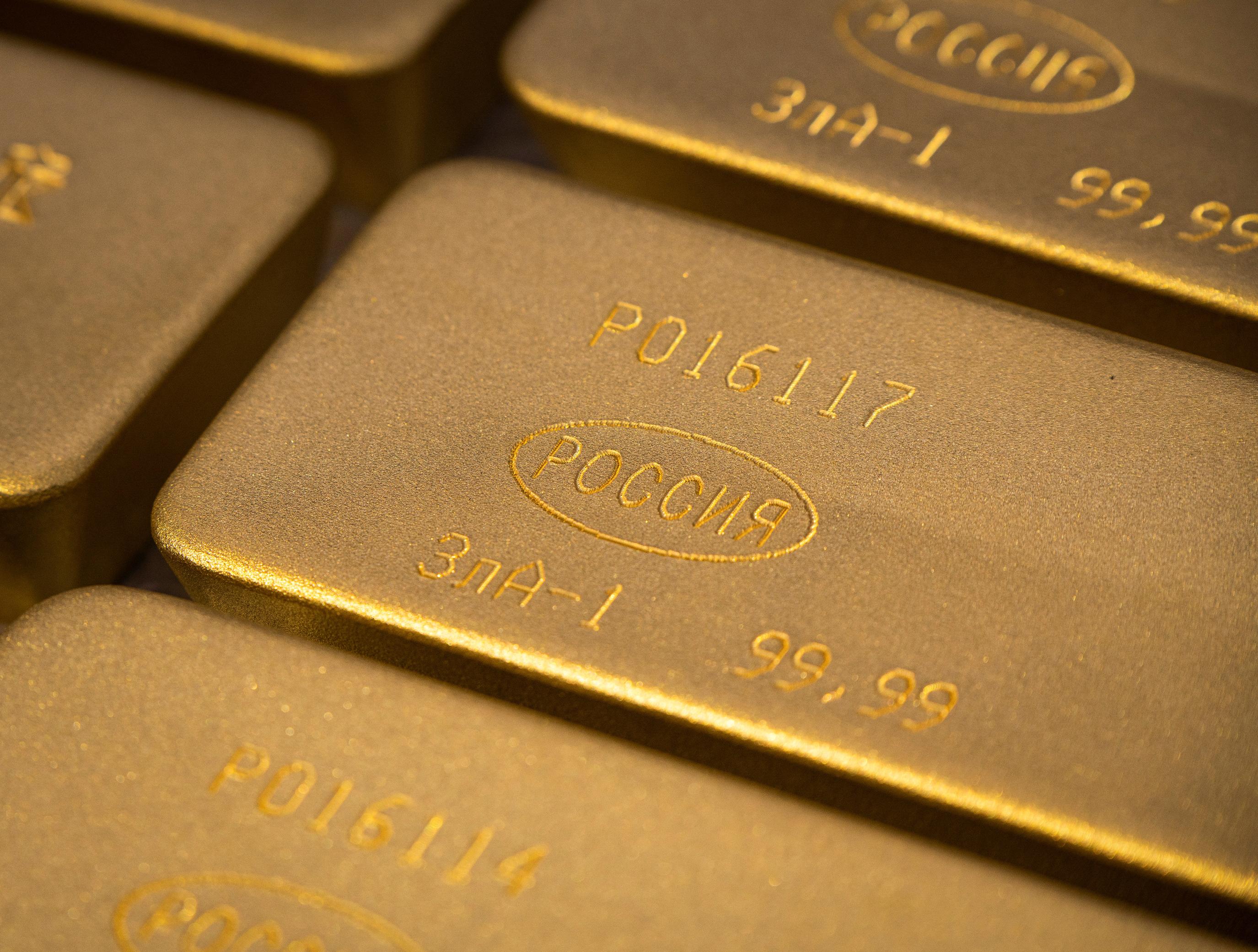
Gold industry sees prices rising to $2,941/oz over 12 months Benchmark 10-year note yields slipped to over a week low Odds of 25 bps US rate cut in November at 94% ECB rate cut decision expected on Thursday Oct 16 (Reuters) - Gold advanced towards record highs on Wednesday as gains in non-yielding bullion were bolstered by weakness in U.S. bond yields and expected rate cuts by major central banks, with additional safe-haven support from ongoing geopolitical conflicts. Spot gold rose 0.5% to $2,673.24 per ounce by 5:30 p.m. ET (2130 GMT), inching close to a record high of $2,685.42 it hit on Sept. 26. U.S. gold futures settled 0.5% higher at $2,691.3. "Expectations of a 25-basis-point rate cut by the U.S. Federal Reserve in November are solidifying, weaker inflation data in Europe and the UK have increased expectations for more aggressive ECB and BoE easing, leading to generally lower yields which have lifted gold," said Peter A. Grant, vice president and senior metals strategist at Zaner Metals. "There's even an outside chance we could see close to $3,000, and that's probably more of a Q1 2025 target," Grant said. U.S. Treasury yields fell to their lowest in over a week, making gold more attractive as it tends to thrive in a low interest rate environment. Traders currently see about a 94% chance of a 25-basis-point U.S. rate cut in November, according to the CME FedWatch tool , opens new tab. The European Central Bank looks set to deliver another rate cut on Thursday, while a drop in British inflation indicated a rate cut next month by the Bank of England. The main bullish drivers for gold include risk of fiscal instability, safe-haven appeal, geopolitical tensions, de-dollarization, U.S. Presidential election uncertainties and rate cuts by central banks, said Ole Hansen, head of commodity strategy at Saxo Bank. Delegates to the London Bullion Market Association's annual gathering predicted gold prices would rise to $2,941 over the next 12 months and silver prices would jump to $45 per ounce. Spot silver firmed about 0.6% to $31.67. Platinum rose 1% to $994.43 and palladium climbed 1.5% to $1,024.76. Sign up here. https://www.reuters.com/markets/commodities/gold-ticks-up-treasury-yields-slip-us-retail-sales-data-focus-2024-10-16/
2024-10-16 05:19
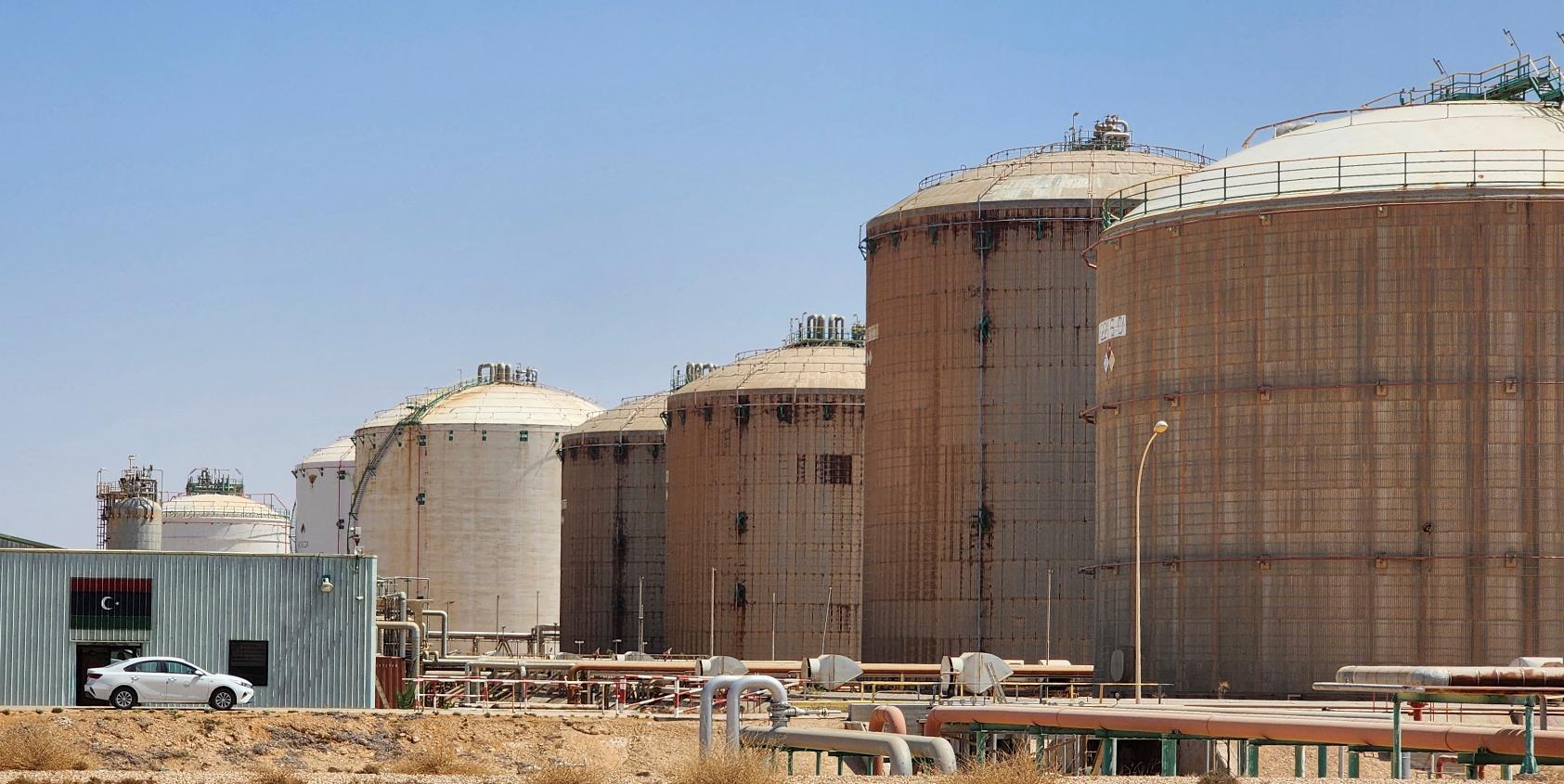
Libyan crude exports rising in Oct. as c. bank crisis resolved Libyan exports weighing on other crude grades like Azeri, CPC LONDON, Oct 16 (Reuters) - A resumption of Libyan crude output after a political crisis over the central bank slashed the OPEC member's exports to a four-year low, has led to a surplus in crude supplies in Europe, forcing competing sellers to cut their prices, trading sources and analysts say. Libya's National Oil Corporation (NOC) announced the restart of production on Oct. 3 after a new central bank governor was appointed. As of Oct. 13, output had reached about 1.3 million barrels per day, close to pre-crisis levels. The timing of Libya's ramp up is coinciding with maintenance at European refiners with several plants in the Mediterranean and northwest Europe in full or partial shutdown. This is weakening the price of competing crude grades, traders and analysts said. According to LSEG data, the premium of Azerbaijan's Azeri Light crude to benchmark dated Brent dropped to $1.55 a barrel, the lowest since April. In the first 11 days of October, the differentials of other major Mediterranean crude grades – CPC Blend, Saharan and Libya's own Es Sider blends also weakened, FGE Energy analyst Sofia Pribludnaja said. "Looking ahead, these Mediterranean grades will face more downside pressure from the second-largest field feeding the CPC Blend – Kashagan – returning from full shutdown due to maintenance after November 10," she added. Prices for West African crude, also a substitute for Libyan barrels, could also weaken, a trader said. Nigerian Bonny Light was last week offered close to a premium of $1 a barrel to dated Brent and valued slightly below that, the lowest since December 2023, according to LSEG data. Libya's central bank crisis started at the end of August, leading to the shutdown of several oilfields and ports. Libya's crude exports in September slumped to about 550,000 bpd, a four-year low, according to Kpler data, and half the average for July and August. October exports so far have recovered to over 600,000 bpd and are expected to rise further. One trader with a firm that usually buys from Libya and who declined to be identified said NOC was allocating cargoes to refiners that were for very imminent loading dates. NOC did not immediately respond to a Reuters request for comment. Refiners had already made alternative arrangements to buy other grades, assuming that the Libyan outage would last longer, he added. A second trader said refiners in Europe will still take in Libyan cargoes but are in a position to demand hefty discounts. Reuters could not confirm deal levels which are usually transacted on a confidential basis. Italy is the biggest buyer of Libyan crude, accounting for a third of all exports in 2023, followed by Spain, France, the United States and Greece, Kpler data show. Sign up here. https://www.reuters.com/business/energy/return-libyan-exports-weighs-european-crude-market-2024-10-16/
2024-10-16 04:34
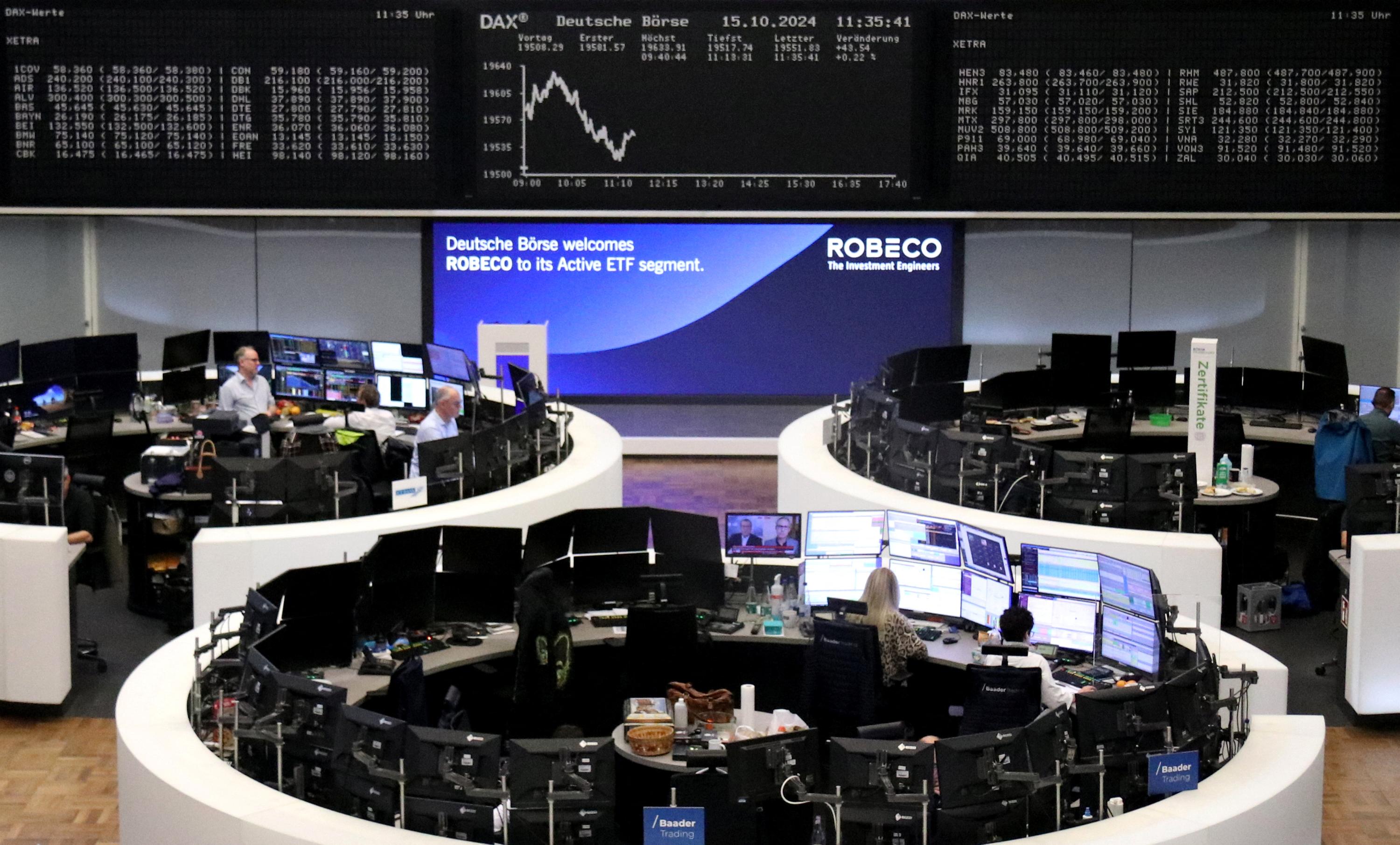
A look at the day ahead in European and global markets from Ankur Banerjee European chip and luxury stocks will be at the forefront of investors' minds on Wednesday, and for all the wrong reasons, after lacklustre earnings from the region's biggest tech firm ASML and luxury bellwether LVMH dragged shares lower. Chip stocks around the world sank after ASML (ASML.AS) , opens new tab forecast weak 2025 sales and said that, while AI-related chips are booming, other parts of the semiconductor market are not, which the Dutch firm said is making many of its chipmaker customers cautious. ASML is the world's biggest manufacturer of chipmaking equipment, with customers including AI chipmaker TSMC (2330.TW) , opens new tab, logic chipmakers Intel (INTC.O) , opens new tab and Samsung (005930.KS) , opens new tab, and memory chip specialists Micron (MU.O) , opens new tab and SK Hynix (000660.KS) , opens new tab. Little wonder, then, that its dour outlook triggered a succession of chip stock sell-offs in Europe, the U.S. and Asia. The European tech stocks index (.SX8P) , opens new tab sank 6.5% on Tuesday, its biggest one-day drop in four years. Stocks on Wednesday may stabilise, but expect sentiment to be weak through the day. Investors will also watch for how luxury stocks (.STXLUXP) , opens new tab react after LVMH (LVMH.PA) , opens new tab reported a decline in quarterly sales for the first time since the pandemic, as consumer demand in China weakened. That has added to investors' wall of worries over a sector that is heavily dependent on China, and taken the steam out of a recent rally in luxury stocks that followed news on Chinese stimulus measures. Chinese consumer confidence has slumped back to the all-time lows of the COVID-19 era, LVMH Chief Financial Officer Jean-Jacques Guiony said. Scepticism had already been building among investors over whether China would follow through with extensive details and strong fiscal stimulus measures to revive the sputtering economy. China was also a theme for ASML, which got 47% of its total revenue in the latest quarter from China but expects that contribution to come down to 20% in 2025. Investors will be eyeing a Beijing press conference (yes, another one) on Thursday, this time to discuss promoting the "steady and healthy" development of the property sector. On the macro side, UK September inflation data is due later in the day and will help to chart the Bank of England's likely path at next month's policy meeting, with markets leaning towards a rate cut. Data on Tuesday showed that British pay grew at its slowest pace in more than two years in the three months to August and that job vacancies fell again, keeping a rate cut from the central bank on track. Key developments that could influence markets on Wednesday: Economic events: UK September CPI and PPI Sign up here. https://www.reuters.com/markets/europe/global-markets-view-europe-2024-10-16/
2024-10-16 04:07
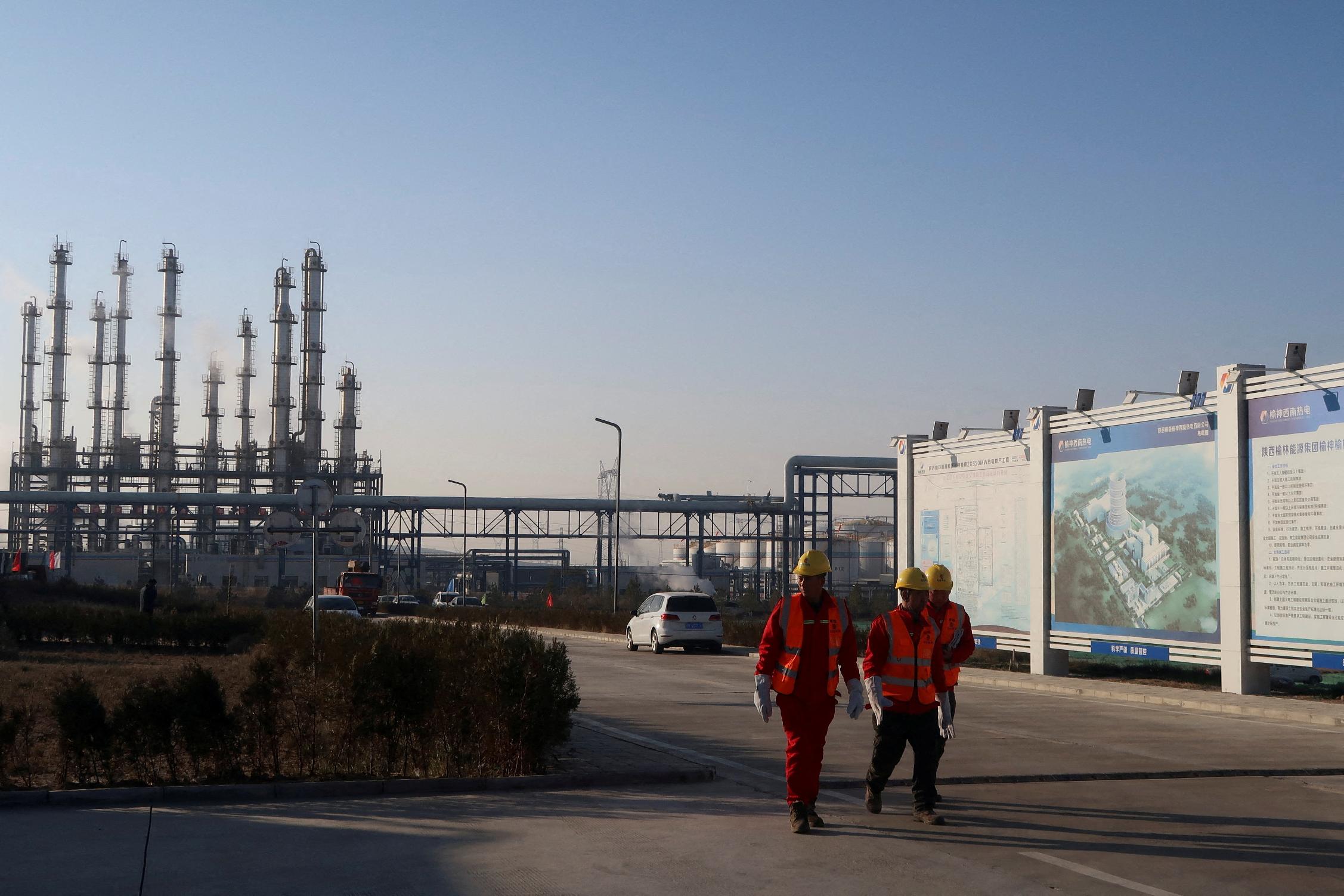
LAUNCESTON, Australia, Oct 16 (Reuters) - Over-estimating China's appetite for crude has been a factor in oil markets this year, especially by OPEC, and it's a theme that looks likely to continue in coming years. The increasing shift to electricity in transport from fossil fuels and what it termed "electric mobility" is "wrong-footing oil producers," according to the International Energy Agency's latest World Energy Outlook, released on Wednesday. It's China, the world's biggest oil importer, that is leading the drive to electric vehicles, with 50% market share in new sales already achieved, a level the rest of the world is likely to reach by 2030, according to the IEA. Under this forecast, which is the IEA's base case it calls the Stated Policies Scenario (STEPS), the rise of EVs displaces around 6 million barrels per day of global crude oil demand. The main risk for the long-term bullish oil demand outlook that oil producers such as the Organization of the Petroleum Exporting Countries remain committed, is that China becomes the template for renewable energy use and electrification, rather than the outlier it currently is. China was responsible for two-thirds of global oil demand growth in the decade to 2023 and one-third of natural gas demand growth. It is also the world's biggest producer and importer of coal, and while coal's share in the overall energy mix is declining, it appears Beijing is prepared to use the dirtier fossil fuel to help meet its electrification drive. China added 50 gigawatts of new coal-fired capacity in 2023, but also a record 260 GW of solar and 75 GW of wind, the IEA report said. The IEA said it expects China's use of coal for electricity generation to peak in the "next few years", even though total electricity demand will continue to grow. Electricity demand in China used to grow in line with gross domestic product, but since 2019 the IEA said electricity demand has risen nearly 50% faster than GDP. This means that China's electricity consumption per capita will overtake that of advanced economies as a group by 2030, driven by economic growth, rising incomes and policies to boost electrification. "The share of electricity in final consumption in China exceeded that of oil in 2023," the report said. "By 2030 in the STEPS, almost one-third of its final energy consumption is from electricity, and China overtakes Japan to become the most electrified major economy in the world," the IEA said. In contrast, the IEA expects that China's oil demand per capita will peak at around half that of advanced economies. POWER SWITCH It's clear that China is pushing electrification hard, and it now dominates the manufacturing of solar panels, batteries and EVs. It is using this competitive advantage to cut its reliance on expensive imported fossil fuels. But it is also prepared to use its vast domestic coal reserves, and cheap coal imports, to help drive electrification. The main challenge for China will be integrating the massive amounts of renewable generation it still plans to install into its electricity grid. One way to even out the variability of renewables is through storage and China added 23 GW of what it termed "new energy storage" in 2023, which consisted mainly of batteries, as well as 6 GW of pumped hydro. It's likely that the pace of storage capacity additions will have to be accelerated as more renewables enter the grid, and this has implications for China's demand for battery metals, such as lithium, copper and nickel. However, it's crude oil that is likely to be the commodity most affected by China's rapid electrification. While China's overall oil demand will peak in the next few years, it's also likely that the mix of products it will require will shift. China will use less gasoline and diesel, but likely need more naphtha to meet rising petrochemical demand, as well as more jet kerosene as air travel expands. The opinions expressed here are those of the author, a columnist for Reuters. Sign up here. https://www.reuters.com/business/energy/chinas-rapid-electrification-is-catching-out-oil-producers-russell-2024-10-16/
2024-10-16 03:03
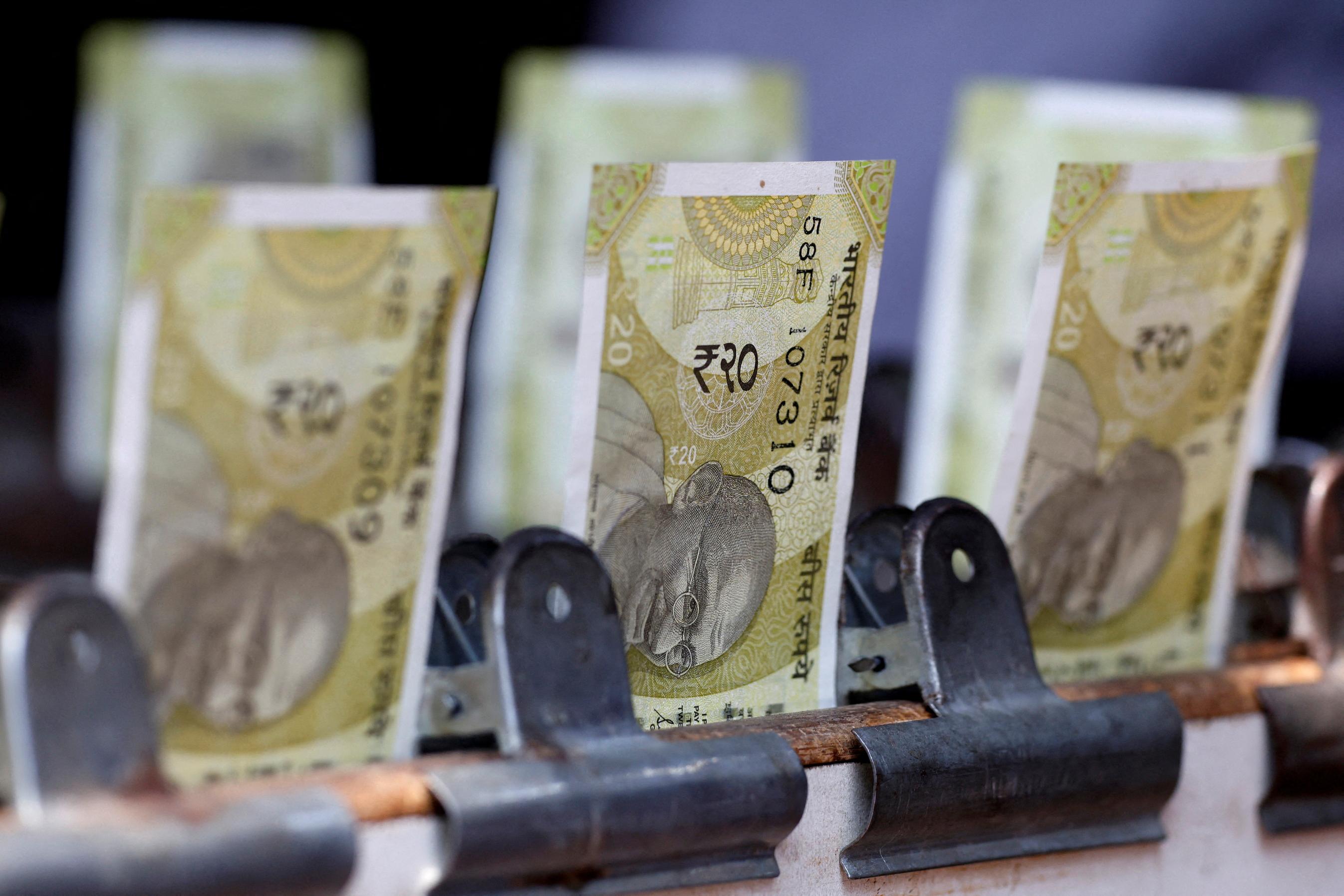
MUMBAI, Oct 16 (Reuters) - The Indian rupee is expected to open largely unchanged on Wednesday, holding below the 84 handle amid risk-off sentiment and a slight pullback in the U.S. dollar. The 1-month non-deliverable forward indicated that the rupee will open at 84.04-84.05 to the U.S. dollar compared with 84.0375 in the previous session. The local currency on Tuesday caught a bit of relief, helped by dollar sell orders put up by public sector banks, likely for the central bank. Usually, a drop past a key level, especially one held for a long time, leads to a pick-up in volatility and more losses. For the rupee, however, that has not happened, with the currency more or less holding near 84 after slipping past that level last Friday. "The complete lack of follow-through after the taking out of 84 further reinforces the environment we are in. That of very low volatility," a currency trader at a bank said. "We (interbank traders) are just resigned to taking bigger positions and capturing small moves." DOLLAR RETREATS The dollar index was marginally lower, pulling back from over two-month highs. Asian currencies ticked higher, boosted by the drop in U.S. Treasury yields. The soft reading of manufacturing activity in New York State alongside the fall in U.S. equities prompted investors to buy U.S. Treasuries. Asian equities followed Wall Street lower. Investors are now nearly certain that the U.S. Federal Reserve will deliver a 25-basis-point rate cut at its next meeting, a step down from the 50 bp in September. Atlanta Federal Reserve President Raphael Bostic said he has pencilled in just one more interest rate reduction of 25 basis points this year. Investors are pricing two 25 bps rate cuts this year . KEY INDICATORS: ** One-month non-deliverable rupee forward at 84.16; onshore one-month forward premium at 11 paise ** Dollar index down at 103.18 ** Brent crude futures up 0.2% at $74.4 per barrel ** Ten-year U.S. note yield at 4.03% ** As per NSDL data, foreign investors sold a net $423.2mln worth of Indian shares on Oct. 14 ** NSDL data shows foreign investors sold a net $27.9mln worth of Indian bonds on Oct. 14 Sign up here. https://www.reuters.com/markets/currencies/dollar-pullback-help-indian-rupee-weak-risk-appetite-weigh-2024-10-16/
2024-10-16 00:49
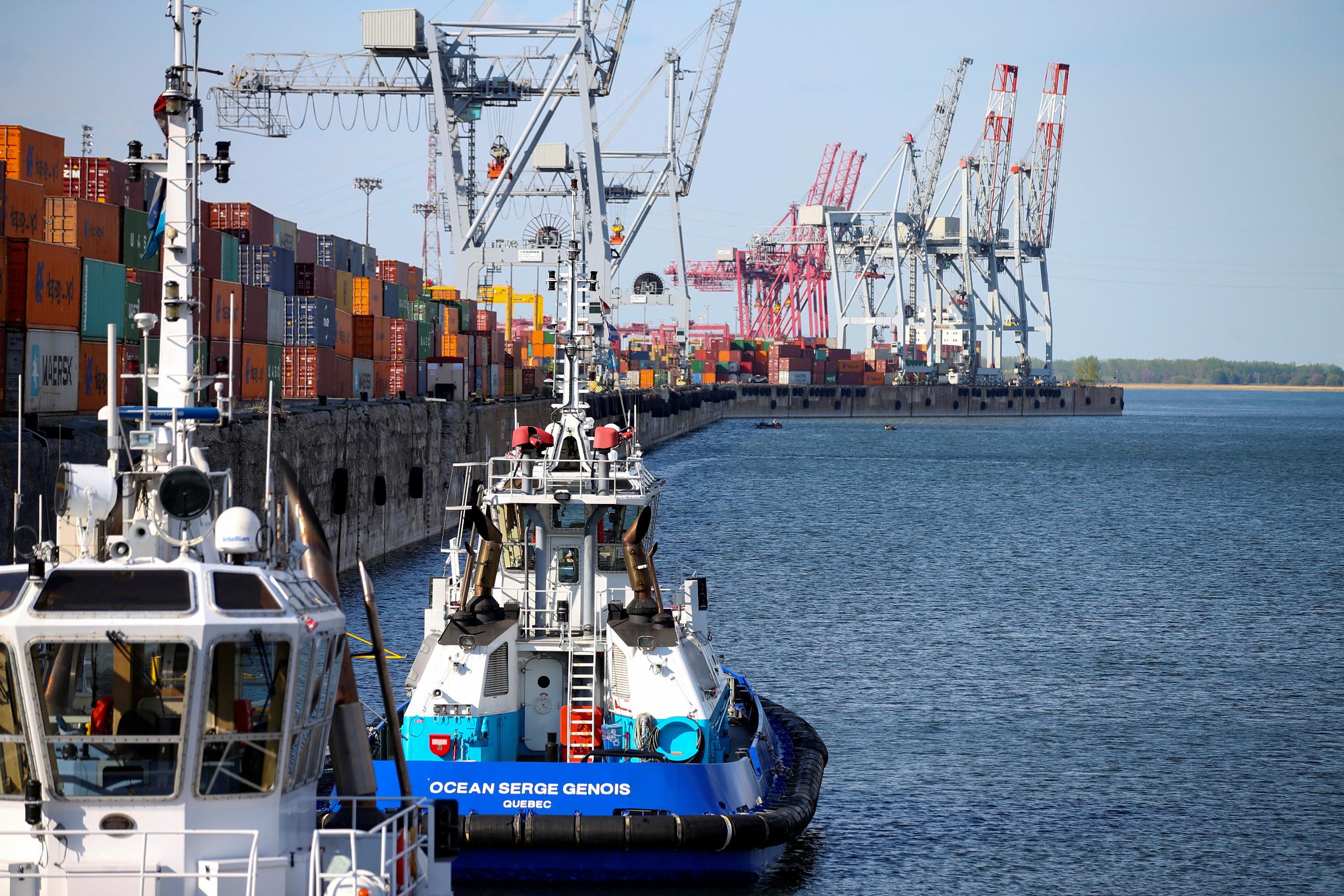
Oct 15 (Reuters) - Canada's Labour Minister Steve MacKinnon on Tuesday proposed the appointment of a special mediator for a 90-day period for Montreal port workers strike. MacKinnon said that there would be no strike or lock-out during the deadline negotiation period, according to a post on X. Talks between the Maritime Employers Association (MEA) and Montreal Longshoremen's union remain in a deadlock over wages. The parties will have to submit responses to the Labour Ministry no later than Friday, Oct. 18, the MEA said in a statement. The strike has impacted the Viau and Maisonneuve terminals, which account for about 40% of the port's container traffic. The Montreal Longshoremen's Union did not immediately respond to a Reuters request for comment. Sign up here. https://www.reuters.com/world/americas/canada-labour-minister-proposes-new-mediator-montreal-port-workers-strike-2024-10-16/