2025-12-19 07:39
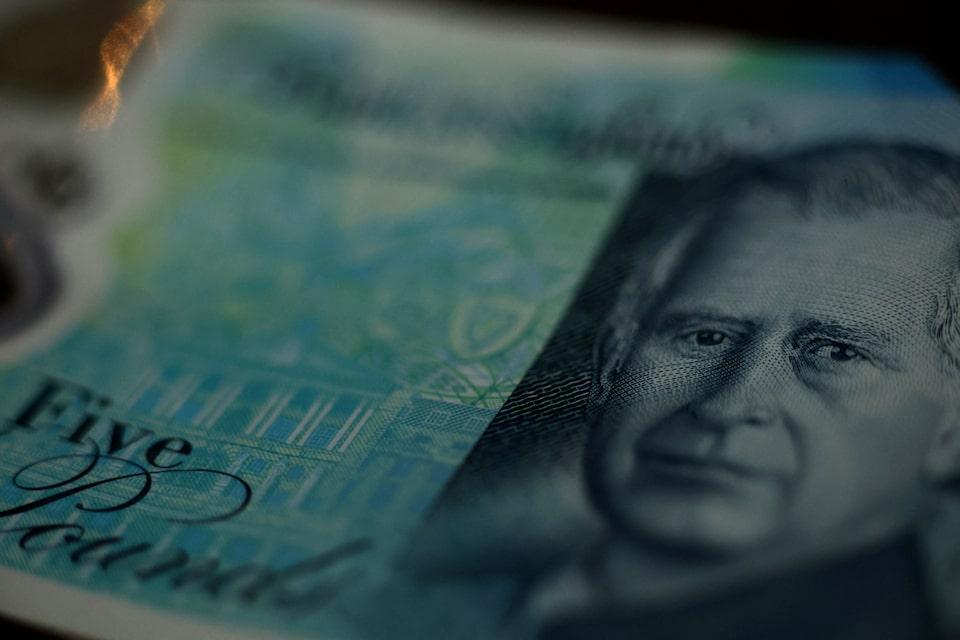
UK borrows 11.7 billion pounds in November Economists had pointed to borrowing of around 10 billion pounds November borrowing lowest since 2021 But economists warn meeting OBR forecast will be a tough ask MANCHESTER, England, Dec 19 (Reuters) - Britain posted another big budget deficit in November and revised up borrowing so far this year, according to data that laid bare the challenge facing finance minister Rachel Reeves who announced tax rises last month to fix the public finances. The Office for National Statistics said on Friday that public sector net borrowing last month totalled 11.7 billion pounds ($15.64 billion). Sign up here. While that marked the smallest November deficit since 2021, it was higher than expected by a Reuters poll, which had forecast a shortfall of 10.0 billion pounds. Reeves in her budget last month chose to raise taxes to build up a bigger buffer for meeting her fiscal rules. But economists said her decision to delay most of those tax hikes until 2028 and 2029 looked risky in the light of the latest borrowing figures, raising the possibility of further nervousness in the bond market. "Ms. Reeves has staked much fiscal credibility on chunky tax increases in the back end of the forecast period. But we think today's figures further illustrate the shaky foundations of that gamble," Elliott Jordan-Doak, senior UK economist at Pantheon Macroeconomics, said. "Revenues continue to underperform, and the smorgasbord approach of tax increases relies on distortionary tax increases with uncertain yields." The figures add to a pattern of the budget deficit surprising to the upside against economists' forecasts so far this year - something that has happened in six out of the eight months of 2025/26 so far in the first estimate. "Although the government used the budget as an opportunity to build up some fiscal headroom, fiscal concerns will likely remain a theme through 2026," said Martin Swannell, chief economic adviser to the EY Item Club consultancy. Borrowing in the first eight months of the financial year amounted to 132.2 billion pounds, a 10 billion-pound increase compared with the same point in 2024/25 and already close to the Office for Budget Responsibility's forecast of 138.3 for the full year. The current budget deficit - which measures day-to-day spending against revenue and must be in balance under the fiscal rules by 2029/30 - is running at 93 billion pounds, far above the OBR forecast of 52.4 billion pounds for the year. "The government will have to successfully deliver a significant slowdown in borrowing over the next few months if it is to meet the OBR's borrowing forecast," Swannell said. Borrowing for October alone was revised up to 21.2 billion pounds from an initial estimate of 17.4 billion pounds. For the first seven months of 2025/26, the ONS revised up borrowing by 3.9 billion pounds - reflecting a downward revision to corporation tax receipts and an additional winter fuel payment. These were offset by local government spending that was lower than previously reported. Interest payable on British government debt fell to 3.4 billion pounds in November, its lowest since March 2024, caused by a drop in the retail price index benchmark for inflation-linked bonds between August and September. On Thursday the Bank of England cut interest rates - a key determinant of the cost of issuing public debt - to a nearly three-year low of 3.75%, although it said the pace of reductions could slow. ($1 = 0.7479 pounds) https://www.reuters.com/world/uk/uk-borrows-117-billion-pounds-november-ons-says-2025-12-19/
2025-12-19 07:05
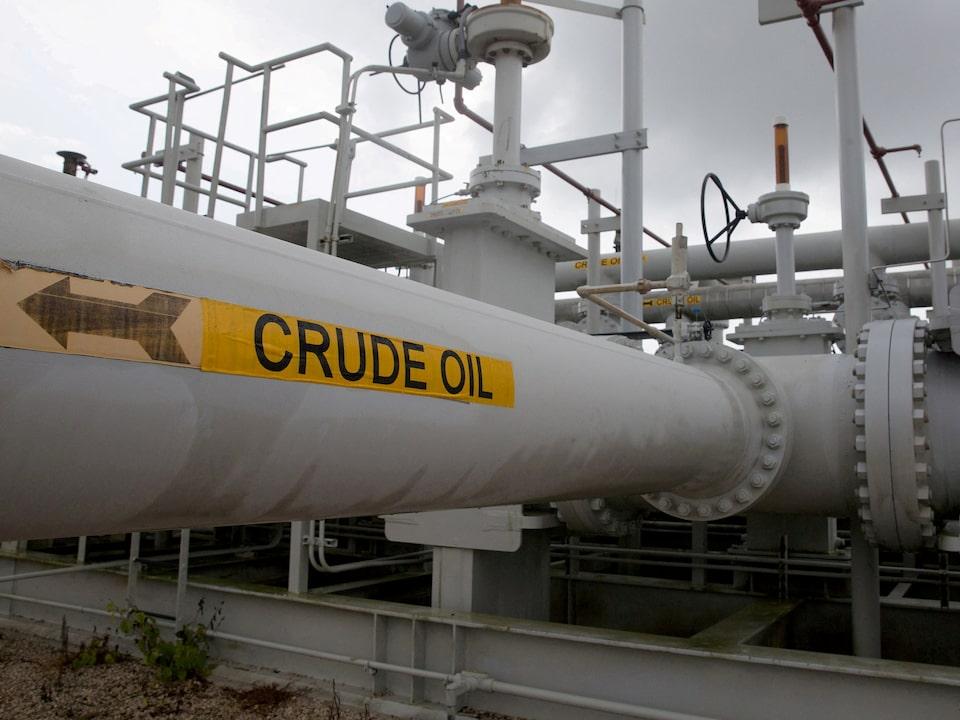
LONDON, Dec 19 (Reuters) - Oil prices slumped below $60 a barrel this week as investors try to make sense of U.S. President Donald Trump’s push to end the war in Ukraine and force out Venezuelan President Nicolas Maduro. Yet the real driver of prices in the months ahead is likely to be far more prosaic: a spike in global crude supplies, both on land and at sea. Sign up here. Global benchmark Brent crude oil futures plunged by nearly 3% on Tuesday to below $59, their lowest since early 2021, amid growing optimism that a peace deal was in sight nearly four years after Russian President Vladimir Putin’s full-scale invasion of his western neighbour. Prices then rebounded by around 2% on Wednesday after Trump said in a post on his Truth Social platform that he had ordered a blockade of all sanctioned oil tankers entering and leaving Venezuela as the U.S. ramps up pressure on Maduro. RISING OIL AT SEA Oil is a reliable barometer of geopolitical stress, so it’s no surprise to see prices react to events. But the impact of either a Ukraine peace deal or a Venezuela blockade on physical supply is likely to be limited. The real determinant of oil prices in the coming months may instead be a single data point: 1.3 billion barrels of "oil on water" - crude held at sea, according to Kpler. That is the largest volume since April 2020, when oil consumption cratered due to COVID-19 lockdowns, and about 30% higher than August levels. Meanwhile, the volume of oil stored on tankers for at least 20 days has reached 51 million barrels, the highest since June 2023, according to Kpler. Slowing tankers provide more evidence that supply is struggling to find a home. The average speed of laden crude tankers, excluding floating storage, fell to 10 knots in December from 10.3 knots in November - the slowest since at least 2017, according to Muyu Xu, senior crude analyst at Kpler. This spike in supplies on water is partly due to tightening sanctions on Moscow. Seaborne Russian crude in transit this week was about 155 million barrels - roughly 55% higher than in January - as Asian buyers hesitate to bring those barrels onshore after new U.S. sanctions on Russian energy giants Rosneft (ROSN.MM) , opens new tab and Lukoil (LKOH.MM) , opens new tab. Yet history suggests sanctioned barrels don’t stay on water forever. They eventually land somewhere after being blended, rebranded, or transferred ship‑to‑ship. Early signs already show Chinese and Indian refiners increasing purchases, likely at steep discounts. Crucially, tanker‑borne volumes have risen sharply even when excluding Russian barrels. Higher output in the Western hemisphere - particularly the U.S. - and in the Gulf after OPEC+scaled back earlier cuts is adding to the flow. This looming supply overhang should weigh heavily on oil prices for the foreseeable future, barring a dramatic change in the physical market. PEACE DIVIDEND? So what would be the market impact of either a ceasefire in Ukraine or a full blockade of Venezuela’s sanctioned oil? A Ukraine ceasefire would likely show up more in the diesel market than in crude prices. Russian diesel exports have fallen about 10% throughout 2025 to 779,000 barrels per day, roughly 10% of global trade, according to Kpler, largely due to Ukrainian drone attacks on Russia’s refineries. That decline helped propel European diesel margins up 27% this year even as crude prices fell 20%, LSEG data shows. Ending the conflict could eventually allow Moscow to repair refining infrastructure repeatedly knocked out by Ukrainian drone strikes this year, easing domestic fuel shortages and boosting diesel exports. That, in turn, would trim diesel refining margins. Crude is a different story. Russian oil exports have held remarkably steady at around 3.5 million bpd since the 2022 invasion. Western sanctions have targeted Moscow's revenue more than its volumes, for fear of spooking global markets. Russia’s growing “shadow fleet” of hundreds of tankers operating outside the Western financial system has also allowed crude to leak through the cracks, landing mostly in China and India. Over in Venezuela, the conflict is quite different but the likely impact on crude prices is similar. A U.S. naval blockade on sanctioned tankers could reduce the country’s exports and production by roughly 500,000 bpd, according to Reuters calculations. That’s significant for Maduro’s finances but barely a rounding error in a 100-million‑bpd global market. THE REAL THREAT News out of Russia and Venezuela may continue to cause crude prices to wobble at the margins, but this will be overshadowed by the much larger threat: swelling global supply. The International Energy Agency forecasts supply will exceed demand by 3.85 million bpd in 2026, the equivalent of around 4% of global demand. OPEC analysts expect the market to be far more balanced next year, but their scenario assumes a significant bump in demand. The evolution of oil prices next year will largely depend on whether the current signs of a looming glut intensify or fizzle out. Geopolitical crises are playing a role, but they are no longer the main event. Want to receive my column in your inbox every Monday and Thursday, along with additional energy insights and links to trending stories? Sign up for my Power Up newsletter here. Enjoying this column? Check out Reuters Open Interest (ROI), , opens new tabyour essential new source for global financial commentary. ROI delivers thought-provoking, data-driven analysis. Markets are moving faster than ever. ROI , opens new tab can help you keep up. Follow ROI on LinkedIn , opens new tab and X. , opens new tab https://www.reuters.com/markets/commodities/surging-barrels-sea-spook-oil-markets-more-than-russia-or-venezuela-2025-12-19/
2025-12-19 07:01
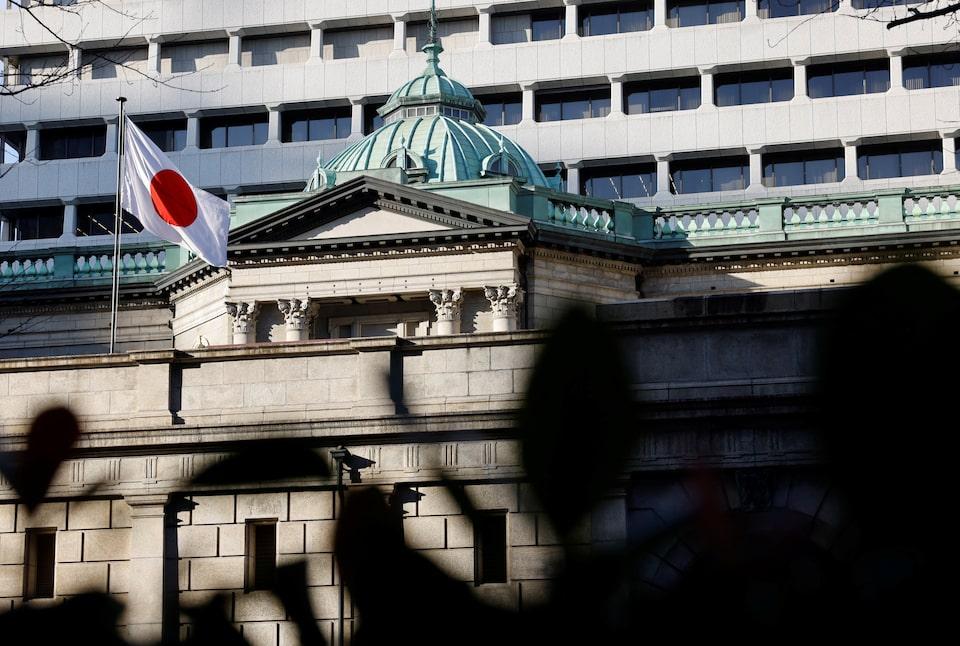
BOJ raises policy rate to 0.75% from 0.5% as widely expected BOJ says it will keep raising rates if forecasts materialise Hawkish board members dissent from BOJ's view on price outlook Ueda offers few hints on pace, extent of further rate hikes TOKYO, Dec 19 (Reuters) - The Bank of Japan raised interest rates on Friday to levels unseen in 30 years, taking another landmark step in ending decades of huge monetary support and near-zero borrowing costs. The central bank also signalled its readiness to continue raising rates by offering a slightly more upbeat view on the growth and inflation outlook, underscoring its conviction Japan was on course to stably hit its 2% inflation target backed by wage gains. Sign up here. But the yen fell after Governor Kazuo Ueda offered few hints on how far the BOJ could eventually raise rates, saying only the pace and timing of further hikes will depend on how the economy reacts to each policy shift. "He didn't offer new hints and didn't appear to be keen to hike in a rush. That may have fuelled perceptions the BOJ will take time raising rates, thereby weakening the yen," said Masato Koike, senior economist at Sompo Institute Plus in Tokyo. In a widely expected move, the BOJ raised short-term interest rates to 0.75% from 0.5% in the first increase since January. The decision was made by a unanimous vote. The move takes interest rates to levels unseen since 1995, when Japan was reeling from the burst of an asset-inflated bubble that drew the BOJ into a prolonged battle with deflation. "Judging from recent data and surveys, there is a high chance the mechanism in which wages and inflation rise moderately in tandem will be sustained," the BOJ said in a statement explaining the policy decision. "Given that real interest rates are at significantly low levels, the BOJ will continue to raise interest rates" if its economic and price forecasts materialise, it said. While Ueda said the BOJ could see scope to raise rates further if wage hikes continued to broaden, he remained vague on the exact timing and pace of further hikes. "We will update at each meeting our views on the economic, price outlook as well as risks and the likelihood of achieving our forecasts, and make an appropriate decision," he told a press briefing after the meeting. Japan's 10-year government bond yield jumped to a 26-year peak on the BOJ's rate decision. But a lack of hawkish signals from Ueda triggered a broad-based decline in the yen. The dollar rose to a one-month high above 157 yen . VAGUE ON NEUTRAL RATE In the statement, the BOJ maintained its view that underlying inflation will converge around its 2% target in the latter half of its three-year projection period through fiscal 2027. But hawkish board members Hajime Takata and Naoki Tamura dissented from this view, highlighting simmering concern within the board over broadening inflationary pressure. The hike to 0.75% pushes the BOJ's policy rate closer to the bottom of its estimated 1.0%-2.5% range of Japan's neutral rate, or the rate that neither cools nor stimulates the economy. As a result, markets had focused on Ueda's comments about the neutral rate to gauge the peak of this hiking cycle. "Even after raising rates to 0.75%, there's some distance to the bottom of our estimated range of neutral," Ueda said, suggesting the BOJ was not done raising rates. But he offered no clarity on how many hikes would take rates to neutral. "In judging the degree of monetary support, we need to look not just at the distance from the neutral rate but real interest rates, lending and developments in the economy," Ueda said. The BOJ ended a decade-long, massive stimulus last year and raised rates twice including to 0.5% from 0.25% in January on the view that Japan was on the cusp of durably hitting its 2% inflation target. Its past decisions to stand pat since then had drawn two dissenters in September and October, as stubbornly high food prices kept inflation above 2% for nearly four years. Critics have blamed the slow pace of the BOJ's rate hikes for the weak yen, which has become a headache for policymakers by pushing up import costs and broader inflation. The yen's recent declines and subsequent inflationary pressures helped the BOJ convince dovish Premier Sanae Takaichi's administration of the need for another rate increase. But not all appeared pleased with Friday's rate hike. Economy Minister Minoru Kiuchi told reporters that while he respected the BOJ's decision, a rate hike would increase debt payment costs and require policymakers to be vigilant to the impact on the economy. https://www.reuters.com/world/asia-pacific/bank-japan-set-raise-interest-rates-30-year-high-2025-12-18/
2025-12-19 06:41
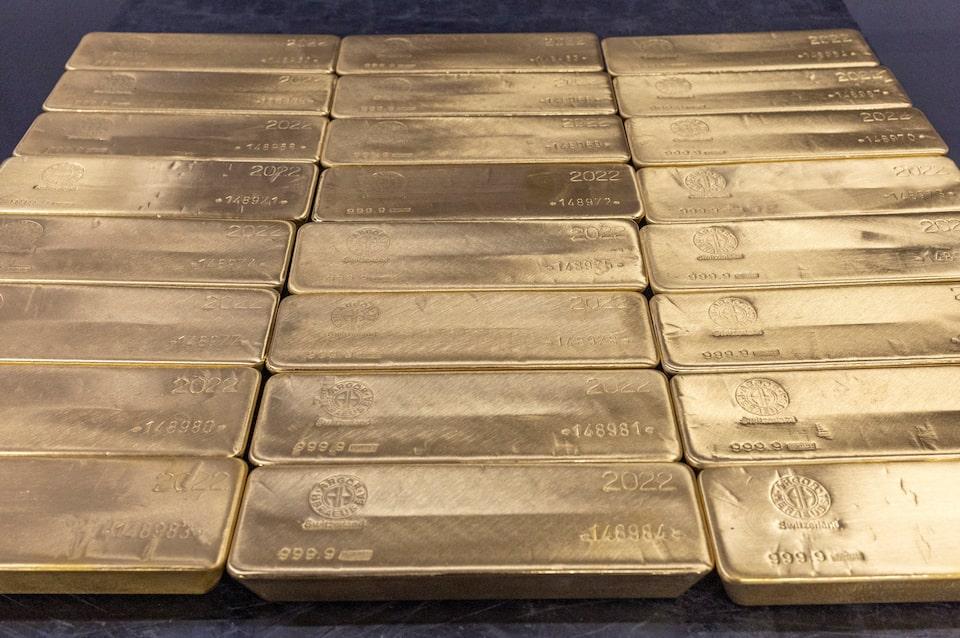
All precious metals headed for weekly gains Silver hits record high of $67.45/oz Platinum trading near 17-year highs hit on Thursday Palladium hits near three-year high Dec 19 (Reuters) - Silver soared to a record high on Friday, bolstered by investment demand and a supply tightness, while gold posted a weekly gain buoyed by increasing expectations of interest rate cuts by the U.S. Federal Reserve. Spot silver rose 2.6% to $67.14 an ounce, ending the week 8.4% higher after hitting a record high of $67.45 in the session. Sign up here. Spot gold rose 0.4% to $4,347.07 an ounce as of 02:17 p.m. ET (19:17 GMT), and logged a weekly gain of 1.1%. U.S. gold futures settled 0.5% higher at $4,387.3. "(Gold and silver) are highly correlated and typically gold leads but the last two months, we saw silver lead. So, whenever you see spread that wide, people will start to pick on gold and tighten on it in the short term," said Michael Matousek, head trader at U.S. Global Investors. Silver has soared 132% this year, far outpacing gold's 65% rise, driven by robust investment demand and supply constraints. "ETF flows (in silver) continue to dominate that theme as well as some speculation from the retail investor," said Phillip Streible, chief market strategist at Blue Line Futures. Macro data has further fueled optimism for rate cuts with U.S. consumer prices rising 2.7% year-on-year in November, falling short of economists' forecast of a 3.1% increase. Separately, the U.S. Labor Department reported earlier this week that the unemployment rate rose to 4.6% in November, the highest since September 2021. "We've seen the lower inflation data, the weakening labor report. It really reaffirms that the Federal Reserve should keep on their easing path – that's one of the main drivers. Second is a lot of the uncertainty around what central bank policy is going to entail," Streible added. Traders continued to bet on at least two 25-basis-point interest rate cuts next year from the Fed, according to LSEG data. FEDWATCH/ Platinum gained 3.1% to $1,975.51 after touching a more than 17-year high on Thursday. Palladium was 0.8% up at $1,709.75 after hitting a nearly three-year high earlier in the session. Both metals posted weekly gains. https://www.reuters.com/world/india/gold-prices-slip-lower-us-inflation-figures-firmer-dollar-2025-12-19/
2025-12-19 06:22
First phase to support 400 megawatts, ready by end-2028 Japan's data centre market to double by 2028, driven by cloud and AI services Toyama offers low-hazard risk and cheaper power for data centres Nanto city to announce plan with developer on Friday TOKYO, Dec 19 (Reuters) - A city in western Japan plans to launch the country's third and largest data centre cluster with total power capacity of 3.1 gigawatts, a document showed, as the Asian nation races to meet surging demand for artificial intelligence-related services. Nanto city in Toyama prefecture, near the Sea of Japan, is due to announce the plan with private developer GigaStream Toyama on Friday, according to the document obtained by Reuters. Sign up here. The project, once completed, will be among the biggest data-centre hubs globally and compares with OpenAI's $500 billion, 10-GW Stargate project. Demand for data centres is soaring, but establishing a disaster-resilient third Japanese hub to follow those in the population centres of Tokyo and Osaka has proven difficult. The two regions account for about 85% of Japan's data centres, and the government has said regional diversification is crucial to ease the bottlenecks there. Nanto is about 250 km (155 miles) from both Tokyo and Osaka and is considered a low-hazard risk area. Toyama is among the prefectures with the fewest large earthquakes, according to the Japan Meteorological Agency. HYPERSCALE The first phase of the Nanto Campus would support about 400 megawatts of power capacity, equivalent to some of Japan's largest data centres announced so far and capable of servicing hyperscale operators such as Amazon (AMZN.O) , opens new tab, Microsoft (MSFT.O) , opens new tab and Alphabet's (GOOGL.O) , opens new tab Google. The site will be ready for service by the end of 2028, according to the public-private plan. GigaStream Toyama, which focuses on preparing infrastructure for data centre operators - a business model similar to that of U.S.-based Lancium and Tract - plans to begin promoting the Nanto Campus at the Pacific Telecommunications Council conference in Honolulu next month, according to the document. The company is headed by Daniel Cox, a 25-year veteran in the Japanese real estate investment market. Officials at Nanto city and GigaStream Toyama declined to comment, saying they would make an announcement soon. Driven by cloud and AI services, Japan's data-centre market is forecast to almost double to more than 5 trillion yen ($32 billion) in the five years to 2028, according to research firm IDC Japan. The government hopes the sector will help it reach a goal of attracting 120 trillion yen in foreign direct investment by 2030, up from 53.3 trillion yen in 2024. Unlike in eastern Japan, power is more abundant and generally cheaper in the western region, which is serviced by utilities such as Hokuriku Electric Power (9505.T) , opens new tab, Kansai Electric Power (9503.T) , opens new tab, Electric Power Development (J-Power) (9513.T) , opens new tab and other smaller operators. Hokuriku Electric, for example, sells less than half of its maximum potential output even without its idled Shika nuclear power plant. ($1 = 155.4700 yen) https://www.reuters.com/business/media-telecom/japans-biggest-data-centre-hub-planned-toyama-prefecture-document-2025-12-19/

2025-12-19 06:03
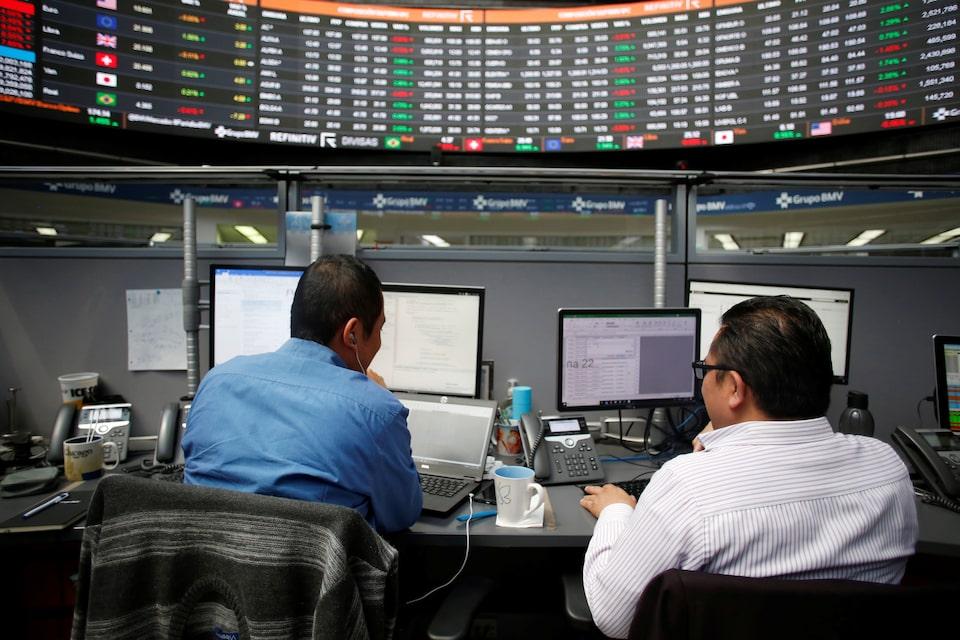
Emerging market local currency bonds return 18%, stocks up 26% in 2025 Investors say emerging economies benefited from diversification push, reforms Bearish views on EM prospects have disappeared, sentiment at record high -HSBC survey 'History suggests that you have to be cautious when everybody agrees', says BofA's Hauner LONDON, Dec 19 (Reuters) - Emerging markets defied tariffs, trade wars and global turmoil to notch up stellar double-digit returns in 2025, and investors are hopeful of a repeat performance next year. Years of painful fiscal choices and central bankers who made all the right calls have left once-risky countries looking solid in the face of political and economic clouds in the United States and Europe, and rising geopolitical fragmentation. Sign up here. "There are a lot of tailwinds that we can take from this year transferring to next year, particularly because of how marvellous and glorious the performance has been," said Manulife Investment Management managing director Elina Theodorakopoulou, highlighting "a combination of good policies and good luck". LIBERATION FOR EMERGING MARKETS U.S. President Donald Trump's return to the White House ushered in the type of uncertainty that typically has investors fleeing to save havens such as U.S. Treasuries or the dollar. Erratic U.S. tariff policies and Trump's Fed attacks have flipped the script, making emerging markets look steadier. While for many investors the fallout from U.S. policy still tops the list of risks to next year's anticipated rally, some used the asset dip triggered by Trump's "Liberation Day" tariff announcements in April to scoop up emerging market assets. "You've increasingly seen investors diversifying out of the U.S. or generally seeking to have global diversification," said Thomas Haugaard, portfolio manager at Janus Henderson Investors. Emerging market debt was under-owned after years of outflows, Haugaard added. There have been dramatic changes at a country level too. Turkey pivoted to orthodox economic policies mid-2023, Nigeria scrapped subsidies and devalued the naira, Egypt continued IMF-backed reforms while Ghana, Zambia and Sri Lanka endured defaults and earned upgrades. The resulting rally helped reverse years of investor cash outflows. Investors say the tough choices many emerging market governments made paid off, paving the way for strength in 2026. "They're able to withstand bigger hits. Their economies are (on) stronger footings," said Giulia Pellegrini of Allianz Global Investors. Analysts also point to another year of net credit rating upgrades as proof resilience can continue. "Fundamentals are improving in that asset class, certainly when you look at it from a sovereign credit perspective," said Morgan Stanley strategist James Lord. "There is a growing momentum of credit upgrades in emerging markets year-on-year," he added. NEW SAVE HAVENS? While the Fed has come under attack, emerging market central banks have shown independence and solid policymaking, investors said. "When it comes to monetary policy, credibility is probably as high as it has ever been in EM," said Charles de Quinsonas, head of emerging market debt at M&G. "They cut, actually ahead of the Fed as well, but they haven't overcut, which has helped currencies to remain quite resilient," he added. And prudent monetary policy helped emerging market currencies outperform, all while the dollar wilted. This was a strong driver of investor interest into local currency debt across emerging markets, which brought returns of around 18% this year. Investors such as Pellegrini of Allianz said they could hit double digits again in 2026. Even uncertainty around elections - from Hungary to Brazil and Colombia - that could often make investors nervy instead spells opportunity for some. "The ensuing potential small policy changes that come on the back of that ... are actually potential market moves that would generate opportunities for us," Pellegrini said. NO MORE BEARS The biggest risk remains the United States. If it enters a recession, a capital retrenchment would hurt emerging markets. And if the Fed hikes rates, it could bolster the greenback and stymie emerging market local currency strength. Trump appointing a new chair to the world's top central bank in 2026 is adding to uncertainty. But even this does not pose the risk it once did. "Fundamentally, (emerging markets) are much less sensitive economically to the U.S. than they ever were," said Quinsonas. If anything, it is the exuberant optimism that is making analysts think twice. HSBC's emerging market sentiment survey published in December found bearish views on emerging markets prospects had entirely disappeared, with record net sentiment at the joint highest in the history of the survey. David Hauner, head of global emerging markets fixed income strategy at BofA Global Research, said he had not encountered a single client that was negative on emerging markets despite speaking to more than 100 in recent weeks. "Everybody is constructive, so this could be a negative signal," said Hauner, adding: "History suggests that you have to be cautious when everybody agrees on the direction of the market." https://www.reuters.com/world/americas/marvellous-emerging-markets-tipped-another-star-showing-2026-2025-12-19/