2024-10-15 06:45
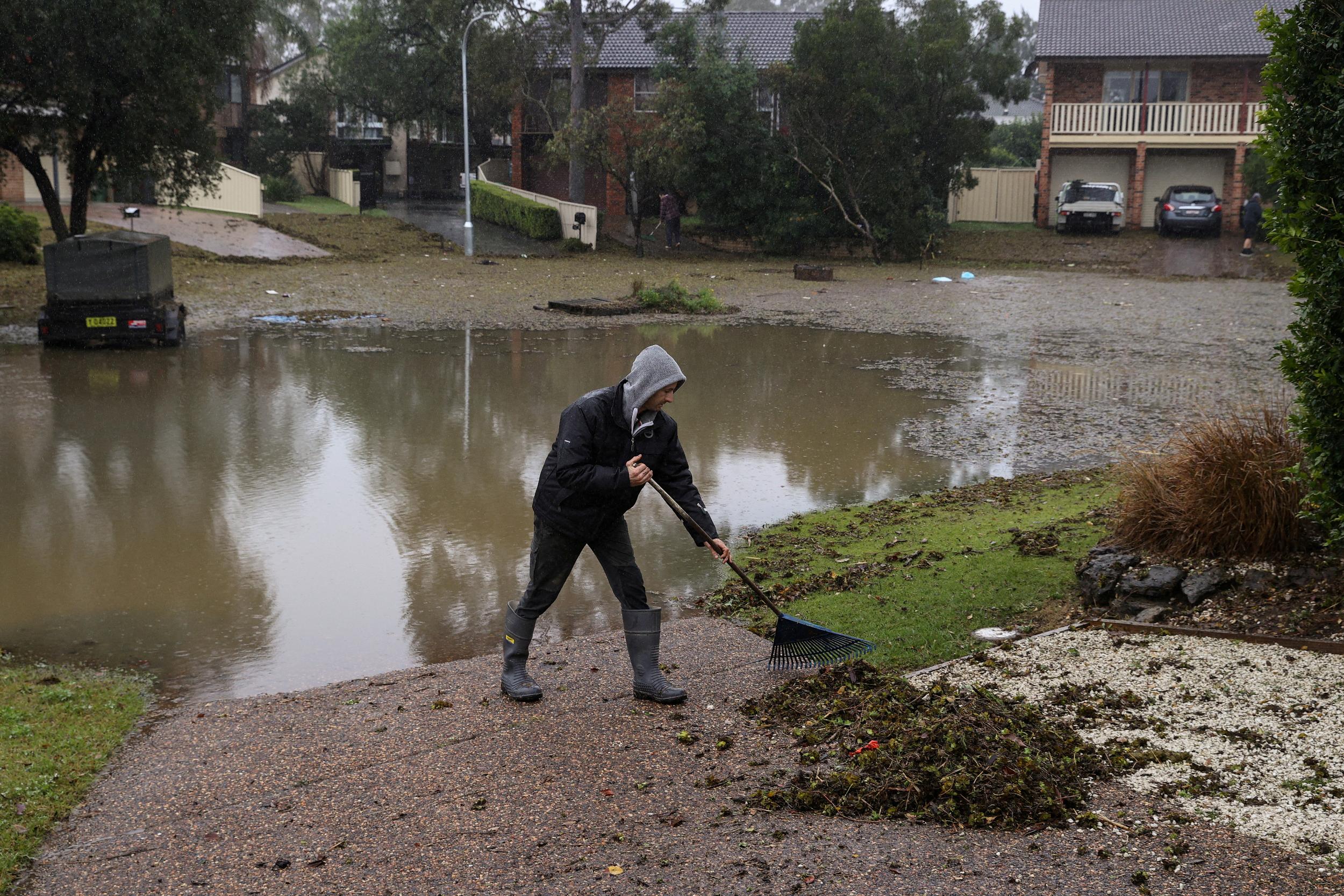
CANBERRA, Oct 15 (Reuters) - The likelihood of a La Nina weather event in coming months has decreased, Australia's weather bureau said on Tuesday, adding that if the phenomenon did appear, it would be weak and short-lived. The development of La Nina and its opposite, El Nino, are of huge importance to global agriculture, with La Nina typically increasing rainfall in eastern Australia, Southeast Asia and India and reducing rainfall in the Americas. "The chance of a La Nina event developing in the coming months has decreased," the Australian Bureau of Meteorology said in a two-weekly update. The bureau said its in-house climate model suggests La Nina will not develop and four of the six other climate models it surveys now agree. La Nina and El Nino are caused by the cooling and warming of sea surface temperatures off western South America. "If a La Nina were to develop, it is forecast to be relatively weak (in terms of the strength of the sea surface temperature anomaly) and short-lived, with all models forecasting neutral values in February," the bureau said. Other meteorologists have also become less confident that a La Nina will appear. A U.S. government forecaster said last week there was a 60% chance of a La Nina emerging by the end of November that would persist through January-March 2025. A month earlier, it said there was a 71% chance of a La Nina forming. Sign up here. https://www.reuters.com/business/environment/la-nina-is-becoming-less-likely-australias-weather-bureau-says-2024-10-15/
2024-10-15 06:28
Fresh all-time high for gold likely by year-end, analyst says Platinum market to be under-supplied in 2025 -UBS Oct 15 (Reuters) - Gold prices held steady on Tuesday as the U.S. dollar remained near two-month highs, with markets caught between profit-taking and prospects for further rate cuts by the Federal Reserve. Spot gold was steady at $2,652.72 per ounce at 1108 GMT while U.S. gold futures nudged up 0.1% to $2,669.20. "We've got a U.S. dollar near two-month highs, higher Treasury yields and also the overwhelming temptation of profit taking as we go towards November after gold's nearly 30% gain so far this year, so in short gold's got some pretty fierce headwinds at the moment," independent analyst Ross Norman said. [USD/ Gold prices hit a record high of $2,685.42 last month, but shed some of those gains as the dollar (.DXY) , opens new tab hovered near a more than two-month peak reached in the previous session, making bullion more expensive for other currency holders. "Further rate cuts I think will continue to support gold and we'll probably see a fresh all-time high this side of the year end," Norman said. Currently traders see about an 87% chance of a 25-basis-point cut in November, according to the CME FedWatch tool. Non-yielding gold thrives in a lower interest rate environment. Fed Governor Christopher Waller called for "more caution" on rate cuts ahead but Fed Bank of Minneapolis President Neel Kashkari said more rate reductions are likely as the Fed's 2% inflation target looms in sight. Market participants are also watching out for U.S. retail sales, industrial production data and weekly jobless claims this week. Spot silver eased 0.1% to $31.14 per ounce. Platinum fell 1.2% to $980.78 and palladium was down 1.8% at $1,011.77. "Scrap supply (for platinum) has disappointed in recent years, but we see room for a recovery next year. We still expect the platinum market to be under-supplied in 2025," UBS analysts said in an note. Sign up here. https://www.reuters.com/markets/commodities/gold-prices-flat-investors-await-fresh-impetus-2024-10-15/

2024-10-15 06:14
TOKYO, Oct 15 (Reuters) - Japan Petroleum Exploration Co (1662.T) , opens new tab, Idemitsu Kosan Co (5019.T) , opens new tab and Hokkaido Electric Power Co (9509.T) , opens new tab said on Tuesday they have teamed up to develop a carbon capture and storage (CCS) facility in northern Japan. CCS is part of Japan's goal to reach carbon neutrality in 2050, with projects being studied at home and also with partners abroad, including in Malaysia. The project, which has a capacity of 1.5 million-2 million metric tons per year, will be located in the Tomakomai area on Japan's northern island of Hokkaido, according to the statement. The three companies aim to launch the project in 2030, the statement said. Sign up here. https://www.reuters.com/sustainability/climate-energy/japanese-companies-team-up-carbon-capture-project-hokkaido-2024-10-15/

2024-10-15 06:03
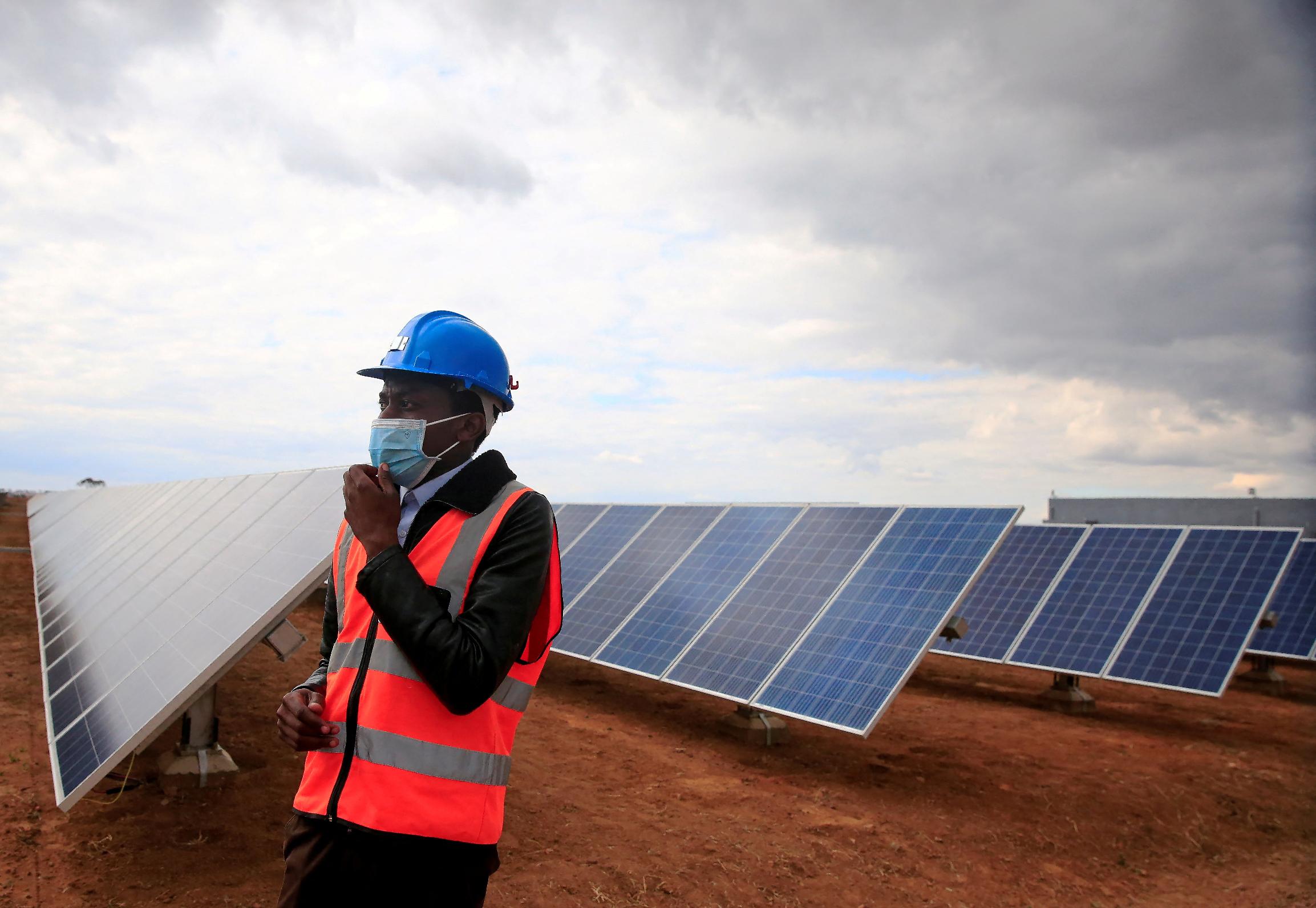
LITTLETON, Colorado, Oct 15 (Reuters) - Africa may be set to transform itself from a relative clean-energy laggard into a power-sector pioneer. African power firms have plans to dramatically expand the continent's energy generation base and make it far cleaner. This could help fuel Africa's expected economic acceleration over the coming decades and provide jobs for its population of roughly 1.5 billion. But the key will be execution. The continent's power companies are seeking to sharply boost clean-power generation, cut reliance on fossil fuels and nearly double total power output by the time projects near or under construction are completed. The projected 278% jump in Africa's clean power capacity - between now and the completion of all the planned projects - dwarfs the 109% rise slated for projects at similar phases globally, according to Global Energy Monitor (GEM). But realizing these plans will require overcoming major obstacles, including a lack of energy policy coordination among nations, outdated existing energy infrastructure and limited experience operating regional power pools. CLEAN LEADERS All told, there are around 32,700 megawatts (MW) of clean- power capacity under construction across Africa, and around 60,000 MW of clean-power capacity already in operation. African power firms are, in aggregate, currently building 250 megawatts (MW) of geothermal plants, nearly 5,000 MW of wind projects, 8,100 MW of solar parks, 15,600 MW of hydro dams, 3,600 MW of nuclear capacity, and around 120 MW of bioenergy capacity. A further 134,000 MW of clean capacity is in the so-called pre-construction phase, which refers to permitted projects that have yet to break ground. The locations of the current and planned projects vary widely, but on the whole Northern Africa has a larger volume of planned solar and wind projects than Sub-Saharan Africa. Several nations stand out in terms of scale. Egypt is currently constructing 2,400 MW of hydro, 1,400 MW of solar, 2,500 MW of wind, and 1,200 MW of nuclear. Kenya and Ethiopia are both exploiting their relatively easy access to geothermal sources and are constructing the lion's share of geothermal capacity. And around 15,000 MW of hydro is being planned across Ethiopia, Egypt, Angola, Nigeria and Tanzania, while Nigeria also has a 4,800 MW nuclear plant in pre-construction. Meanwhile, around 22,000 MW of fossil fuel-fired power capacity is currently under construction across the continent, with an additional 25,000 MW in pre-construction. This will be on top of Africa's existing fossil fuel-powered operating capacity of around 177,000 MW, or roughly 74% of its total current power-generating capacity. CHALLENGES Africa's current power development road map bodes well for clean-power supporters, with 50% more clean capacity than fossil-fuel capacity currently being built and five times more clean capacity than fossil capacity in the pre-construction phase. However, bringing all of these plans to fruition will require sustained financial, governmental and societal support for clean-power development as well as a veritable army of effective project managers. Power firms may struggle to secure sufficient qualified labour for certain projects. They may face difficulties sourcing certain in-demand parts and materials that remain subject to supply-chain snarls and manufacturing backlogs. Power providers must then also ensure that the energy generated from their new assets is channelled to consumers who are prepared to pay up for that power. This will require extensive cross-border transmission networks, which mostly do not yet exist. But construction of transmission lines is already under way across several rapidly developing countries, including Tanzania, Togo, Kenya and elsewhere. A 1,700 kilometre line spanning Senegal, the Gambia, Guinea and Guinea-Bissau was completed last year, while a 500-km Kenya-Tanzania Interconnector is due to come on line later this year. This is a good start, but many more long-distance lines will be needed if African nations are to get full value out of the clean-power capacity being built and if power producers are to secure paying customers to help cover their construction costs. RIGHT PLACE, RIGHT TIME While meeting these challenges will not be easy, African power firms may be well-positioned to do so. First, global energy firms are seeking to expand market share just as several African nations are committing to major energy-system upgrades. African firms may also be able to bypass some of the traditional energy development avenues by adopting new technologies that can be deployed in areas without existing grids and be tailored to meet the continent's evolving needs. For example, firms today can utilise real-time power management systems to ensure maximum volumes of clean energy are dispatched around the clock and that fossil fuel plants supplement these sources only when clean-generation volumes fall short of system needs. The continent's power suppliers should also have access to improved battery systems that can store surplus clean power during high output periods and then discharge it onto grids during peak demand intervals to optimize grids and ensure power flows remain as clean as possible. This moment represents a tremendous opportunity for the continent. A well-managed and coordinated build-out of the planned power supply pipeline could help provide the abundant and cheap energy that is urgently needed to spur industrial growth and enable the region to fulfil its economic and demographic potential. The opinions expressed here are those of the author, a columnist for Reuters. Sign up here. https://www.reuters.com/business/energy/africas-road-map-bigger-greener-power-system-maguire-2024-10-15/
2024-10-15 05:57
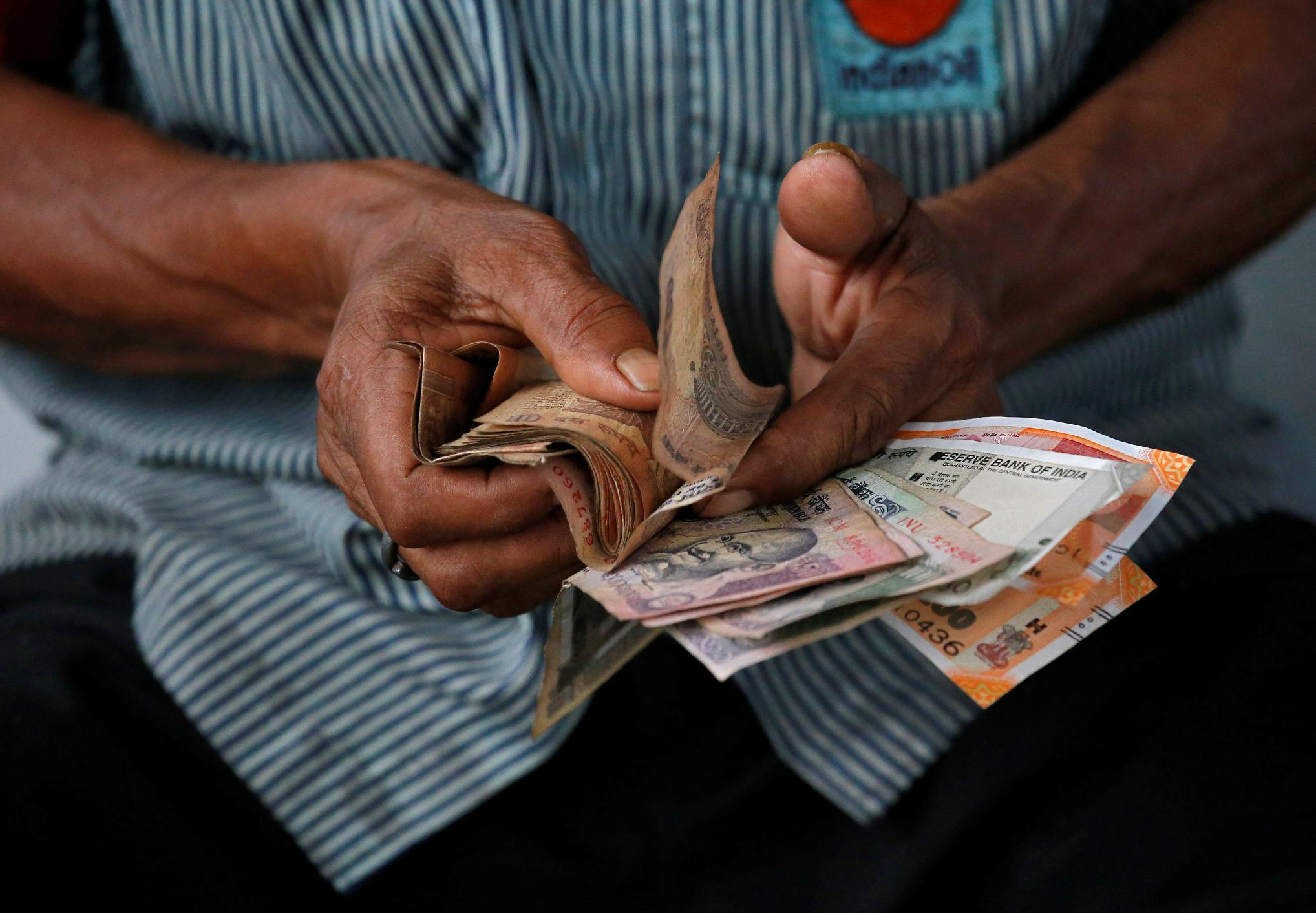
MUMBAI, Oct 15 (Reuters) - The Indian rupee hovered close to a record low on Tuesday, pressed by a fall in its regional peers, while mild dollar sales from state-run banks supported the currency which has remained subdued this month. The rupee was at 84.0725 against the U.S. dollar as of 11:20 a.m. IST, nearly unchanged from its close at 84.06 on Monday. The currency had slipped to an all-time low of 84.0750 in the previous session, after weakening below 84 for the first time last week. The rupee is down by about 0.3% this month, but has fared better than its regional peers which have declined between 0.8% to 3% amid a rebound in the US dollar. The dollar index was at 103.3 on Tuesday, its strongest level in over two months. Other Asian currencies were down between 0.1% and 0.8%. Foreign banks were spotted bidding for dollars, likely on behalf of their custodial clients, a trader at a state-run bank said. Sustained outflows from local equities have hurt the local currency this month, with foreign investors having pulled out about $8 billion so far. Benchmark equity indices BSE Sensex (.BSESN) , opens new tab and Nifty 50 (.NSEI) , opens new tab were down about 0.2% each on Tuesday, diverging from gains in most other Asian equities. In the near-term, the local currency is expected to trade between 83.90 and 84.10, said Amit Pabari, managing director at FX advisory firm CR Forex. "However, with the right mix of RBI intervention and favourable global trends, the rupee could inch back to 83.80." Meanwhile, dollar-rupee forward premiums dipped, with the 1-year implied yield down 1 basis point at 2.20% pressured by a rise in near-maturity U.S. bond yields. The 1-year U.S. Treasury yield was up 7 bps at 4.25% in Asia hours. Sign up here. https://www.reuters.com/markets/currencies/rupee-pinned-near-all-time-low-regional-currencies-decline-2024-10-15/
2024-10-15 05:45
ASML's weak sales forecast impacts tech shares Oil prices fall due to easing supply worries and weak demand Financial firms post strong profits, healthcare results disappoint NEW YORK, Oct 15 (Reuters) - U.S. stocks closed down on Tuesday, following world stocks lower as a weak sales forecast from chipmaker ASML (ASML.AS) , opens new tab weighed on tech shares, while crude extended its slide due to easing supply worries and weakening demand. The three major U.S. indexes ended the session in negative territory, with the S&P 500 and the Dow easing back from Monday's record closing highs. Financial firms Goldman Sachs (GS.N) , opens new tab, Citigroup (C.N) , opens new tab and Bank of America (BAC.N) , opens new tab all posted better-than-expected profit, while healthcare companies UnitedHealth (UNH.N) , opens new tab and Johnson & Johnson (JNJ.N) , opens new tab results underwhelmed investors. But Netherlands-based chip equipment maker ASML posted third quarter results that surprised markets with weak bookings and lower-than-expected sales forecasts, dour news that proved contagious to the U.S. chip sector (.SOX) , opens new tab. "The U.S. stock market is so heavily weighted in tech, it’s going to drive where the overall market appears to be going," said Rob Haworth, senior investment strategist at U.S. Bank Wealth Management in Seattle. "But below the surface it’s not bad news across the board." "The global story is more due to soft data," Haworth added. Energy stocks (.SPNY) , opens new tab suffered the steepest percentage drop among the major S&P 500 sectors, falling 3.04% on sliding crude prices. The Dow Jones Industrial Average (.DJI) , opens new tab fell 324.60 points, or 0.75%, to 42,740.62, the S&P 500 (.SPX) , opens new tab fell 44.54 points, or 0.76%, to 5,815.31 and the Nasdaq Composite (.IXIC) , opens new tab fell 187.10 points, or 1.01%, to 18,315.59. European stocks posted their largest one-day percentage drop in over two weeks, weighed by tech stocks in the wake of ASML's disappointing annual sales forecast. Meanwhile, investors remained focused on the European Central Bank's rate decision on Thursday. MSCI's gauge of stocks across the globe (.MIWD00000PUS) , opens new tab fell 6.20 points, or 0.72%, to 850.98. The STOXX 600 (.STOXX) , opens new tab index fell 0.8%, while Europe's broad FTSEurofirst 300 index (.FTEU3) , opens new tab fell 19.22 points, or 0.92%. Emerging market stocks (.MSCIEF) , opens new tab fell 11.40 points, or 0.98%, to 1,148.66. Oil prices slid to a near two-week low, extending Monday's losses amid easing supply pressures arising from the conflict in the Middle East, amid reports Israel's Prime Minister Benjamin Netanyahu told U.S. President Joe Biden's administration that Israel would avoid striking Iranian oil targets. Additionally, OPEC and the International Energy Agency both lowered their global demand forecasts, mostly due to weakness in China. "Sliding oil prices are disinflationary and that’s a positive for the broader economy," said Tim Ghriskey, senior portfolio strategist Ingalls & Snyder in New York. "What you’re seeing now is the speculation that Middle East oil properties are going to be exempt from attack." "And falling oil prices does say something about global demand." U.S. crude tumbled 4.40% to $70.58 per barrel, while Brent fell to $74.25 per barrel, down 4.14% on the day. Benchmark U.S. Treasury yields edged lower, pausing after touching a 2-1/2 month high in the wake of soft manufacturing data from the New York Federal Reserve. The yield on benchmark U.S. 10-year notes fell 3.7 basis points to 4.036%, from 4.073% late on Friday. The 30-year bond yield fell 5.8 basis points to 4.3237% from 4.382% late on Friday. The 2-year note yield, which typically moves in step with interest rate expectations, rose 1.1 basis points to 3.952%, from 3.941% late on Friday. The dollar was nominally lower against a basket of world currencies amid wagers that the Federal Reserve will proceed with modest rate cuts in the near term. The dollar index , which measures the greenback against a basket of currencies including the yen and the euro, rose 0.06% to 103.24, with the euro down 0.2% at $1.0887. Against the Japanese yen , the dollar weakened 0.37% to 149.2. Gold gained traction, lifted by lower Treasury yields. Spot gold rose 0.4% to $2,661.80 an ounce. To read Reuters Markets and Finance news, click on https://www.reuters.com/finance/markets For the state of play of Asian stock markets please click on: (This story has been refiled to add the dropped word 'tech' in the headline) Sign up here. https://www.reuters.com/markets/global-markets-wrapup-1-2024-10-15/