2025-12-19 05:58
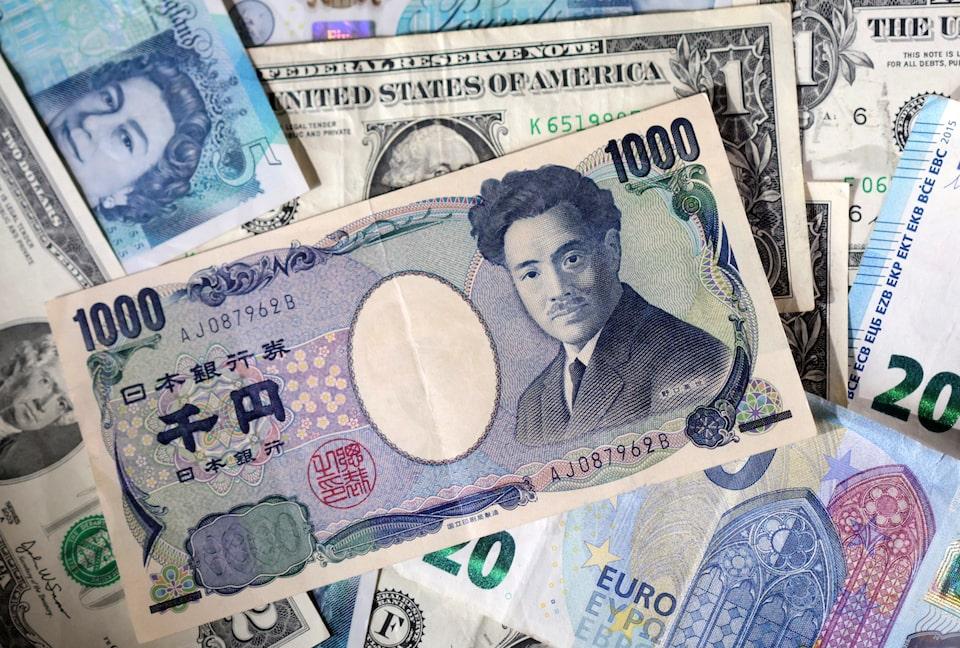
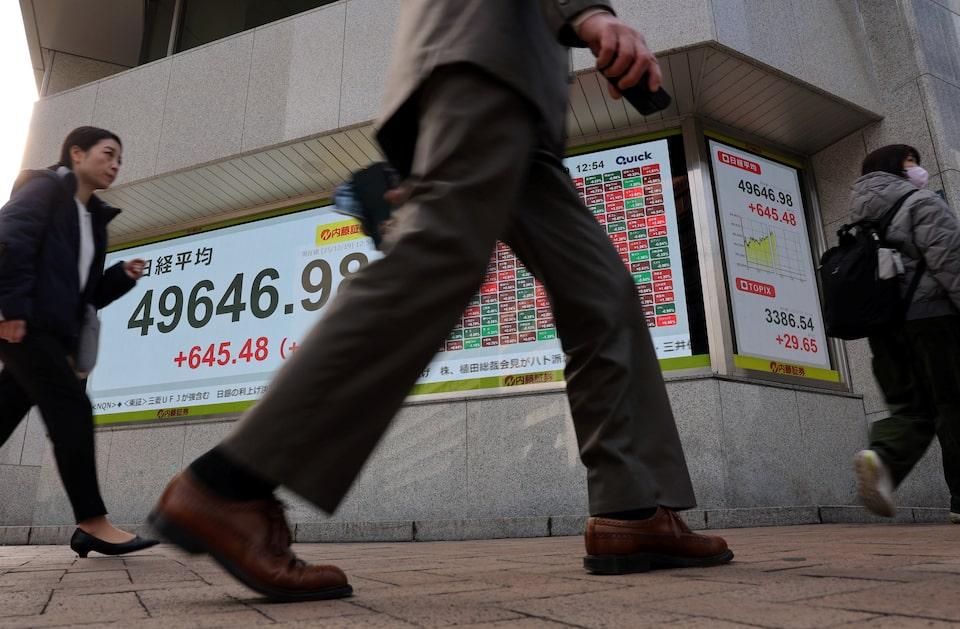
It's taken 30 years, but Japanese savers can finally get 0.75% for their money - just don't spend it all at once. The Bank of Japan did what everyone expected, because it had been telegraphed by the bank itself, and raised rates a quarter point to 0.75%. The knee-jerk reaction in markets was to sell yen on the fact and the dollar popped as high as 156.19, later steadying at 156.00. The Nikkei held early gains of 1.2%, made largely on the back of a rally on Wall Street where stellar results from Micron Technology reenergised tech. Sign up here. That's not to say the BOJ was in any way dovish. It again noted real rates were at "significantly" low levels even after the hike, and pledged to continue tightening should the economy and inflation pan out as forecast. Policymakers also sounded more confident that firms would continue to raise wages, sustaining inflation around its 2% target, a cycle it has spent decades trying to foster. The bond market seemed to take them at their word and 10-year yields climbed 5 basis points to 2.015%, levels not seen since August 1999 when Christina Aguilera's "Genie in a Bottle" was at No. 1. Investors are now waiting for BOJ Governor Ueda to give his post-meeting media conference, where his comments have moved markets in the past. One focus will be his thoughts on the terminal rate. He's long stated that neutral was in a wide range of 1.0% to 2.5%, but markets have only been pricing in one more hike to the bottom of that band. Were Ueda to hint at anything higher, that could help the yen while hammering bonds. Otherwise, Thursday's U.S. CPI report could be a candidate for damned lies and statistics. No serious economist believes inflation really slowed to 2.7% in November from 3.0% in September (October having been lost to the shutdown). Some of the downward bias came because the Bureau of Labor Statistics could only collect prices from mid-November, just in time to catch the Black Friday sale events. The BLS' methodology for dealing with the lack of October data also put a downward bias on rent and owner's equivalent rent, which will linger for some time to come. Indeed, the impact might not be reversed until the April edition of the CPI is released, so the annual readings will stay suspect. Just what Fed policymakers needed. Key developments that could influence markets on Friday: - Speakers include ECB's Kocher, Lane and Cipollone - EU flash consumer confidence; German GfK Consumer Sentiment, German and French producer prices; UK retail sales - US University of Michigan consumer sentiment, existing home sales (This story has been refiled to fix grammar in the headline) https://www.reuters.com/world/china/global-markets-view-europe-2025-12-19/
2025-12-19 05:53
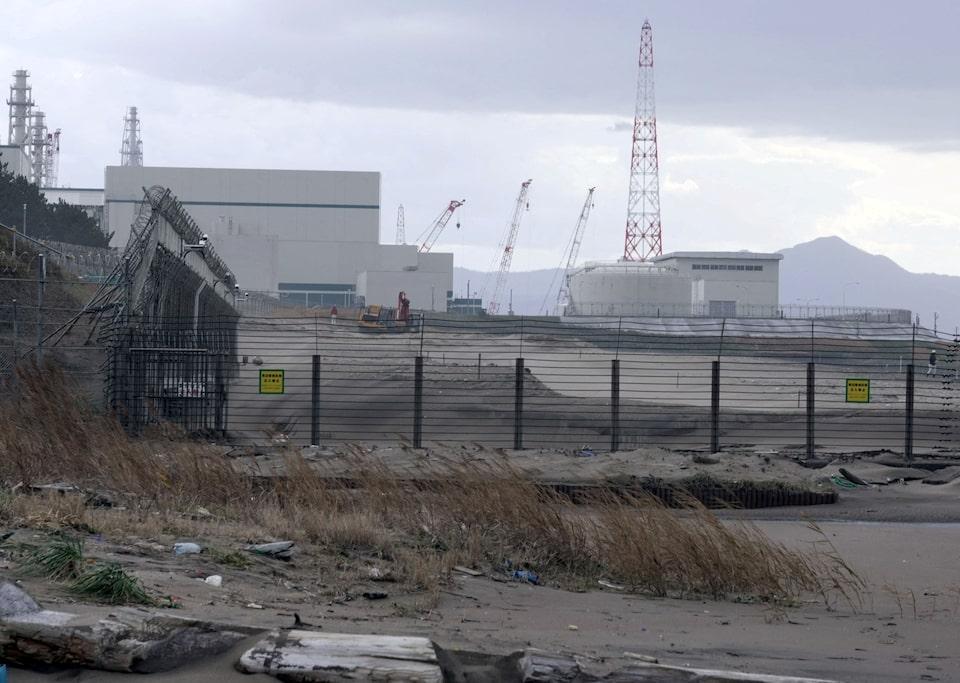
Ministry proposes public loans for up to 30% of total loans for long-term projects Japan aims to double nuclear power share in its energy mix to 20% by 2040 At least 15-16 reactors need to be restarted to achieve that target TOKYO, Dec 19 (Reuters) - Japan is moving to unlock more public funding for its crippled nuclear power sector, which experts say is crucial to jump-starting an industry long financed by shareholder-owned utilities. In the wake of the 2011 Fukushima disaster and ensuing public fear about the industry's safety standards, Japan shut down all of its 54 reactors. Stricter rules and, in some cases, opposition from local residents has meant that only 14 of 33 units available for restarts are currently operational. Sign up here. Next week, however, will mark a milestone in the sector's recovery, when Niigata prefecture lawmakers are expected to vote in favour of restarting two of seven reactors at the Kashiwazaki-Kariwa nuclear plant, the world's biggest. Last month, Japan's trade and industry ministry proposed a loan system for investments in nuclear power that could help utilities looking to upgrade safety at reactors or build afresh. Previously, public financial support was limited to allowing some investment recovery via the country's long-term decarbonization auction scheme. "We will use the loan system currently under consideration to support long-term and large-scale investments, which are generally considered difficult to raise money for," the ministry said. In November, a ministry working group suggested public financing could be 30% of total loans for nuclear projects and possibly more for large projects. POTENTIALLY STRONG DEMAND Demand could be robust. Japan aims to double the share of nuclear power in its electricity mix to 20% by 2040 to boost energy security, contain living costs, and meet power demand set to grow by 6% over the coming decade driven by AI data centres, reversing years of decline. New Prime Minister Sanae Takaichi is a strong backer of nuclear power, seeking to ease the bill for imported fuels that fire 60–70% of Japan's power generation. Other factors are also providing tailwinds for the industry. "Nuclear restarts are clearly gaining momentum, driven not only by rising data-centre-related power demand, but also by energy-security concerns, decarbonisation commitments and slower-than-planned offshore wind deployment," said Kpler analyst Go Katayama. Japan's operational reactors can generate around 13 gigawatts (GW) of power. To achieve its 2040 target, at least another 15-16 idle reactors need to be brought online, analysts say. RESTARTS AND NEW BUILDS Restarts requiring safety upgrades cost between $700 million and $1 billion per unit, according to World Nuclear Association estimates. But Kpler's Katayama said Japan's stricter rules due to the risks of earthquakes are likely to drive costs towards the upper end. He expects the restarts will need to be backed with 30%-50% public funding to be viable for operators. But Japan will not be able to rely just on restarts. Some 14 GW of nuclear reactors will reach their operational limit of 60 years by 2050, underlining the need to develop next-generation reactors, according to a June trade and industry ministry report. Since Fukushima, only Kansai Electric Power Co (9503.T) , opens new tab has announced plans for a new reactor. The utility, which has yet to provide a construction cost estimate, plans to raise funds through bonds, loans, and other vehicles. A new 1 GW nuclear reactor costs roughly $7 billion in Japan, said Joshua Ngu, vice chairman for Asia Pacific at Wood Mackenzie, adding that new-build large-scale projects typically seek to fund 50% to 80% of their project cost with debt. Hideki Masui, president of the Japan Atomic Industrial Forum, noted that a nuclear power plant takes around 20 years to build. "During those 20 years, there is essentially no revenue coming in at all. Frankly, that's extremely tough," he said. The pending Kashiwazaki-Kariwa restarts would bring one 1.36 GW unit online next year and another 1.36 GW unit back up sometime around 2030. In addition to that, the governor of Hokkaido recently approved the restart of Hokkaido Electric Power Co's (9509.T) , opens new tab Tomari-3 reactor. Japan Atomic Power Co's (JATOM.UL) 1.1 GW Tokai-2 reactor has been given the green light by the industry regulator to resume service and plans to finish safety upgrades by the end of 2026. It still needs to gain local government approval. Another six reactors operated by Hokkaido Electric, Chubu Electric Power Co (9502.T) , opens new tab, Tohoku Electric Power Co (9506.T) , opens new tab and Hokuriku Electric Power Co (9505.T) , opens new tab are awaiting , opens new tab regulatory decisions on their potential restarts. https://www.reuters.com/sustainability/boards-policy-regulation/japan-free-up-more-public-funding-nuclear-power-renewal-push-2025-12-19/
2025-12-19 05:15
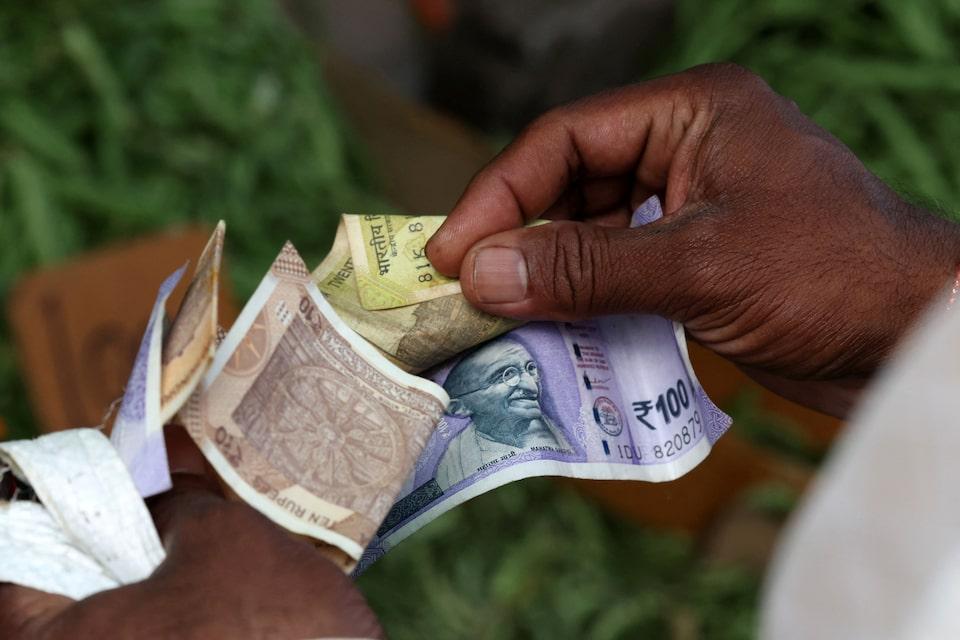
MUMBAI, Dec 19 (Reuters) - The Indian rupee posted its strongest single-day gain in over three years on Friday, rising above the 90-per-dollar mark late in the session, as the central bank intervened to shore up the currency and curb speculative bets, traders said. The currency had slipped to a record low earlier this week on a lingering trade impasse with the U.S. and persistent portfolio outflows, but the central bank’s interventions have led to a 2% rise from the trough. Sign up here. The rupee closed at 89.27 per dollar, rising more than 1% on the day. It also gained the most week-on-week since June with an advance of 1.2%. Traders pointed out that a large state-run bank heavily sold dollars, most likely on behalf of the RBI, near the close of the spot market session at 3:30 p.m. IST. The central bank's "hammer-like intervention" will surely change the tone on the rupee in the near-term and will keep speculators wary of entering fresh short positions, a trader at a Mumbai-based bank said. The RBI had also intervened heavily earlier in the week when the rupee fell to its all-time low of 91.075. "The RBI appears to have intervened to push back on speculative positioning against the currency," said Dilip Parmar, a foreign exchange research analyst at HDFC Securities. While volatility could remain elevated next week as trading liquidity thins, the rupee should hold in a 89.10-89.95 range, Parmar said. Earlier in the day, the rupee had lumbered between modest gains and losses, influenced largely by corporate activity and modest declines in Asian currencies. The dollar index was last up 0.2% at 98.66 while Asian currencies were mostly lower, led by the over 1% slump in the Japanese yen after the Bank of Japan delivered a widely expected rate cut. Meanwhile, U.S. dollar/Indian rupee forward premiums rose to three-year peaks on Friday, spurred by excess dollar liquidity, traders unwinding positions and hedging demand in the non-deliverable forward market. https://www.reuters.com/world/india/soft-us-inflation-adds-rbi-support-tentative-rupee-recovery-2025-12-19/
2025-12-19 05:01
Brent and WTI prices rise amid Venezuelan tanker blockade Russia-Ukraine peace talks impact oil market sentiment U.S. sanctions increase pressure on Venezuela's oil exports NEW YORK, Dec 19 (Reuters) - Oil prices edged up on possible disruptions from a U.S. blockade of Venezuelan tankers as the market waits for news about a possible Russia-Ukraine peace deal. Brent futures rose 65 cents, or 1.1%, to settle at $60.47 per barrel, while U.S. West Texas Intermediate (WTI) crude rose 51 cents, or 0.9%, to settle at $56.66. Sign up here. That put Brent and WTI down about 1% this week after both crude benchmarks fell about 4% last week. In other energy markets, a recent drop in U.S. gasoline futures to a four-year low cut 321- and gasoline crack spreads, which measure refining profit margins, to their lowest since February. "The (oil) complex is posting small gains in holding above lows established earlier this week as it awaits further guidance regarding Ukraine/Russian peace talks as well as fresh headlines out of Venezuela as to the potential impact of the apparent Trump tanker blockade," analysts at energy advisory firm Ritterbusch and Associates said in a note. As U.S. President Donald Trump seeks an end to Europe's deadliest conflict since World War Two, the onus was on Ukraine and Europe to make the next move toward peace. European Union leaders decided on Friday to borrow cash to loan 90 billion euros ($105 billion) to Ukraine to fund its defense against Russia for the next two years rather than use sidestepping divisions over an unprecedented plan to finance Kyiv with Russian sovereign cash. Putin offered no compromise on Friday on his terms for ending the war in Ukraine and accused the European Union of attempting "daylight robbery" of Russian assets. Ukraine, meanwhile, struck a Russian "shadow fleet" oil tanker in the Mediterranean Sea with aerial drones for the first time, an official said on Friday, reflecting the growing intensity of Kyiv's attacks on Russian oil shipping. VENEZUELA BLOCKADE U.S. Secretary of State Marco Rubio on Friday told reporters that the United States is not concerned about an escalation with Russia when it comes to Venezuela, as the Trump administration builds up military forces in the Caribbean. Trump told NBC News in an interview that he was leaving the possibility of on the table. Uncertainty over how the U.S. would enforce Trump's intent to block sanctioned tankers from entering and leaving Venezuela tempered geopolitical risk premiums, IG analyst Tony Sycamore said. Venezuela, which pumps about 1% of global oil supplies, on Thursday authorized two unsanctioned cargoes to set sail for China, said two sources familiar with Venezuela's oil export operations. A sanctioned tanker carrying some 300,000 barrels of naphtha from Russia entered Venezuelan waters late on Thursday, while three others also under sanctions either stopped navigation or began redirecting course in the Atlantic Ocean, ship tracking data showed. The U.S. on Friday imposed sanctions on family members and associates of Nicolas Maduro and his wife, as Washington ratchets up pressure on the Venezuelan president. U.S. PRODUCTION WORRIES? The rig count in the Permian Basin in West Texas and eastern New Mexico, the biggest U.S. oil-producing shale formation, fell by three this week to 246, the lowest since August 2021, according to data from U.S. energy services firm Baker Hughes (BKR.O) , opens new tab. The rig count is an early indicator of future output. A lower count can point to a decline in future output. https://www.reuters.com/business/energy/oil-set-close-lower-second-straight-week-2025-12-19/
2025-12-19 01:34
Farmers' debt could spiral after cyclone hits rice growing Cyclone kills 643, affects 1.8 million farming families Food inflation could double in coming months Government offers compensation to help farmers replant PALLEPOLA, Sri Lanka, Dec 19 (Reuters) - Mud and sand have swamped a rice crop across Kalanchi Dewage Risman's two-acre (0.8-hectare) tract that had just been starting to show green shoots when Cyclone Ditwah ripped through Sri Lanka. "I have to clear out the mud, level out the field, and then plant again," said Risman, 55, who earns his livelihood from rice farming, along with his wife and two sons, but faces the prospect of going even deeper into debt to make a recovery. Sign up here. "It's already mid-December and rice planted this late won't provide a good harvest." Replanting is a daunting task after Ditwah flooded crops across 535,000 hectares (1.3 million acres), while government data shows more than 120,000 hectares (297,000 acres) have been completely washed away or buried under mud and sand. FARMLAND DEVASTATED BY DITWAH Ditwah hit key growing regions for rice, vegetables and maize farmed by nearly 1.8 million families when it scythed through the island of 22 million in November, killing 643 people and sending more than 70,000 into relief centres. Just a fortnight before, nearly 800,000 farmers had cultivated 563,950 hectares (1.4 million acres) of paddy in the main growing season from November to February, United Nations estimates show. But floods, prolonged inundation, and winds have caused severe damage to about 95,799 hectares (237,000 acres) of other field crops, while 13,463 hectares (33,300 acres) of maize, pulses, bananas, and vegetables have also suffered. Torrential rain and floods tore up 483 dams and 1,936 canals to swathe rice fields in central Sri Lanka in mud, the agriculture ministry's initial estimates showed. Rice and vegetable farming supports about 300 families in the region and many are pooling resources to salvage at least some fields, said six farmers who spoke to Reuters. LOOKING FOR A HOME TO RENT Many have yet to receive any of the promised government compensation of 150,000 rupees ($485) for fields that have been completely destroyed and they worry the money will fall short. Niluka Yaparatne, 48, is looking for a home to rent after a landslide that killed seven neighbours smashed into her home, nestled on a hillside. She said her family had taken a 2 million rupee loan to build the home. "We built it bit by bit and finally completed it in 2022," said Yaparatne, now living with a relative after she and her disabled husband, Pattini Gedara Nihal, 51, fled with their three children in a three-wheeler in the middle of the night. "We need to find a home near to the children's school but rent prices are higher now." Torrential rain brought by the cyclone swamped the paddy field farmed by her husband with mud and sand, while authorities have declared the entire block of more than 50 homes landslide-prone, and evacuated families to nearby relief centres. Food inflation could double in the short term from 3% in November, said Raynal Wickremeratne, research co-head at Softlogic Stockbrokers. "We would need to import a quantity of rice to manage this season," he added. "Farmers need state support. It's not just a loss of crop, it's also the cost of rebuilding the fields and the costs of replanting and fertiliser." COMPENSATION TO BE HANDED OUT THIS WEEK More than 15 billion rupees earmarked for compensation will be distributed from this week, Agriculture Secretary D. P. Wickramasinghe told Reuters, ruling out the prospect of immediate rice imports. Large swathes of the rice crop can be salvaged if replanting and irrigation repairs are carried out swiftly, he said. "We are encouraging farmers to replant by end December," he added. "Some fields will recover from floods and we expect rice production to be about 3.5 million metric tons, which should be sufficient." That is scant consolation for farmers like Risman. "My hope is that we can at least plant for the next season in May," he said, standing beside his field under bleak skies that threatened more rain. Risman is staring at the need to shell out funds for heavy machinery, seed paddy and fertiliser, amounting to 175,000 rupees ($566) to ensure a partial recovery, while repaying a loan of 50,000 rupees ($162) he took for this season. "I don't understand where to even start." ($1=309.2 Sri Lankan rupees) https://www.reuters.com/business/environment/sri-lanka-farmers-face-daunting-task-replanting-after-cyclone-2025-12-19/

2025-12-19 00:41
BOJ raises rates as expected, Ueda's speech offers few hints Yen falls broadly, hits record low against euro Japense finance minister warns of action against excessive FX moves NEW YORK/LONDON, Dec 19 (Reuters) - The yen weakened sharply against the dollar and other major peer currencies on Friday after the Bank of Japan raised rates to a 30-year high but did not offer clarity on future hikes. The yen fell against the dollar after the BOJ lifted its policy rate to 0.75% from 0.5% in a move that had been well-telegraphed by policymakers, prompting traders to sell. Sign up here. Losses in the Japanese currency extended after BOJ Governor Kazuo Ueda's post-meeting press conference, where he remained vague on the exact timing and pace of future rate hikes and said only that the door was open to further tightening. The dollar rose as high as 157.67 against the Japanese yen, its strongest level in four weeks and on track for its largest one-day rise since early October. It was last up 1.23% at 157.535 yen. The euro hit a record high of 184.71 yen while the Swiss franc hit an all-time high of 197.23 yen . Sterling rose by as much as 1.36% to its highest since 2008, at 210.96 yen . "I think most of the currencies are consolidating but the big one, of course, is the yen," said Marc Chandler, chief market strategist at Bannockburn Global Forex in New York. "The BOJ delivered a rate hike like everybody expected and indicated that they will continue to raise should the economy evolve as they expect. The yen is weaker across the board. I think many people are saying that the BOJ was not hawkish enough," Chandler added. In Friday's statement, the BOJ maintained its view that underlying inflation will converge around its 2% target in the latter half of its three-year projection period through fiscal 2027. It reiterated that real rates were at "significantly" low levels even after the hike, and pledged to continue tightening should the economy and inflation pan out as forecast. But none of this was enough to halt the slide in the yen. Traders have started to consider the chances of official intervention to support the currency once the yen crossed the 155 level against the dollar in November. The last time Tokyo authorities stepped into the market to intervene was July 2024, when the dollar/yen rate hit 161.96, the most since the mid-1980s. Japanese Finance Minister Satsuki Katayama warned on Friday that Tokyo would take appropriate action to deal with any excessive volatility in the foreign exchange market. "We will respond appropriately to excessive moves, including those driven by speculators," she said. "We would fade that dovish BOJ narrative," said Elias Hadad, global head of markets strategy at BBH in an investor note. "In our view, the bar for additional BOJ rate hikes is low. First, the BOJ warned that 'the risk of firms' active wage-setting behavior being interrupted is low', implying that underlying wage and inflation pressure are likely to persist. Second, BOJ Governor Ueda pointed out the policy rate is still some distance from the lower end of the neutral rate range." EURO STEADIES European Union leaders decided on Friday to borrow cash to fund Ukraine's defence against Russia for the next two years rather than use frozen Russian assets, sidestepping divisions over an unprecedented plan to finance Kyiv with Russian sovereign cash. The euro held steady at $1.1720. European Central Bank chief Christine Lagarde on Thursday offered no forward guidance and said all options were on the table, pushing back against more hawkish members. The ECB left its policy rate on hold at 2%, as expected. Sterling round-tripped to sit at $1.3388 after the Bank of England cut interest rates to 3.75%, as expected, but the decision was closer-run than the market had anticipated, which may limit the room for further easing. Overnight, the dollar had briefly weakened following a sharp and unexpected fall in U.S. inflation, but investors were not sure how far to trust the data since collection was interrupted by the U.S. government shutdown, and the move soon retraced. Elsewhere, the Australian dollar strengthened 0.06% versus the greenback to $0.66175 while the kiwi weakened 0.23% versus the greenback to $0.57619. The dollar was flat at 7.0342 versus the offshore Chinese yuan. In cryptocurrencies, bitcoin gained 2.77% to $87,978.94. Ethereum rose 5.73% to $2,991.88. https://www.reuters.com/world/asia-pacific/fragile-yen-tenterhooks-ahead-boj-2025-12-19/