2024-10-14 11:38
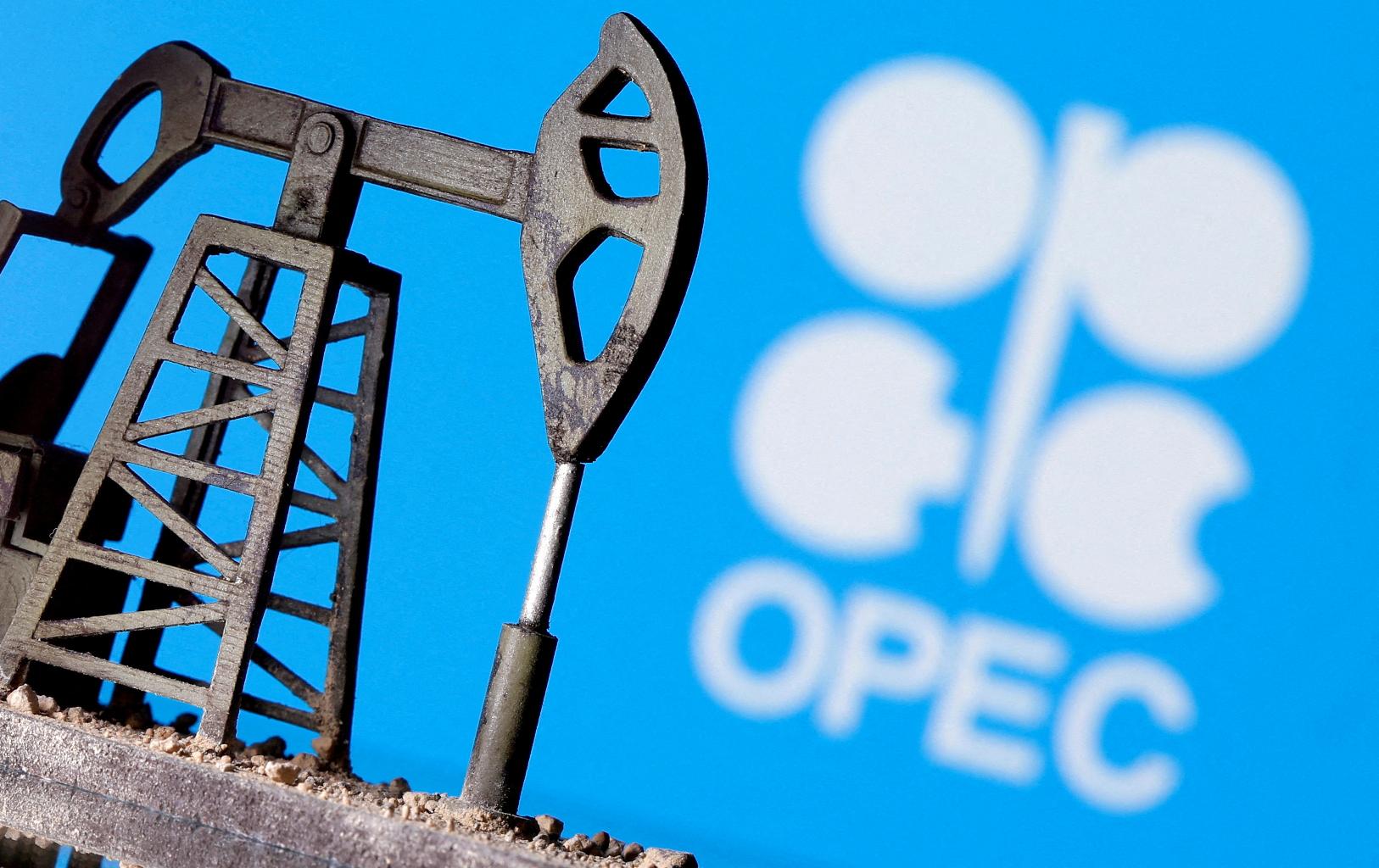
Makes third cut in 2024 oil demand growth forecast Cuts view on Chinese demand growth to 580,000 bpd IEA to publish updated forecasts on Tuesday LONDON, Oct 14 (Reuters) - OPEC on Monday cut its forecast for global oil demand growth in 2024 reflecting data received so far this year and also lowered its projection for next year, marking the producer group's third consecutive downward revision. The weaker outlook highlights the dilemma faced by OPEC+, which comprises the Organization of the Petroleum Exporting Countries and allies such as Russia, which is planning to start raising output in December after earlier delaying the hike against a backdrop of falling prices. On Monday, OPEC in a monthly report said world oil demand will rise by 1.93 million barrels per day (bpd) in 2024, down from growth of 2.03 million bpd it expected last month. Until August, OPEC had kept the forecast unchanged since it was first made in July 2023. China accounted for the bulk of the 2024 downgrade. OPEC trimmed its Chinese growth forecast to 580,000 bpd from 650,000 bpd. While government stimulus measures will support fourth-quarter demand, oil use is facing headwinds from economic challenges and moves towards cleaner fuels, OPEC said. "Diesel consumption continued to be subdued by slowing economic activity, mostly a slowdown in building and housing construction, and the substitution of liquefied natural gas (LNG) for petroleum diesel fuel in heavy-duty trucks," OPEC said in reference to August. Oil held an earlier decline of about 2% after the report was issued, with Brent crude trading below $78 a barrel. There is a wide split between forecasters on the strength of demand growth in 2024, partly due to differences over China and over the pace of the world's switch to cleaner fuels. OPEC is still at the top of industry estimates and has a long way to go to match the International Energy Agency's far lower view. OPEC said this year's demand growth was still above the historical average of 1.4 million bpd seen prior to the COVID-19 pandemic, which caused a plunge in oil use. For next year, OPEC cut its 2025 global demand growth estimate to 1.64 million bpd from 1.74 million bpd. LIBYA, IRAQ, RUSSIA CUTS OPEC+ has implemented a series of output cuts since late 2022 to support the market, most of which are in place until the end of 2025. The group was due to start unwinding the most recent layer of cuts of 2.2 million bpd from October, but decided to delay the plan for two months after oil prices slumped. OPEC's report showed production fell in September due to unrest in Libya and a cut by Iraq. OPEC+ pumped 40.1 million bpd, down 557,000 bpd from August. Iraq pumped 4.11 million bpd, down 155,000 bpd but still above its 4 million bpd quota. As well as Iraq, OPEC has named Russia and Kazakhstan as among the OPEC+ countries which pumped above quotas. Russia cut output in September by 28,000 bpd to about 9 million bpd, the report said, citing data from secondary sources such as consultancies. Kazakhstan, however, raised production by 75,000 bpd to 1.55 million bpd. The OPEC report projects demand for OPEC+ crude, or crude from OPEC plus the allied countries working with it, at 43.7 million bpd in the fourth quarter, in theory allowing it room for higher production. Other forecasts suggest less room. The IEA, which represents industrialised countries, sees much lower demand growth than OPEC of 900,000 bpd in 2024. The IEA is scheduled to update its figures on Tuesday. Sign up here. https://www.reuters.com/markets/commodities/opec-cuts-2024-2025-global-oil-demand-growth-view-again-2024-10-14/
2024-10-14 11:36
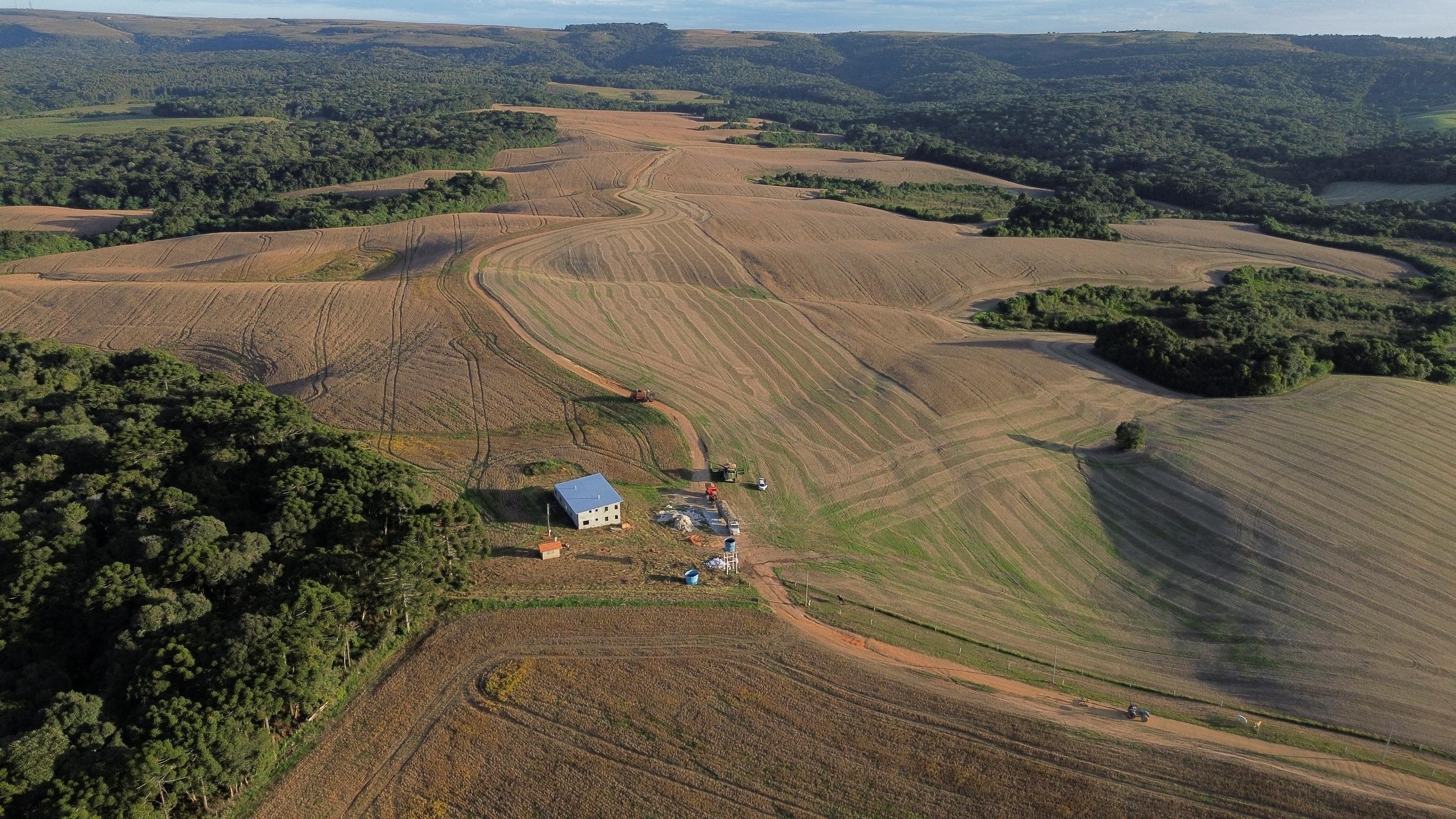
Raised on steak, most Brazilians are strangers to tofu Brazil: world's #1 soybean grower, mostly for animal feed High-end chefs use soy imported from as far off as Japan SAO PAULO, Oct 14 (Reuters) - Brazil's foodie hub Sao Paulo may be best known for its prized cuts of grilled meat and lavish sushi spreads, but some upscale restaurants are featuring a novel star ingredient: soy. The agricultural powerhouse is the world's top producer of soy, shipping over a million tons a week to China on average. But unlike in Asia and other markets where soy is synonymous with cheap everyday protein, Brazilians eat so little of it that it has become a pricey niche offering. On their carefully curated social media pages, high-end chefs prepare tofu cubes decorated with edible flowers and edamame topping sticky rice wrapped in thinly sliced carrots. In Sao Paulo's supermarkets, Brazilians making minimum wage would need to fork over a full day's pay for just 250 grams of tofu. "It's a treat," said Lucinete Magalhaes, after ordering a tofu dish in a restaurant in upscale Jardins. "In Brazil, we're used to eating rice with beans every day - but we don't really view soybeans the same." Bolivians, Nigerians and Russians consume more soy on average than Brazilians, according to agriculture consultancy Agromeris. It found Brazil was the only major market for foods made with soybeans in decline. Jacob Golbitz, who led the study a few years ago, said it was all down to culture. "If culture ever changes, it's at a glacial pace," he said. Mass soy production began only in the 1970s in Brazil, after new science opened the door to farming the cash crop in the country's vast, sparsely populated interior. Outside the Asian diaspora, Brazilians who heap brown and black beans on their rice every day still look askance at the exotic green beans - nearly all of which are grown to be exported to Asia and Europe to fatten up cattle, pigs, birds and fish. Brazil is forecast to produce a record 170 million metric tons of soy in its next harvest, compared to 125 million metric tons grown in the United States, which it surpassed in 2020. The boom has come withenvironmental costs. For decades, Brazil's expanding soy frontier has contributed to deforestation in the Amazon rainforest and the Cerrado savanna. ELITE TASTES "We experiment a lot with tofu, to play with contrasts, to give it flavor and texture," said Maria Cermelli, owner of the Sushimar restaurant in Jardins, a well-to-do neighborhood where locals walk dogs in custom knit sweaters past fashion boutiques. "It's still a novelty but becoming more popular." The contrasting positions of soy in Brazil illustrate a growing divide between global supply chains for mass-produced soft commodities and the niche cultivation of bespoke produce like heirloom Mexican corn and Peruvian potatoes for elite tastes. About 98% of Brazil's soy is genetically modified organisms (GMO) to withstand the heavy use of herbicide on industrial-scale plantations, which has added to a stigma in the local market. So food companies offering tofu and soy milk to choosy Brazilians rely on expensive parallel farming of organic, non-GMO soybeans – or imported products from as far off as Japan – and prices are high. "It's absurd that Brazil imports soy," said Alexandre Lima Nepomuceno from Embrapa, a research division of the Agriculture Ministry that opened the country's soybean frontier five decades ago. "The controversy around GMO has created a situation where every country made their legislation, often highly complex and confusing, which is increasing the cost and making this an impossible business." Brazilian law does not prohibit human consumption of GMO soybeans. However, companies go to great lengths and pay a hefty premium to source traditional soy, which for many have become synonymous with organic and healthy ingredients. In the high-volume, low-margin business of commercial farming, it is rare to find Brazilian producers betting on the non-GMO segment. "Creating a relevant demand for non-GMO soy is not easy," said Gus Guadagnini, Brazil CEO at The Good Food Institute, a think tank studying development of meat alternatives. Where Brazilian companies have embraced traditional soy production, it often requires heavy investments. Caramuru, the largest processor of the oilseed in central Mato Grosso state, deep in Brazil's agricultural heartland, has gone as far as building a separate plant for non-GMO soy. Marcos de Melo, their agricultural inputs manager, said the parallel production was needed because the tolerance for "contamination" of GMO soybeans is below 0.1%. However, Brazilians will not taste the final product coming off that dedicated Caramuru line. The company's non-GMO soymeal is destined for export to Europe to be used in animal feed. Sign up here. https://www.reuters.com/markets/commodities/despite-massive-production-soy-remains-niche-food-brazil-2024-10-14/
2024-10-14 11:30
NAPERVILLE, Illinois, Oct 13 (Reuters) - With global crop risks looming, speculators abandoned more bearish bets last week in Chicago corn and soybeans having been record short in both just three months ago. The net buying came ahead of Friday's pivotal supply and demand data from the U.S. government, and the moves were enough to flip collective fund sentiment from bearish to bullish in U.S. grain and oilseed futures and options as of Oct. 8. The combined net long, including CBOT corn, soybeans, soy products, wheat, and both Kansas City and Minneapolis wheat, was money managers’ first since September 2023. That is currently anchored by heavily bullish bets in soymeal and more modest ones in soybean oil, though funds’ sharp reduction in corn and soy bearishness has facilitated the flip into bull territory. However, the net long could be short-lived if the downward price pressure observed late last week carries over into this week. CORN AND SOYBEANS In the week ended Oct. 8, money managers reduced their net short position in CBOT corn futures and options to 23,729 contracts, their least bearish corn stance since early August 2023. That compared with 67,699 contracts in the prior week, and the move was driven entirely by short covering for a second straight week. Most-active CBOT corn futures had shed nearly 2% through Oct. 8 and CBOT soybeans dropped almost 4%, but money managers cut their net short in CBOT soybeans to a 19-week low of 21,798 futures and options contracts. That was a reduction of more than 13,000 contracts on the week, the result of new gross longs. Funds had been covering bean shorts somewhat aggressively over the previous few weeks. Worldwide crop concerns had pushed corn and soybean futures to multi-month highs on Oct. 2 and Sept. 30, respectively. But the trajectory has since been downward as rains have returned for some drought-concerned areas, and U.S. farmers are efficiently wrapping up a bumper season. Speculators may have been attempting to reduce risk ahead of Friday’s data from the U.S. Department of Agriculture, which yet again revealed comfortable supplies. Both corn and soybean futures slid on Friday, losing about 1% each over the last three sessions. SOY PRODUCTS AND WHEAT Money managers’ net long in CBOT soybean meal is record large for the date, but they cut their position to 96,588 futures and options contracts through Oct. 8, a reduction of about 6,600 on the week. That was associated with a 7% dive in meal futures . Soybean oil is the only other U.S. grain or oilseed where money managers hold a net long, and they doubled it in the week ended Oct. 8 to 32,503 futures and options contracts. That is their most bullish oil stance in a year. Along with soybeans, CBOT soymeal futures have eased this month, on Friday hitting their lowest levels in more than five weeks. But global vegoil prices remain strong, and CBOT soybean oil drifted slightly higher in the last three sessions. Chicago wheat futures have also held up relatively well considering recent declines in corn. Futures eased fractionally through Oct. 8, and money managers expanded their net short to 29,449 futures and options contracts from 22,953 a week before, which had been their least bearish view in two years. Wheat traders have been watching dryness in top supplier Russia and its recent jump in export prices, as well as risks to wheat crops in the Southern Hemisphere. Missile attacks in Ukrainian grain ports have also added to the uncertainty. Parched areas of Russia may be due for some showers this week, and rains are also expected for the driest areas of Brazil, where soybean planting has been slow. This, along with the presumably quick U.S. corn and soy harvest pace, will be in focus early this week. Karen Braun is a market analyst for Reuters. Views expressed above are her own. Sign up here. https://www.reuters.com/markets/europe/funds-establish-first-net-long-across-us-grains-oilseeds-13-months-2024-10-14/

2024-10-14 11:30
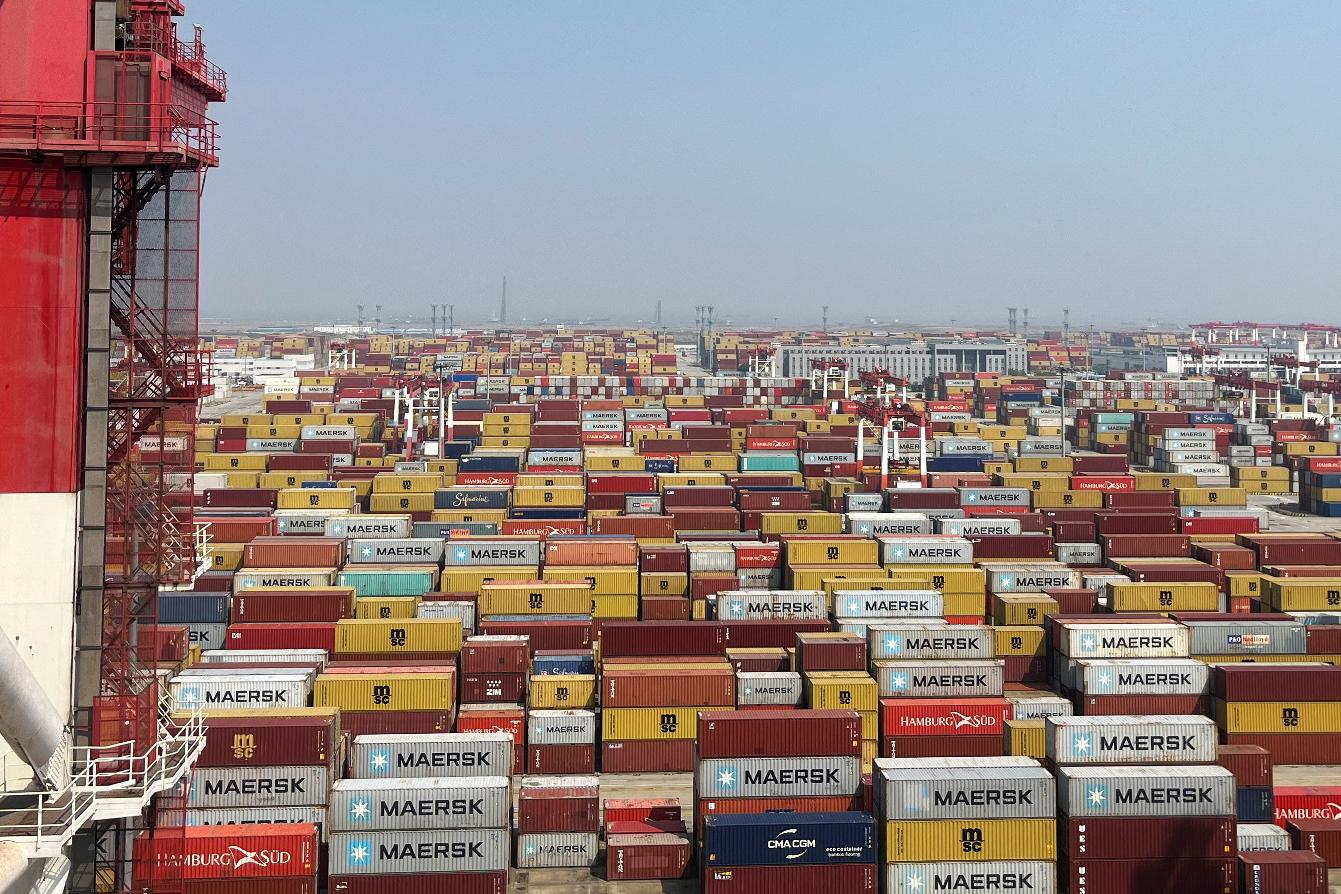
Exports grow at slowest pace in 5 months, miss forecast Imports also undershoot, underline weak domestic demand Export volumes remained resilient, analysts said Trade barriers could undercut efforts to lift growth BEIJING, Oct 14 (Reuters) - China's export growth slowed sharply in September while imports also unexpectedly decelerated, undershooting forecasts by big margins and suggesting manufacturers are slashing prices to move inventory ahead of tariffs from several trade partners. Export momentum had been one bright spot for the Chinese economy that has struggled to gain traction due to weak domestic demand and a property market debt crisis, adding to the urgency for stronger stimulus. Outbound shipments from the world's second-largest economy grew 2.4% year-on-year last month, the slowest pace since April, customs data showed on Monday, missing a forecast 6.0% increase in a Reuters poll of economists and a 8.7% rise in August. Imports edged up 0.3%, missing expectations for a 0.9% rise and softer than 0.5% growth previously. The weak data does not bode well for exports in coming months as just under a third of China's purchases are parts for re-export, particularly in the electronics sector. "Export growth slowed last month but remained resilient, with volumes still rising at a double-digit pace," Zichun Huang, China economist at Capital Economics said. "Further ahead, though, growing trade barriers are likely to become an increasing constraint." "The pivot toward monetary easing should also help support demand among China's trade partners. But China's export success is prompting increasing trade restrictions from other countries, which threatens to dampen longer-term export growth," she added. The European Commission on Oct. 4 saw its motion to impose additional duties on electric vehicles built in China of up to 45% pass in a divided vote of EU member states, joining the U.S. and Canada in tightening trade measures against China. China's overall trade surplus narrowed to $81.71 billion in September from $91.02 billion in August and missed a forecast of $89.80 billion. Manufacturing activity shrank sharply in September, according to a recent factory owners' confidence survey, with new export orders falling to their worst in seven months. Analysts have attributed previous months' strong export performance to factory owners slashing prices to find buyers. "Export growth in the fourth quarter is still likely to remain positive, but in the context of slowing external demand, the downside risk of exports is large," said Wang Qing, chief macro analyst at Oriental Jincheng, adding that manufacturing activity was way below the average for the last 10 years. DOUR DOMESTIC DEMAND Last week, the head of China's state planner said he was "fully confident" of achieving the government's full-year growth target of around 5%. And on Saturday, Chinese officials announced plans to ramp up debt issuance to aid local governments in managing their debt problems and provide increased support to low-income earners. But the omission of a dollar figure for the package prolongs investors' nervous wait for a clearer policy roadmap to overcome deflationary pressures and lift consumer confidence. Officials waited until after China's markets had closed to release the trade data. The U.S.-listed shares of red parka maker Canada Goose (GOOS.TO) , opens new tab dropped 4.4% before the bell after Wells Fargo downgraded its stock on weak China demand. Analysts anticipate it will take a long time to restore consumer and business confidence and get the $19 trillion economy on a more solid footing. A housing market recovery, in particular, could be a long way off. That said, China's iron ore imports rose 2.9% last month year-on-year, partly on hopes for improved demand over September and October, the peak construction season, while the country's copper imports climbed from a month prior too. New bank lending in China missed forecasts in September, separate data released by the People's Bank of China showed, although household loans, including mortgages, rose to 500 billion yuan in September from 190 billion yuan in August, according to Reuters' calculations. "The change of fiscal policy stance as indicated by the press conference over the weekend is critical as a pillar for growth next year," said Zhiwei Zhang, chief economist at Pinpoint Asset Management. "Looking ahead it would be difficult to sustain strong export growth into next year, as trade tension heightens." Sign up here. https://www.reuters.com/markets/asia/china-sept-export-growth-hits-5-month-low-global-demand-cools-2024-10-14/
2024-10-14 11:27
MOSCOW, Oct 14 (Reuters) - Russia cut crude oil output in September by 28,000 barrels per day (bpd) to about 9 million bpd, the Organization of the Petroleum Exporting Countries (OPEC) said on Monday, citing data from secondary sources such as consultancies. This was slightly above the quota agreed by the OPEC+ group of leading oil producers. Under OPEC+ deals and voluntary cuts, Russia's monthly quota stands at 8.98 million bpd. Production in August was revised down to 9.029 million bpd from 9.059 million bpd initially reported in September. The OPEC+ group of producers, comprising OPEC and allies including Russia, has made a series of deep output cuts since late 2022 to prop up the volatile oil market, agreeing to production quotas for its member countries. OPEC has named Russia, Kazakhstan and Iraq among the countries which produced oil above the quotas. Russia has pledged to compensate for its overproduction since April with reductions in October and November this year and between March and September next year. Sign up here. https://www.reuters.com/markets/commodities/opec-says-russian-oil-output-edged-further-down-september-2024-10-14/

2024-10-14 11:27
DAKAR, Oct 14 (Reuters) - The Democratic Republic of Congo (DRC) has cancelled a licensing round for 27 oil blocks, originally launched in 2022 to tap into the nation's oil and gas potential, according to a statement posted on the hydrocarbons ministry's X account on Monday. The statement dated Oct. 11 cited multiple reasons for the cancellation, including late submissions, inappropriate or irregular offers, and a lack of competition. "Given the above, I am obliged to declare the cancellation of the ongoing process," hydrocarbons minister Aime Sakombi Molendo said. He added that the process would be relaunched soon, without providing a specific timeline. Congo announced in July 2022 that it would offer 27 oil blocks and three gas blocks in the licensing round which drew condemnation from environmental groups and some of Congo's western partners. Some blocks are situated in parts of the world's second-biggest rainforest, sparking fears that drilling could release large amounts of carbon into the atmosphere, jeopardising climate goals to tame global warming. Congo rejected the criticisms, arguing that it needed to tap its natural resources for development. Congo, a leading miner of copper, cobalt, gold and diamonds, has long aimed to boost its oil sector. The country is believed to have sizeable oil and gas reserves. The licensing process has faced controversy. In November 2023, Reuters reported that a Canadian start-up run from a private home was chosen for a technically complex project to extract methane from the deep waters of a volatile lake, despite the company not meeting the tender's financial criteria. Sign up here. https://www.reuters.com/world/africa/congo-cancels-licensing-round-27-oil-blocks-2024-10-14/