2024-10-14 04:03
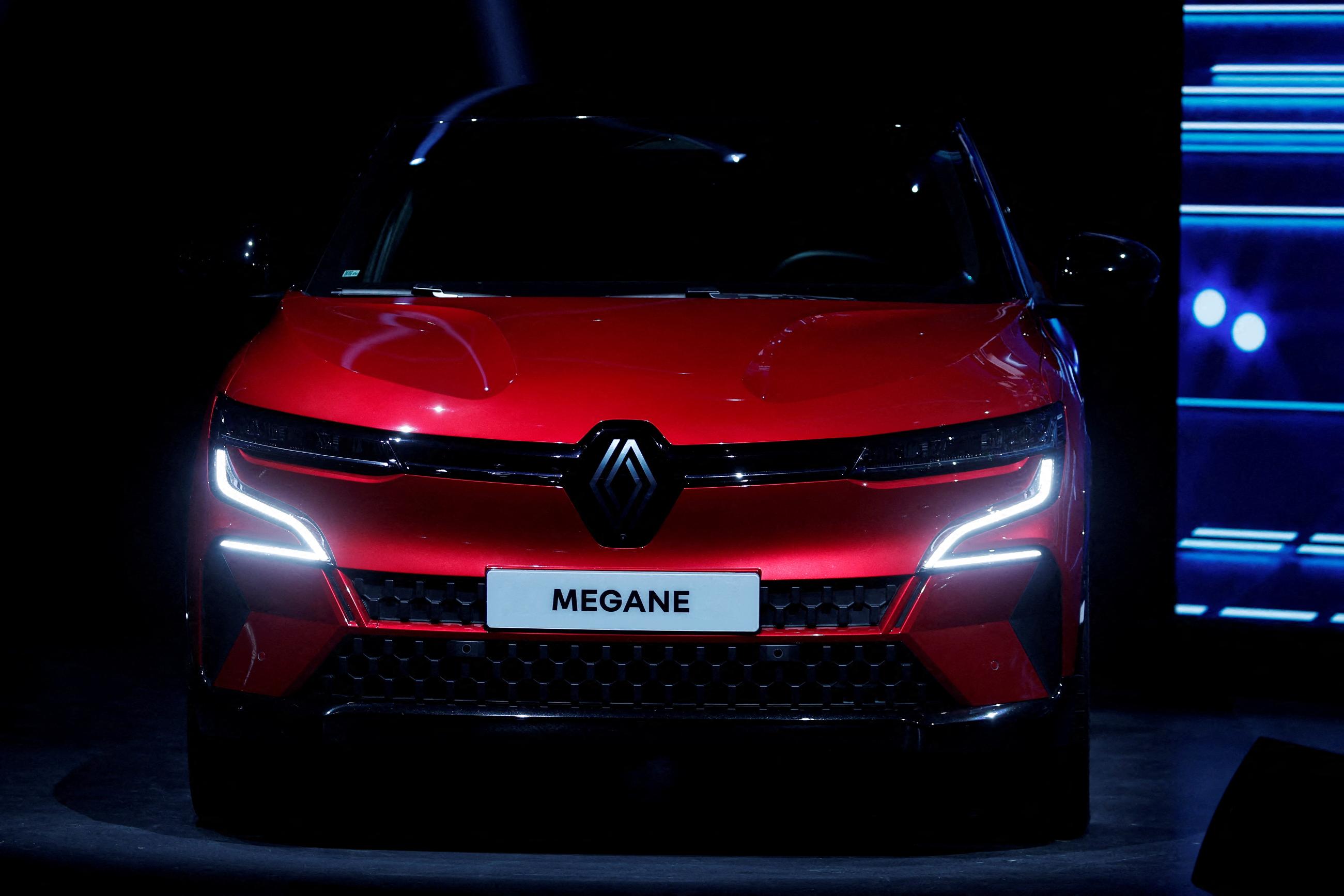
Renault's hybrid sales rise 55% in January-August French carmaker's low-cost hybrid tech uses fewer parts Renault's EV sales stagnant, needs 20% EV sales to meet 2025 CO2 targets - source PARIS, Oct 14 (Reuters) - Renault CEO Luca de Meo's bet on a low-cost gearbox technology is allowing the French carmaker to gain ground in Europe's fast-growing hybrid car market, giving it some breathing space as rivals get squeezed by the electric mobility challenge. Demand for expensive electric vehicles is not taking off in Europe despite a European Union ban on combustion engine cars due to come into force in 2035, putting massive strain on Europe's automotive industry. But Renault, which is smaller than auto peers and was hit by record losses in 2020, is showing surprising strength in hybrid cars that use both a thermal engine and an electric one. In the first eight months of the year, sales of Renault hybrid models including the Clio and Captur were up 55% from the previous year, according to Renault preliminary figures, above a 21.1% increase for the whole of the European Union, data from European industry body ACEA show. The sales increase, which reached 60% in the first half of the year, made the Renault brand Europe's second-biggest in this segment, behind Japan's Toyota. "Renault seems to be doing very, very well," analysts at Stifel said after the carmaker announced on Oct. 8 it was sticking to its business targets, one of the few traditional carmakers not to revise downwards its estimates amid tough market conditions. "We think the company is simply more versatile and agile than its peers," they added in a research note. Retaining strength in hybrid cars, cheaper than electric vehicles but less polluting than traditional ones, could help de Meo to lower the group's overall emissions and grow sales in the near term. Demand for hybrids is expected to continue to grow until the end of this decade, before electric vehicles take over, according to consultancies Dataforce and S&P Global. With a market cap of 11.6 billion euros ($12.68 billion), Renault is worth just a quarter of European leader Volkswagen (VOWG_p.DE) , opens new tab, which makes it more nimble but potentially more vulnerable than peers against intensifying competition from Chinese e-cars. The company, 15%-owned by the French state, is also seeking a new direction after having largely abandoned its two-decades long alliance with Nissan and Mitsubishi, and after ditching a planned IPO of EV arm Ampere. LOW-COST GEARBOX The secret behind Renault's recent success in hybrid is a focus on a technology that the French group has mastered. A pioneer in gearboxes a century ago, Renault engineers turned to a simplified 'dog clutch' - used to connect and disconnect gears without the need for a battery of syncronisers - to create a low-cost hybrid transmission system, named E-Tech. A gear box uses syncronisers and gears to manage the speed of the engine and its transmission to wheels. The E-tech system, which can be used across all of Renault's models, requires fewer components than other dual engines, making it lighter and cheaper. Investors appear to be happy. Renault shares are up 6.4% this year, versus a 12% decline for the European auto share index. "Renault is particularly at ease in balancing between battery electric vehicles and hybrid transmissions compared with its competitors," said Philippe Houchois, analyst at Jefferies. Growth should continue as Renault introduces more new models at affordable prices, say analysts. Renault's hybrid Clio is 400 euros more expensive than the Toyota Yaris and the Peugeot 208, but more powerful and its E-tech gearbox system can be used in small cars as well as in its new 300 horsepower Rafale coupé sedan. "Renault is going to keep this advantage for several years," said Antoine Giraud, S&P Global analyst. STAGNANT EVS The strength in hybrids, which are less harmful for the environment than regular cars, will help Renault comply with EU rules to limit CO2 emissions rules even as it sells fewer electric vehicles than competitors, said Benjamin Kibies, senior automotive analyst at Germany-based consultancy Dataforce. Renault's E-Tech hybrid cars emit as little as 95 grams per kilometre, which helped the group to reach a CO2 average of 114 grams in the first six months of 2024, says Dataforce. That's better than Ford and Volkswagen's average CO2 emissions of 123 grams and 125 grams respectively. But Renault's surprising strength in hybrids will only go so far. Carmakers in Europe must reduce average CO2 emissions to 94 grams per kilometre from next year. To comply with such limits, Renault will need just under 20% of its sales to come from electric cars, said a source familiar with the matter, who declined to be named because of confidentiality issues. That's hard while Renault's EV sales remain stagnant at around 12% of its brand sales in Europe. An early mover in electric vehicles in the last decade, Renault has been overtaken by pure players like Tesla (TSLA.O) , opens new tab, and larger competitors like Stellantis (STLAM.MI) , opens new tab . De Meo will unveil a new electric SUV, the Renault 4, at the Paris autoshow that starts on Oct. 14, following the recent launch of the Renault 5, another small EV. "Selling more hybrids instead of thermal vehicles can only go in the right direction. But the key will also be the success of the launches of both the R5 and R4," said Giraud. ($1 = 0.9145 euros) Sign up here. https://www.reuters.com/business/autos-transportation/low-cost-hybrid-tech-gives-renault-breathing-space-tough-ev-transition-2024-10-14/
2024-10-14 03:43
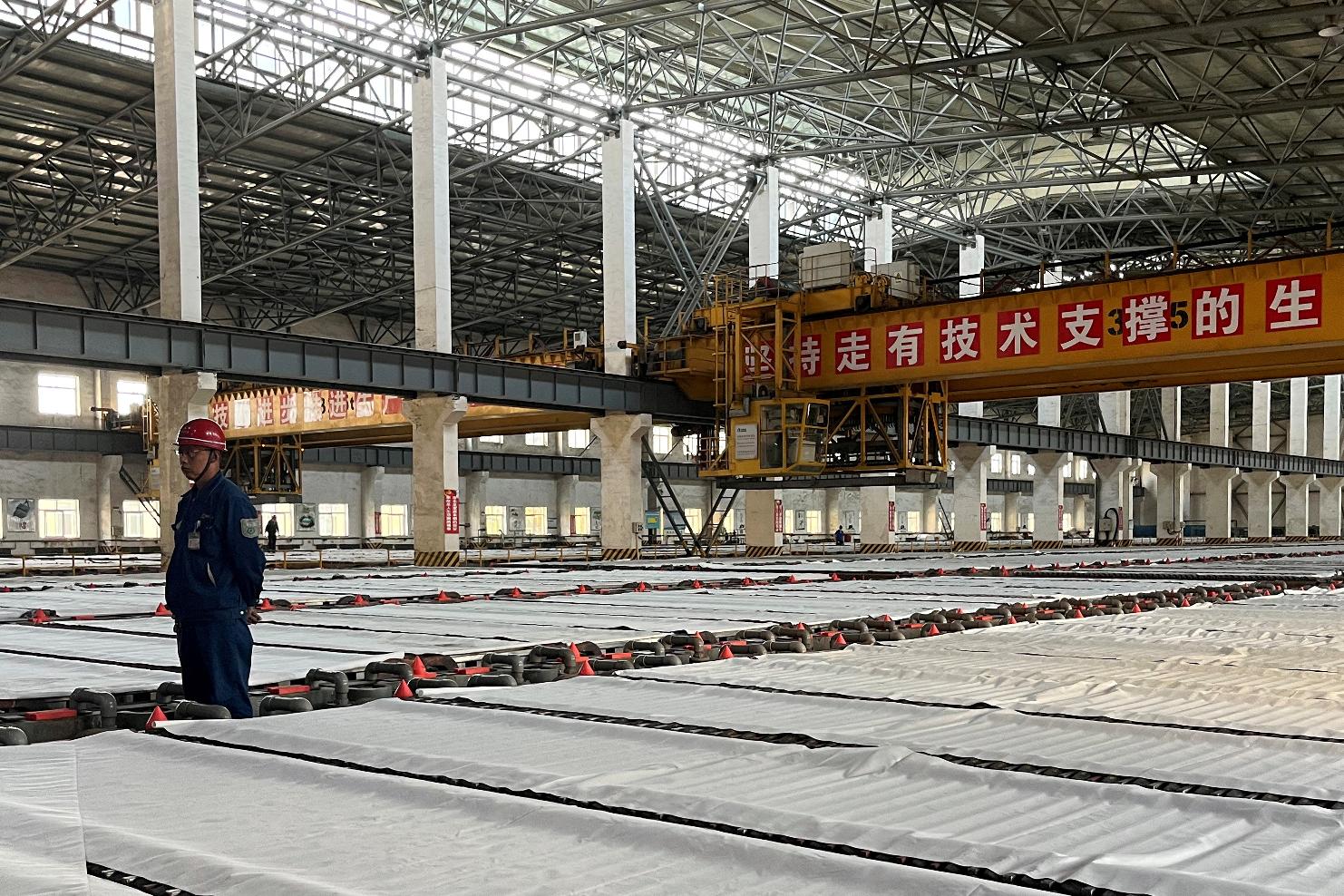
ShFE aims to rival LME pricing benchmarks Plan hinges on lining up international metals warehouses ShFE copper futures volume drops as US COMEX gains share Yuan currency controls may deter international investors State intervention fears also pose challenge LONDON/SINGAPORE, Oct 14 (Reuters) - China is locking in steps to shape the pricing of the vast quantities of industrial metals it produces and consumes, with moves to attract foreign firms to trade on Shanghai's futures exchange, which would eventually fragment global markets. After buying mining assets around the world over the past two decades to secure metals needed for industrialisation and more recently to meet its carbon emissions targets, China now wants a bigger say in how prices of those metals are determined. But it has lost market share in metals futures trading and needs to persuade international investors to use the Shanghai Futures Exchange (ShFE), according to interviews with more than 10 brokers, traders, analysts, risk managers and consultants with direct knowledge of ShFE's plans. If successful, the push would help give Shanghai's contracts benchmark status and upend the system for reference prices of industrial metals in place since 1877 when the London Metal Exchange (LME) started life above a hat shop in London. ShFE benchmarks would eliminate the need for Chinese firms to link their physical contracts to LME prices and create a need for foreigners to trade on ShFE to influence reference prices in their contracts, shifting market sway from the west to China. In recent meetings, the exchange told industry players the plan is high on its agenda and was likely to be put in place soon, but it did not discuss deadlines, two people said. ShFE did not respond to requests for comment or to questions on timelines, amounts available to invest in this project, the challenges it faces or how success would be measured. However, state media in June reported Wang Fenghai, general manager at ShFE, as saying: "Only through opening up can we draw in foreign investors, participate in the process of ShFE’s price establishment, therefore enhance price influence." Wang added that cross-border delivery capability was an area ShFE would focus on in terms of attracting global participation. In a key step, the exchange has been looking to line up warehouses outside China to store metal delivered for copper contracts that were launched on its International Energy Exchange (INE) for foreigners in 2020. ShFE has told industry stakeholders it intends to expand soon into international metals storage, two other sources with direct knowledge said, bidding to rival the LME's global network of more than 450 registered warehouses that hold thousands of tons of aluminium, copper and other metals. "They (ShFE) have a plan, they are coming out, they will list warehouses outside China, ... the government wants this to happen," one source familiar with the exchange's thinking said. While the metals industry has known since last year that ShFE plans to line up warehouses offshore, starting in Singapore, its latest comments to foreign firms suggest it is closer than ever to going ahead. "A real price people want to use needs warehouse stocks the world over," a source at a consultancy with knowledge of ShFE's plans said. Once ShFE makes a firm decision to offer metal storage outside China, the process of registering warehouses would be a matter of weeks if not days, as facilities already exist at ports that see large flows of metals, warehousing sources said. ShFE will not need regulatory approvals for warehouses that can store metal deliverable against its contracts as long as they are located in free trade zones, so metal can be stored free of taxes until delivered to customers. Singapore makes a good starting point as it is already a location for LME warehouses, which means the regulatory framework already exists. All of the people who spoke to Reuters asked not to be named as their conversations with ShFE were private. RIVALS TAKE MARKET SHARE The Shanghai exchange faces a difficult road countering the LME, even as China consumes more than half of global supplies of copper, aluminium and zinc and produces large amounts of these metals. "Any exchange that wants to achieve internationalisation would face challenges ... ShFE would face many challenges and various constraints if it aims to become a global pricing center," Luo Xufeng, chairman of Nanhua Futures (603093.SS) , opens new tab told Reuters. Ultimately the exchange aims to list aluminium, zinc, nickel, lead and tin on the INE, sources with knowledge of ShFE's plans said. Those metals are already traded on the LME, the world's largest and oldest forum for metals, owned by Hong Kong Exchanges and Clearing (HKEx) (0388.HK) , opens new tab. On the LME, volumes for copper, essential in construction, power systems and electrical goods, have stabilised at around 60% of copper futures globally. But ShFE's domestic market has lost ground to U.S.-based COMEX, part of CME Group (CME.O) , opens new tab, since 2015, with ShFE last year accounting for around 15% of copper futures traded globally, while COMEX's share was 22%.And in the first nine months of 2024, trading volumes on ShFE's INE copper futures have dropped nearly 43% from the same period last year. "The only way to increase volumes is get more international involvement in ShFE," a metals trader with direct knowledge of the matter said, adding that China's government was behind the project to internationalise ShFE's contracts. The China Securities Regulatory Commission (CSRC), which regulates ShFE, and the State Council, China's cabinet, did not respond to questions from Reuters. Meanwhile, LME is working on plans to list new contracts using ShFE prices and is set to approve the expansion of its metals warehousing network into Hong Kong before the end of this year. LME said it intends to "deepen our collaboration with ShFE by working together in product innovation to better serve international participants in risk management and price discovery," in response to a request for comment on its plans. HURDLES FOR SHFE ShFE's ambition has been long in the making. When HKEx bought the London exchange in 2012 with a plan to turbo-charge revenues by expanding LME warehousing into China, ShFE told local authorities it could mimic the LME's network and give China power and influence over global metals markets. Some of that influence would come from more foreigners trading on ShFE having to hold yuan accounts, which would boost Beijing's aim to gain global acceptance of its currency. Contracts on ShFE and its INE platform are priced in yuan. "ShFE has been trying to do this for over 10 years," said Dan Smith, head of research at Amalgamated Metal Trading. "The biggest challenge is that there are still restrictions on the conversion of yuan to dollars." China's currency exchange controls that limit the amount of money companies can take out of the country at any one time, partly a measure to control currency volatility, are potential deterrents for foreign investors. Sources also mentioned fear of Chinese authorities' policies designed to steer commodities markets and government market interventions, such as on margin requirements - the deposits of cash or collateral clearing houses need to cover potential losses. "They don't like volatility. They could double, triple transaction fees and margins overnight if they want. It makes people nervous," a source familiar with the matter at a resources-focused fund said. Sign up here. https://www.reuters.com/markets/commodities/inside-chinas-bid-build-sway-over-global-metals-pricing-2024-10-14/
2024-10-14 00:44
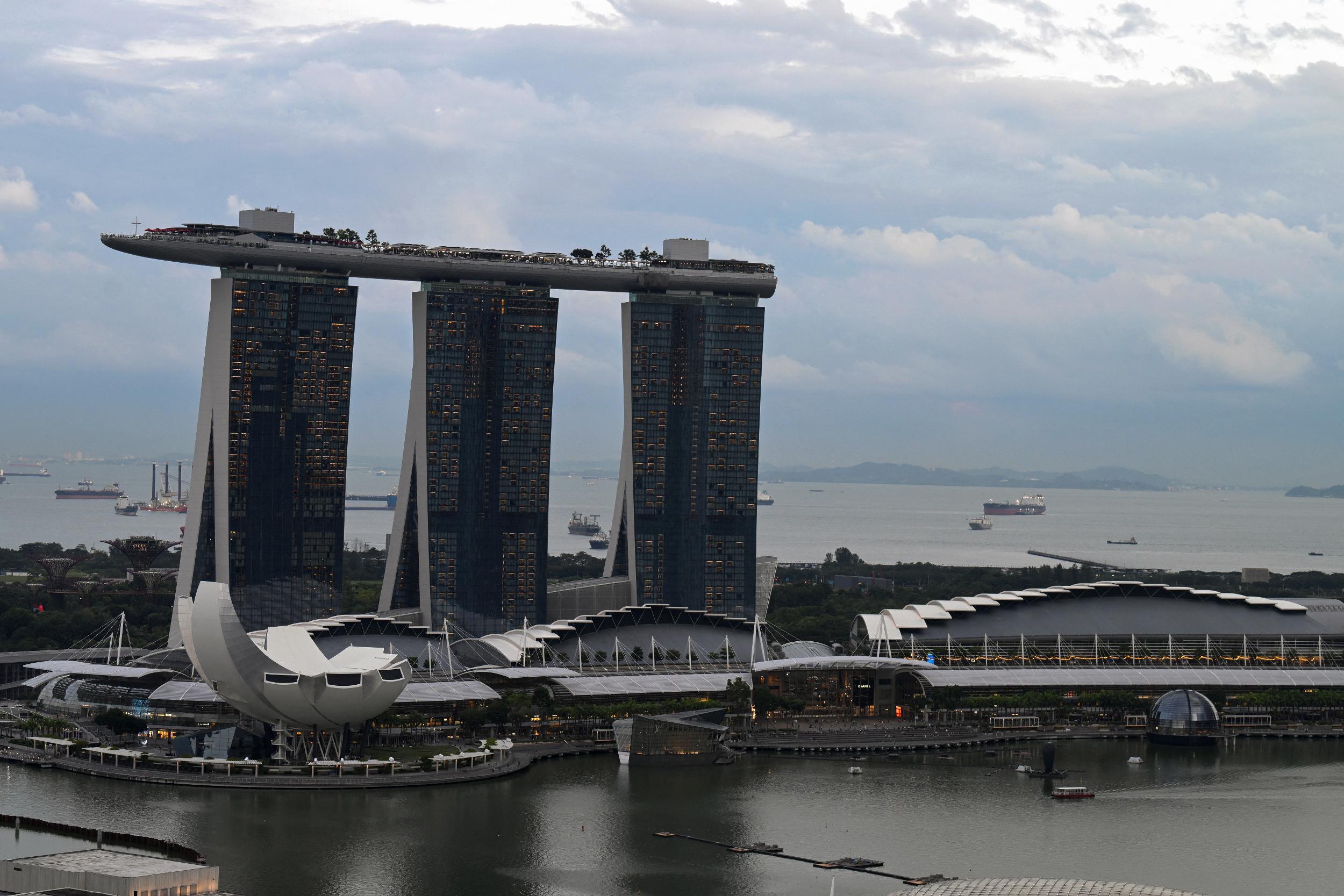
MAS keeps monetary settings unchanged, Q3 GDP growth perks up Analysts expect policy loosening in Jan as external risks rise MAS sees steady growth next year, but warns about 'significant' uncertainty SINGAPORE, Oct 14 (Reuters) - Singapore's central bank on Monday left its monetary settings unchanged, as expected, as data showed the economy perked up in the third quarter though analysts are betting on a loosening in policy early next year to guard against external risks. The Monetary Authority of Singapore (MAS) said it will maintain the prevailing rate of appreciation of its exchange rate-based policy band known as the Nominal Effective Exchange Rate, or S$NEER. The width and the level at which the band is centred would also be maintained, the MAS said. "The risks to Singapore's inflation outlook are more balanced compared to three months ago," MAS said in a statement, adding that growth momentum has picked up. Separately, advance trade ministry data earlier showed gross domestic product (GDP) grew 4.1% year-on-year in the third quarter underpinned by a boost in manufacturing, accelerating from 2.9% in the second quarter, and policymakers expressed optimism about the 2025 outlook. "The growth outlook is more sanguine," said OCBC economist Selena Ling, but added that geopolitics and trade conflicts are concerns for the city state and that MAS has an opportunity to loosen policy at its next review in January. Capital Economics markets economist Shivaan Tandon concurred, saying "the risk of keeping monetary policy too tight for too long will take centre stage soon prompting the central bank to pivot". MAS said it expects the economy to grow at the upper end of the trade ministry's adjusted GDP growth forecast range of 2.0% to 3.0% for 2024, but cautioned that external risks posed "significant" uncertainty for next year. "A sharp escalation in geopolitical and trade conflicts could exert sizeable drags on global and domestic investment and trade," the central bank said. Singapore is often seen as a bellwether for global growth as its international trade dwarfs its domestic economy. MAS expects core inflation to decline further to around 2% by the end of 2024. Core inflation has tapered from a peak of 5.5% in early 2023, and hit a 2-1/2 year low of 2.5% in July before edging up to an annual 2.7% in August. As a heavily trade-reliant economy, Singapore uses a unique method of managing monetary policy, tweaking the exchange rate of its dollar against a basket of currencies instead of domestic interest rates like most other countries. It adjusts policy via three levers: the slope, mid-point and width of the policy band. The MAS tightened policy five times between October 2021 and October 2022, including in two off-cycle moves, to tame inflation during the pandemic and amid global geopolitical instability. Since then, it has held steady as concerns over economic growth trumped inflation. Capital Economics' Tandon expects the manufacturing-led uptick in economic growth to fade amid slowing global demand, prompting the MAS to respond. "With policy very tight by historical standards, the economy set to weaken and the MAS now appearing less concerned about inflation, we expect the central bank to loosen policy in January." Sign up here. https://www.reuters.com/markets/rates-bonds/singapore-central-bank-keeps-monetary-policy-unchanged-expected-2024-10-14/
2024-10-13 21:48
Oct 14 (Reuters) - A look at the day ahead in Asian markets. As the trading week begins in Asia, Chinese stocks are coming off several days of retrenchment while U.S. equities keep churning higher. Wall Street's main indexes ended with gains on Friday. The benchmark S&P 500 (.SPX) , opens new tab stood at record-high levels after logging its fifth-straight week of gains. JPMorgan Chase (JPM.N) , opens new tab and Wells Fargo (WFC.N) , opens new tab shares jumped after both major banks beat profit estimates, a bullish kick-off for corporate America's third-quarter reporting season. The two lenders also touted resiliency of the U.S. consumer, which will be in focus in the coming week of earnings and retail sales data. MSCI's gauge of stocks across the globe (.MIWD00000PUS) , opens new tab rose 0.5% on the day. Asian markets were sure to key off of Beijing's pledge on Saturday to "significantly increase" debt to revive its sputtering economy, but left investors guessing on the overall size of the stimulus package. China's yuan firmed to 7.0669 per dollar by late Friday as markets looked ahead to the release of the update to previously announced measures that had not solidified confidence that they would stimulate its economy. Finance Minister Lan Foan told a press conference China's government will help local governments tackle their debt problems, offer subsidies to people with low incomes, support the property market and replenish state banks' capital, among other measures. The omission of a dollar figure may prolong investors' nervous wait for a clearer policy roadmap until the next meeting of China's legislature, a date for which has yet to be announced. The fresh stimulus details come after Chinese stocks slumped on Friday, with the blue-chip CSI300 index (.CSI300) , opens new tab closing down 2.8%. For the week, the CSI300 fell by 3.3%. But the index remains up more than 20% over the past month, lifted by stimulus news. The trajectory of interest rate moves by central banks continues to be in focus globally. South Korea's central bank cut rates for the first time since mid-2020 on Friday and flagged room to reduce further. In the U.S., market expectations coalesced around a view that the Fed will make a modest 25 basis-point cut at its next meeting in November. U.S. producer prices were unchanged in September, according to data on Friday, a day after a report showed consumer prices rose a bit above expectations in September. Oil prices settled lower on Friday but rose for the second straight week. Traders were grappling with potential supply disruptions from the storms in the U.S. southeast and tensions in the Middle East. Here are key developments that could provide more direction to markets on Monday: - Singapore GDP (Q3) - India CPI (Sept) - China import/exports (Sept) Sign up here. https://www.reuters.com/markets/asia/global-markets-view-asia-2024-10-13/
2024-10-13 20:38
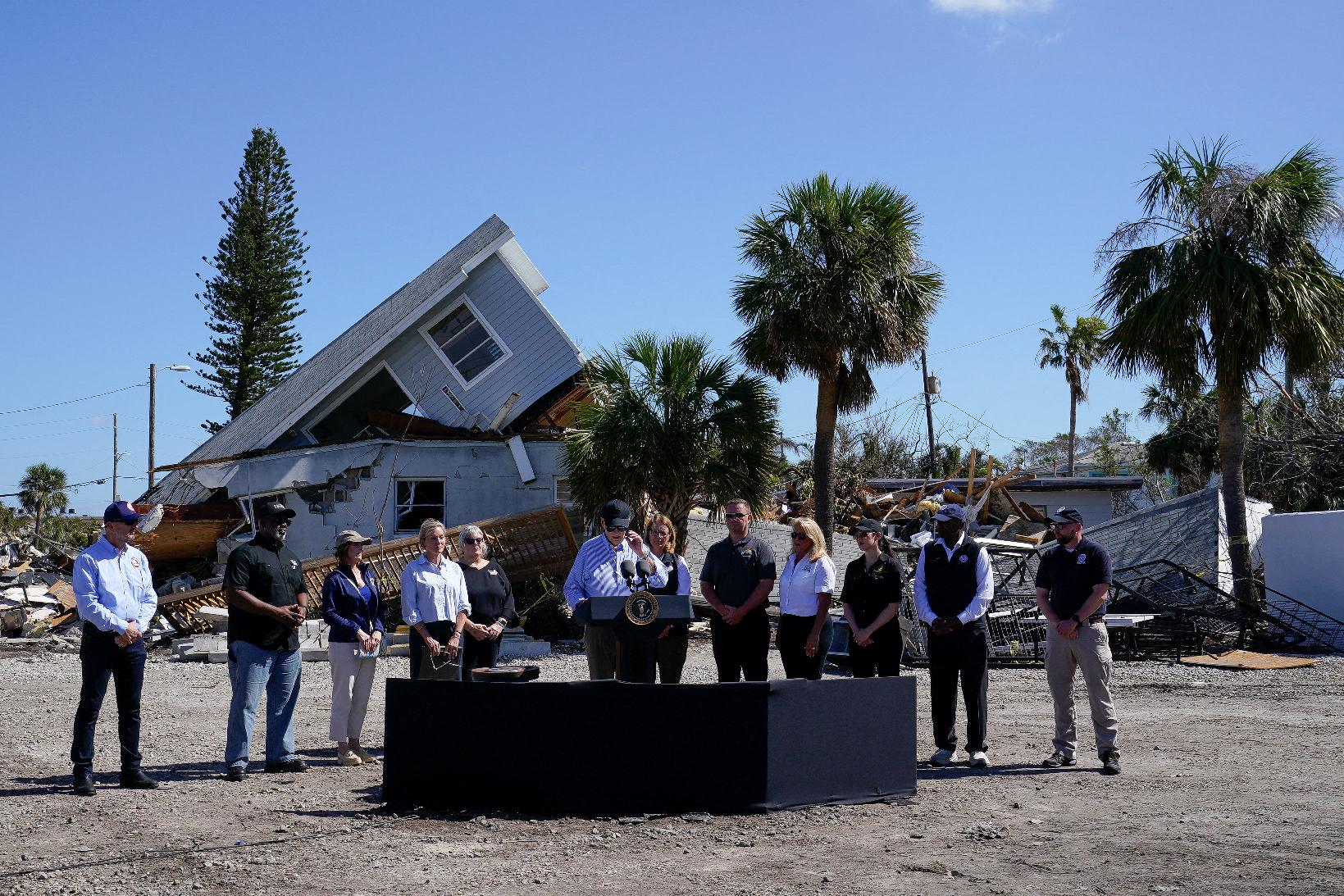
Biden assesses damage from Tampa to St. Petersburg Power expected to be restored across state by end of Tuesday 33% of Florida gas stations without fuel, many in Tampa area Flooding continues in Tampa Bay and Sanford as rivers rise House Speaker Johnson resists calls for more disaster funds ST PETE BEACH, Florida/WASHINGTON, Oct 13 (Reuters) - After surveying battered communities and debris-filled streets in Florida, President Joe Biden vowed on Sunday to continue supporting the state's recovery from Hurricane Milton, the second major storm to pummel the region in recent weeks. Rising floodwaters, fuel shortages and power outages are hindering cleanup efforts after Milton, which made landfall as a Category 3 hurricane. The devastation was compounded by the earlier Hurricane Helene. Recovery is expected to take a long time with the two storms hitting within two weeks of each other. Residents of hard-hit St. Pete Beach are "heartbroken and exhausted and their expenses are piling up,” Biden said after touring the barrier island. A photo album, mattresses, siding, couches and busted kitchen cabinets were scattered on roads, some still covered in large patches of sand, as Biden walked through with emergency responders. The smell of mold hung in the air. “Help,” one resident had scrawled across a pile of destroyed household remnants. "I know you're concerned about the debris removal, and it's obvious why," the president said, speaking in front of a beach house toppled from its foundation. "There's much more to do. We're doing everything we can." Meanwhile, flooding is expected to continue around the Tampa Bay and the Sanford area northeast of Orlando, according to the National Weather Service. "Rivers are continuing to rise," Florida Division of Emergency Management Executive Director Kevin Guthrie told reporters at a separate news conference with Florida Governor Ron DeSantis, adding that some residents should prepare to evacuate as needed. About 75% of Florida's power is back online, with full restoration expected by Tuesday evening, said Energy Secretary Jennifer Granholm, who traveled with Biden. Five days after the storm hit, about 818,000 customers remained without power, DeSantis said. About one-third of Florida's gas stations did not have fuel, including nearly 88% of those around Tampa, GasBuddy.com analyst Patrick De Haan said on X. Six more fuel distribution sites were scheduled to open on Sunday, according to the state's emergency operations center. Biden had a bird's eye view of the destruction as his helicopter thundered along Florida's western coast from Tampa to St. Petersburg over a landscape of golf courses, waterfront skyscrapers and battered neighborhoods, including the shredded roof of Tampa Bay Rays' baseball stadium, Tropicana Field. At least 17 deaths have been reported from Milton, far less than the more than 200 people killed by Helene, in part, officials have said, because more people heeded calls to evacuate ahead of the second hurricane. 'A PATH FORWARD' Climate change has been linked to stronger and faster hurricanes, with the two recent back-to-back storms pummeling Florida raising questions of infrastructure resiliency even as many residents vow to rebuild. While Milton was less destructive than officials initially forecast, analysts have estimated insured losses of between $30 billion and $60 billion. Biden has approved federal aid to help residents and local governments cover expenses and on Sunday announced $612 million for six new utility projects in affected communities. But while the Federal Emergency Management Agency has funding to meet immediate needs, his administration is seeking more money from Congress given the potential for more disasters and seven more weeks until the hurricane season ends. Biden, a Democrat, reiterated his call for U.S. lawmakers — on recess until after the Nov. 5 presidential election — to return to Washington to approve more FEMA money, telling reporters as he left the state Congress needs to move quickly: "It's important." But Republican House Speaker Mike Johnson resisted White House and state lawmakers appeals to approve more disaster assistance, telling NBC News' "Meet the Press" program: "The states have to go and calculate and assess the need and then they submit that to Congress, and that takes some time." Relief efforts have also been hampered by a trail of misinformation, including by Republican lawmakers and former President Donald Trump, who is challenging U.S. Vice President Kamala Harris for the White House, as politics infiltrates the storm recovery with just three weeks before the election. A number of local officials greeted or accompanied Biden on his tour, including Florida Republican U.S. Representative Anna Luna. DeSantis, a Republican who also did not attend Biden's last visit following Helene, declined the White House's latest invitation and Biden told reporters that he did not speak with the governor. DeSantis, speaking to reporters in front of a heap of destroyed office furniture on Treasure Island, did not address Biden's visit. He said the state would remove as much debris as possible within the next three months to take advantage of federal aid. Floridians and others in the eastern U.S. may get a reprieve as clean up continues. For the first time in several weeks, no active tropical cyclones are forming in the Atlantic Ocean, the National Hurricane Center said on X. Sign up here. https://www.reuters.com/world/us/biden-survey-milton-storm-damage-twice-hit-florida-2024-10-13/
2024-10-13 11:36
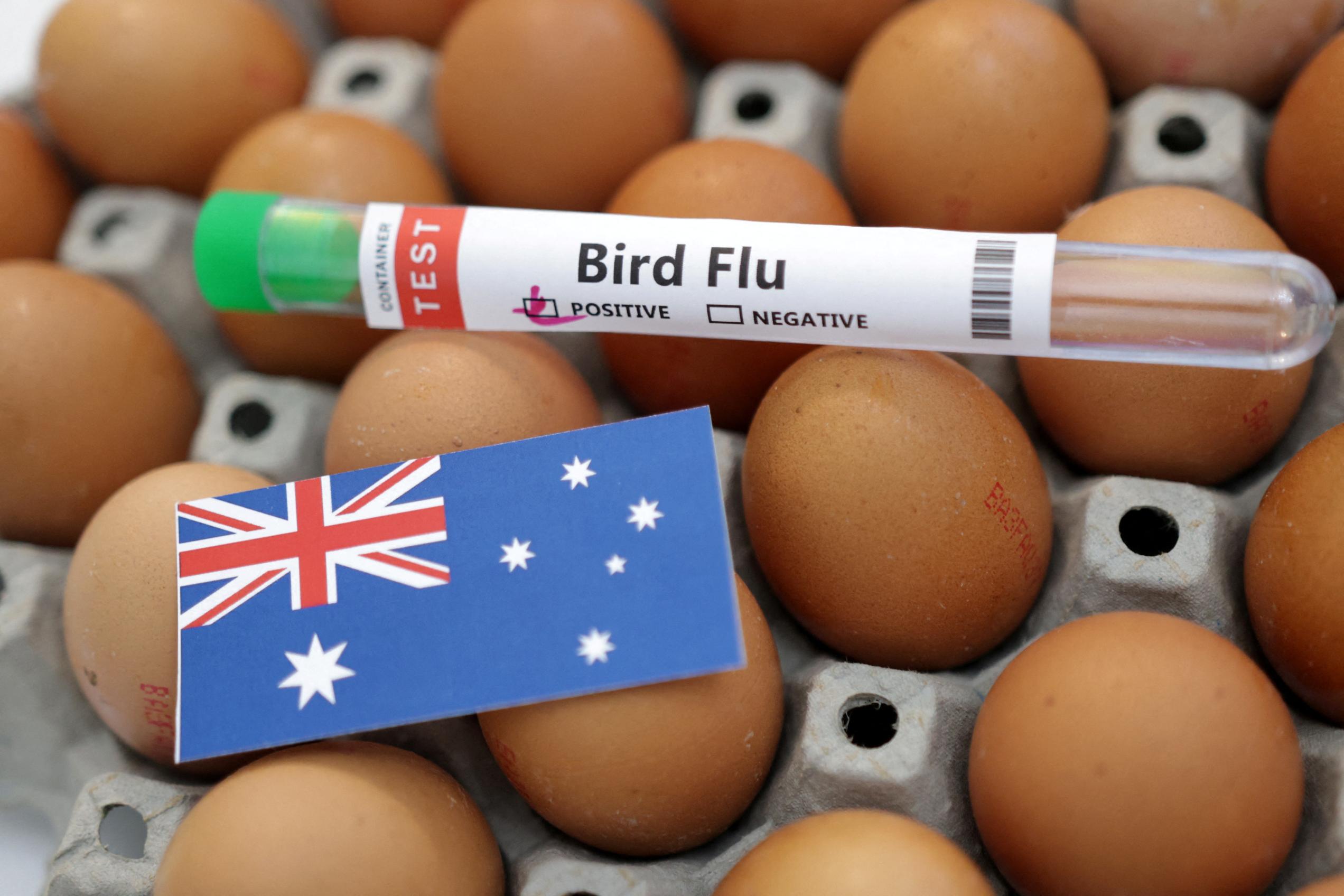
SYDNEY, Oct 13 (Reuters) - Australia's government said on Sunday it would spend an extra A$95 million ($64.13 million) to protect against a destructive bird flu strain that has spread through bird and mammal populations worldwide but not yet reached the island continent. Oceania is the last region of the world free of the H5N1 clade 2.3.4.4b avian influenza that has killed hundreds of millions of birds and tens of thousands of mammals since appearing in Asia, Europe and Africa in 2020, littering beaches with corpses and upending the agricultural industry. Agriculture, Fisheries and Forestry Minister Julie Collins said the new funding was additional to more than A$1 billion being spent to bolster the country's biosecurity. “This strain of avian influenza presents a real and significant threat to Australia’s agriculture sector," Collins said in a statement. While the region is somewhat protected by its geography - it is off the migration routes of big birds such as geese that spread infection - the virus is close, having reached Indonesia in 2022 and Antarctica last year. Scientists and officials say there is a higher risk of it arriving in Australia with smaller migratory shore birds in the Southern Hemisphere spring, from September to November. Earlier this year, Australia dealt with three parallel outbreaks of bird flu but each involved a different strain of the virus, none of which was the H5N1 type. "Impacts experienced this year from outbreaks of other strains of high pathogenicity avian influenza highlight the importance of continued investment in national preparedness," Collins said. ($1 = 1.4815 Australian dollars) Sign up here. https://www.reuters.com/world/asia-pacific/australia-commits-64-mln-protect-against-looming-bird-flu-threat-2024-10-13/