2024-10-11 08:37
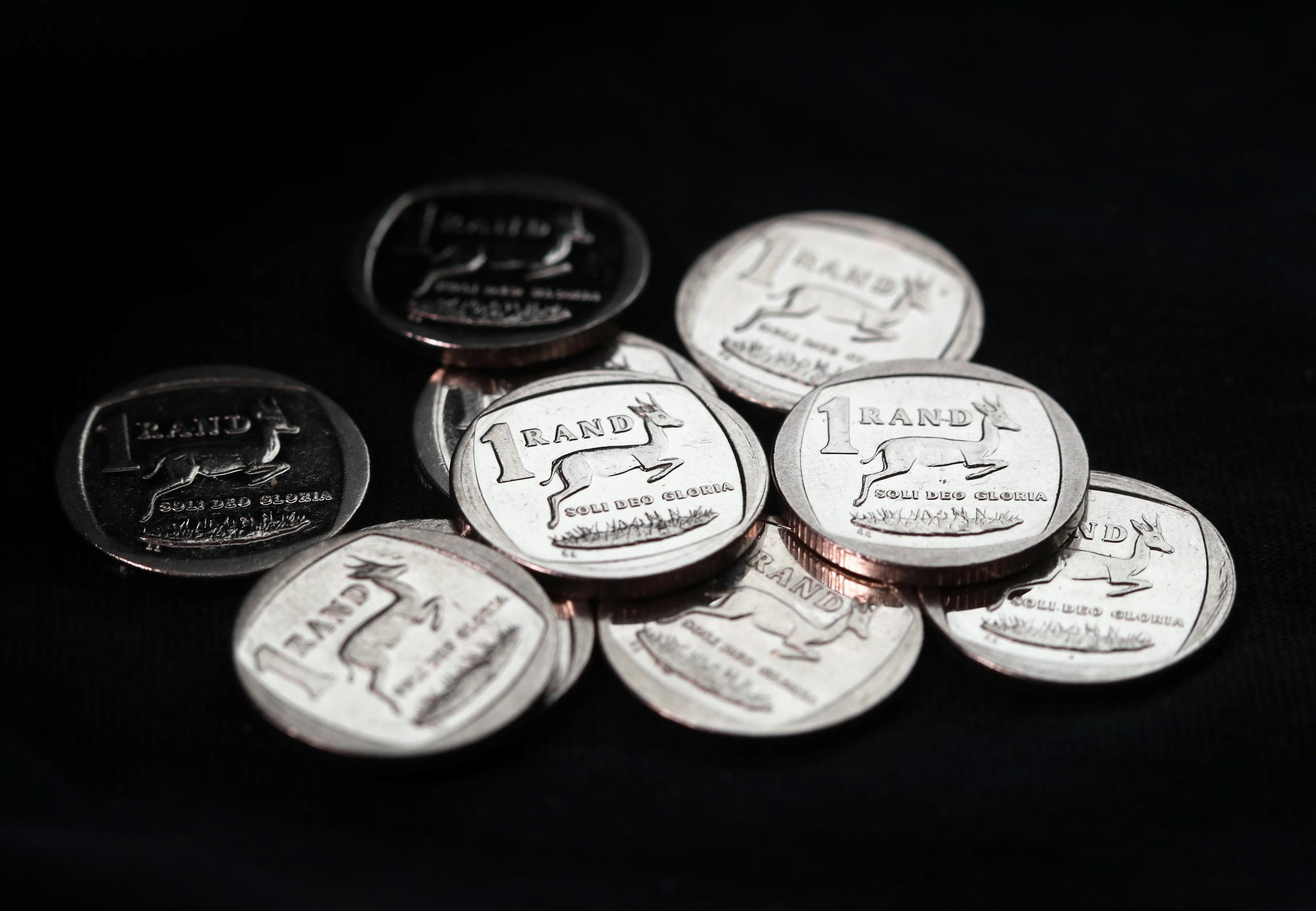
JOHANNESBURG, Oct 11 (Reuters) - South Africa's rand gained against the dollar on Friday after U.S. data this week helped sustain expectations for an interest rate cut by the Federal Reserve next month. At 1616 GMT, the rand traded at 17.39 against the dollar , about 0.8% firmer than its previous close. The dollar index was last down about 0.05% against a basket of currencies. Data from the world's biggest economy this week kept intact bets of another rate cut when the Fed meets in November. The U.S. producer price index for final demand was unchanged last month, data showed on Friday, a day after other data showed jobless claims rose while consumer inflation was slightly higher than expected in September. The local currency has tracked the dollar and U.S. economic data points this week in the absence of major domestic events. On the stock market, the blue-chip Top-40 (.JTOPI) , opens new tab index closed about 0.8% up. South Africa's benchmark 2030 government bond was slightly weaker, with the yield up 1.5 basis points to 9.155%. Sign up here. https://www.reuters.com/markets/currencies/south-african-rand-rises-after-us-data-fuels-fed-rate-cut-bets-2024-10-11/
2024-10-11 08:18
Cybercab production to start in 2026; to be priced under $30,000 Operating cost to be 20 cents per mile over time Musk also showcased robovan, Optimus humanoid robot Oct 10 (Reuters) - Tesla (TSLA.O) , opens new tab CEO Elon Musk showcased on Thursday a long-awaited robotaxi with two gull-wing doors and no steering wheel or pedals and surprised with robovan, betting on a shift in focus from low-priced mass-market cars to robotic vehicles. At a glitzy unveiling, Musk reached the stage in a "Cybercab" to be produced from 2026 - eventually in high volume - and priced under $30,000. He then introduced the robovan which can carry up to 20 people though offered few further details. But Musk, who has a record of missing projections - and himself said he tended to be optimistic with time frames - did not say how quickly Tesla could ramp up robotaxi production, clear inevitable regulatory hurdles or implement a business plan to leapfrog robotaxi rivals such as Alphabet's (GOOGL.O) , opens new tab Waymo. Analysts and industry experts said establishing robotaxis could take years, particularly due to ensuring safety and reliability. They pointed to accidents as well as the difficulty the technology has responding to scenarios such as inclement weather, complex intersections and pedestrian behavior. But Musk, wearing a leather-jacket and addressing crowds at the Warner Bros studio near Los Angeles, said autonomous cars could be 10 times safer than humans and drive five to 10 times longer. "The autonomous future is here," Musk said. "With autonomy, you get your time back." Musk had previously said he planned to operate a fleet of self-driving Tesla taxis that passengers can hail through an app. Individual Tesla owners would also be able to make money on the app by listing their vehicles as robotaxis, he had said. He made no mention of the app at Thursday's event. The event - titled "We, Robot" in an apparent nod to the "I, Robot" science-fiction short stories by American writer Isaac Asimov - echoed Musk's comment that Tesla "should be thought of as an AI robotics company" rather than an automaker. It started after a delay of nearly an hour which Musk attributed to a medical emergency involving an attendee. The presentation, months in the making, lasted for less than half an hour and was watched by about four million people on Musk's X social media platform alone. "I'm a shareholder and pretty disappointed. I think the market wanted more definitive time lines," said equity trader Dennis Dick at Triple D Trading. "I don't think he said much about anything." Running the Cybercab will cost 20 cents a mile over time and charging will be inductive, requiring no plugs, Musk said. Operating the robovans will be even cheaper - at 5 cents a mile. The vehicles will rely on artificial intelligence and cameras rather than hardware common among robotaxi rivals, he said, such as lidar - an approach experts have flagged as challenging both from a technical and regulatory stand point. Beyond vehicles, Musk touted "a lot of progress" made with its humanoid robot "Optimus" that could eventually be priced at $20,000 to $30,000 and which can perform many daily tasks. TOUGH TO CRACK Musk said in 2019 he was "very confident" Tesla would have operational robotaxis by 2020. This year, he diverted focus to the Cybercab and scrapped plans , opens new tab to build a smaller, cheaper car widely seen as essential to countering slowing EV demand. Tesla is at risk of posting its first-ever decline in deliveries this year as buying incentives have failed to attract enough customers to its aging EV lineup, showed Reuters calculations based on third-quarter earnings. Price cuts meant to offset high interest rates have also squeezed profit margins. Several companies attempting to crack the robotaxi market have suffered billion of dollars in loss, forcing some to shut shop. Alphabet's (GOOGL.O) , opens new tab Waymo, with about 700 Jaguar Land Rover cars in its fleet, is the only U.S. firm operating uncrewed robotaxis that collect fares. Amazon's (AMZN.O) , opens new tab Zoox is testing purpose-built vehicles that resemble toaster ovens on wheels and lack manual controls. General Motors' (GM.N) , opens new tab Cruise, which uses the Chevrolet Bolt EV, this year indefinitely suspended plans to develop its self-driving "Origin" without controls. Tesla's approach to full self-driving technology, in its current iteration, requires constant driver attention but keep costs down. It has, however, faced legal scrutiny with at least two fatal accidents involving the technology. "We do expect to start fully autonomous unsupervised FSD in Texas and California next year." Musk said. "That's with the Model 3 and Model Y." He did not say whether the Cybercab uses FSD or new technology. "Musk did a fantastic job of painting an ideal future for transportation that promises to both free up our time and increase safety," said Jessica Caldwell, head of at car research and buying website Edmunds. "But many questions remain about how this will be achieved from a practical standpoint." Sign up here. https://www.reuters.com/technology/teslas-musk-unveil-robotaxis-amid-fanfare-skepticism-2024-10-10/

2024-10-11 07:48
Japan now buys three cargoes for strategic LNG buffer Aims to beef up buys to at least 12 a year -METI Plan could boost annual reserve buys to nearly 1 mln T TOKYO, Oct 11 (Reuters) - Japan is considering stepping up purchases of liquefied natural gas (LNG) for emergency needs to at least 12 cargoes a year from three now, an official of its industry ministry said, to guard against unexpected supply shocks. The reserve-boosting plan entails additional purchases by the world's second biggest buyer of LNG after China, increasing its buys to at least 0.84 million tonnes of LNG per annum from 0.21 million now. Japan is expanding its role as an LNG trader at a time of falling domestic demand overall for the fuel, but in a plan to boost energy security, it trades some cargoes that are not wanted at home during periods of weak demand. From last December, Japan's top power generator, JERA, has bought one LNG cargo for each of the winter months, or a total of three for the year, to add to a 'Strategic Buffer LNG' (SBL) run by the Ministry of Economy, Trade and Industry (METI). This winter, JERA will continue buying one cargo of 70,000 metric tons for each month from December to February, Yuya Hasegawa, director of the ministry's energy resources development division, told Reuters. "From the mid- to late-2020s, we will try to secure at least one cargo per month throughout a year - that is, at least 12 cargoes per year," Hasegawa said, adding that JERA, also Japan's top LNG buyer, would continue handling cargoes for the reserve. Japanese power utilities have been calling for a bigger SBL, designed for JERA to provide a cargo to a utility in urgent need, hedging against unexpected supply crunches triggered by military conflicts or nuclear reactor halts, among other issues. Australia is Japan's top LNG supplier by far, but the Middle East, including Qatar and Oman, provided 14% of its August needs of the super-chilled gas, Japanese customs said, with Russia supplying another tenth. Japan has no underground gas storage but has LNG storage capacity of around 12 billion cubic meters, or just over a month of consumption, at its LNG receiving terminals, which number more than 30, the International Energy Agency says. To boost storage capacity, METI proposed financial support last month for companies to secure storage tanks at home and abroad, in a scheme separate from the SBL but which also aims to improve energy security. LNG makes up a third of the power generation mix in Japan, which sees it remaining as a transition energy source in the years to come. Japanese companies have recently also expanded LNG swap deals in efforts to boost flexibility. Sign up here. https://www.reuters.com/business/energy/japan-could-boost-lng-buys-emergency-reserve-nearly-1-mln-t-year-meti-official-2024-10-11/

2024-10-11 07:40
LAHORE, Pakistan, Oct 11 (Reuters) - Two militants involved in the 2021 attack that killed nine Chinese engineers were shot and killed in a shootout in a central Pakistani district on Friday, counter-terrorism officials said. They said the militants who had been convicted and sentenced to life imprisonment were being moved out of a prison in Sahiwal district due to a threat when some men attacked the police van they were in. Two of the five militants in the van were killed in cross-fire between police and the attackers, it said. They two were masterminds of the attack that had killed a total of 13 people, including the nine Chinese engineers, near a hydropwer plant in Dadu in northern Pakistan in July 2021. Pakistan's main cities, especially Islamabad, are on a high alert ahead of the Shanghai Cooperation Conference (SCO) which is scheduled to be held in the capital on Oct 15-16. Pakistan is seeking to curb all movements of Chinese nationals during the summit because of the risk that they could be attacked. The shootout came within hours of an attack that killed over 20 miners in southwestern Balochistan province, the hotbed for separatist militants, including the Baloch Liberation Army (BLA), which has been attacking Chinese nationals and their interests in the region. Sign up here. https://www.reuters.com/world/asia-pacific/two-suspected-pakistani-militants-behind-2021-attack-chinese-killed-shootout-2024-10-11/

2024-10-11 07:32
ORLANDO, Florida, Oct 11 (Reuters) - Foreign investors' claims on Uncle Sam have been greater than U.S. investors' claims overseas for decades, an imbalance that many analysts have long warned may spark a crisis of confidence in the dollar. That crisis has yet to arrive and there are good reasons to believe it never will, but the U.S. is now entering uncharted territory with regard to its net debtor status. Its negative net international investment position, or "NIIP", is growing rapidly and is now the largest it has ever been, both nominally and as a share of GDP. This is raising new questions about how long this American exceptionalism can last. THE ONLY GAME IN TOWN A country's NIIP is the difference in the value of its foreign-held assets including stocks, bonds, FDI and other investments, and its equivalent domestic total held by foreigners. The latter are claims by overseas entities, so are classed as liabilities. According to the Bureau of Economic Analysis, the United States' NIIP at the end of June was a negative $22.52 trillion, or 77.6% of annual GDP, an increase of $4.27 trillion and 11 percentage points in the last year. But it's not just the volume of these liabilities that has changed dramatically in recent years; it's also the composition. The U.S.'s "net debtor" status is increasingly driven by equity-based liabilities. Equity-related foreign direct investment into the U.S. stood at $14.77 trillion in June and claims on U.S. equity portfolio assets totaled $16.67 trillion, both up almost $2 trillion since December. The contribution of equity flows and valuation changes to NIIP since the pandemic has been roughly twice that of bond-related dynamics. "The role of the U.S. as banker to the world is changing," says Chris Marsh, senior adviser to Exante Data and a former economist at the IMF. "The U.S. is now the global innovator and foreign appetite for claims on the U.S. is reshaping the U.S. external balance sheet." In fact, the U.S. is now a net debtor on all major measures of its external position: equity, debt, foreign direct and 'other' investments. Sounds worrying? Not necessarily. This lopsidedness mostly signals confidence in the relative strength and attractiveness of the U.S. economy and its assets, particularly those traded on Wall Street, compared to the global counterparts. Consequently, U.S. stocks now account for a record 72% of world stocks, according to MSCI market cap metrics. That's up from around 63% before the pandemic and up 20 percentage points in little more than a decade. "U.S. companies are enormously profitable, the economy is strong. Why do I go anywhere else," ponders Jan Loeys, managing director of global research at JP Morgan. "The price you're paying for this U.S. strength ain't cheap. But the trigger to go elsewhere isn't there yet." Of course, this deluge has only helped accelerate the positive trends in U.S. growth, corporate profits and asset prices. This has obviously been a boon to U.S. investors. U.S. households' equity allocation as a share of total financial asset holdings has never been higher at almost 45%, according to JP Morgan. In this light, it looks like we're seeing a virtuous circle. And if that's why America's external asset position is "deteriorating", that may not be such a bad thing. WILL THE MUSIC STOP? But can it last? To be sure, there's no indication that foreign investors are about to dump U.S. stocks any time soon. Still, valuations are starting to get a bit rich by historical standards, especially for some of the mega-cap tech companies that have powered the two-year bull market. And it's unclear how much juice is left in America's economic boom or whether AI can deliver the returns that trillions of invested dollars are banking on. Also, if crowded trades have pushed up U.S. markets in recent years, it's reasonable to assume that a genuine correction – if it lasts – could be painful. Then there's America's debt, which actually has to be paid back or rolled over. Foreigners' net claim on U.S. debt is currently approaching $11 trillion. Granted, most of that is in Treasuries, the safest, most liquid and most sought-after asset in the world. But that doesn't mean there's nothing to worry about. "The increasing value of liabilities reflects the strength of the U.S. economy. But borrowing generates liabilities that will have to be stabilized eventually," says Gian Maria Milesi Ferretti, senior fellow at the Hutchins Center on Fiscal and Monetary Policy, The Brookings Institution. So while this party may last for some time, if financial history has taught investors anything, it's that no party lasts forever – especially one driven by large and widening imbalances. (The opinions expressed here are those of the author, a columnist for Reuters.) Sign up here. https://www.reuters.com/markets/us/americas-record-net-debtor-status-enters-unknown-mcgeever-2024-10-11/

2024-10-11 07:29
Oct 14 (Reuters) - China's GDP figures, U.S. retail sales and a rate decision by the European Central Bank headline the coming week, while earnings are under way on both sides of the Atlantic and UK markets get nervy ahead of the new government's first budget. Here's a look at the week ahead in global markets by Rae Wee in Singapore, Ira Iosebashvili in New York, Yoruk Bahceli in Amsterdam, and Naomi Rovnick and Samuel Indyk in London. 1/ ON TARGET? China's third-quarter growth figures, due Oct. 18, are headlining a busy week scattered with data releases from the world's second-largest economy. The data comes after Beijing pledged on Saturday more stimulus and to "significantly" ramp up debt to revive its sputtering economy, though leaving investors guessing on the overall size of a package. Policymakers have said they are "fully confident" of achieving their full-year growth target of around 5% - a somewhat bold statement considering Q2's dismal number and with Q3 unlikely to fare much better. But investors may look past the pessimism given Saturday's announcement adds to Beijing's only recently unveiled aggressive stimulus measures. The earlier moves had sent mainland stocks scaling fresh highs and, although some of that euphoria has since faded, on Monday China's stock markets pressed ahead in volatile trade. Alongside GDP data, China will release figures on trade, house prices and retail sales, giving policymakers a clue on how much work they have cut out for them before year-end. 2/CUTTING TRACK The ECB is set to deliver another quarter-point rate cut on Thursday, a move policymakers were reluctant to flag and traders gave less than a 25% chance to when the bank met a month ago. But September euro zone business activity unexpectedly contracting stoked worries the ECB may be cutting rates too slowly as the bloc's economy wobbles. Inflation has slowed sharply, dropping below the ECB's 2% target in September, shifting the focus for policymakers now onto growth risks. Economists reckon Thursday's move could kick off back-to-back rate cuts. But rate setters, once burnt twice shy, are unlikely to jump on the bandwagon just yet. But a more explicit shift may come soon, perhaps in December when the bank releases new forecasts. Even top hawk Isabel Schnabel has dropped her long-standing warning about the difficulty of taming inflation. 3/ SHOPPERS AND BANKERS Markets get another reading on the health of the U.S. consumer on Thursday, with investors hoping retail sales data will offer further insight into an economy that is turning out to be far more resilient than many had expected. Stronger-than-expected recent labour market data spurred a recalibration of bets on how deeply the Fed will need to cut rates in coming months, lifting Treasury yields and bolstering the U.S. dollar. A robust retail sales number could further amplify that trend, offering evidence of strength in an important pocket of the world's largest economy. With earnings season under way, results from big banks including Goldman Sachs and Bank of America, both reporting on Tuesday, could offer further insight on how consumers are faring. 4/ DEFIANT EARNINGS LVMH (LVMH.PA) , opens new tab and ASML (ASML.AS) , opens new tab - two of Europe's biggest companies - are due to report results in the coming week, kicking off earnings season on the continent. While the euro zone economy struggles to muster any sort of growth, corporate earnings are seen growing for a second straight quarter for the first time since Q1 2023, according to LSEG Data. That makes for a high bar to hurdle, but as earnings expectations have been lowered coming into reporting season, analysts are still optimistic that Europe Inc will clear it. With the STOXX 600 (.STOXX) , opens new tab index less than 2% from its all time high, a more robust earnings picture could bring fresh peaks, as seen in the U.S. in recent days. 5/ LOOMING BUDGET Britain's lenders in international bond markets are getting nervous ahead of the new Labour government's first budget on Oct. 30. September inflation data, out Wednesday, could make them feel even worse. Ten-year gilt yields are around their highest since early July after investors sold off in part due to concerns about finance minister Rachel Reeves relaxing borrowing rules to fund public investments. Anxiety about extra debt sales has coincided with uncertainty about whether inflation has been tamed. The annual rate of UK consumer price increases held steady at 2.2% overall in August, but accelerated to 5.6% in the dominant services sector. Recent data showed rising grocery inflation and retail spending. Traders widely expect a second Bank of England rate cut in November, but Bank of England Governor Andrew Bailey and Chief Economist Huw Pill have given mixed signals about what happens after that. Sign up here. https://www.reuters.com/business/take-five/global-markets-themes-graphic-2024-10-11/