2025-12-18 22:34
LONDON, Dec 18 (Reuters) - Britain imposed sanctions on Thursday on more Russian oil companies and Canadian-Pakistani billionaire Murtaza Lakhani as part of efforts to ramp up pressure on Moscow over the war in Ukraine. The government targeted 24 individuals and entities, including what it described as Russia's largest remaining unsanctioned oil companies: Tatneft, Russneft, NNK-Oil and Rusneftegaz. Sign up here. The latest measures aim to make it harder for Russia to trade its oil globally. In October, Britain and the U.S. sanctioned Russia's two biggest oil companies, Lukoil and Rosneft. Earlier on Thursday, the EU imposed sanctions on 41 more ships in Russia's so-called shadow fleet that seeks to circumvent Western trading restrictions. Russia has previously dismissed Western sanctions as politically motivated. Thursday's package also included Lakhani, who was sanctioned by the European Union earlier this week, and his companies, which the British government said had become some of the largest traders of Russian oil since 2022. "Mr. Lakhani denies the allegations that he owns or controls any shadow fleet of vessels trading Russia petroleum products in breach of any applicable sanctions law," Lakhani's mid-sized trading firm Mercantile & Maritime said in a statement. Lakhani, 63, began his career at global trader Glencore and runs Mercantile & Maritime, which now faces UK sanctions. The company has offices in Singapore and London. The statement added that Lakhani is "immediately pursuing all avenues of legal remedy and redress to defend, refute, and appeal the unfounded, unfair and politically motivated sanction designations of the EU and UK." Britain also said it was using sanctions to clamp down on Central Asian supply chains of cotton pulp, a key component in ammunition, explosives and missile fuel that it said Russia cannot produce at scale. https://www.reuters.com/world/uk/britain-imposes-more-sanctions-russias-energy-sector-2025-12-18/
2025-12-18 22:33
Dec 18 (Reuters) - Michigan regulators on Thursday conditionally approved special contracts for DTE Energy's (DTE.N) , opens new tab unit to supply power to a Washtenaw County data center. The Michigan Public Service Commission (MPSC), however, imposed additional mandatory safeguards meant to protect residential and other customers from bearing any costs related to the development and continued operation of the data center. Sign up here. DTE Energy is also mandated to absorb any costs it cannot recover from the data center's owner, Green Chile Ventures, a unit of Oracle (ORCL.N) , opens new tab, alongside OpenAI and Related Digital. It must also update emergency procedures so that in any such event, the data center's load is reduced before interrupting service to other customers. Power demand is hitting record highs as the rapid expansion of data centers — especially those supporting artificial intelligence — drives a surge in electricity consumption, adding strain to already stretched power grids. Michigan requires DTE Electric to cover any costs for serving Oracle's (ORCL.N) , opens new tab planned 1,383‑MW Saline Township data center that are not recovered from Green Chile Ventures LLC. MPSC requires DTE to submit, within 90 days, a proposal for a new tariff designed for very large customers like data centers. https://www.reuters.com/business/energy/michigan-approves-dte-power-deals-data-center-adds-grid-safeguards-2025-12-18/

2025-12-18 22:07
ORLANDO, Florida, Dec 18 (Reuters) - This will be the last regular 'Trading Day' newsletter of the year. Thank you for all your support and feedback, and we look forward to an equally eventful and rewarding 2026. Normal service will be resumed on Monday, January 5. Happy holidays. U.S. stocks rose and Treasury yields fell on Thursday after U.S. heavily distorted inflation figures strengthened bets for another rate cut early next year, while global markets turned their attention to the Bank of Japan's policy meeting and guidance on Friday. Sign up here. In my column today, I look at how the BOJ decision will affect the yen. Whatever the BOJ signals, the currency may struggle to exit the 'intervention zone' it's been languishing in for several weeks. If you have more time to read, here are a few articles I recommend to help you make sense of what happened in markets today. Today's Key Market Moves Today's Talking Points * U.S. data credibility issues The U.S. inflation figures published on Thursday were so far out of consensus - "whacky", according to KPMG's Diane Swonk - that serious doubt is being cast on their credibility. The reason? The government shutdown that delayed and distorted the data collection process. This may explain the muted reaction of Treasuries, and especially the dollar, to core inflation falling to 2.6%, the lowest since March 2021. The consensus was for a slight rise to 3.1%. Some economists note this was the biggest downside "miss" since 2009. * European hawks show their talons The Bank of England cut rates on Thursday, while the European Central Bank and Norges Bank stayed on hold. But on balance, the underlying tone of officials' statements and guidance was generally hawkish. Traders are now beginning to wager that the ECB's next move will be a hike, albeit not until 2027. The BoE's 5-4 vote could not have been closer, and the Bank indicated that its gradual pace of easing might slow further. Taken together with the surprise fall in U.S. inflation, the Fed seems even more of a dovish outlier. * Cannabis stocks get high then come down U.S. President Donald Trump signed an executive order on Thursday recommending the easing of regulations on marijuana, which could reshape the industry, unlock billions in research funding, and open doors long closed to banks and investors. U.S.- and Canada-listed cannabis stocks rallied on the news, some posting double-digit gains. But they reversed course sharply on the realization that this will be a process, and therefore could be diluted or even thwarted altogether. Yen struggles to exit 'danger zone' even as Japan hikes rates The Japanese yen was the worst-performing major currency against the bruised U.S. dollar in 2025, even though the Bank of Japan was the only major central bank to raise interest rates. Further tightening will not guarantee the yen escapes the intervention "danger zone." The BOJ is expected to continue its gradual tightening cycle on Friday with a quarter percentage point rate increase, bringing its policy rate to a three-decade-high of 0.75%. Interest‑rate futures imply around 40 basis points of additional hikes next year. As things stand, that will make the BOJ one of the most hawkish G10 central banks next year along with the Reserve Bank of New Zealand and the Reserve Bank of Australia. Governor Kazuo Ueda's guidance on Friday will be closely scrutinized for clues about the BOJ's appetite for additional tightening. But more hikes may not end in a yen recovery in 2026. Most major central banks are close to the end of their easing cycles, with the notable exception of the U.S. Federal Reserve. If monetary policy starts tightening globally in the coming year, other central banks could quickly narrow the gap with the BOJ. ATTRACTIVE YIELDS, SHAKY MARKET Ueda has to perform a delicate balancing act, with pressure coming from three different fronts: Prime Minister Sanae Takaichi, bond investors, and the currency market. With so little room to maneuver, he will likely maintain the cautious stance he has taken this year. Japan's economy appears to be rebounding from a U.S. tariff-fueled contraction in the third quarter. Big business sentiment is the highest in four years, the labor market is the tightest in decades, by some measures, which should support wage growth and consumer spending. Moreover, inflation is entering its third year above the BOJ's 2% target, so the natural urge among BOJ officials may be to raise rates faster. But the Japanese government bond (JGB) market - burdened by public debt of around 250% of GDP, the world's highest - is not so ready and willing. To be sure, higher JGB yields will attract foreign demand, especially private sector pension funds and central bank reserve managers seeking to diversify away from their dollar-denominated holdings. Ministry of Finance data shows that foreigners currently hold 12.2% of all JGBs and Japanese bills. That's more than double the share held in 2010 and close to the record high of 14.4% in March 2022. That share may rise further in 2026. As Jordan Rochester at Mizuho notes, the fragility of the JGB market is forcing domestic life insurance companies to sell, with foreigners eager to buy due to the attractive hedging-adjusted yields. But the JGB market is fragile for overseas investors too. It has been the worst-performing major bond market in the world this year, with the 10-year JGB yield now at its loftiest point since 2007 and longer-dated yields hovering near record highs. YEN'S INTERVENTION ZONE Bond yield spreads have moved significantly in the yen's favor this year, yet the currency has still struggled, hitting a record low against the euro and slumping back toward the 160 per dollar level that triggered government yen-buying in recent years. Ministry of Finance officials have issued intervention warnings in the past month, but there appears to be little appetite to act, at least as long as dollar/yen stays below 160.00. At this point, the only thing keeping those wolves at bay seems to be the latest bout of dollar weakness. The main reason the yen and JGB market are under so much pressure is, of course, Japan's fiscal plight. The upper house on Tuesday passed an 18.3 trillion yen ($118 billion) supplementary budget, the country's largest stimulus package since the pandemic. Takaichi's spending splurge will mostly be financed through new debt issuance. The BOJ governor will be careful not to rock the bond market on Friday. But no matter what he does, JGBs and the yen are entering the new year on shaky ground. What could move markets tomorrow? Want to receive Trading Day in your inbox every weekday morning? Sign up for my newsletter here. Opinions expressed are those of the author. They do not reflect the views of Reuters News, which, under the Trust Principles , opens new tab, is committed to integrity, independence, and freedom from bias. https://www.reuters.com/world/china/global-markets-trading-day-graphic-2025-12-18/
2025-12-18 21:52
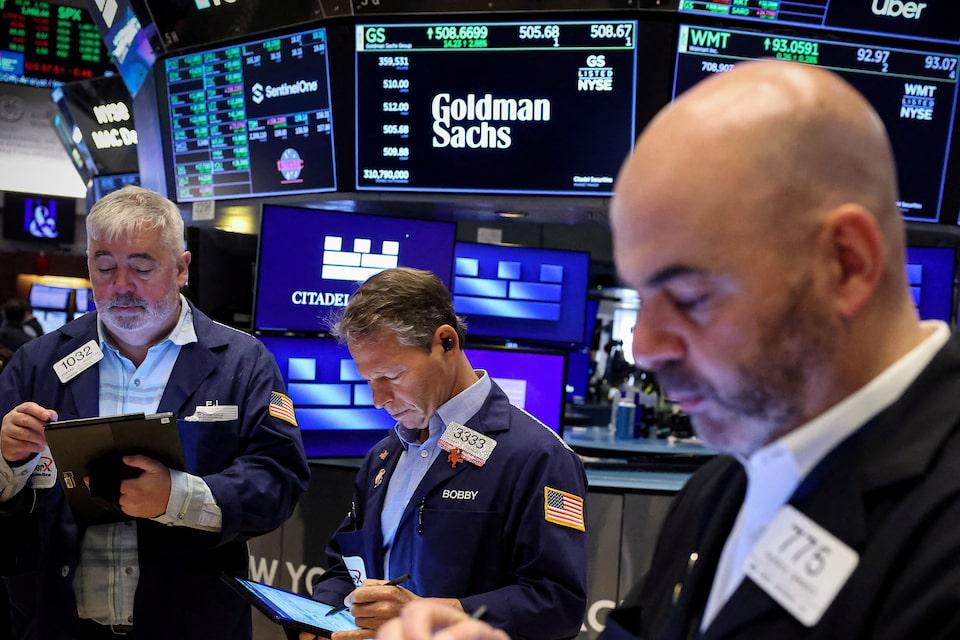
Micron jumps on strong AI demand Trump Media soars on $6 bln merger with TAE Technologies Annual consumer prices rise less than expected in November Indexes end up: Dow 0.14%, S&P 0.79%, Nasdaq 1.38% Dec 18 (Reuters) - Wall Street's main indexes closed higher on Thursday as a soft inflation report fed expectations for interest rate cuts by the Federal Reserve, while chipmaker Micron's blowout forecast signaled strong AI demand. The Consumer Price Index report showed that consumer prices increased less than expected in the year to November. The Labor Department's Bureau of Labor Statistics did not publish month-to-month CPI changes after the 43-day shutdown of the government prevented the collection of October data. Sign up here. "The constructive CPI report ... starts to ease pressure on policymakers further to potentially get more comfortable cutting rates next year," said Bill Merz, head of capital markets research at U.S. Bank’s Asset Management Group. "We’ll want to see follow-through next month to ensure there wasn’t too much noise from the shutdown." The three major indexes rebounded from three-week lows, and the Russell 2000 index (.RUT) , opens new tab, tracking rate-sensitive smallcaps, also advanced 0.8%. A jobless claims report showed new applications fell last week, reversing the prior week's surge and suggesting labor market conditions remained stable in December. Earlier this week, an official jobs report showed U.S. job growth rebounded in November and the unemployment rate rose to 4.6%. Traders now see a 58% chance for a dovish policy move by the Fed in March, according to CME's FedWatch Tool. The Dow Jones Industrial Average (.DJI) , opens new tab rose 65.88 points, or 0.14%, to 47,951.85, the S&P 500 (.SPX) , opens new tab gained 53.33 points, or 0.79%, to 6,774.76 and the Nasdaq Composite (.IXIC) , opens new tab gained 313.04 points, or 1.38%, to 23,006.36. Six of the 11 S&P sectors gained, led by consumer discretionary (.SPLRCD) , opens new tab stocks, which rose 1.78%. Lululemon (LULU.O) , opens new tab surged 3.5% on a report that activist investor Elliott has acquired more than a $1 billion stake in the athletic-wear company. Starbucks (SBUX.O) , opens new tab also rallied 4.9%. Among tech stocks, Micron Technology (MU.O) , opens new tab jumped 10.2% after the company forecast quarterly profit at nearly double what analysts were expecting on strong artificial intelligence-related demand. Other memory companies including SanDisk (SNDK.O) , opens new tab and Western Digital (WDC.O) , opens new tab also surged, while the Philadelphia SE Semiconductor Index (.SOX) , opens new tab climbed 2.6%. Companies' massive debt-backed spending on developing AI technology and uncertainty about how they plan to monetize it have plagued risk-taking this quarter. Oracle (ORCL.N) , opens new tab rose 0.9%, recovering from a fall on Wednesday when funding plans for a Stargate data center sparked a broad equities selloff. Trump Media & Technology (DJT.O) , opens new tab jumped 41% after the company and fusion power company TAE Technologies said they have agreed to combine in an all-stock deal valued at more than $6 billion. Advancing issues outnumbered decliners by a 1.9-to-1 ratio on the NYSE. There were 216 new highs and 105 new lows on the NYSE. On the Nasdaq, 2,892 stocks rose and 1,773 fell as advancing issues outnumbered decliners by a 1.63-to-1 ratio. The S&P 500 posted 15 new 52-week highs and no new lows while the Nasdaq Composite recorded 112 new highs and 178 new lows. Volume on U.S. exchanges was 16.89 billion shares, compared with the 16.96 billion average for the full session over the last 20 trading days. https://www.reuters.com/sustainability/sustainable-finance-reporting/wall-st-futures-climb-run-up-inflation-data-micron-gains-2025-12-18/
2025-12-18 21:50
Dec 18 (Reuters) - Federal Reserve Bank of Chicago President Austan Goolsbee said on Thursday “there’s a lot to like” in the latest consumer price index data, and if it can be sustained, it will help open the door for more interest rate cuts next year. “My view is that the settling point of rates is a fair bit below where it is today, and that by the end of next year we can, as long as we are hitting our marks on getting inflation back on path to 2%, I think that it's realistic that rates can come down a fair amount,” Goolsbee said in a Fox Business interview. Goolsbee was one of two officials who voted against the central bank’s rate cut last week. Sign up here. Goolsbee called data that showed some moderation in price pressures in November as measured by the CPI a “good month,” while cautioning not to make too much of a single month’s findings. The report, its release delayed by the government shutdown, showed a moderation in price pressures. But economists viewed the report cautiously given issues with its compilation, and the favorable turn was not seen as an all-clear that price pressures, which have been well above the Fed’s 2% target, are abating on a sustainable basis. The Fed cut its interest rate target by a quarter percentage point to between 3.5% and 3.75% on December 10, as it balanced rising risks to the job market with the fact that inflation remains too high. Goolsbee voted against the rate cut along with one other regional Fed leader, while one official voted in favor of a half percentage point easing. In a statement , opens new tab last Friday, Goolsbee said “I believe we should have waited to get more data, especially about inflation, before lowering rates further.” He added, “waiting to take this matter up in the new year would not have entailed much additional risk and would have come with the added benefit of updated economic data which have been absent lately.” In the interview on Thursday, Goolsbee said, “I just am uncomfortable front loading the rate cuts” before there’s strong confidence inflation will be returned to target. Before easing again, “we are going to want to see progress” on lowering price pressures. https://www.reuters.com/sustainability/boards-policy-regulation/feds-goolsbee-fox-business-interview-welcomes-latest-inflation-data-says-more-2025-12-18/

2025-12-18 21:49
Energy Transfer open to third-party discussions for Lake Charles LNG project Transwestern pipeline expansion costs rise to $5.6 billion Energy Transfer says pipeline projects have better risk, return profiles HOUSTON, Dec 18 (Reuters) - Energy Transfer (ET.N) , opens new tab said on Thursday it was suspending the development of its Lake Charles liquefied natural gas export facility in Louisiana, the first LNG project to be halted after U.S. President Donald Trump expedited permits for them in January. The suspension comes as the company has been facing rising costs and amid fears of a looming global oversupply as new LNG output comes online. Sign up here. In a statement, Energy Transfer said it will focus on allocating funds to natural gas pipeline projects, which it believes provide superior risk and return profiles. The pipeline and storage company said it remains open to discussions with third parties that may have an interest in developing the LNG project. Energy Transfer executives became nervous about Lake Charles LNG in the final stretch of development because the company still sees itself as a pipeline operator rather than an LNG-focused company, said a person familiar with the project. Offtake agreements for Lake Charles LNG had been structured in a way to protect Energy Transfer from a potential glut in LNG supply, the person added. Energy Transfer did not immediately respond to a request for additional comment. The company had previously said it would only give the facility the financial go-ahead if it sold 80% of the project to equity partners. Lake Charles LNG was projected to have a liquefaction capacity of 16.45 million metric tons per annum (mtpa). The suspension could impact customers including U.S. oil producer Chevron (CVX.N) , opens new tab. Energy Transfer said in June it would supply Chevron with an additional 1 mtpa from Lake Charles, bringing the total contracted volumes to Chevron to 3 mtpa. The oil producer did not immediately respond to a request for comment. Contracting has slowed down across all LNG facilities, and contract rates on sale and purchase agreements are much lower than previous rates, squeezing margins for LNG developers, analysts said. "There is quite a bit of capacity out there, and way too many projects. Some more projects will wither away," said Uday Turaga, the founder of energy research and consulting firm ADI Analytics. ENERGY TRANSFER TO EXPAND PIPELINE CAPACITY The Dallas-headquartered company on Thursday also announced an increase in the transportation capacity of its Transwestern pipeline’s planned expansion project to meet additional customer demand. The pipeline expansion project, called Desert Southwest, will now cost about $5.6 billion, excluding allowance for funds used during construction, Energy Transfer said. The project was previously expected to cost about $5.3 billion including a $600 million of allowance for funds used during construction. The project’s main pipeline diameter will be increased from 42 inches (106 cm) to 48 inches, which will grow the project’s capacity to up to 2.3 billion cubic feet per day, Energy Transfer said. The design capacity of the pipeline was previously 1.5 bcf per day. The pipeline is expected to be in service by the fourth quarter of 2029. "There is significant demand growth in the Desert Southwest region, including the potential to retire and/or convert coal-fired power plants to natural gas, which could further benefit the project," the company said, adding the ultimate capacity of the expansion project would be based on market demand. https://www.reuters.com/business/energy/energy-transfer-suspends-development-its-lake-charles-lng-export-project-2025-12-18/