2024-10-10 08:05
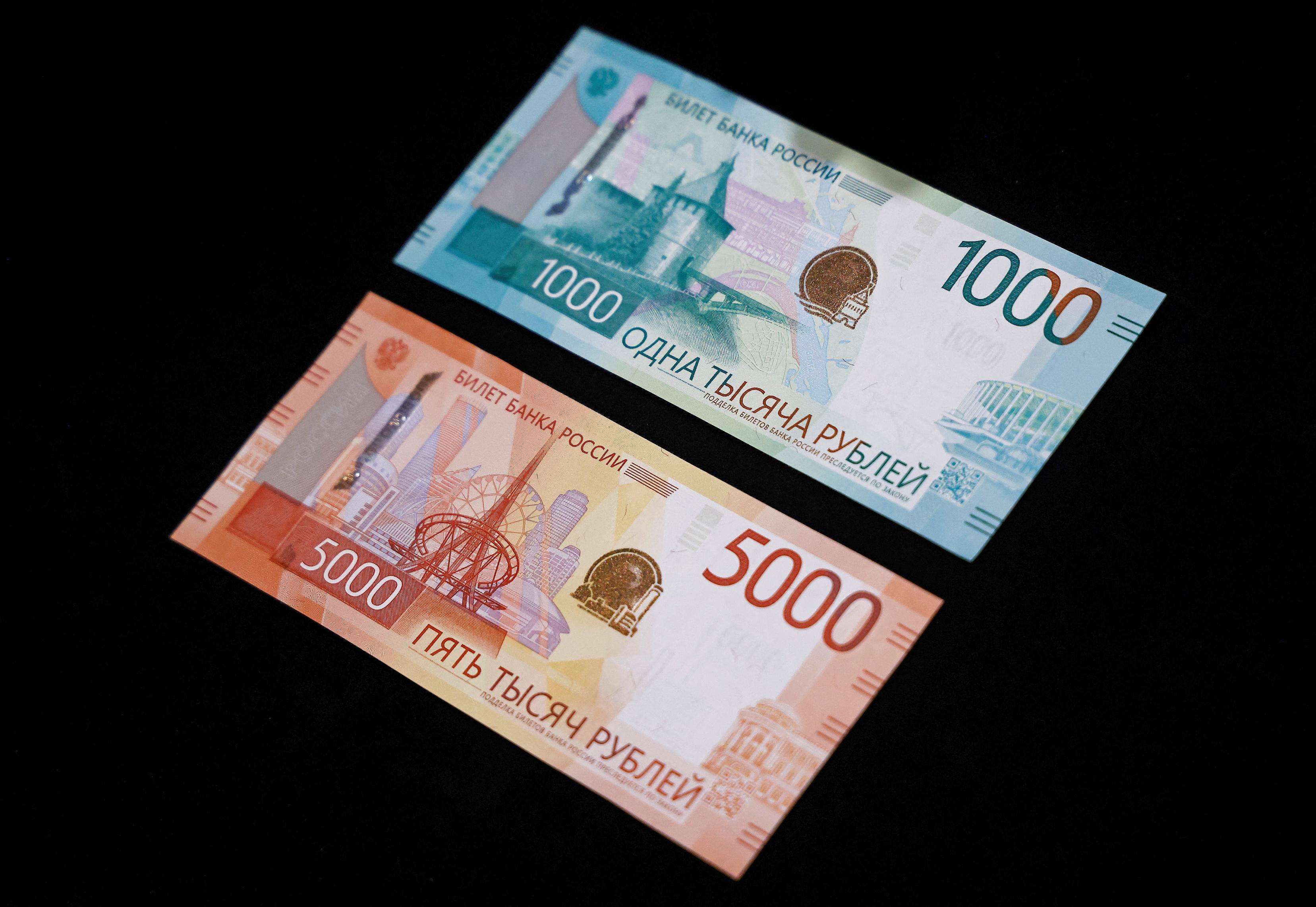
MOSCOW, Oct 10 (Reuters) - The Russian rouble weakened further on Thursday, remaining at its lowest against the U.S. dollar and China's yuan since October 2023. At 0740 GMT the rouble was down 0.4% at 97.40 against the dollar, LSEG data showed. The rouble on Wednesday hit the 97 mark for the first time since October last year. The rouble was down 1.29% against the yuan at a one-year low of 13.65, according to LSEG data. In trade on the Moscow Stock Exchange (MOEX), the rouble was down 0.18% at 13.71 to the yuan. "The rouble has once again hit yearly lows; an autumn slide of the national currency is almost 15%," said analysts at broker BCS. Analysts pointed to several factors behind current rouble weakness, including the Oct. 12 expiration of a licence from the U.S. Treasury Department's Office of Foreign Assets Control (OFAC) allowing commercial banks to deal with MOEX. The licence was issued to allow banks to wind down operations with MOEX after Western sanctions on the exchange and its clearing agent, the National Clearing Centre, were introduced on June 12. The sanctions stopped all trade in dollars and euros at MOEX, making China's yuan the most traded foreign currency in Russia. Trade in dollars and euros has shifted to the over-the-counter (OTC) market, obscuring price data. There is concern in the market that Chinese banks providing yuan liquidity for exchange trading could pull out for compliance reasons after the OFAC licence expires. Other factors pressuring the rouble included weaker oil prices over the August-September period, exporters withholding foreign exchange due to international transactions problems as well as growth in cross-border settlements in roubles, analysts and traders said. Increased foreign exchange sales by the state in October are supporting the Russian currency but this was not sufficient to offset the downward pressure, analysts said. One-day rouble-dollar futures, which trade on the Moscow exchange and are a guide for OTC market rates, were flat at 96.54. The central bank's official exchange rate, which it calculates using OTC data, was set at 96.95 to the dollar. The rouble was down 0.42% at 106.55 against the euro , LSEG data showed. Brent crude oil , a global benchmark for Russia's main export, edged up 0.67% to $77.07 a barrel. Sign up here. https://www.reuters.com/markets/currencies/russian-rouble-hits-one-year-lows-against-major-currencies-2024-10-10/
2024-10-10 07:56
NAPERVILLE, Illinois, Oct 9 (Reuters) - Despite a jump in production, U.S. ethanol stocks dropped significantly last week, partly owing to a sharp rebound in gasoline demand, which neared three-year highs. But record exports have been the factor keeping U.S. ethanol supplies in check over the last several months, even as output of the corn-based fuel additive set records of its own. Plentiful, cheap corn and relatively low natural gas prices have supported profit margins for U.S. ethanol producers, which account for nearly 40% of annual U.S. corn use. Ethanol output over the last three months was record-high for the period, coinciding with a 20% slide in U.S. ethanol prices . It was not clear if and when new ethanol production records could be set following the 2020 COVID-19 pandemic that choked off fuel demand, placing stress on the U.S. corn industry. Demand for U.S. motor gasoline has not yet returned to pre-pandemic levels, which is a negative force for ethanol use. However, implied U.S. ethanol use has been strong in recent months, even setting some weekly records. This comes as many countries are stepping up plans to reduce carbon emissions using biofuels and other sustainable fuels, offering the perfect opportunity for U.S. ethanol exporters. The United States produces just over half of the world’s ethanol annually and is the leading supplier. MEATY EXPORTS Census Bureau data published on Tuesday showed U.S. ethanol exports at a record 6.6 billion liters (1.75 billion gallons) between September 2023 and August 2024, which spans the 2023-24 U.S. corn marketing year. August marked the fifth consecutive month in which a new monthly export record was set, and total ethanol shipments over that five-month period were 30% greater than 2018’s previous record for that stretch. Canada accounted for 37% of the 2023-24 U.S. ethanol shipments, and relatively new customer the United Kingdom came in second at 13%. Both trade relationships have been driven by the recent push for cleaner fuels. The demand for corn-based ethanol in India, the No. 3 destination for U.S. ethanol, has become so strong that it has pushed domestic corn prices to record levels, turning the country into a net corn importer. To ensure ample sugar supplies, India is trying to shift away from sugar-based ethanol, the primary offering from Brazil, a former U.S. ethanol customer. Brazil’s steep import tariffs on the U.S. fuel have been prohibitive to that trade over the past couple of years. Brazil is the world’s No. 2 ethanol exporter, well behind the United States, though its corn-based ethanol output has exploded over the past few years, now accounting for more than 20% of Brazil’s total ethanol production. CORN BALANCE SHEET Data from the Energy Information Administration on Wednesday showed U.S. ethanol stocks plunged more than 5% last week to the lowest levels since December, though supplies are above average for the time of year. However, the stock situation could have been much more cumbersome if not for the exports, especially given the strong production levels. Ethanol output and thus exports could remain robust in the coming months, a key time for U.S. corn processing, especially if the bumper corn harvest is realized. Analysts expect the U.S. Department of Agriculture on Friday to reconfirm its view that the in-progress 2024 corn harvest will be the second-largest on record behind 2023. USDA’s September estimates pegged U.S. corn used for ethanol in 2024-25 to fall slightly from 2023-24, though this order may need to be flipped if ethanol production rates continue to shine through early next year. Karen Braun is a market analyst for Reuters. Views expressed above are her own. Sign up here. https://www.reuters.com/markets/commodities/surge-us-ethanol-exports-offsets-thriving-production-2024-10-10/

2024-10-10 07:46
JOHANNESBURG, Oct 10 (Reuters) - South Africa's rand edged higher against the dollar on Thursday, ahead of local mining and manufacturing data and a U.S. inflation report. At 0727 GMT, the rand traded at 17.6275 against the dollar , 0.13% stronger than its previous close. The dollar index was steady against a basket of currencies. It had gained earlier following the release of minutes from the Federal Reserve's September meeting on Wednesday, which confirmed the central bank would take a cautious approach to monetary easing. The rand has lost some steam after rallying against the dollar in late September and much of its recent weakness can be attributed to the resurgence of the greenback, analysts said. South African investor focus is now on the release of August mining and manufacturing data, while a U.S. consumer price index report looms later in the day. "Even if (U.S.) CPI comes in lower than expected, the market seems to have largely priced in the Fed’s cautious approach, meaning that significant ZAR recovery against the USD is unlikely in the near term," said Andre Cilliers, currency strategist at TreasuryONE. On the stock market, the Top-40 (.JTOPI) , opens new tab index was up 0.2%. South Africa's benchmark 2030 government bond was marginally weaker, with the yield up 1 basis point to 9.18%. Sign up here. https://www.reuters.com/markets/currencies/south-african-rand-edges-higher-ahead-local-data-us-inflation-report-2024-10-10/

2024-10-10 07:06
Hurricane Milton spurs mass fuel buying in Florida EIA's US crude inventories show higher than expected build Investors remain wary of Iran-Israel escalation LONDON, Oct 10 (Reuters) - Oil prices rose more than 1% on Thursday, underpinned by a spike in fuel demand as a major storm barrelled into Florida, with Middle East supply risks also in focus. Brent crude futures rose $1.01, or 1.3%, to $77.59 a barrel by 1108 GMT. U.S. West Texas Intermediate (WTI) futures were up $1, or 1.4%, at $74.24. In the United States, the world's largest oil producer and consumer, Hurricane Milton made landfall in Florida, where about a quarter of fuel stations sold out of gasoline, helping to support crude prices. Prices spiked this month after Iran launched more than 180 missiles against Israel on Oct. 1, raising the prospect of retaliation against Iranian oil facilities. With Israel yet to respond, crude benchmarks have eased once more and remained relatively flat through the week. But investors remained wary, given Israeli Defence Minister Yoav Gallant promised that any strike against Iran would be "lethal, precise and surprising". U.S. President Joe Biden spoke to Israeli Prime Minister Benjamin Netanyahu about Israel's plans concerning Iran, though ANZ analysts said there is growing concern that Israel's allies have little influence on its strategy. Even with threats to the oil-producing Middle Eastern region in the spotlight, demand concerns continue to underpin the fundamental outlook. "Without a genuine demand excess or supply shortage, the risk will remain skewed to the downside. Even if the Israeli bellicose rhetoric is embodied in an Israeli assault on Iranian oil infrastructure, the price reaction could be brief, albeit violent," said Tamas Varga at oil broker PVM. The U.S. Energy Information Administration (EIA) on Tuesday downgraded its demand forecast for 2025 on weakening economic activity in China and North America. EIA data on Wednesday showed crude inventories last week built more than expected by analysts in a Reuters poll. Sign up here. https://www.reuters.com/business/energy/oil-prices-rise-israel-iran-conflict-fears-us-storm-2024-10-10/

2024-10-10 07:05
BUENOS AIRES, Oct 9 (Reuters) - Argentina's lower house of Congress failed on Wednesday to muster the votes needed to reverse President Javier Milei's veto of a law that would have boosted university funding, a win for the libertarian leader after mass protests opposing his move. Milei vetoed a bill last month that would have updated public university funding in line with Argentina's triple-digit inflation rate, one of the world's highest. Thousands of people have since demonstrated against his cuts to education and healthcare. Lawmakers voted 160 in favor of the university funding law with 84 against and 5 abstentions, falling six votes short of the two-thirds majority of those present needed to reverse the president's veto. Milei's far-right party makes up only a small minority in Congress, but it has formed alliances with conservative lawmakers to prevent the opposition from gathering the two-thirds needed to ratify the law. "What we saw today was a power struggle," conservative PRO party lawmaker Alejandro Finocchiaro told reporters. "If the presidential veto did not pass, it would have been a very bad sign for markets." Milei argues that the law would jeopardize a fiscal balance he has promoted to tackle a long-running economic crisis, and has pledged to veto anything that threatens it. Argentina's health, pension and education spending have been the hardest hit by Milei's public cuts. The law vetoed by Milei would have adjusted public education budgets due to inflation. University salaries have lost around 40% of their purchasing power due to inflation. Under Milei's austerity drive, high inflation has started to slow but Argentina is deep in recession and poverty rates have surged over 50%. But opposition to the president's spending cuts, especially to education funding, still retains impassioned supporters. "The right to public education defines our nation," opposition center-left UCR party lawmaker Facundo Manes said during the veto debate. "Education is the best economic policy of the 21st century, which is why we will not give up defending it." Sign up here. https://www.reuters.com/world/americas/milei-faces-test-argentinas-congress-votes-university-funding-2024-10-09/

2024-10-10 07:04
CEO says Fortum faces cyberattacks on daily basis Has also spotted drones, suspicious people near sites Security services allege rise in malicious activity by Russia HELSINKI, Oct 10 (Reuters) - Nordic utility Fortum (FORTUM.HE) , opens new tab faces cyberattacks on a daily basis in Finland and Sweden and has sometimes spotted drones and suspicious individuals near its sites, its CEO told Reuters, adding the company had asked the authorities to investigate. Security services in Finland and Sweden declined to comment on specific incidents, but both have alleged a pick up in malicious activities by Russia in recent years. Russia's foreign ministry or embassy in Helsinki did not immediately reply to a written request for comment. Finland and Sweden angered eastern neighbour Russia by joining the Western military alliance NATO in a foreign policy U-turn after Russia's full-scale invasion of Ukraine in 2022. "There are different kinds of cyberattack attempts, or cyber security breach attempts, against us daily, and then less frequently, drones and different kinds of suspicious movement around our assets," Fortum CEO Markus Rauramo said, adding power plants' satellite connections were disturbed earlier this year. Fortum has hydro, wind, solar, nuclear and combined heat and power (CHP) plants. Rauramo added the situation was broadly similar at Fortum's Swedish assets. He said Fortum had taken extensive precautions to try to mitigate cyberattacks, including strict access control, private security services, reserve systems, and drills with authorities. "There has been an uptick in the frequency (of incidents) just as authorities are also reporting. The numbers are increasing, but the impact on our operations is very small," Fortum's head of security Jari Stenius said. Finland's National Bureau of Investigation KRP told Reuters police had several open investigations on incidents near critical infrastructure, without giving details. Finland's Security and Intelligence Service Supo and Finnish police declined to comment on the cyberattacks directly, or who might be behind them. Swedish Intelligence Service Sapo also declined to comment on specific incidents or targets. RUSSIAN SECURITY THREAT However, a deterioration of relations between Finland and Russia since 2022 has led to an increase in cyberattacks and intelligence operations from Russia, targeting Finland's critical infrastructure, Supo told Reuters, calling Russia the main threat to Finland's national security. A spokesperson for Sweden's Sapo said: "We have seen a change in security-threatening actions in and against Sweden from Russian intelligence," adding Russian intelligence was more opportunistic, more aggressive and taking bigger risks. NATO and Western intelligence services including Finland's have warned that Russia is behind a growing number of hostile activities across the Euro-Atlantic area, ranging from repeated cyberattacks to Moscow-linked arson - which Russia denies. Russia has threatened Finland with retaliation for joining NATO and seized Fortum's Russian energy assets worth $1.9 billion last year, in response to European Union sanctions. Sign up here. https://www.reuters.com/business/energy/finnish-utility-fortums-power-assets-targeted-with-surveillance-cyber-attacks-2024-10-10/