2024-10-10 06:38
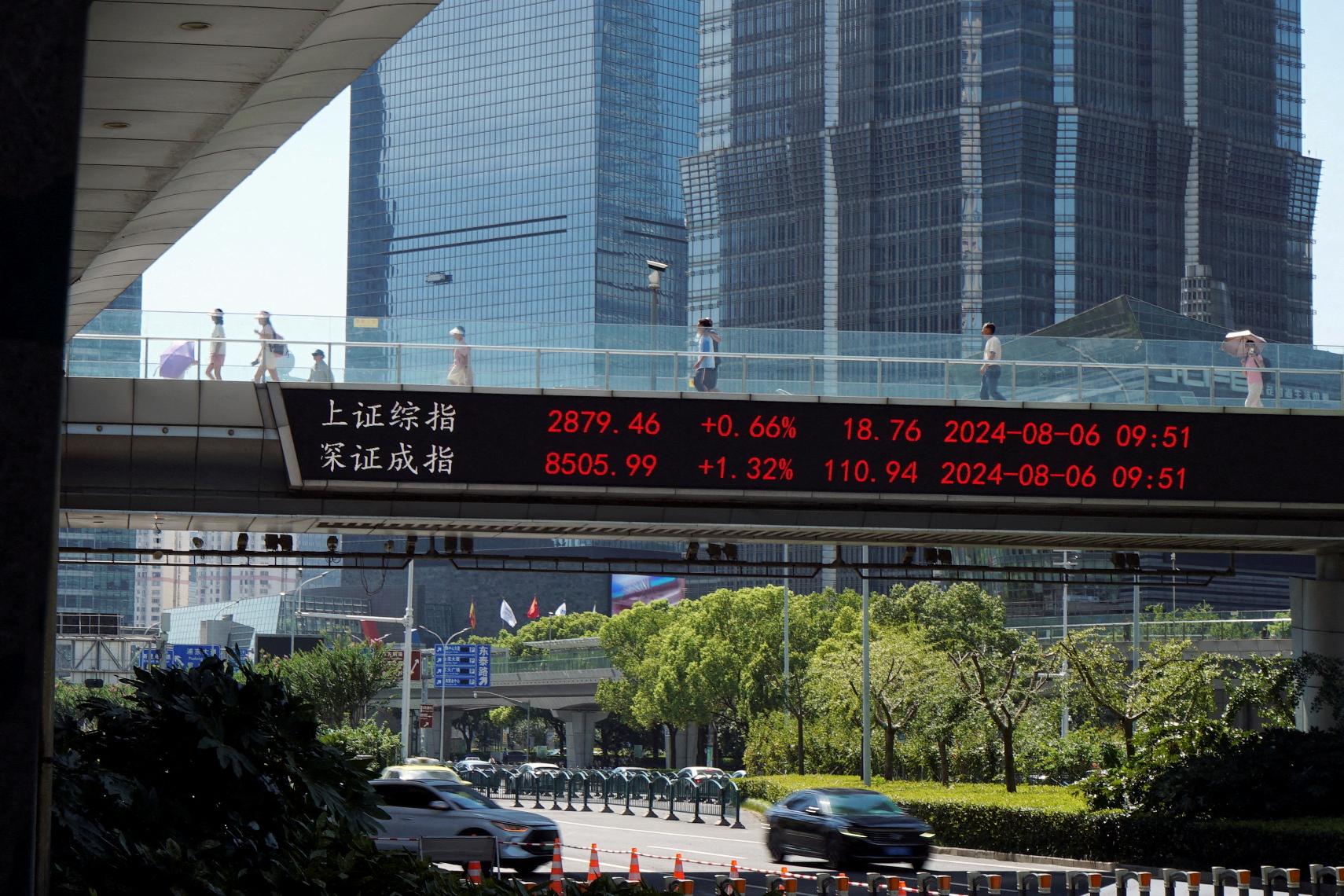
Oct 10 (Reuters) - Foreign investors increased their purchases of Japanese stocks in the week ended Oct. 5, as the yen weakened following Prime Minister Shigeru Ishiba's dovish remarks, boosting appetite for local exporters. Foreigners acquired Japanese stocks worth 919.3 billion yen ($6.16 billion) on a net basis during the week, according to Finance Ministry data, in their largest weekly net purchase since April 13. The yen fell about 4.4% against the dollar last week, the most since December 2009, on easing worries about rate hikes after Ishiba said Japan is not in an environment for an additional rate increase. Foreigners have divested approximately 5.42 trillion yen worth of Japanese stocks so far in the second half of this year, after about 6 trillion yen of net purchases in the first half. Exchange data showed that foreigners pumped about 395.55 billion yen into Japanese cash equities, but remained net sellers of derivative contracts for a third successive week, with about 604.4 billion yen in net sales. In the Japanese bond market, foreigners snapped up a net 1.38 trillion yen worth of long-term securities, their largest weekly net purchase since Sept. 14. They also poured about 50.3 billion into short-term instruments. Japanese investors bought 696.7 billion yen worth of foreign bonds after 55.8 billion yen of net selling in the prior week. They, however, sold 138.7 billion yen worth of short-term debt securities. Japanese investors, meanwhile, acquired 257.8 billion yen worth of foreign equities, their largest weekly net purchase in four weeks. ($1 = 149.2500 yen) Sign up here. https://www.reuters.com/markets/asia/japanese-stocks-see-biggest-weekly-foreign-inflows-six-months-2024-10-10/
2024-10-10 06:34
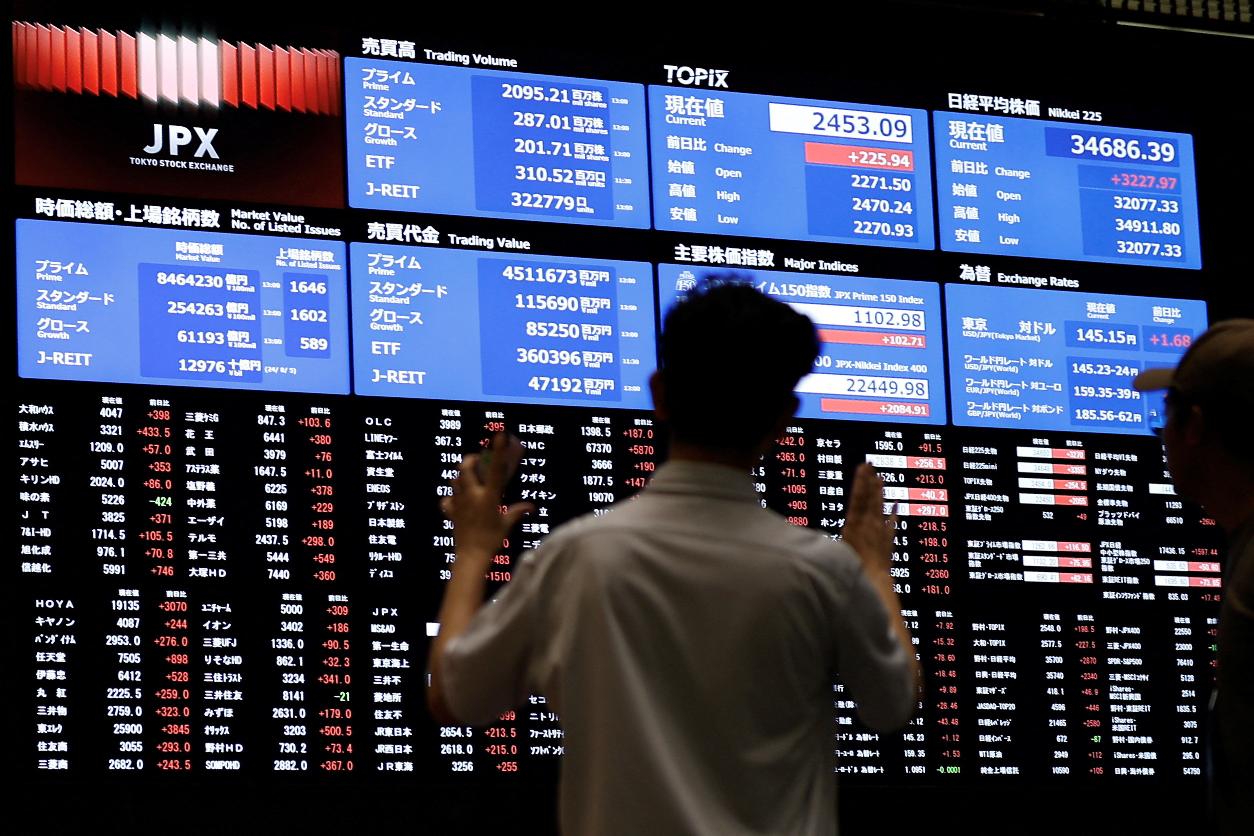
No big change expected in BOJ's new price forecasts BOJ policymakers see economy on track to hit price goal BOJ can 'afford' to wait, but no guarantee it will hold for long Fed, yen and politics aside, data gives go-ahead for more hikes TOKYO, Oct 10 (Reuters) - Japan's improving economic conditions and receding U.S. recession worries are likely to bring prospects of a December or January interest rate hike back into view, even as a new government complicates the politics around monetary policy. A significantly dovish shift in rhetoric from Bank of Japan Governor Kazuo Ueda and surprising opposition to further rate hikes by new Prime Minister Shigeru Ishiba have cast doubts over when the central bank would next tighten policy. Despite the recent change in mood around policy, however, sources and analysts see a growing economic case for the central bank to take Japan's rates further away from historic lows and for the BOJ to step up its hawkish signalling. While the BOJ is expected to keep interest rates steady at its Oct. 30-31 meeting, it will roughly maintain its forecast for inflation to stay around its 2% target through March 2027, say three sources familiar with its thinking. Former BOJ official Nobuyasu Atago, who is currently chief economist at Rakuten Securities Economic Research Institute, said the central bank is unlikely to want to wait until March to raise rates again. "Recent developments surrounding the U.S. economy, including receding risks of a severe downturn, will work in favour of further BOJ rate hikes. From that perspective, the chance of a near-term rate increase is heightening," Atago said. "I don't think the Ishiba administration would push back against the BOJ's efforts to raise interest rates." With inflationary pressure from import costs subsiding, Ueda has said the central bank can "afford" to spend time scrutinising risks, such as unstable markets and U.S. economic uncertainties, in timing the next rate hike. But that does not necessarily mean the BOJ will stand pat for a prolonged period, especially if conditions for a rate hike fall into place, the sources say. Many BOJ policymakers see the economy on track for a moderate recovery with higher wages underpinning consumption and helping sustain broad-based price rises, the sources say, meeting the prerequisite of further rate hikes. "It's true the BOJ is in no rush" with few signs inflation is firing up, one of the sources said. "But that doesn't mean it will unnecessarily delay the next rate hike." "What the BOJ is likely trying to do is to give itself a bit of wiggle room on when to change policy," another source said on Ueda's comment. The BOJ ended negative interest rates in March and raised short-term borrowing costs to 0.25% in July, taking a landmark shift away from the decade-long radical monetary stimulus of the previous governor. NAVIGATING UNCERTAINTIES Uncertainty over Ishiba's stance on monetary policy and the risk of renewed market volatility from the U.S. Federal Reserve's fresh rate-cut cycle have heightened challenges for the BOJ to nudge rates up again. From a macroeconomic perspective, however, the BOJ has few reasons to pause. Base salaries rose at the fastest pace in nearly 32 years in August, reflecting this spring's labour-management pay negotiations that led firms to deliver bumper pay hikes. Growing prospects of sustained wage increases are prodding more service-sector firms to hike prices, a BOJ report showed, heightening the chance of a broad-based rise in inflation. While slowing U.S. and Chinese demand cloud the outlook, the headwinds have yet to hit manufacturers, with a quarterly central bank survey showing the business mood holding up and companies retaining robust spending plans. Even the external risks Ueda highlighted in his recent dovish commentary, such as the U.S. outlook and market volatility, appear to be diminishing. Brisk U.S. job growth suggests resilience in the world's largest economy, alleviating one concern Ueda cited as reason to go slow in raising rates. Markets have also restored some calm with the Nikkei average (.N225) , opens new tab recouping most of August's rout. The yen is stable around 149 to the dollar, off a three-decade trough near 162 hit in early July but comfortably below the 140 mark which, if breached, would hit exports. The BOJ's quarterly outlook report, due after its Oct. 30-31 meeting, will offer clues on how worried the bank remains about markets and overseas risks. Key would be whether such risks are mentioned in the report's portion on future policy guidance, the sources said. After the October meeting, the BOJ next meets for a rate review on Dec. 18-19 followed by one on Jan. 23-24. The outcome of a general election slated for Oct. 27 will also be crucial for the next rate hike timing. Japan's new economy minister, Ryosei Akazawa, on Tuesday backed the BOJ's rate decision, brushing aside views the new administration would push back against efforts to normalise monetary policy. The likelihood of a December or January rate hike could heighten if premier Ishiba, who was previously seen as a policy hawk, strengthens his grip within his ruling party with a solid election victory, some analysts say. "In a way, uncertainties always exit," a third source said. "From here on, the timing (of a rate hike) will pretty much be a judgment call." Sign up here. https://www.reuters.com/markets/asia/boj-may-not-be-dovish-uedas-cautious-rhetoric-suggests-2024-10-10/
2024-10-10 06:23
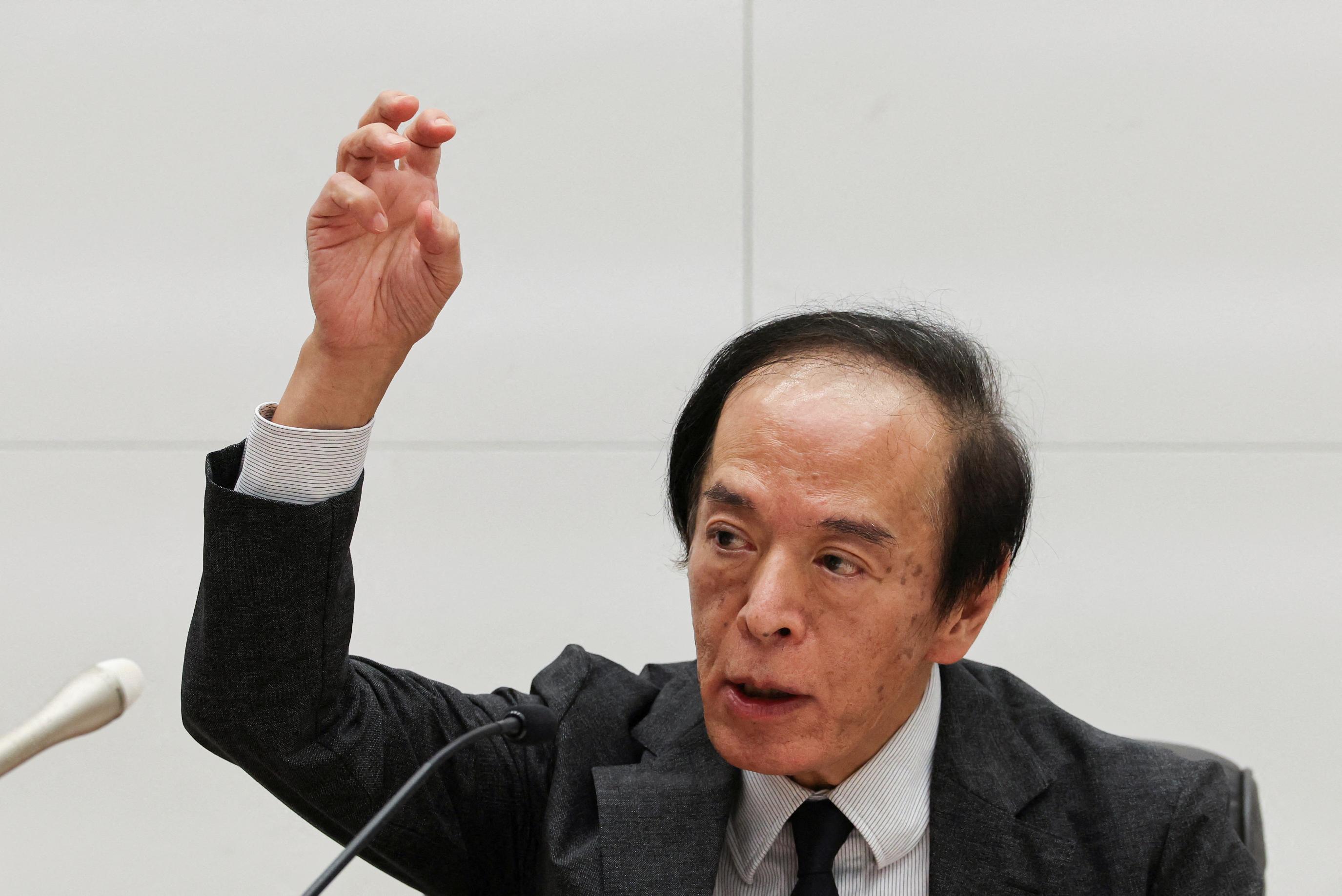
U.S. data due at 1230 GMT ANZ upgrades short-term silver forecast to $34 Platinum climbs nearly 2% Oct 10 (Reuters) - Gold prices nudged higher on Thursday, while traders await key U.S. inflation data due later in the day to gauge the Federal Reserve's future monetary policy stance. Spot gold was up 0.2% at $2,613.49 per ounce, as of 0727 GMT, after easing for the previous six sessions. Prices scaled a record high last month. U.S. gold futures gained 0.2% at $2,630.90. The U.S. Consumer Price Index (CPI) for September is due at 1230 GMT and Producer Price Index (PPI) data on Friday. "If core CPI comes hotter, U.S. Treasury yields will go higher and that is bad for gold. I think there is room for prices to come down, but don't necessarily see a downtrend in the big picture," said Ilya Spivak, head of global macro, Tastylive. Markets see an 85% chance of a 25-basis-point Fed rate cut in November. A "substantial majority" of Fed officials at the September meeting supported beginning an era of easier monetary policy with an outsized half-point rate cut, but agreed that further easing will be data-driven, according to its minutes. The zero-yielding bullion is preferred in a low-interest rate environment as well as amid periods of economic and geopolitical turmoil. Analysts at BMI increased their 2024 gold price forecast to $2,375 from $2,250, and noted that a potential Fed rate reduction comes against a myriad of geopolitical tensions, with the Middle East jitters and the upcoming U.S. presidential elections at the forefront. Meanwhile, Israel's plans to strike Iran added to concerns of wider conflict in the Middle East. Spot silver edged 0.1% higher to $30.53 per ounce. ANZ upgraded its short-term silver forecast to $34. "Solid industrial demand and stagnant supply are expected to widen the market deficit, presenting a strong investment case," it said. Platinum added 1.9% to $963.35 and palladium firmed 1.1% to $1,050.52. Sign up here. https://www.reuters.com/markets/commodities/gold-ticks-up-us-inflation-data-focus-2024-10-10/

2024-10-10 06:21
ABU DHABI, Oct 10 (Reuters) - Qatar is planning initiatives to boost private sector growth in the Gulf state, including writing off some loans to Qatari companies made during the COVID-19 pandemic, state media reported late on Wednesday. The Cabinet has called for the preparation and implementation of a package of initiatives to increase private sector participation in the national economy, the Qatar News Agency reported, based on directives from Emir Sheikh Tamim bin Hamad Al Thani. The initiatives are intended to offer support to private companies struggling to recover from the pandemic and strengthen the private sector as part of government plans to diversify the economy, create jobs and attract investment. Loans to Qatari firms under the National Response Guarantee Programme are to be dropped, and companies will also be able to access short-term funding to finance working capital, according to the statement. Qatar, one of the world's top exporters of liquefied natural gas, has accelerated its efforts to diversify economic sectors and revenue streams, but it remains reliant on gas revenue for government income. The latest initiatives align with Qatar's Third National Development Strategy 2024-2030. Sign up here. https://www.reuters.com/world/middle-east/qatar-write-off-loans-boost-private-sector-growth-2024-10-10/

2024-10-10 06:06
HAMBURG, Oct 10 (Reuters) - Europe's largest sugar producer Suedzucker (SZUG.DE) , opens new tab on Thursday reported a 63% fall in quarterly operating profit and cut its full-year earnings forecasts on weak sugar markets. Suedzucker reported operating profit of 114 million euros ($124.70 million) in the second quarter to Aug. 31 of its 2024/25 fiscal year, down from 310 million euros in the same quarter last year. The company warned in September that its second-quarter earnings would decline following unexpectedly sharp deteriorations in market expectations for its core sugar sector. On Thursday it confirmed the September warning and said the group profit in the 2024/25 fiscal year will fall to between 175 and 275 million euros from the previous forecast of 500 to 600 million euros. Suedzucker reported a profit of 947 million last fiscal year. Improved sugar beet harvest expectations around Europe in the current 2024 sugar crop processing campaign are increasing volumes of sugar offered for sale in the European market, it said. EU sugar prices peaked at 856 euros a metric ton in December 2023, falling to 775 euros/ton in July 2024, it said. The reported spot price level is now well below this average after expanded cultivation and good harvest expectations for the 2024 crop, the company said. Suedzucker, which also has interests ranging from biofuels to processed foods, expects full-year operating losses in its sugar sector between 50 and 150 million euros. “The downward trend in EU price levels has since accelerated substantially in recent weeks, leading to an unexpected deterioration in market conditions,” Suedzucker said. “A higher EU harvest expectation from the current 2024 processing campaign with a correspondingly higher sugar volume of the European market and a significantly lower global sugar market price are the reasons for the downturn.” The company also expects sugar production costs to rise, which can only be passed to customers with delays. Sign up here. https://www.reuters.com/markets/commodities/suedzuckers-q2-earnings-fall-sharply-lower-sugar-prices-2024-10-10/

2024-10-10 05:49
U.S. CPI slightly above expectations Jobless claims climb, boosted by Helene Market views for 25-bp Fed rate cut in November choppy NEW YORK, Oct 10 (Reuters) - Global stocks were little changed while longer-dated U.S. Treasury yields edged up in choppy trading on Thursday as investors weighed the interest rate path from the Federal Reserve after economic data and comments from central bank officials. U.S. consumer prices rose slightly more than expected in September as food costs rose, but the annual increase in inflation was the smallest in more than 3-1/2 years. The Labor Department said the consumer price index increased 0.2% last month after gaining 0.2% in August, slightly above expectations of economists polled by Reuters for a 0.1% rise. In the 12 months through September, the CPI rose 2.4% versus the 2.3% estimate. "It's a little bit hotter than expected, the top line and the core level, and is a bit of a disappointment for those that were hoping for rate cuts coming at successive meetings," said Robert Pavlik, senior portfolio manager at Dakota Wealth in Fairfield, Connecticut. "People are thinking the Fed is now going to be concerned about the level of inflation. "It's kind of a kick in the shins." Other data showed weekly initial jobless claims jumped 33,000 last week to a seasonally adjusted 258,000, well above the 230,000 estimate, although the climb was partially attributed to distortions from Hurricane Helene. The data helped initially solidify expectations the Federal Reserve will cut interest rates next month, but expectations retreated slightly to a nearly 80% chance for a cut of 25 basis points (bps) after comments from several Federal Reserve officials, from nearly 90% immediately after the numbers were released, according to CME's FedWatch Tool , opens new tab. Expectations for the 25 bp cut then increased again and were last at 86.3%. Atlanta Federal Reserve Bank President Raphael Bostic said in an interview with the Wall Street Journal that he would be "totally comfortable" skipping an interest-rate cut at an upcoming meeting of the U.S. central bank, adding that the "choppiness" in recent data on inflation and employment may warrant leaving rates on hold in November. The market had been pricing in a 32.1% chance for another outsized cut of 50 bps a week ago. On Wall Street, stocks ended lower but off their worst levels of the session, with the rate-sensitive real estate (.SPLRCR) , opens new tab index the worst-performing of the 11 major S&P sectors. The Dow Jones Industrial Average (.DJI) , opens new tab fell 57.88 points, or 0.14%, to 42,454.12, the S&P 500 (.SPX) , opens new tab fell 11.99 points, or 0.21%, to 5,780.05, and the Nasdaq Composite (.IXIC) , opens new tab fell 9.57 points, or 0.05%, to 18,282.05. MSCI's gauge of stocks across the globe (.MIWD00000PUS) , opens new tab slipped 0.18 point, or 0.02%, to 848.46, as it pared earlier declines. In Europe, the STOXX 600 (.STOXX) , opens new tab index closed down 0.18% ahead of France's 2025 budget. Markets have been dialing back expectations the Fed will be aggressive in cutting interest rates after Friday's strong U.S. payrolls report. Fed Chair Jerome Powell and other central bank officials have signaled the Fed has shifted its primary focus from combating inflation to labor market stability. Other Fed officials indicated on Thursday that slowly cooling inflation and a U.S. job market that remains strong but at risk of deteriorating give the central bank room for more interest-rate cuts in coming months, likely at a gradual pace. The yield on benchmark U.S. 10-year notes inched up 0.4 basis point to 4.071% after reaching 4.12%, while the 2-year note yield, which typically moves in step with interest rate expectations, fell 5.6 basis points to 3.962%. The dollar index fell 0.03% to 102.85 after earlier rising as much as 0.27%, with the euro down 0.03% at $1.0936. Against the Japanese yen , the dollar weakened 0.51% to 148.53. Bank of Japan Deputy Governor Ryozo Himino said on Thursday the central bank will consider raising interest rates if the board has "greater confidence" that its economic and price forecasts will be realized. Sterling weakened 0.07% to $1.3061. Oil prices jumped after two sessions of decline, boosted by a spike in fuel demand as Hurricane Milton slammed into Florida, with Middle East supply risks and signs that demand from the U.S. and China could increase also providing support. U.S. crude settled up 3.56% to $75.85 a barrel and Brent rose to settle at $79.40 per barrel, up 3.68% on the day. Sign up here. https://www.reuters.com/markets/global-markets-wrapup-1-2024-10-10/