2025-12-18 21:33
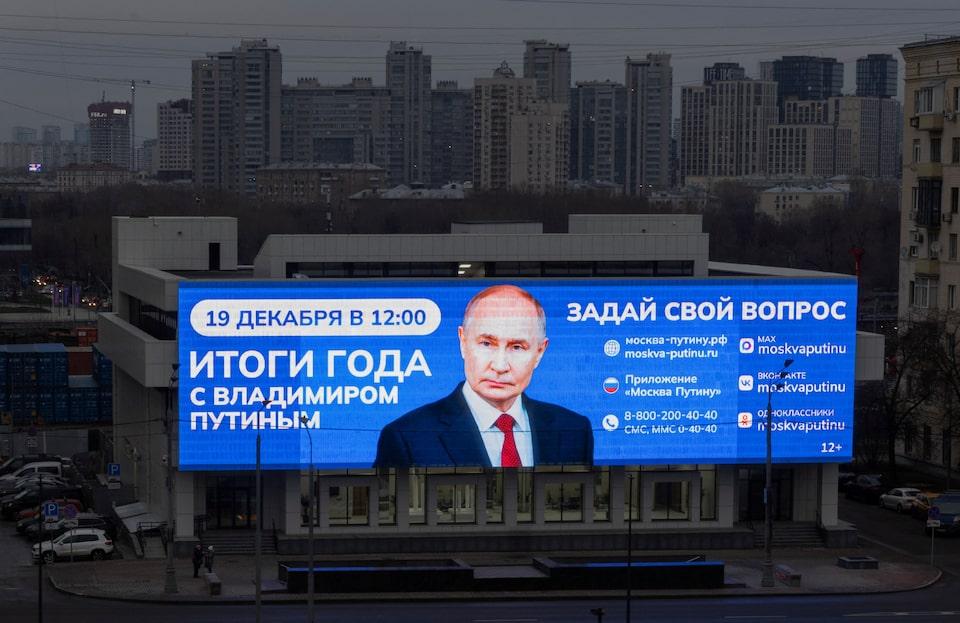
Putin fields questions from journalists, ordinary people War in Ukraine is top issue at annual press conference EU sets aside plan to use Russian frozen assets Some rogue comments flash up on screen during the event MOSCOW, Dec 19 (Reuters) - President Vladimir Putin offered no compromise on his terms for ending the war in Ukraine on Friday and accused the European Union of attempting "daylight robbery" of Russian assets. Putin set out the Kremlin's stance on the war in the opening moments of his annual end-of-year press conference, a marathon event that typically runs for some four hours. Sign up here. He said he did not see readiness on the Ukrainian side to agree a peace deal, but there were "certain signals" it was willing to engage in dialogue. "The only thing I want to say is that we have always said this: we are ready and willing to end this conflict peacefully, based on the principles I outlined last June at the Russian Ministry of Foreign Affairs, and by addressing the root causes that led to this crisis," Putin said. He was referring to a speech 18 months ago in which he demanded that Ukraine abandon its ambition of joining the NATO military alliance and withdraw entirely from four regions that Russia has claimed as its own territory. Kyiv refuses to give up land that Moscow's forces have failed to capture in nearly four years of war. ASSESSMENT OF BATTLEFIELD SITUATION Putin was speaking hours after European Union leaders set aside a plan to use as backing for a loan to Ukraine, deciding instead to borrow cash to help fund Kyiv's defence against Russia for the next two years. The EU leaders said they reserved the right to use Russian assets to repay the loan if Moscow fails to pay war reparations to Ukraine. Putin said the bloc had backed away from the original scheme because it would have faced serious repercussions, and it had damaged its status as a safe place to store assets. "Theft is not the appropriate term... It's daylight robbery. Why can't this robbery be carried out? Because the consequences could be grave for the robbers," he said. "This isn't just a blow to their image; it's an undermining of trust in the euro zone, and the fact that many countries, not just Russia, but primarily oil-producing countries, store their gold and foreign exchange reserves in the euro zone." ON-SCREEN GLITCHES After nearly four years, the war stands at a delicate juncture as U.S. President Donald Trump pushes for a peace deal on terms that Ukraine and its European allies fear will be slanted towards Russia. Russia says it is waiting to hear from Washington how its draft peace proposals have been modified following consultations between the United States, Ukraine and the Europeans. The state of the conflict - and the question of when it will end - dominated the first phase of the "Direct Line" event, which Putin has held in different formats most years since 2001. He typically uses it to field dozens of questions on everything from nuclear weapons to the price of eggs. Some are posed by journalists and others by ordinary Russians, who can submit them online or by phone. The Kremlin said it had received more than 2.6 million questions in advance. It styles the event as a demonstration of Putin's openness to respond to questions on any topic, and his willingness to respond to the concerns of citizens. But there were brief glitches in the choreographed proceedings when several sarcastic comments flashed up on a screen showing incoming text messages. "Not a direct line, but a circus" said one of the messages, which was shown on live TV before the camera moved away. STATE OF THE FRONT LINES Putin laid out a detailed assessment of the battlefield situation, saying Russia was advancing along the entire front line and Ukrainian forces were in retreat. At one point he gave the floor to Naran Ochir-Goryaev, a senior lieutenant and decorated Hero of Russia who described his part in Russia's storming of the Ukrainian town of Siversk. Putin apologised to the widow of a soldier killed in action, who said her family had not yet received the compensation due to them. Ukraine says Russian gains are incremental and have come at the cost of huge casualties. It says it is fighting back in locations such as Kupiansk in the northeast, which Russia said it had captured last month. Kyiv has long called for a ceasefire and said it does not believe that Putin is serious about seeking peace. Russia says it is Ukraine that is refusing to come to the table. Putin said a sharp slowing in the Russian economy - to 1% growth this year from 4.3% in 2024 - was the result of conscious actions by the central bank to bring down the rate of inflation. While his press conference was under way, the bank - under heavy pressure from businesses, banks and some politicians to bring down interest rates - announced it was cutting its key rate by half a percentage point to 16%. https://www.reuters.com/world/europe/putin-talk-war-peace-marathon-news-conference-2025-12-18/
2025-12-18 21:29
Order directs PJM to implement rules that allow power plants to cut output to the grid Analyst group sees 'major victory' for existing gas, nuclear plants WASHINGTON, Dec 18 (Reuters) - The U.S. energy regulator on Thursday directed the largest U.S. grid operator, PJM Interconnection, to establish rules on the connection of artificial intelligence-driven data centers and other large electricity loads located next to power plants. Backers of AI and other facilities that consume large amounts of power say that co-locating them near power plants offers efficiency benefits, including cutting the need for new transmission lines. Opponents say it can damage grid reliability and raise power bills for surrounding communities by reducing electricity available for public use. Sign up here. The Federal Energy Regulatory Commission said the move will protect consumers in the mid-Atlantic region that serves about a fifth of Americans in 13 states and the District of Columbia. Laura Swett, the FERC chairman, said the order was a "monumental step towards fortifying America's national and economic security in the AI revolution," and would ensure power rates remain "just and reasonable." Washington policy advisory firm Capstone called the order a "major victory" for existing nuclear and gas plants, as it directs PJM to implement rules that allow power stations to reduce output to the grid to serve new behind the meter customers such as data centers. Power bills for the region are expected to continue to rise after PJM on Wednesday reported fresh record-high capacity prices that reflected electricity demand by data centers overtaking supplies. The expansion of Big Tech's data centers has driven up so-called capacity prices in PJM by about 1,000% over a roughly two-year period, intensifying energy affordability problems for those living and working in the region. Rising costs in PJM have hit power bills in the grid's territory, with some areas seeing a more than 20% jump in utility bills starting from last summer. FERC took aim at PJM's open access transmission tariff, which the operator says governs its services in the region to allow for a fair and competitive wholesale electricity market. The agency said the tariff was "unjust and unreasonable due to a lack of clarity and consistency in the rates, terms, and conditions." It directed PJM to revise its tariff to detail the terms and conditions for interconnection customers to follow when using generating facilities to serve co-located load. PJM did not immediately respond to a request for comment. https://www.reuters.com/business/energy/us-energy-regulator-directs-pjm-launch-rules-ai-connections-2025-12-18/

2025-12-18 21:08
One of the ships sailed away from Jose's anchorage on Thursday Most oil exports remain on hold amid the U.S. blockage threat PDVSA on Wednesday resumed loading crude and fuel cargoes Venezuela's crude exports have fallen sharply Dec 18 (Reuters) - Venezuela on Thursday authorized two very large crude carriers (VLCC) to set sail for China, according to two sources familiar with Venezuela's oil export operations, which would be only the second and third supertankers to depart the country since the U.S. seized a ship carrying Venezuelan oil last week. The U.S. has said it would not allow vessels under sanction to leave Venezuelan waters. The departing tankers, each carrying around 1.9 million barrels of Venezuelan Merey heavy crude according to internal documents from state company PDVSA, are not on the U.S. current sanctions list. Sign up here. The ships plan to navigate with their tracking transponders switched off from Venezuela's main oil port of Jose, one of the sources said. One of them had already sailed away from Jose's anchorage, where many loaded vessels have been waiting for instructions to depart since the U.S. seized the ship last week, monitoring service TankerTrackers.com said after analyzing Thursday's satellite images. Both tankers have been carrying Venezuelan oil in recent years, according to the PDVSA internal documents. Many vessels that provide false location data to disguise their real position while transporting Iranian, Russian or Venezuelan oil are not under U.S. sanctions. However, they are part of the so-called "shadow fleet" of ships that are typically unregulated by Western insurers and maritime service providers. The shadow fleet is considered exposed to possible punitive measures from the U.S., shipping analysts have said. In the case of Venezuela, Washington has said it is only targeting vessels under U.S. sanctions as part of a "blockade" announced by President Donald Trump this week. Of 75 oil tankers currently in Venezuela that are part of a "shadow fleet" of ships that typically navigate with transponders off to disguise their locations, around 38 have been sanctioned by the U.S. Treasury, according to data from TankerTrackers.com, updated this week. Of those, at least 15 are loaded with crude and fuel, it added. PDVSA on Wednesday resumed loading crude and fuel cargoes after suspending operations at terminals on Sunday due to a cyberattack, although most exports have remained on hold due to the U.S. blockage threat. "The blockade announcement caught the company by surprise," said a PDVSA source, who declined to be identified. "We have had a lot of meetings with customers since, and most of them are willing to take their cargoes out if there is any guarantee that unsanctioned vessel will not be targeted." Venezuela's crude exports have fallen sharply from the more than 900,000 barrels per day it shipped in November since the U.S. ship seizure. U.S. oil major Chevron (CVX.N) , opens new tab, which has continued to ship Venezuelan crude under a U.S. authorization, exported a crude cargo on Thursday bound for the U.S., LSEG data showed. Chevron said this week its operations in Venezuela continue without disruption, without providing details. Venezuela's government called Trump's blockade a "grotesque threat" in a statement on Tuesday, saying it violates international law, free commerce and the right of free navigation. https://www.reuters.com/business/energy/venezuela-authorizes-two-unsanctioned-loaded-oil-supertankers-depart-sources-say-2025-12-18/

2025-12-18 21:00
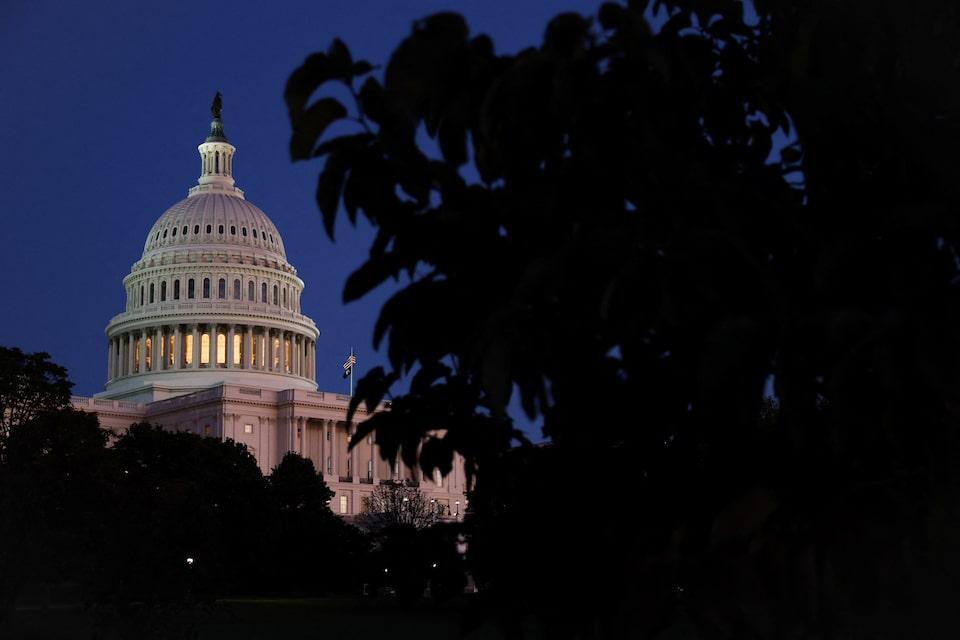
Dec 18 (Reuters) - The U.S. House of Representatives passed legislation on Thursday that would streamline environmental reviews and speed permitting for large energy infrastructure projects, data centers and factories. The goals of the bill are in line with President Donald Trump's agenda to expand domestic energy, mining and other industries, but conservationists said looser environmental standards risk clean air and public water supplies. Sign up here. Congress has tried for several years to pass permitting reform legislation. The bill lost support from clean energy advocates following last-minute changes by a small group of Republicans who wanted to preserve President Trump's ability to block permitted offshore wind farms. The SPEED Act, sponsored by Republican Bruce Westerman, faces opposition in the Senate from Democrats who want the legislation to benefit clean energy and related transmission projects. The bill passed with 11 Democratic votes despite concerns about the amendments. Energy industry groups welcomed the 221-196 bill passage on Thursday, saying it is the first "meaningful" reform of the Nixon-era National Environmental Policy Act, which builders of large projects in many sectors have blamed for slow approvals. “Today’s vote marks a turning point to fix America's broken permitting system and lower energy costs for every American," said Anne Bradbury, CEO of oil and gas lobby group AXPC. Environmental groups urged the Senate to reject the bill. "The bill gives industry a free pass while casting aside science and public input. This will jeopardize access to clean air and safe drinking water for communities already burdened by pollution and climate risks,” said Camden Weber, climate and energy policy specialist at the Center for Biological Diversity. A solar industry trade group said the bill did not remedy what it called unequal treatment of renewable energy resources by the federal government, which under Trump has frozen progress on permits for wind and solar projects. "Permitting reform that prioritizes certainty and fairness will help deliver affordable energy to the American people," Abigail Ross Hopper, president of the Solar Energy Industries Association, said in a statement. https://www.reuters.com/world/us/us-house-passes-legislation-speed-infrastructure-approvals-2025-12-18/
2025-12-18 20:43
LONDON, Dec 18 (Reuters) - Gold exports from Switzerland fell 15% month on month in November as shipments to India dropped to their lowest since February, Swiss customs data showed on Thursday. Demand in India has been affected by a price rally which sent bullion to a record high of $4,381 per troy ounce in October. Spot prices are up 65% so far this year, heading for their biggest annual gain in 46 years, amid demand for safe-haven assets. Sign up here. The Swiss data showed that gold exports to India fell to 2 metric tons in November from 26 tons in October, while supplies to China, another major bullion consumer, climbed to 12 tons from 2 tons. Gold exports from Switzerland, the world's biggest bullion refining and transit hub, to Britain, home to the world's largest over-the-counter gold trading hub, jumped to 45 tons last month, the highest since June, from 9 tons as bullion kept coming back from U.S. stocks. Swiss total gold exports and supplies to key markets* (in kgs): * Source: Swiss customs. Data subject to revision. https://www.reuters.com/world/china/swiss-gold-exports-drop-november-shipments-india-plunge-2025-12-18/

2025-12-18 20:33
Dec 18 (Reuters) - The Bank of Mexico lowered its benchmark interest rate by 25 basis points on Thursday, signaling confidence that inflation is still on track to return to target by late next year despite an increase in near-term inflation risks. The reduction, which was widely expected by analysts, brings the rate to 7.00%, its lowest level since April 2022. Sign up here. The decision by the central bank's five-member governing board was divided, the bank said in a statement. Deputy Governor Jonathan Heath voted to hold the rate at its previous level for the fifth consecutive rate decision. The bank's forward guidance shifted modestly in Thursday's announcement, with the board set to "evaluate the timing for additional reference rate adjustments." The guidance "is a signal that a pause is likely at the next meeting and the next moves in rates will be data-dependent," said Capital Economics' Liam Peach. Thursday's rate cut comes after Mexican inflation accelerated in November, landing slightly above market expectations. Annual headline inflation sped up to 3.80% in November from 3.57% the month prior. The closely watched core index, which strips out volatile items like energy and food prices, rose from 4.28% to 4.43% in November. The board on Thursday also raised its own inflation projections for the fourth quarter of 2025 and the first two quarters of 2026, crediting the revision mostly to services inflation easing more slowly than expected. Still, Banxico, as the central bank is known, projects headline inflation will return to the bank's 3% target by the third quarter of 2026. Sticky core inflation has loomed over Banxico's rate-cutting cycle. Heath has criticized his colleagues' optimism, saying Banxico's forecasts faced a "credibility crisis" given what he said is the implausibility of reaching the 3% inflation goal in just a few months' time. A Reuters poll published ahead of Thursday's rate cut showed analysts were divided over whether Banxico will pursue another reduction early next year. Half the respondents said they expect one or two more cuts by the end of March, with the rest forecasting a pause in the long-easing cycle. Pantheon Macroeconomics' chief Latin America economist Andres Abadia said he expects rate cuts will be paused in early 2026, "resuming only if core inflation moderates sustainably and the Mexican peso remains stable." Banxico on Thursday warned that economic activity is expected to remain weak in the fourth quarter, which the board cited as a downside inflationary risk and said factored into its decision to cut the rate. https://www.reuters.com/world/americas/bank-mexico-lowers-benchmark-interest-rate-700-2025-12-18/