2024-10-09 06:36
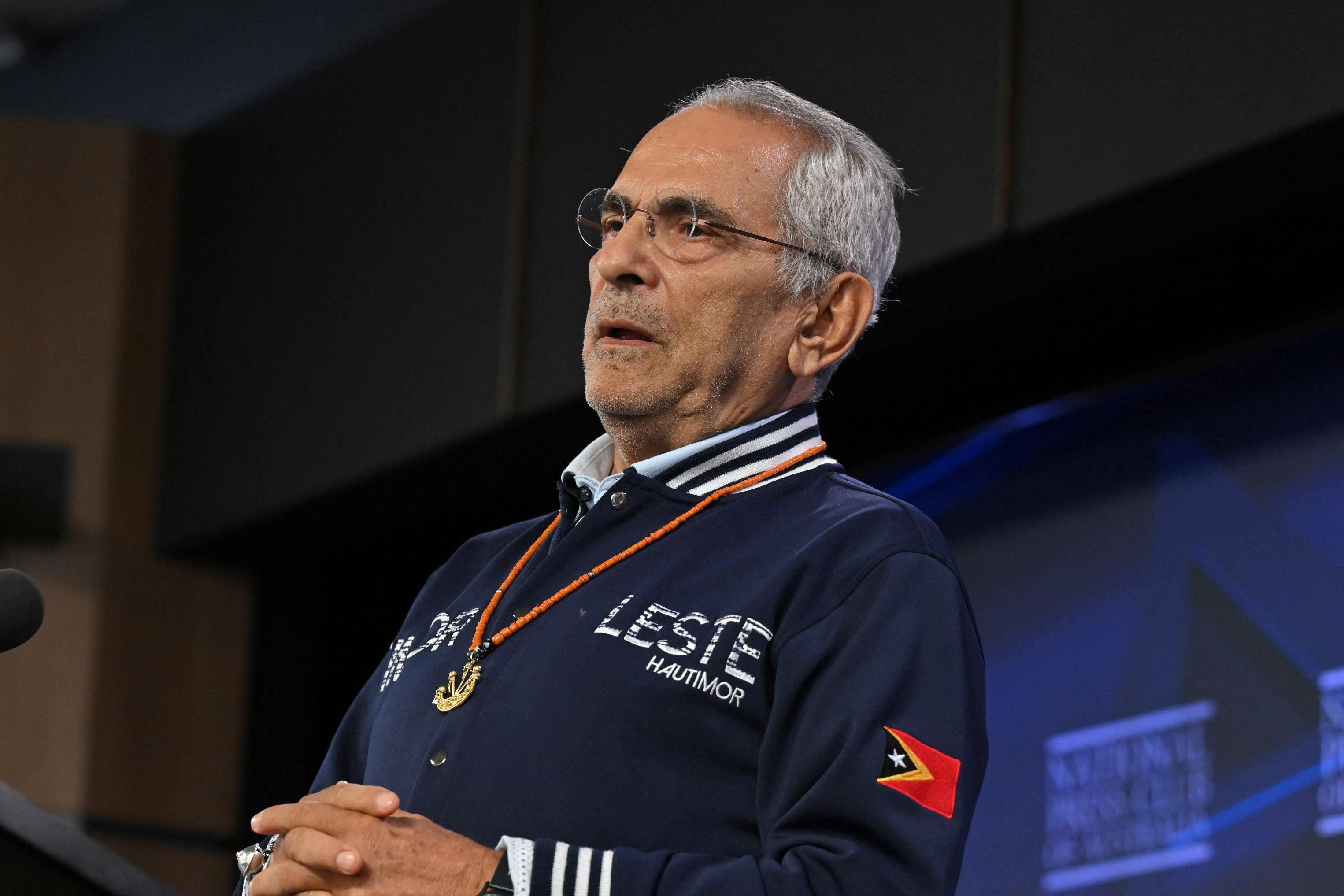
CANBERRA, Oct 9 (Reuters) - East Timor has talked with Chinese firms including state-owned Sinopec (600028.SS) , opens new tab about developing the stalled Greater Sunrise gas field, President Jose Ramos-Horta said on Wednesday, after disagreements with Australia over the shared field's future. The field, whose revenues were estimated at $65 billion in 2018, is vital to the economy of the poor Southeast Asian country but has been stalled for decades due to disagreements with Australia, which shares the field, and operator Woodside Energy (WDS.AX) , opens new tab, which is meant to spearhead the project's development. A bitter dispute over a maritime boundary was resolved in 2018. Now the main hurdle is disagreement over whether to pipe the gas to a new liquefied natural gas (LNG) plant in East Timor or to an existing LNG hub in Darwin. Ramos-Horta has previously suggested East Timor could bring in new partners like China if the deal is not made on their terms, raising concerns in Australia about growing Chinese power and influence in the pacific region. Ramos-Horta told Reuters that East Timor had talked with a number of private and state-owned Chinese firms and that representatives of some of these had visited as part of a recent Chinese business delegation. Asked whether Sinopec was among those companies, Ramos-Horta said "Sinopec has been in touch". Sinopec, officially known as China Petroleum & Chemical Corp, did not immediately respond to a request for comment. Ramos-Horta was speaking after delivering a speech in Canberra at which he said: "We look for partners. If Australia doesn't feel like doing it, that is totally understandable. Then either we talk with the Chinese or the Kuwaitis." East Timor and China upgraded their bilateral ties last year during a visit by Prime Minister Xanana Gusmao to Beijing, where he met President Xi Jinping. They signed an agreement to cooperate more closely on agriculture and infrastructure development. The deal also provided scope for Chinese government and commercial loans. The development of the Greater Sunrise field is critical to East Timor's economy as its main source of revenue - the Bayu Undan oil and gas field - is exhausted and stopped exporting gas last year. Sign up here. https://www.reuters.com/business/energy/east-timor-talked-with-sinopec-other-chinese-firms-over-stalled-multi-billion-2024-10-09/
2024-10-09 06:35
Fast Retailing's profit likely rose 24% to 478.3 billion yen Key factors: Japan's fall/winter sales, China business recovery Shares up 43% in 2024, outperforming Nikkei's 16% rise TOKYO, Oct 9 (Reuters) - The Japanese owner of casual wear giant Uniqlo is projected to beat its own forecast in what would be a third straight year of record profits as its brand makes inroads in western markets and its business in China recovers. Fast Retailing's (9983.T) , opens new tab operating profit in the 12 months through August likely rose 24% from a year earlier to 478.3 billion yen, based on the average of 15 analyst estimates compiled by LSEG ahead of the company's earnings on Thursday. That's marginally higher than the company's 475 billion yen forecast, which it lifted in July citing a strong performance in the second half. Fast Retailing's shares have been on a tear, reaching a record high this week. Key factors going forward will be sales of fall and winter items in Japan and whether the company can reinvigorate its business in China, according to independent analyst Mark Chadwick. "Investor attention will turn to whether Fast Retailing's measures in Greater China successfully reverse the earnings decline caused by weak consumer sentiment and increased competition," Chadwick wrote on the Smartkarma platform. With more than 900 stores in China, Fast Retailing has long been seen as a bellwether for the retail sector in the world's second-biggest economy. COVID restrictions weighed on results there for years, but now the challenge is a sluggish economy that has weighed on consumer confidence. Greater China CEO Pan Ning acknowledged in July that the market is maturing, with the company scaling back store openings and adopting a scrap and build strategy for underperforming locations. When COVID lockdowns depressed sales in China, the company focused more on expansions in North America and Europe. Both sectors delivered strong sales and profits through the first nine months of fiscal 2024. Company founder Tadashi Yanai aims to make Fast Retailing the world's biggest fashion retailer, with the operators of Zara (ITX.MC) , opens new tab and H&M (HMb.ST) , opens new tab standing in the way. He believes consumers are more focused on value than luxury in a post-COVID world, a trend that works in Uniqlo's favour. Yanai, Japan's richest man, is scheduled to speak at the company's earnings briefing on Thursday, as well as Uniqlo president Daisuke Tsukagoshi, whom Yanai has spoken of as a possible successor. Fast Retailing's shares have climbed 43% so far in 2024, outperforming a 16% advance in the benchmark Nikkei index (.N225) , opens new tab. Sign up here. https://www.reuters.com/business/retail-consumer/uniqlo-owner-seen-posting-24-annual-profit-surge-brands-overseas-push-2024-10-08/

2024-10-09 06:31
Oct 9 (Reuters) - Argentina captain Lionel Messi is ready to return to their line-up when they play Venezuela in the CONMEBOL World Cup qualifiers, but midfielder Alexis Mac Allister's availability is in doubt, manager Lionel Scaloni said. Argentina were boosted by the return of Messi for their World Cup qualifiers against Venezuela and Bolivia after the 37-year-old recovered from a right ankle injury, which he picked up during the Copa America final against Colombia in July. Messi, who plays for Major League Soccer club Inter Miami, had missed their qualifiers against Chile and Colombia. "Messi is fine. He played several games for his team in recent weeks, after not being in the last call-up, which was what we had agreed because he needed to recover and get more minutes," Scaloni told reporters on Tuesday. "Leo is training with the squad and is ready to be part of the team to play against Venezuela, who will be a great rival." Liverpool's Mac Allister was replaced at half time during the club's 1-0 win over Crystal Palace in the Premier League last weekend. "He (Mac Allister) is training separately. We'll see if he makes it to the first game," Scaloni said. "For now, he hasn't been able to join us, and, well, we'll make the decision if he's part of the squad or on the bench or if he plays on Thursday. But it's difficult for him to make it today. "I think we have to take care of him. He's a guy who has a lot of games under his belt and that's the situation today. We hope we don't lose any more players because the situation can change later." Argentina are set to face Venezuela at the Monumental Stadium of Maturin on Thursday, and with the team training at Inter Miami's training centre in Florida, Scaloni said his side was worried about Hurricane Milton. Hurricane Milton barreled toward Florida's battered Gulf Coast as an enormous Category 5 storm on Tuesday, triggering massive traffic jams and fuel shortages as officials ordered more than 1 million people to flee before it slams into the Tampa Bay area. "We work, we work calmly, the truth is that the training place is perfect, we work well, but it is always around this issue and especially when there is the security issue, it is a delicate issue," Scaloni said. "The match is important, but safety is much more important. So when you talk about wind, hurricanes, that it happens near, that it happens far away, that the airport closes, well, whether you like it or not, it worries you. "We are worried and we are waiting to see if it is true that we can leave tomorrow, they say that we will be able to leave in the afternoon. We don't have any certainties, but well, on that side we are worried." Sign up here. https://www.reuters.com/sports/soccer/argentina-skipper-messi-ready-play-venezuela-mac-allister-doubt-2024-10-09/

2024-10-09 06:18
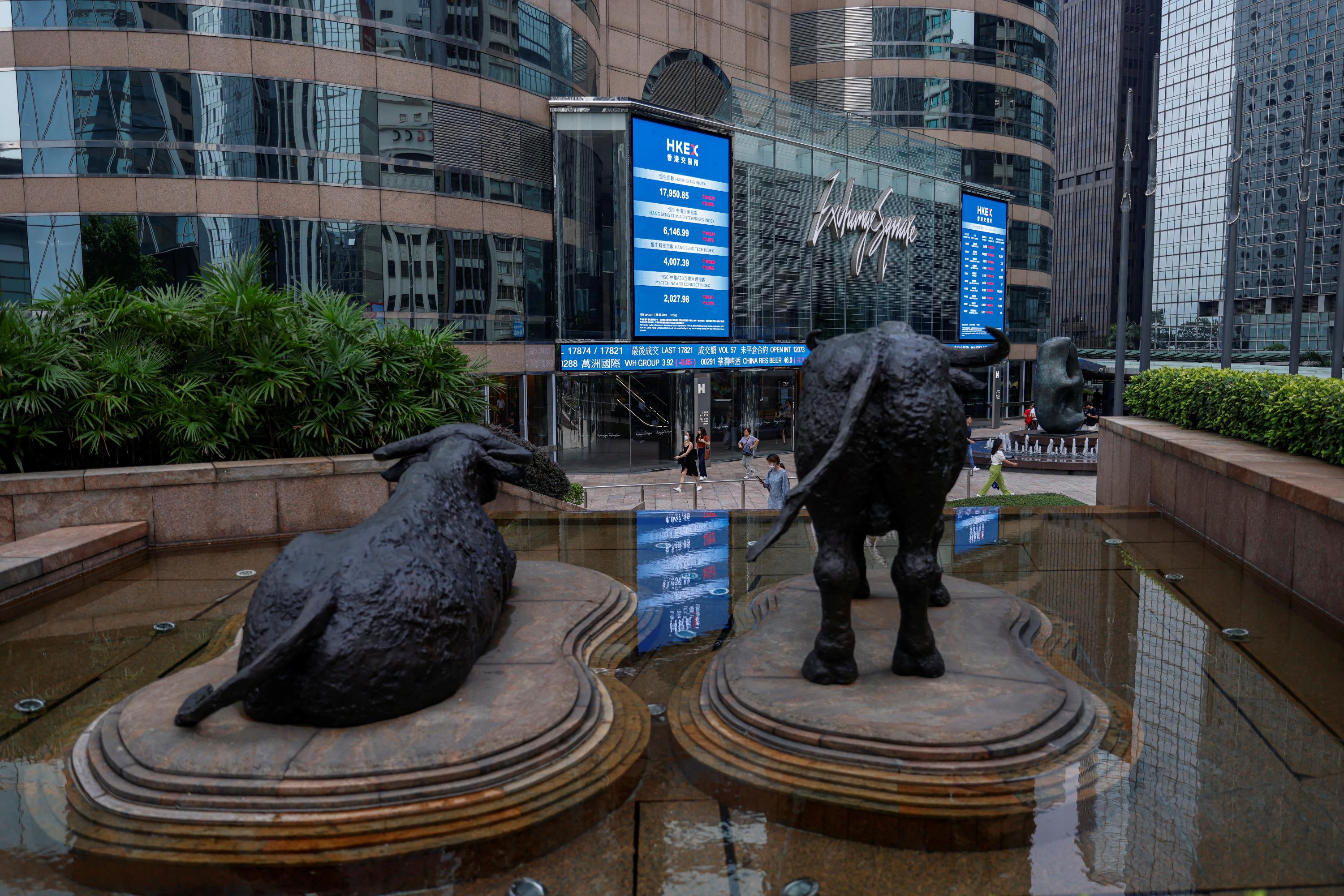
Dow, S&P close at record highs China stocks register biggest daily drop since pandemic US yields move higher on slower Fed pace Graphic: World FX rates NEW YORK, Oct 9 (Reuters) - Global stocks advanced on Wednesday along with U.S. Treasury yields, as minutes from the Federal Reserve's September meeting indicated more rate cuts, while investors awaited inflation data for further clues on the central bank's interest rate path. Minutes from the meeting showed a "substantial majority" of U.S. Federal Reserve officials supported beginning an era of easier monetary policy with an outsized half-point rate cut, but there appeared even broader agreement that the initial move would not commit the Fed to any particular pace of rate reductions in the future. U.S. stocks added to gains after the minutes, with both the Dow and S&P 500 closing at record levels. The Dow Jones Industrial Average (.DJI) , opens new tab rose 431.63 points, or 1.03%, to 42,512.00, the S&P 500 (.SPX) , opens new tab rose 40.91 points, or 0.71%, to 5,792.04 and the Nasdaq Composite (.IXIC) , opens new tab rose 108.70 points, or 0.60%, to 18,291.62. Investors have scaled back expectations for aggressive rate cuts by the Fed after last week's strong U.S. jobs report. They will also monitor inflation data on Thursday in the form of the consumer price index (CPI) for insight on the Fed's rate path, while the corporate earnings season kicks off with bank earnings on Friday. "The minutes were also further confirmation that they believe that they've won the fight on inflation so that tomorrow's CPI number shouldn't be too much of a surprise," said Lindsey Bell, chief strategist at 248 Ventures in Charlotte, North Carolina. "There's an air of optimism in the market since the Friday jobs report. Investors remain optimistic on the soft-to-no landing scenario." After completely pricing in a cut of at least 25 bps last week, with a 35.2% chance of a second consecutive cut of 50 bps, the market is betting on a 79.4% chance of a 25 basis point cut at the Fed's November meeting, and a 20.6% chance it will hold rates steady, CME's FedWatch Tool , opens new tab showed. The expectations for a cut in November decreased slightly after the Fed minutes. Dallas Federal Reserve Bank President Lorie Logan said she supported last month's outsized rate cut but wants smaller reductions ahead, given "still real" upside risks to inflation and "meaningful uncertainties" over the economic outlook. MSCI's gauge of stocks across the globe (.MIWD00000PUS) , opens new tab advanced 3.61 points, or 0.43%, to 848.39 and was on track for a second straight session of gains. In Europe, the STOXX 600 (.STOXX) , opens new tab index closed up 0.66%, buoyed in part by automakers as the indexed bounced back from a decline in the prior session. A rally in China stocks short-circuited, with both the Shanghai Composite index (.SSEC) , opens new tab and CSI300 index (.CSI300) , opens new tab suffering their biggest one-day percentage drops since February 2020. China's main information office said the finance ministry will detail plans on fiscal stimulus to boost the economy at a news conference on Saturday. U.S. yields were higher in the wake of Logan's comments and the Fed minutes, as well as an auction of 10-year notes. The yield on benchmark U.S. 10-year notes gained 3.8 basis points to 4.073% while the 2-year note yield, which typically moves in step with interest rate expectations, rose 4.3 basis points to 4.022%. The 10-year yield topped 4% for the first time in two months earlier in the week. The dollar index , which measures the greenback against a basket of currencies, climbed 0.42% to 102.92, with the euro down 0.38% at $1.0938. Against the Japanese yen , the dollar strengthened 0.76% to 149.32. Sterling weakened 0.34% to $1.3059. Crude prices fell for a second straight session on rising U.S. crude inventories, while the risk of Iranian supply disruptions caused by the Middle East conflict and Hurricane Milton in the United States curbed price declines. U.S. crude settled down 0.45% to $73.24 a barrel and Brent fell to settle at $76.58 per barrel, down 0.78% on the day. Sign up here. https://www.reuters.com/markets/global-markets-wrapup-1-2024-10-09/
2024-10-09 06:09
LONDON, Oct 9 (Reuters) - The dollar just had its best week in two years, showing once again how dangerous it can be to bet against the U.S. currency if the rest of the world just won't let it drop. The DXY index (.DXY) , opens new tab, which tracks the dollar against the most widely traded global currencies, surged more than 2% last week - a stunning whiplash, not least for the many speculators who were short on the greenback and waiting for it to swoon. While the rally was supercharged partly by the blowout U.S. employment report - and related rethink on the Federal Reserve's interest rate trajectory - the dollar's rebound was well underway before Friday. The payrolls figures merely put the icing on the cake. The main catalyst for the renewed dollar strength was the clear signals coming from central banks in Europe and Japan that any efforts by the Fed to up the ante on rate cuts would be matched in kind. The rest of the world's major central bankers certainly took note of the Fed's outsize 50 basis point opening salvo last month in what it flagged as a 250 basis point easing cycle. The move was followed by a series of pointed comments from chiefs and governors of the European Central Bank, Bank of England and Swiss National Bank. They all suggested their own decks were being cleared for accelerated easing as well. While the Bank of Japan had been moving in the opposite direction, both the BoJ and the country's new prime minister threw cold water on plans to further 'normalize' policy with higher rates following the Fed's large cut. Add to that signs that the SNB is already intervening in currency markets to cap the rise of the Swiss franc, ongoing intervention from the Reserve Bank of India, and even a rebound in China's foreign currency reserves, and it's easy to see why the dollar's long-forecast downward path has been frustrated. 'STAGGERING' ACCUMULATION OF US ASSETS But the really big capital shifts buoying the dollar in less in the public than the private space and reflect the seemingly insatiable appetite of overseas investors for U.S. assets. Societe Generale's currency strategist Kit Juckes this week puzzled over why the dollar is rising again so shortly after the Fed has started cutting rates. He noted that the two previous multi-year dollar rallies over the past 50 years were completely reversed after Fed easing commenced. Juckes highlighted data showing that Japanese trust funds have already resumed buying U.S. Treasuries and overseas demand for dollar call options is rising. The quick return to already overcrowded U.S. markets is, in his words, "taking U.S. exceptionalism to new levels." So the dollar remains stubbornly over-valued: the real, broad trade-weighted index is still some 30% above levels seen 10 years ago. This is creating growing disquiet about the sheer scale of global exposure to U.S. assets, the peculiar twist that has on the dollar exchange rate and its effect on U.S. competitiveness and the reemergence of anxiety about 'global imbalances' that was prevalent 20 years ago. SocGen strategist Juckes highlighted that foreign investors had increased their net holdings of U.S. assets by a "staggering" $40 trillion since 2020 - making it all the more remarkable that this thirst hasn't yet been slaked. "I'm certain that a weaker dollar would help reduce some of the imbalances in the global economy, but if investors have so little confidence in their domestic policies and asset markets that they are already returning to the U.S., how does it happen?" he said. What's more, there's little or no sign that U.S. investors have the remotest interest in underperforming overseas markets. U.S. mutual fund numbers have seen net outflows from global equities over the last month, a fairly consistent trend since the Fed began raising interest rates in March 2022. So what could shake investors' unerring faith in the resilience of the U.S. economy, and by extension, the greenback? Geopolitical concerns are certainly as high as we've seen in many decades. But this, arguably, increases safe haven demand for dollars, encourages U.S. money to hunker down at home and enhances the attraction of unrivalled U.S. scale and liquidity. Couldthe U.S. election or threats to U.S. democracy and institutions rankle investors? Certainly a return of Donald Trump to the presidency following the Nov. 5 election may raise concerns, not least given Trump's well-aired support for both a weak dollar and political control of the Fed. But it's telling given that that even with the White House race on a knife edge, the world still appears determined to keep the dollar aloft. The opinions expressed here are those of the author, a columnist for Reuters Sign up here. https://www.reuters.com/markets/currencies/dollar-wont-fall-rest-world-wont-let-it-mike-dolan-2024-10-09/

2024-10-09 06:06
LITTLETON, Colorado, Oct 9 (Reuters) - Electric vehicle (EV) sales in the United States have soared by over 140% since the start of 2023, but additional growth may be hindered by a far slower and more uneven rollout of public charging stations. U.S. registrations of electric vehicles hit just over 3.5 million as of September 2024, according to the Alternative Fuels Data Center (AFDC). That's up from 1.4 million registrations in 2023, and marks the steepest ever growth rate in EV uptake in the country. However, installations of public EV charging stations have expanded by only 22% over the same period, to 176,032 units, AFDC data shows. That slower charging infrastructure rollout risks causing backlogs at charge points, and may dissuade potential buyers from making EV purchases if they expect uncertain wait times when needing to re-charge their cars. PAN-AMERICAN GROWTH The 2 million or so rise in EV registrations seen since 2023 has emerged throughout the country, although roughly 70% occurred within the 10 largest EV-driving states. Topped by California, Florida and Texas, that list also includes Washington state, New Jersey, New York, Illinois, Georgia, Colorado and Arizona. Collectively, those 10 states boosted EV registrations by nearly 1.5 million to just over 2.5 million, AFDC data shows. California remains by far the largest EV market, with registrations climbing by nearly 700,000 to 1.25 million as of September. Florida and Texas both have registrations around 250,000, while Washington, New Jersey and New York are the other only states with EV registrations of over 100,000. Rapid growth was also seen outside those main states, with 38 other states plus the District of Columbia all recording 100% or more growth in EV registrations this year. Oklahoma showed the largest year-over-year rise in EV registrations, posting a rise of 218% from 7,180 last year to nearly 23,000. Arkansas, Michigan, Maryland, South Carolina and Delaware all posted increases of 180% or more, while an additional 18 states posted increases of over 150%. This wide swell in EV registrations means that every state or district aside from North Dakota has at least 1,000 registered EVs as of September. NEVI MOMENTUM The key to further EV growth will be determined by a slew of factors, including whether current purchasing incentives are carried over to the next U.S. administration after the Nov. 5 presidential election. Those incentives play a key role in determining how competitive EVs remain relative to combustion-powered vehicles. A Kamala Harris administration is expected to maintain EV incentives, while Donald Trump has pledged he may cut federal EV support if he regains office. Of almost equal significance will be the span and density of public charging stations, which remain a critical factor for many would-be EV buyers. The National Electric Vehicle Infrastructure (NEVI) program launched by the Biden administration is a key driver of charge point growth and provides public funding to states to deploy a network of strategically-located EV chargers. The pace of charge point rollout has been far slower than anticipated, due to a number of factors including the difficulty of identifying and constructing suitable sites and the slow pace of utility connections to local grids. Shortages of key charge station equipment and of qualified technicians and installation teams have also constrained the build out pace. CHARGE POINT GROWTH As with EV registrations, 10 states account for a majority of the total 176,032 public EV chargers in place, and are home to just under 112,000 charge points. And seven of the 10 largest states with public charge points are also in the top 10 list of EV registrations: California (49,433), New York (11,114), Florida (9,763), Texas (8,637), Washington (5,817), Colorado (5,432) and Georgia (4,994). Massachusetts, Maryland and Virginia round out the top 10. Overall, Connecticut, Louisiana, Delaware and Indiana saw the fastest growth in EV charge point numbers, all posting growth rates of over 40% from the year before. An additional 38 states posted EV charge point gains of 20% or more. In terms of the number of EV charging units, 32 states and districts have 1,000 or more public EV charge points in place as of September 2024, AFDC data shows. Of the remainder, 13 states have between 500 and 999 charge points, while West Virginia, Montana, Wyoming, South Dakota, North Dakota and Alaska are the only states with fewer than 500 public EV chargers. Going forward, a majority of the growth in both EV sales and charge point installations is likely to remain in the largest EV-driving states. But the strong growth pace in EV registrations across every state over the past year indicates widespread interest in EV ownership, even outside the traditional strongholds. For that pace to be maintained, a denser charging network running coast to coast and including rural areas is required. Sign up here. https://www.reuters.com/markets/commodities/slow-charge-point-rollout-risks-stalling-us-ev-sales-momentum-maguire-2024-10-09/