2025-12-18 20:00
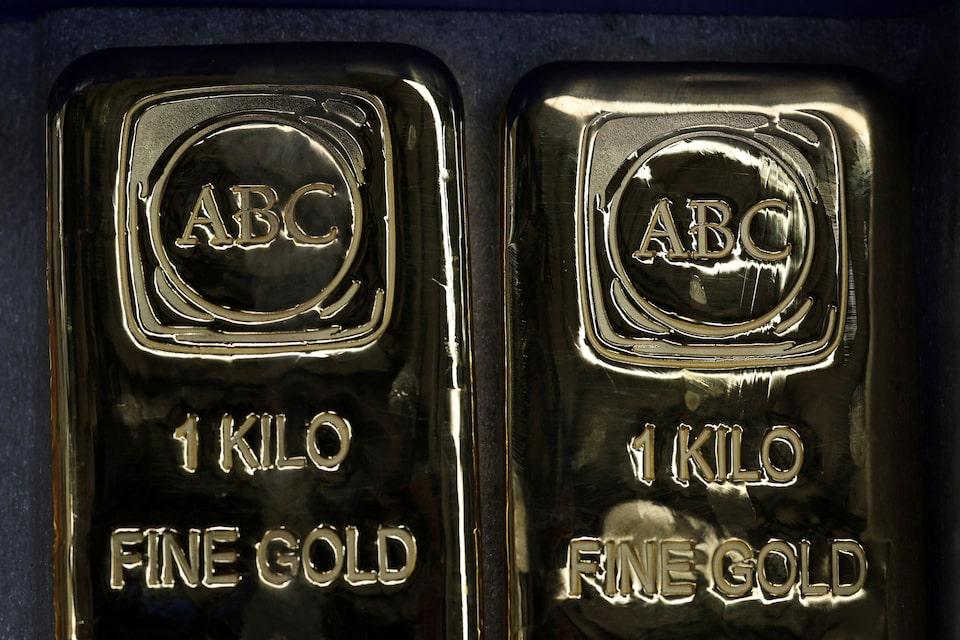
MELBOURNE, Dec 19 (Reuters) - Australia on Friday revised its expected resources earnings up 4% to A$383 billion ($252.5 billion) for the current financial year thanks to record gold prices, resilient iron ore prices and the failure of its currency to rise against the U.S. dollar as expected. Gold is set to become the country's second most valuable resource export after iron ore in the 2025-26 financial year, displacing liquefied natural gas, as concerns about geopolitical instability fuelled demand for the safe-haven metal, Australia's Department of Industry said in its September report. Sign up here. Since then, the outlook for Australia’s exports of resource and energy commodities has "improved markedly," it said in its December report. The department raised by A$14 billion the country's expected resource export earnings for the current financial year, which will bring earnings close to 2024-2025's A$385 billion. While that is still shy of the immediate post COVID-era peak of A$466 billion in 2022–2023, resources export earnings remained robust in historical terms, it noted. Support is coming from easier monetary and fiscal policy, investment driven by rising artificial intelligence usage as well as the energy transition, it said. Most of the revision was attributable to gold's record run. Australia expects the value of its gold exports to rise to A$69 billion in 2025–2026, driven by higher volumes and prices, up 15% from its September forecast of A$60 billion. It expects gold's export earnings to be A$74 billion in 2026–2027. Prices of gold hit a record of more than $4,350 a troy ounce in October. They are likely to remain strong at around $4,000 an ounce over 2026, the report said, before falling in 2027. Iron ore is expected to remain Australia’s largest earner, accounting for around a quarter of all resource and energy commodity earnings over the next two years. "In trend terms, prices are expected to decline slightly because of abundant supply and moderating steel demand," the government said. Iron ore prices for the current financial year are expected to be $87 a ton. For 2026-2027, the department raised its forecast by $1 to $83 a ton. Copper demand will benefit from data centres, it said. It revised up by 12% its copper price forecast for 2025-2026 to $10,658 from a September forecast of $9,694 and by 10% to $10,896 in 2026-2027 from an earlier forecast of $9,906. Elsewhere, the value of critical minerals exports is forecast to increase to A$14 billion in 2026–27 from around A$11 billion in 2024–25, due to a recovery in manganese exports, helped by rising exports of rare earths and antimony, it said. ($1 = 1.5168 Australian dollars) https://www.reuters.com/world/asia-pacific/gold-bonanza-australia-revises-resource-export-earnings-up-4-2025-12-18/
2025-12-18 19:52
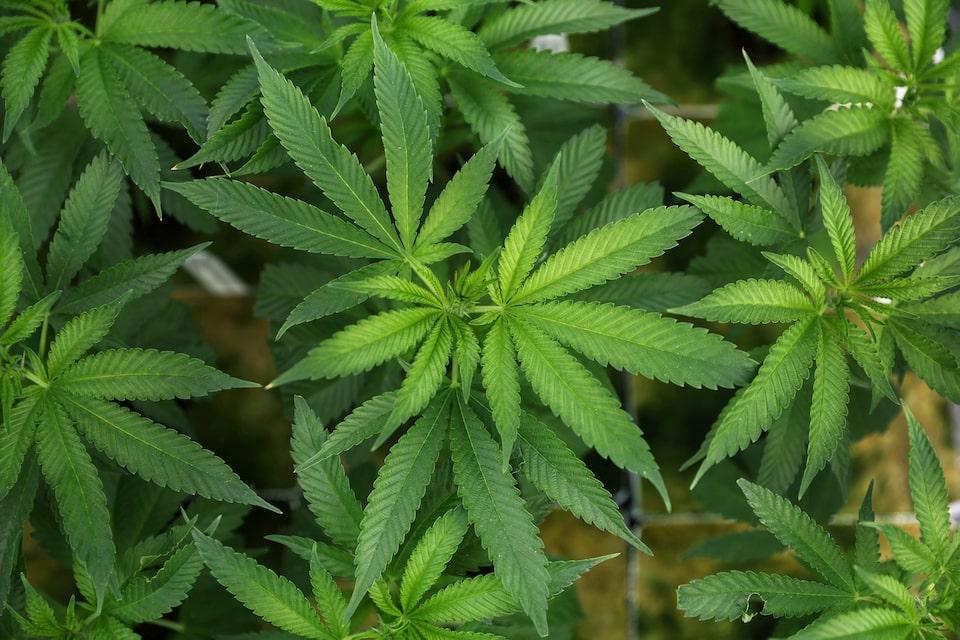
Reclassification could reshape cannabis industry, ease penalties Challenges remain for broad acceptance, banking access Some Republicans opposed Trump's move WASHINGTON, Dec 18 (Reuters) - U.S. President Donald Trump on Thursday signed an order directing the loosening of federal regulations on marijuana, a move that could further reverse decades of tough-on-weed policy. Trump's order instructs the attorney general to quickly move ahead with reclassifying marijuana. If that happens, the psychoactive plant would be listed alongside common painkillers, ketamine and testosterone as a less dangerous drug. Sign up here. Such a decision would represent one of the most significant federal changes to marijuana policy in decades. It could reshape the cannabis industry, unlock billions in research funding and open doors long closed to banks and investors. The Senate's Democratic leader, Chuck Schumer, welcomed the move, while dozens of lawmakers in Trump's own Republican Party blasted the decision. TRUMP SAYS SOME PATIENTS NEED ACCESS TO THE DRUG Marijuana will still remain illegal federally and subject to a patchwork of local laws across the country, Trump said. Some industry experts said congressional action was still needed to create more stable regulation. "We have people begging for me to do this, people that are in great pain for decades," Trump told reporters at the White House. But the teetotaling president also said that controlled substances are risky and that experimentation was of no interest to him. "I don't want it, okay," he said. "I'm not gonna be taking it. But a lot of people do want it. A lot of people need it." Senior administration officials said the primary purpose of the order was to increase medical research of marijuana and related products to understand their risks and potential for treatment. The Centers for Medicare and Medicaid Services plans to allow some beneficiaries to use hemp-derived CBD products as soon as April. Dozens of Republicans in the U.S. House of Representatives and Senate wrote to Trump on Thursday, pleading with him not to sign the order. "Reclassifying marijuana as a Schedule III drug will send the wrong message to America's children, enable drug cartels, and make our roads more dangerous," they said. Marijuana is the most widely used illicit drug in the world and the United States. Nearly one in five U.S. residents use it a year, according to the U.S. Centers for Disease Control and Prevention. Millions of Americans have been arrested for possession of the drug, even while growing businesses listed on stock exchanges sell cannabis-related products. Prosecutors, police and judges could take a lighter touch toward criminal prosecutions in response to growing acceptance. EASING DRUG REGULATIONS The Drug Enforcement Administration has to review the recommendation to list marijuana as a Schedule III drug under the U.S. Controlled Substances Act and will decide on the reclassification. The issue has been bogged down in bureaucratic process at the agency. Under the act, marijuana is listed as a Schedule I substance like heroin, ecstasy and peyote. That classification indicates it has a high potential for abuse and no currently accepted medical use. Schedule III drugs are seen as less addictive and as carrying legitimate medical uses. Even under a reclassification, marijuana would still be treated as a controlled substance on a federal level and its use subject to tight restrictions and criminal penalties. A patchwork of laws exists at the local level, from states where use and possession are fully legal to states where they are fully illegal. Since California first allowed medicinal use of marijuana in 1996, a 30-year trend has moved toward loosening regulation. CANNABIS STOCKS HAVE GAINED VALUE Stocks of cannabis-related companies gained on the news from Washington but fell between 3% and 12% at Thursday's close. U.S.-listed shares of Tilray dropped 4.2%, Aurora Cannabis (ACB.TO) , opens new tab fell 3.4%, SNDL slipped nearly 1.5% and Canopy Growth (WEED.TO) , opens new tab sank about 12% by the close. The stocks had earlier gained between 6% and 12% in afternoon trading before reversing course. At least two analysts said expectations that a mandate for cannabis banking would be included in the order, and then was not, could have caused some disappointment among investors. Funding remains one of the biggest challenges for cannabis producers, as federal restrictions keep most banks and institutional investors out of the sector, forcing pot producers to turn to costly loans or alternative lenders. A black market also thrives because of the high costs of doing business. "This shift marks an important step toward greater regulatory clarity and institutional acceptance of cannabis worldwide," said a spokesperson for Organigram Global, a cannabis company (OGI.TO) , opens new tab Most Americans tell pollsters they favor full legalization. During his 2021-2025 term in office, Democratic former President Joe Biden issued a blanket pardon for most federal marijuana possession charges and kickstarted the review of marijuana's status. After that review, the Department of Health and Human Services recommended moving marijuana to Schedule III classification. Trump has honed a reputation as a law-and-order Republican, bombing alleged drug in international waters and deploying military into cities to combat crime, efforts that have drawn legal scrutiny. But he has also bucked tradition to reward favored groups and individuals, including pardoning several who were convicted of federal violations related to drugs. https://www.reuters.com/legal/government/trump-moving-ease-us-marijuana-regulations-sparking-industry-hopes-2025-12-18/
2025-12-18 19:50
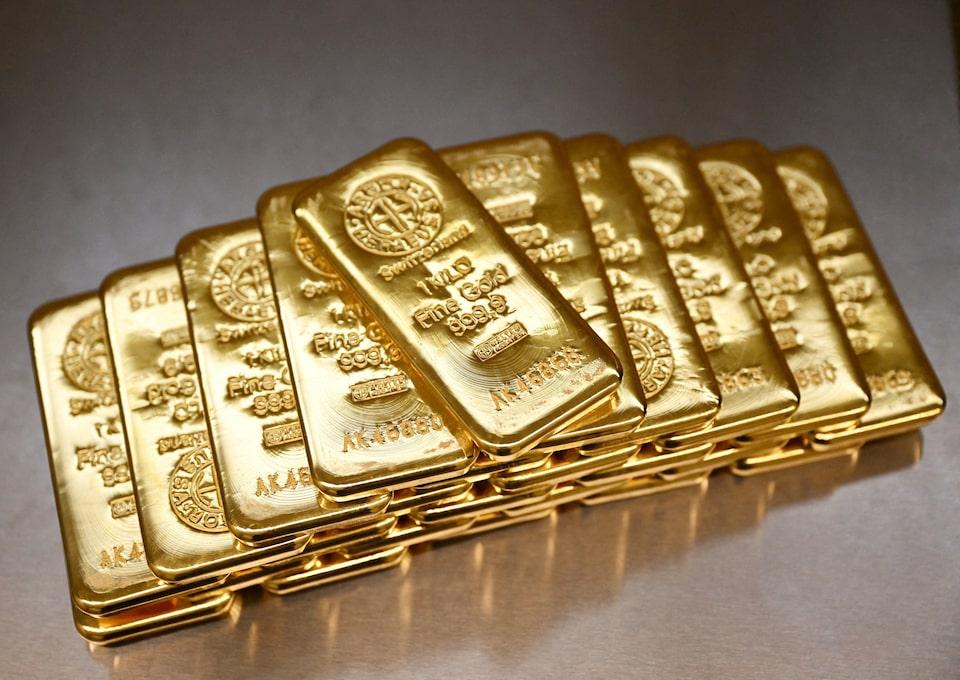
Goldman forecasts oil prices to decline by 2026 Copper remains favored due to strong demand and supply constraints US power markets face higher prices and potential outages Dec 18 (Reuters) - Goldman Sachs (GS.N) , opens new tab sees gold prices climbing 14% to $4,900 per ounce by December 2026 in its base case, it said in a note on Thursday, while citing upside risks to this view due to a potential broadening of diversification to private investors. In a note in which the bank discussed its views on commodities for 2026, Goldman Sachs said it expects structurally high central bank demand and cyclical support from U.S. Federal Reserve interest rate cuts to lift the price of gold. It continues to recommend long exposure in the yellow metal. Sign up here. Spot gold was trading at $4,334.93 per ounce at 1824 GMT on Thursday. The bank also forecast the price of copper to consolidate in 2026 and average $11,400 per metric ton under its base case that uncertainty over tariffs will linger until a possible announcement in mid-2026 that the U.S. will implement tariffs on refined copper in 2027. "Despite the recent rally in copper prices and our expected consolidation in 2026, it remains our 'favorite' industrial metal, especially in the long-run, as electrification - which drives nearly half of copper demand - implies structurally strong demand growth and as copper mine supply faces unique constraints," Goldman noted. Benchmark three-month copper on the London Metal Exchange was little changed at $11,721.50 per metric ton as of 1723 GMT on Thursday. It hit a record high of $11,952 last week. The bank forecast Brent and WTI crude oil to decline further to 2026 averages of $56 per barrel and $52 per barrel, respectively. "Barring large supply disruptions or OPEC production cuts, lower oil prices in 2026 will likely be required to rebalance the market after 2026," it added. Brent crude was trading at $60.04/bbl at 1711 GMT on Thursday. U.S. West Texas Intermediate crude was near $56.46/bbl. Goldman expects oil prices to hit their lowest point around mid-2026, as markets begin to anticipate a rebalancing. The note added that this will be driven by solid demand growth of about 1.2 million barrels per day, further declines in Russian supply if the war in Ukraine and sanctions persist, and slowing non-OPEC ex-Russia output. "We see net downside risks to our 2026-2027 oil price outlook," Goldman noted. However, the bank said it assumes oil prices will pick up in the fourth quarter of next year as the market starts pricing in a return to a deficit in the second half of 2027 and shifts focus to incentivizing long-cycle production. It added that it expects the prices of Brent and WTI to gradually recover to $80/bbl and $76/bbl, respectively, by late 2028. For natural gas, the bank said it forecasts 2026 Title Transfer Facility (TTF) at 29 euros per megawatt-hour (EUR/MWh) and 2027 TTF at 20 EUR/MWh, to incentivize additional gas demand, while it expects 2026 and 2027 U.S. gas prices to incentivize U.S. gas production growth at $4.60 per million British thermal units (mmBtu) and $3.80/mmBtu, respectively. Goldman Sachs said it expects U.S. power spare capacity to decline further as rapid power demand growth and coal retirements outweigh renewable and natural gas power builds. "As a result, US power markets are at risk of significantly higher prices and even outages. This risk is particularly acute in local power markets where data centers are booming, with 72% of all US datacenters sitting in 1% of US counties," it added. https://www.reuters.com/business/goldman-sees-gold-4900-by-december-2026-projects-oil-price-decline-copper-2025-12-18/
2025-12-18 18:09
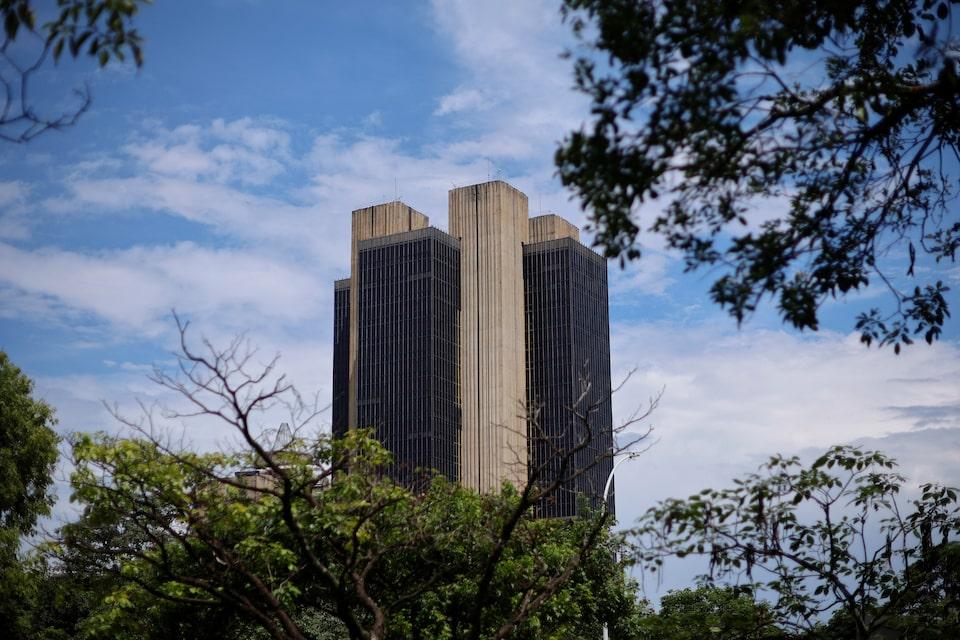
Brazil's central bank will stick to a data-dependent approach ahead of meeting Lula rules out pressure on central bank, but expects rate cut soon Central bank chief warns against assuming any single indicator will dictate decisions BRASILIA, Dec 18 (Reuters) - Brazil's central bank chief Gabriel Galipolo said on Thursday he and his fellow policymakers will stick to a data-dependent approach and offered no guidance on the next interest rate move, while President Luiz Inacio Lula da Silva said he "could smell" cuts coming soon. Galipolo kept all policy options open ahead of a monetary policy meeting next month. The central bank has kept its key rate at 15%, the highest level in nearly two decades, in an effort to ensure inflation falls to "around" the 3% target. Sign up here. "This means I'm not giving any kind of direction on what to do, nor am I closing any doors," Galipolo said at a press conference, stressing that the central bank prefers to wait and gather more information rather than give guidance on future steps. He emphasized it would be wrong to assume that any single factor would determine interest rate decisions, a point he said also applies to inflation projections. LULA RULES OUT PRESSURING CENTRAL BANK Speaking at a separate press conference, Lula ruled out pressuring the central bank to lower rates and voiced "full confidence" in Galipolo, but added that he expects an easing cycle to begin soon. "Just like we can smell rain coming, I'm sensing that very soon interest rates will start to come down," Lula said. The leftist leader has toned down criticism of the central bank for what he sees as excessively high borrowing costs since Galipolo, his nominee, replaced Roberto Campos Neto, an appointee of former President Jair Bolsonaro, in January. "The central bank has autonomy, I would never pressure Galipolo to take whatever action he needs to take," Lula said. "It's up to him to make the decision. I hope he's breathing the same air I'm breathing right now." NO DECISION YET FOR JANUARY MEETING Most economists in a weekly central bank poll expect the easing to start in March, though some are still betting on a cut in January. Galipolo said the central bank deliberately chose language that gives no indication of its future steps because "we haven't decided yet." Earlier on Thursday, the central bank projected inflation would be 3.2% in the third quarter of 2027, which could be close enough to the target for policymakers to be comfortable starting the easing cycle in January. But Galipolo declined to say whether that figure should be seen as "around" the target. He said that as policymakers moved away from creating expectations that specific wording could be interpreted as triggers for policy action, market participants have shifted their focus to other elements, including inflation projections. The central bank's economic policy director, Diogo Guillen, cautioned against a "mechanistic view" of inflation projections and added: "We will consume the data, which is more worthwhile than trying to anticipate or signal anything." https://www.reuters.com/world/americas/brazils-central-bank-keeps-options-open-lula-senses-rate-cut-ahead-2025-12-18/
2025-12-18 17:27
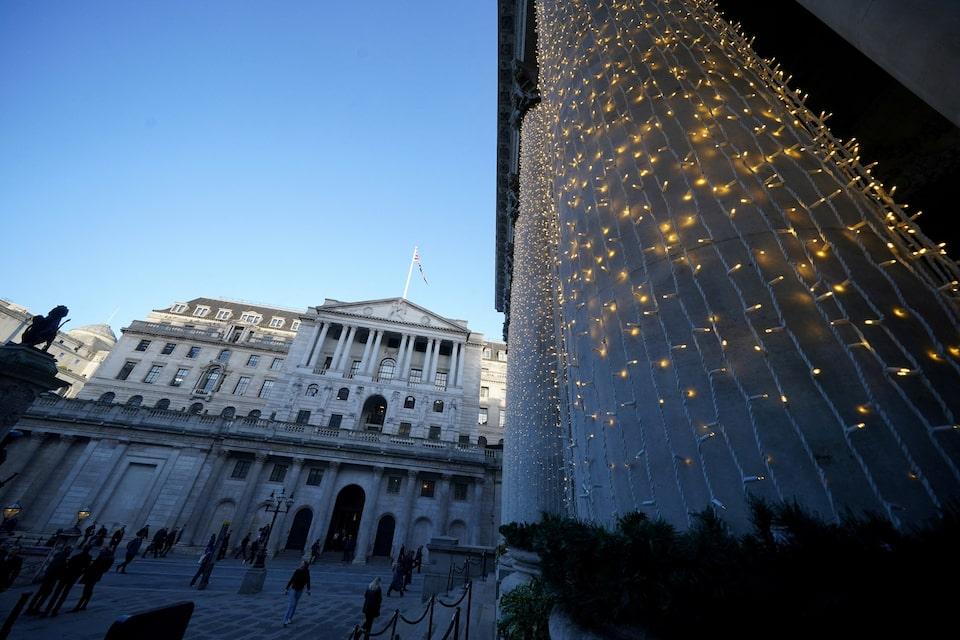
BoE cuts benchmark rate by 25 basis points to 3.75% Central bank says future decisions will be closer calls BoE's Bailey expects inflation back near 2% by May 2026 Sterling rises, gilt yields increase after BoE decision Economists see limited rate cuts in 2026 as economy weakens LONDON, Dec 18 (Reuters) - The Bank of England cut interest rates on Thursday after a narrow vote by policymakers but it signalled that the already gradual pace of lowering borrowing costs might slow further. After a big drop in inflation and a new forecast from BoE staff that the economy is stagnating, five Monetary Policy Committee members voted to lower the BoE's benchmark rate for the sixth time since August 2024 to 3.75% from 4%. Sign up here. The four other members supported no change as they worried about the potential for inflation - still the highest among the Group of Seven economies - to remain too high. Analysts polled by Reuters last week had mostly expected a 5-4 vote for a rate reduction as Britain's economy struggles to grow and inflation falls. Governor Andrew Bailey changed his view and voted for a cut as he sees inflation returning close to the BoE's 2% target as soon as April or May next year, about a year earlier than forecast by the central bank just last month. But he cautioned that inflation still posed some risks. "The calls will become closer, and I would expect the pace of cuts, therefore, to ease off at some point," he told broadcasters. "But I'm not going to judge exactly when that is, because it's too uncertain at the moment." Sterling strengthened by as much as a cent against the U.S. dollar after the decision, before paring gains. Interest-rate-sensitive two-year gilt yields - which were at their lowest since August 2024 before the decision was announced - rose as much as 6 basis points as investors saw slightly less chance of more than one rate cut next year. Sanjay Raja, chief UK economist at Deutsche Bank, said he was sticking to his forecast of two more quarter-point cuts in 2026 - in March and in June - but said there was a chance the BoE could move more slowly and ultimately have to cut rates more. James Smith and Chris Turner, economists at ING, said the lines between the two MPC camps had become more blurred. Some of the policymakers who voted for a rate cut showed signs of concern about high wage growth while others among those who called for a hold hinted at diminishing inflation risks. "That said, we don't view today's decision as a game-changer," they wrote in a note to clients. "Fundamentally, the Bank - or most officials at least - still think further cuts are likely. It has not changed our mind that the Bank will cut rates twice more next year." INFLATION FALLING FASTER THAN THOUGHT Among the senior policymakers who voted against the rate cut, Deputy Governor Clare Lombardelli said she remained more concerned about the risk of inflation proving stronger than expected and the recent data had only softened "at the margin". Chief Economist Huw Pill said he saw a bigger risk of inflation getting stuck too high than too low. But Catherine Mann said her decision not to vote for a rate reduction was "quite finely balanced". The cut took Bank Rate to its lowest level in nearly three years although it is still almost double the European Central Bank's equivalent rate which it kept on hold on Thursday. British inflation remains higher than among peer economies - in part because of finance minister Rachel Reeves' decision last year to raise taxes on employers - even after it fell unexpectedly sharply to 3.2% in data released on Wednesday. Data on Tuesday showed a weakening jobs market including the highest unemployment rate since 2021. The BoE said it now expected the economy to stagnate in the last three months of 2025, down from a forecast of 0.3% growth made last month, although it thought underlying growth was stronger at about 0.2% a quarter. Britain's economy shrank by 0.1% in the three months to October amid reports that businesses put investment projects on ice in the run-up to Reeves' budget on November 26. The BoE said the budget would bring down inflation in 2026 by about half a percentage point due to one-off measures which would then push it up a bit in the following two years. The budget measures would add at most 0.2% to the size of the economy in 2026 and 2027. Other major central banks are believed to be close to halting their rate cuts. The U.S. Federal Reserve last week signalled one more move in 2026, while the ECB has probably already come to the end of its monetary loosening cycle. https://www.reuters.com/world/uk/bank-england-cuts-rates-after-tight-vote-signals-caution-about-further-moves-2025-12-18/
2025-12-18 17:16
WASHINGTON, Dec 18 (Reuters) - Scientists and companies have been trying for decades to harness fusion energy, the process that fires the sun, to generate electricity on Earth. A $6 billion deal announced on Thursday to merge U.S. President Donald Trump's social media firm Trump Media and Technology Group (DJT.O) , opens new tab with Google-backed TAE Technologies is the latest development in the industry that is a long way from commercialization. Sign up here. WHAT IS FUSION? Fusion energy, the process that fires the sun and stars, occurs when light atoms, such as hydrogen isotopes, are forced together to fuse under extreme pressure and temperatures to release huge amounts of energy. Today's nuclear reactors are fired by nuclear fission, in which atoms are split to release energy. Physicists at companies and in national laboratories are racing to replicate fusion reactions in hopes of producing electricity expected to be low in pollution and long-lasting radioactive waste. If successful, fusion could one day help meet demand for power which in the United States is rising for the first time in decades on artificial intelligence, cryptocurrency and manufacturing. Backers, including TAE and Commonwealth Fusion Systems hope to build plants to begin sending power to the grid in the late 2020s to early 2030s. WHAT ARE THE HURDLES? Scientists at Lawrence Livermore National Lab in 2022 briefly achieved for the first time a net energy gain from a fusion experiment using lasers. The lab has replicated the breakthrough since, but the energy output of the experiments is tiny compared to the energy that fired the lasers in the first place. The brief fusion reactions that physicists have achieved so far would need to occur continuously and over the long term in order to generate reliable electricity. Fusion companies also need to develop materials and plants that could withstand continuous neutron bombardments over the long term. In order to become a widespread power source, fusion would likely have to replace existing electricity infrastructure. WHAT ARE THE TECHNOLOGIES? Most fusion companies are either trying to drive fusion reactions using lasers or large magnets. TAE plans to use magnets and neutral particle beams, not lasers, for fusion. WHICH COUNTRIES ARE MOVING ON FUSION? The United States is home to 29 fusion developers, the UK has four, while China, Germany and Japan are among countries that have three, according to the U.S.-based Fusion Industry Association, or FIA. China appears to be building a large laser-ignited fusion research center, similar to the fusion facility at Lawrence Livermore, in Mianyang. That development could aid nuclear weapons design and work exploring power generation. WHICH PUBLICLY TRADED COMPANIES ARE INVESTING? FIA said earlier this year that fusion companies have received nearly $9 billion in private funding. Several firms such as Chevron (CVX.N) , opens new tab, Siemens Energy (ENR1n.DE) , opens new tab, Nucor (NUE.N) , opens new tab and Google's Alphabet (GOOGL.O) , opens new tab have invested in fusion companies. Helion Energy, a startup backed by OpenAI's Sam Altman and SoftBank's venture capital arm, said in July it had started construction on a site for a planned nuclear fusion power plant that will supply power to Microsoft (MSFT.O) , opens new tab data centers by 2028. https://www.reuters.com/business/energy/what-is-fusion-energy-quest-coveted-by-trump-media-2025-12-18/