2024-10-08 15:51
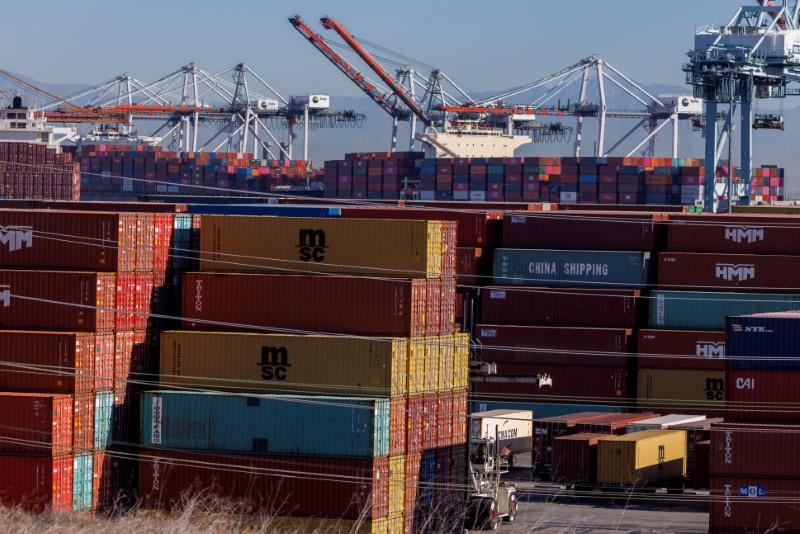
Trade deficit shrinks 10.8% to $70.4 billion in August Exports increase 2.0% to record high; imports fall 0.9% WASHINGTON, Oct 8 (Reuters) - The U.S. trade deficit narrowed sharply in August as exports increased to a record high, suggesting trade could have little or no impact on economic growth in the third quarter. The smaller-than-expected trade gap reported by the Commerce Department on Tuesday added to data on the labor market and consumer spending in suggesting that the economy remained on solid footing last quarter. The economy's strength likely has no impact on expectations that the Federal Reserve will cut interest rates again next month. It, however, reinforced views that the U.S. central bank did not need to pursue another half-percentage point rate reduction. Economists at Goldman Sachs maintained their forecast for gross domestic product to rise at a 3.2% annualized rate in the July-September quarter after the trade data. "This report says that net trade supports GDP growth in August," said Carl Weinberg, chief economist at High Frequency Economics. "Putting together July and August figures suggests that net trade is flat so far in third quarter, making no significant addition or subtraction to GDP growth so far." The trade gap contracted 10.8% to $70.4 billion, the smallest in five months, from a revised $78.9 billion in July, the Commerce Department's Bureau of Economic Analysis said. Economists polled by Reuters had forecast the trade deficit would narrow to $70.6 billion from the previously reported $78.8 billion in July. Exports increased 2.0% to a record $271.8 billion. Goods exports surged 2.5% to $179.4 billion, the highest level since September 2022. They were boosted by a $1.7 billion rise in capital goods to a record high, mostly reflecting telecommunications equipment, civilian aircraft, computer accessories as well as other industrial machinery. But exports of semiconductors fell. Consumer goods exports increased $1.0 billion, lifted by pharmaceutical preparations. Exports of industrial supplies and materials increased as a $1.1 billion drop in crude oil was more than offset by a $1.5 billion rise in nonmonetary gold. Automotive vehicles, parts and engines increased, driven by passenger car exports. Non-petroleum exports were the highest on record, as were those of other goods. Exports of services increased $0.9 billion to an all-time high of $92.3 billion amid rises in travel as well as government goods and services. But exports of transport services fell. Imports decreased 0.9% to $342.2 billion. Goods imports dropped 1.4% to $274.3 billion, pulled down by a $3.9 billion decline in industrial supplies and materials as well as a $1.2 billion decrease in nonmonetary gold. Crude oil imports fell $1.0 billion. That reflected lower prices as well as quantities. Imported crude oil prices averaged $74.28 per barrel in August compared with $75.96 in July. Motor vehicles, parts and engines imports decreased $1.3 billion, weighed down by passenger cars. But imports of other goods were the highest since December 2021. Goods imports had surged in the prior months, likely as businesses rushed to bring in shipments in anticipation of higher tariffs as well as a strike by dockworkers last week, which lasted only three days. Stocks on Wall Street traded higher. The dollar slipped against a basket of currencies. U.S. Treasury yields rose. STRONG DOMESTIC DEMAND With domestic demand still strong despite 525 basis points worth of rate hikes from the Fed in 2022 and 2023, the decline in goods imports is likely to be temporary. The central bank launched its policy easing cycle last month, cutting its benchmark overnight interest rate by 50 basis points to the 4.75%-to-5.00% range, its first rate reduction since 2020. "The resolution of the dockworkers strike earlier this month ensures supply chain disruptions would be minimal and removes a key risk to trade outlook," said Matthew Martin, senior U.S. economist at Oxford Economics. "Depleted inventories and resilient consumer demand indicate the drop in imports is unlikely to be sustained." Imports of services increased $0.7 billion to an all-time high of $67.9 billion amid gains in travel and charges for the use of intellectual property. But imports of transport services declined. When adjusted for inflation, the goods trade deficit declined 8.9% to $88.6 billion. The average of the so-called real goods trade deficit for July and August roughly equals the average for the second quarter. Trade has subtracted from gross domestic product for two straight quarters. The economy grew at a 3.0% pace in the April-June quarter. The politically sensitive goods trade deficit with China narrowed $2.6 billion to $24.7 billion, with exports rising and imports decreasing. The goods trade gap with Canada also contracted, but widened with Mexico. Economists perceived the rise in exports as unsustainable. "The risks to global demand are tilted to the downside, as China's economy has yet to meaningfully stabilize and growth across the eurozone is showing some signs of fragility," said Nicole Cervi, an economist at Wells Fargo. "On the flip side, domestic demand is poised to remain firm amid solid personal income growth and a strong dollar. Taken together, we look for trade to be a modest drag on real GDP growth throughout 2025." Sign up here. https://www.reuters.com/markets/us/us-trade-deficit-narrows-sharply-august-2024-10-08/
2024-10-08 14:33
LONDON, Oct 8 (Reuters) - Gold and coffee helped to deliver trend-following hedge funds a positive result in September, a Societe Generale note showed on Tuesday, thanks to record commodities prices, rising equities and falling interest rates. Gold has surged almost 30% this year to a record high on Sept. 26. The precious metal has been one of the best performing financial assets in 2024 for these kinds of hedge funds which use price and trading volumes data to find and trade market trends, said the SocGen note seen by Reuters. Robusta coffee futures also reached record highs last month. Top coffee producer Brazil has suffered a drought which has impacted much of the crop for the 2024-2025 season, pushing up prices. The mean return for the group of 96 funds tracked by Societe Generale's prime brokerage trading desk returned roughly 0.7% for September, with the highest return coming in at a positive 7.41% and the lowest at a negative 15.77% said the note. Over half of the trend funds posted a positive return for the month, the bank research showed. The Australian dollar, though adding to hedge fund performance in September, has drained the most from trend hedge funds this year, the SocGen note said. Other losing positions for the year-to-date included the Mexican peso, silver and natural gas, it said. Sterling, though it proved a positive position in September was still a losing position for trend funds in the year so far. The bank research did not show which pairs were on the other side of the currency crosses, nor what kind of way the commodities trades were structured. New notable positions that trend followers entered towards the end of September included long positions in Hong Kong's Hang Seng stock index (.HSI) , opens new tab, sugar, silver, lean hogs, German and Spanish stock indices (.DAX) , opens new tab (.IBEX) , opens new tab the Canadian, Australian and New Zealand dollar, said the bank. A long position is essentially a bet that an asset will rise in value. Sign up here. https://www.reuters.com/markets/commodities/gold-coffee-boost-september-hedge-fund-returns-says-societe-generale-2024-10-08/

2024-10-08 14:26
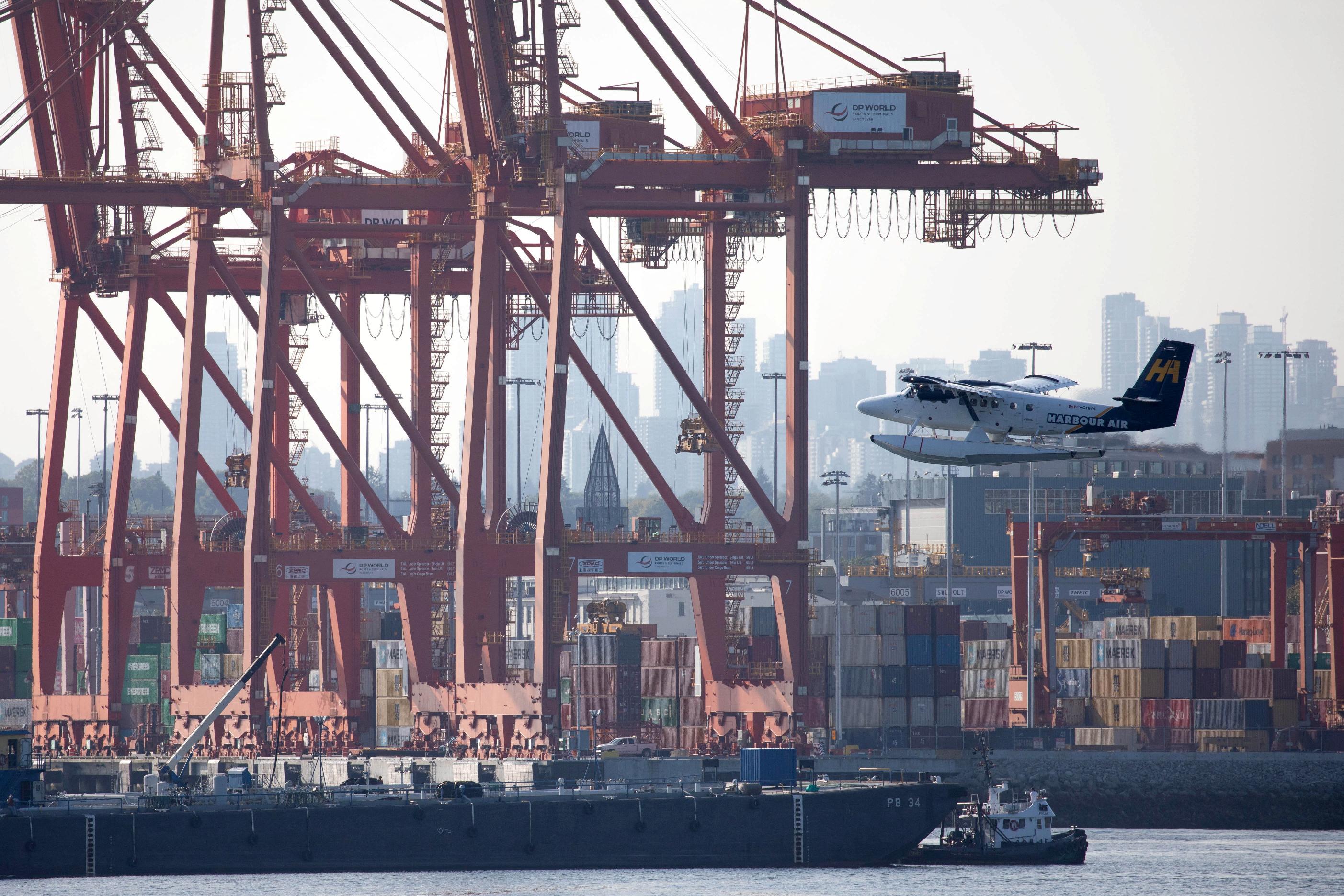
OTTAWA, Oct 8 (Reuters) - Canada recorded a bigger-than-expected trade deficit of C$1.1 billion ($806 million) in August, its sixth consecutive monthly shortfall, as imports rose while exports declined, Statistics Canada data showed on Tuesday. Analysts polled by Reuters had forecast a C$500 million deficit in the month. July's trade balance was revised to a C$287 million deficit from a surplus of C$684 million initially reported. Total exports fell 1% in the month, mainly on lower crude oil prices, and pulp and paper exports. Imports in the month were up 0.3%, driven by motor vehicles and parts, as well as industrial machinery, equipment and parts, Statscan data showed. By volume, exports rose 0.1%, indicating softer prices of exported goods, and imports were up by 0.4%. "We were not expecting a great month for Canada as energy and commodity prices were depressed in August," said Stuart Bergman, chief economist at Export Development Canada, adding the current rise in crude prices could be helpful for exports in the coming months. The price of Brent crude has risen by almost 9% in the last 30 days, but they are still 14% below the peak seen last year. A strong Canadian dollar also chipped away at the competitiveness of the country's exports, Bergman said. Tuesday's trade report comes amid growing concerns of an economic slowdown in Canada. Data last month showed that the economy likely stalled in August and was on track to fall short of the Bank of Canada's growth forecast for the third quarter, supporting the case for a super-sized interest rate cut in October. Money markets see almost a 75% chance of a rate cut of 25 basis points this month, which would be the fourth one in a row after the BoC started its rate trimming cycle in June. The Canadian dollar was down 0.21% to 1.3644 against the U.S. dollar, or 73.29 U.S. cents, at 1310 GMT. Yields on two-year government bonds were up 1.3 basis points to 3.41%. Energy products, primarily export of crude oil, were the biggest drag on exports in August, mainly due to cheaper crude oil, as concerns over oil demand weighed on prices, the statistics agency said. Exports of forestry products and building and packaging materials also fell, weighed down by lower exports of pulp and paper to China and the United States. The decrease in exports of pulp and paper may have been due to rail transport work stoppages in Canada in August, Statscan said. Partially offsetting those declines, exports of motor vehicles and parts, and farm, fishing and intermediate food product categories rose in the month. The motor vehicles and parts product category was the biggest contributor to the rise in total imports, coinciding with higher production of light trucks and sport utility vehicles in the United States in August, Statscan said. Imports from the United States - by far Canada's largest trading partner - increased 0.9% in the month while exports were down 4.3%. Other contributors to the increase in total imports were industrial machinery, equipment and parts, while declines in consumer goods - mainly pharmaceuticals - partly offset the gains. Overall, six of 11 export product sections posted declines and six of 11 import product sections rose. ($1 = 1.3640 Canadian dollars) Sign up here. https://www.reuters.com/world/americas/canada-posts-sixth-straight-monthly-trade-deficit-august-2024-10-08/
2024-10-08 12:50
Over 1,000 killed and a million displaced in Lebanon conflict UN officials fear repeat of Gaza's devastation in Lebanon Nine hospitals shut or partially functional in Lebanon, WHO says GENEVA, Oct 8 (Reuters) - U.N. officials voiced concern on Tuesday that the same methods of warfare used by Israel that caused high civilian casualties and widespread destruction in Gaza are now being repeated in Lebanon, calling for action to avoid the same "spiral of doom". Israeli forces have begun ground operations in the southwest of Lebanon, escalating a year-long conflict with the Iran-backed group Hezbollah that has killed over 1,000 people in the past two weeks and prompted the mass flight of over a million people. In the Gaza Strip, nearly 42,000 Palestinians have been killed and most of the 2.3 million population displaced in the war triggered by the Oct. 7, 2023 cross-border attack by Hamas in which gunmen killed 1,200 people and took 250 hostages. "It is in my mind, from the time I awake until the time I sleep, that we could go into the same sort of spiral of doom, and we need to do everything we can to stop that from happening in this particular crisis," World Food Programme Country Director in Lebanon Matthew Hollingworth said in response to a question about parallels between the two conflicts. Israel's military has said Hamas fighters hide among civilians in Gaza and that it will strike them wherever they emerge, while also trying to avoid harming civilians. Its campaign against the more heavily-armed Hezbollah aims to secure the return home of Israelis evacuated from areas near the border as a result of nearly a year of Hezbollah rocket fire into northern Israel in support of Hamas. "We need the world to be more impactful and able to make the arguments that this cannot go on," Hollingworth told a Geneva briefing by video link from Beirut. Fears of a repeat of Gaza's upheaval are also shared by the Lebanese population and this explains why so many have fled so quickly, Hollingworth said after visiting displacement camps. A World Health Organization official said at the same briefing that nine hospitals in Lebanon had been shut or partially shut - a pattern that has also occurred in Gaza. Ian Clarke, WHO's Deputy Incident Manager for Lebanon, warned of disease outbreaks in Lebanon due to crowded conditions in displacement shelters and hospital closures as medics have fled Israel's assault. The U.N. human rights office has previously said that Israeli forces may have repeatedly violated the laws of war in Gaza. Its spokesperson Jeremy Laurence said on Tuesday that the "same means and methods of warfare" are being used in Lebanon. Israel denies violating the laws of war, saying its conflict is with Palestinian militants not Palestinians in general. Sign up here. https://www.reuters.com/world/middle-east/who-warns-possible-lebanon-disease-outbreaks-hospitals-shut-2024-10-08/

2024-10-08 12:46
Oct 8 (Reuters) - Brazil's consumer prices are expected to have risen in September after staying little changed in August, due partly to a severe drought which has hit agricultural output, a Reuters poll showed. Above-target inflation prompted the central bank to stop an interest rate easing cycle earlier this year and then to hike rates last month, but some policymakers worry this may be of little help as long as public spending remains elevated. The IPCA consumer price index for September, to be released on Wednesday, is forecast to have increased 0.46% from August and 4.43% from a year earlier, according to median forecasts from 22 economists polled Oct. 2-7. Higher energy tariffs associated with lower reservoir levels at hydroelectric plants caused by a lack of rain, as well as increased cigarette prices, were two important drivers of faster inflation last month. On top of that, "the first effects of the drought will put pressure on some food and beverage prices, such as fruit, meat, milk and dairy products, baked goods, drinks and infusions," said Bruno Imaizumi, an economist at LCA Consultores. In an example of the impact on supply of one of the country's staples, coffee production stood below initial forecasts in 2024 as adverse weather conditions affected key crop development stages. Annual inflation has continued to run at more than one percentage point over the central bank's goal of 3% since June, with expectations for next year pointing to at a rate close to 4% in the bank's weekly survey among economists. Besides the drought, Banco Central do Brasil chief Roberto Campos Neto has attributed unanchored inflation to some worrying fiscal trends, as President Luiz Inacio Lula da Silva's government continues to pump the economy with higher spending. Campos Neto, who ends his term this year, has also said tighter interest rates alongside looser fiscal policy create inefficiencies that hinder the transmission of monetary policy, stressing the need for more coordination. On the other hand, Lula's fiscal stimulus keeps boosting economic activity. Last month, the Finance Ministry raised its growth forecast for the economy to 3.2% from 2.5% for 2024, compared to an expansion of 2.9% last year. "With activity and job markets booming, and real wages and (economic) expectations on the rise, service prices tend to remain relatively rigid and hover above 3.0%," ABC Brasil economists wrote in a report. Sign up here. https://www.reuters.com/world/americas/brazil-consumer-prices-seen-higher-sept-drought-bites-2024-10-08/

2024-10-08 12:36
NEW DELHI, Oct 8 (Reuters) - Indian miner Hindustan Zinc (HZNC.NS) , opens new tab plans to transition to renewable energy to power its operations in the next five to seven years, Chairperson Priya Agarwal told Reuters on Tuesday. "We still have a lot of captive thermal (power). It's not going to shut down tomorrow. It's going to go on for some time, but we're very committed to ensure that the transition happens successfully over time," Agarwal said at the FT Energy Transition Summit India in New Delhi. More than 90% of the company's emissions come from thermal energy, Agarwal said. Hindustan Zinc has a captive thermal power capacity of 514 megawatt. India is looking to lower greenhouse gas emissions and boost the share of non-fossil fuels in electricity generation. However, Prime Minister Narendra Modi's government has defended domestic reliance on coal, citing increasing energy requirements in the world's most populous country. Hindustan Zinc is majority-owned by metals-to-oil conglomerate Vedanta Ltd (VDAN.NS) , opens new tab, which, in turn, is controlled by UK-based Vedanta Resources. The Indian government holds most of the remaining stake in Hindustan Zinc. In May, the CEO of Vedanta Ltd's aluminium business told Reuters that the firm will no longer add coal-fired capacity. Sign up here. https://www.reuters.com/business/indias-hindustan-zinc-aims-switch-renewable-energy-five-seven-years-chairperson-2024-10-08/