2024-10-08 12:36
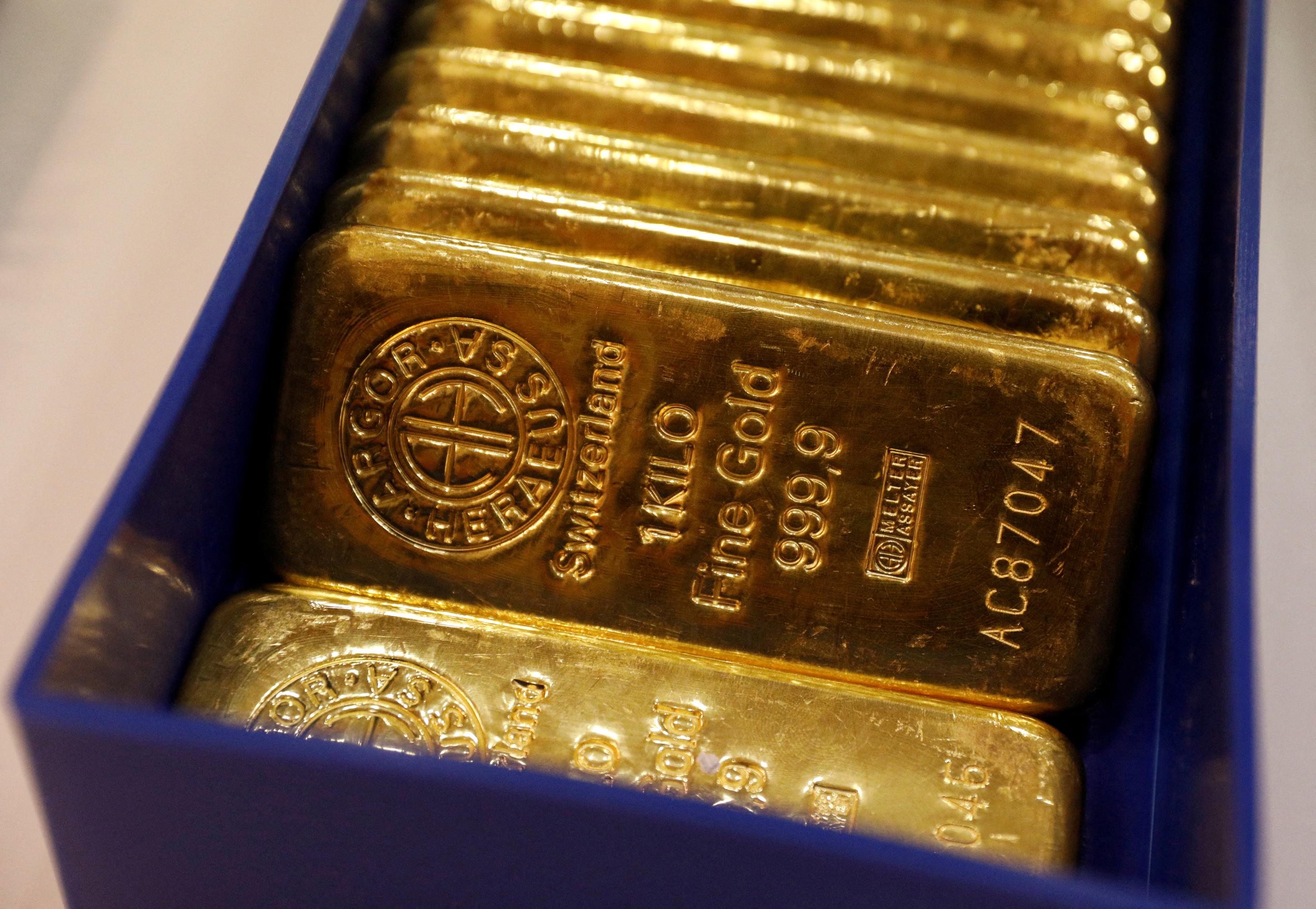
LONDON, Oct 8 (Reuters) - Global physically backed gold exchange-traded funds (ETFs) registered a fifth consecutive month of inflows in September as North America-listed funds added to their holdings, the World Gold Council (WGC) said on Tuesday. Gold ETFs store bullion for investors and account for a significant amount of investment demand for the precious metal that touched a record high of $2,685.42 an ounce on Sept. 26, buoyed by the start of U.S. interest rate cuts. After three consecutive years of outflows against a backdrop of high interest rates, the past five months have turned year-to-date net flows in dollar terms to a positive $389 million. Gold ETFs registered inflows of 18.4 metric tons, or $1.4 billion, in September to lift collective holdings to 3,200 tons, the WGC said in a research note. A stronger gold price and recent inflows pushed total assets under management to a month-end peak of $270.9 billion in September. The WGC, and industry body grouping global gold miners, estimates that worldwide gold trading volumes rose in September by 7% month on month to $259 billion a day while average trading volumes in the over-the-counter (OTC) market added 10% to $176 billion. With the gold price up 28% this year and the prospect of future U.S. rate cuts, speculators increased their total net long position on COMEX by 6% from August to 976 tons by the end of September, the highest level since February 2020. Sign up here. https://www.reuters.com/markets/commodities/gold-etfs-registered-fifth-month-inflows-september-says-wgc-2024-10-08/
2024-10-08 12:35
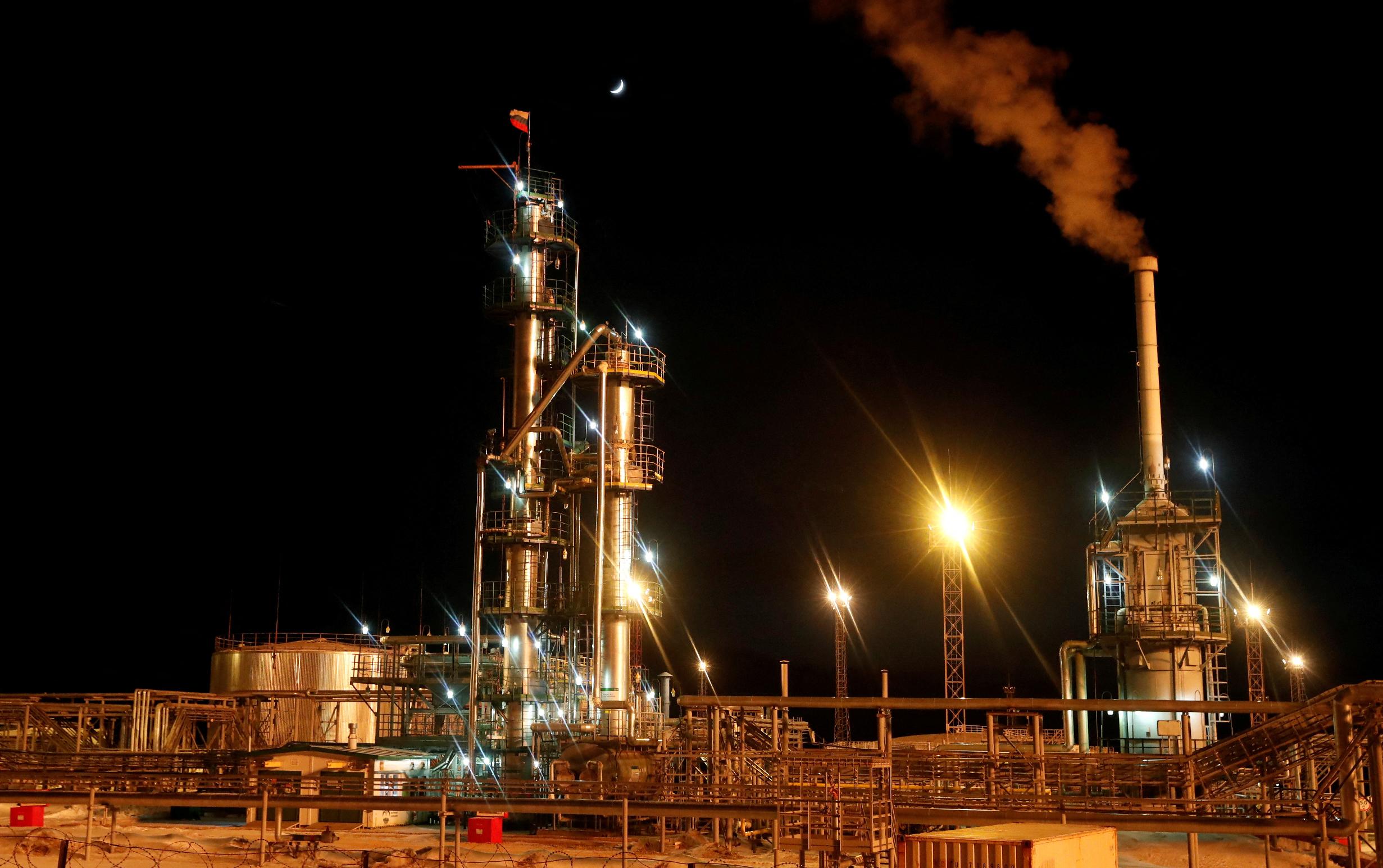
MOSCOW, Oct 8 (Reuters) - Russian oil companies have held talks with the government on whether firms that do not produce diesel should be banned from exporting it because of concern the refiners may be losing subsidies, Interfax news agency reported on Tuesday. Russia is the world's biggest seaborne exporter of diesel, just ahead of the United States, and diesel represents the greatest share of its oil product exports. It imposed a temporary ban , opens new tab on diesel exports last year and media reports have emerged Russia is considering another ban to try to contain rising domestic prices. Interfax, citing unnamed sources, said the possible ban on fuel exports was on the agenda of a meeting on Tuesday on the domestic fuel market chaired by Russian Deputy Prime Minister Alexander Novak. High prices of diesel, whose local Russian index has reflected an expensive winter grade from Oct. 1, could lead to the cancellation of, or a significant decrease of subsidies known as damper payments. They were introduced to compensate local fuel producers for giving priority to the domestic market over usually more lucrative exports. Russian exports about 35 million metric tons of diesel annually. A government statement said Novak discussed the situation on the fuel market, fuel transportation via railways and supplies to farmers. It did not mention diesel export restrictions, while saying that the domestic market is fully provided with gasoline and diesel. Novak's office has not replied to a request for comment. While refineries are responsible for most of Russia's fuel shipments, some diesel is shipped by various traders and other companies that do not produce fuel. Russia already has gasoline export restrictions in place until the end of the year. Since a full EU embargo on Russian oil product imports was imposed in February 2023 over the conflict in Ukraine, diesel supplies have been diverted to Brazil, Turkey, countries in Africa, Asia and the Middle East as well as ship-to-ship (STS) loadings. Sign up here. https://www.reuters.com/markets/commodities/russia-considers-diesel-export-ban-non-producers-interfax-reports-2024-10-08/
2024-10-08 12:15
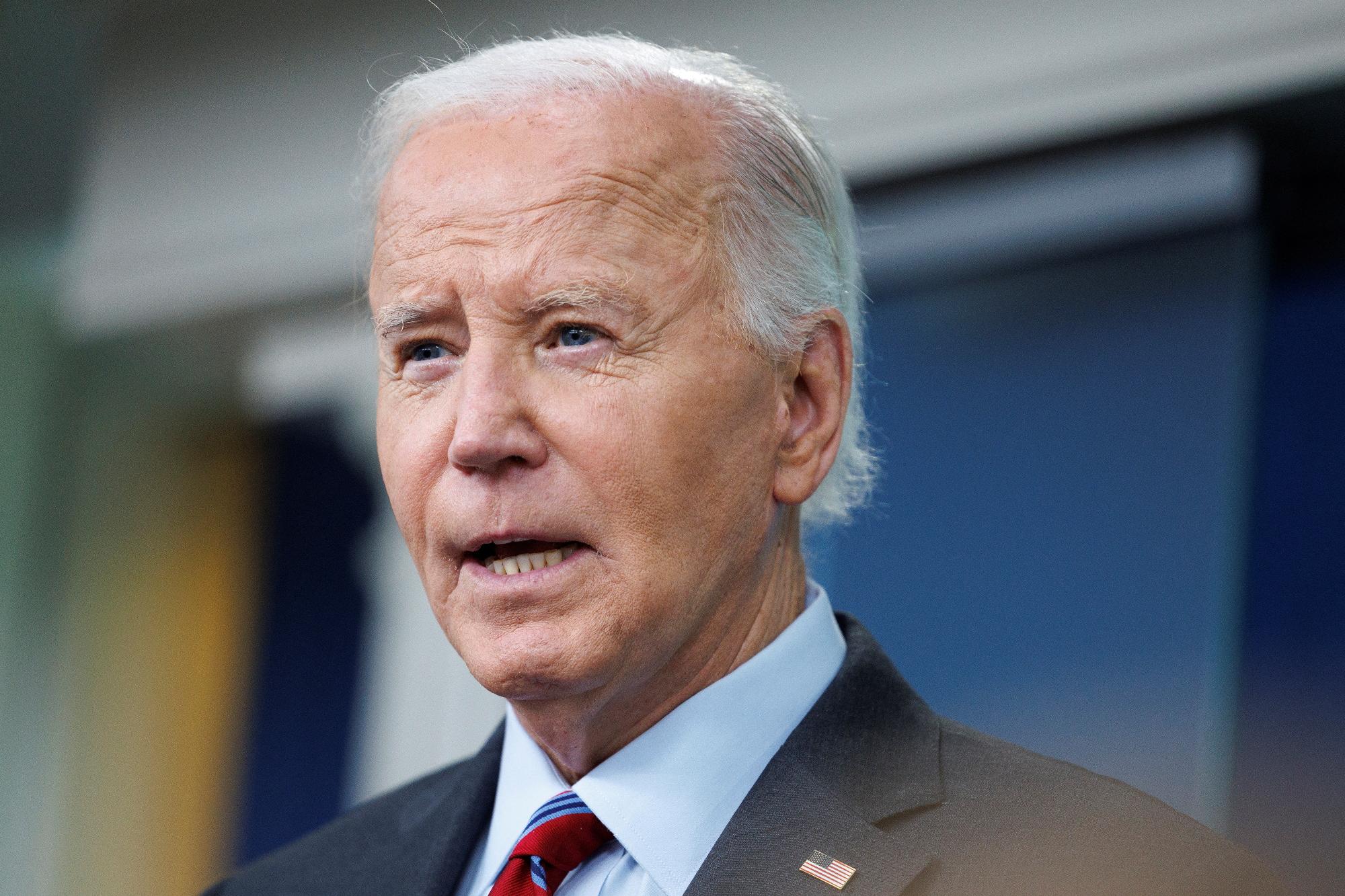
Oct 8 (Reuters) - (This Oct. 8 story has been refiled to fix a typographical error, in paragraph 6) The Biden administration finalized a landmark rule on Tuesday that would require water utilities to replace virtually every lead pipe in the country within 10 years, tackling a major threat that is particularly dangerous to infants and children. The White House has made removing every lead pipe within 10 years in the United States a centerpiece of its plan to address racial disparities and environmental issues in the wake of water contamination crises in recent years from Newark, New Jersey to Flint, Michigan. In a Milwaukee speech to highlight the new rule, President Joe Biden said public officials have long understood the dangers lead pipes pose to the public, but it never had been given the national priority it deserved. "I'm here today to tell you that I finally insisted that it gets prioritized and I'm insisting it get done," Biden said. The rule is widely seen as popular in industrial Midwestern states that are expected to play a major role in deciding the presidential election next month. Vice President Kamala Harris, who is running for president this November, has also called for replacing lead pipes, an issue especially important for underserved communities. The rule, initially proposed by the U.S. Environmental Protection Agency in 2023, imposes the strictest limits on lead in drinking water since federal standards were first set decades ago and requires utilities to review their systems and replace them over the next 10 years. The new rule supplants a looser standard set by former President Donald Trump’s administration that did not include a universal requirement to replace lead pipes. Fifteen Republican attorneys general, led by Kris Kobach of Kansas, have criticized the EPA rule. The GOP officials said they are concerned that homeowners in some places might have to pay to replace pipe sections under their property. Lead poisoning can cause irreversible damage to the nervous system and the brain and poses a specific risk to infants and children. Service lines that bring water into homes are thought to be a major source of lead exposure. The EPA estimates the stricter standard will prevent up to 900,000 infants from having low birthweight and avoid up to 1,500 premature deaths a year from heart disease. The dangers of lead contamination came into sharp relief in Flint, Michigan, a decade ago. The 2021 bipartisan Infrastructure Law provided $50 billion to support upgrades to the nation’s drinking water and wastewater infrastructure, including $15 billion over five years dedicated to lead service line replacement. Sign up here. https://www.reuters.com/world/us/final-rule-epa-requires-removal-all-us-lead-pipes-decade-2024-10-08/
2024-10-08 11:49
BENGALURU, Oct 8 (Reuters) - The European Central Bank (ECB) will cut its deposit rate by 25 basis points on Oct. 17 and again in December, according to more than 90% of economists polled by Reuters who now see a quicker decline in euro zone inflation. Only 12% of economists polled last month had predicted an October cut. But most have swiftly changed their view to cuts in both October and December after September inflation dipped below 2% and some Governing Council members, including ECB President Christine Lagarde, hinted a reduction was coming this month. "The latest developments strengthen our confidence that inflation will return to target in a timely manner," Lagarde told a European Union parliamentary hearing last week. "We will take that into account in our next monetary policy meeting in October." For the last six months, economists predicted a total of three 25 basis point reductions in the deposit rate this year but are now expecting four. Over 90% of economists, 70 of 75, said in an Oct. 2-8 Reuters poll they expected the ECB to cut the deposit rate for a second straight meeting by 25 basis points next week, taking it to 3.25%. Just five predicted no change. Last month, only around 12% of economists, or nine of 77, forecast an October cut. The central bank will cut again to 3.00% in December, according to 68 of 75 economists, in line with market pricing. "With fading inflation pressures, both on headline and core, we believe the ECB is going to be able to get back to somewhere near its neutral rate more quickly as it manages the accelerating downside risks to growth," said James Rossiter, head of global macro strategy at TD Securities. "With growth still below trend next year, this is enough for the ECB to cut steadily from October." INFLATION The ECB doesn't have a neutral rate estimate, which neither restrains or stimulates the economy, but staff published a paper this year showing a real rate of around zero - or about 2% in nominal terms - when adjusted for inflation. An over-55% majority of economists, 41 of 72, predicted the ECB to cut twice next quarter, to 2.50%. The central bank will lower rates twice more later next year, the poll showed. That is a swifter path than was expected last month but in line with current market pricing. Inflation in the common currency bloc, which declined to 1.8% last month, will pick up a little and be at the ECB's 2% target next quarter and stay around there until at least 2027, the poll found. Economists last month expected inflation to be 2% later in 2025. However, core inflation will remain elevated this quarter and average 2.7%, where it was in September, before slowing gradually next year. "The closer the ECB moves its key interest rates to the neutral interest rate... the more vigorously the hawks in the ECB Governing Council are likely to argue against rapid interest rate cuts," said Marco Wagner, senior economist at Commerzbank. "At the beginning of next year, core inflation is still likely to be around 2.75%, and the continued strong wage increases do not yet suggest that inflation, particularly in services, will slow noticeably in the coming months." Despite recent PMIs suggesting an economic slowdown the euro zone economy was expected to grow at a decent pace over the coming year. The economy will grow 0.2% this quarter, matching Q2's rate, and average 0.7% growth this year, the poll showed, before expanding by 1.2% in 2025 and 1.4% in 2026. However, growth in Germany, Europe's largest economy, stagnated last quarter after contracting 0.1% in Q2 and will expand 0.1% this quarter. It would grow 0.8% and 1.3% in 2025 and 2026, respectively. (Other stories from the Reuters global economic poll) Sign up here. https://www.reuters.com/sustainability/sustainable-finance-reporting/ecb-cut-rates-by-25bps-both-oct-dec-euro-zone-economy-wobbles-2024-10-08/
2024-10-08 11:43
MUMBAI, Oct 8 (Reuters) - The Indian central bank's informal instructions to lenders to refrain from betting heavily against the rupee have led some traders to reduce the size of speculative positions and tweak their approach to trading the currency. The Reserve Bank of India's (RBI) instructions to banks on Monday came as the rupee was close to breaching its record low of 83.9850 and complemented its intervention in the non-deliverable forwards and over-the-counter spot markets, six traders at large- to mid-sized banks told Reuters. The head of forex trading at a mid-sized private bank, who held "super long dollar/rupee positions" through client flows, has brought down the size of the position after the RBI's instructions. A forex spot and forwards trader at a large foreign bank exited the "accumulated" long dollar/rupee positions "brought about by the daily flows", while another trader at a private bank decided to "sit out" of the market and only handle client flows. None of the traders wished to be named as they are not authorised to speak to media. The rupee quoted at 83.9450 per U.S. dollar at 1:45 p.m. IST, up slightly from 83.9775 in the previous session. The volatility of the rupee has been heavily dampened by the central bank's routine interventions, with the realised volatility the lowest among emerging market currencies. The low volatility should allow traders to take bigger bets but one would be careful about holding large positions, a forex trader at a foreign bank said. "It just seems better to run limited positions, especially on the (dollar/rupee) long side, and that is what I have decided to do," the trader said. The RBI regularly asks banks about the size of their speculative positions and large dollar flows, traders said. While banks are not obligated to comply with the informal directions the RBI issues, they do so in most instances. A senior trader at a public sector bank said he is now leaning on the currency futures market for intraday trading. Sign up here. https://www.reuters.com/world/india/india-cenbanks-instructions-banks-prompt-change-rupee-trading-tactics-2024-10-08/
2024-10-08 11:30
MOSCOW, Dec 23 (Reuters) - Russian President Vladimir Putin met Slovak Prime Minister Robert Fico in the Kremlin on Sunday, a rare visit by a European Union leader to Moscow as a contract allowing for Russian gas to transit through Ukraine nears expiry. Ukrainian President Volodymyr Zelenskiy had said on Thursday that Kyiv could consider continued transit of Russian gas, but only on condition that Moscow did not receive payment until after the war - a condition it was unlikely to accept. Putin said that day that it was clear there would be no new deal with Kyiv to send Russian gas through Ukraine to Europe. Here is what happens if Russian gas transit via Ukraine is completely turned off and whom will be affected most. HOW BIG ARE THE VOLUMES? Russian gas supplies to Europe via Ukraine are relatively small. Russia shipped about 15 billion cubic metres (bcm) of gas via Ukraine in 2023 - only 8% of peak Russian gas flows to Europe via various routes in 2018-19. Russia spent half a century building its European gas market share, which at its peak stood at 35%. Moscow has lost its share to rivals such as Norway, the United States and Qatar since the Russian invasion of Ukraine in 2022, which spurred the EU to cut its dependence on Russian gas. EU gas prices rallied in 2022 to record highs after the loss of Russian supplies. The rally won't be repeated given modest volumes and a small number of customers for the remaining volumes, according to EU officials and traders. UKRAINIAN ROUTE The Soviet-era Urengoy-Pomary-Uzhgorod pipeline brings gas from Siberia via the town of Sudzha - which is now under control of Ukrainian military forces - in Russia's Kursk region. It then flows through Ukraine to Slovakia. In Slovakia, the gas pipeline splits into branches going to the Czech Republic and Austria. Russia's overall gas exports via the route have held steady despite the stoppage of flows from Gazprom to Austria's OMV (OMVV.VI) , opens new tab in mid-November over a contractual dispute, and legal wranglings as other buyers stepped in to buy the volumes. Austria still receives most of its gas via Ukraine, while Russia accounts for around two-thirds of Hungary's gas imports. Slovakia takes around 3 bcm from energy giant Gazprom (GAZP.MM) , opens new tab per year, also about two-thirds of its needs. The Czech Republic almost completely cut gas imports from the east last year, but began taking gas from Russia in 2024. Most other Russian gas routes to Europe are shut including Yamal-Europe via Belarus and Nord Stream under the Baltic. The only other operational Russian gas pipeline route to Europe is the Blue Stream and TurkStream to Turkey under the Black Sea. Turkey sends some Russian gas volumes onward to Europe including to Hungary. WHY DOES THE UKRAINIAN ROUTE STILL WORK? While remaining Russian gas transit volumes are small, the issue remains a dilemma for the EU. Many EU members such as France and Germany have said they will not buy Russian gas anymore but the stance of Slovakia, Hungary and Austria, which have closer ties to Moscow, challenges the EU common approach. The countries, who still receive Russian gas, argue it is the most economic fuel and also blame neighbouring EU countries for high transit fees imposed on alternative supplies. Ukraine still earns $0.8-$1 billion in transit fees per year from Russian gas transit. According to Reuters calculations, Gazprom's total pipeline gas exports to Europe via all routes in 2024 have increased to 32 bcm from 28.3 bcm in 2023, when they collapsed to the lowest level since the 1970s. Russia could earn around $5 billion on sales via Ukraine this year based on an average Russian government gas price forecast of $339 per 1,000 cubic metres, according to Reuters calculations. Russia's gas pipeline export monopoly Gazprom plunged to a net loss of $7 billion in 2023, its first annual loss since 1999, because of the loss of EU gas markets. Russia has said it would be ready to extend the transit deal but Kyiv has repeatedly said it will not do it. Another option is for Gazprom to supply some of the gas via another route, for example via TurkStream, Bulgaria, Serbia or Hungary. However, capacity via these routes is limited. Hungary has been keen to keep the Ukrainian route open, but said it would continue to receive Russian gas from the south, via the TurkStream pipeline on the bed of the Black Sea. The EU and Ukraine have also asked Azerbaijan to facilitate discussions with Russia regarding the gas transit deal. A senior source at Azeri energy company SOCAR told Reuters on Friday that Moscow and Kyiv have failed to agree on the deal brokered by Azerbaijan to continue Russian gas exports to Europe via Ukraine. Sign up here. https://www.reuters.com/business/energy/what-happens-when-russian-gas-europe-via-ukraine-stops-2024-12-23/