2024-10-04 10:34
LONDON, Oct 4 (Reuters) - The British pound gained ground against the dollar and the euro on Friday after a steep plunge a day earlier when Bank of England Governor Andrew Bailey had said more aggressive interest rate cuts might be on the table. Bank of England Chief Economist Huw Pill on Friday called for a more cautious approach to lowering rates, aiding sterling's 0.3% rise on the day to $1.317. But the pound was still headed for its steepest weekly decline in more than a year after Bailey on Thursday said the BoE could become "a bit more activist" and "a bit more aggressive" in its approach to lowering rates. Bailey's comments caused an unwinding of long positions in the pound, ING FX strategist Francesco Pesole said. Sterling has gained about 3.4% so far this year, outperforming other G10 currencies on the back of expectations that the BoE will keep rates higher for longer than those elsewhere. "There is further room for position squaring to weigh on sterling unless BoE communication or data force another hawkish repricing ... We still think $1.30 can be hit in sterling in the coming weeks," Pesole said. The dollar was flat against a basket of other major currencies ahead of the crucial U.S. payrolls report due at 1230 GMT that could provide more clues on the state of the U.S. economy and shape the Federal Reserve's next steps in the rate-cut cycle. In Britain, the latest industry survey showed that the construction sector grew at its fastest pace in nearly two and a half years in September, with some companies concerned about possible spending cuts and tax increases in finance minister Rachel Reeves' first budget on Oct. 30. Reeves has warned that some taxes might rise as the new government seeks to boost public services and investment. Sterling firmed 0.4% to 83.74 pence per euro after registering its biggest one-day drop in nearly two years on Thursday. Sign up here. https://www.reuters.com/markets/currencies/sterling-ticks-up-set-worst-week-more-than-year-2024-10-04/

2024-10-04 10:17
MUMBAI, Oct 4 (Reuters) - The Indian rupee ended nearly unchanged on Friday to cap its worst weekly performance in a little over four months, as equity outflows surged and crude oil prices rose due to a worsening of the Middle East conflict. Intervention by India's central bank limited losses, traders said. The rupee closed at 83.9725 against the U.S. dollar, almost flat compared to its close at 83.9675 in the previous session. The currency fell 0.3% week-on-week. Large foreign banks dominated dollar bids during the session, likely related to outflows from equities, a foreign exchange trader at a state-run bank said. The Reserve Bank of India intervened in both the non-deliverable forwards and local spot FX market to help the rupee stay above the psychologically important 84 mark, traders said. The rupee had declined to its record low of 83.9850 last month. India's benchmark equity indexes, the BSE Sensex (.BSESN) , opens new tab and Nifty 50 (.NSEI) , opens new tab, were down over 4% each on the week, their worst weekly performance since June 2022. Foreign investors have net sold about $3.5 billion of local stocks over the previous three trading sessions. The rise in oil prices, regulatory tightening of equity derivatives trading and China's recent stimulus measures were cited by analysts as reasons for outflows from Indian stocks. Brent crude oil futures were at $78.1 per barrel, up nearly 8.5% on the week as escalating tensions in the Middle East prompted concerns about supply. Investors awaited the release of U.S. non-farm payrolls data later in the day for cues on whether the Federal Reserve will cut rates by 50 or 25 basis points in November. "In the case of a downside surprise for payrolls, the dollar would probably lose out on 50bp by the Fed in November, but the downside would be contained by higher oil prices and risk aversion," Societe Generale said in a note. Sign up here. https://www.reuters.com/world/india/rupee-logs-worst-week-since-may-hurt-by-equity-outflows-middle-east-risk-2024-10-04/
2024-10-04 10:14
SAO PAULO, Oct 4 (Reuters) - Fitch is unlikely to upgrade Brazil's credit rating in the near-term, despite its better-than-expected economic growth, because of doubts the country will be able to significantly improve public finances, a director in its sovereign ratings group said. Fitch currently rates Brazil's credit as BB, two notches below investment grade, with a stable outlook. "To raise Brazil's credit rating, we would need to have greater confidence in the government's ability to deliver primary surpluses," Todd Martinez, a senior director and co-head of Americas sovereigns said on Thursday. Moody's this week lifted Brazil's credit rating to only a notch below investment grade status, a vote of confidence to Latin America's largest economy, which lost its low-risk score nearly a decade ago. Fitch, however, is keeping a more conservative stance than Moody's, which raised the country's long-term issuer and senior unsecured bond ratings to Ba1 from Ba2, with a positive outlook. Martinez said economic activity in Brazil has continued to surprise on the upside, with economists expecting gross domestic product to grow at about 3% in 2024. "But public finances remain a weak spot, with spillovers into confidence, the exchange rates and thus growth," he said. Martinez, however, praised President Luiz Inacio Lula da Silva's administration's efforts to improve the fiscal situation, with changes to its tax rules and a more recent agreement to roll back payroll exemptions. But despite such moves, Fitch expects the federal primary deficit to rise to 1.0% of GDP in 2025 from 0.6% this year, before falling to 0.8% in 2026. Based on the agency's current expectations for growth and interest rates, that would lift its debt-to-GDP ratio from 77.8% this year to 83.9% by 2026. Lula and his economic team are aiming for Brazil to recover the investment grade status it lost in 2015. During a visit to New York at the end of September, he met with representatives of the three major rating agencies to discuss Brazil's credit score. Like Fitch, S&P rates Brazil at BB with a stable outlook. Sign up here. https://www.reuters.com/markets/fitch-unlikely-raise-brazils-credit-rating-soon-director-says-2024-10-04/
2024-10-04 10:04
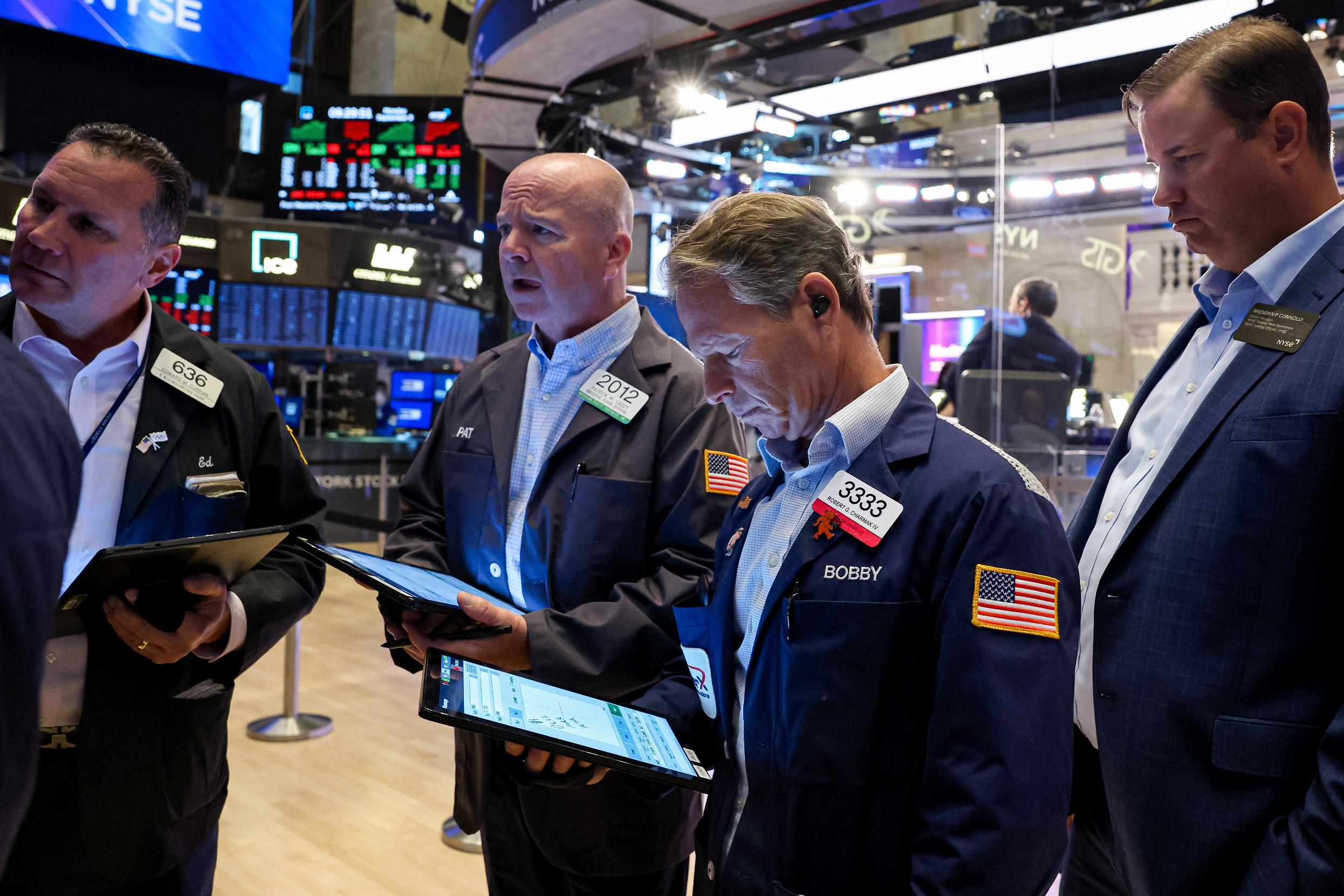
A look at the day ahead in U.S. and global markets from Mike Dolan Wall Street has weathered an edgy start to the final quarter reasonably well this week, with the September employment report now an obvious final hurdle on Friday and firmer oil prices an irritant even as a three-day U.S. ports strike ends. As has been the case for weeks, markets are trying to find the balance between signs of persistent growth but at a pace soft enough to sustain disinflation and Federal Reserve interest rate cut hopes. Labor market soundings so far this week certainly support the former, though brisk job growth and the relatively modest oil price pop on Middle East tensions raised some questions over Fed easing speculation. At least the threat that this week's ports strike may feed retail price rises looks to have been averted. U.S. East Coast and Gulf Coast ports began reopening late on Thursday after dockworkers and port operators reached a wage deal to settle the industry's biggest work stoppage in nearly half a century. As Chicago Fed boss Austan Goolsbee pointed out on Thursday, retailers and manufacturers had stockpiled about two weeks worth of items in anticipation of the strike and that should be sufficient now the dispute has ended. This week's crude oil price rise, aggravated by comments from U.S. President Joe Biden on Thursday that Israeli retaliation against Iran's rocket attack could target Tehran's oil facilities, has become a more unpredictable prospect as nerves about weekend events may keep traders on tenterhooks. Still, despite this week's jump in crude prices , oil prices are only back to where they were a month ago and continue to track annual declines of more than 10%. U.S. retail gasoline prices remain close to eight-month lows. And so the scene is set for the September payrolls report later on Friday, with consensus forecasts for another 140,000 new jobs last month - close to August's tally - and an unemployment rate steady at 4.2%. Most of the week's labor updates - private sector payrolls, jobless claims, vacancies and layoffs data - show the jobs market remains in relatively rude health. So for all the cross-currents this week, the S&P500 (.SPX) , opens new tab has lost little more than 0.5% so far and futures are higher into Friday's open. Implied volatility captured by the VIX index (.VIX) , opens new tab, however, remains elevated at about 20. The shifting rates picture and background geopolitics is trickier for Treasuries, where 10-year yields have pushed up a net 5 basis points this week to 3.85% - but held close to Thursday's close overnight. Fed futures pricing, with just 66bp of rate cuts now pencilled in by yearend, is leaning towards two further quarter-point Fed rate cuts this year rather than one of those being another 50bp move. The dollar (.DXY) , opens new tab has been the big winner all week, not least as central banks around the world turned more dovish on their interest rate signalling just as Fed expectations ebbed. But the greenback retreated slightly on Friday, partly as sterling clawed back some of the heavy losses suffered when Bank of England governor Andrew Bailey talked on Thursday of more "activist" and "aggressive" BoE easing. Bailey's comments were dampened on Friday by his chief economist Huw Pill, who said "it will be important to guard against the risk of cutting rates either too far or too fast." Stock markets around the world (.MIWD00000PUS) , opens new tab were marginally higher on Friday, with Hong Kong's Hang Seng index (.HSI) , opens new tab resuming its recent steep climb on Chinese stimulus plans after a stumble on Thursday. The offshore yuan weakened. In Europe, attention was focussed on European Union trade negotiations that struggled to find a consensus on raising tariffs of up to 45% on Chinese electric vehicle imports - with Europe's auto sector suffering multiple hits from the rivalry and dragging on region's industrial economy. With Germany voting against the tariffs because of fears of Chinese retaliation against German carmakers, EU countries failed to vote clearly in favour or against, leaving the European Commission to decide, EU sources told Reuters on Friday. In a later statement, the Commission said the proposal to impose definitive tariffs has obtained the necessary support - but it would continue negotiations with China "to explore an alternative solution that would have to be fully WTO-compatible." European auto shares (.SXAP) , opens new tab, which had been the worst performing sector this week with losses of almost 7% due to the tariff standoff and mounting profit warnings, jumped back almost 1% on Friday after the reports. Elsewhere, the latest data on U.S. money market funds showed assets under management jumped again in the latest week to a new record of $6.46 trillion - puzzling some who had expected money to exit these cash-like funds as Fed rate cuts got underway. Key developments that should provide more direction to U.S. markets later on Friday: * US September employment report; Mexico August jobless rate * New York Federal Reserve President John Williams speaks * US corporate earnings: Apogee Enterprises Sign up here. https://www.reuters.com/markets/us/global-markets-view-usa-pix-2024-10-04/
2024-10-04 08:50
LONDON, Oct 4 (Reuters) - High levels of interest rates are not a key reason behind weakness in British business investment, Bank of England Chief Economist Huw Pill said on Friday. "When you ask about business (investment) intentions, the role played by the level of interest rates - whether interest rates are 5% or 4% - that is not something that people are screaming about," Pill said at a conference hosted by the Institute of Chartered Accountants in England and Wales. Pill said business investment had been depressed by high levels of uncertainty since the 2008 global financial crisis, including from Brexit, the COVID-19 pandemic and Russia's invasion of Ukraine. Sign up here. https://www.reuters.com/world/uk/boes-pill-says-high-interest-rates-not-depressing-investment-2024-10-04/

2024-10-04 08:37
BoE's Pill sees need for caution over rate cuts Pill opposed start of BoE rate cuts in August Sterling strengthens after Pill's remarks Pill says BoE inflation models might understate risks LONDON, Oct 4 (Reuters) - The Bank of England should move only gradually with cutting interest rates, Chief Economist Huw Pill said on Friday, a day after Governor Andrew Bailey was quoted as saying the BoE might move more aggressively to lower borrowing costs. Pill warned of lingering inflation risks in a speech that prompted a partial recovery in sterling after it slumped on Thursday following Bailey's comments. "While further cuts in Bank Rate remain in prospect should the economic and inflation outlook evolve broadly as expected, it will be important to guard against the risk of cutting rates either too far or too fast," Pill told the Institute of Chartered Accountants in England and Wales. "For me, the need for such caution points to a gradual withdrawal of monetary policy restriction." The BoE's Monetary Policy Committee is expected to cut interest rates by a quarter-point at its next meeting in November. It cut rates for the first time in more than four years in August, a decision which Pill opposed. Financial markets are more divided about whether the BoE will follow a rate cut in November with another in December. The BoE has not cut rates at consecutive meetings since 2020. Bailey told the Guardian newspaper that the central bank could move more aggressively to cut rates if there was further welcome news on inflation. Sterling rose by a fifth of a cent against the U.S. dollar when Pill's speech was published, having plunged by more than a cent on Thursday. Investors have largely expected the BoE to cut rates more slowly than the U.S. Federal Reserve and the European Central Bank, a view which Bailey's comments challenged. Andrew Goodwin, chief UK economist at Oxford Economics, said the chance of a December rate cut was rising as he judged Bailey's view was more representative of the majority on the BoE's nine-member Monetary Policy Committee. "The Budget on October 30 is likely to be a decisive factor in whether Bailey's camp decides to step up the pace of rate cuts, particularly given the recent speculation that the fiscal rules will be changed in a way that allows looser fiscal policy," Goodwin said. Finance minister Rachel Reeves has said higher taxes are likely at her first budget since Labour returned to government on July 4 but she and Prime Minister Keir Starmer have also stressed the importance of boosting investment. Pill said he remained concerned about the possibility of structural changes in Britain's economy that could sustain inflation pressures, which gave "ample reason" for caution in assessing how quickly that persistence would lift. Pill also said that inflation among services firms and pay growth represented "a continued source of concern". An alternate economic forecasting model - which had similar starting assumptions to the BoE's main model, but did not have the same built-in constraints on possible outcomes - showed inflation staying slightly above 2% over the medium term. Pill said the alternate model should be taken seriously, and that it suggested the neutral interest rate and the natural rate of unemployment could both be higher than the BoE had assumed. "I am worried more about inflation than what's reflected in the MPC's published forecasts," he said. Sign up here. https://www.reuters.com/world/uk/boes-pill-urges-cautious-approach-cutting-interest-rates-2024-10-04/