2024-10-04 07:55
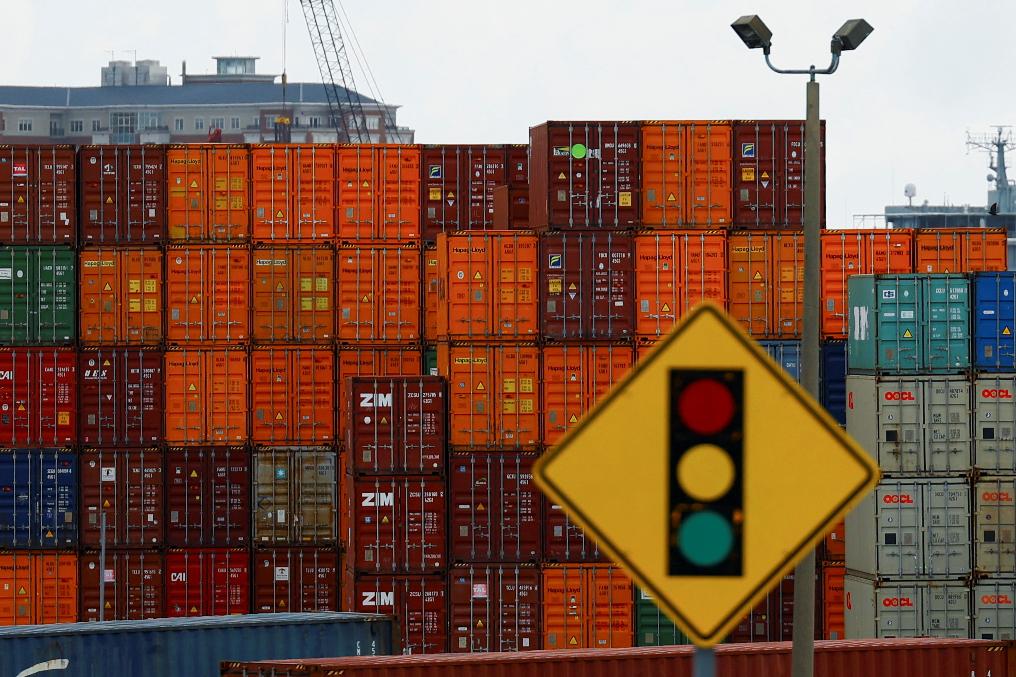
ILA and USMX still to iron out details on automation Automation in ports has led to labor disputes in the U.S. and Canada European port unions have negotiated protections against automation job losses NEW YORK, Oct 4 (Reuters) - A strike by dockworkers on the U.S. East Coast and Gulf Coast that disrupted much of the nation's ocean shipping this week ended on Thursday, but a key issue driving labor unrest across the continent - the growing use of automation - was unresolved. Companies view automation as a path to better profit while unions see it as a job-killer. For North American dockworkers battling automation, Europe's port worker contracts may point a way to resolve the issue. Some 45,000 port workers from the International Longshoremen's Association union late on Thursday ended a three-day strike that had shut ocean shipping from Maine to Texas after reaching a tentative deal on wages. The workers and port operators agreed to extend their contract to Jan. 15, 2025, while talks continued. A key sticking point in the negotiations for a new six-year labor contract is automation. "We got to keep fighting automation and semi-automation," ILA’s leader, Harold Daggett, told a group of workers during the strike outside the Maher terminal in Elizabeth, New Jersey, as they held signs reading "Machines don't feed families" and "Fight automation, save jobs." The union claims the use of an automated gate system , opens new tab at a port in Mobile, Alabama violates their contract. The port is run by Netherlands-based APM Terminals, a member of the United States Maritime Alliance (USMX) employer group. The auto gate system can process trucks entering and leaving the port using digital scans, without the help of unionized labor, according to ILA. APM Terminals, owned by A.P. Moller-Maersk (MAERSKb.CO) , opens new tab, told Reuters the auto-gate has been in place since the terminal opened in 2008 and that it remains in full compliance with the ILA/USMX master contract. USMX declined to comment on the issue. CANADA FIGHT Automation has also cropped up in other port labor disputes in the U.S. and Canada that have shaken global trade, stretching from Los Angeles to Vancouver. In June, 99% of the International Longshore and Warehouse Union (ILWU) Local 514 workers in Canada rejected what was then called the final offer of the British Columbia Maritime Employers Association (BCMEA), covering seaports in the Canadian province. The union was upset in part because logistics company Dubai Ports World Canada had put the labor group on notice that it would unilaterally introduce automation at a key rail yard at the Port of Vancouver. "Workers are challenging automation because they know the negative effects that disappearing jobs have on our families and communities," an ILWU Coast Longshore Division spokesperson said on Tuesday. The BCMEA and ILWU Local 514 have been negotiating on an industry-wide basis since November 2022. Last year, more than 7,300 workers went on strike in Vancouver as automation became a sticking point with the BCMEA. The ILWU sought to include language in contracts about training workers to repair new machinery introduced at the ports. The Pacific Maritime Association (PMA), which represents terminal operators from California to Washington state, said union workers in 2023 "effectively shut down" terminals at ports including Los Angeles, Long Beach and Oakland in California when negotiations hit the 13-month mark. A report underwritten by the ILWU representing West Coast dockworkers found that in 2020 and 2021, the Long Beach terminal had 392 fewer jobs than it would have had if it were not automated. A competing report commissioned by the PMA found that paid hours at Los Angeles ports had risen by 31.5% since automation began in 2016. The authors declined to provide figures for Long Beach alone. In the new six-year contract, the union and PMA said they would establish a minimum staffing agreement for terminals that introduce automated equipment and discuss new technological changes. EUROPEAN CONTRACTS In Europe, port workers' unions have already negotiated protections against automation, after Europe Container Terminals opened the world's first automated container terminal in Rotterdam in 1993, according to Berardina Tommasi, policy officer at the European Transport Workers' Federation for dockworkers. "Nobody can be sacked because of automation," said Niek Stam, secretary of FNV Havens, the largest Dutch dockworkers' union. The Dutch union has more than 6,000 members across three ports in the Netherlands including the Port of Rotterdam, which is considered one of the most technologically advanced in the world. "We've had this in our contracts for many years," Stam said. Even so, the union is looking to address issues around automation in its current contract negotiations, over worries about career longevity as automation reduces the number of less intense roles at ports. "We have to talk about early retirement [with terminal operators] because workers can’t work until 67 doing the most labor-intensive jobs," Stam said. A certain level of automation is tolerable in the dockworker industry, according to some European and U.S. union officials. "We're not opposed to bringing in technology that makes us more efficient," said Shaheem Smith, 41, a New Jersey crane operator and ILA strike captain. "But when you start trying to make things that's going to take our job - that's when we have the issue." Sign up here. https://www.reuters.com/world/us/us-port-strike-throws-spotlight-big-union-foe-automation-2024-10-04/
2024-10-04 07:49
CPI lowest in over 4 years, to settle around 3.2% this year Slower inflation gives room for aggressive monetary easing Central bank to hold policy meeting on Oct 16 MANILA, Oct 4 (Reuters) - Philippine annual inflation accelerated at its slowest rate in more than four years in September due to a slower rise in food prices and downtrend in transport costs, giving the central bank room to cut interest rates further. The consumer price index (CPI) rose 1.9% in September from a year earlier, the smallest increase since May 2020. It was also less than the previous month's 3.3% print and below the 2.5% forecast in a Reuters poll. With last month's data, Finance Secretary Ralph Recto said inflation could settle around 3.2% this year, within the central bank's 2% to 4% target. "This gives the BSP more room to be aggressive in its monetary policy easing to help the economy grow at a faster rate and support the government in increasing its revenue collections," Recto said in a statement. The BSP said in a statement on Friday that inflation is expected to trend downwards in the succeeding quarters on easing supply pressures from food and base effects from higher consumer prices last year. "The balance of risks to the inflation outlook continues to lean toward the downside for 2024 and 2025 with a slight tilt to the upside for 2026," the central bank said. It brought year-to-date average inflation to 3.4%. Core inflation, which strips out volatile food and energy prices, also slowed to 2.4% in September from 2.6% in August. Last month's deceleration in food inflation was driven by a significant slowdown in rice price increases to 5.7% from 14.7% in August, due to base effects and the impact of reduced tariffs. The central bank, which cut its policy rate by 25 basis points to 6.25% in August, the first reduction in nearly four years, will meet on Oct. 16 to decide on the direction of interest rates. BSP Governor Eli Remolona has said two 25 basis point cuts, one in October and another in December were possible with inflation on an easing trend. Sign up here. https://www.reuters.com/markets/asia/slower-philippine-inflation-september-gives-room-rate-cuts-2024-10-04/

2024-10-04 07:32
Oct 7 (Reuters) - It's a packed week ahead with U.S. inflation data, the start of Q3 earnings, a French budget and possibly a big rate cut from New Zealand. Investors are also on edge as Middle East tensions escalate, while Japan's new Prime Minister Shigeru Ishiba is in the spotlight. Here's all you need to know about the week ahead in global markets from Lewis Krauskopf in New York, Yoruk Bahceli in Amsterdam, Karin Strohecker and Amanda Cooper in London and Kevin Buckland in Tokyo. 1/ ONE YEAR OF WAR One year on from Hamas' Oct. 7 attack on Israel and the region looks on the brink of a sprawling war that could potentially reshape the oil-rich Middle East. The conflict, which has killed more than 42,000 people, the vast majority in Gaza, is spreading. Israeli troops are now in neighbouring Lebanon, home to Iran-backed Hezbollah; Iran launched a large scale missile attack on Israel last week. Global markets have remained broadly unfazed. Oil prices, the main conduit for tremors further afield, jumped about 8% last week, but soft demand and ample supply globally have kept a lid on gains. A further escalation between Iran and Israel could change that, especially if Israel strikes Iran's oil facilities, an option that U.S. President Joe Biden said was under discussion. The scars of the conflict are visible on Israel's economy, which has suffered a number of sovereign downgrades and seen its default insurance spike and bonds slide. 2/ BUSY TIMES The U.S. third-quarter earnings season is about to kick into gear, posing a test for a stock market near record highs and trading at elevated valuations. JPMorgan Chase (JPM.N) , opens new tab, Wells Fargo (WFC.N) , opens new tab and BlackRock (BLK.N) , opens new tab report on Friday. Other results earlier in the week include PepsiCo (PEP.O) , opens new tab and Delta Air Lines (DAL.N) , opens new tab. S&P 500 companies overall are expected to have increased Q3 earnings by 5.3% from a year earlier, according to LSEG IBES. Thursday's September U.S. consumer price index, meanwhile, will be closely watched for signs that inflation is moderating. Robust jobs numbers could mean smaller rate cuts from the Federal Reserve, which kicked off its easing cycle last month. Elsewhere, investors will seek to gauge the economic fallout from a dockworker strike after U.S. East Coast and Gulf Coast ports reopened on Thursday. 3/ A RECKONING France's new government presents its long-awaited budget to parliament on Thursday. It's planning a 60-billion-euro belt-tightening drive, around 2% of GDP, next year. It reckons spending cuts and tax hikes should bring the deficit, seen rising to 6.1% this year in the latest upward revision, to 5% by end-2025. The target date for reaching the euro zone's 3% deficit limit is also being pushed back to 2029 from 2027. That's bad news just ahead of rating reviews kicking off with Fitch on Friday. Markets are not impressed. Having eased slightly, the extra premium France pays for its 10-year debt over Germany's widened back to just under 80 bps, near its highest since August. Ultimately, what may matter more is whether Prime Minister Michel Barnier can pass the budget, given a divided parliament that has investors questioning how long his government will last. Left-wing lawmakers filed a no-confidence motion against Barnier's government on Friday, but it is not expected to pass. 4/ FEELING SHEEPISH A reluctant joiner to global easing, the Reserve Bank of New Zealand is catching up fast. It meets on Wednesday, and traders reckon the central bank could follow the Fed's example and cut rates by half a point. The RBNZ cut rates by 25 bps to 5.25% in August, a year ahead of its own projections. Markets price in a drop below 3% by end-2025. This will still be above where traders think U.S. and euro area rates will be. Shorter-term investors are neutral towards the kiwi, but hedge funds have lapped it up this year. Positioning and potentially higher rates than others might insulate New Zealand's currency. So could the return of so-called carry trades and in this case, essentially a bearish bet on the yen in favour of bullish ones on high-yielders such as the kiwi. 5/ POLL POSITIONING When Shigeru Ishiba surprised markets by winning the contest to become Japan's prime minister, investors rushed to reposition themselves for higher interest rates. A week on and the landscape looks different, as Ishiba back-flipped not just on monetary policy, but on prior market-unfriendly support for higher corporate and capital gains taxes. It's perhaps not surprising for a hawk to hide his talons with a snap election looming on Oct. 27. Even so, Ishiba was unabashedly blunt, saying after a meeting with the Bank of Japan - whose independence Ishiba has pledged to honour - that the economy is not ready for further rate hikes. The yen, which had been surging, slid past 149 to a seven-week trough on Monday. Japanese stocks rebounded from their steepest slide since early August. Check back in a month from now for any further policy flip-flops. Sign up here. https://www.reuters.com/business/take-five/global-markets-themes-graphic-2024-10-04/

2024-10-04 06:49
MANILA, Oct 4 (Reuters) - The Philippines' inflation rate could settle around 3.2% this year, its finance minister said on Friday, giving room for the central bank to further cut rates. "This gives the BSP more room to be aggressive in its monetary policy easing to help the economy grow at a faster rate and support the government in increasing its revenue collections," Finance Minister Ralph Recto said in a statement. Inflation was at 1.9% in September, the slowest in more than four years. Sign up here. https://www.reuters.com/markets/asia/philippine-inflation-settle-around-32-2024-finance-minister-says-2024-10-04/

2024-10-04 06:42
MOSCOW, Oct 4 (Reuters) - Russia's Prosecutor General has filed a lawsuit against a number of energy major Shell's (SHEL.L) , opens new tab units, court documents showed on Friday. The lawsuit, filed with Moscow's Arbitration Court on Oct. 2, was addressed to eight Shell units. The documents indicated it had been launched by Gazprom Export, the Russian energy ministry, regional authorities on the Pacific island of Sakhalin, Sakhalin Energy, and the office of Russia's Prosecutor General. No additional details were given. Shell declined to comment. Shell had several projects in Russia before Moscow sent its army into Ukraine in February 2022 in what it called a special military operation. The company had a stake in a liquefied natural gas producing plant on the Pacific island of Sakhalin led by Kremlin-controlled Gazprom. Russia consolidated its control over the plant in response to sanctions imposed by the West, and Shell left Russia. That meant it ended its involvement with the Sakhalin plant, as well as other activities such as its investments in the Nord Stream 2 pipeline project. Sign up here. https://www.reuters.com/business/energy/russia-files-lawsuit-against-shell-units-court-documents-show-2024-10-04/

2024-10-04 06:28
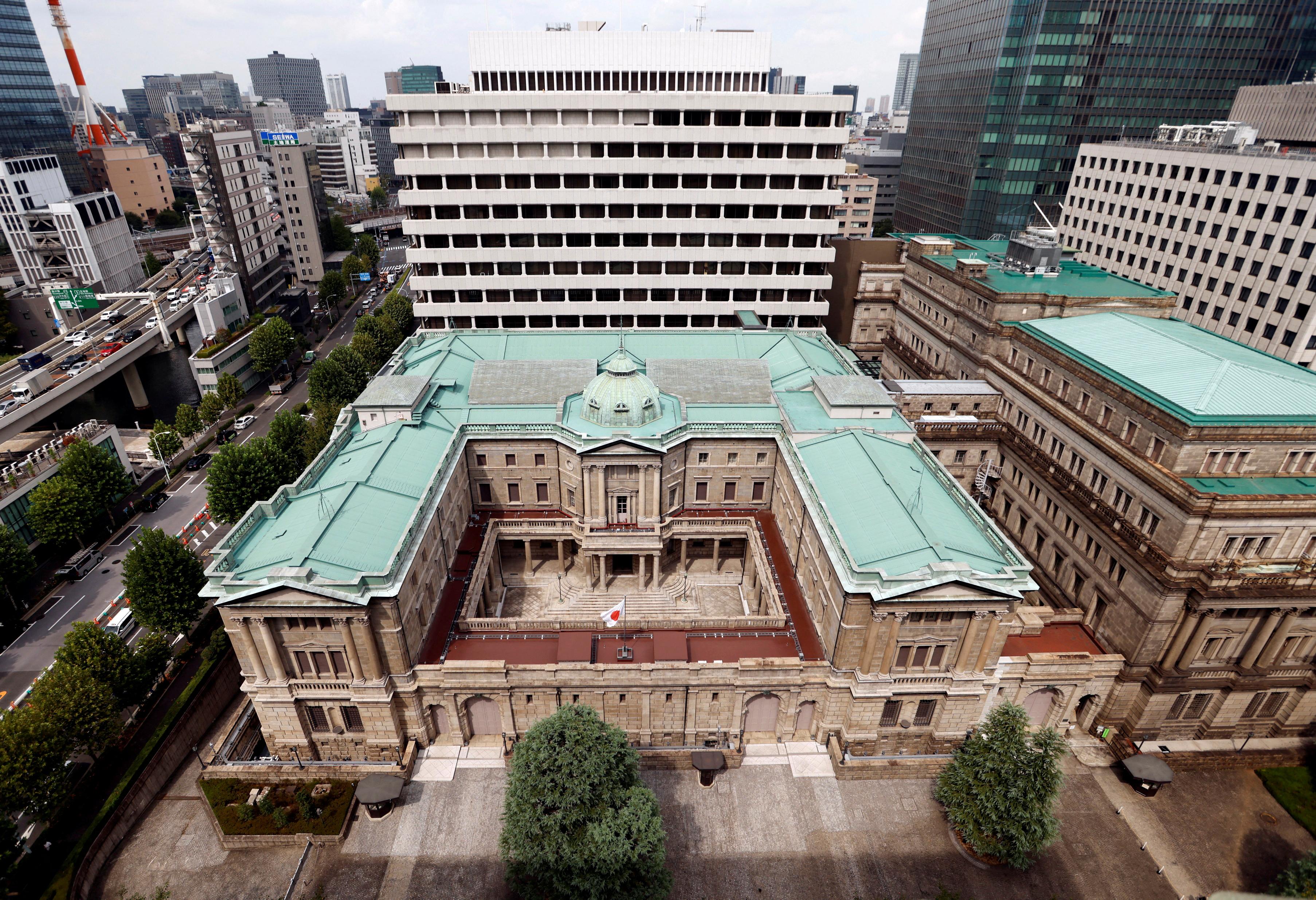
New premier Ishiba's remarks cast doubt on BOJ's rate hike plans Political uncertainty, yen may prompt BOJ to hold fire for now BOJ ended negative rates in March in historic shift TOKYO, Oct 4 (Reuters) - Bank of Japan Governor Kazuo Ueda's efforts to lift rock-bottom borrowing costs face fresh challenges as a yen rebound and the new political leadership's preference for loose monetary policy raise the hurdle for rate hikes. New Japanese premier Shigeru Ishiba stunned markets this week when he said the economy was not ready for further rate hikes, an apparent about-face from his previous support for the BOJ unwinding decades of extreme monetary stimulus. The surprisingly blunt remarks pushed the yen lower against the dollar and cast fresh doubts over how aggressive the BOJ would be in raising rates. While politics is unlikely to derail the longer-term case for rate hikes, analysts say policy deliberations could get bumpy heading into a general election due Oct. 27. "I don't think the remarks were intended to apply huge pressure on the BOJ. Rather, Ishiba probably had the election in mind," said Katsuhiro Oshima, chief economist at Mitsubishi UFJ Morgan Stanley Securities. "He was seen by markets as a hawk, so may have wanted to fine-tune that image a little bit." The looming election this month means many analysts expect the BOJ will hold off raising rates at its Oct. 30-31 meeting. Ueda was appointed last year by former Prime Minister Fumio Kishida, who stepped down in September and had endorsed the BOJ's exit from its radical monetary stimulus. The BOJ in March delivered its first rate hike in 17 years, arguing the pace of price and wage increases showed Japan was finally shaking its entrenched deflationary mindset. The bold shift to a tightening bias, however, hit a snag this week with Ishiba's new cabinet reaffirming with the BOJ a 2013 statement that commits both sides to focus on reflating a stagnant economy. To be sure, pressure for the BOJ to immediately hike rates again this year had already eased ahead of Ishiba taking office, thanks in part to a rebound in the yen off a three-decade low hit in July, which moderates inflationary pressure from import costs. Predicting the political clouds, the BOJ has already laid the groundwork to pause. After keeping rates steady last month, Ueda signaled that the BOJ is in no rush to hike with markets still unstable and U.S. economic uncertainties heightening. "They won't directly affect monetary policy," said a source familiar with the BOJ's thinking, on Ishiba's remarks. "But there's also no need for the BOJ to hike rates when so much is going on," the source said, a view echoed by another source. POLITICAL UNCERTAINTY MAY CONTINUE Having ended negative interest rates in March and raised them again in July, Ueda said the BOJ would keep lifting rates to levels that neither cool nor overheat growth - seen by analysts as somewhere around 1-1.5% - if the economy moves in line with forecasts. With inflation exceeding 2% for well over two years and a tight labour market pushing up wages, pausing for too long could cause communication problems. However, with the potential for political curve balls heading into the election, the BOJ may use overseas risks, such as a slowing U.S. economy, as an argument for not raising rates straight away. Such a messaging tweak could help avoid market perceptions the BOJ was abandoning its tightening bias altogether. "It's essential for the BOJ to make efforts to improve its communication to avoid unnecessary confusion with its policy shift," BOJ board member Asahi Noguchi said on Thursday, in unusually candid remarks acknowledging problems in the way the central bank communicated with markets. There is also uncertainty on whether Ishiba would revert to his endorsement of a BOJ exit once the election is out of the way - as many policymakers and analysts expect. Ishiba's approval ratings stood at 50.7% in a poll by Kyodo news agency conducted on Oct. 1-2, lower than the debut ratings of the previous three administrations, suggesting a tough battle in the election. While Ishiba's Liberal Democratic Party (LDP) is likely to stay in power, a significant loss of seats could weaken his standing within the party, and keep him under pressure to heed calls for loose fiscal and monetary policy, analysts say. Depending on this month's lower house election outcome, political uncertainty may continue until the upper house election set to be held in summer next year. "If Ishiba wins solidly at this month's election and the political situation stabilises, the BOJ could raise rates in December or January," said Shigeto Nagai, head of Japan economics at Oxford Economics. "If the political turmoil drags on, that could unravel the BOJ's strategy to hike rates up to around 0.75% next year," he said. "At heart, the BOJ probably wants to move swiftly." Sign up here. https://www.reuters.com/markets/asia/boj-faces-fresh-challenge-politics-yen-complicate-rate-hikes-2024-10-04/