2024-10-04 06:15
Dollar hits seven-week high Jobs report cuts bets for another big Fed rate cut Safe-haven demand also boosts dollar NEW YORK, Oct 4 (Reuters) - The dollar jumped to a seven-week high on Friday and was on track to post its best week since September 2022 after a surprisingly strong jobs report for September led traders to cut bets that the Federal Reserve will make further 50-basis-point rate cuts. The greenback was also set for its best weekly percentage performance against the Japanese yen since 2009 as traders adjusting for a less dovish Fed and a more dovish Bank of Japan sparked a rapid repricing in the currency pair. U.S. nonfarm payrolls increased by 254,000 jobs last month, beating the 140,000 new jobs that economists polled by Reuters had anticipated. The unemployment rate also unexpectedly slipped, to 4.1% from 4.2% in August. It is a "blockbuster payrolls report by any measure. I think a no-landing scenario for the U.S. economy has suddenly become far more plausible," said Karl Schamotta, chief market strategist at Corpay in Toronto. "The expectation now would be for a Federal Reserve that treads far more cautiously in easing policy,” Schamotta said. Improving economic data and more hawkish comments from Fed Chair Jerome Powell on Monday, when he pushed back against expectations of continuing hefty rate cuts, led traders to reduce bets on a 50-basis-point reduction at the Fed's next meeting, on Nov. 6-7. Those odds were completely wiped out after Friday's data. Traders are now pricing in no chance of a 50-basis-point rate cut, down from around 31% earlier on Friday and 53% a week ago, the CME Group's FedWatch Tool shows. A 25-basis-point reduction is seen as almost certain, with traders also seeing a small chance that the Fed will leave rates unchanged. Bank of America expects the Fed to cut rates by 25 basis points per meeting through March 2025, followed by reductions of 25 basis points each quarter until the end of 2025, BofA US economist Aditya Bhave said in a report on Friday. "The data flow since the Fed's decision to cut by 50bp in September has been remarkably positive," he said, calling Friday's report "A-plus." Chicago Fed President Austan Goolsbee called the data "superb" and said more labor market data along those lines would boost his confidence the economy is at full employment with low inflation. The dollar index reached 102.69, the highest level since Aug. 16, and was on track for its best weekly percentage gain since September 2022. The euro slipped to $1.09515, the lowest since Aug. 15. The dollar gained to 149.02 yen , the highest since Aug. 16. New Japanese premier Shigeru Ishiba stunned markets this week when he said the economy was not ready for further rate hikes, an apparent about-face from his previous support for the Bank of Japan's unwinding decades of extreme monetary stimulus. The dollar has also been boosted this week by safe-haven demand on concerns about widening conflict in the Middle East. Supreme Leader Ayatollah Ali Khamenei said on Friday that Iran and its regional allies will not back down. Iran raised the stakes when it fired missiles at Israel on Tuesday, partly in retaliation for Israel's killing of Hezbollah secretary general Sayyed Hassan Nasrallah. Sterling fell as low as $1.3070, the lowest level since Sept. 12. Bank of England chief economist Huw Pill said on Friday the British central bank should move only gradually with cutting interest rates, a day after the pound slumped 1% after Governor Andrew Bailey said the BoE could move more aggressively to lower rates. In cryptocurrencies bitcoin rose 1.95% to $61,958. Sign up here. https://www.reuters.com/markets/currencies/dollar-poised-largest-weekly-gain-since-april-jobs-report-focus-2024-10-04/
2024-10-04 06:07
LONDON, Oct 4 (Reuters) - Sudden ebbs and flows of inflation without equivalent hits to economic output may be a feature of a post-pandemic world of fragile supply chains - potentially requiring more forceful and hyperactive central banking, and possibly in both directions. The speed of the global inflation spike after the twin shocks of COVID-19 and the Ukraine invasion has by now almost been matched by the disinflation that's followed. So much so, that central banks are now just as rapidly reversing the steep, and arguably late, interest rate squeeze they used to contain prices over 2022 and 2023. The truly remarkable outcome despite that roller-coaster is a likely "soft landing" for economies without any major contraction of overall output. And a big question for policy makers, business and financial markets alike is whether we've just returned to square one while dodging a rare bullet. Trying the frame the lessons of the episode this week, the Bank for International Settlements - the umbrella organisation for global central banks - once again sketched a world where supply shocks may be more frequent and inflation edgier. But in a speech in London this week, BIS Deputy General Manager Andrea Maechler , opens new tab nuanced the picture to suggest central banks should no longer "look through" supply shocks as temporary inflation irritants in the way they had often done pre-pandemic. In particular, she spotlighted much steeper supply curves and a steeper "Phillips Curve", which plots the relationship between unemployment and wages, or more broadly output and prices. The gist of her argument is that such steep supply curves mean bigger moves in prices for a given shift in output, seen most spectacularly as post-pandemic labour shortages led to wage surges for companies that wanted to ramp up business quickly. Disruptions to overseas supplies and imports - most obviously in the post-Ukraine energy price shock - similarly meant rising output twinned with a supply shock had a much sharper effects on overall prices than previously. And crucially, the impact on economy-wide inflation was greater and more rapid than prior commodity and sectoral shocks of recent decades because they hit when overall inflation was already above central bank target rates, Maechler said, pointing to BIS studies illustrating that effect. TAKE CARE Maechler concluded "central banks must exercise care when assessing the extent to which they can afford to look through supply shocks". And that should colour their approach as those supply shocks were set to be more frequent in a world of de-globalisation, geopolitical tension, falling workforces, high public debt, climate change and a transition to green energy. Being more "forceful" and active in their policy response, regardless of the impact on underlying demand, was likely necessary to ensure more volatile inflation in the short term did not disturb longer-term inflation expectations and faith in 2% targets remained. But most intriguingly, given the head-scratching over how the wild swings in inflation and interest rates of late did not sow a major recession, Maechler said steep supply curves also meant wages and prices may more quickly subside to target with only relatively mild hits to output from higher interest rates. "Raising policy interest rates in response to adverse supply shocks may have only limited effects on activity if Phillips curves are steep," she said. "Then, slowing the economy to tame inflation could be less costly in terms of output." "Today's soft landing outlook may be partially explained by the economy - and in particular labour markets - being in a state where the Phillips curves are steeper than had been the case in the decades prior to the pandemic." UNDERSHOOT Where all of that fits into today's picture is less clear, though the theme of persistent supply is clearly topical in a week of such ramped-up geopolitical anxiety. Whether the steep supply curves of the post-pandemic period endure or whether most of the quirks have already been ironed out is another question. But presumably it would also suggest supply-related developments that see inflation suddenly undershooting targets again and potentially threatening price stability on the downside should similarly be met with central banking force. Only this week, European Central Bank policymaker Mario Centeno made that case clearly as the ECB en masse appeared to pivot to faster easing. "Now we face a new risk: undershooting target inflation, which could stifle economic growth," he said. Facing falling monthly prices last month and annual inflation back below 1%, new Swiss National Bank chairman Martin Schlegel also said the SNB was not ruling out taking interest rates back into negative territory. And even recent hold-outs at the Bank of England suggested they pick up the pace too, with BoE boss Andrew Bailey talking of being "a bit more aggressive" in cutting UK rates. For investors, the whole scenario points to a more volatile interest rate environment in both directions than they had been accustomed to in the pre-COVID decade. And yet it could remain a potentially positive horizon for company earnings and equities if broader economies can continue to surf wavier prices and borrowing rates much better than they have done for decades. The opinions expressed here are those of the author, a columnist for Reuters Sign up here. https://www.reuters.com/business/finance/central-banks-set-forceful-hyperactivity-mike-dolan-2024-10-04/

2024-10-04 06:02
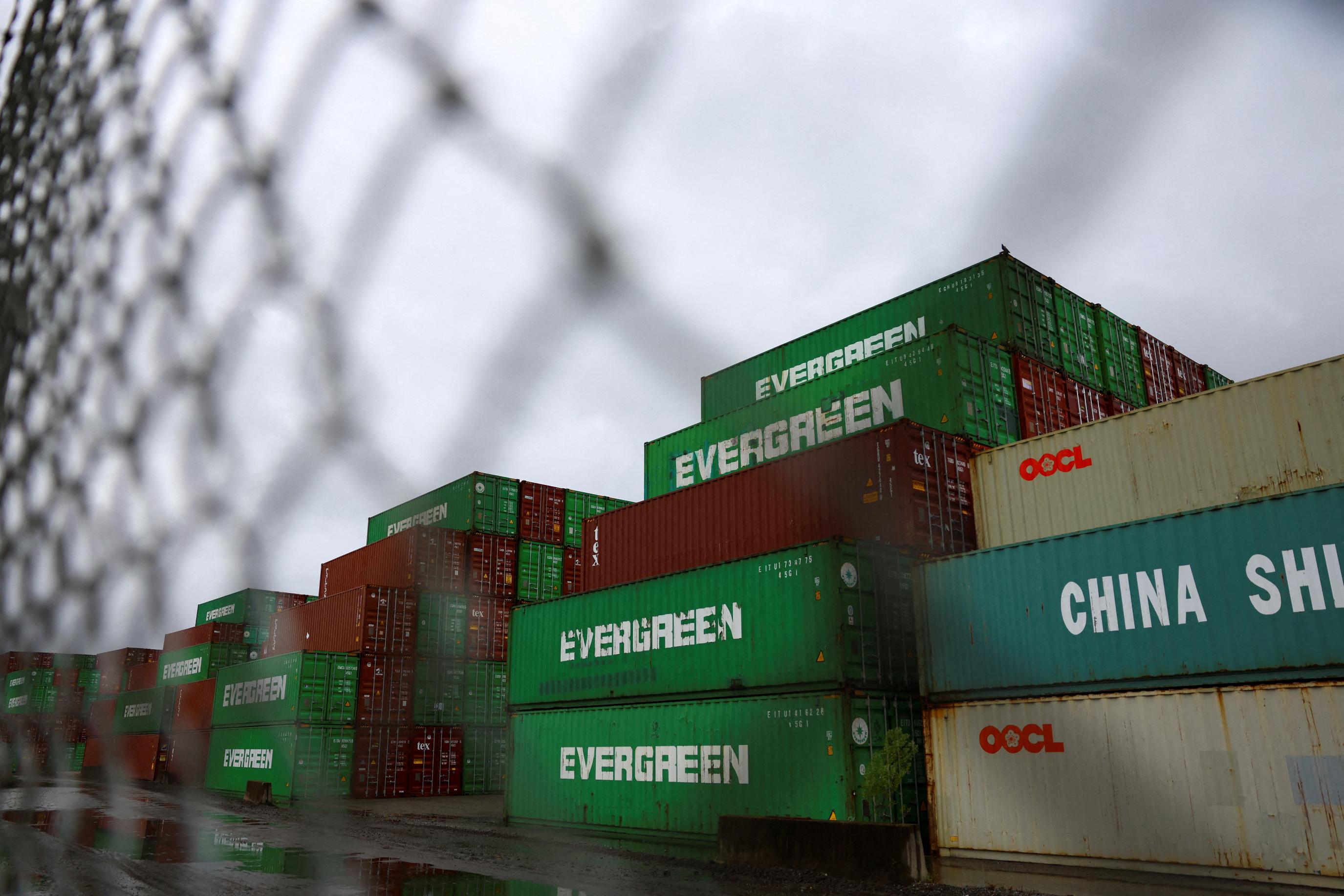
54 container ships queued outside ports, risking shortages Tentative deal includes 62% wage hike over six years-sources Strike cost U.S. economy $5 billion/day, JP Morgan analysts say Shipping stocks tumble across Asia Oct 4 (Reuters) - U.S. East Coast and Gulf Coast ports began reopening on Thursday night after dockworkers and port operators reached a wage deal to settle the industry's biggest work stoppage in nearly half a century, but clearing the cargo backlog will take time. The strike's end came sooner than investors had expected, taking the fizz out of shipping stocks across Asia on Friday as freight rates were no longer expected to surge. At least 54 container ships queued up outside the ports over three days as the strike prevented unloading and threatened shortages of everything from bananas to auto parts. The figure by Everstream Analytics was calculated at 4:00 p.m. ET (2000 GMT). More ships are sure to arrive. The International Longshoremen's Association (ILA) workers union and United States Maritime Alliance (USMX) port operators announced the deal and an immediate end to the strike late on Thursday. Sources said they had agreed a wage hike of around 62% over six years, raising average wages to about $63 an hour from $39 an hour. Shares in shipping companies in Asia fell heavily across Asia. "Shipping stocks had previously rallied on expectations of price increases triggered by the strike by U.S. dock workers and the tense situation in the Middle East," said Taishin Securities Investment Advisory analyst Tony Huang. "Now the strike will end, meaning the price rise factor is no longer in play." Japan's Nippon Yusen (9101.T) , opens new tab, which had hit a record high a day earlier, tumbled 9% and Kawasaki Kisen (9107.T) , opens new tab fell 9.5%. Mitsui O.S.K. Lines (9104.T) , opens new tab also fell 7% in its heaviest trading day for 18 months. In South Korea, HMM (011200.KS) , opens new tab dropped 6.6% to a three-week low and Pan Ocean (028670.KS) , opens new tab dropped 5.7%, while Taiwan's Evergreen Marine (2603.TW) , opens new tab, Wan Hai Lines (2615.TW) , opens new tab and Yang Ming Marine (2609.TW) , opens new tab also fell between 8.8% and 10% in their heaviest drops for several months. In Hong Kong, Orient Overseas (International) (0316.HK) , opens new tab was the biggest loser on the Hang Seng index with an 8% drop. The ILA launched the strike by 45,000 port workers, their first major work stoppage since 1977, on Tuesday, affecting 36 ports from Maine to Texas. JP Morgan analysts have said the strike would cost the U.S. economy around $5 billion per day. Retailers account for about half of all container shipping volume, with Walmart (WMT.N) , opens new tab, IKEA, and Home Depot (HD.N) , opens new tab among those that heavily rely on the East Coast and Gulf Coast ports, according to eMarketer analyst Sky Canaves. According to bill of lading data from Import Yeti, a data firm, some of the importers relying on affected ports range from IKEA and Walmart to Goodyear Tire & Rubber (GT.O) , opens new tab. East Coast ports are also key destinations for coffee, and prices have already risen due to the port disruptions. The strike ended with the tentative deal on wages, though the two sides will continue hammering out other issues, including ports' use of automation that workers say will lead to job losses. "The decision to end the current strike and allow the East and Gulf coast ports to reopen is good news for the nation’s economy," the National Retail Federation said in a statement. "The sooner they reach a (final) deal, the better for all American families." Sign up here. https://www.reuters.com/world/us/us-port-strike-ends-clearing-long-ship-queues-will-take-time-2024-10-04/
2024-10-04 06:00
US added 254,000 jobs in September vs 140,000 estimates Dollar hits highest level since August, US bond yields rise Oil rallies, on Mid East fears but settles below session highs NEW YORK/LONDON, Oct 4 (Reuters) - MSCI's global equities index rose on Friday while the dollar climbed to its highest level since mid-August as investors heaved a sigh of relief after a surprisingly strong U.S. labor market report. Oil prices rose and settled with their biggest weekly gains in over a year on the mounting threat of a region-wide war in the Middle East, but gains were limited as U.S. President Joe Biden discouraged Israel from targeting Iranian oil facilities. Earlier on Friday, the U.S. Bureau of Labor Statistics said 254,000 workers were added to nonfarm payrolls last month, above the 140,000 economists had estimated. The 4.1% unemployment rate was below estimates while August job growth was revised higher. U.S. Treasury yields rose to their highest level since early August as traders ditched bets that the Federal Reserve will cut rates by half a percentage point next month after the stronger-than-expected jobs report. Traders now see a roughly 97% probability the Fed will cut rates by only a quarter percentage point in November, up from roughly 68% on Thursday, CME Group's FedWatch tool , opens new tab showed. "U.S. equities reaction to this very strong jobs growth confirms that investors are most concerned about economic growth" even when it comes with a "hawkish disruption," said Julia Hermann, global market strategist, New York Life Investments. "The fact the market has been able to digest this hawkish shift points to a constructive view about the economic outlook," Hermann added, pointing to moves in U.S. Treasuries as well as stocks. Likely bringing further relief for U.S. economy was the reopening on Friday of U.S. East Coast and Gulf Coast ports after dockworkers and port operators reached a wage deal to settle the industry's biggest work stoppage in nearly half a century. However, clearing cargo backlog is expected to take time. On Wall Street the Dow Jones Industrial Average (.DJI) , opens new tab rose 341.16 points, or 0.81%, to 42,352.75, registering a record closing high. The S&P 500 (.SPX) , opens new tab climbed 51.13 points, or 0.90%, to 5,751.07 and the Nasdaq Composite (.IXIC) , opens new tab advanced 219.37 points, or 1.22%, to 18,137.85. MSCI's gauge of stocks across the globe (.MIWD00000PUS) , opens new tab rose 4.82 points, or 0.57%, to 847.12. For the week, the index showed a roughly 0.7% decline. Earlier, Europe's STOXX 600 (.STOXX) , opens new tab index rose 0.44%. Investors remained anxious about how Israel would respond after Iran fired missiles at it on Tuesday. Supreme Leader Ayatollah Ali Khamenei said earlier that Iran and its regional allies will not back down. But oil prices pared gains after U.S. President Biden said that, in Israel's shoes, he would consider alternatives to striking Iranian oil fields and that he thinks Israel has not decided yet how to respond. U.S. crude settled up 0.9% at $74.38 a barrel and Brent settled at $78.05 per barrel, up 0.55% on the day. In currencies, the dollar jumped to a seven-week high and was eying its biggest weekly gain since September 2022 after the jobs report led traders to cut their bets on a big Fed rate cut. Based on its gains for the full week, New York Life's Hermann said the dollar was also "clearly reacting to geopolitical risk." The dollar index , which measures the greenback against a basket of currencies including the yen and the euro, rose 0.56% to 102.48. The euro was down 0.5% at $1.0976 while against the Japanese yen , the dollar strengthened 1.25% to 148.77. In Treasuries, the yield on benchmark U.S. 10-year notes rose 12.5 basis points to 3.975%, from 3.85% late on Thursday while the 30-year bond yield rose 7.9 basis points to 4.259%. The 2-year note yield, which typically moves in step with interest rate expectations, rose 21.8 basis points to 3.9321%, from 3.714% late on Thursday. In precious metals, gold prices slipped after the stronger-than-expected U.S. jobs report poured cold water on expectations for another big Fed rate cut. Spot gold fell 0.23% to $2,649.89 an ounce. U.S. gold futures fell 0.38% to $2,647.10 an ounce. Sign up here. https://www.reuters.com/markets/global-markets-wrapup-1-2024-10-04/
2024-10-04 05:00
NEW DELHI, Oct 4 (Reuters) - India's Jakson Green is closing in on a more than 40 billion-rupee ($476.4 million) fundraise to expand its renewable energy capacity, Joint Managing Director Krishnan Kannan said. The privately-held company, which currently has an installed capacity of around 250 megawatt, will add 1 gigawatt (GW) by early 2026. "We are working with a strategic partner to bring in the investment. For this 1 GW, the investment will be around 40 billion rupees in a mix of 75% debt and 25% equity," Kannan told Reuters on Thursday on the sidelines of the Renewable Energy India Expo event in New Delhi. The company is in advanced talks with green energy funds and aims to close the fundraise by November, he added. The firm is part of the Jakson Group that also has a presence in solar module and cell manufacturing through another unit called Jakson Solar. A growing number of Indian companies are expanding their renewable energy capacity and raising funds as the government aims to add at least 500 GW of clean energy by 2030 to reduce emissions. Jakson Green is also looking to add 1 GW of renewables capacity per annum for the next five years and will raise funds as per its requirements, Kannan said. Jakson Green has won more than 1 GW of renewable energy projects from the Indian government, including Solar Energy Corporation of India , opens new tab and NHPC (NHPC.NS) , opens new tab, and in July it secured , opens new tab a credit facility from First Abu Dhabi Bank for its international expansion. In September, the company signed an agreement with Indian state-owned infrastructure lender REC (RECM.NS) , opens new tab for 14.2 billion rupees to fund Jakson's power projects. ($1 = 83.9630 Indian rupees) Sign up here. https://www.reuters.com/sustainability/climate-energy/indias-jakson-green-nears-476-mln-fundraise-renewables-capacity-expansion-2024-10-04/

2024-10-04 04:34
A look at the day ahead in European and global markets from Rae Wee Oil prices are headed for their largest weekly rise in over a year on Friday, spurred by escalating Middle East tensions that have cast a pall over global markets ahead of the weekend. Most equity indexes and stock futures were in the black, but gains were capped as investors speculated that Israel could imminently carry out retaliatory strikes on Iran. Brent crude futures were set to gain around 8% for the week - its steepest since February 2023, while U.S. crude futures' 8.2% weekly rise would be the largest since March last year. Markets may have found some solace from U.S. President Joe Biden saying he did not believe there is going to be an "all-out war" in the Middle East. However, he did previously indicate that the U.S. was discussing strikes on Iran's oil facilities as a response to Tehran's missile attack on Israel. Notwithstanding oil's recovery from a low base and prices reverting to levels seen only a month ago, world stocks and investors' risk appetite are beginning to feel the pressure. Should geopolitical tensions persist and oil prices continue to rise, investors may need to reassess their inflation forecasts. The risk of a widening conflict in the Middle East is likely also keeping Federal Reserve Chair Jerome Powell on his toes, and perhaps had some part to play when he said the U.S. central bank would likely stick with quarter-percentage-point interest rate cuts moving forward. The last thing he would want is for the Fed to ease policy too quickly only to see a resurgence in inflation. Of course, resilience in the U.S. economy is also the more obvious - and less worrying - reason to go slower on rate cuts. September's nonfarm payrolls report takes centre stage later in the day, though recent data showing continued strength in the labour market and impressive services sector activity implies there is little to be nervous about heading into the release. The day will also see a slew of speeches from European Central Bank policymakers and one from Bank of England's (BoE)chief economist Huw Pill. It remains to be seen whether Pill could strike the same dovish tone as his boss Andrew Bailey, who said the BoE could move more aggressively to cut interest rates if inflation pressures continue to weaken. In some good news elsewhere, U.S. East Coast and Gulf Coast ports began reopening on Thursday night after dockworkers and port operators reached a wage deal to settle the industry's biggest work stoppage in nearly half a century. Key developments that could influence markets on Friday: - U.S. nonfarm payrolls report (September) - Bank of England's Huw Pill speaks - Speeches from various European Central Bank policymakers Sign up here. https://www.reuters.com/markets/europe/global-markets-view-europe-2024-10-04/