2024-10-03 05:51
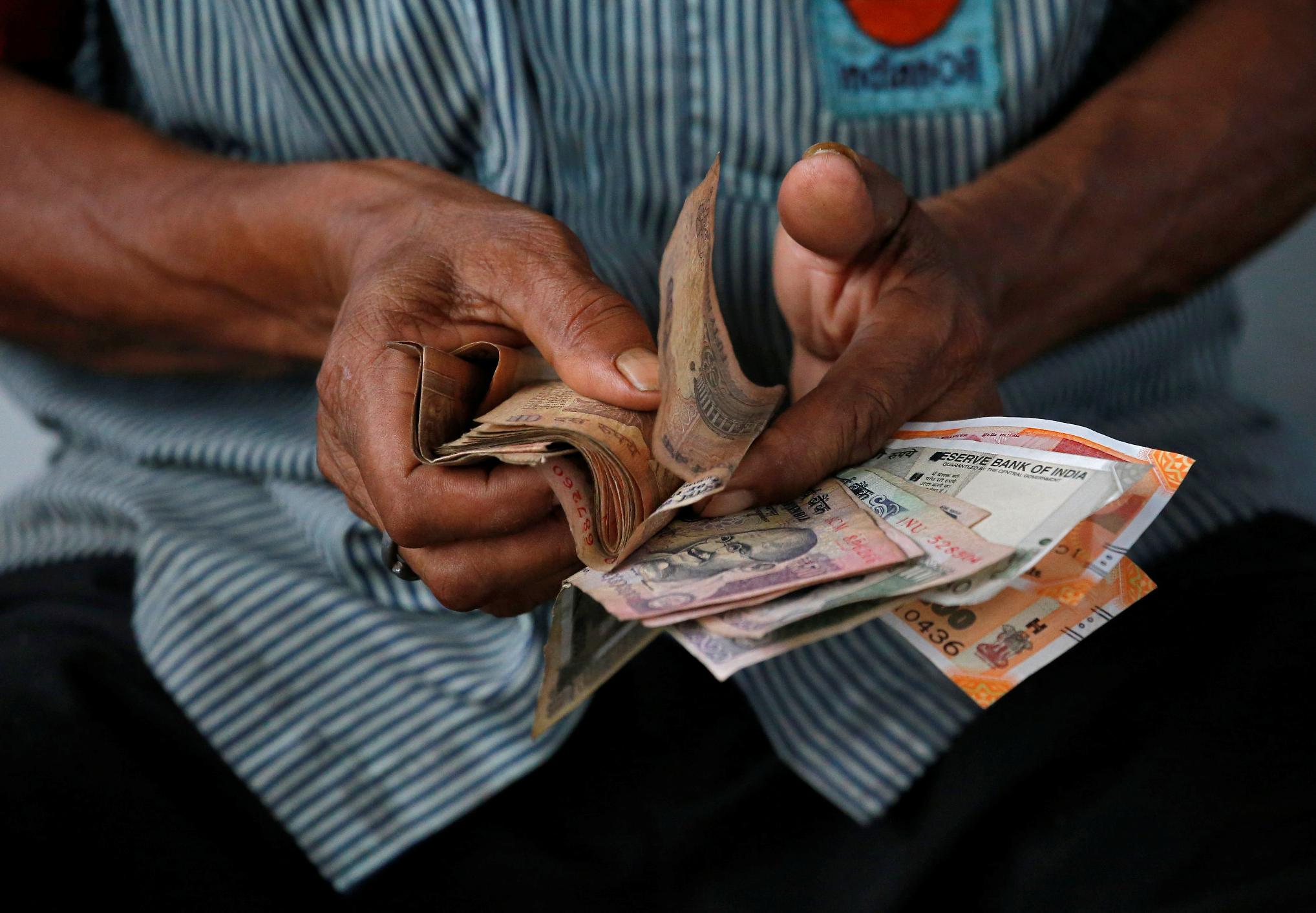
MUMBAI, Oct 3 (Reuters) - The Indian rupee declined on Thursday, just shy of an all-time low, pressured by prospects that the Federal Reserve was not likely to be in a rush to cut interest rates and concerns over the impact of escalating Middle East tensions on oil prices. The rupee was quoted at 83.9375 to the U.S. dollar at 11:10 a.m. IST, down from 83.82 in the previous session. The domestic currency is hovering near its lifetime low of 83.9850, hit a month ago. The likelihood that the rupee will slump to a new low and slip past the 84 handle is "negligible", a currency trader at a bank said. He expects the Reserve Bank of India (RBI) to intervene to prevent a decline to 84, like it has done in the past. The rupee is finding itself "on shaky ground" and now "all eyes are on the RBI", which is expected to continue its interventions to keep the currency in a narrow range, Amit Pabari, managing director at FX advisory firm CR Forex, said. ASIA TUMBLES The Thai baht, Malaysian ringgit and the Indonesian rupiah were all down about 1% to the U.S. dollar on Thursday, while the offshore Chinese yuan weakened past 7.05. The Indonesian central bank intervened to manage the volatility in the currency. A volatility in oil prices amid the Middle East conflict and the declining probability that the Fed will opt for a large rate cut next month dampened demand for Asian currencies and lifted the dollar. U.S. private payrolls increased more than expected last month, spurring expectations for a robust reading on the monthly non-farm payrolls figures on Friday. The payrolls data supported Fed Chair Jerome Powell's recent remarks that the central bank is in no hurry to cut rates, pushing the odds of a 50-basis-point rate cut in November to 35%. Sign up here. https://www.reuters.com/markets/currencies/moderating-fed-view-oil-worries-put-rupee-brink-all-time-low-2024-10-03/
2024-10-03 05:08
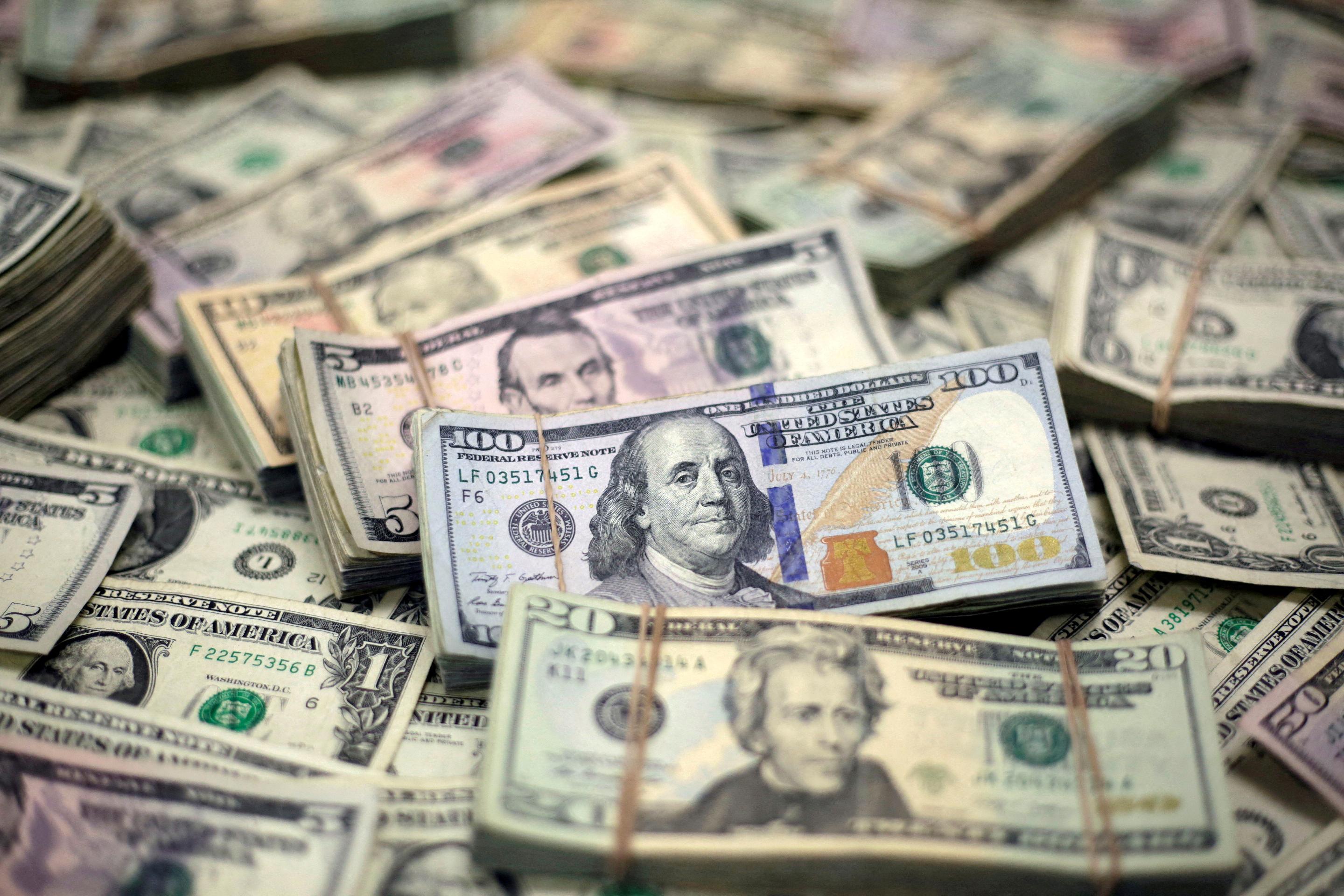
Fed's rate cuts and global central banks' actions impact dollar's performance Economic data and U.S. presidential election add uncertainty to dollar's outlook Investors eye currencies like yen, krone, and real for potential gains Yen has rallied from 2024 lows as central bank policies diverge Still-strong U.S. economy could limit how much the Fed cuts rates NEW YORK, Oct 3 (Reuters) - Traders gauging how to play further downside in the U.S. dollar are looking to the relative strength of economies around the world, as interest rate shifts from global central banks shake up currency markets. The U.S. dollar index (.DXY) , opens new tab fell 4.8% against a basket of currencies in the third quarter, its worst quarterly performance in nearly two years. Pressure on the U.S. currency increased after the Fed delivered a jumbo-sized 50 basis point cut last month, its first reduction since 2020. How much further the dollar falls and which currencies will benefit may largely be a question of yields. For years, U.S. yields have stood above most developed economies, bolstering the dollar's allure against its peers. That picture is shifting, with the Fed and most other central banks cutting interest rates to safeguard economic growth. Many traders betting against the buck are doing so through currencies whose yield gap with the dollar is expected to narrow. Net bets on a weaker dollar have grown to $14.1 billion in futures markets, the highest level in about a year, Commodity Futures Trading Commission data showed. The path lower for the dollar, however, is likely to be a bumpy one. The comparatively strong U.S. economy could limit how much the Fed cuts rates, complicating the outlook for further dollar declines. Meanwhile, the U.S. presidential election and geopolitical worries threaten to inject further volatility into currency markets in coming weeks. "It's not just necessarily 'sell the dollar and buy everything,'" said Jack McIntyre, portfolio manager at Brandywine Global. "You have to be a little more selective." While the dollar index is little changed for the year, it is down about 5% from its April high, with the currency notching drops against several developed market peers as U.S. yields fell in anticipation of monetary policy easing by the Fed. Some of the risks to the weaker dollar view became more apparent in recent days. The dollar rose sharply against the British pound on Thursday after the Bank of England said it could move more aggressively to cut interest rates if inflation pressures continued to weaken. A day before, data showed euro zone inflation dipped below 2% for the first time since mid-2021 in September, reinforcing the case for the European Central Bank to cut rates this month, a potential source of weakness for the euro. The dollar's role as a safe haven has also been on display as Middle East tensions have escalated in recent days. From the U.S. side, Friday's labor market data could help shape views on how much the Fed might cut rates for the rest of the year. Though futures markets show an additional 68 basis points of cuts priced in, a strong number could bolster the case for more moderate policy easing. However, "if we are entering a soft patch for the U.S. economy, the market is going to discount more cuts into the curve and that will weaken the dollar," said Christian Dery, head of macro strategy at Capital Fund Management. Nevertheless, investors believe more downside remains for the dollar in some corners of the market. Paresh Upadhyaya, director of fixed-income and currency strategy at Amundi US, said he is looking for "idiosyncratic stories like widening interest rate differentials caused by a divergence in monetary policy." His plays on a weaker dollar include positions in the Norwegian krone and Australian dollar. Norway's central bank recently held its policy interest rate at a 16-year high, signaling any cuts must wait until early 2025. Australia's central bank held rates steady last week and said interest rate cuts were unlikely in the near term. Upadhyaya also added to a position in the Brazilian real. Unlike many of its peers, Brazil's central bank hiked rates last month as it looks to tackle a challenging inflation outlook. The Brazilian real is down about 10% against the dollar this year. The Japanese yen could also find further support from diverging central bank policy, investors said. The Bank of Japan tightened rates to 0.25% in July in a landmark shift away from a decade-long stimulus program aimed at firing up economic growth. Though the Bank of Japan has signaled it is in no rush to raise rates further, the narrowing gap between rates in Japan and the U.S. has already fueled a 10% rally in the yen from its 2024 lows against the dollar. Net bullish bets on the currency against the dollar stand at $5.8 billion, CFTC data showed. "With global central banks also starting to cut rates, the biggest gainer versus the USD will be in the likes of the (yen)," said Natsumi Matsuba, head of FX trading and portfolio management at Russell Investments. An analysis of currency valuations based on metrics such as purchasing power parity and real effective exchange rates released by BofA Global Research last month showed that the yen and Norwegian krone are among the developed world's most undervalued currencies. The dollar and Swiss franc are the two most overvalued, the study found. Whatever their positioning, however, investors must also contend with potential volatility surrounding the U.S. presidential election, slated for Nov. 5. Uncertainty in the weeks before the vote could send safety-seeking investors to the dollar. Many investors also believe a win by Republican candidate Donald Trump could buoy the dollar. "The wild card in any forecast right now for our currency is the U.S. election," said Brandywine's McIntyre, who remains bearish on the U.S. dollar, but less so than before the currency's recent slide. "That's why it's hard to be super convicted." Sign up here. https://www.reuters.com/markets/currencies/dollar-bears-eye-shifts-global-yields-growth-play-weakening-us-currency-2024-10-03/
2024-10-03 04:45
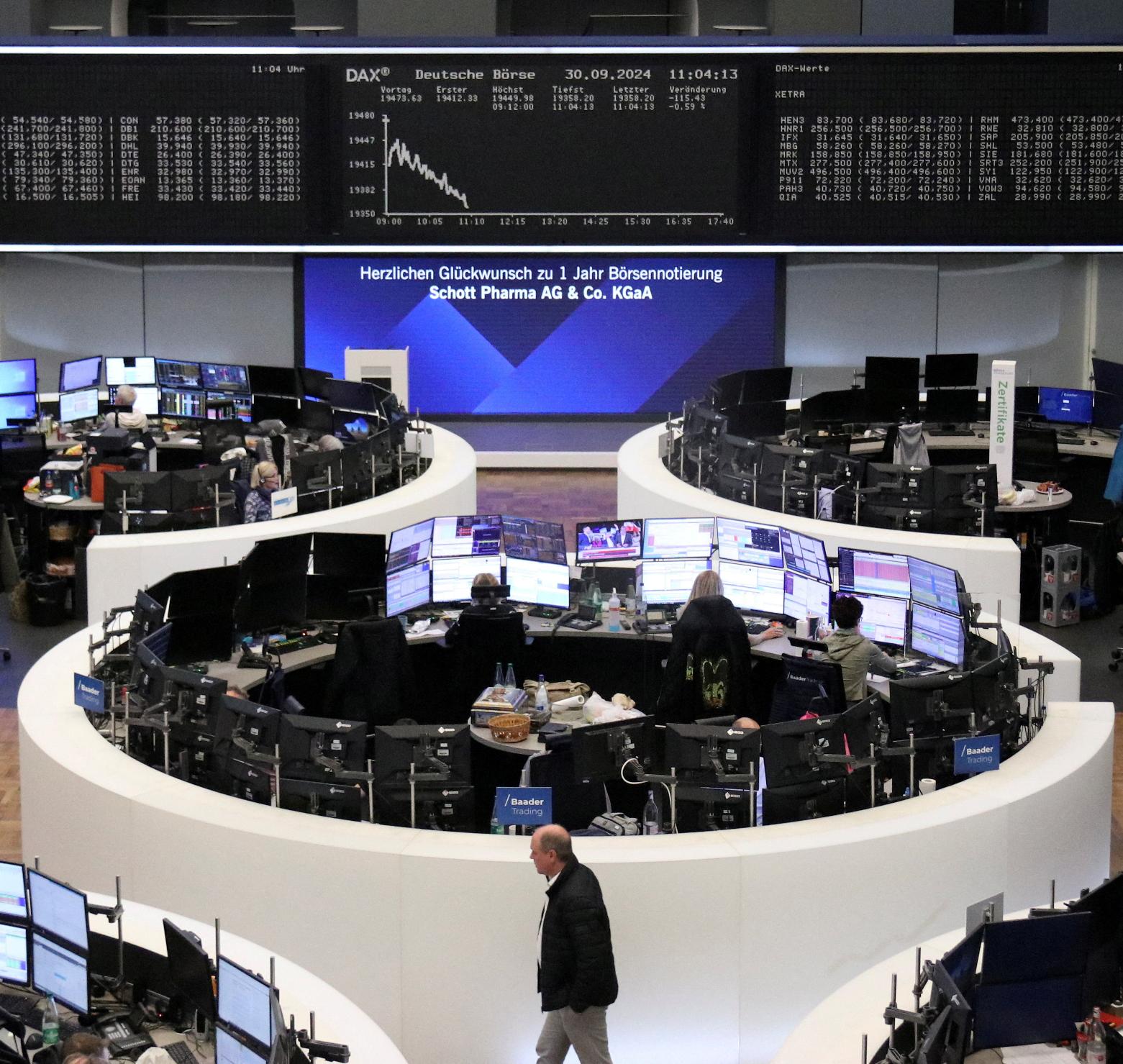
A look at the day ahead in European and global markets from Stella Qiu Services PMIs due across Europe on Thursday are likely to show further moderation in activity and cement expectations for rate cuts in the region, while potential rate moves in New Zealand and the U.S. are also in focus. Investors are already betting the European Central Bank will cut rates by 25 basis points at its next two meetings, in October and December, after top hawk Isabel Schnabel sounded more sanguine about inflation coming under control. While services are expanding in Britain, the composite PMIs in Germany and elsewhere in Europe are expected to continue showing contraction in data for September. In the U.S., jobless claims and the ISM services survey will top Thursday's data docket, although the main event will be Friday's payroll figures. In New Zealand, expectations are rising among economists that the central bank will cut by 50 bps at each of its meetings in October and November. The manufacturing PMI in global trade bellwether Singapore remained in expansionary territory in September, data showed late on Wednesday. New orders were up and the electronics PMI hit its highest since 2018 although analysts cautioned of possible weakness ahead, as rising input prices may point to supply chain challenges while backlogs in electronics orders are subsiding. Asian markets, meanwhile, had a mixed day, with the MSCI ex-Japan index falling 1.4%, retreating from a 32-month peak. That was driven by a 3.5% drop in Hong Kong's Hang Seng, which pulled back following a meteoric rise of 30% in just three weeks. Hong Kong tech shares (.HSTECH) , opens new tab were down more than 5% and property stocks were headed for their largest one-day drop in almost two years, falling 7.2%. The other big mover was Japan's Nikkei, which rallied 2.3% as newly elected Prime Minister Shigeru Ishiba shed his hawkish feathers and essentially told the Bank of Japan not to hike rates any further. BOJ policy dove Asahi Noguchi reinforced that message, saying the central bank must patiently maintain loose monetary policy. That's good for Japanese stocks, but not so much for the yen, which dropped to its lowest in month. The currency fell 2% overnight and was last at 146.9 per dollar. Markets now indicate almost no chance of a BOJ tightening in October and an increase of just 4.6 basis points in December, or less than an even chance of a 10 bp move. Rates are seen only reaching 0.5% by the end of next year, from the current 0.25%. Key developments that could influence markets on Thursday: -- HCOB Eurozone Services PMI -- U.K. S&P Global Servces PMI -- U.S. jobless claims, ISM services PMI -- Appearances by Fed Bank of Atlanta President Raphael Bostic and Bank of Minneapolis President Neel Kashkari, Sign up here. https://www.reuters.com/markets/europe/global-markets-view-europe-2024-10-03/
2024-10-03 04:03
HANOI, Oct 3 (Reuters) - Dozens of tigers and lions in captivity died in the past month in southern Vietnam with tests showing they were positive for bird flu, health ministry and state media said on Thursday. Two samples taken from dead tigers at Mango Garden Resort in Dong Nai province have tested positive for the H5N1 strain of bird flu, the Ministry of Health said in a statement. Twenty tigers have died at the resort since early last month. The spread of highly pathogenic avian influenza, commonly known as bird flu, to mammals including cows, dogs, cats and even dolphins worldwide has raised concerns about potential human-to-human transmission. In neighbouring Long An province, 27 tigers and three lions died from bird flu at My Quynh Safari from Sept. 6 to 18, state media reported, citing provincial agricultural authorities. The tigers at Mango Garden Resort had been fed chicken before they died, Phan Van Phuc, an official of Dong Nai province's Centre for Disease Control, said in the health ministry statement. "It's likely that the tigers had been infected from sick chicken, and the authorities are tracking the source of the chicken to determine the cause," the statement quoted Phan as saying. On its website, the World Health Organization warns against consuming raw or incompletely cooked meat and eggs from regions experiencing avian influenza outbreaks due to the high risk of infection. Sign up here. https://www.reuters.com/world/asia-pacific/dozens-captive-tigers-lions-die-vietnam-bird-flu-detected-2024-10-03/

2024-10-03 03:56
SINGAPORE, Oct 3 (Reuters) - China's climate-warming carbon dioxide emissions could fall by a third by 2035 and align with the goals of the Paris Agreement if it submits more ambitious pledges to the United Nations early next year, an environmental think tank said on Thursday. As part of their Paris obligations, nations must deliver new and stronger "nationally determined contributions" (NDCs) to the U.N. by February to lay out goals for 2035. Pledges from China, the world's largest greenhouse gas emitter, will be closely scrutinised. With China on course to meet its 2030 climate goals with relative ease, it could now capitalise on its renewable energy advantages and establish policies that will slash emissions by at least 30% by 2035, said the Helsinki-based Centre for Research on Energy and Clean Air (CREA). Total CO2 levels could now already be in "structural decline" after falling this year, and there are positive signs that climate is back on the policy agenda, said CREA's China policy analyst, Belinda Schape. However, "despite these positive trends, there is a risk that Chinese policymakers may be lowballing China's climate targets for 2035 amid current policy inertia," she said. China has not disclosed any details related to its NDC plans. In August, top renewable energy official Li Chuangjun told reporters it was "working hard" to establish 2035 targets. China's long-term climate goals are fixed and its pathway to net zero emissions will be decided by China alone and "will never be influenced by others", Li said. Climate Action Tracker, an independent initiative that assesses how countries match up to the Paris goal to keep temperature rises within 1.5 degree Celsius, has described China's last NDC submission in 2021 as "highly insufficient". China is classed by the U.N. as a developing country so is not obliged to make absolute cuts in emissions. It said in its last NDC submission in 2022 that it had "made every effort" to advance climate action. China may already have achieved the target to bring emissions to a peak by "before 2030" and a goal to increase wind and solar capacity to 1,200 gigawatts by 2030 has also been met six years early, after record levels of new installations. CREA said China was capable of setting a 2035 wind and solar target of 4,500 GW and cutting total power sector emissions by at least 30%. It could also cut steel and cement emissions by 45% and 20% respectively. Strong targets to slash other greenhouse gases like methane are also achievable, CREA said. China has already ordered its steel mills to undergo "low-carbon renovation" that will cut emissions by an estimated 53 million metric tons by next year. Sign up here. https://www.reuters.com/sustainability/climate-energy/china-could-cut-co2-by-third-by-2035-with-new-un-targets-think-tank-says-2024-10-03/

2024-10-03 03:02
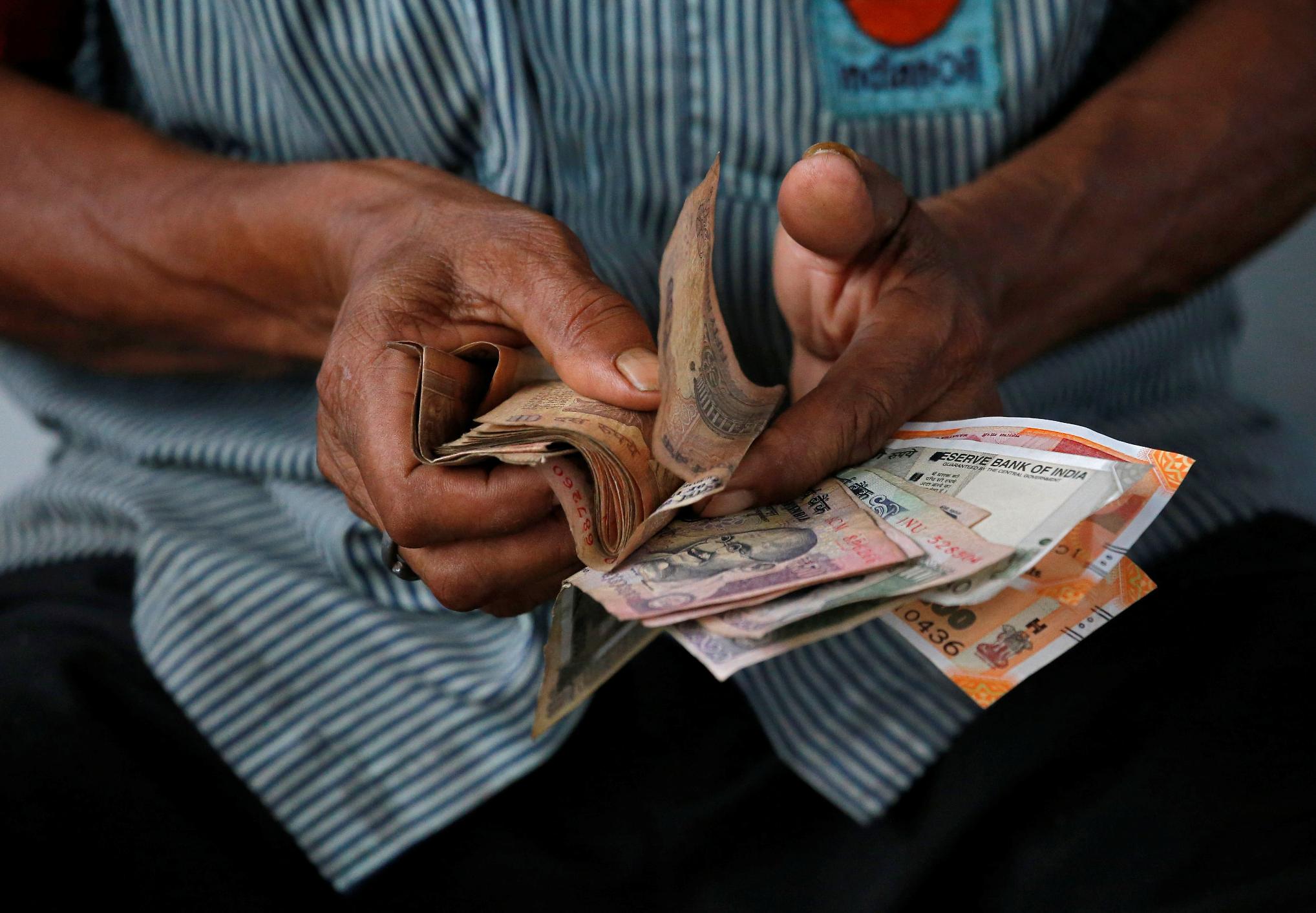
MUMBAI, Oct 3 (Reuters) - The Indian rupee is poised to open weaker on Thursday, after a measure of how the U.S. labour market was faring spurred expectations that the Federal Reserve would deliver a smaller interest rate hike next month, boosting the U.S. dollar. The conflict in the Middle East and the potential impact it could have on oil prices is further expected to weigh on the Indian currency. The 1-month non-deliverable forward indicated that the rupee will open at 83.92-83.94 to the U.S. dollar, compared with 83.82 on Tuesday. Indian financial markets were shut on Wednesday for a public holiday. The rupee is not too far away from an all-time low of 83.9850 hit a month ago. The rupee is "now back towards the higher side of the current range, tracking the changing Fed rate cut odds", said Srinivas Puni, managing directors at QuantArt Market Solutions. Unless Friday's U.S. jobs data comes in much higher than expected, the 84-84.10 zone will likely remain the peak for USD/INR, he said. The dollar index was up for a fourth straight session and at a three-week high on mounting expectations that the Fed at its November meeting will cut rates by 25 basis points, a step down from the 50 bps it opted for last month. The dollar was helped by data on Wednesday that showed U.S. private payrolls increased more than expected last month, spurring expectations for a robust reading on the monthly non-farm payrolls figures due on Friday. The data supported Fed Chair Jerome Powell's recent remarks that the U.S. central bank is in no hurry to cut rates. Futures are now pricing in just a 1-in-3 likelihood of a 50 bps rate cut next month, down from nearly 60% a week before. Meanwhile, oil prices ticked higher on Thursday amid worries over the widening Middle East conflict. KEY INDICATORS: ** One-month non-deliverable rupee forward at 84.04; onshore one-month forward premium at 11 paise ** Dollar index up at 101.75 ** Brent crude futures up 0.9% at $74.6 per barrel ** Ten-year U.S. note yield at 3.79% ** As per NSDL data, foreign investors sold a net $767mln worth of Indian shares on Sept. 30 ** NSDL data shows foreign investors bought a net $17.6mln worth of Indian bonds on Sept. 30 Sign up here. https://www.reuters.com/markets/currencies/rupee-likely-decline-dollar-strength-middle-east-risks-2024-10-03/