2024-10-02 10:32
OPEC+ joint ministerial monitoring committee meets on Wednesday Unlikely to change production agreement, two sources say Compliance with cuts by Iraq and Kazakhstan under scrutiny LONDON/DUBAI, Oct 2 (Reuters) - An OPEC+ ministerial panel scheduled to meet on Wednesday is unlikely to recommend any changes to policy, allowing the group to start gradually increasing production from December, two sources from told Reuters. Ministers from the Organization of the Petroleum Exporting Countries and allies led by Russia, or OPEC+ as the group is known, will hold an online joint ministerial monitoring committee (JMMC) at 1200 GMT. The two sources, who declined to be identified, said Wednesday's meeting is unlikely to bring any surprises. One of them said it will reaffirm the need for member countries to comply with their production targets under the deal. International oil prices fell below $70 a barrel in September for the first time since late 2021, but have since rallied. This week, prices have risen around 5% to above $75 on concerns a possible escalation in the Middle East following Iran's biggest military attack yet against Israel could disrupt crude output from the region. OPEC+ is cutting output by a total of 5.86 million barrels per day (bpd), or about 5.7% of global demand, in a series of steps agreed since late 2022. It plans a 180,000 bpd increase in December, as part of a gradual unwinding of its most recent layer of voluntary cuts during 2025. The hike was delayed from October after prices slid. Countries' compliance will be in focus at the meeting and in the coming weeks, particularly that of Iraq and Kazakhstan that have promised what are known as compensation cuts of 123,000 bpd in September and more in later months to make up for their previous over-production. An OPEC+ source told Reuters last week that clarity on whether the compensation cuts were made in September would allow the December increase to go ahead. However, a lack of compliance could prompt Saudi Arabia and others to unwind their cuts faster from December, analysts said. "If they fail to comply, we can envision a swifter sunsetting of the voluntary cuts," Helima Croft of RBC Capital said in a report. The JMMC, which groups the oil ministers from Saudi Arabia, Russia and other leading producers, usually meets every two months and can make recommendations to change policy. Sign up here. https://www.reuters.com/business/energy/opec-set-keep-output-policy-unchanged-panel-meeting-2024-10-02/
2024-10-02 10:14
MidEast escalation pressures pound against safe-haven dollar Data shows UK pay settlements at 2-year low in 3-months to Aug BoE speeches, services and construction surveys eyed Oct 2 (Reuters) - The British pound steadied on Wednesday, a day after it fell sharply against the dollar as the growing conflict in the Middle East spurred demand for safe haven assets. Sterling was last flat at $1.3286 after dropping 0.67% the previous day as investors flocked to the U.S. currency. The pound was around 1% off a two-and-a-half year high hit on Thursday. The dollar was boosted on Tuesday as Iran fired ballistic missiles on Israel, an assault that, along with Israel's incursion into Lebanon, has sparked fears of a wider conflict in the oil-producing Middle East. Uncertainty over whether Iran's salvo marked an escalation, rather than a temporary flare-up, kept investors on edge. "The move lower in GBP ... can be mostly attributed to the rising Middle East tensions and hawkish Powell remarks," said Matthew Ryan, head of market strategy at global financial services firm Ebury, referring also to Monday's speech by U.S. Federal Reserve Chair Jerome Powell. Euro/sterling was flat at 83.29 pence per euro, while the pound firmed 0.6% against a weakening yen to 191.80. Beyond headlines on the Middle East, market participants will look to U.S. jobs data on Friday, which could offer hints on the health of the world's biggest economy and shape the Fed's policy path. In Britain, data showed pay settlements awarded by employers held at their lowest in two years in the three months to August, a reassuring sign for the Bank of England as it considers whether to cut interest rates again. The BoE, which began lowering its key borrowing rate in August, is expected to cut rates more gradually compared with European and U.S. peers as it battles sticky inflation, boosting the pound this year. Money markets are pricing in 36 basis points of rate cuts by year-end, implying a 25 basis point move and a roughly 45% chance of another. IRPR Several BoE officials are scheduled to speak this week, including Chief Economist Huw Pill on Friday, while service sector and house building surveys are due on Thursday and Friday respectively. "Focus in the UK this week will be almost entirely on communications from Bank of England officials. We suspect that officials will strike a similar tone, warning against rapid cuts, and validating our view for rate reductions on roughly a quarterly basis," Ryan said. Sign up here. https://www.reuters.com/markets/currencies/sterling-steadies-after-dropping-middle-east-escalation-2024-10-02/
2024-10-02 10:02
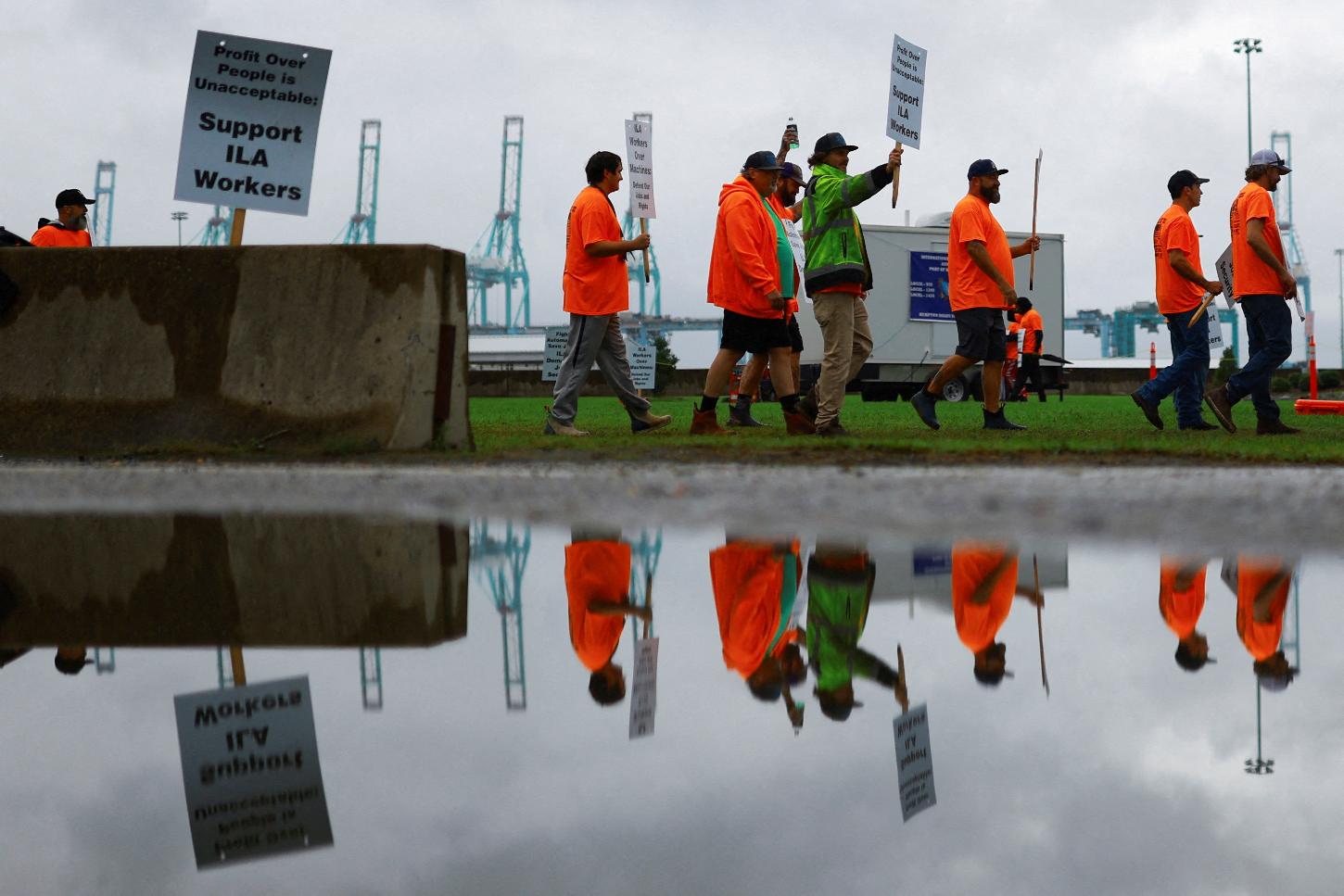
A look at the day ahead in U.S. and global markets from Mike Dolan With Middle East tensions dialing back up, U.S. port workers on strike and global industry under the cosh, the final quarter of 2024 promises to be a bit edgier for world markets than the relatively serene first nine months. The fourth quarter was barely underway on Tuesday when 12 months of intense conflict in Gaza and Lebanon spilled over again into another direct standoff between Israel and Iran - jarring recently listless energy markets and provoking some limited hedging of risk assets. With year-end political risks already high due to the U.S. election, a fresh flaring of Middle East violence has added anxiety at the margins - even if most economic and fundamental market settings still seem positive. Iran said early on Wednesday that its missile attack on Israel was over, barring further provocation, even as Israel and the United States promised to strike back against Tehran as fears of a wider war smouldered. But, as so often over the past year, the market reaction to the latest geopolitical twist has been pretty limited so far. Crude oil prices - with one eye on Wednesday's OPEC+ ministerial meeting - did pop back above $70 per barrel - but that's only back to where it was early last week. Year-on-year crude declines that are depressing headline annual inflation rates across the world are still running close to 20%. As it stands, no OPEC policy change is expected and the group is set to raise output from December by 180,000 bpd monthly. And Saudi Arabia warned oil prices could drop to as low as $50 per barrel if OPEC+ members don't stick to agreed-upon production targets, the Wall Street Journal reported. Back stateside, the U.S. east coast port strikes could well distort monthly economic data and inflation readings at a critical time for policymakers - though there are doubts whether any damage would be durable and some of the biggest worries are for already-hobbled European automakers. But there is little doubt the global industrial economy is struggling badly again, judging by the stream of U.S. and global manufacturing surveys for September released on Tuesday. JPMorgan's catch-all global factory index is now showing the deepest contraction of worldwide activity this year and just a whisker from its deepest downturn since the aftermath of the 2020 pandemic shock. There were some silver linings in the U.S. readouts, however, which showed improving new orders and a drop in factory input prices to nine-month lows. Along with news of a pick-up in economy-wide job openings in August, the economic 'soft landing' picture holds together nicely. In a big week for labor market data, ADP's private sector payrolls report is due out later on Wednesday, alongside another long list of Federal Reserve speakers. And despite the geopolitical jolt, interest rate and stock markets have held relatively steady. The S&P 500 (.SPX) , opens new tab fell back less than 1% from record highs on Tuesday and stock futures are off only modestly ahead of Wednesday's bell. The VIX volatility gauge (.VIX) , opens new tab is hovering just under 20, a level it briefly poked above for the first time in three weeks on Tuesday. Fed futures pricing is virtually unchanged from Monday. 'Safety' bids in U.S. Treasuries after the Iran attack news have mostly been unwound already - with 10-year yields back just above 3.75% after completing a round-trip from lows just under 3.70% on Tuesday. Gold prices were flat on Wednesday and didn't even hit new records on Tuesday's developments. The dollar (.DXY) , opens new tab held onto gains, perhaps partly due to safe haven demand, but it was largely against the euro, which is suffering from stepped-up European Central Bank easing speculation. With euro zone inflation swooning below target, European industry contracting and the regional auto sector in deep trouble, economists have rushed to change ECB forecasts over the past week and most do not see another rate cut this month. The market mood around the world on Wednesday was also more circumspect. Asia stocks were mostly lower, with Tokyo's Nikkei (.N225) , opens new tab underperforming with losses of 2%. The yen gave back any tangential safety bid it may have received too, however, with Bank of Japan Governor Kazuo Ueda also saying the central bank must be vigilant to fallout from unstable markets and global economic uncertainties before pushing ahead with further interest rate hikes. But with mainland Chinese markets closed for the rest of the week, Hong Kong (.HSI) , opens new tab was the only indicator of ongoing optimism about last week's frantic economic stimulus and the Hang Seng jumped another 6% on Tuesday's reopening there. European stocks (.STOXXE) , opens new tab actually ticked higher again. In company news, Nike (NKE.N) , opens new tab withdrew its annual revenue forecast on Tuesday, just as a new CEO is set to take the helm at the sportswear giant that is staring at a holiday season likely to be filled with discounts and weak traffic on its website and mobile apps. That has sent Nike's shares tumbling 6% ahead of Wednesday's open. Key developments that should provide more direction to U.S. markets later on Wednesday: * US September ADP private sector payrolls; Brazil August industrial production * OPEC+ ministerial panel meets to review oil policy * Cleveland Federal Reserve President Beth Hammack, St. Louis Fed President Alberto Musalem, Richmond Fed chief Thomas Barkin, and Fed Board Governor Michelle Bowman all speak; European Central Bank board member Isabel Schnabel speaks * German Chancellor Olaf Scholz meets French President Emmanuel Macron in Berlin; British Prime Minister Keir Starmer meets European Commission President Ursula von der Leyen in Brussels * US corporate earnings: Conagra Brands, Levi Strauss, RPM International, NovaGold Resources Sign up here. https://www.reuters.com/markets/us/global-markets-view-usa-pix-2024-10-02/
2024-10-02 09:32
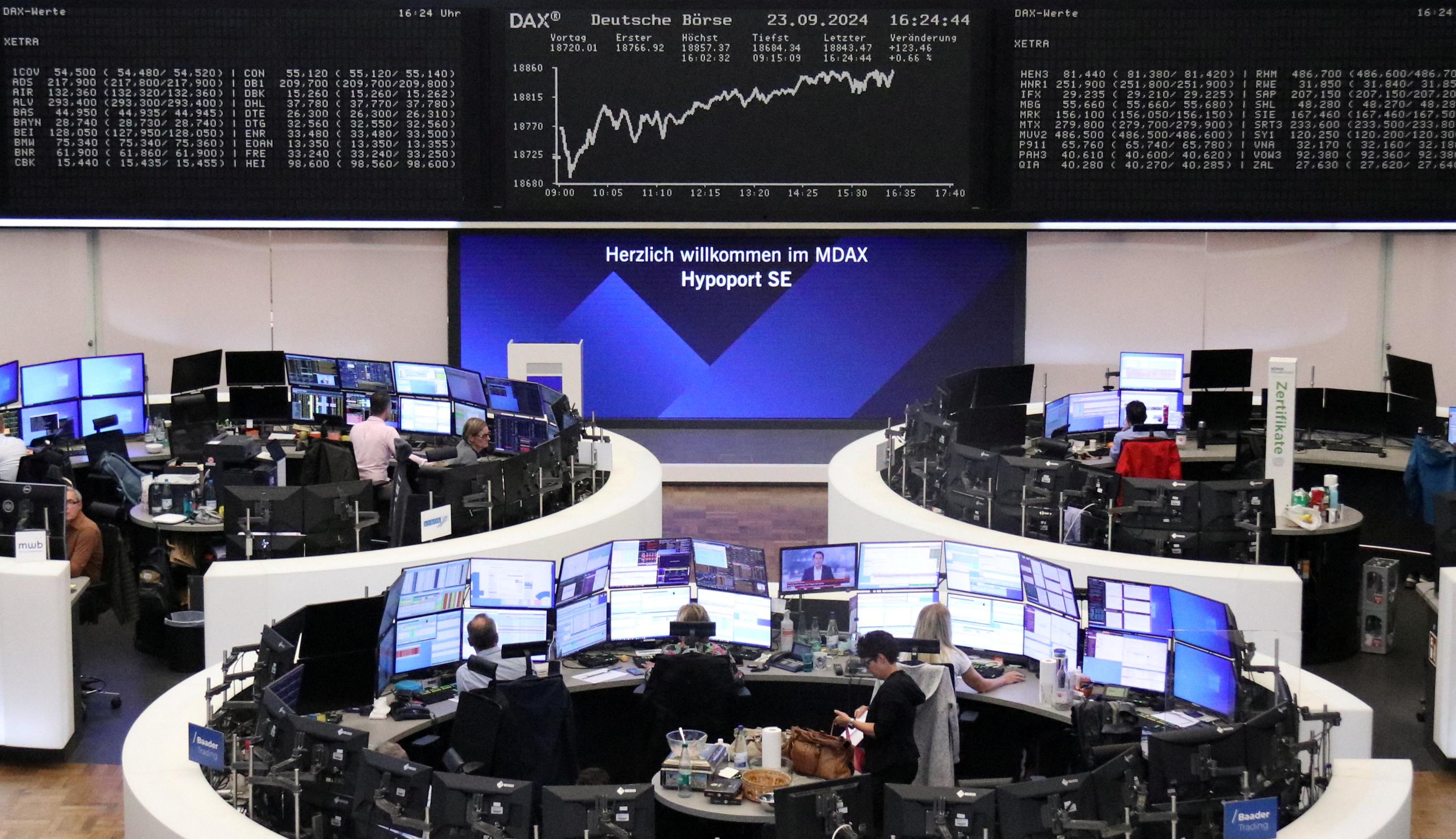
By David Milliken and Suban Abdulla LONDON, Oct 2 (Reuters) - Global asset prices remain stretched and are vulnerable to a big fall as investors grow more concerned about geopolitical risks, the Bank of England said on Wednesday. The BoE said overall risks to British financial stability were unchanged compared with its last assessment in June, but that it would be wrong to draw comfort from a rapid rebound in asset prices after a drop in August. "Valuations across several asset classes, particularly equities, quickly returned to stretched levels following the episode. Markets remain susceptible to a sharp correction," the BoE's Financial Policy Committee said in a quarterly statement. Weak U.S. employment data and softer-than-expected results from big tech companies led to a market sell-off in August that only reversed after stronger macroeconomic data was published - a boost which investors should not count on happening again, the BoE said. "Global vulnerabilities remain material, as does uncertainty around the geopolitical environment and global outlook," the BoE said. A twice yearly BoE survey of major financial firms operating in Britain showed concerns about geopolitical risk had risen to their highest since the survey began in 2008, the central bank said. That survey was based on responses from 55 firms between July 23 and Aug. 12 and did not specify which sources of geopolitical risk were of greatest concern. As well as conflict in the Middle East and Ukraine, the U.S. presidential election remains in close focus. The BoE noted that since June, hedge funds' net short position in U.S. government bonds had risen to $1 trillion from $875 billion. If funds needed to unwind these positions due to changed risk perception, losses or other factors, this cold lead to "severe" stresses, the BoE said. The central bank also said high levels of public debt across major economies could trigger financial stability risks if investors took a gloomier view of government borrowing. British public debt has risen to 100% of national income - mid-table by advanced economies' standards - and finance minister Rachel Reeves is due to present her first annual budget on Oct. 30 following the Labour Party's July 4 election. Looking at specifically at Britain, the BoE said most households and businesses were coping well with high interest rates, although there were some pockets of difficulties for small businesses and those backed by private equity investors. In August the BoE cut its main interest rate to 5% from a 16-year high of 5.25% before keeping it unchanged at 5% in September. Financial markets see a 90% chance of a further cut to 4.75% on Nov. 7 after the BoE's next meeting. Lower interest rates meant that mortgage costs for households whose fixed-rate mortgages were expiring next year would rise less than previously estimated, the BoE said. Overall the debt interest burden would be much lower than after the global financial crisis. The increase in mortgage costs for an average household would be 150 pounds per month, down from 180 pounds. The central bank last month forecast the economy would grow by 0.3% a quarter in the second half of 2024, roughly Britain's long-term trend rate of growth but less than in the first half of the year when the economy recovered from a shallow recession that occurred in late 2023. The FPC also said it was keeping the counter-cyclical capital buffer - a tool it uses to manage risks in banks' credit cycle - unchanged at 2%. (([email protected] , opens new tab)) Keywords: BRITAIN BOE/BANKS Sign up here. https://www.reuters.com/markets/europe/bank-england-says-global-asset-prices-remain-stretched-2024-10-02/
2024-10-02 07:46
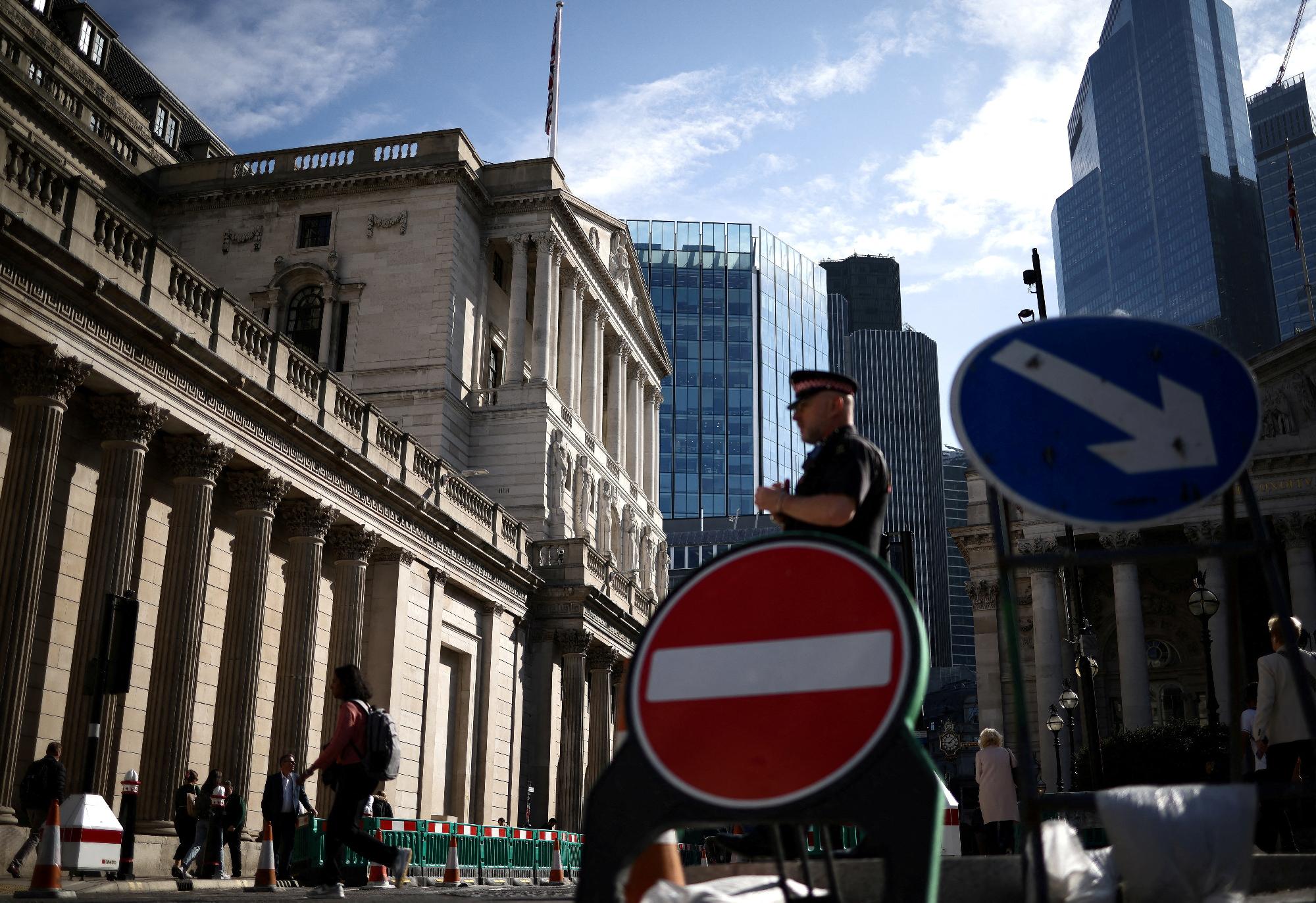
FTSE 100 up 0.4%, FTSE 250 Flat Oct 2 (Reuters) - The UK's benchmark FTSE 100 stock index opened higher on Wednesday, led by energy and industrial metal mining shares, while JD Sports fell after the Nike retailer kept annual outlook unchanged despite a first-half profit beat. The blue-chip FTSE 100 (.FTSE) , opens new tab was up 0.4% by 07:20 GMT, while the more domestically-focussed midcap FTSE 250 index (.FTMC) , opens new tab was flat. Heavyweight oil and gas shares (.FTNMX601010) , opens new tab rose 2.5% as oil prices jumped by more than a dollar due to rising concerns that the Middle East tensions could escalate, potentially disrupting crude output from the region, following Iran's biggest ever military blow against Israel. The industrial metal miners (.FTNMX551020) , opens new tab gained 1% on higher copper prices, buoyed by brighter demand prospects after China's stimulus measures. JD Sports Fashion (JD.L) , opens new tab tumbled 5.5% to the bottom of FTSE 100, as the sports retailer did not update its annual guidance despite beating market outlook for first-half profit, citing a 20 million pound ($26.6 mln) foreign exchange headwind in the second half of the year. The automobiles and parts index (.FTNMX401010) , opens new tab led sectoral declines, down 1.3%, as Aston Martin (AML.L) , opens new tab lost 3.6%, extending declines to a third consecutive session. Elsewhere, pay settlements awarded by British employers held at their lowest in two years in the three months to August, according to a survey that could reassure the Bank of England as it considers whether to cut interest rates again. Sign up here. https://www.reuters.com/world/uk/ftse-100-rises-upbeat-energy-metal-stocks-2024-10-02/
2024-10-02 07:44
Oct 2 (Reuters) - European shares opened higher on Wednesday, led by energy stocks, defying a slump in Asian stocks and Wall Street after Iran's ballistic missile strike on Israel raised fears of a broader regional conflict. The pan-European STOXX 600 (.STOXX) , opens new tab rose 0.2% to 522.10 points, as of 0710 GMT. The energy sector (.SXEP) , opens new tab provided the biggest boost to the index, gaining 1.7% after oil prices jumped due to rising concerns in the Middle East that could escalate, following Iran's biggest-ever military blow against Israel. Defence companies such as Germany's Rheinmetall (RHMG.DE) , opens new tab, Sweden's Saab (SAABb.ST) , opens new tab and BAE Systems (BAES.L) , opens new tab gained between 1% and 3%. Basic Resources (.SXPP) , opens new tab rose 1.1% as copper prices gained after China's stimulus measures brightened demand prospects. On the data-front, euro-zone unemployment data for August is set to drop at 0900 GMT. Markets will also be focussing on comments by the European Central Bank's chief economist Philip Lane, with a host of ECB board members set to speak through the day, including Vice President Luis de Guindos. JD Sports Fashion (JD.L) , opens new tab lost 2.5% despite the British sportswear retailer beating a consensus forecast for first-half profit. (This story has been corrected to fix the energy sector move to 1.7%, not 17%, in paragraph 3) Sign up here. https://www.reuters.com/markets/europe/european-shares-buck-global-downturn-middle-east-risks-energy-stocks-gain-2024-10-02/