2024-10-02 07:39
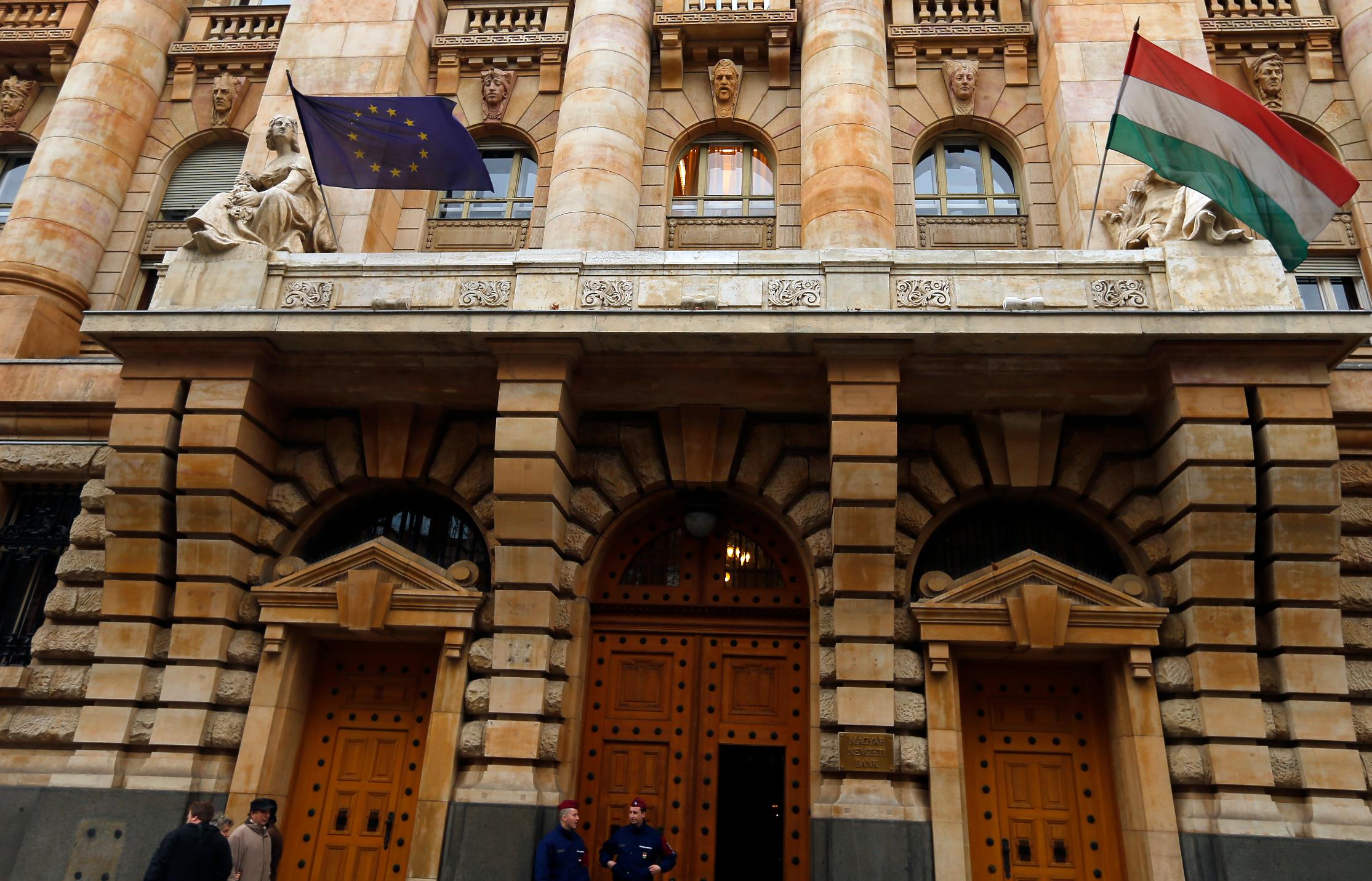
Funds to target homeowners and business sector Hungary's main rate still the highest in EU Economic recovery slower than anticipated Central bank headed for leadership change in March BUDAPEST, Oct 2 (Reuters) - The National Bank of Hungary plans to launch green financing programmes for homeowners and companies in January depending on inflation and financial market conditions, it said on Wednesday after the forint sank to its lowest levels since March. Even after cuts totalling 1,150 basis points, Hungary's 6.5% base rate is still the highest in the European Union, alongside that of neighbouring Romania, following an inflationary surge to levels above 25% after Russia's 2022 invasion of Ukraine. Faced with a weak recovery from last year's recession, Prime Minister Viktor Orban's government has called on the NBH to cut rates more sharply, though the veteran leader has toned down his pressure on the bank ahead of an NBH leadership change in March. "The primary objective of the NBH is to reach and maintain price stability. This still requires a disciplined and tight interest rate policy," the NBH told Reuters in an emailed response to questions. The bank said its monetary policy stance would also be supported by a tightening of liquidity next year, as large amounts of crisis-management loans issued earlier expire, tightening monetary conditions. The forint , central Europe's worst-performing currency with a loss of some 4% versus the euro this year, sank to its weakest levels for 6-1/2 months on Wednesday, pressured by an escalation of the conflict in the Middle East. Falls in the forint forced the NBH into emergency rate hikes in late 2022 to shore up the currency, which Goldman Sachs economists have described as the "binding constraint" on the pace of further rate cuts due to its high volatility. The NBH said the rate-setting Monetary Council would decide on the parameters and timing of the green corporate bond programme, which would be limited in size and targeted in scope, not affecting the orientation of monetary policy. The NBH also said it could ease credit conditions for green housing loans that banks can offer to retail clients next year. Under a previous green housing programme launched in October 2021 and closed a year later, the NBH provided funding worth 299 billion forints ($831.43 million) to commercial banks which they could lend on to retail borrowers at an interest rate of 2.5%. In power since 2010, the nationalist Orban has struggled to revive Hungary's economy from last year's downturn, taking various moves to shield borrowers from high interest rates, which the NBH has said undermined its independence. ($1 = 359.62 forints) Sign up here. https://www.reuters.com/sustainability/sustainable-finance-reporting/hungary-central-bank-launch-green-financing-programmes-2025-2024-10-02/
2024-10-02 07:20
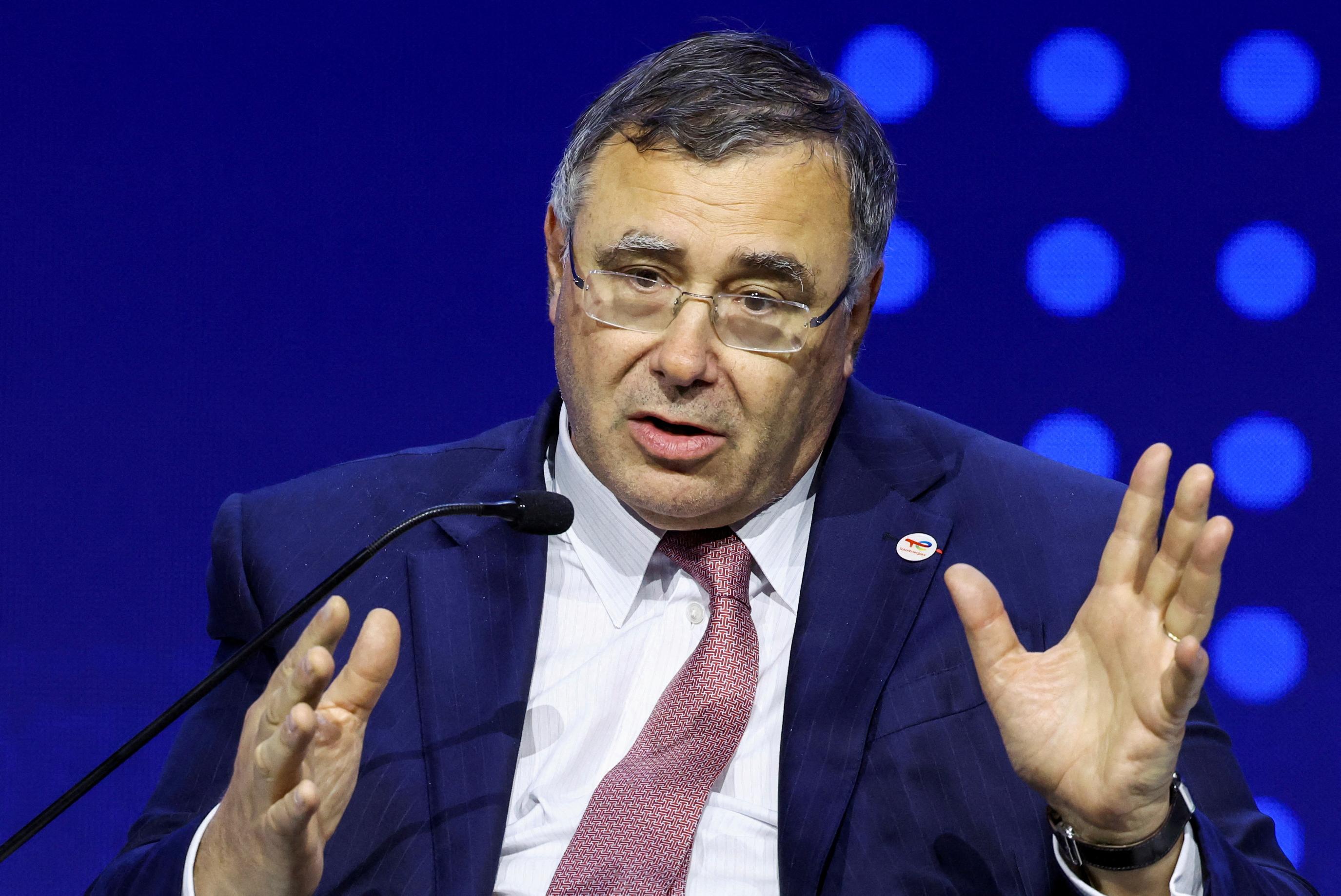
Four upstream mega-projects approved this year Gas sales deals linked to oil, U.S. prices reduce risk Renewables portfolio far exceeds that of peers Update expected on cross-listing shares in New York PARIS, Oct 1 - Fresh off a flight from Suriname, TotalEnergies' CEO is expected to tell investors in New York on Wednesday that the energy giant can maintain returns through 2030 despite falling prices, thanks to low-cost oil projects like its most recent in the South American country. Patrick Pouyanne has also promised to provide an update on the French group's plans to cross-list shares in New York, as U.S. investors now account for the majority of shareholders. After years of investor pressure to pivot towards green energy, TotalEnergies (TTEF.PA) , opens new tab is now unapologetically focused on growing its legacy business - its 24 gigawatts of installed renewable capacity already far exceed the combined portfolios of peers Shell, BP, Equinor and Eni. But this month, Brent crude dropped below $70 per barrel from over $90 in April, prompting some analysts to cut share price forecasts on oil and gas producers and worry the firms may have to slow dividend payouts and share buybacks. TotalEnergies, the only European major not to cut dividends during the COVID crisis, will highlight projects launched this year in Angola, Brazil and Suriname, which produce oil at low cost - in some cases under $20 per barrel - as evidence it can continue to pay out through the downturn. "We view Total's $8 billion annual buyback as more resilient than peers' and broadly sustainable at oil prices above $70 per barrel," said HSBC analyst Kim Fustier in a note ahead of the meeting. TotalEnergies is also protecting itself from market fluctuations by signing long-term liquefied natural gas (LNG) sales agreements pegged to oil and U.S natural gas prices. The company is the top exporter of U.S. gas, with about 10 million metric tons of U.S. LNG under contract. That position - set to grow through 2030 - could become a liability as global gas prices fall in 2026 and 2027 when more LNG export projects come online, and as European Union decarbonization policies render future demand there uncertain. "With the addition of Rio Grande, Costa Azul and the Cameron LNG expansion in its portfolio, its short position does look set to grow," RBC analyst Biraj Borkhataria said in a note last week, referring to a growing gap between TotalEnergies' supplies and confirmed buyers. But six long-term LNG contracts signed this year totaling 4.65 million tons annually ensure the company has customers paying above its costs for its fuel beyond 2030. To balance out the remaining volumes it takes at prices pegged to the U.S. Henry Hub benchmark, TotalEnergies also purchased stakes in two upstream U.S. gas fields, giving it access to cheaper volumes it can profitably sell should Henry Hub prices rise. Those additions mean "they are still short over time, but (the gap is) getting smaller," Borkhataria told Reuters this week. TotalEnergies' Mozambique LNG project, which is still included in company calculations on annual growth despite being frozen under force majeure since 2021, remains a worry. Criminal complaints and investigations in France are ongoing on Total's possible liability for deaths near the project. Total has denied wrongdoing. Sign up here. https://www.reuters.com/business/energy/totalenergies-highlight-its-low-cost-oil-long-term-lng-sales-investors-2024-10-01/
2024-10-02 07:12
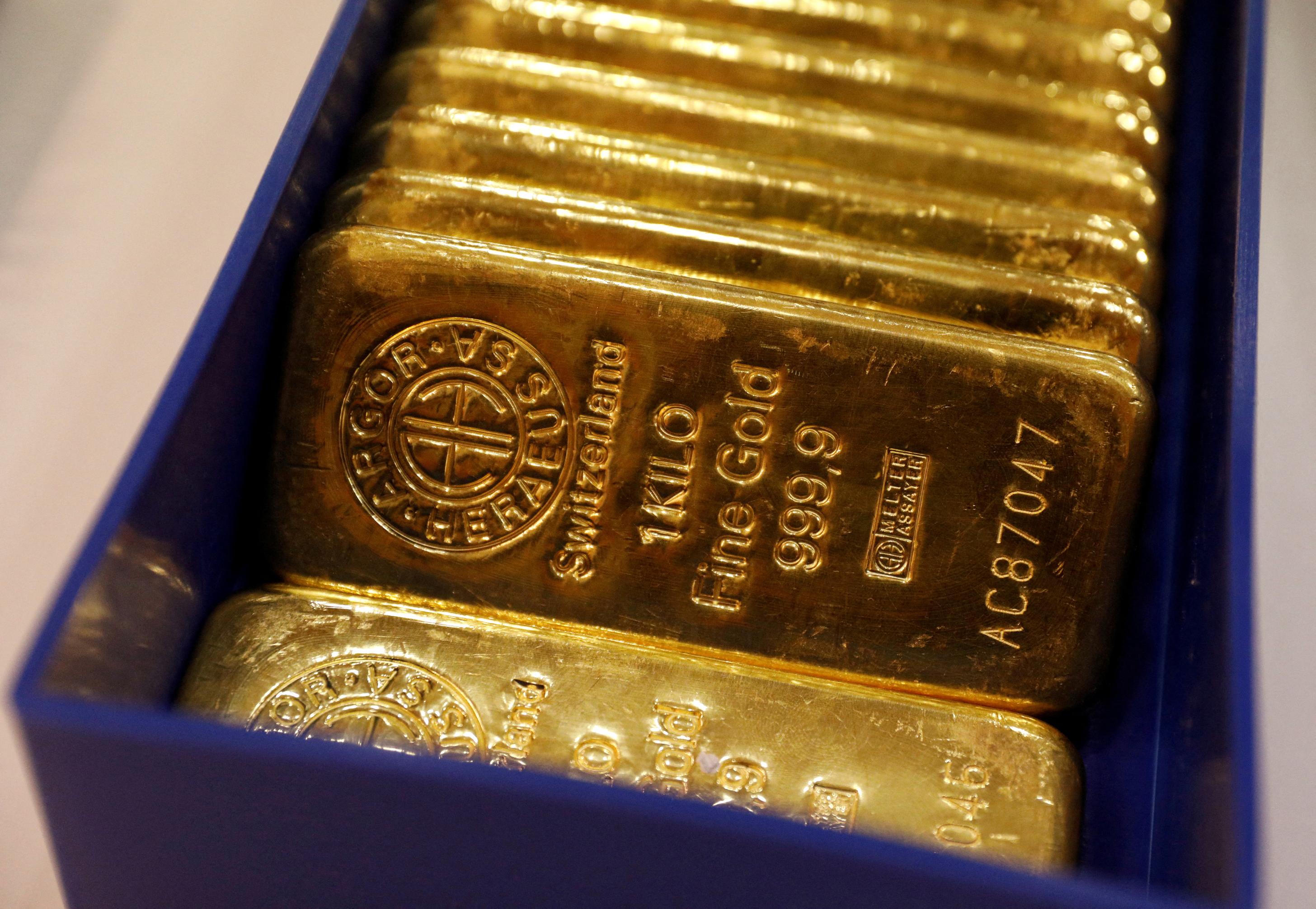
Real rates outlook to drive gold longer term- ANZ analyst US nonfarm payrolls data due on Friday Oct 2 (Reuters) - Gold eased on Wednesday, taking a breather after rallying in the last session on an escalation in the Middle East conflict, while traders waited for more clues on U.S. interest rates. Spot gold was down 0.5% at $2,650.89 per ounce by 1146 GMT, following a jump of more than 1% on Tuesday after Iran launched missile strikes on Israel. U.S. gold futures eased 0.7% to $2,672.00. Reining in gold's run was strength in the rival safe-haven dollar. "Gold is just seeing some short-term pressure due to a stronger dollar but the environment remains extremely favourable for gold," said Kinesis Money market analyst Carlo Alberto De Casa. Gold was still within sight of recent highs on fears of further escalation in the Middle East, including retaliation by Israel. Longer term, the outlook for real interest rates is going to drive gold, Daniel Hynes, senior ANZ commodities strategist said in a note. Bullion's 28% rally so far this year has been driven in part by the Fed's monetary easing, which enhances the relative appeal for zero-yield gold. Traders see a 38% chance of a 50 bps cut from the Fed in November. They will keep a close eye on data, including U.S. ADP employment figures later in the day and Friday's nonfarm payrolls, while also scanning commentary from Fed officials on Wednesday. "If the data comes in weak and raises chances of a 50 basis point cut in November, gold could see record prices again," De Casa added. Silver rose 0.1% to $31.44. "Supported by a stabilising industrial metal sector, silver could potentially do even better (than gold), not least considering its relative cheapness to gold, which could see it take aim at $40 next year," Saxo Bank said in a note. Platinum gained 0.8% to $993.87 and palladium added 1.2% to $1,006.51. Sign up here. https://www.reuters.com/markets/commodities/gold-prices-flat-dollar-strength-counters-safe-haven-demand-2024-10-02/
2024-10-02 07:09
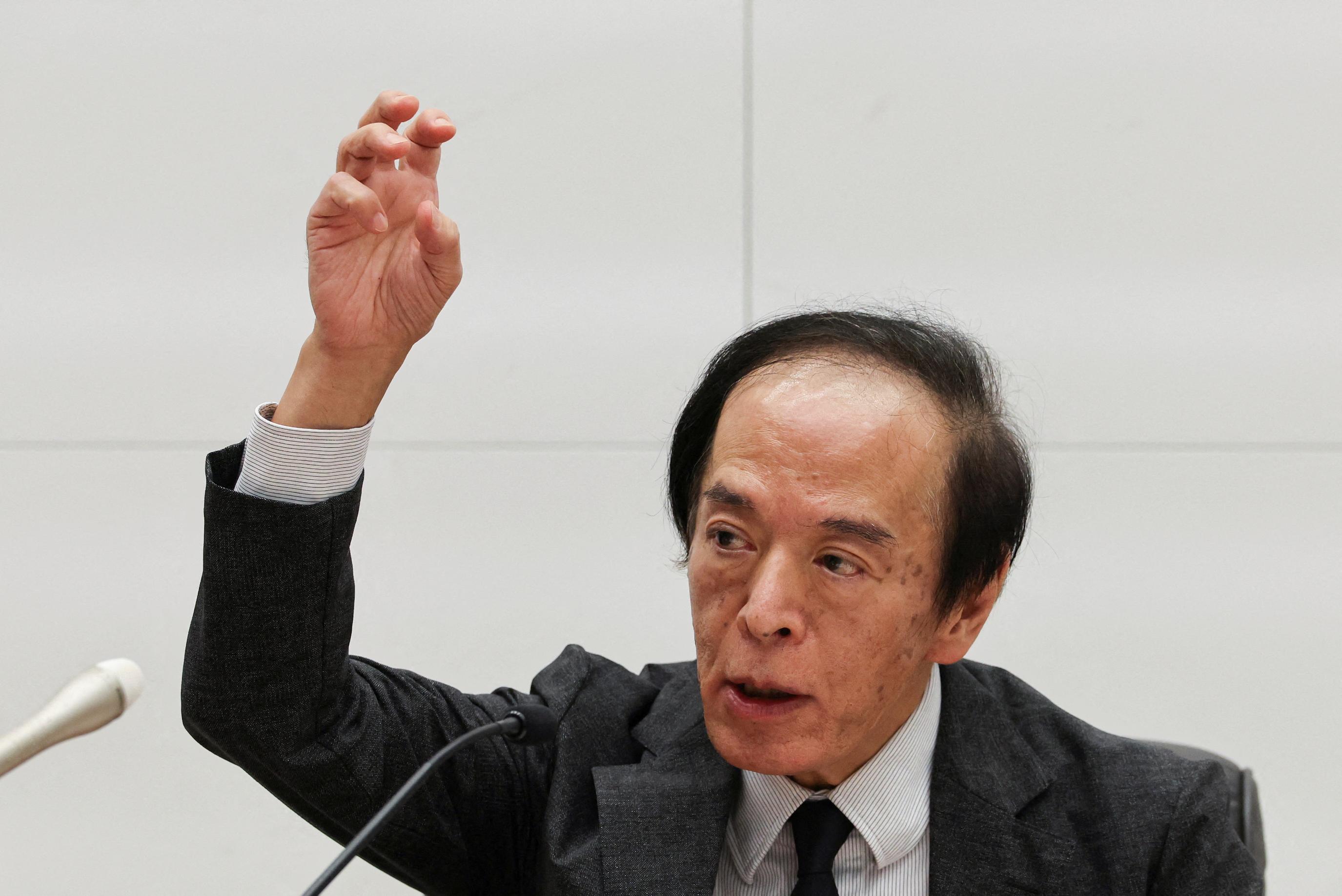
Ueda says he told Ishiba BOJ will move cautiously in rate hike Ueda highlights uncertainties, risks to Japan's economy Economy minister urges BOJ to be cautious of raising rates Political dynamics may delay BOJ rate hikes, analysts say Oct 2 (Reuters) - Prime Minister Shigeru Ishiba said Japan is not in an environment for an additional rate increase, in an apparent effort to shake off his reputation as a monetary hawk, after a meeting with Bank of Japan Governor Kazuo Ueda on Wednesday. "I do not believe that we are in an environment that would require us to raise interest rates further," Ishiba told reporters on Wednesday night in the most explicit remark to date from a prime minister pushing back against further rate hikes. The yen weakened after Ishiba's remarks as markets interpreted them as reducing the chance of a near-term interest rate hike. The dollar was last up 0.77% against the yen at 144.71 yen per dollar. A majority of economists polled by Reuters on Sept. 4-12 had expected the BOJ to raise rates again by year-end. Ishiba, who was officially appointed as prime minister on Tuesday, had been seen by markets as endorsing the BOJ's policy normalisation, in part because of his comments to Reuters in August that a gradual hike in ultra-low rates will help boost Japan's profitability. His comments, as well as his focus on pulling Japan fully out of economic stagnation, underscore the new administration's preference for the BOJ to go slow in hiking rates, analysts say. Ishiba's newly-appointed economy minister, Ryosei Akazawa, also voiced hope on Wednesday that the BOJ would be cautious about raising rates further. While the BOJ's current policy rate, at 0.25%, was "abnormal in global standards," Japan's priority was to "pull out of deflation," Akazawa said. BOJ SET TO MOVE 'CAUTIOUSLY' Speaking after the meeting with Ishiba, Ueda said he told the premier that the BOJ would move cautiously in deciding whether to raise interest rates further. "I told the prime minister that we are supporting the economy with loose monetary conditions," Ueda said in his first meeting with Ishiba since he became prime minister. Ueda added the BOJ will raise interest rates if economic and price developments move in line with its forecast. "But I said we will adjust the degree of monetary support cautiously, as we can afford to spend time scrutinising (economic) developments," he said. The BOJ ended negative rates in March and raised short-term borrowing costs to 0.25% in July on the view Japan was making progress towards durably achieving 2% inflation. Ueda was forced to roll back his remarks, made when the BOJ hiked rates in July, that the bank would keep raising borrowing costs after the hawkish remarks triggered a market rout. In a speech delivered on Wednesday before the meeting with Ishiba, Ueda said the BOJ will be "extremely" vigilant for the time being to economic fallout from unstable markets and global economic uncertainties. The BOJ next reviews rates on Oct. 30-31, when the board also releases fresh quarterly growth and price forecasts. It holds another meeting in December. "The remarks from Ishiba and Akazawa clearly sound negative against a near-term, additional rate hike. A rate hike in October is now out of the question," said Yoshimasa Maruyama, chief market economist at SMBC Nikko Securities. "The hurdle for another rate hike by year-end has also risen," he said. Sign up here. https://www.reuters.com/markets/asia/bojs-ueda-says-unstable-markets-global-uncertainty-cause-vigilance-2024-10-02/
2024-10-02 06:54
Minister makes comments hours before OPEC+ committee meets Says many moving factors in short term including geopolitics Comments echo those of Russia's Novak on Monday Says OPEC+ sacrificed more than other producers FUJAIRAH, UAE, Oct 2 (Reuters) - United Arab Emirates Energy Minister Suhail al-Mazrouei said on Wednesday OPEC+ was doing a noble job of balancing the oil market even if does not produce the majority of oil in the world. "OPEC+ has sacrificed more than others but the critical element is that it is staying together," Mazrouei said at an industry event in the emirate of Fujairah. "I would like you to imagine the world without this group. We would be in chaos," Mazrouei said speaking hours before a planned virtual meeting of an OPEC+ committee. His comments echo those of Russian Deputy Prime Minister Alexander Novak who said on Monday that OPEC+ was strategically reducing oil supply and ceding market share with a long-term aim that producing countries secure enough investments and oil prices to suit producers and consumers. Output from OPEC+, which groups the Organization of the Petroleum Exporting Countries and allies such as Russia, equates to 48% of world oil supply, according to Reuters calculations based on figures from the International Energy Agency. Mazrouei would not comment on the outlook for oil in 2025, saying that there were many moving parts, including geopolitics. Oil prices jumped by over a dollar on Wednesday due to rising concerns Middle East tensions could escalate, potentially disrupting crude output from the region, following Iran's biggest military blow against Israel to date. Brent crude stood at $74.56 a barrel at 0330 GMT. "I would refer you to the OPEC outlook because I stopped personally commenting on the short term," the minister said. "I think there are so many moving parts of the world, including geopolitics, that put us all on pause when we predict the future. We hope for peace, we hope for prosperity, but facts of life are facts of life." Ministers from OPEC+ will hold an online joint ministerial monitoring committee (JMMC) meeting on Wednesday at 1200 GMT. Oil prices have fallen in 2024, with Brent crude last month slipping below $70 a barrel for the first time since 2021, pressured by expectations of weaker global demand and rising supply outside OPEC+. OPEC+ has cut output by around 5.7% of global demand in a series of steps agreed since late 2022. The JMMC meeting on Wednesday is unlikely to recommend any changes to a current plan to start unwinding some cuts from December, five sources from the producer group told Reuters. In September, OPEC+ agreed to delay a planned gradual oil output increase to December from October, saying it could further pause or reverse the hikes if needed. Sign up here. https://www.reuters.com/business/energy/opec-doing-noble-job-balancing-oil-market-says-uae-2024-10-02/

2024-10-02 06:42
PRAGUE, Oct 2 (Reuters) - The Czech lower house has approved widening the 2024 budget deficit target to 282 billion crowns ($12.34 billion) to provide 30 billion crowns for flood aid after heavy rains last month devastated some towns in regions along the Polish border. Lawmakers approved the budget amendment in a vote late on Tuesday, with none opposing the change. The government last week approved raising the deficit ceiling from an original target of 252 billion crowns. It also plans to provide 10 billion crowns for flood damage in the 2025 budget, whose deficit will be set at 241 billion crowns. The centre-right administration aims this year to return the country's overall fiscal deficit, which also includes local governments and other institutions, to below the European Union's ceiling 3% of gross domestic product. It would be the first time it hit the goal since 2019, when the budget was in a surplus. That was before the COVID-19 pandemic and the surge in energy prices after Russia's invasion of Ukraine that led to increased spending to aid those grappling with high power bills. Last month, heavy rains led to the worst flooding in central Europe in at least two decades. ($1 = 22.8530 Czech crowns) Sign up here. https://www.reuters.com/world/europe/czech-parliament-approves-higher-2024-budget-deficit-after-floods-2024-10-02/