2024-10-02 06:11
PM Starmer to host international investors on Oct. 14 UK needs billions to upgrade infrastructure and foster growth Investors want clarity on utilities regulation, budget plans Public anger at private water companies for dirty rivers LONDON, Oct 2 (Reuters) - British Prime Minister Keir Starmer faces a tough sales job this month in his first high-profile meeting with international investors whose cash he needs to accelerate economic growth and halt a sense of national decline. Starmer will host executives from global banks, power firms and other multinationals on Oct. 14, hoping that political volatility in France, Germany and the United States will enhance Britain's attractiveness. But big questions hang over how he will tackle the problems that hampered previous governments. Years of Brexit-linked political chaos may have ended with his Labour Party's big election win, but the near-collapse of utility Thames Water has unsettled investors. Britain's privatised water industry is under fire for polluting rivers with sewage amid accusations that profit has been prioritised over the environment. Current investors in Thames Water blame regulators for limiting bill rises they say are needed to fund investment. "We're talking to international investors, and they're very nervous about the UK," Luke Hickmore, investment director at investment firm abdrn - a Thames Water creditor - said. "That's largely around the uncertainty on regulation." Britain needs tens of billions of pounds annually to upgrade infrastructure to meet Starmer's promise to double economic growth and raise the tax revenues needed to improve public services. But it cannot match the big subsidies on offer in the United States and euro zone for the net-zero transition. Four days after July's election, finance minister Rachel Reeves outlined plans to unblock planning and financing constraints on infrastructure and home-building. But details remain scant and the government has yet to appoint an investment minister. "There is definitely a sense that they have identified some of the problems, but it's very early days and there are a lot of unanswered questions," Raoul Ruparel, director of the Boston Consulting Group's Centre for Growth, said. Low rates of return on private investment - and often over-complicated contractual terms - were compounded by elevated labour and energy costs and skills shortages, he said. "The rest of Europe is similar, but the UK is a different story because of its long-running under-investment problem." Britain ranked 28th among 31 countries in the Organisation for Economic Cooperation and Development for business investment as a percentage of national income in 2022, according the Institute for Public Policy Research think tank. UK government officials say they are making progress, pointing to recent announcements like a 10 billion-pound ($13.3 billion) investment by private equity firm Blackstone in an AI data centre and a planned 8 billion-pound investment by Amazon. INVESTOR WORRIES Britain has lost its ranking as Europe's top foreign direct investment destination - ranked by the total number of projects - to France, although it was the leader in 2023 for new projects, accountancy firm EY says. A survey of investors published in July by consultants Alvarez & Marsal showed Britain was Europe's only big economy ranked negatively on the outlook for infrastructure attractiveness and opportunities, mostly to due to regulation. "The government doesn't understand that clear, distinctive and predictable regulation is still an opportunity the UK hasn't seized," said a senior London-based consultant, who asked not to be named. Hickmore at abrdn said investors faced a "perfect storm" of higher interest rates, government change and regulation, adding: "We've seen the regulators get tough at just the wrong point in the cycle." Starmer's government plans new laws to toughen oversight of the water companies, including potential curbs on executives' pay - a response to public anger at Britain's dirty rivers. Investors must also wait to see the new government's tax policy: Reeves will announce her first budget on Oct. 30, having hinted at higher taxes for the wealthy. A business survey last month showed expansion plans were being put on ice pending clarity on the budget. Further ahead, a spending review next Spring will reveal the government's own investment plans for power, transport and other infrastructure over the coming years, providing a foundation for the private sector. Ruparel said investors wanted a shift away from the focus of recent British governments on meeting budget rules at the expense of longer-term strategy. "Businesses appreciate the balance-sheet challenges but they are looking for strategic guidance and clarity over where the government is going with its own investment plans," he said. Reeves has hinted at such a shift in her budget plan. Some investors worry that the government's gloomy message about the economy it inherited from the Conservatives is a precursor for investment-sapping tax increases, including possibly on capital gains. "Those types of measures might be counterproductive to what they are trying to achieve," Peter Arnold, EY's chief UK economist. ($1 = 0.7517 pounds) Sign up here. https://www.reuters.com/world/uk/new-uk-pm-starmer-tries-woo-sceptical-investors-2024-10-02/

2024-10-02 06:10
LONDON, Oct 2 (Reuters) - If you think Federal Reserve interest rate cuts could overly spur an already briskly growing U.S. economy, consider the other side of the equation: the income drag. A counterintuitive twist on the Fed's unfolding easing cycle is that it should zap cash income from the banking system in the same way it flattered those same deposits when it rapidly hiked rates two years ago. Given that the latter appears to have blunted the negative effects of higher borrowing costs on the aggregate economy, then the reverse may curtail any economic benefits as rates head down. And it could complicate the U.S. central bank's job considerably if the Goldilocks scenario doesn't play out as planned. Morgan Stanley strategists have recently crunched the numbers around the income boost that accompanied Fed hikes and the potential drag that could soon be coming, noting that historical models of U.S. central bank policy lags have failed to account for this novel dynamic. Unlike in decades past, the Fed now pays large amounts of interest to commercial banks for reserves that it holds. These volumes were boosted massively during the central bank's emergency balance sheet expansions after the 2008 banking crash and again after the 2020 COVID-19 pandemic. While excess reserves have declined in the past year, they appear to have settled around $3.1 trillion. The Fed also offers interest on its daily reverse repo facility in this cycle as a way of siphoning off what it considers to be excess liquidity. The current volume is less than one-fifth of its peak but still running at about $300 billion to $400 billion per night. And then there are the more traditional interest-bearing short-term assets. About one-third of the more than $6 trillion of money market fund assets is invested in U.S. Treasury bills of one-year or less, which pay interest at rates that move roughly in step with the federal funds rate as they mature and get rolled over - meaning they've been generating attractive income in recent years but are now set to reverse. There also is almost $4 trillion in bills outstanding owned by other investors. The Fed's sharp rate hikes of 2022-2023, which lifted the fed funds rate by 5 percentage points, flattered interest income at all these levels, muffling the economy-wide effects from the intended borrowing squeeze. So cutting rates now could, by the same mechanism, act as a drag on market liquidity and cash income even as credit gets cheaper. "Just as higher payments of interest income may have muted the effect of monetary policy tightening in 2022-2023, lower payments may mute the effect of easing," the Morgan Stanley strategists wrote. "To the extent the Fed had to raise policy rates higher than otherwise to offset this effect, it may have to lower rates more as well." BACK TO NEAR-ZERO RATES? To quantify the potential income drag, the Morgan Stanley team calculates the total hit to monthly income if the Fed returns to what it sees as the "neutral" rate around 3% over the next two years. Their striking conclusion is that the total hit as a share of projected GDP would be roughly equal to when the Fed took rates to the near-zero level in 2020. That drag could presumably affect everything from bank earnings and lending to corporate cash holdings and wealth effects. Whether it is enough to offset the cut to actual borrowing costs is an open question. This headwind to Fed easing, however, may well be appropriate for a central bank seeking to gently recalibrate policy to a notional equilibrium, especially given the resilience of the underlying economy. The drag could even neatly regulate any excessive stimulus, much as Fed tightening was softened by the income boost it generated for many cash-rich companies and relatively wealthy households. But there could be a serious problem if the U.S. central bank were to struggle to gain traction with rate cuts because of an economic shock or alarming re-emergence of deflationary pressures. The Fed could then find itself easing much more than it currently expects. The once-distant prospect of a return to a world of near-zero rates may then not be as fanciful as many have come to assume in the post-pandemic era. Speculation that inflation could get too low is already emerging in Switzerland, the euro zone and even China. This dynamic could also complicate the Fed's so-called "quantitative tightening" plans. With U.S. commercial bank reserves already close to what many assume to be a "steady state" going forward, most money market analysts see the Fed ending its balance sheet rundown next year. Should the income drag from rate cuts prove problematic, Fed noises about ending the quantitative tightening may get a lot louder. The opinions expressed here are those of the author, a columnist for Reuters Sign up here. https://www.reuters.com/markets/us/projected-fed-rate-cuts-could-see-income-drag-akin-2020-mike-dolan-2024-10-02/

2024-10-02 06:06
LITTLETON, Colorado, Oct 2 (Reuters) - For the first time, electricity generation from Australian solar and wind farms could match that coming from the country's coal-fired power plants this summer. Combined solar and wind electricity generation is on track to hit between 8 and 9 terawatt hours (TWh) a month during the heart of the Australian summer, according to Reuters projections using historical data from energy think tank Ember. Coal-fired electricity generation is likely to decline to similar levels over the same period, and mark the first time that renewables have a shot of surpassing coal as Australia's chief source of electricity. TURNAROUND The fact that renewables generation is even coming close to that from coal plants in Australia highlights the remarkable turnaround in the country's electricity mix. A decade ago, coal-fired generation was 10 times the combined output from solar and wind farms, and coal accounted for more than 64% of Australia's electricity supplies until 2020. Rapid renewables growth has turned things around, however. Combined generation from solar and wind farms has grown by 22% a year since 2018, and this year could supply over 30% of total electricity for the first time, data from Ember shows. Australian electricity production from solar and wind farms jumped from less than 30 terawatt hours (TWh) in 2018 to 77 TWh in 2023, and is on track to surpass 80 TWH in 2024. The nearly 170% jump in solar and wind production from 2018 to 2023 contrasts with a nearly 20% decline in coal-fired generation over the same period, and resulted in a sharp reconfiguration of Australia's generation mix. Coal-fired emissions have dropped due to the output cuts, from nearly 140 million metric tons of carbon dioxide (CO2) in 2018 to 110 million tons in 2023, helping to advance national pollution reduction efforts. REVERSAL? So far in 2024, a nearly 20% drop in output from hydro dams and flat production from wind farms has triggered a nearly 4% climb in coal-fired generation. However, the peak generation window for renewables output is still ahead, which should allow utilities to curb coal production over the latter half of the year. Solar production during August was 3.2 TWh, but historically rises by around 75% by December, which is typically the peak month for solar production in Australia. A repeat of that trend in 2024 would put this December's solar production at around 5.5 TWh. However, so far in 2024 solar generation is running around 11% ahead of 2023's monthly totals, thanks to capacity increases brought online this year. That suggests that this year's solar output during the peak production window could rise by a similar degree, and push total solar generation closer to 6 TWh by December. Wind output in December has averaged around 2.5 TWh since 2021, and so would bring total solar and wind generation to around 8.5 TWh that month this year if solar production matches expectations. COAL CUTS? Coal generation has averaged 11.2 TWh a month so far in 2024, but has historically hit its lowest generation levels for the year in September, October and November during the Australian spring. In 2023, the coal output low for the year was 9.2 TWh in September, while in 2022 the yearly low was 9 TWh set in November. This year, a drop below 9 TWh is possible in October or November if both solar and wind generation rise as expected, and could result in combined solar and wind output matching coal-fired generation for the first time. Coal output will likely rise again in December due to greater demand for cooling, which would cement coal's place as Australia's primary electricity source. But for a brief window this summer, coal's supremacy could be matched by renewables for the first time, signalling a taste of things to come if the country's utilities continue to roll out more renewable capacity. Sign up here. https://www.reuters.com/business/energy/australias-renewables-set-key-output-milestone-2024-maguire-2024-10-02/

2024-10-02 05:45
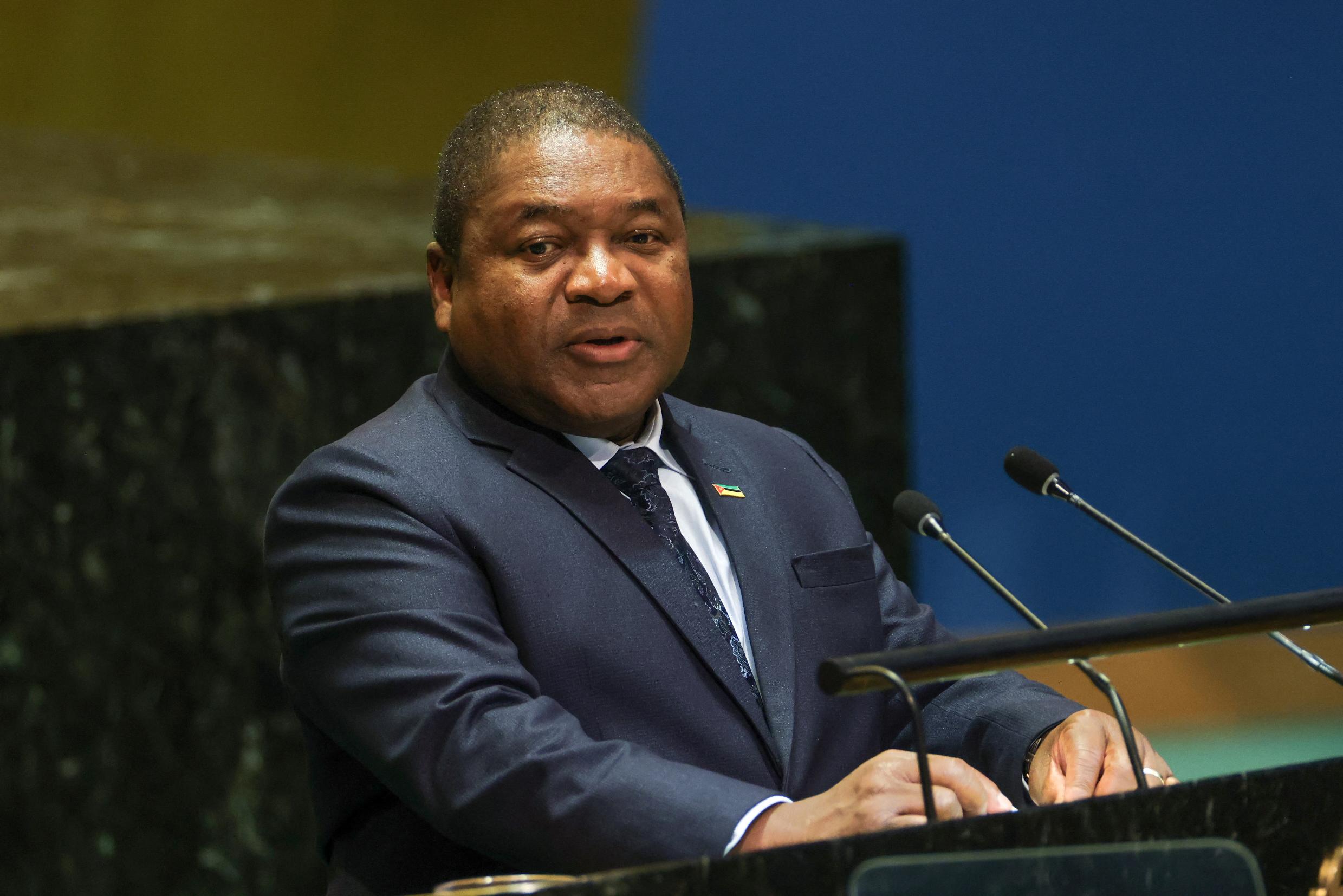
JOHANNESBURG, Oct 2 (Reuters) - Mozambicans will vote in presidential and legislative elections on Oct. 9 that are almost certain to extend the ruling Frelimo party's half century in power, as it battles a long-running Islamist insurgency in one of Africa's largest gas fields. Ruling party candidate Daniel Chapo, a former radio announcer and law lecturer, is widely expected to replace Filipe Nyusi as president of the southeast African nation. Here are some key issues facing one of the world's poorest countries and its more than 34 million people as it heads to polls. ISLAMIST INSURGENCY Islamic State-linked militants launched an insurgency in the northern gas-rich province of Cabo Delgado in 2017, killing thousands of civilians, destroying livelihoods and internally displacing hundreds of thousands, aid agencies say. The insurgency has disrupted multi-billion-dollar energy projects. Aided by regional troops and Rwanda, the government has contained the insurgency, but there has been a surge in deadly attacks since the start of the year. STALLED GAS PROJECTS Before the wave of insurgent attacks, gas projects worth over $50 billion were earmarked for development. The projects were aimed at turning the country into a major liquefied natural gas (LNG) producer. French energy giant TotalEnergies (TTEF.PA) , opens new tab halted work on its $20 billion LNG project and declared force majeure in 2021 after insurgents attacked the northern town of Palma, a logistics hub near the site. Its Chief Executive Officer Patrick Pouyanné said in July the company hoped to chart a path to restart its LNG plant after the presidential election. Another LNG project led by Exxon Mobil (XOM.N) , opens new tab and its partner Eni (ENI.MI) , opens new tab was also delayed. Exxon expects a final investment decision by the end of 2025. DEBT SCANDAL Mozambique is still reeling from a $1.5 billion-plus "tuna bond" scandal in which money lent to state-run firms for fishing fleets, funded in part by Credit Suisse, went missing. Last year Credit Suisse, now owned by UBS (UBSG.S) , opens new tabreached an out of court settlement , opens new tab with Mozambique over the decade-old scandal, which prompted the International Monetary Fund and other donors to temporarily cut off support to the country, triggering a currency collapse and debt default. Mozambique maintained that it was the victim of a conspiracy among shipbuilders, corrupt officials and banks. President Nyusi, who was defense minister at the time, denied any wrongdoing. The scandal triggered criminal investigations from Maputo to New York, while senior Frelimo politicians were charged for their involvement, dealing a blow to the party's image. CLIMATE SHOCKS Mozambique is one of the most disaster-prone countries in the world, vulnerable to extreme climate shocks like droughts, cyclones and floods. An El-Nino induced drought has ravaged southern African countries, wiping out crops, including in Mozambique. Around 1.8 million people have been affected by the drought in central and southern parts of the country, the United Nations Mozambique said in August. Devastating cyclones also regularly hit Mozambique. Along with neighbouring Malawi and Madagascar, Mozambique bore the brunt of Cyclone Freddy last year, when the storm - one of the deadliest to hit the continent in two decades - ripped through the region, killing over 1,000 people. PEACE AGREEMENT Frelimo has been in power since Mozambique's independence in 1975. Shortly after independence, a 16-year civil war between Frelimo and former guerilla movement Renamo - now the country's main opposition - killed around 1 million people before a truce in 1992 ended the worst of the bloodshed. However, violence has flared up periodically, around elections. In a bid to bring "definitive peace", the two parties signed the Maputo Accord for Peace and National Reconciliation shortly before the elections in 2019 to end years of conflict. Over 5,000 former combatants gave up arms and have been reintegrated into society since. Sign up here. https://www.reuters.com/world/africa/what-are-key-issues-mozambique-elections-2024-10-02/
2024-10-02 05:25
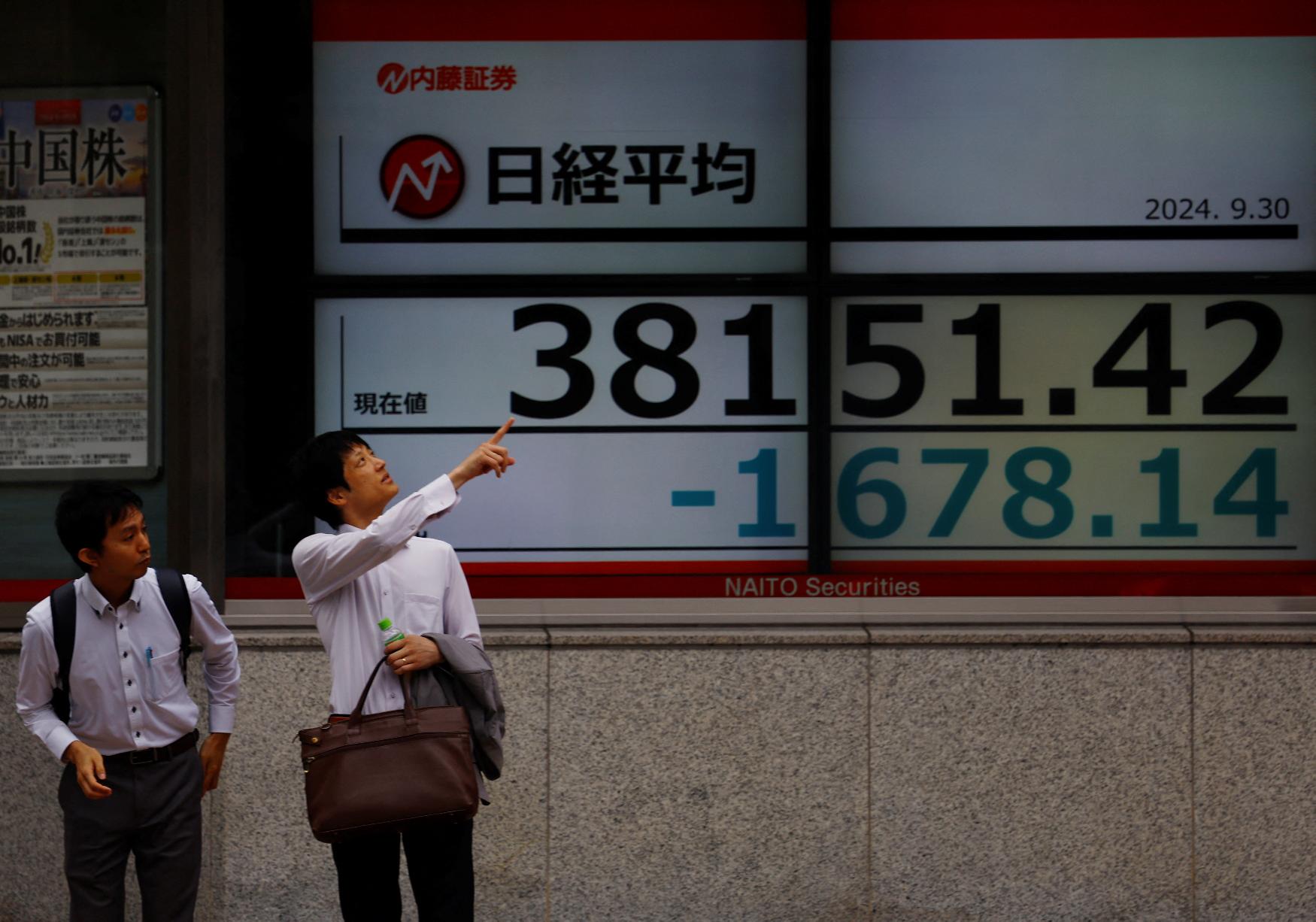
Oil price gain on Middle East fears capped by inventory build Dollar hits three-week high after strong U.S. employment report U.S. bond yields up as investors monitor data, Middle East NEW YORK/ LONDON, Oct 2 (Reuters) - MSCI's global equities index was down slightly on Wednesday while the dollar rose and oil prices pared earlier gains, as investors digested U.S. economic data and anxiously awaited Israel's response to Iran's missile attack the previous day. Oil prices rose on worries that further escalation in the Middle East could threaten oil supplies from the world's top producing region, but gains were limited by a large build in U.S. crude inventories. U.S. President Joe Biden said he would not support any Israeli strike on Iran's nuclear sites and urged Israel to act "proportionally" in response to Iran's biggest ever direct attack on Israel. Iran, after firing ballistic missiles on Israel on Tuesday, said early Wednesday that its attack was finished barring further provocation. The dollar hit a three-week high against the euro after the ADP national employment report showed U.S. private payrolls increased more than expected in September ahead of Friday's highly anticipated jobs data. Longer-dated U.S. Treasury yields rose after the data pointed to a stable labor market while investors monitored Middle East hostilities. "The markets are still bracing for any other geopolitical developments and settling a little after yesterday," said Matt Miskin, co-chief investment strategist at John Hancock Investment Management. Looking at the private payrolls data, Miskin said "the bond market is looking at the next Fed meeting and saying we're probably not going to get a 50 basis point cut." A strike by 45,000 dockworkers halting shipments at U.S. East Coast and Gulf Coast ports entered its second day on Wednesday with no negotiations currently scheduled between the two sides, sources told Reuters. On Wall Street, the Dow Jones Industrial Average (.DJI) , opens new tab rose 39.55 points, or 0.09%, to 42,196.52; the S&P 500 (.SPX) , opens new tab rose 0.79 point, or 0.01%, to 5,709.54; and the Nasdaq Composite (.IXIC) , opens new tab rose 14.76 points, or 0.08%, to 17,925.12. MSCI's gauge of stocks across the globe (.MIWD00000PUS) , opens new tab fell 0.38 point, or 0.04%, to 845.49. Earlier the STOXX Europe 600 index (.STOXX) , opens new tab closed up 0.05% at 521.14. In energy markets, U.S. crude settled up 0.39% at $70.10 a barrel and Brent ended the session at $73.90 per barrel, up 0.46% on the day. In Treasuries, the yield on benchmark U.S. 10-year notes rose 4 basis points to 3.783%, from 3.743% late on Tuesday, while the 30-year bond yield rose 4.9 basis points to 4.1299%. The 2-year note yield, which typically moves in step with interest rate expectations, rose 1.4 basis points to 3.6352%, from 3.621% late on Tuesday. A closely watched part of the U.S. Treasury yield curve measuring the gap between yields on two- and 10-year Treasury notes , seen as an indicator of economic expectations, was at a positive 14.6 basis points. In currencies, the dollar index , which measures the greenback against a basket of currencies including the yen and the euro, rose 0.34% to 101.60. The euro was down 0.16% at $1.1049 while the dollar strengthened 2% against the Japanese yen to 146.43. In precious metals, spot gold fell 0.14% to $2,659.22 an ounce. U.S. gold futures fell 1.02% to $2,640.00 an ounce. Sign up here. https://www.reuters.com/markets/global-markets-wrapup-1-2024-10-02/
2024-10-02 05:22
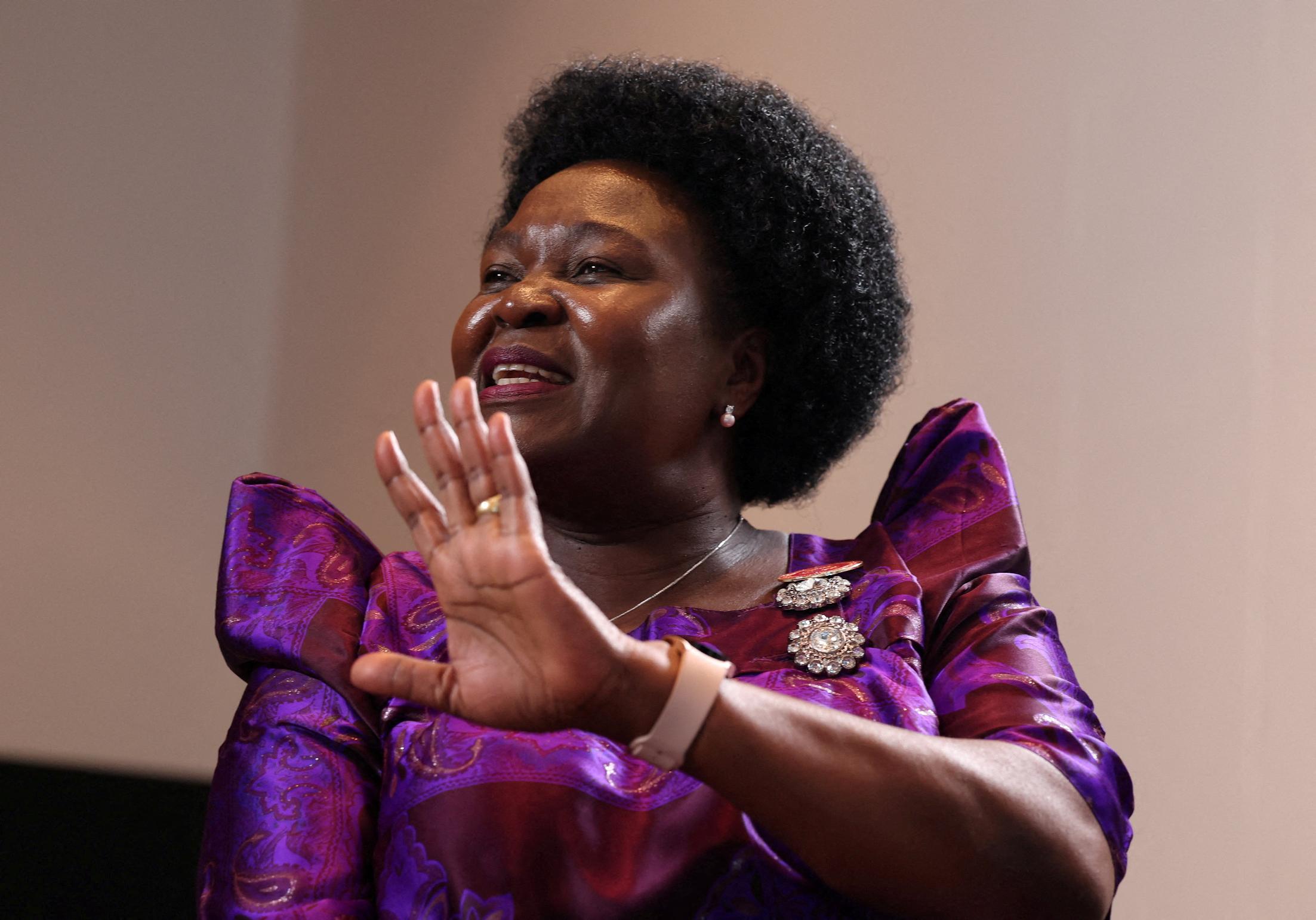
KAMPALA, Oct 2 (Reuters) - Uganda has formed a state-owned mining company to manage the government's equity interests in mining operations, its minister for energy and mineral development, Ruth Nankabirwa, said. All mining activities in the east African country have previously been done by private firms after obtaining exploration and mining licenses. Under a new mining law approved in 2022, the government can compulsorily take a 15% free carry stake in all mining operations in the country. The move is part of broader efforts to expand Uganda's share of the value from its mineral wealth, following in the footsteps of other African countries such as Tanzania. "This company will manage the state's commercial interests in the mining industry. It will do so through strategic partnerships with young developers in the private sector," Nankabirwa told a mining conference in Kampala on Tuesday. President Yoweri Museveni's government has also been pushing investors in the sector to process minerals and add value domestically instead of exporting them in raw form. In April, Uganda launched its first tin refining company by mining firm Woodcross resources, which refines tin ore to 99.9% purity. Chinese-backed Sunbird Resources has also been licensed to mine limestone for cement production in Karamoja region in Uganda's northeast region, while Australia's Ionic Rare Earths (IXR.AX) , opens new tab has been licensed to mine and process rare earths. Ugandan geologists say the country has large deposits of a range of minerals including gold, cobalt, copper, iron ore, rare earths, among others. Sign up here. https://www.reuters.com/world/africa/uganda-sets-up-state-owned-firm-take-stakes-mining-operations-2024-10-02/