2024-10-01 19:33
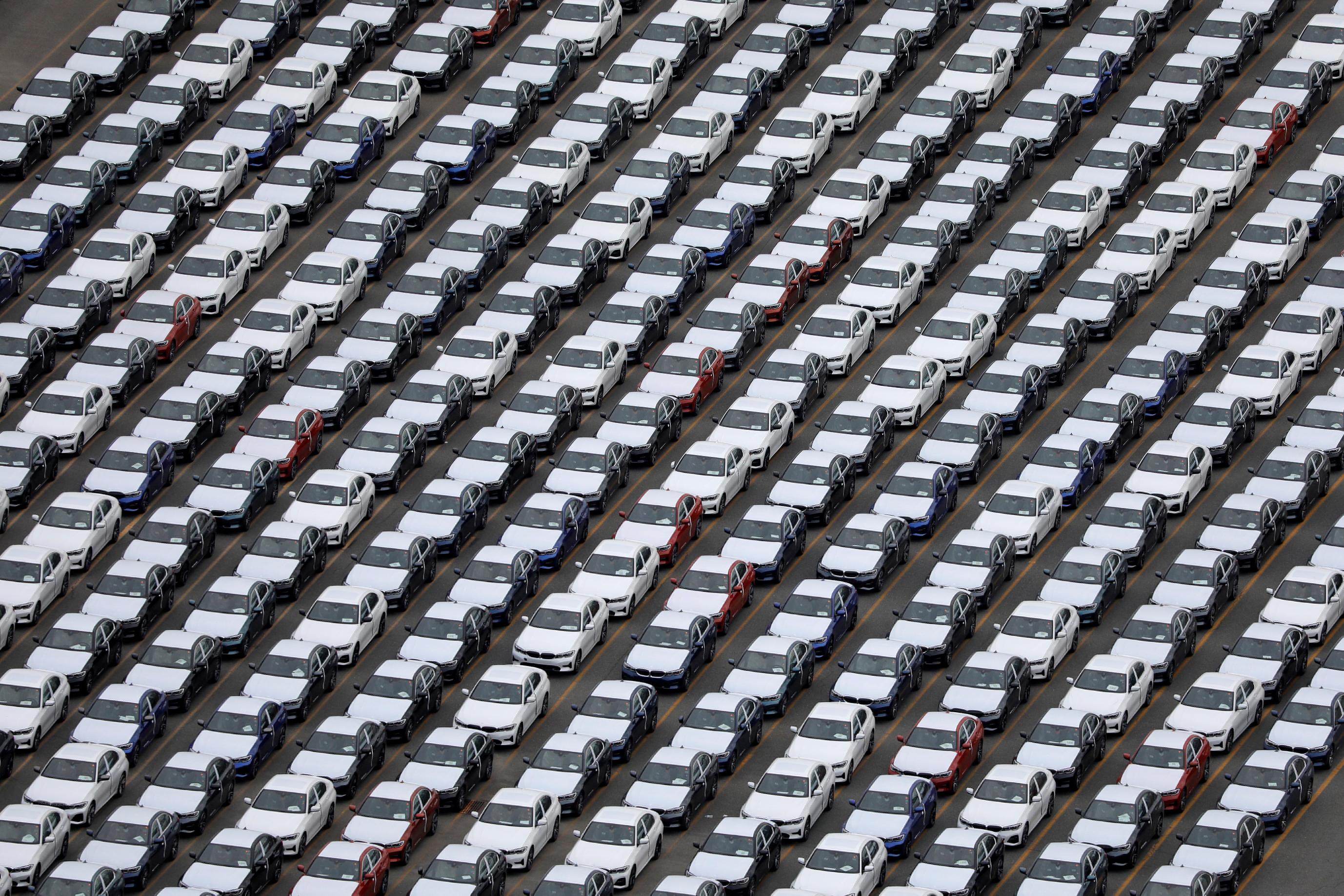
Dockworkers' strike halts flow of half the nation's ocean shipping European automakers most affected due to reliance on East and Gulf Coast ports Detroit automakers may benefit from reduced industry inventories Group representing major automakers urges White House to broker a resolution Shortage of parts could lead some automakers to reduce vehicle production DETROIT/WASHINGTON, Oct 1 (Reuters) - European automakers are the most likely to be affected by the dockworkers strike at U.S. East Coast and Gulf Coast ports because they rely heavily on those locations, but a longer walkout could prove "debilitating" to the entire sector, industry officials and analysts said. The dockworkers began their first large-scale stoppage in nearly 50 years early on Tuesday, halting the flow of about half the nation's ocean shipping. The International Longshoremen's Association union representing 45,000 port workers had been negotiating with the United States Maritime Alliance (USMX) employer group for a new six-year contract. A group representing major automakers urged the White House to broker a resolution. "A protracted strike will be debilitating to the auto supply chain and set off economic and national security ripples across the country - harming auto communities and consumers," said John Bozzella, CEO of the Alliance for Automotive Innovation. He noted that the ports affected by the strike handled 34% of all U.S. motor vehicle and parts trade worth $135.7 billion last year. "If (the strike) turns into weeks, it's going to be a tragedy," said Steve Hughes, CEO of HCS International, which advises the auto sector on shipping issues. While automakers could survive some time without vehicle deliveries, a shortage of parts would certainly hurt, Hughes said. "If you look at a GM car, you're going to find all sorts of European and Asian parts in those cars now," he said. The Motor & Equipment Manufacturers Association, a trade group for auto suppliers, also called on President Joe Biden to force both sides back to the bargaining table. A shortage of parts could lead some automakers to reduce vehicle production, although analysts said some may quietly welcome that. Stellantis (STLAM.MI) , opens new tab, for example, has very high vehicle inventories. Stellantis said it was taking steps to mitigate the potential impact of the strike on vehicle production without providing details. Barclays analyst Dan Levy said 70% of auto parts imports into the U.S. come via the affected ports, although companies likely built up some inventory since the strike risk had been visible for a while. If automakers are forced to fly in parts, that could drive up costs. "All of this is very, very inflationary," Hughes said. European automakers, many of which use the ports on strike, would be the most affected, Levy said in a research note. "The European (automakers) lean heavily on Baltimore for imports and Southeastern ports (i.e. Charleston) for exports, as most of their U.S. production exposure is in this region," he said. BMW (BMWG.DE) , opens new tab and Volkswagen (VOWG_p.DE) , opens new tab said they were monitoring the situation closely and working to minimize any impact, while Volvo Cars (VOLCARb.ST) , opens new tab said it was devising contingency plans but had not yet experienced any noticeable impact. Officials with Mercedes (MBGn.DE) , opens new tab could not immediately be reached to comment. European imports have accounted for as much as half of the German automakers' U.S. sales in recent years and Volvo Car is even more reliant, Levy said. However, with inventories higher than usual, the companies may have prepared and the strike impact could be limited barring a long walkout, he said. Truckmaker Volvo (VOLVb.ST) , opens new tab said the company stockpiled parts and looked into rerouting shipments to minimize impact and doesn't expect any impact in the short term. Detroit automakers could actually benefit modestly as reduced industry inventories could limit pricing pressure, Levy said. The companies, including General Motors (GM.N) , opens new tab and Ford (F.N) , opens new tab, are more likely affected by the import of parts since most of their vehicle imports come by truck and rail from Canada and Mexico, he said. "We are carefully monitoring the situation and have contingency plans in place," GM said in a statement. "We will continue to work to mitigate any significant impact to our operations and will make adjustments as needed.” The Detroit automaker declined to provide details on how it uses the ports or the nature of its contingency plans. Ford said it was monitoring the situation, but said it was too early to speculate on potential impacts. Asian automakers may be less affected, Levy said. Toyota (7203.T) , opens new tab built up extra vehicle inventory over the last couple of weeks to help buy it time and it was watching the talks closely, Toyota North America Executive Vice President Jack Hollis said in an interview. Mazda (7261.T) , opens new tab said the ports of Baltimore and Jacksonville, Florida, were important for the Japanese automaker, but its vehicle inventories were sufficient to meet short-term demand. Honda (7267.T) , opens new tab said it was affected by the strike, without providing details, while Nissan (7201.T) , opens new tab said it has implemented contingency measures to mitigate delays, but declined to provide details. Hyundai (005380.KS) , opens new tab said its logistics affiliate, Hyundai Glovis, was closely monitoring the talks and working on alternate plans to ensure delivery of vehicles. Sign up here. https://www.reuters.com/business/autos-transportation/european-automakers-most-risk-us-dockworkers-strike-analysts-say-2024-10-01/
2024-10-01 19:31
WASHINGTON, Oct 1 (Reuters) - The process of rebuilding after Hurricane Helene will be extremely costly and take years, U.S. Homeland Security Secretary Alejandro Mayorkas said on Tuesday. Search and rescue operations are still going on in some areas, Mayorkas told reporters at the White House. Sign up here. https://www.reuters.com/world/us/rebuilding-after-hurricane-helene-will-take-years-us-dhs-secretary-says-2024-10-01/

2024-10-01 19:23
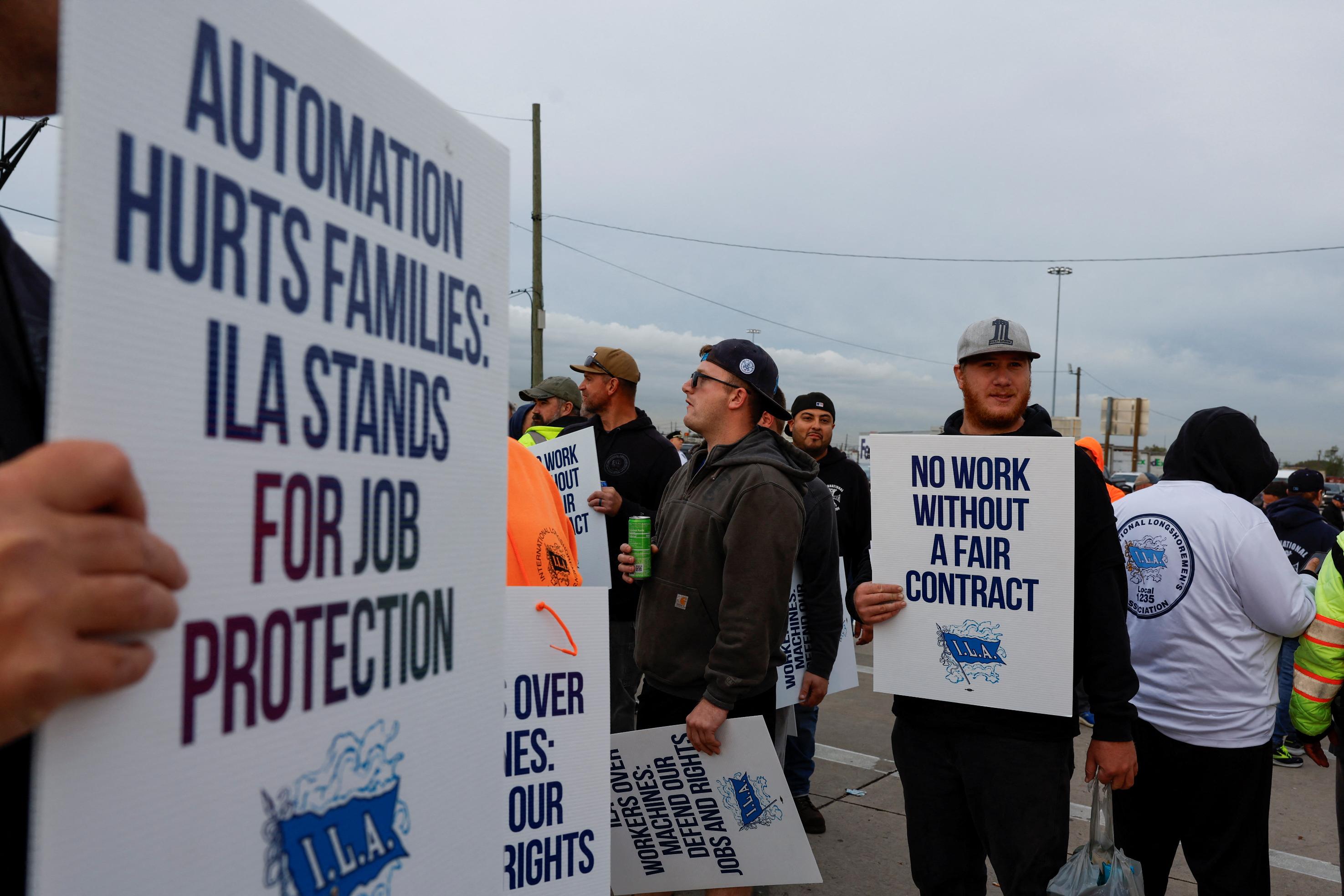
Strike may cloud Fed's outlook ahead of Nov. 6-7 meeting Analysts expect work stoppage to be short-lived Strike could cause distortions in October US jobs report NASHVILLE, Tennessee, Oct 1 (Reuters) - The COVID-19 pandemic's crushing blow to global supply chains also scarred U.S. Federal Reserve officials who thought the fallout from disrupted ports and backed up container ships would cause only "transitory" inflation. A strike by dockworkers on the U.S. East Coast and Gulf Coast that began on Tuesday isn't expected to cause problems as deep or severe, but it still could cloud Fed policymakers' views and their sense of certainty about what's happening in the economy as they debate their next interest rate move ahead of the U.S. central bank's Nov. 6-7 policy meeting. "If it is short enough we will get through it," David Altig, executive vice president and chief economic adviser at the Atlanta Fed, said on Sunday at a National Association for Business Economics conference in Nashville, Tennessee. But he noted that one of the things helping hold inflation down right now is falling prices for goods, which could be at risk if the flow of imports stops for too long during the dockworkers' strike. "A reversal of those durable goods dynamics in terms of prices would not be a good thing, to say the least," for central bankers counting on weak goods prices to keep overall inflation anchored, Altig said. Ports from Maine to Texas were shuttered after the International Longshoremen's Association called its first strike since 1977, putting thousands of workers on the picket line and stranding ships and containers at facilities central to the global economy. Many analysts expect the labor action to be short-lived, if only because the impact on commerce could be severe, putting pressure on both sides to reach agreement or, alternatively, for the White House to intervene. It would likely take time for the issues flagged by Altig to become so pronounced they throw the Fed off track in its effort to return inflation to the central bank's 2% target, a fight officials feel is nearly won. Many businesses, particularly retailers looking ahead to the holiday season, bulked up inventories in anticipation of the strike and may have the goods on hand to meet demand. POTENTIAL DISTORTIONS Even a two-week strike would cover the days during which government officials conduct the survey for the October U.S. jobs report, potentially distorting one of the last key bits of information Fed policymakers will receive before their November meeting. The count of payroll jobs could be depressed and the unemployment rate pushed higher if port-related businesses lay off workers, though the striking workers themselves are not counted as unemployed. "For the Fed this is complicating. There is not an obvious policy implication. It can be as disruptive and demand-destroying as it can be inflationary," with the potential to hit economic growth and consumer spending while also putting upward pressure on prices, Julia Coronado, president of MacroPolicy Perspectives, said on the sidelines of the NABE conference. It may not matter for the November policy meeting and the likelihood that the Fed will cut rates by at least a quarter of a percentage point just days after the U.S. presidential election. But "if this is something that is still going on in the first week of November ... we might be feeling the constraints," said Erin McLaughlin, a senior economist at the Conference Board. "We have all learned a lot about supply chains during the pandemic. It was not front of mind. Normal consumers are now aware," and, she worries, may become more careful about spending if the strike persists. "Would it change policy if wrapped up in a normal time frame? I suspect not," former Cleveland Fed President Loretta Mester said in an interview at the NABE conference. But "you have to take it into account. If it is long-lasting it will have implications for prices, certainly ... It might have implications for the labor market if people can't get goods or there is a halt in activity." Sign up here. https://www.reuters.com/markets/us/us-port-strike-adds-another-uncertainty-feds-outlook-2024-10-01/
2024-10-01 19:10
Oct 1 (Reuters) - Danish drugmaker Novo Nordisk (NOVOb.CO) , opens new tab said on Tuesday it has mitigation plans in place to minimize or prevent any disruption to its production due to sea port strikes in the United States. The maker of popular drugs, Wegovy and Ozempic, plans to ship its products to and from the U.S. via air freight, a company spokesperson said. The company imports some of its active pharmaceutical ingredient, or semaglutide, into the U.S. for its blockbuster diabetes drug Ozempic and weight-loss treatment Wegovy, according to CNBC, which first reported on the mitigation plans. The U.S. Department of Health and Human Services (HHS) said earlier on Tuesday its preliminary analysis showed a strike by U.S. East Coast and Gulf Coast dockworkers should have limited impact on the availability of essential goods such as medicines and medical devices. The dockworkers began their first large-scale stoppage in nearly 50 years, halting about half the country's ocean shipping after negotiations for a new labor contract broke down over wages. Sign up here. https://www.reuters.com/business/healthcare-pharmaceuticals/novo-nordisk-has-mitigation-plans-minimize-disruption-port-strikes-cnbc-reports-2024-10-01/

2024-10-01 18:53
Rate jump sign of tighter liquidity Repo rates rise, possible sign of scarce cash for Wall St market NEW YORK, Oct 1 (Reuters) - A key U.S. overnight funding interest rate jumped on Monday in a sign of tighter liquidity in money markets at the end of the month and the third quarter. The Secured Overnight Financing Rate (SOFR), a measure of the cost of borrowing cash overnight collateralized by Treasury securities, rose to 4.96% on Monday from 4.84% at the end of last week, data from the Federal Reserve Bank of New York showed on Tuesday. Excluding moves that occurred when the Fed changed its policy rate, Monday's SOFR increase was the biggest one-day change since March 2020, data showed. The rate rose six basis points (bps) above the interest on reserve balances (IORB) that the Fed pays to banks, a sign of funding pressure. Meanwhile, the DTCC GCF Treasury Repo Index, which tracks the average daily interest rate paid for the most-traded General Collateral Finance (GCF) repo contracts for U.S. Treasuries, rose to 5.221% on Monday, some 32 bps above IORB. Angelo Manolatos, macro strategist at Wells Fargo in New York, said in a note that the "turbulence in repo markets" signaled heightened funding pressure. A spike in the price for repurchase agreements, or repos, can be a sign that cash is getting scarce in a key funding market for Wall Street. Short-term funding costs spiked in September 2019 due to a large drop in bank reserves amid a corporate tax deadline and increases in net Treasury issuance. That forced the Fed to intervene by injecting liquidity into repo markets. "Repo rates normally trade higher on quarter-ends, as balance sheet reporting causes dealers to rein in their matched book activity," Joseph Abate, interest rates strategist at Barclays, said in a note on Tuesday. But he said the rapid jump in borrowing rates on Monday indicated banks' balance sheet capacity proved "far less available than expected and significantly more expensive." Also on Monday, the standing repo facility (SRF), which allows eligible firms to hand Treasuries or other securities to the Fed for cash, saw $2.6 billion in lending by the U.S. central bank. That was the first daily total of more than $200 million since the launch of the facility in 2021. The cap on daily SRF lending is currently at $500 billion. The Fed lent $250 million against mortgage-backed securities collateral and $2.35 billion against Treasury collateral, data showed. The majority of the Treasury borrowing was done at a rate of 5.01%, above the minimum bid rate of 5.00%. The Fed reported high and low rates of 5.01% and 5.00%, respectively, with a weighted average of 5.007%. Lou Crandall, chief economist at money market research firm Wrightson, pointed out that only $2.6 billion of collateral was financed through the Fed at rates near 5.00%, on a day when other repo rates funded Treasury collateral at higher levels. For instance, Wrightson cited $94 billion of Treasury GCF repo went through at an average rate of 5.22% in the market and $74 billion of MBS collateral was funded at an average of 5.45%. "That is not a sign of an effective 'ceiling' tool," Crandall said, referring to the SRF. "Still, it was a welcome start...as one or more institutions were actually willing to use the facility for a change." On Tuesday, there was zero volume on the SRF, suggesting that Monday's surge in activity was month-end pressure. Sign up here. https://www.reuters.com/markets/rates-bonds/key-us-short-term-rate-surges-amid-month-end-turbulence-2024-10-01/
2024-10-01 18:31
Job openings increase 329,000 to 8.040 million in August Hires fall 99,000; layoffs decrease 105,000 Manufacturing PMI unchanged in September WASHINGTON, Oct 1 (Reuters) - U.S. job openings unexpectedly increased in August after two straight monthly decreases, but hiring was soft and consistent with a slowing labor market that keeps the Federal Reserve on track to cut interest rates again in November. The Labor Department's Job Openings and Labor Turnover Survey, or JOLTS report, on Tuesday also showed layoffs declining. There were 1.13 job openings for every unemployed person in August compared to 1.08 in July. Resignations were the lowest in four years, a sign that Americans are growing less confident in the jobs market. Though Fed Chair Jerome Powell on Monday pushed against investors' expectations for another half-percentage-point rate reduction, he described labor market conditions as having clearly cooled over the past year, noting that "workers now view jobs as somewhat less available than they were in 2019." "Today's JOLTS estimates will be regarded as encouraging evidence that labor demand is stabilizing, implying that further increases in the unemployment rate are likely to be limited," said Jonathan Millar, a senior economist at Barclays. "The widening gap between hiring and separations likely keeps the Fed on course for a 25 basis points cut in November." Job openings, a measure of labor demand, rebounded by 329,000 to 8.040 million by the last day of August, the Labor Department's Bureau of Labor Statistics said. Data for July was revised higher to show 7.711 million unfilled positions instead of the previously reported 7.673 million. Economists polled by Reuters had forecast 7.660 million job openings. The rise in vacancies was led by the construction industry, with 138,000 job openings. There were 78,000 unfilled positions in state and local government, excluding education. But job openings in the 'other services' category fell 93,000. The job openings rate increased to 4.8% from 4.6% in July. Businesses with 10 to 49 employees reported 203,000 more job openings. Medium-sized and large companies saw a decline in vacancies. Hires slipped 99,000 to 5.317 million, pulled down by declines in retail trade, transportation, warehousing and utilities as well as manufacturing, healthcare and social assistance. Hires also fell at hotels, restaurants and bars. The hires rate dropped to 3.3% from 3.4% in July. Hires dropped 180,000 among companies with 10 to 49 workers, suggesting a shortage of workers could be an issue. Layoffs declined by 105,000 to 1.608 million. There were decreases in layoffs in the retail trade and healthcare and social assistance sectors as well as at hotels, restaurants and bars. Layoffs, however, increased in the professional and business services industry. Small, medium-sized and large employers all reported a decline in layoffs. Resignations dropped 159,000 to 3.084 million, the lowest level since August 2020. That pushed the quits rates to a four-year low of 1.9% from 2.0% in July, which should help to curb wage inflation. The slowdown in the labor market is being driven by cooler hiring following 525 basis points worth of rate hikes from the U.S. central bank in 2022 and 2023 to combat inflation. Price pressures have abated considerably allowing the Fed to shift focus to the labor market. Stocks on Wall Street were trading lower after Iran fired ballistic missiles at Israel in retaliation for its campaign against Tehran's Hezbollah allies in Lebanon. The dollar rose against a basket of currencies as investors sought a safe haven from the escalating tensions in the Middle East. U.S. Treasury yields fell on safe-haven flows. MANUFACTURING STABLE The central bank last month cut its benchmark interest rate by an unusually large 50 basis points to the 4.75%-5.00% range, the first reduction in borrowing costs since 2020, in a nod to rising concerns over the labor market's health. The Fed is expected to cut interest rates again in November and December. September's employment report, due on Friday is likely to show nonfarm payrolls increased by 140,000 jobs last month after rising by 142,000 in August, according to a Reuters survey. That would be well below the average monthly gain of 202,000 jobs over the past 12 months. The unemployment rate is forecast to be unchanged at 4.2%. It has risen from 3.4% in April 2023 as a surge in immigration boosted labor supply. Sluggish hiring and subsiding inflation were corroborated by a survey from the Institute for Supply Management (ISM), which showed factory employment slackening in September. The ISM's manufacturing employment measure dropped to 43.9 from 46.0 in August. Its measure of prices paid by manufacturers decreased to 48.3, the lowest level since December 2023, from 54.0 in August. A port strike by members of the International Longshoremen's Association that began on Tuesday could temporarily snarl supply chains. The ISM's gauge of supplier deliveries increased to 52.2 from 50.5 in the prior month. A reading above 50 indicates slower deliveries. Overall manufacturing held steady at weaker levels, though new orders improved. The ISM's manufacturing PMI was unchanged at 47.2 last month. A PMI reading below 50 indicates contraction in the manufacturing sector, which accounts for 10.3% of the economy. "The strike will have a significant impact on U.S. manufacturing if it lasts long enough, but the impact in early days will be muted because it seemed almost certain since the longshoremen walked from the bargaining table in June and companies stocked parts and materials in anticipation," said Mark Streiber, an economic analyst at FHN Financial. Sign up here. https://www.reuters.com/markets/us/us-job-openings-rebound-august-hiring-soft-2024-10-01/