2024-10-01 10:15
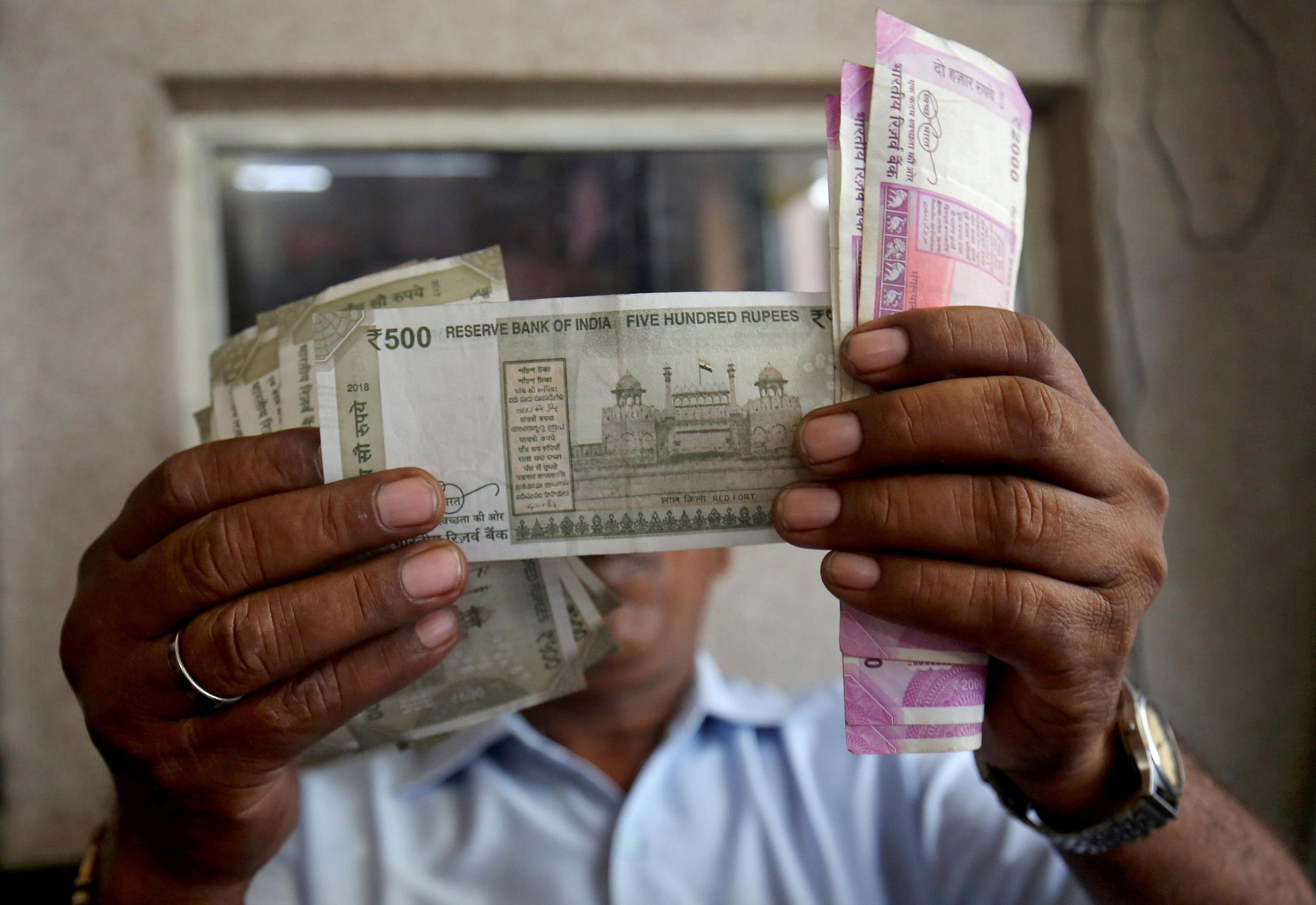
MUMBAI, Oct 1 (Reuters) - The Indian rupee closed little changed on Tuesday as exporters' dollar sales helped offset the decline in Asian currencies, which were pressured by tempered hopes of another hefty interest rate cut by the U.S. Federal Reserve. The rupee closed at 83.82 against the U.S. dollar compared with its close at 83.7925 in the previous session. Asian currencies weakened with the Thai baht and Malaysian ringgit down about 1% each and leading losses. Current levels in the rupee are "decently appealing," to exporters and the interest should pick up closer to 83.90, helping cap the currency's decline, a salesperson at a foreign bank said. Dollar demand also eased on Tuesday compared to the previous session, which was magnified due to quarter-end adjustments, the salesperson said. The dollar index rose to the 101 mark, adding to Monday's 0.3% rise after remarks from Fed Chair Jerome Powell prompted traders to temper expectations of a 50-basis-point rate cut at the central bank's November meeting. Despite the dip in odds of a larger-than-usual rate reduction at the Fed's next meeting, interest rate futures continue to price in 72 basis points of cumulative Fed rate cuts over the remaining two policy decisions. Investors are "effectively betting that soft data will force a September-like Fed surprise in one of the next two meetings. That signals the balance of risks in the very near term is probably skewed to the upside for the dollar," ING Bank said in a note. Attention now turns to the U.S. job openings data due later in the day, ahead of the release of the closely watched non-farm payrolls report on Friday. Indian financial markets will remain shut on Wednesday for a public holiday. Sign up here. https://www.reuters.com/world/india/rupee-ends-little-changed-exporter-dollar-sales-help-counter-dip-asia-fx-2024-10-01/
2024-10-01 10:10
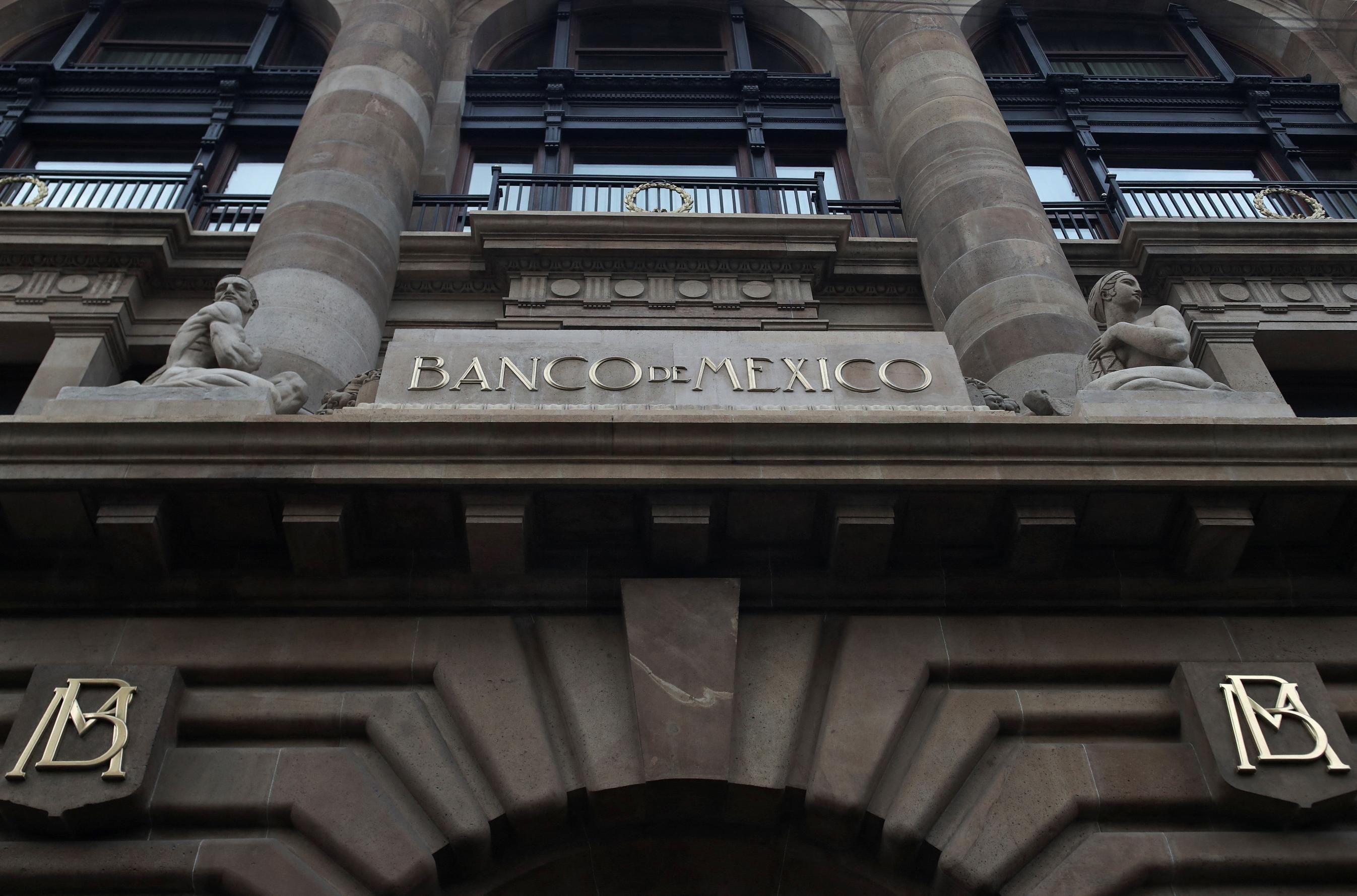
MEXICO CITY, Oct 1 (Reuters) - The Bank of Mexico's governing board may consider larger cuts to its benchmark interest rate going forward as inflation in Latin America's second largest economy cools, bank governor Victoria Rodriguez told Reuters in an interview late on Monday. Banxico, as the Mexican central bank is known, lowered its key rate by 25 basis points to 10.50% on Thursday, the second straight cut as price pressures ease. It previously cut rates by a quarter of a percentage point in March. "We could assess the magnitude of the adjustments to the reference interest rate at our meetings going forward, given the levels of inflation that we have been observing," Rodriguez said. Banxico will announce its next monetary policy decisions on Nov. 14 and Dec. 19. To be sure, the latest rate cut approved by Banxico's five-member governing board was not unanimous. Deputy Governor Jonathan Heath voted to hold the rate at 10.75%. Mexico's annual headline inflation slowed to 4.66% in the first half of September, official data showed on Tuesday, its fourth consecutive fortnight of declines. Core inflation moderated to 3.95%, its lowest level since early 2021. "The adjustment to the inflationary outlook indicates to us that it's appropriate to reduce the level of restrictive monetary policy, though we also recognize we continue to face challenges," said Rodriguez. Last week, Banxico revised its forecast for annual headline inflation in the fourth quarter slightly downward to 4.3%, from 4.4% previously, while also adjusting its expectations for core inflation to 3.8% from 3.9%. "The inflation outlook has been improving very significantly," the Mexican central banker said. Incoming Mexican President Claudia Sheinbaum takes office on Tuesday, and according to Rodriguez the country's first woman president will take over the economy in a "solid position." In Rodriguez's words, Mexico has sustainable external accounts, a very moderate current account deficit, a resilient banking system, and with adequate levels of international reserves. Sign up here. https://www.reuters.com/markets/rates-bonds/bank-mexico-may-consider-larger-rate-cuts-says-bank-governor-2024-10-01/
2024-10-01 10:08
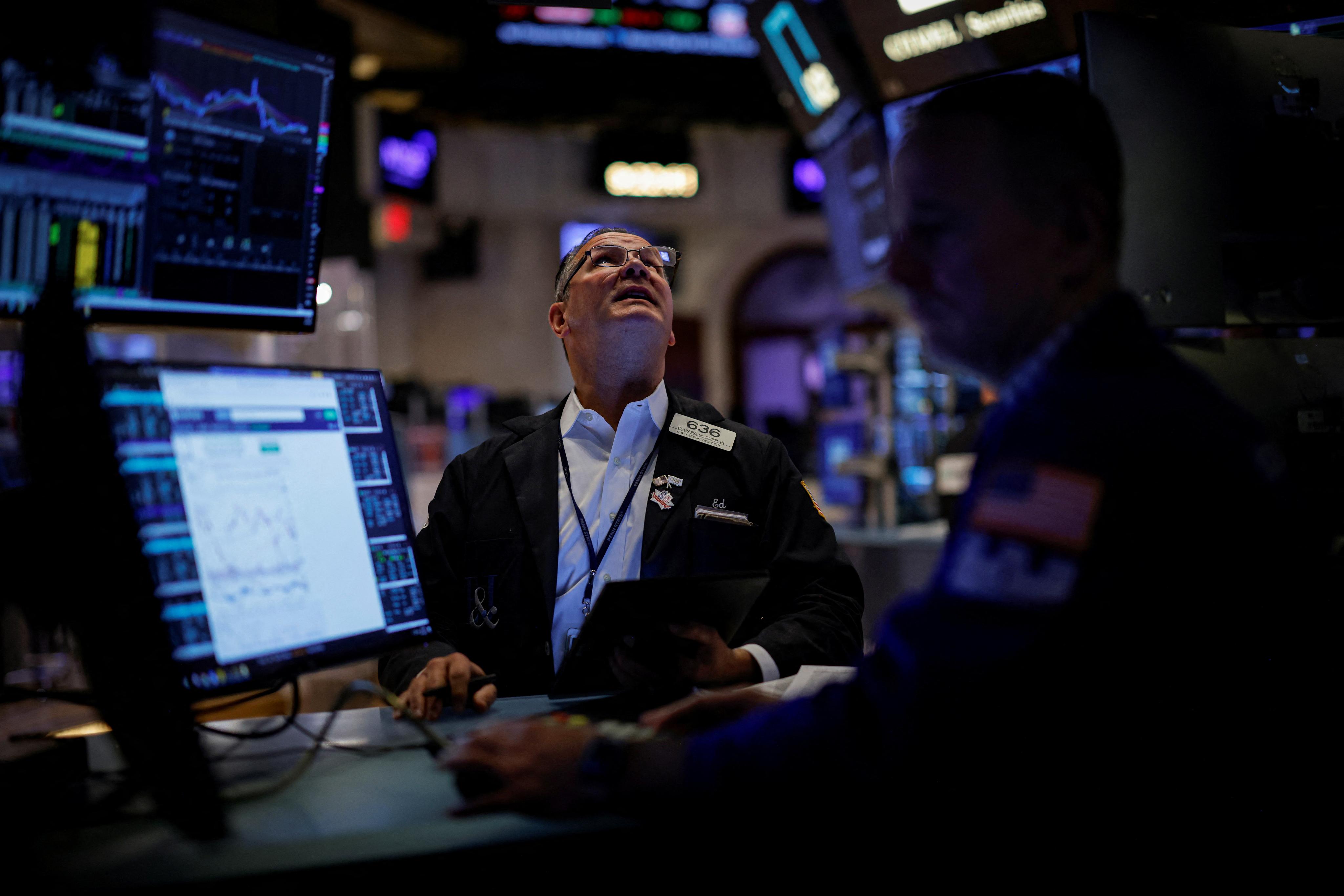
A look at the day ahead in U.S. and global markets from Mike Dolan Wall Street's S&P500 (.SPX) , opens new tab kicks off the final quarter of a stellar 2024 from yet another record close notched on Monday - with odd quarter-end effects competing with measured Federal Reserve guidance as labor market updates hit the radar. Fed chair Jerome Powell cooled speculation of a second 50 basis point cut at the central bank's next meeting, indicating the central bank was in no rush and suggesting that two more quarter-point rate cuts by year's end was a base case. "This is not a committee that feels like it is in a hurry to cut rates quickly," Powell told an event in Nashville, adding the economy was in "solid shape." The comments reined in rate futures prices to show just 70bps of Fed cuts by the end of the year, down from more than 75bps earlier. Two-year Treasury yields briefly popped above 3.7% - although they retreated again early on Tuesday. But quarter-end effects were making markets a bit scattergun and difficult to read all around the world - not least Monday's wild pre-holiday surge in Shanghai (.CSI300) , opens new tab and outsize Tokyo (.N225) , opens new tab swoon. Chinese markets are now closed for the rest of the week and the Nikkei's drop was partly recouped on Tuesday with a 2% rebound. The S&P500, too, was in the red on Monday until the final half hour of trading - but then jumped to close almost 0.5% higher at a new closing record. Mild disappointment at Powell's comments was relatively fleeting, largely because he spoke before seeing the long list of U.S. labor market indicators due out this week, starting with the August JOLTS job openings report later on Tuesday and ISM manufacturing report. Also clouding the economic data picture ahead is a major labor strike by U.S. East and Gulf Coast port workers that starts on Tuesday, and also the devastation from Hurricane Helene in the U.S. southeast. A ports strike could cost the U.S. economy roughly $5 billion a day, JP Morgan analysts estimate, as shipments of food, retail goods and other products are disrupted from busy terminals including New York, Baltimore and Houston. The fourth quarter also brings November's election firmly into the market's orbit and Tuesday sees Democrat Tim Walz and Republican JD Vance face off on TV - the only scheduled U.S. vice presidential debate. With China's bouncing markets closed after the government's stimulus blitz last week, attention overseas switched to Europe and rising speculation the European Central Bank will cut its policy rates for a third time this month as euro zone headline inflation plunged below the ECB's 2% in September. Weighed down by plunging energy prices, a China-related factory slump and growing concerns about the region's ailing auto sector, euro zone inflation fell to 1.8% last month - with French, German and Spanish inflation even lower and annual Italian consumer inflation as low as 0.8%. Euro zone struggles and mounting ECB rate cut speculation have been enough to drag euro/dollar back from recent highs and below $1.11 for the first time in almost two weeks. With Japan's Nikkei rebounding on Tuesday, dollar/yen also firmed back up a touch. Bank of Japan policymakers discussed the need to go slow in raising interest rates as jittery markets clouded the outlook, a summary of their September meeting showed, reducing the chance of a near-term rate hike. With Japan's new PM-designate Shigeru Ishiba calling a snap election for this month, markets are parsing his take on the BOJ's future course and his appointment as finance miister of Katsunobu Kato - a proponent of former premier Shinzo Abe's "Abenomics" stimulus policies. Ahead of Tuesday's open, U.S. stock futures were steady to higher and the VIX volatility gauge relatively subdued below 17. U.S. stock gains have broadened of late, with the equal-weighted S&P500 index also at a record high on Monday. As Nuveen analysts point out, both growth and defensive sectors are performing equally well now and year-to-date returns on both U.S. utilities and the information technology sectors are approaching 30%. Key developments that should provide more direction to U.S. markets later on Tuesday: * US September manufacturing surveys from ISM and S&P Global, August JOLTS job openings data, August construction spending, Dallas Fed September service sector survey * Atlanta Federal Reserve President Raphael Bostic, Fed Board Governor Lisa Cook, Richmond Fed chief Thomas Barkin and Boston Fed boss Susan Collins speaks all speak; New Swiss National Bank chairman Martin Schlegel makes first speech as SNB chief; European Central Bank Board member Isabel Schnabel speaks; Bank of England Chief Economist Huw Pill speaks * US corporate earnings: Nike, McCormick, Resources Connection, Lamb Weston, Paychex, Palatin Technologies, Cal-Maine Foods, United Natural Foods. Acuity Brands, * US Treasury sells 12-month bills Sign up here. https://www.reuters.com/markets/us/global-markets-view-usa-pix-2024-10-01/
2024-10-01 10:08
Oct 1 (Reuters) - Sterling dipped against a firming dollar on Tuesday as survey data confirmed a slowdown in factory activity in September, but the British currency was still in sight of recent highs. The pound was down 0.4% at $1.33280 a day after closing out its strongest quarter in two years alongside a broader improvement in risk appetite. It hit a more than two-year high against the greenback just last week. But the dollar was firmer across the board on Tuesday, after Federal Reserve Chair Jerome Powell pushed back against bets on more supersized interest rate cuts. The centrepiece of this week for markets is the U.S. jobs due on Friday, which will offer clues about the health of the world's biggest economy and the trajectory of Fed policy. In the mix in Britain, the S&P Global UK Manufacturing Purchasing Managers' Index slipped to 51.5 in September, unchanged from a preliminary estimate, as British manufacturers worried about the new government's first budget. Sterling was flat against the euro, at 83.26 pence to the common currency, a day after firming to its strongest since April 2022. Weighing on the euro were rising expectations of European Central Bank policy easing in October on top of an already-priced December cut, after soft inflation prints and data showing manufacturing activity across the euro zone declined at its fastest pace this year in September. In contrast, stubborn British inflation has fuelled bets of slower monetary policy easing in the United Kingdom. The Bank of England is widely expected to lower interest rates by 25 basis points next month, but only one rate cut is fully priced in between now and the end of the year. IRPR "The pound is taking a little bit of backseat this week and riding the wave of external catalysts elsewhere," said Michael Brown, senior research strategist at Pepperstone. In the medium term, investors are looking to the Oct. 30 budget when new finance minister Rachel Reeves will publish her first tax and spending plans. "The big risk to the pound at the moment is the budget goes too far and that chokes off the (economic) recovery and then you see cable make a relatively rapid decline from the two and a half year high where we currently trade," said Brown. Cable is market jargon for the pound traded against the dollar. Sign up here. https://www.reuters.com/markets/currencies/sterling-eases-against-strong-dollar-uk-factory-activity-dips-2024-10-01/

2024-10-01 09:35
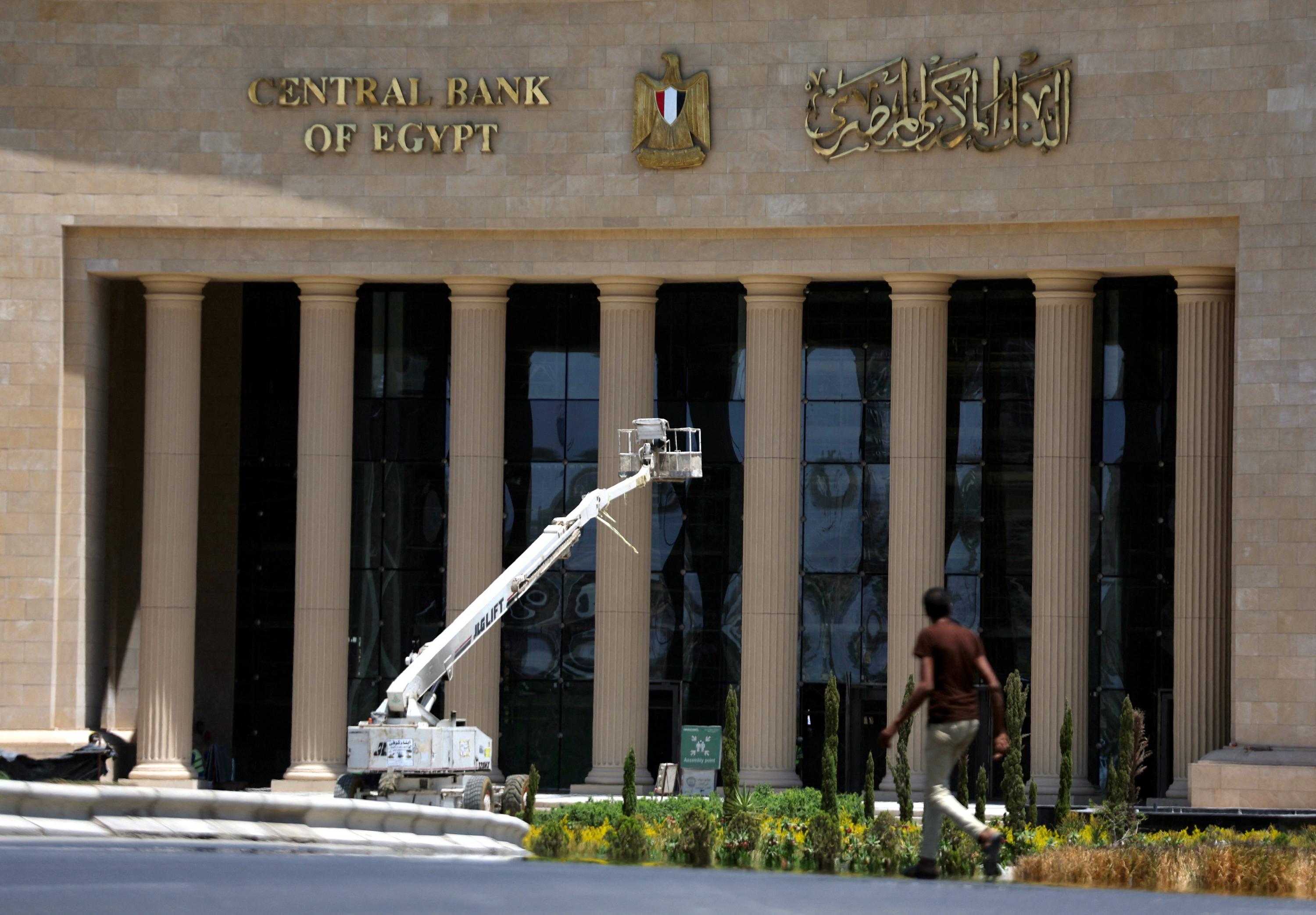
CAIRO, Oct 1 (Reuters) - Egypt's current account fell into deficit in the second quarter, reversing a rare surplus in the same period of 2023 as imports rose and Suez Canal revenue plunged, the central bank said on Tuesday. It was the first full quarter reported since Egypt sold the rights to develop prime Mediterranean coastline to Abu Dhabi for $35 billion in February and signed an $8 billion financial support programme with the International Monetary Fund in March. The current account flipped to a $3.71 billion deficit in the April-June quarter from a $557 million surplus a year earlier, according to Reuters calculations. Egypt, long suffering from chronic currency crises, has recorded only two quarterly surpluses in the last few years. Imports in the second quarter jumped to $19.2 billion from $16.1 billion a year earlier after non-petroleum imports surged by $2.7 billion. Exports fell by a marginal $126 million as those of petroleum, including natural gas, declined by $937 million to $1.12 billion. The drop in hydrocarbon exports was counterbalanced by a $811 million increase in non-petroleum exports to $7.23 billion. Egyptian natural gas and petroleum production has been falling off in recent years even as consumption increases. Suez Canal revenue fell to $870 million from $2.54 billion a year earlier, a victim of attacks on Red Sea shipping by Yemen's Houthis who say they are acting in solidarity with Palestinians in Gaza. Tourism revenue remained resilient despite regional conflicts, rising by $196 million to $3.52 billion, while worker remittances climbed $2.84 billion to $7.47 billion. Egyptians abroad had been holding back on sending money home before a major devaluation that was part of the March IMF agreement. Net foreign direct investment soared to $22.35 billion in the second quarter from only $2.09 billion a year earlier, largely due to the Abu Dhabi land deal. Sign up here. https://www.reuters.com/markets/egypts-current-account-deficit-quadruples-central-bank-says-2024-10-01/
2024-10-01 07:51
Proponent of more hikes said tightening can wait Now is time to monitor overseas, market moves, one member said Yen's rebound, stock fall could hurt profits, sentiment Dovish debate reduces chance of Oct rate hike TOKYO, Oct 1 (Reuters) - Bank of Japan policymakers discussed the need to go slow in raising interest rates as jittery markets clouded the outlook, a summary of their September meeting showed, reducing the chance of a near-term rate hike. The summary also showed how the U.S. Federal Reserve's decision to deliver an oversized reduction in borrowing costs, which came a day before the BOJ's Sept. 19-20 meeting, led to increased worries about the U.S. economic outlook. "Uncertainties have heightened about the U.S. economy and the pace of rate cuts by the Fed. Attention needs to be paid to the possibility that these factors will have a negative impact on the yen's exchange rates and corporate profits in Japan," one member was quoted as saying. Even a proponent of future rate increases called for patience in pulling the trigger, the summary showed, a turnaround from the previous meeting in July when many in the nine-member board voted for a rate hike to pre-empt the risk of too-high inflation. "I remain convinced that if it's confirmed that there will be no major downward revision to our outlook, it's desirable to raise rates without taking too much time," another member was quoted as saying. "But rate hikes should not be an end in itself," the member said, calling for the need to wait for the "appropriate" timing in pushing up borrowing costs. Given economic and market uncertainties, it was undesirable for the BOJ to raise rates further at this point as doing so might suggest the central bank was shifting to a full-fledged monetary tightening cycle, a third opinion showed. "Overseas economic uncertainties have heightened. We should scrutinise overseas and market developments closely for the time being," a fourth opinion showed, adding that rate hikes can wait until such uncertainties diminish. At the September meeting, the BOJ kept short-term rates steady at 0.25% and its governor said it could afford to spend time eyeing the fallout from global economic uncertainties, signalling it was in no rush to raise borrowing costs further. "In sharp contrast to July when optimism over the economy, emphasis on upside inflation risks and calls for additional rate hikes were a clear majority, there were quite a large number of opinions cautious about the outlook in September," analysts at SMBC Nikko Securities wrote in a research note. "With a good number of opinions calling for the need to scrutinise downside economic risks, it's hard to predict the BOJ raising rates in the near future," they said, projecting the next hike to come in January next year. The BOJ ended negative rates in March and raised short-term borrowing costs to 0.25% in July on the view Japan was making progress towards durably achieving its 2% inflation target. The July rate hike and Governor Kazuo Ueda's hawkish comments, coupled with weak U.S. labour market data, triggered a spike in the yen and stock market rout in early August. Since then, BOJ policymakers have stressed the need to take into account the economic fallout from market volatility. The BOJ next reviews rates on Oct. 30-31, when the board also releases fresh quarterly growth and price forecasts. It holds another meeting in December. A majority of economists polled by Reuters on Sept. 4-12 expected the BOJ to raise rates again by year-end. "In conducting monetary policy, it's necessary to give due consideration to downside risks to Japan's economy and monitor data carefully," one member was quoted as saying, highlighting how the BOJ's focus was shifting away from the risk of an inflation overshoot towards underpinning a fragile recovery. Another member said the yen's sharp reversal from past weaknesses could hurt exports and discourage manufacturers from raising wages, the summary showed. The departure of Prime Minister Fumio Kishida, who appointed Ueda and nodded to the BOJ's policy normalisation, adds to uncertainty over the bank's efforts to push up interest rates. Shigeru Ishiba, who was appointed as new prime minister on Tuesday, said on Sunday Japan's monetary policy must remain accommodative as a trend. Economic data pointed to continued moderate recovery, with robust corporate profits underpinning capital expenditure. The BOJ's "tankan" survey released on Tuesday showed big manufacturers' sentiment held steady in the three months to September, despite headwinds from soft global demand. "As for the next rate hike, I'm focusing on developments in consumer inflation, momentum toward next year's wage talks and U.S. economic developments," one board member was quoted as saying in the September summary. The summary of opinions does not identify the name of the board member who made the comment. Sign up here. https://www.reuters.com/world/japan/boj-policymakers-discussed-need-caution-rate-hikes-sept-summary-shows-2024-10-01/