2025-12-18 06:30
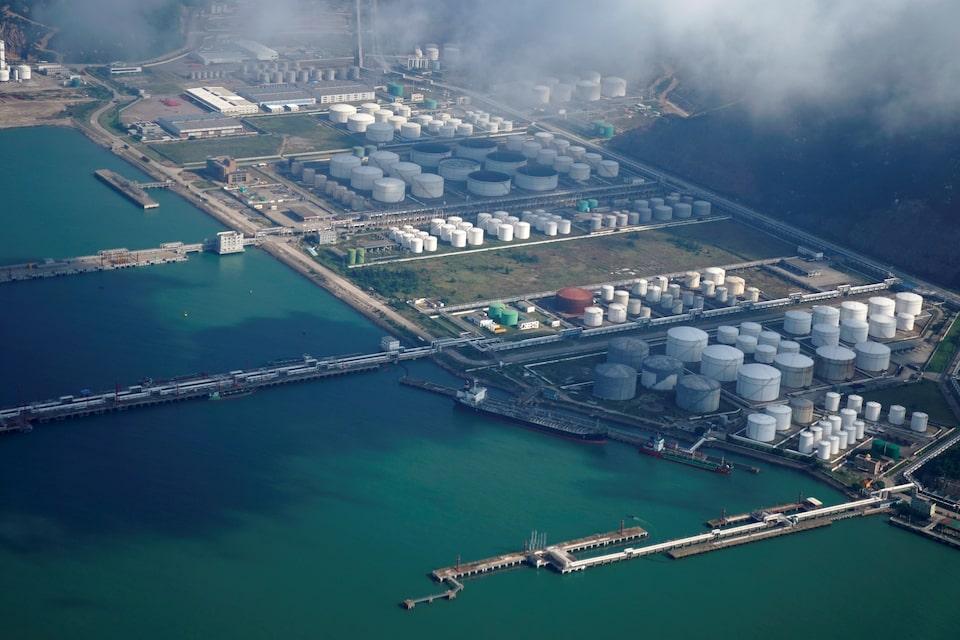
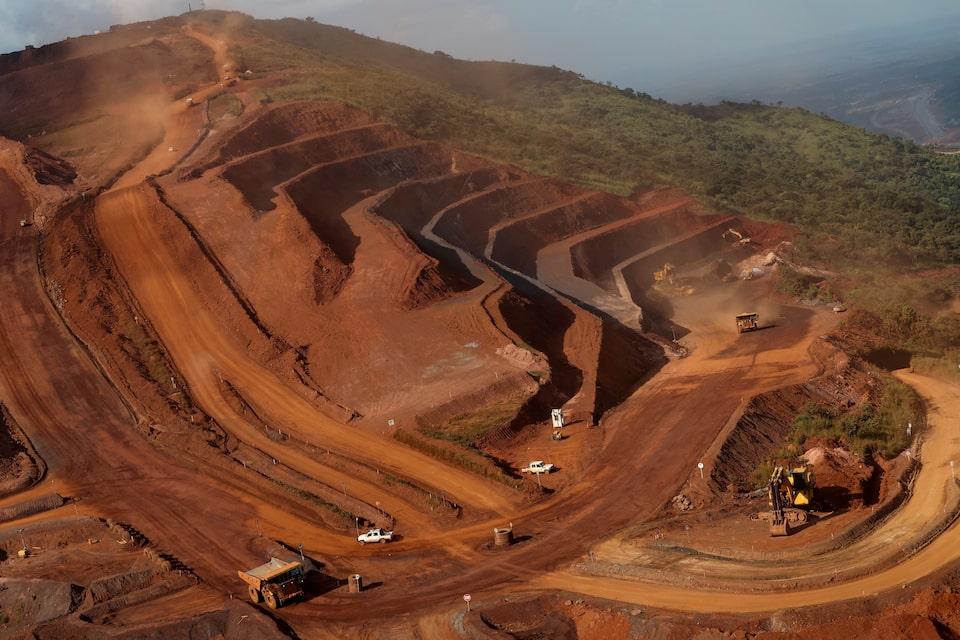
Shift to operational phase raises risk of poverty and unrest Guinean authorities plan infrastructure projects to absorb displaced workers Big layoffs in mining are common once construction completed, but the impact in Guinea is severe SIMANDOU, Guinea, Dec 18 (Reuters) - Guinea's Simandou mega mining project, promoted by the military government as a symbol of the country's economic transformation, is laying off thousands of workers just as it begins exporting iron ore after decades of delays and corruption scandals. Simandou was officially launched with pomp and a public holiday in November, ahead of elections on December 28, the first since the military coup in 2021 that brought Mamady Doumbouya to power. Sign up here. The junta leader is standing for president and political analysts say he is the favourite to win, meaning he could be in power for another seven years. Even without Simandou, the world's largest untapped reserve of iron ore, Guinea is the world's biggest exporter of bauxite, used to make aluminium. Its mining wealth, however, has failed to transform for the better the lives of many of its people. World Bank data published in 2025 showed more than half the population lived in poverty. Reuters interviewed a dozen workers and former employees, as well as some senior company sources. Asking not to be named because of the sensitivity of the issue, they said the process of sacking thousands of workers had begun and that the impact was likely to be more severe than in the case of comparable mining projects. It is a bitter disappointment for those who hoped their lives would be improved for the long term by Simandou's ambitions to produce around 120 million metric tons of iron ore annually, or around 7% of global demand. EMPLOYMENT PEAKED AT MORE THAN 60,000 Employment from Simandou peaked at over 60,000 jobs in 2024 and 2025, companies and government sources told Reuters, as contractors raced to meet deadlines set by Guinea's military rulers to try to fast-track iron ore exports after nearly three decades of delay. Fewer than 15,000 people will be needed to run the mines, the ports, and the 670 kilometre (416-mile) railway specially built to allow export from the landlocked project. The project is run by two consortia – one led by Rio Tinto (RIO.L) , opens new tab, (RIO.AX) , opens new tab and the other by the Winning Consortium Simandou, or WCS, comprising mostly Chinese companies. The way the work has been organised means the workforce reduction is extreme. One executive involved said the railway was "a simultaneous spread project," meaning every section was built at the same time, the labour force was ramped up to peak construction, "then falls off a cliff because everything finishes". WCS, which manages almost all of the railway via more than a dozen subcontractors, did not respond to requests for comment on its workforce. Rio Tinto, through a joint venture Rio Tinto-Simfer, is in charge of two mine blocks, 78 kilometres of rail connecting them to the main rail network and transshipment facilities at the new port on Guinea's Atlantic coast. In all, it has provided employment for around 25,000 workers, 82% of them Guinean, over the construction phase. For the operational phase, a spokesperson for Rio Tinto said the Simfer venture was expected to require a workforce of about 6,000 to work in the mine and at a transshipment vessel terminal at the port. The mine and rail construction is scheduled to be completed next year, while work at the port will continue through 2027, the spokesperson said. Chris Aitchison, managing director at Rio Tinto-Simfer, said he was concerned about the risks raised by sudden job losses, which the industry refers to as demobilisation. "It's the what's next?" he said. "In other jurisdictions when we demobilise there's a pathway for employees or people that have been engaged in execution to move to other projects." In comparable projects, such as Mongolia's Oyu Tolgoi copper mine, for example, more diversified economies meant former mining employees had other job options. RISK OF SOCIAL UNREST AND ACCIDENTS The workforce sources said the job-cutting had begun. In Dantilia, a hub in the Faranah region near Sierra Leone's border, 8,000 of 10,000 workers have lost their jobs the last three months. The other 2,000 have been told their jobs will end in the coming months. In Kamara, part of the same district, around 1,500 workers have already been dismissed, the workers said. "We are waiting in hope but for now they don't have any solutions, and they haven't promised anything yet," a pick-up driver for the Winning Consortium Simandou told Reuters, asking not to be named. "There is no other job." Three Western company sources said concern was mounting that reduced staffing could increase the risk of accidents, as well as of social unrest. They said they were worried about the likelihood of community protests that could take the form of blockades along the Simandou railway, where trains have already killed cattle, angering local residents who depend on their livestock. Risk assessments carried out by the consortia in the last six months flagged the places where people or livestock could stray onto tracks and derail trains, prompting the construction of fencing that the original design did not provide for, company sources said. In March, Reuters reported that a dozen workers had died in accidents during Simandou's railway construction between June 2023 and November 2024. In addition, at least five local residents were killed in traffic accidents involving vehicles from the works. Rio Tinto and WCS reported a further five worker deaths. Mines minister Bouna Sylla said the government was strict with the partners on safety and environmental safeguards. GOVERNMENT'S PROMISES OF FUTURE EMPLOYMENT Guinea's limited infrastructure, narrow skill base, and lack of income buffers magnify the impact of the sudden loss of jobs. Speaking to media in the days ahead of Simandou's official launch on November 11, Sylla acknowledged the layoffs would be painful. "It's not easy for people who've been earning a salary, waking up early for work every day, to suddenly lose it," Sylla said. He outlined government plans for new infrastructure projects, including roads, refineries and power plants, but he did not give any timing. The official launch at the new export port at Morebaya on Guinea's Atlantic coast was resolutely upbeat, with brass bands, honour guards, traditional dancers and visiting dignitaries. Doumbouya looked on, dressed in a white Guinean boubou tunic. In an attempt to provide thousands of future jobs, Guinea's military government has touted "Simandou 2040" as a 15-year strategy to transform the country into a diversified economy, based on investment in agriculture, education, transport, technology, finance and health for the entire population. The government holds a 15% stake in Simandou and the plan's estimated $200 billion cost would be partly funded by mining revenues, although it has said the bulk should come from private capital. Sylla said Guinea's infrastructure agency the Administration et Contrôle des Grands Projets was working on feasibility studies. The government also commissioned a KPMG report on re-employment programmes, which will be published after the elections, two sources said. KPMG did not respond to a request for comment. The infrastructure agency said the plans included 3,000 kilometres of new highways to be developed over 15 years. THE LONG WAIT FOR PROSPERITY But nearly 30 years after Rio started exploring the deposit, the question of whether Simandou can deliver prosperity for most of Guinea is unanswered. The IMF in its "Selected issues" paper on Guinea's economy, published in May 2024, modelled the macroeconomic effects of Simandou. It found it could boost the country's real GDP by 26% by 2030, but it also said the reduction in poverty could be minimal at just 0.6 percentage points without active policies to manage the transition. The project's impact in increasing the number of skilled workers could even lead "to worsening of inequality, especially in rural areas," it said. https://www.reuters.com/world/africa/mass-layoffs-overshadow-guineas-simandou-mega-mine-output-accelerates-2025-12-18/
2025-12-18 06:23
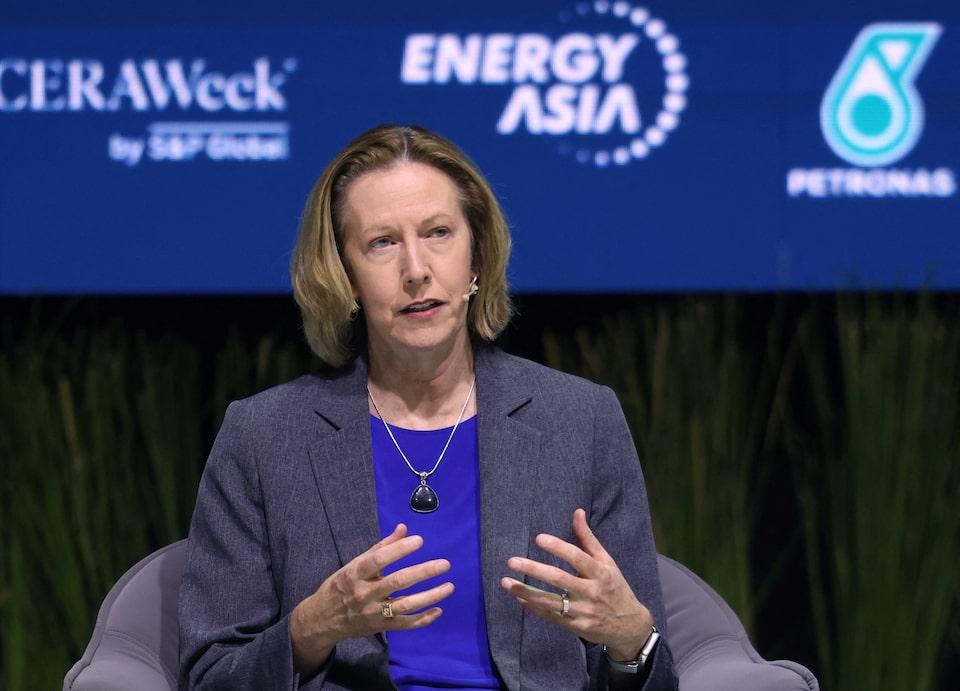
Dec 18 (Reuters) - BP (BP.L) , opens new tab has named Meg O'Neill, chief executive of Australia's Woodside Energy (WDS.AX) , opens new tab, as its next CEO, signalling a renewed push to boost returns and double down on oil and gas after retreating from an ambitious renewables strategy. O'Neill, who will take over in April following the abrupt exit of Murray Auchincloss, becomes BP's first external CEO in its more than century-long history and the first woman to lead any of the world's top five oil majors. Sign up here. Here's what analysts are saying about the latest development: SAUL KAVONIC, ANALYST, MST MARQUEE "Meg has built a very strong reputation in the oil and gas industry in the space of a few years, and is even more highly regarded overseas than in Australian markets." BRYNN O’BRIEN, EXECUTIVE DIRECTOR, AUSTRALASIAN CENTRE FOR CORPORATE RESPONSIBILITY "At Woodside, O’Neill’s departure is an opportunity for a much-needed strategy refresh." “Investors will be hoping that O’Neill’s departure is a circuit breaker on Woodside’s habit of pursuing high-capex, marginal fossil fuel projects, and is an opportunity to instead start focusing on better capital returns." PIPER SANDLER ANALYSTS "Although the announcement was surprising in terms of timing and immediacy, we expect that the change will ultimately be positive for the stock. "While investors have generally been positive on the direction of travel under Auchincloss, including material changes to capital allocation and strategic direction, it has also been clear that there is market appetite for a more aggressive approach in both scope and pace." "The decision highlights a level of speed and focus under new Chairman of the Board, Albert Manifold, that was lacking previously, and is likely to be welcomed by investors." PAUL CHENG, ANALYST, SCOTIABANK GLOBAL EQUITY RESEARCH "We believe the market will view the step-down of Auchincloss with positive lens. In our opinion, the appointment of a new outsider CEO signals the Board's impatience with the pace and extent of previously announced restructuring efforts." "In the past, we have found successful cases where the new outsider CEO with no legacy baggage had successfully served as a disrupted change agent that led to a significantly higher performance level within a couple of years." https://www.reuters.com/sustainability/boards-policy-regulation/bp-picks-first-outsider-ceo-meg-oneill-after-abrupt-auchincloss-exit-2025-12-18/
2025-12-18 06:01
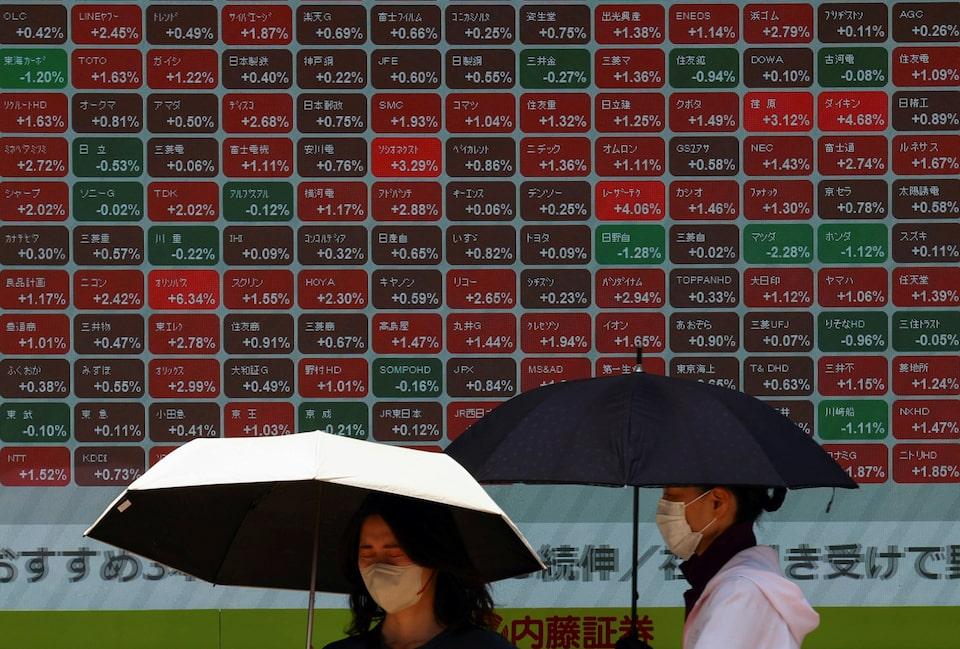
Stocks rise on softer inflation, sunnier tech sentiment US CPI report for November softer than expected BoE cuts rates, ECB stays put Oil settles higher, Treasury yields dip NEW YORK/LONDON, Dec 18 (Reuters) - MSCI's global equities gauge rose on Thursday after four days of losses, but Treasury yields dipped after soft U.S. inflation data raised investors' hopes about more Federal Reserve rate cuts. Meanwhile, memory chip maker Micron Technology's (MU.O) , opens new tab strong results helped to reinvigorate Wall Street's "rollercoaster" sentiment around artificial intelligence stocks. Sign up here. U.S. consumer prices increased less than expected in the year to November, with the Consumer Price Index rising 2.7% year-on-year versus economists' forecast of 3.1%, leading to some choppy trading in the dollar as investors also digested updates from UK and European policymakers. After Wednesday's technology sector selloff driven by worries about AI-inflated valuations, Micron's blowout forecast provided some reassurance, sending its shares up 10% and other heavyweight U.S. tech stocks higher. Garrett Melson, portfolio strategist at Natixis Investment Managers, said Micron's news was "helping to at least stabilise some of the sentiment around AI, which has been a rollercoaster." "It's this kind of back and forth between skepticism and real confidence. Today we're back on the confidence side of things," he said. On Wall Street, the Dow Jones Industrial Average (.DJI) , opens new tab finished up 65.88 points, or 0.14%, at 47,951.85. The S&P 500 (.SPX) , opens new tab rose 53.33 points, or 0.79%, to 6,774.76, with technology providing the biggest boost to the benchmark. The Nasdaq Composite (.IXIC) , opens new tab advanced 313.04 points, or 1.38%, to 23,006.36. U.S. INFLATION DATA COULD SET STAGE FOR RALLY Although the U.S. inflation data was "compromised" by collection and release delays due to the 43-day government shutdown through October into mid-November, Mark Luschini, chief investment strategist at Janney Montgomery Scott, said it "still gives some indication that perhaps prices continue to decelerate." "Today's inflation report set the stage for a rally in stock prices that had been somewhat downtrodden over the last week or so," Luschini said. "This is a seasonably favorable time of the year for stock prices so the bias tends to be good news being treated as really good news," he added. The Fed, which has been balancing labour market weakness with still elevated inflation, has signalled only one rate cut next year but traders have been betting on two and estimates were little changed after Thursday's data. U.S. President Donald Trump said late on Wednesday the next Fed chair, replacing Jerome Powell in May, would be someone who believed in lowering rates "by a lot." MSCI's gauge of stocks across the globe (.MIWD00000PUS) , opens new tab rose 6.13 points, or 0.62%, to 1,001.18. Earlier, the pan-European STOXX 600 (.STOXX) , opens new tab index closed up 0.96%. In currencies, the dollar recovered earlier losses as investors digested the inflation data. The dollar index , which measures the greenback against a basket of currencies including the yen and the euro, rose 0.06% to 98.44. The euro was down 0.13% at $1.1724 after the European Central Bank kept euro zone rates unchanged as expected and struck a more upbeat tone on the economy. Against the Japanese yen , the dollar weakened 0.07% to 155.56 ahead of the Bank of Japan's expected rate hike on Friday. Sterling strengthened 0.02% to $1.3378 after the Bank of England cut interest rates but signalled limited scope for further easing. In the bond market, the yield on benchmark U.S. 10-year notes fell 3.1 basis points to 4.12%, from 4.151% late on Wednesday, while the 30-year bond yield fell 2.8 basis points to 4.7999%. The 2-year note yield, which typically moves in step with interest rate expectations for the Federal Reserve, fell 2.5 basis points to 3.46%, from 3.485%. In energy markets, oil prices settled slightly higher as investors assessed the likelihood of further U.S. sanctions against Russia and the supply risks posed by a blockade of Venezuelan oil tankers. U.S. crude settled up 0.38%, or 21 cents, at $56.15 a barrel and Brent settled at $59.82 per barrel, up 0.23%, or 14 cents, on the day. Gold prices edged down as markets digested softer-than-expected U.S. inflation data, reducing the safe-haven's appeal as an inflation hedge, though a higher November unemployment rate, announced on Wednesday, limited losses. Spot gold fell 0.2% to $4,332.32 an ounce. U.S. gold futures fell 0.27% to $4,335.80 an ounce. https://www.reuters.com/world/china/global-markets-wrapup-1-pix-2025-12-18/
2025-12-18 05:55
Three people killed in Ukrainian drone attacks on Rostov region Two cargo vessel crew members die, fire now extinguished Ukraine and Russia accuse each other of targeting vessels Dec 18 (Reuters) - Three people, including two crew members of a cargo vessel, were killed in overnight Ukrainian drone attacks on the Russian port of Rostov-on-Don and the town of Bataysk in the southern Rostov region, the local governor said on Thursday. The vessel was Russia-flagged tanker Valeriy Gorchakov, according to British maritime risk management company Vanguard. A fire on board was extinguished, Yuri Slyusar wrote on his Telegram messaging app channel. Rostov-on-Don head Alexander Skryabin said that a leak of oil products had been avoided. Sign up here. Ukraine and Russia have accused each other of deliberately attacking civilian vessels, and Russian President Vladimir Putin has threatened to cut Ukraine off from the sea after Kyiv's attacks damaged three "shadow fleet" tankers heading to Russia this month to export its oil. One person was killed and seven people were injured in the town of Bataysk where two private homes caught fire as a result of a drone attack, Slyusar said. The Valeriy Gorchakov is managed by the Volgo-Balt Service, according to LSEG ship-tracking data. https://www.reuters.com/world/ukrainian-drones-hit-tanker-russias-rostov-port-causing-deaths-mayor-says-2025-12-18/

2025-12-18 05:48
TOKYO, Dec 18 (Reuters) - Japan Petroleum Exploration Co (JAPEX) (1662.T) , opens new tab said on Thursday it decided to buy the entire equity interest in Verdad Resources Intermediate Holdings LLC (VRIH), which holds tight oil and gas assets in the U.S., for $1.3 billion. JAPEX would buy the whole VRIH, with assets in Colorado and Wyoming, from Verdad Resources Feeder LLC, using its own funds and debt, it said, aiming to close the deal by the end of February 2026. Sign up here. The asset is currently producing around 35,000 barrels of oil equivalent per day of tight oil and gas which JAPEX aims to increase to approximately 50,000 boed around 2030, it said. Over the last year, Japanese companies have stepped up energy purchases, via equity stakes and offtake deals, with the U.S., aiming both to diversify their supply base and as U.S. President Donald Trump calls on allies to buy more U.S. energy. Japan's announced U.S. LNG purchases this year have reached at least 8.5 million tonnes per year. Japan imported a total of roughly 66 million tons of LNG in 2024. https://www.reuters.com/business/energy/japans-japex-buys-us-tight-oil-gas-assets-13-bln-deal-2025-12-18/

2025-12-18 05:48
Reuters Open Interest (ROI) LAUNCESTON, Australia, Dec 18 (Reuters) - Asia's imports of U.S. crude oil, coal and liquefied natural gas are on track to decline this year despite President Donald Trump's efforts to boost shipments as part of his trade and tariff policies. The decline in imports from the United States is largely driven by China, the world's biggest buyer of commodities, which pulled back on purchases after Trump ramped up tariffs on U.S. imports of Chinese goods, with the current average rate around 47.5%. Sign up here. Asia's imports of U.S. crude oil are expected to reach 1.43 million barrels per day (bpd) in 2025, down from 1.56 million bpd in 2024 and the record 1.65 million bpd in 2023, according to data compiled by commodity analysts Kpler. The biggest importer is South Korea, one of the countries that committed to buying more U.S. energy as part of a trade deal with the Trump administration. However, South Korea's imports of U.S. crude oil are likely to show a tiny increase in 2025 to 470,000 bpd from 465,000 bpd last year. Japan, which also agreed to boost imports of U.S. energy, did show a significant increase in imports of crude oil, with 84,500 bpd arriving in 2025, up from 34,000 bpd in 2024. However, Japan's total crude imports in 2025 are about 2.25 million bpd, meaning the U.S. share amounts to a paltry 3.8%. China imported just 38,350 bpd from the United States in 2025, down 84% from 245,100 bpd in 2024 and 400,000 bpd in 2023, according to Kpler. It is much the same story with LNG, with China's imports from the United States dropping to 250,000 tons in 2025, down 94% from the 4.30 million tons in 2024. Asia's LNG imports from the United States, the world's biggest exporter of the super-chilled fuel, dropped to 19.08 million tons in 2025 from 29.78 million in 2024. Japan was the biggest buyer, but its arrivals slipped to 4.49 million tons in 2025 from 6.50 million in 2024. INDIA DIVERGES Another country that took significantly less U.S. LNG was India, with imports dropping to 2.93 million tons in 2025 from 5.01 million in 2024, according to Kpler. Trump imposed import tariffs of as much as 50% on goods from India amid a breakdown in relations with New Delhi over its ongoing purchases of Russian crude oil. But the trade relationship between Washington and India hasn't completely broken down as India lifted imports of coal from the United States, with arrivals of 21.07 million tons this year, up from 18.77 million in 2024. India is by far the biggest buyer of U.S. coal in Asia, with a 61% share of 2025 imports. This makes U.S. coal exports to Asia vulnerable should the trade dispute between Washington and New Delhi escalate in 2026. Other major Asian buyers of U.S. coal are Japan and South Korea, and their imports only increased fractionally. Japan's 2025 imports of U.S. coal are forecast at 4.44 million tons, up from 4.40 million in 2024, while South Korea is expected to take 1.59 million, an increase from 1.29 million in 2024. Japan agreed to purchase an annual $7 billion in U.S. energy as part of its deal with Trump, which was reached in September. This means that 2025 imports won't fully reflect this commitment, but they do show that Japan will have to boost its imports in 2026 if it is to reach the target. Using average prices for U.S. crude oil, Japan's LNG imports and seaborne thermal and metallurgical coal, the estimated value of Japan's imports of U.S. energy in 2025 is about $5.32 billion. Increasing this to $7 billion next year is feasible, although given Japan's stagnant energy demand, any increase in imports from the United States would mean cutting purchases from other suppliers. This dynamic underscores the larger problem with Trump using tariffs to encourage countries to buy more U.S. energy. The United States will run out of capacity to supply what is likely to be demanded if all the countries try to actually meet their commitments, especially the annual $250 billion in energy imports by the European Union. Enjoying this column? Check out Reuters Open Interest (ROI), your essential new source for global financial commentary. ROI delivers thought-provoking, data-driven analysis of everything from swap rates to soybeans. Markets are moving faster than ever. ROI can help you keep up. Follow ROI on LinkedIn , opens new tab and X , opens new tab. The views expressed here are those of the author, a columnist for Reuters. https://www.reuters.com/markets/commodities/asias-imports-us-energy-drop-2025-despite-trump-trade-moves-2025-12-18/