2024-09-30 16:23
Sept 30 (Reuters) - Ingram Micro made public its U.S. IPO filing on Monday, more than two years after the private-equity backed electronics distributor laid the foundation for its return to stock markets. Expectations of more monetary policy easing and pressure to return capital to investors are encouraging PE firms to list their portfolio companies. Beverly Hills, California-based Platinum Equity acquired Ingram in 2021 from a unit of Chinese aviation and shipping conglomerate HNA Group in a $7.2 billion deal. The company and some of its existing stockholders will sell shares in the proposed offering. Founded in 1979, Ingram partners with technology manufacturers and cloud providers to bring their products to market through its digital platform Ingram Micro Xvantage. The company, which also provides businesses with a portfolio of technology offerings and supply chain services, disclosed a 5.5% drop in 2023 net revenue to $48 billion due to the sale of its commerce and lifecycle services (CLS) business. Ingram in April 2022 sold the unit to French shipping company CMA CGM Group in a $3 billion deal. The company's net income shrank to $352.7 million in 2023 from $2.39 billion a year earlier. Ingram had booked a $2.28 billion gain on the CLS sale in 2022. Ingram laid the foundation for its return to stock markets when it had confidentially filed for a U.S. IPO in September 2022. The IPO proceeds will be mainly used to pay down debt. Ingram plans to list on the New York Stock Exchange under the symbol "INGM." The offering is being underwritten by more than a dozen Wall Street banks, led by Morgan Stanley, Goldman Sachs and J.P. Morgan Securities. Sign up here. https://www.reuters.com/markets/deals/ingram-micro-makes-us-ipo-filing-public-2024-09-30/

2024-09-30 15:01
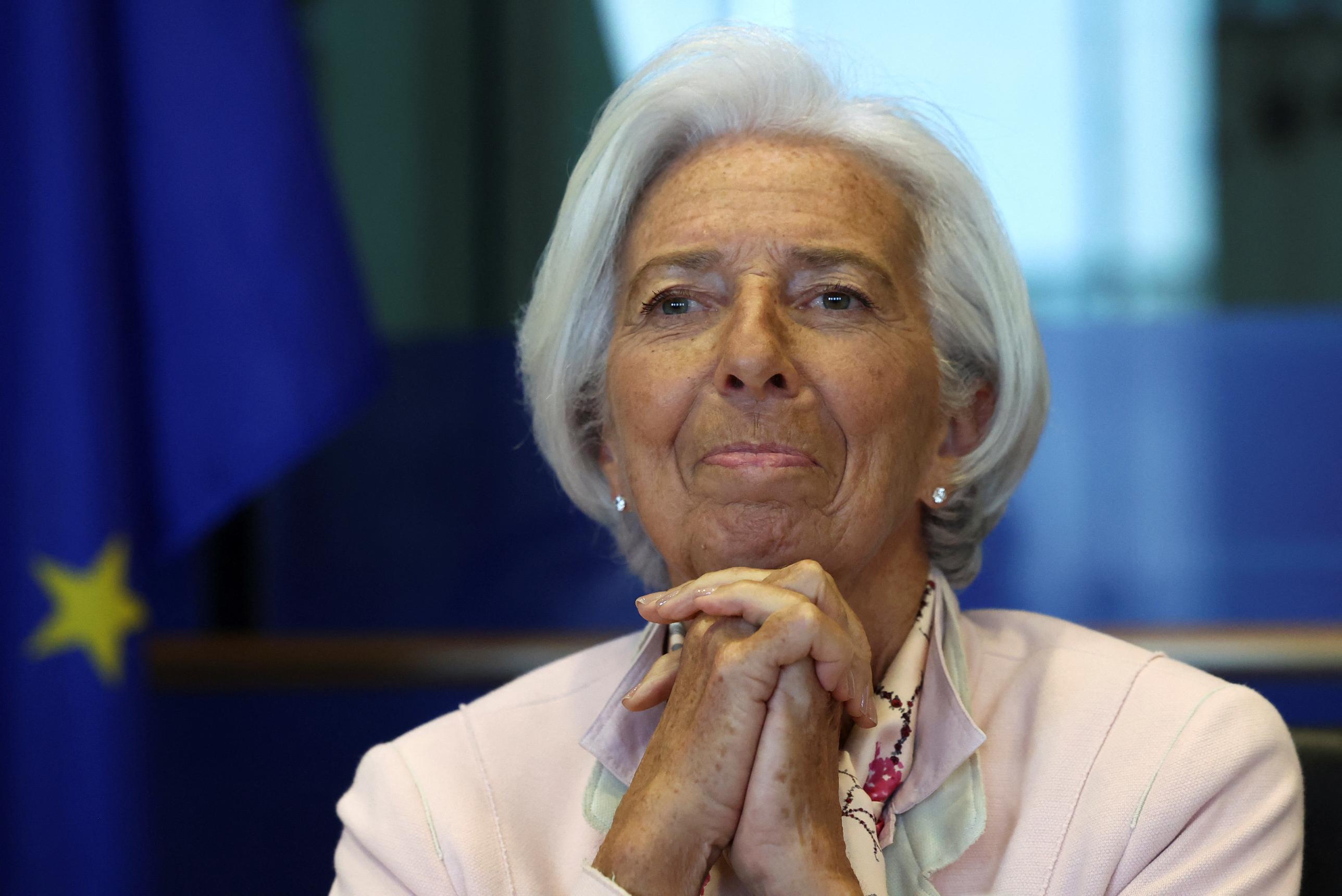
FRANKFURT, Sept 30 (Reuters) - The European Central Bank is increasingly confident that inflation will fall to its 2% target and this will be reflected in its next policy move, the bank's president said on Monday, dropping the clearest hint yet about a coming interest rate cut. Money market investors ramped up their bets on a reduction in borrowing costs at the ECB's Oct. 17 meeting after Lagarde's comments, which follow a string of lower-than-expected readings for economic activity and inflation. "The latest developments strengthen our confidence that inflation will return to target in a timely manner," Lagarde told a European Union parliamentary hearing in Brussels. "We will take that into account in our next monetary policy meeting in October." Inflation in the 20-nation currency bloc likely fell below the ECB's 2% target for the first time since mid-2021 this month, a raft of national data suggested. Lagarde suggested Tuesday's reading for the euro zone as a whole would also be below the ECB's "baseline" projections. The inflation and weak growth data have raised expectations of a 25 basis point rate cut in October, which is now almost fully priced into money markets, up from a 25% probability seen early last week. Reuters exclusively reported late last week that policy doves at the ECB were preparing to fight for a rate cut next month after a string of weaker-than-expected economic data. Lagarde also acknowledged the recent run of poor growth readings. "Looking ahead, the suppressed level of some survey indicators suggests that the recovery is facing headwinds," she told a regular hearing of the Committee on Economic and Monetary Affairs. Still, she repeated the bank's usual line that the recovery was expected to strengthen and rising real incomes should allow households to consume more. She added that the labour market, the source of some price pressures via rapid wage growth, remained resilient, even if wage growth was moderating and corporate profits were absorbing some pay increases. Sign up here. https://www.reuters.com/markets/europe/ecbs-oct-decision-will-reflect-greater-confidence-inflation-says-lagarde-2024-09-30/
2024-09-30 13:55
BRASILIA/SAO PAULO, Sept 30 (Reuters) - Private sector economists in Brazil now project a more restrictive path for interest rates, with two 50-basis-point hikes expected this year and higher borrowing costs next year, a weekly central bank survey showed on Monday. Amid a stronger-than-expected economy, policymakers raised rates by 25 basis points to 10.75% earlier this month, leaving the door open for further increases without committing to their specific size. The survey revealed that economists now foresee twice the tightening at each of the upcoming policy meetings in November and December, with the benchmark Selic rate ending this year at 11.75%, up from 11.50% in the previous survey. For 2025, economists expect a 25 basis-point hike in January, with the rate kept at 12% through mid-year. They predict four 25 basis-point cuts from July onward, bringing the Selic to 10.75% by year-end. Previously, the forecast was for the rate to close next year at 10.50%. The revision came alongside unchanged inflation forecasts for this year and next, breaking a streak of ten consecutive weeks of rising expectations for 2024 and two weeks for 2025 expectations. Economists also lowered their inflation outlook for 2026 after two consecutive weeks of increases. Still, inflation projections at 4.37% this year, 3.97% in 2025 and 3.60% in 2026 remain above the official 3% target. The 2027 forecast has been kept steady at 3.5% for over a year. Since its latest rate decision, policymakers have emphasized their concern over inflation expectations unanchoring from the target, which they see as a critical issue. "Prolonged above-target medium-term inflation expectations (2026-27) could contaminate and harden price-formation mechanisms and make it more costly for the central bank to deliver inflation at the target," Goldman Sachs economist Alberto Ramos said. The following is a set of projections from the survey: Sign up here. https://www.reuters.com/markets/rates-bonds/brazil-private-economists-forecast-two-50-basis-point-rate-hikes-this-year-2024-09-30/

2024-09-30 13:41
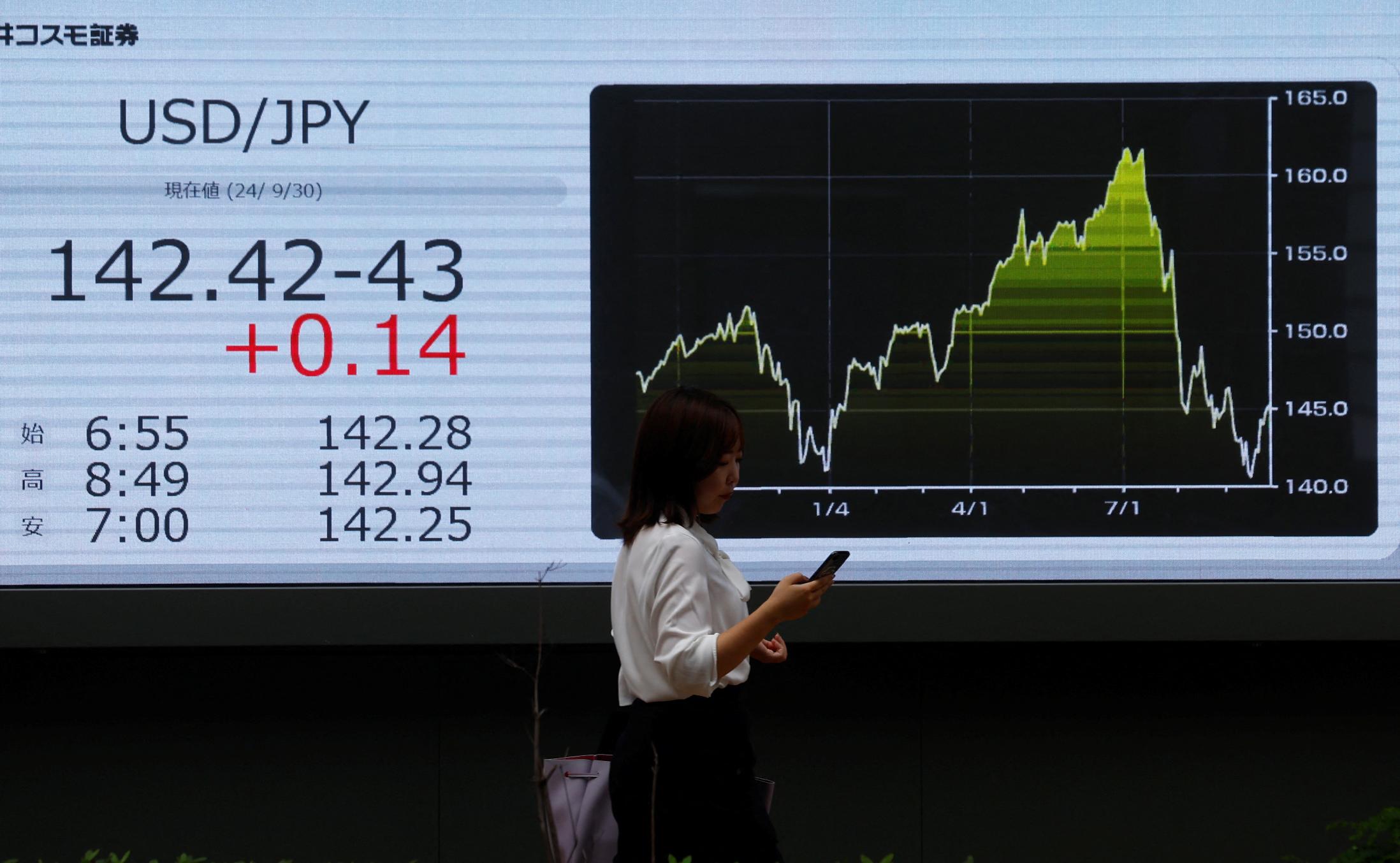
Q3 dominated by surges in Japanese yen, Chinese stocks Oil falls 17%, central banks cut rates U.S. election expected to bring more volatility Gold thrives on heightened uncertainty LONDON, Sept 30 (Reuters) - What a wild quarter for the markets! The yen's strongest run since the 2008 global crash, central banks swivelling at speed, oil diving, gold shining and China spraying economic stimulus. The Q3 scores show world stocks (.MIWD00000PUS) , opens new tab and U.S. Treasuries both up around 6%, gold almost 15% higher, the yen up a whopping 11%. Oil is 17% lower and central banks have just delivered the biggest batch of interest rates cuts since the COVID-19 pandemic. The storms started when the normally docile yen went wild at the idea of higher Japanese rates at almost exactly the same time U.S. economic data started looking queasy. In just a few weeks, MSCI's main world equity index shed $6 trillion in one of the fastest sell-offs in years, especially for Big Tech. Traders went from pricing one or two U.S. rate cuts this year to five or six. "The biggest thing that happened in Q3 was that the yen carry trade broke down," Societe Generale's Kit Juckes said, explaining the strategy of borrowing cheaply in Japan to buy higher-yielding assets elsewhere. "That, along with the first pieces of weak U.S. data, really changed the market." The prospect of lower borrowing costs did the trick though. By the end of August, world stocks had rebounded and Chinese markets were about to make a remarkable turnaround of their own. As Beijing turned on the stimulus taps, including lower rates and measures aimed at the ailing property market, Chinese stocks (.SSEC) , opens new tab have just notched up their strongest week since 1996 and real estate shares (.CSI000952) , opens new tab have rocketed by a third. China's largesse has also helped spur the biggest quarterly spike in both emerging market stocks (.MSCIEF) , opens new tab and the main global volatility gauges (.VIX) , opens new tab since 2022. "China needs to recover to see a turnaround in the asset class," said Claus Born, an emerging markets equity portfolio manager at Franklin Templeton. "China's influence is very important". A BIT LESS MAGNIFICENT Markets are still showing signs of bruising from the August turmoil. Among the "Magnificent Seven" tech stocks that dominate world markets - Nvidia (NVDA.O) , opens new tab, Microsoft (MSFT.O) , opens new tab Amazon (AMZN.O) , opens new tab and Google (GOOGL.O) , opens new tab - are all ending the quarter lower than where they were at the start. Don't panic yet though, Apple (AAPL.O) , opens new tab, Meta (META.O) , opens new tab and Tesla (TSLA.O) , opens new tab are up 9%, 13% and 32% respectively in Q3 and Nvidia is up a staggering 145% for the year. In commodities, the big Q3 shift has been the 17% slide in oil , despite escalating conflict in the Middle East where Israel's bombings have now spread to Lebanon. The Middle East tensions and the weaker dollar have helped gold to set new record highs and it looks set have had its strongest quarter since 2016. In agricultural commodities, cocoa shortages have pushed prices up 87% for the year, which will be its second biggest annual price jump on record barring a Q4 meltdown. Europe has not escaped the volatility. French bond risk has exploded to its highest level since the euro zone crisis after gains by the far right has caused major headaches for French President Emmanuel Macron. As a result, investors are now demanding a higher interest rate to buy 5-year French debt than they do from Greece, the country that was at the centre of the euro zone crisis. The euro has also fallen against European peers like Britain's pound and the Swiss franc . Distressed debt specialist fund Gramercy said the rise in French government bond yields which also includes the Franco-German yield differential topping 80bps had prompted comparisons to the “Liz Truss moment” that the UK gilt market endured two years ago. TRUMP CARD But there's no chance of a quiet end to the year, with the fourth quarter set to be dominated by November's U.S. election between Donald Trump and Kamala Harris. Analysts at BofA highlight that even in normal conditions the CBOE's VIX index (.VIX) , opens new tab, the Wall Street "fear gauge", typically rises around 25% between July and November in U.S. election years. The vote - which could bring trade tariffs if Trump wins - will trigger even more turbulence if investors sense the outcome might influence the Fed's rate plans. JPMorgan's economists estimated U.S. inflation could jump 2.4% if Donald Trump wins and slaps a 60% tariff on all China imports and a 10% universal minimum tariff on those from elsewhere. They also think it would push the dollar up 4-6%. Fidelity's Henk-Jan Rikkerink said that the wild card for the markets (for Q4) is a broadly more complex set of geopolitical risks. "The conflicts in the Middle East and Ukraine roll on, with no end in sight, and the US election beckons on November 5th." Sign up here. https://www.reuters.com/markets/global-markets-q3-pix-2024-09-30/
2024-09-30 12:58
NEW DELHI, Sept 30 (Reuters) - India's infrastructure output fell by 1.8% year-on-year in August, marking its first contraction since February 2021 as heavy rains hurt coal and electricity production, government data showed on Monday. Infrastructure output, which makes up 40% of India's industrial production and tracks activity across eight sectors, had grown by 6.1% in July. "Excess rainfall impacted mining activity, with the output of coal, crude oil, and natural gas declining, while also leading to a contraction in electricity generation in the month," said Aditi Nayar, chief economist at ICRA rating agency. Given these trends, industrial output growth could slow down sharply to about 1% in August 2024 from 4.8% in July 2024, she said. Prime Minister Narendra Modi has stepped up state spending on infrastructure, proposing to invest 11.1 trillion rupees ($132.5 billion), about 3.4% of GDP, in the fiscal year ending in March 2025, to boost economic growth. Infrastructure output in February 2021 had contracted 3.3% year-on-year, according to government data , opens new tab. Coal production fell 8.1% in August compared to a 6.8% growth in July, while electricity generation fell 5% in August from 7% growth in the previous month. Steel production grew 4.5%, against a 7.2% increase a month earlier. Cement output fell 3% year-on-year, compared with July's 5.5% rise, and fertiliser production increased 3.2%, against a 5.3% rise in the previous month. Output of refinery products fell 1% compared with an increase of 6.6% in July. Crude oil production fell 3.4% compared with a fall of 2.9% in July. Natural gas output fell 3.6% compared to a 1.3% decline a month ago. ($1 = 83.7700 Indian rupees) Sign up here. https://www.reuters.com/world/india/indias-infrastructure-output-contracts-first-time-more-than-3-years-2024-09-30/

2024-09-30 12:52
Govt would need faster growth, easier credit conditions Orban says government respects central bank independence 100% Tones down pressure for rate cuts ahead of leadership change BUDAPEST, Sept 30 (Reuters) - Hungary's government would like to see faster economic growth and more favourable credit conditions, but it can "live" with the interest rate environment set by the central bank, Prime Minister Viktor Orban told parliament on Monday. The National Bank of Hungary cut its base rate by 25 basis points to 6.5%, earlier this month, aided by a fall in inflation and a larger-than-usual cut by the U.S. Federal Reserve. However, the NBH, which has faced pressure from Orban's cabinet to slash borrowing costs, said a careful and patient policy approach was justified, with its main rate still the highest in the European Union alongside Romania. Orban said there was a "heated debate" among economists about the desired level of interest rates, which he said was "understandable" considering borrowing costs elsewhere in central Europe. Earlier this month Orban said a new ministry would take charge of the economy and state finances as he gears up for the nomination of a new central bank governor to succeed former ally Gyorgy Matolcsy. "I would like to make it clear that although the government would desire faster economic growth and more favourable credit conditions than today, we respect the central bank's independence 100%," Orban said. "The government can live together with the interest rate environment set by the central bank." In power since 2010, the veteran nationalist has struggled to revive Hungary's economy from last year's downturn following a surge in inflation to more than 25% in the first quarter of 2023, the highest level in the EU. Finance Minister Mihaly Varga has been widely tipped to succeed Matolcsy early next year, while Economy Minister Marton Nagy, a former central banker, could take charge of public finances under a merged ministry. Some economists say the main risk for investors from the leadership changes would be a potential dovish policy shift, which could hit the forint and boost inflation. Sign up here. https://www.reuters.com/markets/rates-bonds/hungarys-government-can-co-exist-with-central-bank-rate-level-orban-says-2024-09-30/