2024-09-30 05:24
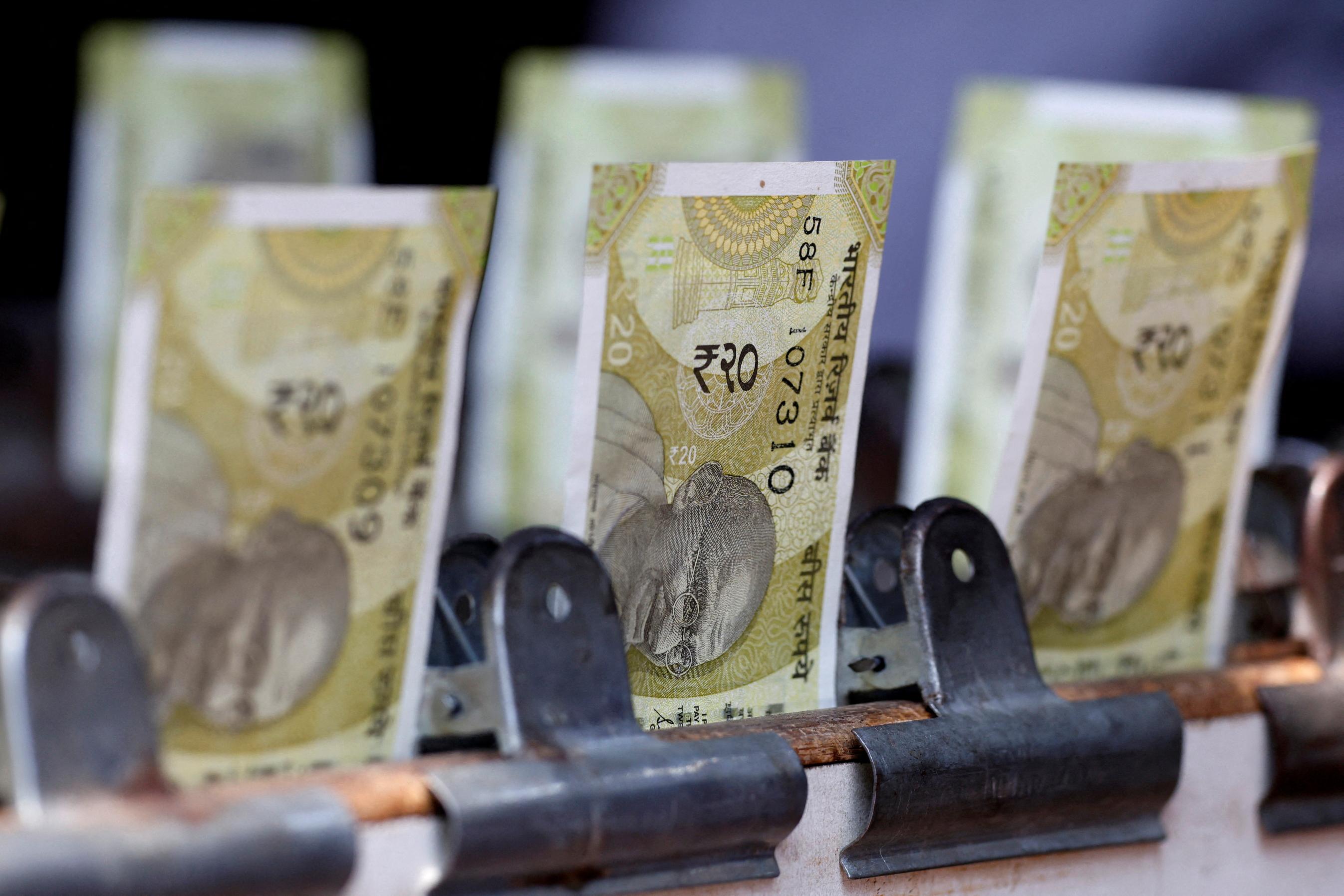
MUMBAI, Sept 30 (Reuters) - The Indian rupee fell on Monday, pressured by dollar demand from foreign banks, while most of its Asian peers gained after China’s economic stimulus measures over the weekend boosted risk sentiment. The rupee was at 83.7850 against the U.S. dollar as of 10:50 a.m. IST, down 0.1% on the day. Strong dollar bids from a London-based and a New York-based bank pressured the rupee in early trading, a trader at a state-run bank said, adding that the currency's intra-day fall should be limited to 83.85. The dollar index was a touch weaker at 100.4 while most Asian currencies gained, led by the Malaysian ringgit and Thai baht, both up 0.5%. While the rupee is set to post its first monthly gain since June, it continues to lag behind regional peers that have risen between 0.3% to 5.4% this month. "The rupee, after experiencing a decent appreciation, has begun drifting back toward its typical range. This shift is driven by month-end dollar demand from importers, coupled with the RBI’s active management of the currency," Amit Pabari, managing director at FX advisory firm CR Forex said. The rupee had touched a near three-month peak of 83.4350 earlier in the month but has since pared gains. Meanwhile, dollar-rupee forward premiums nudged higher, with the 1-year implied yield rising 1 basis point to 2.40%, near its highest level since May 2023. Focus today will be on remarks from Federal Reserve Chair Jerome Powell, who may provide insights into the future direction of U.S. policy rates. Interest rate futures are currently pricing in 75 basis points of rate cuts for 2024, with nearly-even odds for a 50 or 25 basis point cut in November. Sign up here. https://www.reuters.com/markets/currencies/rupee-weakens-foreign-banks-dollar-bids-offset-positive-asian-cues-2024-09-30/
2024-09-30 04:37
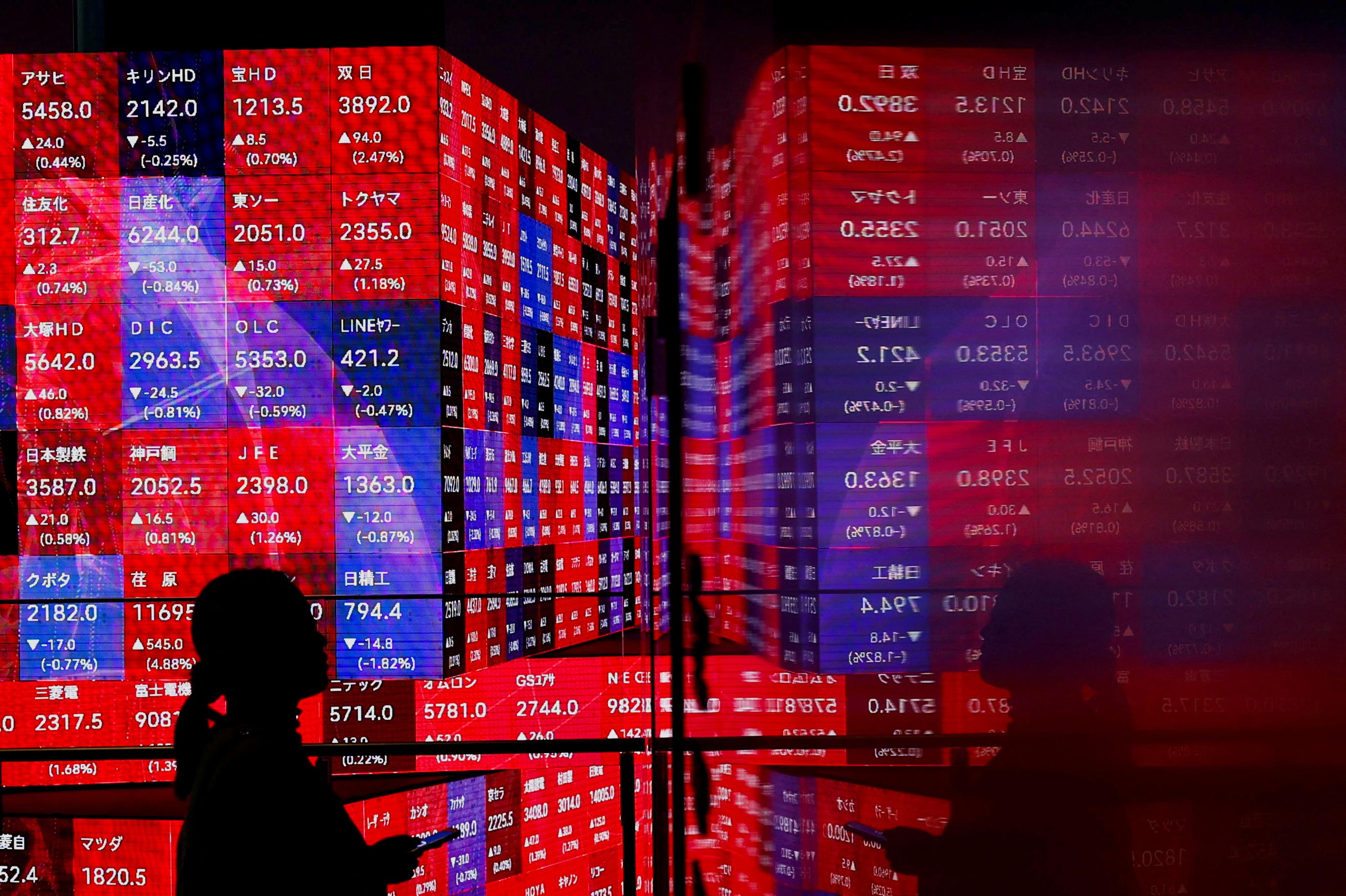
A look at the day ahead in European and global markets from Wayne Cole. There's so much news it's hard to know where to start, what with strife in the Middle East and more stimulus measures out of Beijing. The Nikkei stole the early show with a drop of 4.6% as markets price in the risk of higher interest rates under new Prime Minister Shigeru Ishiba. He has long been a critic of the Bank of Japan's uber-easy policies so investors assume he will not stand in the way of policy normalisation. Still, actually being in charge can change attitudes and he sounded a lot more conciliatory over the weekend, saying easy policy was needed given the state of the economy. Markets still show almost no chance of a BOJ tightening in October, but have 6 bp of hikes for December, so about a 24% chance of a quarter-point rise. Then again, the market only has the current 0.25% rate reaching 0.5% by the end of next year, so it's not exactly a hawkish outlook. Ishiba's comments were enough to help the dollar steady at 142.64 yen , after Friday's 1.8% drop as low as 142.07. The euro is a shade firmer at $1.1170 , having got a lift last week from the benign U.S. core PCE price index. The U.S. data left markets pricing in a 52% chance of another outsized rate cut from the Federal Reserve on Nov. 7, though obviously the presidential election is a wild card for that. A victory for Donald Trump would be seen as a risk for higher inflation and a stronger dollar, given his stated preference for wide-scale tariffs. PredictIt shows Kamala Harris ahead at 57 cents to 48 cents but that is hardly a convincing lead. A host of Fed officials will have a chance to speak their minds this week, led by Chair Jerome Powell later on Monday, while Friday's August payrolls report looms large in deciding how big the next cut will be. While the Nikkei stumbled, Chinese stocks (.CSI300) , opens new tab extended their meteoric run with a rise of 5% after the country's central bank said it would guide mortgage rates lower. The property sector got an added boost after first-tier cities such as Guangzhou lifted all home purchase restrictions over the weekend, while Shanghai and Shenzhen announced plans to ease curbs on buying. The rush of stimulus helped to offset a drop in the Caixin/S&P Global manufacturing PMI to 49.3 in September, and a slowdown in the services PMI to 50.3 Key developments that could influence markets on Monday: - German CPI and retail sales, French CPI. EU consumer and business sentiment - Introductory statement by ECB President Christine Lagarde at ECON Hearing. Bank of England policymaker Megan Greene takes part in a panel discussion - Federal Reserve Chair Jerome Powell speaks on the economic outlook. Fed Board Governor Michelle Bowman speaks - US Chicago PMI, Dallas Fed activity index Sign up here. https://www.reuters.com/markets/europe/global-markets-view-europe-2024-09-30/
2024-09-30 02:39
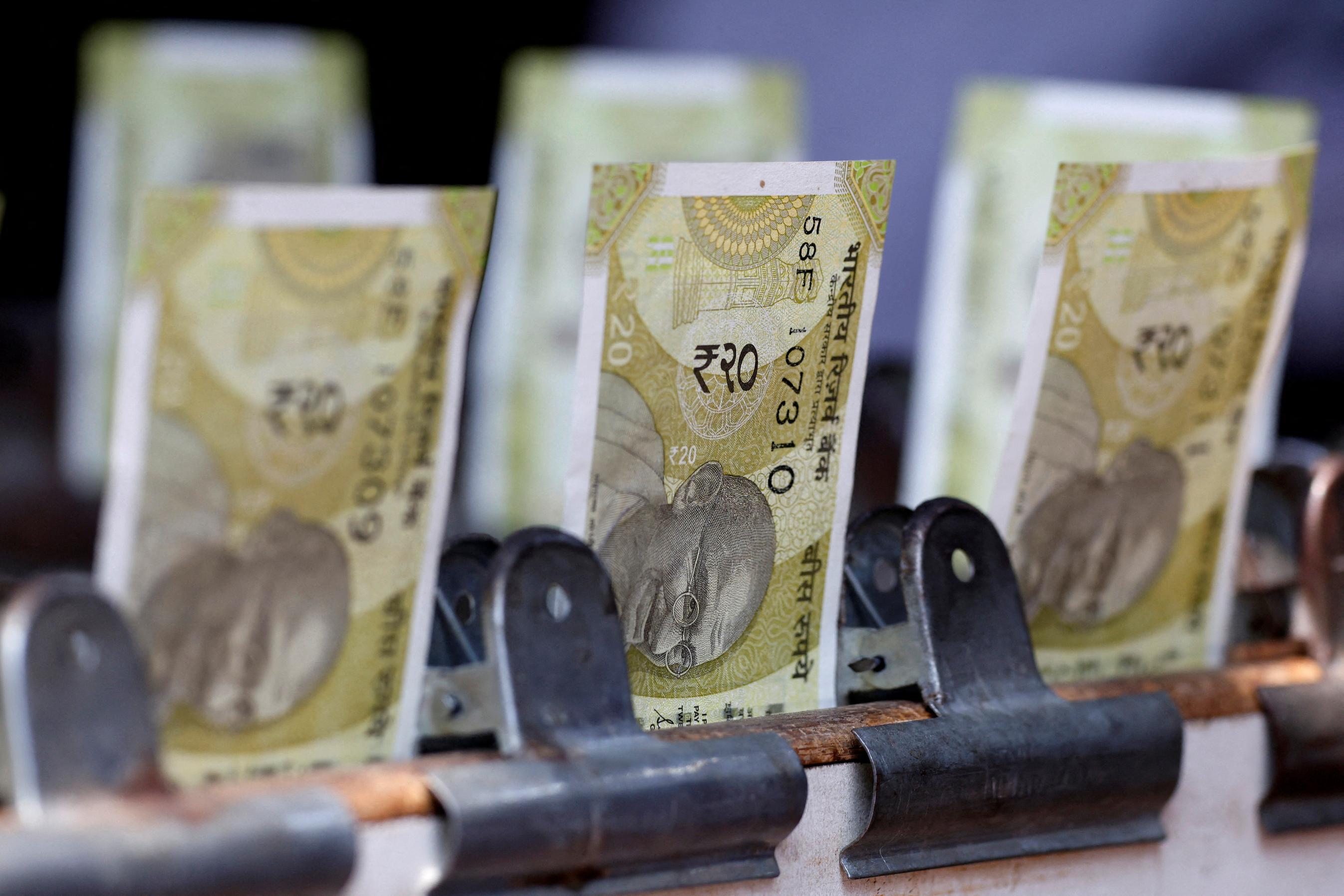
MUMBAI, Sept 30 (Reuters) - The Indian rupee is expected to open nearly unchanged on Monday and trade with a slightly positive bias on the back of gains in most of its regional peers, while traders await comments from Federal Reserve Chair Jerome Powell for rate-cut clues. The 1-month non-deliverable forward indicated that the rupee would open around 83.68-83.70 against the U.S. dollar, nearly flat from its close at 83.70 on Friday. Most Asian currencies were trading higher, with the Malaysian ringgit leading the gains with a 0.5% rise, while the offshore Chinese yuan held above 7 per U.S. dollar, close to its highest level since May last year. Despite positive regional cues, traders expect the rupee's gains to be muted in the face of month-end dollar demand from local importers. The rupee is on course to log its best monthly performance since January, boosted by strong risk appetite after the Fed kicked off its rate-cut cycle and plentiful portfolio inflows. Overseas investors have net bought nearly $11 billion of local bonds and equities in September so far, the highest monthly inflow on record, according to stock depository data. Likely absorption of dollar inflows by the Reserve Bank of India helped boost the country's foreign exchange reserves to a record high of $692.3 billion as of Sept. 20. Powell's remarks will be in focus on Monday for cues on the size of the Fed's next rate cut, likely in November. Investors will also keep an eye on the Middle East situation after Israel stepped up attacks on Iranian-backed forces. "For Asian currencies, the key transmission would be through spikes in oil prices, but the offsetting point is the potential move by Saudi Arabia to boost oil production and regain market share hence capping oil prices thus far," MUFG Bank said in a note. KEY INDICATORS: ** One-month non-deliverable rupee forward at 83.80; onshore one-month forward premium at 12.75 paisa ** Dollar index at 100.4 ** Brent crude futures up 0.8% at $72.6 per barrel ** Ten-year U.S. note yield at 3.75% ** As per NSDL data, foreign investors bought a net $1.02 bln worth of Indian shares on Sep. 26 ** NSDL data shows foreign investors sold a net $150 mln worth of Indian bonds on Sep. 26 Sign up here. https://www.reuters.com/markets/currencies/rupee-supported-by-buoyant-asia-fx-importer-dollar-bids-cap-gains-2024-09-30/
2024-09-27 20:34
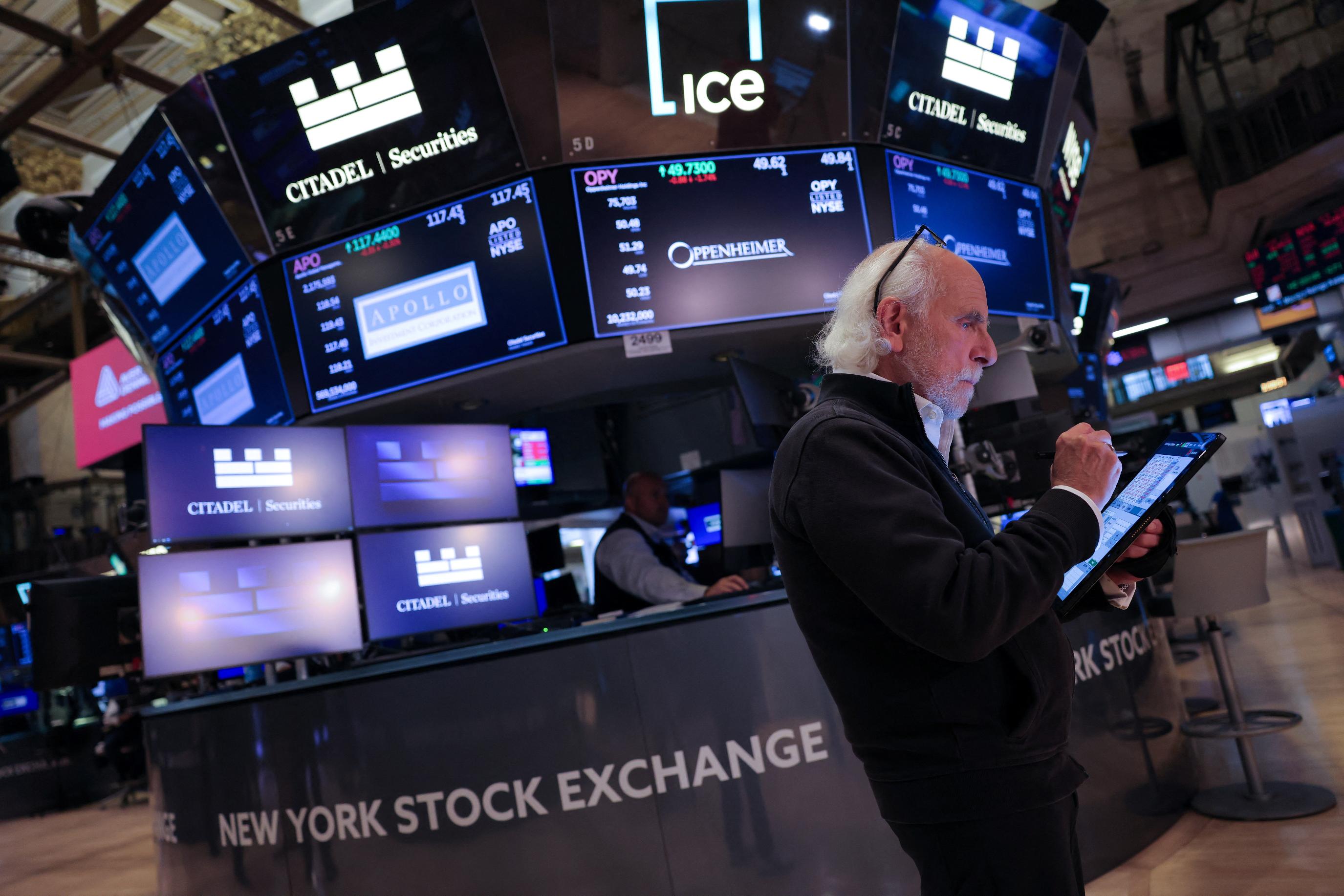
NEW YORK, Sept 27 (Reuters) - Investor hopes for a soft landing for the U.S. economy will be put to the test next week, as the government releases closely watched labor market data following a series of disappointing jobs reports. Wall Street's benchmark S&P 500 (.SPX) , opens new tab index is up 20% year-to-date near a record high. With the third quarter ending on Monday, the index is on track for its strongest January-September performance since 1997. Hopes for a soft landing in which the Federal Reserve tames inflation without badly hurting growth, have helped drive those gains, along with a 50 basis point rate cut the central bank delivered at its monetary policy meeting this month. Some worry that the rate cuts may not be enough to avert a downturn, and Wall Street views the monthly employment report as one of the more critical reads on the economy. The prior two monthly reports have shown weaker-than-expected job increases, raising the stakes for the Oct 4 data. "Stocks are priced for a Goldilocks/soft landing-type scenario," said Wasif Latif, president and chief investment officer at Sarmaya Partners. "The jobs report could potentially either confirm that or derail that." Some recent payrolls reports have roiled markets, particularly data showing an unexpected slowdown that helped spark a sharp, days-long selloff in the S&P 500 in early August. The index has since recovered those losses and gone on to make fresh highs. For the September report due out next week, nonfarm payrolls are expected to have increased by 140,000, according to Reuters data on Friday. The labor data could help solidify views on the Fed's next move at its Nov 6-7 meeting. Futures tied to the fed funds rate currently show bets almost evenly split between a 25 basis point cut or another 50-basis-point reduction. "While the totality of the data will always be important, the burden will be on incoming labor market data to provide the Fed with greater confidence that the softening trend is stabilizing," economists at Deutsche Bank said in a recent note. Investors will also watch an address from Fed Chairman Jerome Powell, set to speak on the economic outlook before the National Association for Business Economics on Monday. Hefty gains in U.S. stocks so far this year bode well for the rest of 2024, if history is any indication. Since 1950, the S&P 500 has gained at least 15% through September in 17 instances, according to Keith Lerner, co-chief investment officer at Truist Advisory Services. In the fourth quarter of those years, the index rose a median of 5.4% and posted a gain in all but three of them, Lerner found. Still, the state of U.S. growth is a focus for investors. A survey of fund managers earlier this month named a U.S. recession as the top "tail risk" for markets, according to BofA Global Research. Garrett Melson, portfolio strategist at Natixis Investment Managers Solutions, said the recent strength in defensive sectors such as utilities and consumer staples reflect concerns over a looming downturn. Strong economic data, on the other hand, could provide a boost for economically sensitive groups such as industrials and financials, he said. The S&P 500 industrial sector (.SPLRCI) , opens new tab has gained nearly 11% in the quarter, and the financial sector (.SPSY) , opens new tab is up around 10%. "There's still probably a case to be made that we've priced in too much recession risk at this point," Melson said. "There's plenty of scope for further upside into year-end." Sign up here. https://www.reuters.com/markets/us/wall-st-week-ahead-jobs-data-test-us-stock-markets-soft-landing-hopes-2024-09-27/
2024-09-27 19:44
Sept 27 (Reuters) - St. Louis Federal Reserve Bank President Alberto Musalem on Friday said the U.S. central bank should cut interest rates "gradually" after what he called the "strong and clear message" of a half-point interest-rate cut last week, which he said he supported. "For me, it’s about easing off the brake at this stage. It’s about making policy gradually less restrictive,” Musalem said an interview with the Financial Times. If the economy or the labor market weakens more than he expects, he said, "a faster pace of rate reductions might be appropriate." Sign up here. https://www.reuters.com/markets/us/fed-should-cut-interest-rates-gradually-musalem-says-2024-09-27/
2024-09-27 15:29
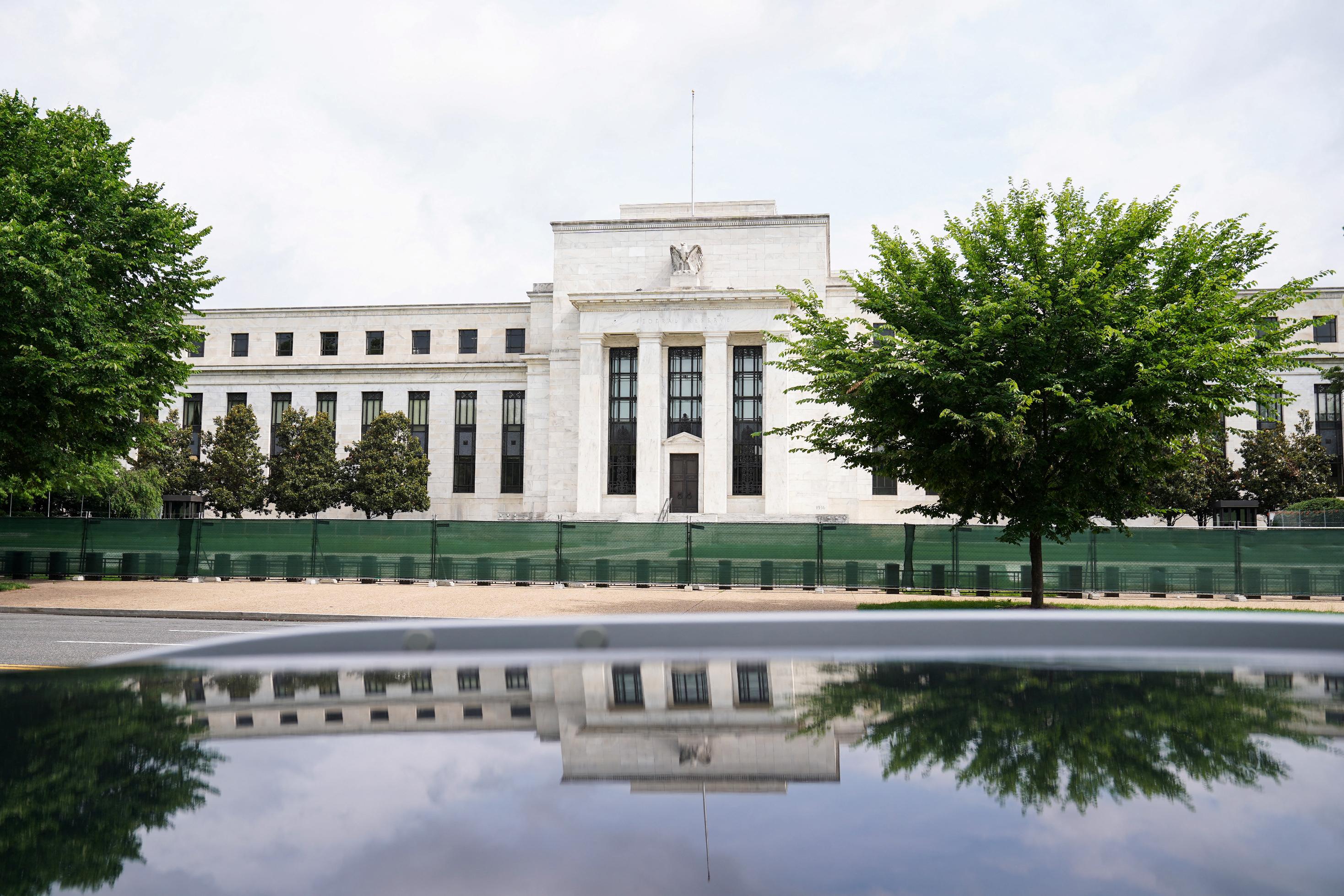
NEW YORK, Sept 27 (Reuters) - The first interest rate cut by the Federal Reserve signals a U.S. recession is imminent and a dramatic drop in financial markets could once again force the U.S. central bank to come to the rescue by buying bonds, said tail-risk hedge fund Universa. The Fed said last week it started cutting rates to recalibrate monetary policy and to maintain strength in the labor market. With inflation declining, and the economy still on relatively solid footing, many see the beginning of the easing cycle as a precursor to a so-called economic soft landing. But for Mark Spitznagel, chief investment officer and founder of Universa, this was the start of an aggressive reduction in interest rates, as a highly indebted U.S. economy, which has so far defied expectations, will soon crack under the weight of interest rates still at historical highs. "The clock is ticking and we are in black swan territory," he told Reuters this week. Universa is a $16 billion hedge fund specializing in risk mitigation against "black swan" events - unpredictable and high-impact drivers of market volatility. It uses credit default swaps, stock options and other derivatives to profit from severe market dislocations. Tail-risk funds are generally cheap bets for a big, long-shot payoff that otherwise are a drag on the portfolio, similarly to monthly insurance policy payments. Universa was one of the big winners during the extreme volatility that rocked markets in the early days of the Covid-19 pandemic in 2020. Spitznagel said the recent "disinversion" of a closely watched part of the U.S. Treasury yield curve, a key bond market indicator of an upcoming recession, signals that a sharp downturn is imminent. "The clock really starts when the curve disinverts, and we're here now," he said. The curve comparing two and 10-year yields has been inverted for about two years but turned back positive in recent weeks with short-term yields dropping faster than longer-dated ones on expectations the Fed will cut interest rates to support a weakening economy. In the past four recessions - 2020, 2007-2009, 2001 and 1990-1991 - that curve had turned positive a few months before the economy started contracting. The magnitude of the next credit crunch could be similar to the "Great Crash" of 1929 that triggered a global recession, he said. "The Fed hiked rates into such a huge, unprecedented debt complex ... That's why I say I'm looking for a crash that we haven't seen since 1929." A recession could occur as soon as this year, forcing the Fed to cut rates aggressively from the current level of 4.75%-5%, and eventually pushing the central bank back to quantitative easing (QE), or bond buying - a process that generally occurs amid unsettled markets and aims to bolster monetary policy when rates are near zero. "I do think they'll save the day again ... I feel strongly that QE is coming back and rates are going to go back to something like zero again," said Spitznagel. Sign up here. https://www.reuters.com/markets/us/clock-is-ticking-us-recession-return-feds-qe-says-black-swan-fund-2024-09-27/