2026-02-09 00:35
Nikkei jumps over 4%, Wall St futures firm LDP majority opens door to debt-driven stimulus Raft of US data to test market bets for June rate cut Silver steadies after wild swings, oil slips on Iran talks SYDNEY, Feb 9 (Reuters) - Asian markets leapt higher on Monday as a resounding win for Japanese Prime Minister Sanae Takaichi whetted appetites for more reflationary policies, while there was widespread investor relief at Wall Street's last gasp rebound. A rally in chip stocks and bargain hunting in beaten-down momentum plays including silver had helped shore up sentiment, as did wagers of more rate cuts from the U.S. Federal Reserve. Sign up here. A rate cut by June is now seen as an odds-on bet, with a slew of economic data this week on jobs, inflation and spending expected to reinforce the case for stimulus. Japan's Nikkei (.N225) , opens new tab led the gains with a jump of 4.2% to all-time highs as the government's decisive majority clears the way for more spending and tax cuts. "Cutting the consumption tax on food is a positive for domestic consumption spending; increased military spending is a positive for defence stocks," said Jamie Halse, managing director at Senjin Capital in Sydney. "The real question is what other measures may be possible now with the huge mandate granted by gaining a two-thirds majority," he added. "The voters have clearly endorsed Sanaenomics, so it is possible further measures may be announced." MSCI's broadest index of Asia-Pacific shares outside Japan (.MIAPJ0000PUS) , opens new tab rose 1.0%, while South Korea's tech-heavy index (.KS11) , opens new tab climbed 3.9%. S&P 500 futures rose 0.4% and Nasdaq futures added 0.6%, having both bounced more than 2% on Friday to break a run of heavy losses. Chip stocks saved the day with Nvidia (NVDA.O) , opens new tab jumping almost 8%, while Advanced Micro Devices (AMD.O) , opens new tab surged over 8% and Broadcom (AVGO.O) , opens new tab rose 7%. Yet concerns remained about whether the truly massive amounts being spent on AI will ever make a return, and which companies will ultimately benefit or fail. The four largest U.S. tech giants alone plan to spend $650 billion on capex this year. "Investors are sensibly rotating from AI spenders to beneficiaries, services to manufacturing, U.S. exceptionalism to global rebalancing," wrote analysts at BofA in a note. "We are long Main St, short Wall St." US DATA TO TEST FED WAGERS To keep the rally going, U.S. data this week would need to be benign enough to keep rate cuts alive, but not so weak as to threaten consumer demand and earnings. Payrolls are forecast to rise 70,000 in January, to leave the unemployment rate at 4.4%, though payroll growth over 2025 is also expected to be revised down quite sharply. Retail sales are seen up a moderate 0.4%, while headline and core consumer price inflation is forecast to slow a little to 2.5% in January. Any downside misses would tend to pull Treasury yields and the dollar lower, though the yen and pound have plenty of troubles of their own. Investors have already sold the yen and JGBs in anticipation of Takaichi's debt-funded expansionary policies, leaving the dollar steady at 157.22 , and some way from the recent peak at 159.45. Analysts assume a push toward 160.00 would likely draw threats of intervention from Tokyo. The euro was flat at $1.1810 , having held to a tight range for the past week or so, while sterling was stuck at $1.3597 still plagued by political uncertainty amid speculation UK Prime Minister Keir Starmer could lose his job. Starmer's chief of staff, Morgan McSweeney, quit on Sunday, saying he took responsibility for advising Starmer to name Peter Mandelson as ambassador to the U.S. despite his known links to Jeffrey Epstein. "Should Starmer be replaced, gilt yields initially rise and the pound weakens," said Ruth Gregory, deputy chief UK economist at Capital Economics. "The most likely longer-lasting influence is a loosening in fiscal policy that leads to higher gilt yields than otherwise and a weaker pound than otherwise." In commodity markets, silver added 2.4% to $79.82, after swinging wildly from a 15% loss to a 9% closing gain on Friday. The metal had plunged in the last two weeks as leveraged positions were caught in a vicious squeeze triggering margin calls and forced selling. Gold was also up 1.5% at $5,033 an ounce , having been as low as $4,403 at one stage last week. Oil prices continued to gyrate as markets waited on the outcome of talks between the U.S. and Iran, which have so far failed to reduce the risk of a military conflict between the two countries. Brent edged down 0.8% to $67.52 a barrel, while U.S. crude fell 0.7% to $63.09 per barrel. https://www.reuters.com/world/china/global-markets-global-markets-2026-02-09/
2026-02-09 00:07
Feb 8 (Reuters) - U.S. President Donald Trump's administration on Sunday appealed against a decision requiring the Transportation Department to unfreeze federal funding for the $16 billion Hudson Tunnel Project in New York, according to a court filing. U.S. District Judge Jeannette Vargas on Friday issued a preliminary injunction that requires the federal government to release funds for a project to overhaul critical rail infrastructure in New York and New Jersey. The Trump administration filed a notice of appeal on Sunday. Sign up here. The Transportation Department said in September that it froze the funding pending a review of the project's compliance with new federal prohibitions against race- and sex-based considerations in contracting decisions. Trump offered last month to unfreeze the funds, a source said, in return for support from Democrats to rename Washington Dulles Airport and New York's Penn Station after him. Democrats strongly criticized the offer. The Gateway Project is intended to build a new commuter rail tunnel between Manhattan and New Jersey and repair a century-old tunnel used by more than 200,000 travelers and 425 trains daily. Vargas handed down her ruling hours after New York and New Jersey said construction would halt for lack of funding. The existing Hudson Tunnel, heavily damaged by Hurricane Sandy in 2012, needs frequent emergency repairs that disrupt travel on the nation's most heavily used passenger rail line. "We thank our partners in New York and New Jersey for taking action to help us access the federal funding for the Hudson Tunnel Project," the Gateway Development Commission said in a statement on Friday after Vargas issued her ruling. "As soon as funds are released, we will work quickly to restart site operations and get our workers back on the job." The project was allocated about $15 billion in federal support under former President Joe Biden. Nearly $2 billion has been spent so far. https://www.reuters.com/world/trump-administration-appeals-ruling-it-must-unfreeze-new-york-city-tunnel-2026-02-09/

2026-02-09 00:02
SINGAPORE, Feb 9 (Reuters) - The yen extended a string of recent losses in early Asian trading on Monday after Japanese Prime Minister Sanae Takaichi swept to victory in Sunday's election, easing the path to further fiscal stimulus. The yen slid as much as 0.3% to 157.72 yen against the dollar, its seventh consecutive day of decline, to reach its weakest level in two weeks. Sign up here. Takaichi is projected to deliver as many as 328 of the 465 seats in parliament's lower house for her Liberal Democratic Party. Alongside her coalition partner, the Japan Innovation Party, known as Ishin, Takaichi now has a supermajority of two-thirds of seats, allowing her to override the upper chamber, which she does not control. "The Liberal Democratic Party’s landslide victory removes political uncertainty and strengthens policy execution, but shifts market focus squarely to how fiscal policy is designed and communicated," said Shoki Omori, chief desk strategist for rates and FX at Mizuho in Tokyo. "Risks from fiscal expansion had already been largely priced in before the election," he added. "The key question now is whether those risks are reinforced or gradually unwind." The U.S. dollar index , which measures the greenback's strength against a basket of six currencies, was last flat at 97.683, at the start of a week that will see the release of several key data releases, including retail sales, inflation and Wednesday's delayed jobs report. Traders are increasing bets of policy easing from the Federal Reserve later this year. Fed funds futures are now pricing an implied 19.9% probability of a 25-basis-point cut at the U.S. central bank's next two-day meeting on March 18, compared to a 18.4% chance on Friday, according to the CME Group's FedWatch tool. The pound was last down 0.1% at $1.3598 as markets mulled developments in a political crisis swirling around British Prime Minister Keir Starmer, whose chief of staff, Morgan McSweeney, resigned on Sunday. McSweeney said he was taking responsibility for advising Starmer to name Peter Mandelson as ambassador to the U.S., despite his known links to Jeffrey Epstein. Against the Chinese yuan trading offshore in Hong Kong , the U.S. dollar was last flat at 6.93 yuan. The Australian dollar was last up 0.2% at $0.7028, while the New Zealand dollar nudged 0.1% higher to $0.6026 and the euro was flat at $1.1819. Bitcoin was down 0.6% at $70,223.86, while ether slid 0.3% to $2,086.73. https://www.reuters.com/world/asia-pacific/yen-slide-deepens-takaichi-triumph-japan-election-paves-way-more-stimulus-2026-02-09/
2026-02-08 23:56
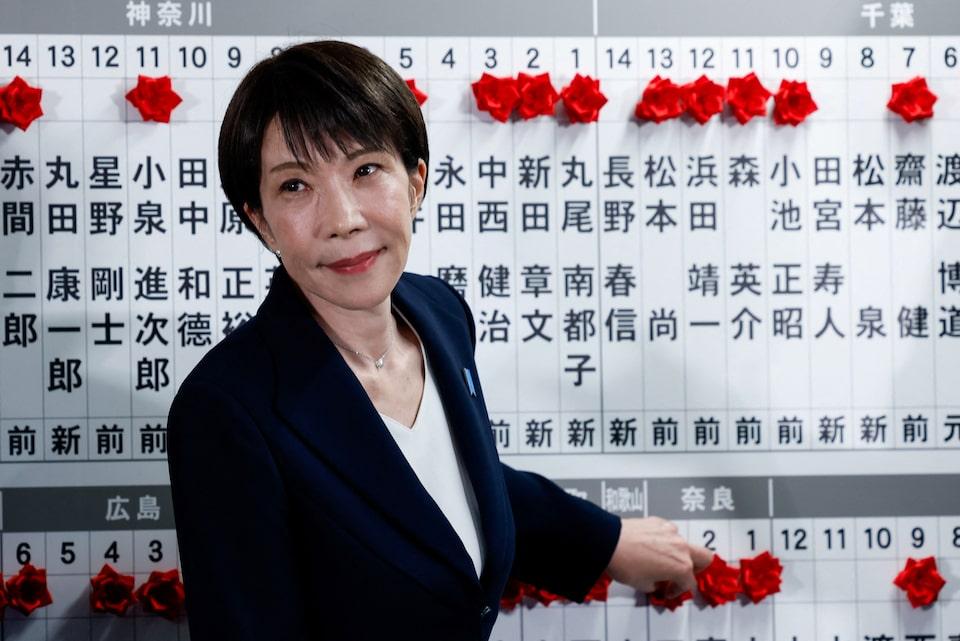
TOKYO, Feb 9 (Reuters) - Japanese Prime Minister Sanae Takaichi's coalition swept to a historic election win on Sunday, handing her a mandate to follow through on a pledge to cut taxes and reflate the economy through spending. COMMENTARY: Sign up here. BRUCE KIRK, CHIEF JAPAN EQUITY STRATEGIST, GOLDMAN SACHS, TOKYO: "PM Takaichi's victory should enhance her political capital within the LDP. Moreover, it should also provide her with a clear mandate to pursue an agenda which focuses on strengthening Japan's position within the region, and emphasizes the geopolitical importance of Japan's strategic alliance with the United States. "As such, we would expect the market to refocus its attention on national security and economic security related thematics such as defence, critical resources and U.S. re-industrialization." GEORGE BOUBOURAS, HEAD OF RESEARCH, K2 ASSET MANAGEMENT, MELBOURNE: "Size of majority gives clarity for Japan on the direction ahead. Short-term markets adjust and are assuming weaker yen and potentially higher yields across the curve. But once policies are lined up with the new massive majority, the yen should hold up again." "Regarding rates, JGBs are very much impacted by BOJ and MoF activities for many decades. Some additional BOJ balance sheet engineering should be anticipated given the PM's expansionary fiscal policy narrative to date. They will aim to keep rates across the curve 'not rise' as much as the bond bears are anticipating." NAOHIKO BABA, CHIEF JAPAN ECONOMIST, BARCLAYS, TOKYO: "In monetary policy, the Takaichi administration may, claiming public support based on the election results, temporarily increase pressure on the BOJ to maintain the status quo." "However, signalling such a stance could easily trigger further JPY depreciation. Ultimately, public frustration with JPY‑driven cost‑push inflation, combined with pressure from the Trump administration, is expected to push the government back toward a stance of reluctantly allowing rate hikes to counter JPY weakness." JUNYA TANASE, CHIEF JAPAN FX STRATEGIST, JPMORGAN CHASE & CO, TOKYO: "The initial reaction in the yen market has been relatively modest. In the short term, the next focus will be the reaction of Japanese stocks and the JGB market to the election results, and the subsequent response of the yen. As there is a loose negative correlation between the yen and Japanese stocks, if Japanese stocks are further bought following the LDP's landslide victory, downward pressure on the yen is likely to increase. "In addition, Prime Minister Takaichi and LDP executives have indicated their intention to advance discussions on a consumption tax cut, and if the JGB market reacts negatively to this, there is a possibility that the trend of JGB selling and yen selling will strengthen again. Overall, short-term risks appear to be tilted somewhat toward yen weakness." JIN KENZAKI, HEAD OF RESEARCH FOR JAPAN, SOCIETE GENERALE, TOKYO: "While the ruling coalition currently does not hold a majority in the upper house, the results of this election will allow them to repass bills rejected by the upper house." "The question is how this ruling coalition's landslide victory will affect the decision to lower the consumption tax rate on food. We believe that the possibility of lowering the consumption tax rate on food will further decrease, as cooperation with opposition parties that have long advocated a consumption tax cut will no longer be necessary." SKYE MASTERS, HEAD OF MARKETS RESEARCH, NATIONAL AUSTRALIA BANK, SYDNEY: "The view is you're probably going to see Japanese stocks up, but a weaker yen and possibly higher JGB yields." "It'll be interesting to see what that reaction is in JGB yields and whether you see that filter through to broader global bond markets on the fear of fiscal spending and what that means for sovereign issuance going forward." JAMIE HALSE, MANAGING DIRECTOR, SENJIN CAPITAL, SYDNEY: "Any stimulus measure is likely to positively impact any domestic-focused company and small to midcap stocks tend to be domestically focused." "Cutting the consumption tax on food is a positive for domestic consumption spending (and) increased military spending is a positive for defence stocks. The real question is what other measures may be possible now with the huge mandate granted by gaining a two-thirds majority." "The voters have clearly endorsed Sanaenomics, so it is possible further measures may be announced." MAHJABEEN ZAMAN, HEAD OF FX STRATEGY, ANZ BANK, SYDNEY: "The decisive win for PM Takaichi and the LDP really reinforces her push for bold spending and more assertive foreign policy. Now, of course, this victory will help advance Takaichi's pro-stimulus policies, allowing her to move forward without needing to negotiate with other parties on every issue." "We do expect the yen to be weaker going forward on the back of this result. In terms of JGB yields, we expect them to also move higher, just reflecting higher inflation expectations and a little bit of that fiscal agenda that Takaichi will be pulling through." KEISUKE TSURUTA, SENIOR BOND STRATEGIST, MITSUBISHI UFJ MORGAN STANLEY SECURITIES, TOKYO: "In future fiscal operations, the ruling party will have less need to accommodate the relatively expansionary demands of opposition parties. That point can be taken as positive for the JGB market. On the other hand, Prime Minister Takaichi, having earned the public's confidence, is expected to accelerate policies such as 'responsible proactive fiscal policy'." "Whether a tax cut can be realised, and if so what stable revenue source would support it, remains fluid." "In last week's JGB market, the ruling coalition's big win appeared to spur the view that a consumption tax cut would be shelved, which seemed to lead to a bull flattening. Precisely for that reason, today the renewed focus on the possibility of a consumption tax cut may test some scope for a reversal. At the very least, it is likely to act as a factor restraining last week's bull-flattening pressure." https://www.reuters.com/world/asia-pacific/view-japan-markets-brace-historic-electoral-win-by-pm-takaichi-2026-02-08/
2026-02-08 16:48
Anglo American selling De Beers amid diamond price crash Angola had initially submitted bid for majority stake Official says country wants common position with neighbours CAPE TOWN, Feb 8 (Reuters) - Angola is pursuing a 20%-30% stake in Anglo American's (AAL.L) , opens new tab diamond unit De Beers, a proposal being discussed with other diamond-producing African nations, a senior official from Angola's mining ministry told Reuters on Sunday. De Beers, one of the world's leading diamond companies with operations spanning Botswana, Namibia, Angola, South Africa and Canada, has been put up for sale by Anglo amid falling diamond prices and the global rise of synthetic diamonds. Sign up here. Angola submitted a bid for a majority stake in De Beers in October 2025, though it had initially sought a minority stake. "Taking the majority stake within luxury commodities is very dangerous because it depends on the market," Paulo Tanganha, Angola's national director of mineral resources, told Reuters on the sidelines of an African mining conference in Cape Town. "So to de-risk that, we have to have a portion that is sustainable for our economy. And that range (is) between 20% and 30%, we are happy about that." NEIGHBOURS HOLD CLOSED-DOOR TALKS Angola's bid for a majority stake in De Beers had set the country up for a potential bidding war with Botswana, which owns 15% of De Beers and has said it was working on acquiring a majority stake in the company. Tanganha said closed-door talks were continuing between Botswana, Angola, Namibia and South Africa to seek a common position on how each country would benefit from having a stake in De Beers, with no agreement yet reached. "There is a saying: together we are stronger. That's the way we are doing it. And if my neighbour is suffering, I also suffer. So we have to be together and fight together as a team," Tanganha said. For Angola, state-owned diamond miner Endiama and its national diamond trading company Sodiam would take up the stake in De Beers on behalf of the government, Tanganha said. Tanganha did not disclose how Angola would fund the De Beers stake acquisition but said the country had many sources of funding. Anglo said on Thursday it was reviewing the value of the De Beers diamonds business after its 2025 rough diamond production dropped. Last year, De Beers' joint Angolan venture with Endiama discovered a new kimberlite cluster in the country, its first such discovery in three decades, attesting to the geological promise of the vastly under-explored country. Kimberlite is a rare rock type where diamonds are commonly found. https://www.reuters.com/world/africa/angola-seeks-20-30-stake-de-beers-senior-official-says-2026-02-08/

2026-02-08 16:32
JOHANNESBURG, Feb 8 (Reuters) - South Africa's energy regulator said on Sunday that it granted state utility Eskom larger electricity rate increases for its next two financial years than originally set after admitting errors in its earlier calculations. Eskom's prices will now rise 8.76% in April this year and 8.83% in April 2027 instead of 5.36% and 6.19%, regulator Nersa said in a statement. Sign up here. It added that the revised tariff increases balanced Eskom's financial sustainability with customer affordability. Eskom, a former monopoly that still supplies the bulk of the electricity in Africa's biggest economy, has been mired in a financial crisis for years, which it partly blames on Nersa's tariff decisions. But the utility made its first full-year profit in eight years last year, helped by a multi-year government bailout and a sharp turnaround in the performance of its coal-fired power stations. After first setting rate increases in January 2025, Nersa admitted errors in calculating Eskom's tariffs for the 2025/26 to 2027/28 financial years and reached a settlement with Eskom in July. But in December the high court rejected the settlement and ordered Nersa to make a fresh determination on Eskom's tariffs after getting submissions from the public. https://www.reuters.com/sustainability/boards-policy-regulation/south-african-regulator-says-eskom-can-increase-charges-more-than-previously-2026-02-08/