2025-12-18 05:45
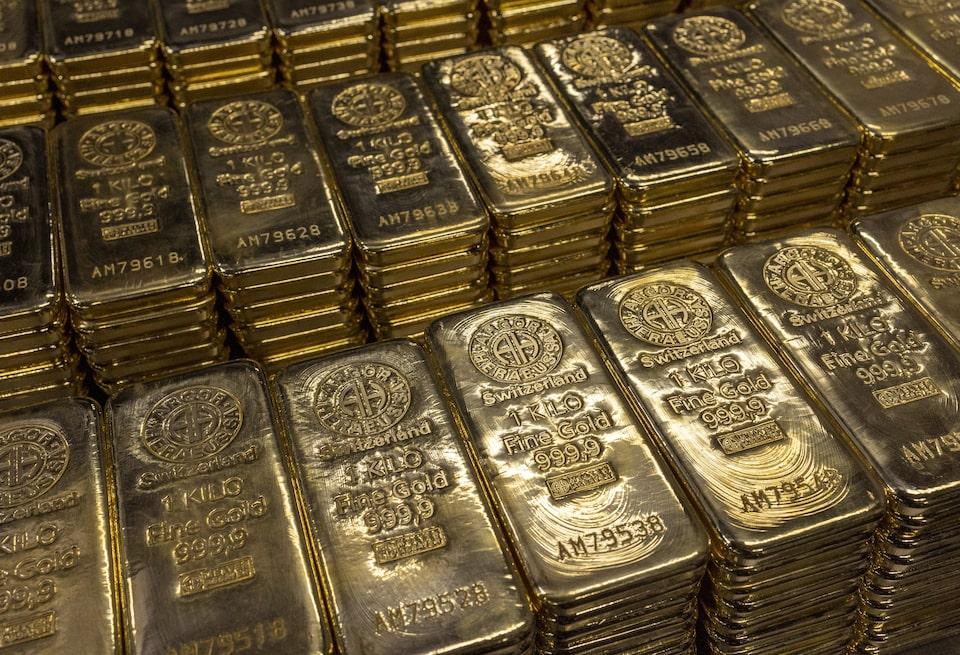
Silver hit record high of $66.88/oz on Wednesday US annual consumer prices increase less than expected in November Palladium touches a near 3-year high Dec 18 (Reuters) - Gold prices edged lower on Thursday as markets digested softer-than-expected U.S. inflation data, reducing the yellow metal's appeal as an inflation hedge, while support from a higher November unemployment rate limited further losses. Spot gold fell 0.2% to $4,330.39 an ounce as of 02:26 p.m. ET (19:26 GMT). Bullion hit a record high of $4,381.21 on October 20, and was hovering near these levels earlier in the session. Sign up here. U.S. gold futures settled 0.2% lower at $4,364.5. "Now that inflation is evidently falling faster than expected, this kind of reduces the appeal of buying insurance for inflation. Gold has been a major inflation hedge, so its weakness makes some sense in the aftermath of the CPI report," said Fawad Razaqzada, market analyst at City Index and FOREX.com. U.S. consumer prices rose 2.7% year-on-year in November, data showed, falling short of the 3.1% increase forecast by economists polled by Reuters. Futures on the federal funds rate factored in a slightly increased chance of the Federal Reserve trimming interest rates at its January meeting, after the data. "It is worth remembering that part of the reasons why gold has been rising so sharply over these years has been due to high levels of inflation eroding the value of fiat currencies," Razaqzada added. Non-yielding assets like gold thrive in a lower-interest-rate environment, and is a reputed inflation hedge. "The trend is still very much positive in gold and an eventual upside breakout of that trend is anticipated. I've got upside objectives at $4,515.63 and $5,000 is still a valid objective as well," said Peter Grant, vice president and senior metals strategist at Zaner Metals. Spot silver dropped 1.5% to $65.3/oz, retreating from a record high of $66.88 hit in the previous session. Silver has outperformed gold this year, climbing 126% year-to-date on investment demand and concerns over a supply deficit. Platinum rose 1.2% to $1,922.05, a more than 17-year high, while palladium gained 3.7% to a nearly three-year high of $1,708.72. "The wave of price increases for precious metals has now spread from silver to platinum... the platinum price is being buoyed by strong demand from China," Commerzbank said in a note. https://www.reuters.com/world/india/gold-steady-ahead-key-us-inflation-data-silver-near-record-highs-2025-12-18/
2025-12-18 05:33
Markets expect the Bank of England to be the only mover at a slew of central bank meetings on Thursday, with a 25-basis-point rate cut to 3.75% almost as predictable as the top order collapse at the Ashes test in Adelaide. Wednesday's unexpected drop in UK inflation has reassured investors that policy easing is in the offing, though with the highest inflation among the G7 economies at 3.2%, further rate reductions are likely to be some ways off. Sign up here. Sterling nursed losses at $1.3374. The European Central Bank is widely expected to keep rates steady at 2% and signal little appetite for cuts, and may increase its growth projections. Central banks in Sweden and Norway are also seen on hold at 1.75% and 4%, respectively. On the corporate front British oil and gas major BP (BP.L) , opens new tab appointed Meg O'Neill, the head of Australia's Woodside Energy (WDS.AX) , opens new tab, as its next CEO as it looks to refocus on hydrocarbons after a detour into renewables. Activist investor Elliott Management has amassed a stake of more than $1 billion in Lululemon Athletica (LULU.O) , opens new tab and is lining up a potential CEO candidate, a source told Reuters. In a rare evening address from the White House, U.S. President Donald Trump - facing sinking approval ratings - announced a $1,776 "warrior dividend" payable to 1.45 million U.S. service members. More importantly for investors, Trump also said he would soon announce his pick for the next chair of the Federal Reserve, adding it would be "someone who believes in lower interest rates by a lot". November U.S. inflation data is due later on Thursday, though it won't have a month-to-month comparison since October figures were not collected during the U.S. government shutdown. In the markets AI jitters extended from Wall Street and Asian bourses were in the red while oil was up on reports of new U.S. sanctions on Russia and its Venezuela blockade. Texan cloud computing firm Oracle (ORCL.N) , opens new tab is a key focus of concern and shares dived 5.4% after it announced an equity deal to support a data center project would not include a key partner Blue Owl Capital (OWL.N) , opens new tab. The stock has shed almost 50% from mid-September when a deal with OpenAI sparked a 35% one-day rally. In Tokyo the Bank of Japan began a two-day meeting that is expected to deliver a rate hike on Friday and the yen , which could be a focus of selling if markets are not convinced on further hikes, was steady around 155.75 per dollar. Key developments that could influence markets on Thursday: - Policy decisions at the Bank of England, European Central Bank, Riksbank and Norges Bank - US November CPI https://www.reuters.com/sustainability/sustainable-finance-reporting/global-markets-view-europe-2025-12-18/

2025-12-18 05:22
European markets lost momentum after first-half rally European stocks seen underperforming US next year Investors say German stimulus delivering key to Europe's appeal LONDON, Dec 18 (Reuters) - For European markets overshadowed by the United States since the summer, investors are hoping a spending bonanza in Germany - the European Union's biggest economy - moves the dial in 2026. But first, they need to see evidence it will deliver. A Ukraine peace deal could boost sentiment too. European stocks have barely recovered the cash that has left since Russia's 2022 invasion of its neighbour. Sign up here. European shares outperformed U.S. stocks in the first half of 2025. The region united to boost defence spending, Germany shook up its borrowing rules, and U.S. President Donald Trump's tariffs dented investor confidence in American assets, generating a long-awaited MEGA, or "Make Europe Great Again" moment. But as tariff fears have abated, European stocks, though continuing to rise, returned to their usual pattern of underperforming U.S. shares, while the euro remains below September's four-year high near $1.20. European equities have seen just over $86 billion of inflows in 2025, but the pace has slowed to $23 billion in the last six months, according to EPFR data tracked by Barclays. They are projected to do well again next year but are nonetheless likely to remain in the United States' shadow. Four of the six biggest U.S. and European investment banks expect Europe to lag, also due to U.S. markets' greater exposure to the AI boom. For the euro, much will hinge on how the U.S. dollar fares. Highlighting the uncertainty, two of the banks expect the European currency to drop. "Now the focus turns on what Europe can do in terms of a 'pull' factor given the 'push' factor out of the U.S. isn't going to be as pronounced as we thought," said Arun Sai, Pictet Asset Management senior multi-asset strategist. GERMAN DELIVERY KEY TO BOOSTING STOCK PERFORMANCE In March, Germany, which accounts for roughly a quarter of the 28-nation bloc's gross domestic product, overhauled its fiscal rules to boost infrastructure and defence spending, a potential game-changer for Europe's economy. But it has been using some of that leeway on day-to-day spending rather than the kinds of additional infrastructure that would boost the economy and stock performance more durably. Infrastructure spending will pick up in 2026, but Barclays economists say that, looking across this year and next, social spending is rising faster. Germany's budgetary plans are "not as ambitious as we would have liked," said Ross Hutchison, head of euro zone market strategy at Zurich Insurance Group, which favours U.S. stocks over European. Hutchison said high overall spending was still positive, but he would like to see more go to infrastructure with greater long-term impact. Execution risk is also high, given Germany has underdelivered on investments in recent years, analysts say. Last week, three German economic institutes downgraded their 2026 growth forecasts, citing limited momentum from spending and slow progress on structural reforms. Market valuations reflect pessimism too. German stocks are up 20% this year but have not gained in the second half. European stocks are trading at a roughly 35% discount to their U.S. rivals relative to forward earnings, near record lows. That means there is plenty of scope for inflows if Germany delivers and sentiment improves, investors said. "The bar is very low," said Schroders fund manager Dominique Braeuninger, who is starting to favour European stocks in his funds. A pickup in earnings for STOXX 600 companies next year following a 2025 contraction could add momentum too, based on LSEG I/B/E/S estimates. As for Ukraine, peace or even a ceasefire would help boost sentiment. Assets under management at European equity funds are down 14% since the start of the war, and recent inflows have only brought back a tenth of the money that left, according to Citi. But the initial impact would be more sector-specific and come from lower energy prices, analysts said. Investors will also watch whether European firms can benefit from the reconstruction of Ukraine, which could cost more than $500 billion over the next decade. EURO REMAINS DOLLAR DEPENDENT The euro, meanwhile, is up 13% on the dollar in 2025, its biggest annual gain since 2017. But it has plateaued since June. The impact of German stimulus, Ukraine peace efforts and European Central Bank policy will help drive the euro, but much will depend on the dollar and whether concerns around its safety resurface, investors said. Goldman Sachs, whose $1.25 forecast tops a Reuters poll, expects that euro gain to largely stem from dollar weakness, as a slowing U.S. economy prompts more Fed cuts. But UBS, seeing little reason for a dollar sell-off, forecasts a drop to $1.14. "Most of the time FX is more dominated by what happens in the U.S. and what the Fed does, and I think we are still there," said Andreas Koenig, head of global FX at Europe's largest asset manager Amundi. https://www.reuters.com/business/finance/return-make-europe-great-again-trades-hinges-german-comeback-2025-12-18/

2025-12-18 04:59
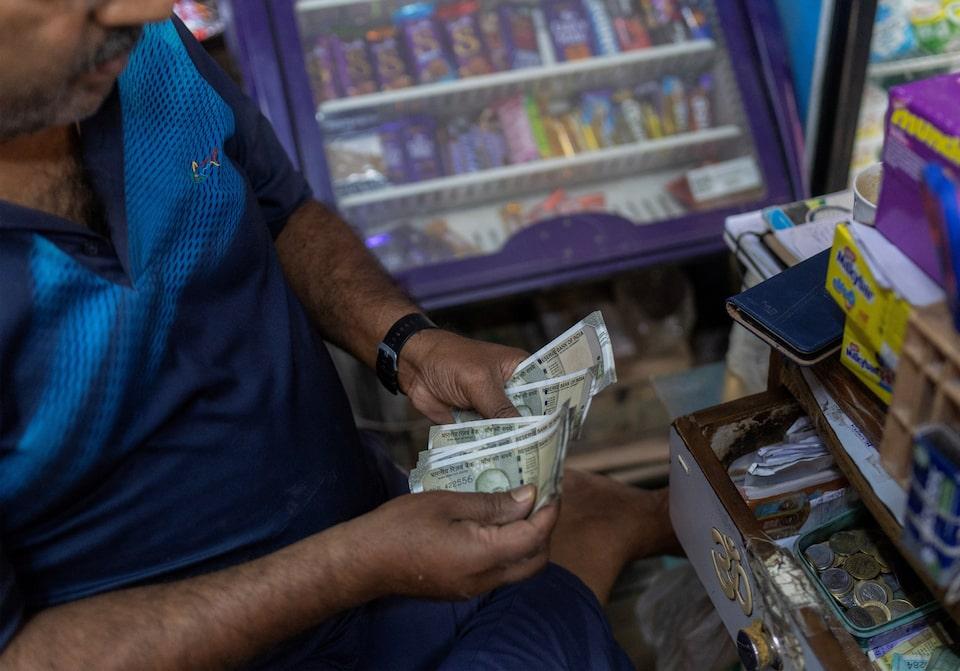
MUMBAI, Dec 18 (Reuters) - The Indian rupee extended gains slightly on Thursday, after rebounding from a record low in the previous session following central bank market intervention, which also contributed to a rise in merchant dollar sales, traders said. The rupee closed at 90.24, 0.1% stronger than Wednesday's close of 90.38 per dollar. Sign up here. The currency had dropped to its record low of 91.075 earlier this week as an elongated trade impasse with the U.S. and persistent portfolio outflows weighed on sentiment. Traders said that following the Reserve Bank of India's heavy-handed intervention on Wednesday, interest in taking on fresh speculative rupee shorts diminished, while both exporters and importers seemed more inclined to lock in hedges. "We think the INR's nominal and real effective exchange rates and have depreciated sufficiently to mitigate punitive U.S. tariffs, and INR can therefore recover if some tariffs are rolled back," analysts at HSBC said, recommending a sell USD/INR trade. The firm expects the rupee to trade at 88 per dollar by the end of March 2026, benefiting from positive seasonality between January and March, "when the trade deficit tends to be the smallest, while external commercial borrowing inflows tend to be the largest." Currently, the rupee is set to log an about 5.5% decline against the dollar over 2025, its steepest drop in three years. Meanwhile, India's benchmark equity indexes, the BSE Sensex (.BSESN) , opens new tab and Nifty 50 (.NSEI) , opens new tab, ended little changed after choppy trading as global risk appetite remained tepid, dragging down tech-sensitive stocks in Asia. The dollar index was a tad higher at 98.5, as markets positioned for central bank decisions in Britain, Europe and Japan. The European Central Bank is expected to stand pat, while an unexpected drop in inflation has bolstered the case for a cut by the Bank of England. The Bank of Japan is expected to lift rates to a three-decade high on Friday. https://www.reuters.com/world/india/rupee-traders-alert-rbi-follow-through-amid-risk-off-mood-2025-12-18/
2025-12-18 04:37
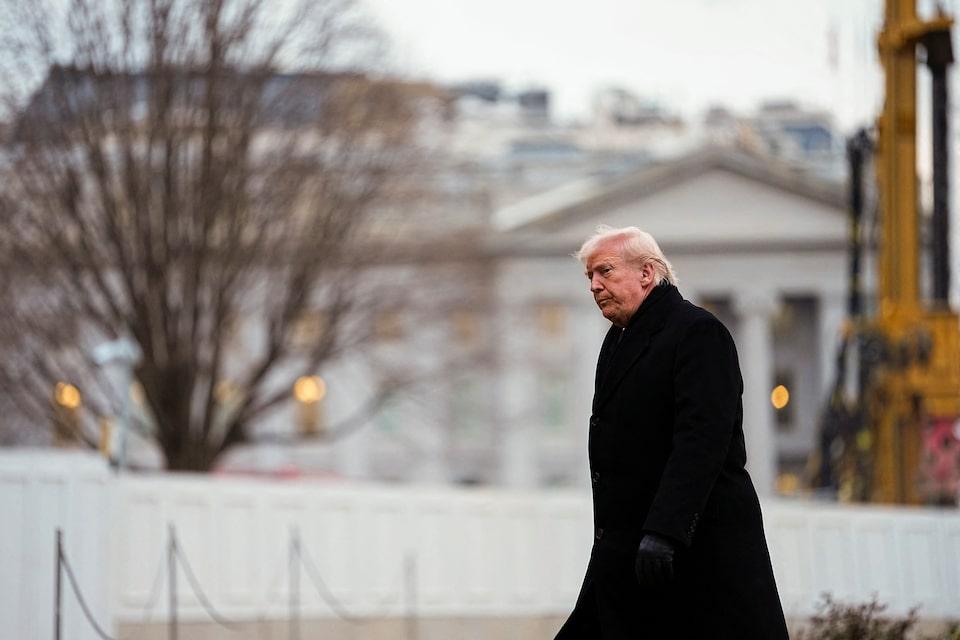
Trump seeks Fed chair favoring significantly lower interest rates Finalists include Hassett, Warsh, and Waller, all favoring lower rates Trump wants Fed chair to consult with him on rate decisions WASHINGTON, Dec 17 (Reuters) - U.S. President Donald Trump said on Wednesday the next chairman of the U.S. Federal Reserve will be someone who believes in lower interest rates "by a lot." "I'll soon announce our next chairman of the Federal Reserve, someone who believes in lower interest rates, by a lot, and mortgage payments will be coming down even further," Trump said. Sign up here. Trump made the comments during a national address touting his economic and national security accomplishments in the first year of his second term in office. He has previously indicated that he will announce his chosen successor to current Fed Chair Jerome Powell early next year. All of the known finalists - White House economic adviser Kevin Hassett, former Fed Governor Kevin Warsh and current Fed Governor Chris Waller - advocate for interest rates to be lower than they are now. None, however, has expressly indicated they would push the U.S. central bank to slash rates as low as Trump has demanded, in some cases to as low as a crisis-level 1%. The current Fed rate ranges from 3.5% to 3.75%, and not even his latest appointee - Governor Stephen Miran - advocates for a rate anywhere near that low. Trump has repeatedly expressed a desire for lower mortgage rates, but the interest rate the Fed controls has only limited effect on longer-term borrowing costs. Those are more typically influenced by longer-term rates the Fed has less sway over, such as the 10-year Treasury note yield . That rate is moved by investors' expectations for U.S. economic growth and inflation and on balance has changed little in the last year. Mortgage rates have been stuck in the 6.3%-6.4% range since Labor Day and show little indication of moving lower. Trump told the Wall Street Journal last week that he was leaning toward either Warsh or Hassett as the next head of the U.S. central bank. All the same, interviews continued on Wednesday with a meeting with Waller, one of the early advocates among current Fed policymakers for lower rates but a stalwart defender of Fed independence. Trump told the newspaper that he thought the next Fed chair should consult with him on where to set interest rates. Presidents typically leave rate decision-making up to the Fed. "Typically, that’s not done anymore. It used to be done routinely. It should be done," Trump said. "It doesn’t mean - I don’t think he should do exactly what we say. But certainly we’re - I’m a smart voice and should be listened to." https://www.reuters.com/world/us/trump-says-next-fed-chair-will-believe-lower-interest-rates-by-lot-2025-12-18/
2025-12-18 00:02
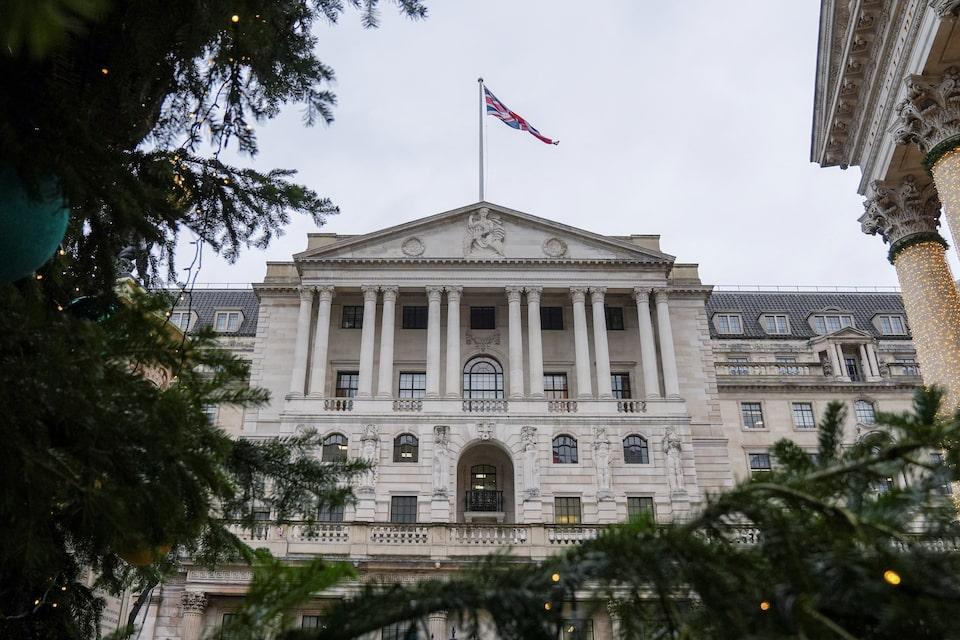
Bank of England expected to lower rates to 3.75% from 4% Investors see one or two more interest rate cuts in 2026 UK inflation fell more than expected to 3.2% in November Unemployment at its highest since 2021 as economy slows UK inflation and interest rates still highest in G7 LONDON, Dec 18 (Reuters) - The Bank of England is expected to lower interest rates on Thursday after a sharp slowdown in inflation and a weakening in economic growth, but a string of further cuts in 2026 looks unlikely given Britain's lingering price pressures. Investors think the BoE will reduce its benchmark rate to 3.75% from 4% for a fourth cut of 2025, welcome news for finance minister Rachel Reeves and Prime Minister Keir Starmer who are struggling to meet promises to voters of faster economic growth. Sign up here. A quarter-point cut would take Bank Rate to its lowest level in nearly three years, although that would still be almost double the equivalent rate of the European Central Bank. British inflation remains the highest among the Group of Seven economies - in part because of Reeves' decision last year to raise taxes on employers - even after it fell sharply to 3.2% in data released on Wednesday. Investors are fully pricing only one more BoE rate cut in 2026, most likely by the end of April, although bets on a second one rose after the November inflation drop. ENTRENCHED POSITIONS ON MONETARY POLICY COMMITTEE Hetal Mehta, chief economist at wealth management firm St. James's Place, said the different camps on the BoE's Monetary Policy Committee were unlikely to shift their medium-term stances significantly this week. "There's enough ambiguity around some of the numbers going into next year for there not to be back-to-back rate cuts," Mehta said. "The data confirms the direction of travel. It's the magnitude (of rate cuts) that is up for debate." The nine members of the Monetary Policy Committee have been almost evenly split in recent months. In November they voted 5-4 to keep rates on hold. Analysts polled by Reuters last week forecast a 5-4 split in favour of a cut at their December meeting with Governor Andrew Bailey switching sides to tip the balance. Wednesday's bigger-than-expected inflation slowdown - which followed data on Tuesday showing a weakening jobs market including the highest unemployment rate since 2021 - might now persuade more MPC members to vote for a cut, Mehta said. Britain's economy shrank 0.1% in the three months to October amid reports that businesses put investment projects on ice in the run-up to Reeves' budget on November 26. INFLATION PRESSURES PERSIST IN UK But Britain is not out of its inflation problem yet. S&P Global's Purchasing Managers' Index, also published on Tuesday, showed rising inflation pressures and suggested businesses were turning a corner after the budget. Relief at the BoE over the big drop in the headline inflation rate is likely to be tempered by only a small fall in the pace of price increases in the services sector. Furthermore, the inflation-reducing impact of Reeves' budget - which removed green levies from power bills and froze rail fares - is likely to be only temporary. Other major central banks are believed to be close to halting their rate cuts - the U.S. Federal Reserve last week signalled one more in 2026 while the ECB has probably already come to the end of its monetary loosening cycle. Economists are watching closely for any change in the BoE's language in Thursday's statement about the prospect of further reductions, including possible changes to its recent description of borrowing costs as being on a "gradual downward path". "Because inflation remains above target and services components still look sticky, policymakers are unlikely to deliver a deeply dovish message," Daniela Hathorn, senior market analyst at trading platform Capital.com, said. "Instead, the BoE is likely to frame any cut as part of a gradual, risk-managed shift rather than a full easing cycle." https://www.reuters.com/world/uk/bank-england-set-cut-rates-inflation-economy-slow-2025-12-18/