2025-12-17 23:11
Slew of Chinese firms interested in launching real world asset tokens Offers new funding avenue for niche products and industries RWA tokens taking off in Hong Kong, which has embraced digital assets But mainland China authorities frown upon such tokens and cryptocurrencies Dec 18 (Reuters) - On the Chinese tropical island of Hainan, Huanghuali trees - a rare kind of rosewood - are being photographed so that they can be turned into digital assets. Huanghuali or "yellow flowering pear" produces wood with a beautiful lustre and golden sheen. Favoured by Chinese emperors in times past, the wood continues to be highly prized. But a tree takes decades to mature, testing the patience of farmers. Sign up here. Converting the Huanghuali into real world asset (RWA) tradeable tokens would bring capital to an industry facing cashflow problems, says Zhao Xiaobao, the Hainan representative for Geely Technology Group, a unit of Chinese automaker Geely. "We are converting the dormant resource of precious wood into tradeable assets," Zhao said, adding that the tokenisation business model could revolutionise the forestry industry and "turn green mountains and clear waters into gold and silver." His company aims to raise HK$100 million ($13 million) in an initial tranche of tokens to be launched in Hong Kong in the next few months. Each tree will be assigned a different value, depending on its size and quality, which would then be broken up into a number of tokens. BAIJIU LIQUOR, ARTIFACTS, COLLECTABLES Geely Tech's plan, Zhao believes, could mark the world's first tokenisation of tradeable real world assets that are biological in nature. It's also not just prized trees. All sorts of Chinese goods, from fine tea to expensive baijiu liquor, are now being turned into digital assets. "Artifacts, collectables, data assets, commodities and real estate – we have received many enquiries about how to tokenise these assets," Liao Renliang, a lawyer at Yingke Law Firm, told a seminar on the topic last month. While many Chinese companies appear excited about this new avenue of funding that has opened up for them in Hong Kong since last year, blockchain-based RWA tokenisation is very much in its infancy. In particular, it remains unclear whether a potential onslaught in supply will be met with sufficient demand, given limits on investment from mainland China. "There are way more assets .... than investors willing to buy them. We need to expand the investor base," said Eric Zuo, managing director at Tadwill & Co. Zuo is working on a project that is seeking to raise 523 million yuan for a bankrupt hydro dam in Sichuan province via digital tokens in Hong Kong. MAINLAND CONCERNS The global RWA market has surged 115% over the past year to $35.7 billion, according to data provider RWA.xyz. RWA tokens are mainly backed by traditional financial assets like bonds, stocks and real estate, with U.S. Treasuries accounting for the lion's share. Hong Kong, which operates under a separate, more free-wheeling economic system from mainland China, has embraced digital assets, keen to burnish its reputation as an Asian financial hub. But there have also been signs that authorities in Beijing, which take a dim view of many digital assets and have banned trade in cryptocurrencies since 2021, are concerned. The China Securities Regulatory Commission informally advised some mainland brokerages to pause their RWA tokenisation businesses in Hong Kong, sources said earlier this year. Mainland citizens can, however, trade in RWA tokens if they have an account with a Hong Kong broker. Asked for comment, the commission referred to a December 5 statement published by it and other financial authorities, which warned criminals were exploiting the rise of stablecoins, air coins and RWA tokens, and said mainland firms were prohibited from providing such services. In contrast, the Hong Kong Securities and Futures Commission said tokenised products that amount to securities or futures contracts fall under its existing rules. "Regulators are targeting fraudsters who use RWA to raise money illegally," said Liu Honglin, founder of Man Kun law firm in Shanghai. He added that if an RWA project is compliant and is used to stimulate consumption, "I don't think there's any problem." DIGITAL TEA FOR FRIENDS In Shanghai, startup Shanghai Teaken Technologies has issued digital assets that represent cakes of highly sought-after fermented pu'er tea. Like fine wine, the tea gains in value the more it ages and can be a good long-term investment. Blockchain technology brings digital authentication to an industry plagued by counterfeiting - with tea stored, say, for only five years, often masquerading as 10-year-old tea, founder and CEO Eric Ma told Reuters in an interview. "We really want to build a platform for tea collectors to safely own and share and maybe pass on this premium quality good tea with transparency and trust," he said, adding that his company would provide state-of-the-art storage cellars for the tea cakes. Juno Zhu, a 27-year-old lover of tea from Xiamen city who works in advertising, said she had bought 100 digital cakes of tea at 700 yuan ($100) apiece and was not worried about compliance concerns. "It's backed by something of value. It's not a token based on nothingness," said Zhu, who has given some to friends as gifts. Other examples include China Qidian Guofeng Holdings (1280.HK) , opens new tab which has said that some 62 metric tons of its baijiu have been used as the underlying assets in an RWA project. The project, arranged by a key shareholder, aims to raise HK$500 million. ($1 = 7.0554 Chinese yuan) https://www.reuters.com/world/asia-pacific/no-small-token-chinese-firms-convert-prized-trees-tea-into-digital-assets-2025-12-17/

2025-12-17 23:08
ECB keeps interest rates unchanged as expected Policymakers not ready to take rate cut off table Inflation near ECB's 2% target, driven by service sector Speculation growing about a future rate hike But economists expect stable rates through 2027 FRANKFURT, Dec 18 (Reuters) - The European Central Bank kept its policy rates steady on Thursday and revised upwards some of its growth and inflation projections, a move that probably closes the door to further cuts in borrowing costs in the near term. Recent growth figures for the euro zone have beaten the ECB's expectations, buoyed by exporters navigating U.S. tariffs more effectively than anticipated and by domestic spending that has counterbalanced a malaise in manufacturing. Sign up here. Inflation has meanwhile hovered around the central bank's 2% target, boosted by price hikes in the services sector, and is expected to stay there for the foreseeable future. The more upbeat outlook has already led investors to draw a line under an easing cycle that saw the ECB halve its policy rate from 4% to 2% in the year to last June. Policymakers themselves expect to keep rates unchanged next year but were not prepared to rule out a move in either direction because uncertainty - from war at the edge of Europe to a U.S. tech bubble - remains too high, sources told Reuters. ECB President Christine Lagarde went out of her way to say all options remained on the table. "It was a unanimous view around the table," she told a press conference after the policy meeting ended exceptionally early, at just after 0900 GMT. "With the degree of uncertainty we are facing, we simply cannot offer forward guidance," Lagarde added. She repeated the ECB's line that it would set borrowing costs meeting-by-meeting depending on incoming data and that it was not pre-committing to a particular rate path. Other central banks are also nearing a halt to rate cuts. The U.S. Federal Reserve last week signalled one more move in 2026, while the Bank of England said after its rate cut on Thursday that the future pace at which it lowers borrowing costs might slow. In its statement, the ECB said the uncertain global outlook would remain a drag on growth in the euro zone and renewed its appeal for national governments to push ahead with reforms to make the economy more efficient and competitive. The group of countries that use the euro currency will expand to 21 on January 1 when Bulgaria joins. RATE HIKE NEXT? In its new projections, the ECB still sees inflation dipping below 2% next year and in 2027, mostly on lower energy costs, but expects it to come back to the target in 2028. It signalled that services inflation might decline more slowly than expected due to wage costs. Output growth was seen as slightly quicker this year because the euro zone economy is proving more resilient than feared to the impact of higher U.S. tariffs and cheap Chinese imports. Lagarde said exports meanwhile remained "sustainable" in the current climate. The ECB now expects growth of 1.4% this year, 1.2% in 2026, and 1.4% in 2027 and 2028. Private-sector economists, too, expect growth to carry forward into next year, supported by the German government's planned investments in defence and infrastructure and a relatively tight labour market, where workers have finally seen wages catch up with the post-pandemic surge in prices. Some recent comments from ECB board member Isabel Schnabel, chief economist Philip Lane and Lagarde herself have helped fuel some speculation about a rate hike late next year. Financial markets have begun pricing modest chances of a rate hike late next year or early in 2027 . But most economists polled by Reuters expect the ECB to leave rates where they are through 2026 and 2027, although the forecast range for the latter year was wide at 1.5%-2.5%. "The reality is, the bar is probably quite high for a move in either direction in the next few meetings," BNP Paribas chief economist Isabelle Mateos y Lago said. The ECB's core inflation forecasts for 2026-27 were nudged higher too. These are crucial as they factor out the effect of a delay to the European Union's new carbon trading scheme, which will mechanistically bring down headline inflation in 2026-27 and push it up in 2028. Among factors likely to weigh on inflation is the euro's strength against the Chinese yuan or renminbi, which is making it even harder for the euro zone to compete with China, and against the U.S. dollar, which may fall further if the Federal Reserve cuts rates more rapidly under a new chair. https://www.reuters.com/sustainability/sustainable-finance-reporting/ecb-hold-rates-steady-euro-zone-economy-shows-resilience-2025-12-17/
2025-12-17 21:42
Capacity prices in PJM hit fresh record high PJM's supply shortfall affects 13-state region, raising power bills Governors push for extended price limits Dec 17 (Reuters) - Power bills for about a fifth of Americans are expected to continue to rise after the largest U.S. grid operator, PJM Interconnection, reported fresh record-high capacity prices on Wednesday that reflected electricity demand by data centers overtaking supplies. The expansion of Big Tech's data centers has driven up so-called capacity prices in PJM by about 1,000% over a roughly two-year period, intensifying energy affordability problems for those living and working in the 13-state region covered by the grid operator. Sign up here. Prices reached $333.44 a megawatt-day in the latest PJM capacity auction. "This auction leaves no doubt that data centers' demand for electricity continues to far outstrip new supply, and the solution will require concerted action involving PJM, its stakeholders, state and federal partners, and the data center industry itself," said Stu Bresler, who becomes PJM's chief operating officer next month. Rising costs in PJM have hit everyday power bills in the Mid-Atlantic and Midwest U.S. states in the grid's territory, with some areas seeing a more than 20% jump in utility bills starting from last summer. Capacity prices make up a portion of utility bills, while other spending on power lines and services and the cost of fuel, such as natural gas, also contribute to the overall cost. PJM, which operates the grid covering the largest amount of energy-intensive data centers in the world, holds auctions to determine the prices that energy companies will be paid to guarantee they run their power plants when called upon. On-call generators in PJM's capacity market are meant to guard against disruptions like blackouts during times when power demand spikes, and the high prices are aimed at encouraging developers to build more supply. More supply, however, is not coming on fast enough. The available supply secured in the latest auction reached 134,479 megawatts. That was about 6,600 megawatts, or enough to power nearly 5 million homes, short of PJM's reliability requirement, PJM officials said. Higher consumer costs led a group of PJM-area governors, including Pennsylvania Governor Josh Shapiro, to negotiate a price ceiling and floor. That price ceiling took effect during the last auction, in July, and extended through the latest bidding round. Shapiro and others are now calling for the price limit to be extended to future auctions. "Reforms must be in place in time to protect Pennsylvania ratepayers before the next (auction)," Shapiro said in a filing this week with the Federal Energy Regulatory Commission. MORE AUCTIONS PJM once held its auctions three years out from the time the prices took effect to give power companies time to plan for new developments and to budget ahead of time. With regulatory delays affecting the power grid operator in recent years, capacity auctions have begun to take place less than a year out, which power companies say have slowed the pace of new developments. PJM is now holding catch-up auctions as a way to get back to its three-year-out program. The prices released on Wednesday will take effect for the year beginning in June 2027. In the meantime, existing power plant owners in PJM are expected to see windfalls from the recent capacity prices. Independent power producer Talen Energy said on Wednesday it expected to land more than $1 billion in capacity revenues for the 2027-2028 planning year. Shares of Talen were up 3.7% after the market closed, while other PJM-region power producers Constellation Energy and Vistra were also higher by 2.7% and 1.6%, respectively. https://www.reuters.com/business/energy/prices-biggest-us-power-grid-auction-hit-new-record-supply-crunch-2025-12-17/

2025-12-17 21:36
Project is part of high-profile Lobito Corridor Aims to connect critical minerals mines to Atlantic Washington competing with China in Africa NAIROBI/LUANDA, Dec 17 (Reuters) - The U.S. International Development Finance Corporation signed a $553 million loan with a consortium of firms on Wednesday for the refurbishment of an Angolan railway line - part of the Lobito critical minerals transport corridor. The high-profile U.S.-backed Lobito Corridor, which will connect copper and cobalt mines to the Atlantic coast, is part of Washington's global push to secure access to strategic metals and its efforts to counter Chinese influence in Africa. Sign up here. Under the deal signed at a ceremony in Washington, the DFC will provide financing to the Lobito Atlantic Railway, a consortium of Portugal's Mota Engil (MOTA.LS) , opens new tab, commodities trading firm Trafigura and rail firm Vecturis SA. The Development Bank of Southern Africa will contribute another $200 million under the deal, which was initially disclosed last year but has only now been finalised. The agreement "underscores the United States' commitment to advance strategic infrastructure that promotes regional trade, mutual economic growth, and long-term U.S.-Africa cooperation," the DFC said in a statement. WASHINGTON TAKES ON CHINA IN AFRICA The funds will also support the rehabilitation and operation of an existing minerals port in Lobito, the development agency said, boosting transportation capacity ten fold to 4.6 million metric tons and cutting the cost of transporting critical minerals by up to 30%. LAR, which in 2022 won the contract to run the Benguela rail line for three decades, has also said in the past it will use the loan to invest in more rolling stock and staff training. The Lobito Corridor project is designed to counter the China-backed revival of the Tanzania-Zambia railway corridor and will link copper fields in Zambia and cobalt mines in the Democratic Republic of the Congo to Angola's Lobito port on the Atlantic seaboard by railway. The project involves the construction of 515 km (320 miles) of rail lines in Zambia and another 315 km (196 miles) in the Democratic Republic of Congo that will connect to the existing 1,300-km (808-mile) Benguela line in Angola. Lagos-based Africa Finance Corporation, which is the lead developer of the corridor, has sought proposals from contractors for the construction of the Zambia leg of the new railway, after completing a feasibility study. The developers plan to finalise more financing deals by the end of 2026, a senior AFC official told Reuters in September. China Civil Engineering Construction Corporation (CCECC) said earlier this year it will invest $1.4 billion to rehabilitate the rival Tanzania-Zambia railway that uses Tanzanian ports to ship out minerals. https://www.reuters.com/world/africa/us-agency-consortium-sign-553-million-loan-angola-railway-revamp-2025-12-17/

2025-12-17 21:34
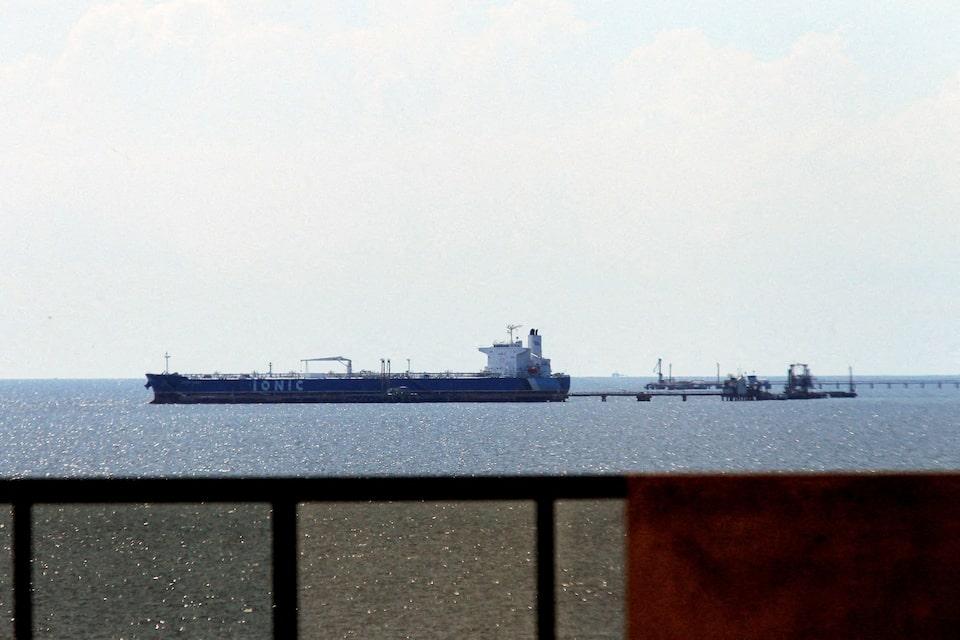
Dec 17 (Reuters) - Venezuela may soon have to start closing some oil wells as it runs low on storage capacity following last week's tanker seizure and U.S. plans to block other sanctioned vessels, Bloomberg News reported on Wednesday, citing people familiar with the situation The country's main oil storage and tankers sitting at its terminals are quickly filling up and may be at maximum capacity in about 10 days, the report said. Sign up here. Reuters could not immediately confirm the report. https://www.reuters.com/business/energy/venezuela-is-running-out-oil-storage-space-amid-tanker-curbs-bloomberg-news-2025-12-17/
2025-12-17 21:28
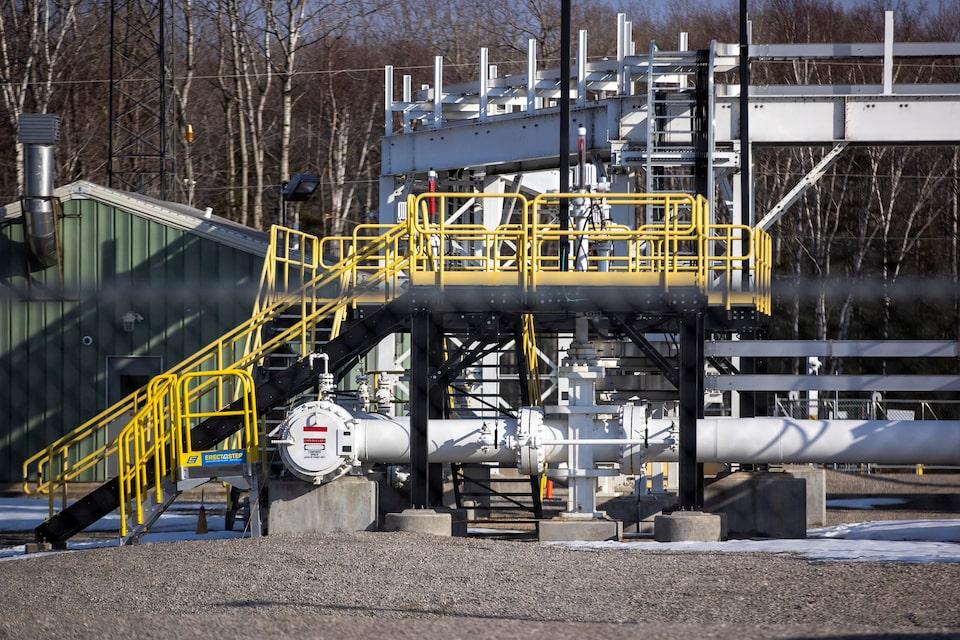
Dec 17 (Reuters) - A U.S. judge on Wednesday blocked Michigan from enforcing a 2020 order to shut down Enbridge's (ENB.TO) , opens new tab Line 5 oil pipeline running beneath a channel linking two of the Great Lakes, ruling that pipeline safety is a federal responsibility. The decision comes five years after Michigan Governor Gretchen Whitmer revoked an easement allowing Canadian company Enbridge to operate a 6.4-km (4-mile) stretch of aging pipeline underneath the Straits of Mackinac, which connect Lake Michigan and Lake Huron, citing risks to the environment in the event of a spill. Sign up here. Enbridge has been fighting the Michigan decision in court. The 72-year-old pipeline — which ships 540,000 barrels per day of crude and refined products from Superior, Wisconsin, to Sarnia, Ontario — has continued to operate throughout the dispute. In his decision, U.S. District Judge Robert Jonker ruled that pipeline safety and protection of the Straits of Mackinac are the responsibility of the United States, and Michigan lacks the authority to interfere. Enbridge faces other ongoing challenges related to Line 5. The company has proposed building a tunnel to house the aging pipeline, but faces opposition from environmentalists and Native American tribes. The U.S. Army Corps of Engineers, a federal permitting agency, granted national energy emergency status to the Line 5 tunnel project in April, fast-tracking a key permitting process. https://www.reuters.com/business/energy/us-judge-blocks-michigan-enforcing-order-shut-down-enbridges-line-5-pipeline-2025-12-17/