2025-12-17 16:56
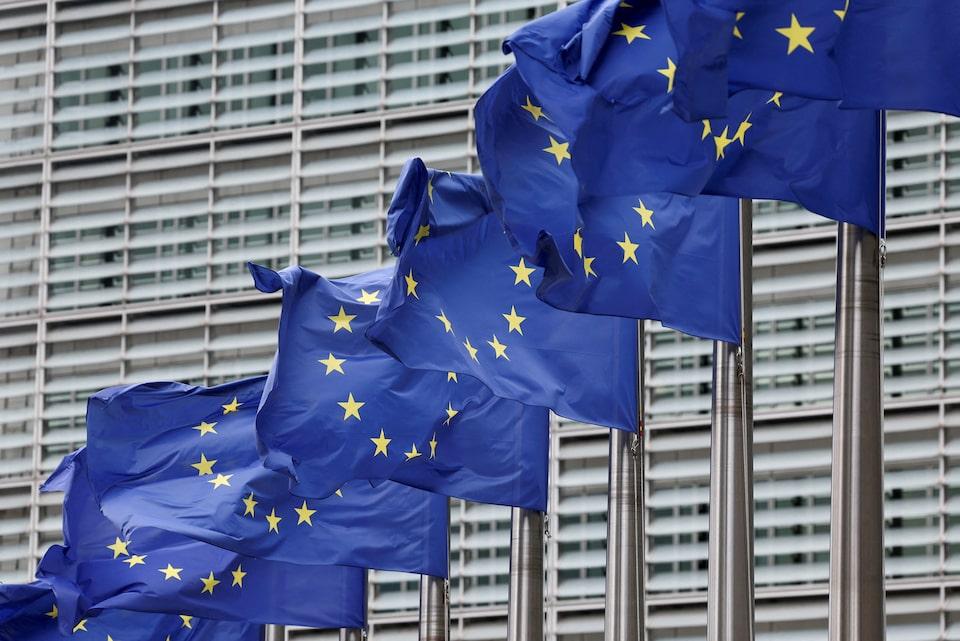
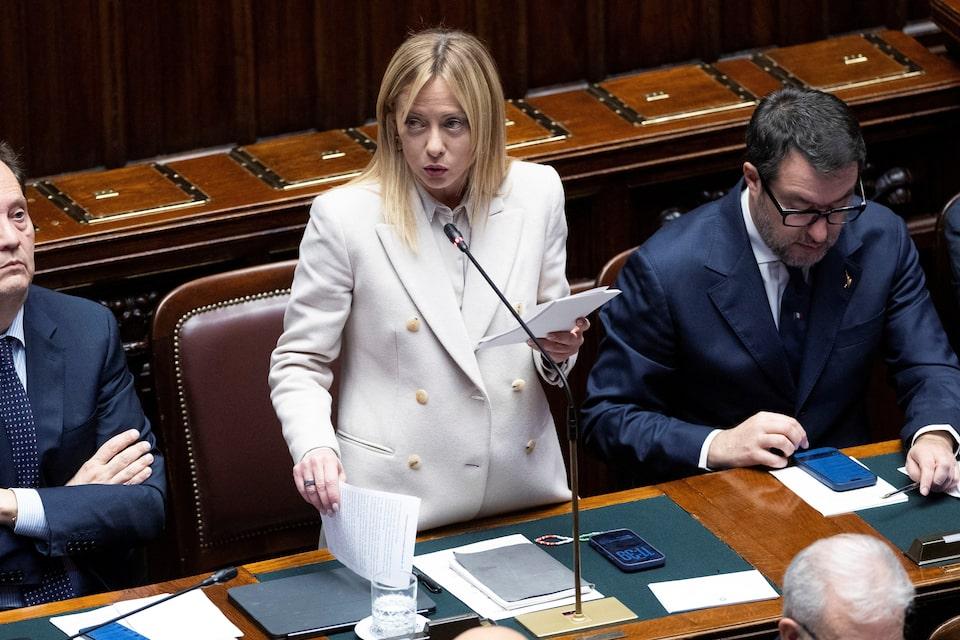
Italy, France demand tougher safeguards for EU-Mercosur deal Germany, Spain back deal to boost exports, reduce China dependence Latin American officials warn of 'now or never' moment ROME, Dec 17 (Reuters) - Italy and France on Wednesday said they were not ready to back a trade agreement between the European Union and the South American trade bloc Mercosur, dealing a blow to hopes of finalising the deal in the coming days. European Commission President Ursula von der Leyen had been expected to fly to Brazil at the end of this week to sign the accord, reached a year ago after a quarter-century of talks with the bloc of Argentina, Bolivia, Brazil, Paraguay and Uruguay. Sign up here. Germany, Spain and Nordic countries say the agreement will help exports hit by U.S. tariffs and reduce dependence on China by providing access to minerals. Confirming an earlier Reuters report, Italian Prime Minister Giorgia Meloni sided with French President Emmanuel Macron in calling for a delay in approving the deal, which Poland and Hungary also oppose. "The Italian government has always been clear in saying that the agreement must be beneficial for all sectors and that it is therefore necessary to address, in particular, the concerns of our farmers," Meloni told the lower house of Italy's parliament. She told lawmakers it would be "premature" to sign the deal before further measures to protect farmers were finalised, adding the deal needed adequate reciprocity guarantees for the agricultural sector. PARIS, ROME DEMAND TOUGHER SAFEGUARDS France too wants tougher safeguards, including "mirror clauses" requiring Mercosur products to comply with EU rules on pesticide use, animal welfare and tighter food safety inspections. "No one would understand if vegetables, beef and chicken that are chemically treated with products banned in France were to arrive on our soil," French government spokesperson Maud Bregeon told a news briefing. Supporters of the deal say it would not override existing EU regulations on food standards. The European Parliament, Commission and the Council, the grouping of EU governments, are set to negotiate an agreement on Mercosur safeguards later on Wednesday after EU lawmakers backed tightening some controls on imports of some farm products. Meloni's Brothers of Italy party said those controls were still not sufficient to ensure farmers could compete on even terms. "This does not mean that Italy intends to block or oppose the agreement as a whole ... I am very confident that, come the start of next year, all these conditions can be met," Meloni said. Brazilian President Luiz Inacio Lula da Silva reacted to the resistance from France and Italy by threatening not to sign as long as he is president. "I already told them, if we don't do it now, Brazil won't have an agreement as long as I am president", Lula told a cabinet meeting on Wednesday. "If they say no now, we will be tough with them from now on. We gave in on everything that diplomacy could possibly concede." The Mercosur bloc is already negotiating deals with other nations such as Japan, United Arab Emirates, India and Canada. https://www.reuters.com/business/italy-says-it-would-be-premature-sign-eu-mercosur-trade-deal-2025-12-17/
2025-12-17 16:36
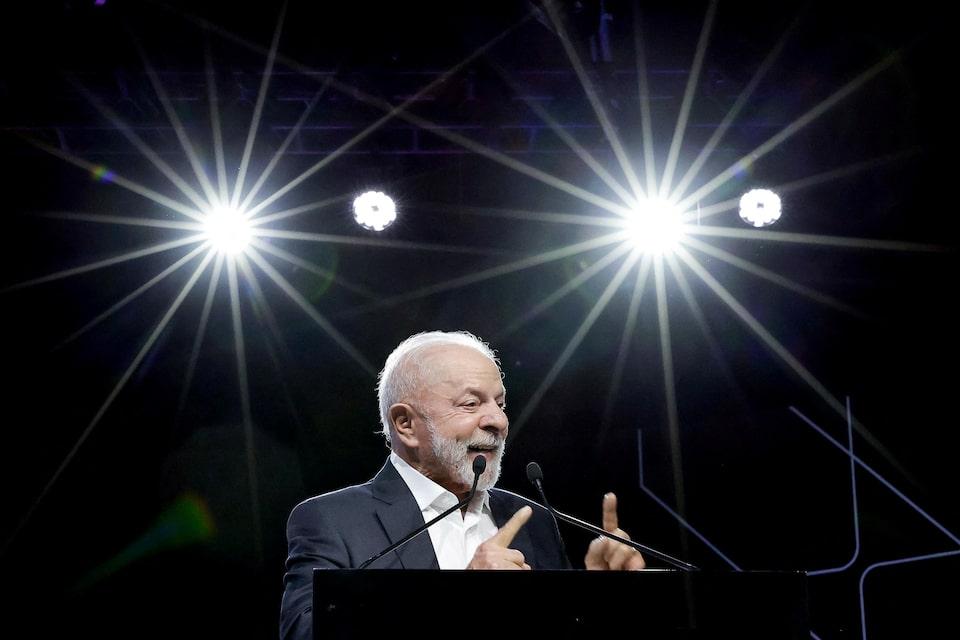
SAO PAULO, Dec 17 (Reuters) - Brazilian President Luiz Inacio Lula da Silva said on Wednesday that if the trade agreement between the European Union and the South American trade bloc Mercosur is not finalized this month, Brazil will no longer sign off on the deal. Italy and France earlier in the day said they were not ready to back the agreement, dealing it a blow as European Commission President Ursula von der Leyen had been expected to fly to Brazil at the end of this week to sign the accord. Sign up here. "If we don't do it now, Brazil won't make this deal anymore as long as I'm president," Lula told a cabinet meeting. "If they say no, we will be tough with them from now on. We gave in to everything that diplomacy could possibly concede." https://www.reuters.com/world/americas/brazil-threatens-abandon-mercosur-eu-deal-italy-france-seek-delay-2025-12-17/
2025-12-17 16:07
Dec 17 (Reuters) - The International Monetary Fund's executive board will discuss a $20 billion program for Argentina on Wednesday during an informal session in Washington, Bloomberg News reported on Wednesday. IMF staff working on the program, which began in April, will brief board members on the latest developments in the country on Wednesday's session, the report said. Sign up here. https://www.reuters.com/world/americas/imf-discuss-20-billion-argentina-program-wednesday-bloomberg-reports-2025-12-17/
2025-12-17 12:37
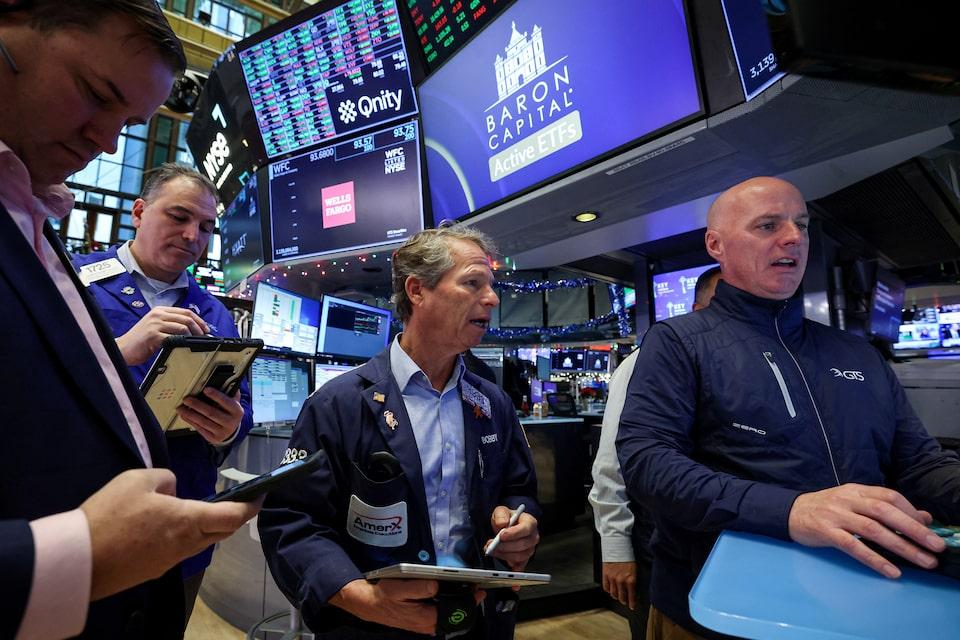
Oracle slides as report says $10 billion data center in limbo Warner Bros Discovery board rejects rival bid from Paramount Indexes down: Dow 0.47%, S&P 1.16%, Nasdaq 1.81% Dec 17 (Reuters) - Wall Street's main indexes closed lower on Wednesday, with the S&P 500 and the tech-heavy Nasdaq sinking to three-week lows as nagging worries about the artificial intelligence trade weighed on technology stocks. Oracle (ORCL.N) , opens new tab dropped 5.4% after a report said the cloud company's largest data center partner Blue Owl Capital (OWL.N) , opens new tab will not back a $10 billion deal for its next facility. Sign up here. Amazon.com (AMZN.O) , opens new tab fell 0.6% after said the company is in talks to invest about $10 billion in ChatGPT maker OpenAI. Worries about the broader technology sector taking on more debt to develop artificial intelligence have discouraged risk-taking lately. "There’s percolating anxiety about the AI trade. ... The primary driver is the level of capex and circular nature of some of the spending with OpenAI being at the center of that," said Ross Mayfield, investment strategist at Baird Private Wealth Management. "The broader question heading into the New Year is about the sustainability and return on investment of all this spending," he said. AI bellwether Nvidia (NVDA.O) , opens new tab fell 3.8% and chipmaker Broadcom (AVGO.O) , opens new tab dropped 4.5%, sending a broader chips index (.SOX) , opens new tab down 3.9%. The Dow Jones Industrial Average (.DJI) , opens new tab fell 228.29 points, or 0.47%, to 47,885.97. The S&P 500 (.SPX) , opens new tab lost 78.83 points, or 1.16%, to 6,721.43. The Nasdaq Composite (.IXIC) , opens new tab lost 418.14 points, or 1.81%, to 22,693.32. Alphabet (GOOGL.O) , opens new tab shares fell 3.2% after a Reuters report said its Google unit is taking on a new initiative to erode Nvidia's software advantage, and working with Meta (META.O) , opens new tab to do so. Google-owned YouTube announced that the Oscar awards will stream exclusively on the platform for free globally and on YouTube TV starting in 2029. In other media news, Warner Bros Discovery's (WBD.O) , opens new tab board rejected Paramount Skydance's (PSKY.O) , opens new tab $108.4 billion hostile bid for the media company, favoring Netflix's (NFLX.O) , opens new tab binding offer. Netflix shares rose 0.2%, while Paramount and Warner Bros fell 5.4% and 2.4%, respectively. Energy stocks rose along with crude prices as U.S. President Donald Trump ordered a "blockade" of all sanctioned oil tankers entering and leaving Venezuela. ConocoPhillips (COP.N) , opens new tab and Occidental Petroleum (OXY.N) , opens new tab both gained over 4%. Offering some relief for investors was Federal Reserve Governor Christopher Waller, often viewed as a dove on monetary policy. He said the central bank still had room to cut interest rates against a softening jobs market. The next significant report will be Thursday's consumer inflation data by the Commerce Department. Declining issues outnumbered advancers by a 1.5-to-1 ratio on the NYSE. There were 135 new highs and 104 new lows on the NYSE. On the Nasdaq, 1,496 stocks rose and 3,162 fell as declining issues outnumbered advancers by a 2.11-to-1 ratio. The S&P 500 posted 12 new 52-week highs and no new lows while the Nasdaq Composite recorded 85 new highs and 175 new lows. Volume on U.S. exchanges was 17.92 billion shares, compared with the 16.97 billion average for the full session over the last 20 trading days. https://www.reuters.com/business/media-telecom/wall-st-futures-inch-higher-investors-eye-more-data-geopolitics-2025-12-17/
2025-12-17 12:28
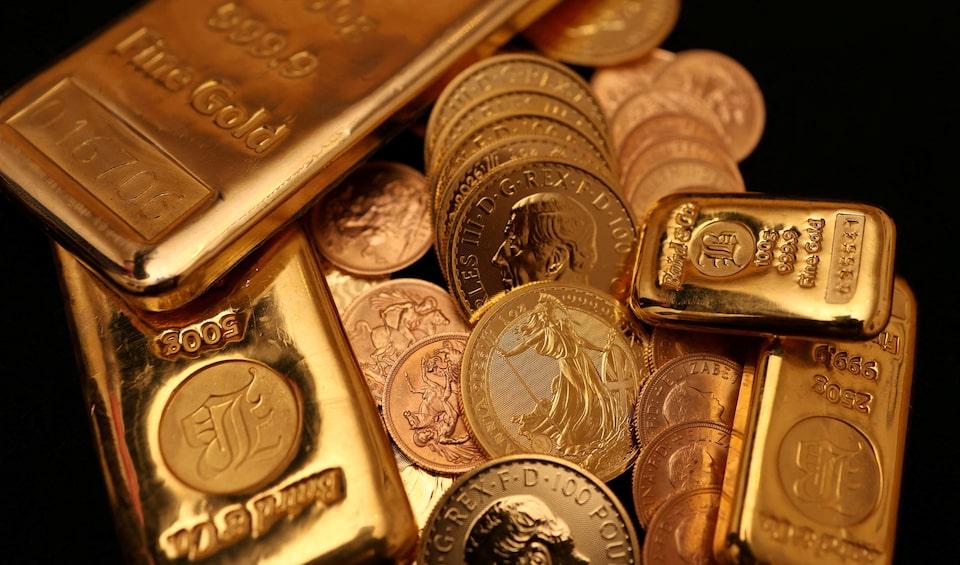
Gold up 64% so far this year, having hit record $4,381/oz Rally seen slowing in 2026 even with $5,000/oz in sight LONDON, Dec 17 (Reuters) - Gold has made its biggest jump since the 1979 oil crisis in 2025 -- with prices doubling in the last two years -- a performance which might previously have meant forecasts of a big correction. Yet a growing investor pool and factors ranging from U.S. policy to war in Ukraine mean analysts at JP Morgan, Bank of America and consultancy Metals Focus now see bullion hitting $5,000 per troy ounce in 2026. Sign up here. Spot gold prices reached a record $4,381 in October, having never hit $3,000 before March, driven by demand from central banks and investors with new participants ranging from stablecoin issuer Tether to corporate treasurers. BofA strategist Michael Widmer said expectations of further gains or portfolio diversification are driving the buying, with impetus from U.S. fiscal deficits, efforts to narrow the U.S. current account deficit and a weak dollar policy. Philip Newman, managing director at Metals Focus, said further support stemmed from worries about U.S. Federal Reserve independence, tariff disputes and geopolitics including war in Ukraine and Russia's interaction with NATO countries in Europe. CENTRAL BANKS ANCHOR THE CYCLE For a fifth year running, central bank diversification of reserves from dollar-denominated assets should give a foundation for gold in 2026 as they buy when investor positioning is stretched, money rotates and prices fall, analysts said. "The price level is supported much higher than where you started because you get that central bank demand coming through," said Gregory Shearer, head of base and precious metals strategy at JP Morgan. "And then all of a sudden we're sitting above $4,000 in a much cleaner environment from a positioning perspective, which then allows the cycle to continue going forward," he said, referring to market signals used by investors to start extending positions again after de-risking. JP Morgan analysts estimate that for prices to stay flat, quarterly central bank and investment demand of around 350 metric tons is needed. They forecast this buying to average 585 tons per quarter in 2026. Investor holdings of gold as a share of total assets under management have risen to 2.8% from pre-2022 levels of 1.5%, JP Morgan's Shearer said, adding that while elevated, this was not necessarily a ceiling. Morgan Stanley forecasts gold at $4,500 per ounce by mid-2026, while JP Morgan expects average prices at above $4,600 in Q2 and more than $5,000 in Q4 and Metals Focus forecasts gold at $5,000 by end-2026. HEDGING EQUITY BETS Global central bank umbrella body BIS said this month that a combination of gold and share prices soaring in unison is a phenomenon not seen in at least half a century - raising questions about a potential bubble in both. Part of this year's gold buying was essentially a hedge against potential sharp corrections in equity markets, gold analysts said, fuelling a fire driven by tensions between historic allies over tariffs, global trade and war in Ukraine. This remains a risk for gold, as sharp corrections in equity markets often force the sale of safe-haven assets. Nicky Shiels, head of metals strategy at MKS PAMP, expects prices to average $4,500 in 2026, predicting that gold will become "a multi-year secular critical portfolio asset rather than a cyclical hedge". Analysts expect gold's rally to be less dramatic in 2026. "The world has stabilised a bit," said Macquarie, whose economists forecast a revival in global growth, central bank easing tapering off and relatively high real interest rates. Macquarie sees average prices at $4,225 in 2026, slightly below Wednesday's spot gold price of $4,317. Meanwhile, central bank purchases and inflows into gold ETFs are seen slowing next year with jewellery demand, which fell 23% in the third quarter, under pressure and only partly compensated for by retail demand for bars and coins. In October, queues of retail customers seen in Australia and Europe possibly represented a reallocation from jewellery to investment, which may continue next year, said Amy Gower, commodities strategist at Morgan Stanley. Yet, demand for bars and coins did not see much profit-taking after October, said Newman at Metals Focus, adding: "If we do see prices start to run up again, you could well see buying into that rally as well". Supply response has been muted so far with a 6% growth in recycling and no significant central bank selling. Macquarie said total gold demand is on track to rise 11% this year to 5,150 tons, before falling to 4,815 in 2026. CRYPTO MEETS GOLD Fed easing brought a new visible institutional investor in gold in the form of crypto company Tether, issuer of the world's largest stablecoin. Quarterly reports show Tether bought about 26 tons of gold in the third quarter, five times more than China's central bank reported buying. "It's not to be ignored," Morgan Stanley's Gower said, but added that it is unclear whether other companies would have a similar strategy because the U.S. GENIUS Act does not list gold as a reserve asset for stablecoins. Further investment pool expansion could come from Asia as India allowed some pension funds to buy gold and silver ETFs. China also allowed some insurance funds to buy gold in February, although Metals Focus said these purchases have been limited so far due to bullion's rally. https://www.reuters.com/business/finance/gold-forecast-glitter-again-next-year-despite-biggest-gain-since-1979-2025-12-17/
2025-12-17 12:24
BRUSSELS, Jan 9 (Reuters) - European Union countries gave provisional clearance on Friday to a planned EU-Mercosur free trade agreement, the largest trade accord the EU has struck. TARIFF CUTS, LARGER FARM PRODUCE QUOTAS Mercosur will remove duties on 91% of EU exports, including for cars, from a current 35% over a period of 15 years. The EU will progressively remove duties on 92% of Mercosur exports over a period of up to 10 years. Sign up here. Mercosur will also remove duties on EU agriculture-based products, such as the 27% on wines and 35% on spirits. For more sensitive farm products, the EU will offer increased quotas, including 99,000 metric tons more beef, while Mercosur will give the EU a duty-free 30,000-ton quota for cheeses. There are also EU quotas for poultry, pork, sugar, ethanol, rice, honey, maize and sweet corn and for Mercosur on milk powders and infant formula. The extra imports represent 1.6% of EU beef consumption and 1.4% for poultry. Proponents of the deal point to existing imports as proof that Mercosur does meet EU standards. The deal recognizes about 350 geographic indications to prevent imitation of certain traditional EU foodstuffs, so for example the term 'Parmigiano Reggiano' would be reserved for specific cheeses from Italy. WHAT PROPONENTS SAY The Commission and supporters such as Germany and Spain say the deal offers a route away from reliance on China, especially for critical minerals such as battery metal lithium. It will ensure there are no taxes on the export of most such materials. Proponents also say it offers relief from the impact of tariffs imposed by U.S. President Donald Trump. The Commission says the free trade agreement is the largest it has ever agreed in terms of tariff reductions, removing over 4 billion euros ($4.7 billion) of duties on EU exports annually, and a necessary part of the EU's push to diversify its trade ties. It adds that, given Mercosur's modest collection of trade agreements, the EU would have an early-mover advantage and notes that EU companies will be able to bid for public contracts in Mercosur on the same terms as local suppliers - something Mercosur has not previously offered in trade accords. There are also potential safeguard measures to address possible market disturbances. WHAT CRITICS SAY European farmers protest that a deal would lead to cheap imports of South American commodities, notably beef, that do not meet the EU's green and food safety standards. The European Commission says the EU's standards will not be relaxed. The deal does include commitments on the environment, including to prevent further deforestation after 2030. However, green groups say it lacks enforceable measures. Friends of the Earth has called the deal "climate-wrecking" and says it would lead to increased deforestation as Mercosur countries would sell more farm produce and raw materials, often sourced from forested areas, including the Amazon. France, the EU's largest beef producer, had said it would sign the free trade agreement only if it "safeguards the interests" of French and EU farming. It now rejects the deal. Italy, Hungary and Poland had also expressed opposition. Together, the four countries could have blocked the deal, but Italy's position shifted in the end. HOW HAS EU TRIED TO WIN OVER SCEPTICS? When the Commission put the agreement forward for approval in September, it set out a mechanism whereby preferential Mercosur access for sensitive farm products, such as beef, could be suspended. The trigger for the Commission to assess the need for such safeguards would be if import volumes rise or prices fall by a set amount in one or more EU countries. The EU had previously agreed to a threshold of 8%, but ambassadors agreed to cut this to 5% after a request from Italy. The EU executive said it would study potential alignment of production standards between domestic and imported products, notably regarding pesticides and animal welfare. It aims to strengthen import controls on food, animal and plant products entering the EU by increasing the number of audits and checks in third countries. The next EU budget will offer a 6.3 billion euro crisis fund for EU farmers, which could cover the "unlikely event" that the agreement harms EU agricultural markets. Some 45 billion euros of support for farmers will also be brought forward. Finally, the Commission has announced it will cut import duties for certain fertilisers, costs of which have risen by up to 60%. ($1 = 0.8587 euros) https://www.reuters.com/business/whats-eu-mercosur-deal-why-is-it-contentious-2025-09-03/