2025-12-17 06:18
Wall Street shares close lower with tech leading losses on AI worries Oil rises with precious metals Sterling falls as data cements BoE rate cut on Thursday US to blockade sanctioned oil tankers in and out of Venezuela NEW YORK/LONDON, Dec 17 (Reuters) - MSCI's global equities gauge fell on Wednesday, pressured by U.S. technology stocks, while silver prices hit a record high and gold rose for a seventh straight day on renewed hopes for Federal Reserve rate cuts and after U.S. President Donald Trump's latest move in Venezuela created safe-haven demand. Oil prices settled higher after Trump ordered a "blockade" of all sanctioned oil tankers entering and leaving Venezuela, as Washington increased pressure on Nicolas Maduro's government by targeting its main source of income. Sign up here. Elsewhere, Fed Governor Christopher Waller, who is expected to be interviewed as a potential replacement for Fed Chair Jerome Powell, said the U.S. central bank has room to cut interest rates amid signs of job market weakness. In U.S. equities, technology stocks were weighing down the S&P 500 amid the latest fears of an artificial intelligence bubble. Shares of AI chip leader Nvidia (NVDA.O) , opens new tab were the biggest drag, closing down 3.8%. Reuters reported that Alphabet's (GOOGL.O) , opens new tab Google is working to erode Nvidia's software advantage. Oracle shares closed down 5.4% even after it looked to reassure investors by announcing that talks for an equity deal to support a data center project were on schedule and do not include Blue Owl Capital (OWL.N) , opens new tab, after a report of stalled negotiations between the two companies. "It does appear there is now real market fatigue in this singular AI infrastructure story, and the circularity issue in revenue, the rationalization of capex, and the fact that not all players can win at once, are seemingly becoming more accepted by markets," said David Bahnsen, chief investment officer at the Bahnsen Group. Ross Mayfield, investment strategist at Baird Private Wealth Management, said there was "percolating anxiety about the AI trade." On Wall Street the Dow Jones Industrial Average (.DJI) , opens new tab fell 228.29 points, or 0.47%, to 47,885.97, the S&P 500 (.SPX) , opens new tab fell 78.83 points, or 1.16%, to 6,721.43 and the Nasdaq Composite (.IXIC) , opens new tab fell 418.14 points, or 1.81%, to 22,693.32. MSCI's gauge of stocks across the globe (.MIWD00000PUS) , opens new tab fell 8.16 points, or 0.81%, to 994.69. Earlier, the pan-European STOXX 600 (.STOXX) , opens new tab index ended its trading session virtually unchanged. Investors pushed U.S. Treasury yields higher as they waited for the latest inflation reading, due on Thursday. Traders have been struggling to assess delayed data as it shows a less clear picture of the U.S. economy after a 43-day federal government shutdown. The yield on benchmark U.S. 10-year notes rose 0.8 basis points to 4.157%, from 4.149% late on Tuesday while the 30-year bond yield rose 0.6 basis points to 4.8293%. The 2-year note yield, which typically moves in step with interest rate expectations for the Federal Reserve, rose 1 basis point to 3.489%. In currencies, sterling fell after an unexpected drop in UK inflation all but guaranteed the Bank of England would cut interest rates, while the dollar rose as markets awaited central bank decisions around the world and weighed Fed commentary. The UK's pound weakened 0.36% to $1.3372. The dollar index , which measures the greenback against a basket of currencies including the yen and the euro, rose 0.2% to 98.41. The euro was down 0.06% at $1.1739 with the European Central Bank in the spotlight on Thursday, when it is expected to keep rates steady. Against the Japanese yen , the dollar strengthened 0.67% to 155.74 as investors bet that Japan's central bank would hike rates on Friday. Regaining some ground lost in the previous four sessions, oil rallied on Wednesday after Trump's Venezuelan blockade order raised some concerns about supply. U.S. crude settled up 1.21%, or 67 cents, at $55.94 a barrel and Brent settled at $59.68 per barrel, up 1.29%, or 76 cents, on the day. In precious metals, silver prices surpassed $66 an ounce for the first time and gold firmed, as hopes of rate cuts and escalating geopolitical tensions sent some investors into safer bets. Spot silver rose 4.2% to $66.46 while spot gold rose 0.94% to $4,344.09 an ounce. U.S. gold futures rose 1.09% to $4,351.40 an ounce. https://www.reuters.com/world/china/global-markets-global-markets-2025-12-17/

2025-12-17 06:15
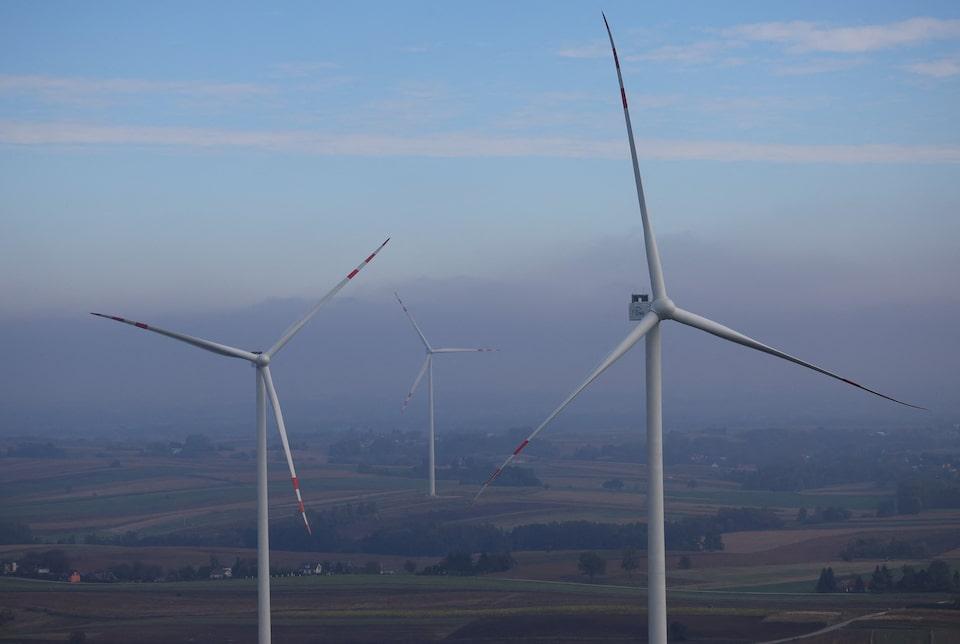
COPENHAGEN/WARSAW, Dec 17 (Reuters) - Poland is launching its first competitive offshore wind auction on Wednesday, a test experts say could revive Europe's struggling sector as developers vie for long-term contracts after a string of failed tenders across the region. The auction offers developers 25-year contracts with fixed prices of $135-$143 per megawatt hour, a level of support that contrasts sharply with recent European auctions where low price caps and lack of infrastructure funding have deterred bidders. Sign up here. Analysts say Poland's approach could set a benchmark for how to restore confidence in offshore wind investment after U.S. President Donald Trump's opposition to renewables effectively froze the U.S. market and as recent auctions in Denmark, Germany, and the Netherlands failed to attract enough bidders amid soaring costs and inadequate subsidies or revenue guarantees. If Poland's auction is successful, it will show "offshore wind is not in such a bad place," said Anastasia Gurnell, Associate Director at German lender NORD/LB. Poland's scheme for support auctions provides critical "long-term visibility" for investments in offshore wind and its supply chain, alleviating uncertainty plaguing other European auctions, Signe Tellier Christensen, Market Analyst at Aegir Insights said. Polish utility PGE (PGE.WA) , opens new tab, refiner Orlen (PKN.WA) , opens new tab and a consortium of Polenergia (PEPP.WA) , opens new tab and Equinor (EQNR.OL) , opens new tab are among those expected to bid for up to 4 gigawatts of capacity. Rules require at least three bidders and cap winners at 90% of invited capacity to ensure competition. Poland plans to hold similar auctions every two years until 2031. For Poland, offshore wind is vital for bridging its looming energy gap, with coal power being phased out, nuclear energy several years away and proximity to Russia heightening the country's emphasis on energy independence. https://www.reuters.com/business/energy/polands-offshore-wind-auction-seen-key-test-europe-after-failed-tenders-2025-12-17/
2025-12-17 06:11
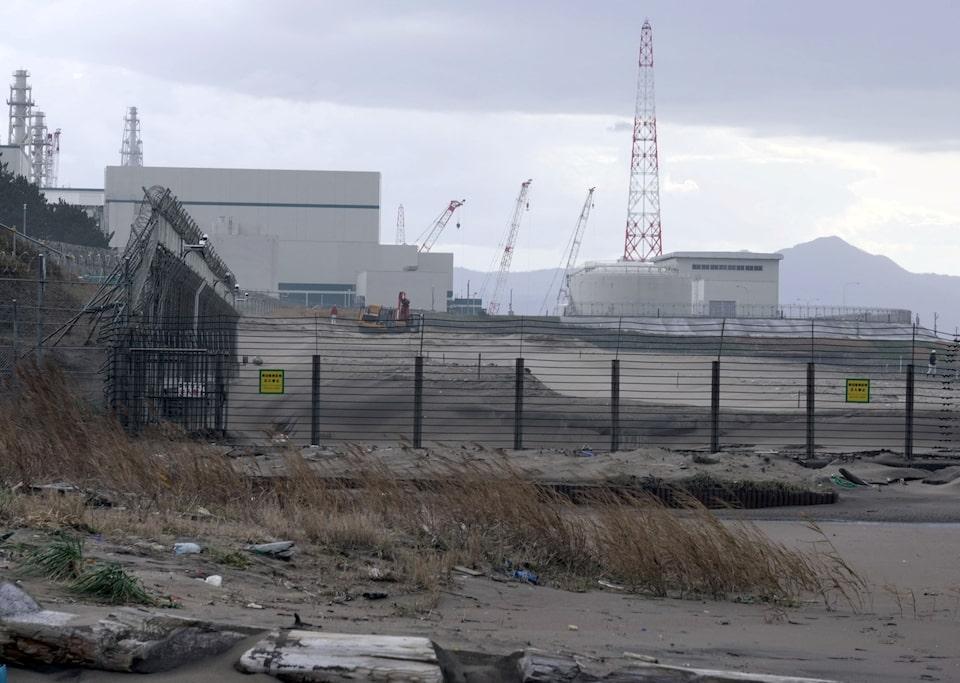
LITTLETON, Colorado, Dec 17 (Reuters) - One of the world's largest oil, gas and coal importers - Japan - has cut fossil fuel electricity generation to the lowest levels in more than a decade so far in 2025, thanks in large part to an ongoing recovery in nuclear power output. Japan's fleet of nuclear reactors has generated the largest amount of electricity this year since 2011, when a tsunami triggered a meltdown at the Fukushima power plant and sparked a curtailment of most of the country's nuclear reactors. Sign up here. Alongside record renewable energy output, Japan's nuclear rebound has supplied utilities with the largest volume of clean power since 2010, and allowed power firms to cut the use of gas-fired power plants to the lowest in at least six years. Japan's energy transition momentum away from fossil fuels will likely accelerate further in 2026 as the country restarts the world's largest nuclear reactor at Kashiwazaki-Kariwa and brings on additional renewable energy generation capacity. For natural gas exporters, the steady decline in fossil fuel generation in such a prominent economy will be a cause for concern, and will likely force them to seek out other buyers for the extra gas supplies they plan to market in 2026 and beyond. CLEAN MOMENTUM Japan's electricity generation system has sharply boosted output from a slew of clean power sources so far in 2025. During January to October, generation from bioenergy plants, nuclear reactors and solar and wind farms all increased by at least 10% compared to the same months in 2024, data from Ember shows. Bioenergy and solar power sources also registered their largest-ever shares of total utility electricity supplies, at 7% and 14% respectively, while nuclear reactors generated over 10% of total utility electricity for the first time since 2011. In all, total clean electricity output during the first 10 months of 2025 was 326.3 terawatt hours (TWh), a 9% jump from the same months in 2024 and the highest during any full year since 2010. NUCLEAR DRIVE The steady return of Japan's nuclear reactor fleet has been a major driver of the clean power supply growth seen in recent years. Following the total shutdown of the country's 54 reactors in 2014, Japan's authorities have gradually resumed reactor output with generation climbing from less than 5 TWh in 2015 to close to 78 TWh so far in 2025. Japan has restarted 14 of the 33 reactors that remain operable in the country, and plans to reboot two of the reactors at the Kashiwazaki-Kariwa nuclear power plant over the coming months. Further restarts of idled nuclear capacity are expected, as Japan's new Prime Minister Sanae Takaichi made pledges during her campaign to boost local electricity supplies, lower electricity costs and reduce fossil fuel imports. Japan spent 10.7 trillion yen ($68 billion) in 2024 on imported liquefied natural gas and coal, a tenth of its total import costs. Those import tallies look primed to decline going forward as the country's supplies of power from its nuclear plants and clean energy assets continue to grow. Gas and coal exporters may take a hit as Japan's imports shrink, but as utilities lift electricity output from nuclear reactors and cut back on output from plants that burn imported gas, Japan's power supplies should get both cleaner and cheaper. The opinions expressed here are those of the author, a columnist for Reuters. Enjoying this column? Check out Reuters Open Interest (ROI), your essential new source for global financial commentary. ROI delivers thought-provoking, data-driven analysis of everything from swap rates to soybeans. Markets are moving faster than ever. ROI can help you keep up. Follow ROI on LinkedIn , opens new tab and X , opens new tab. https://www.reuters.com/business/energy/japans-fossil-fuel-power-output-sinks-again-nuclear-rebound-2025-12-17/
2025-12-17 06:07
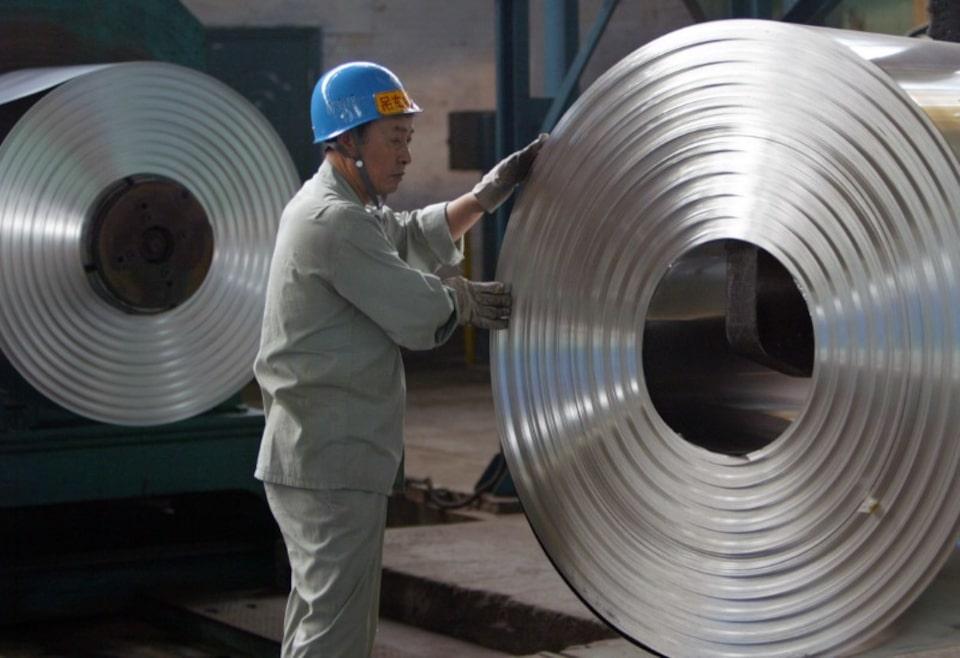
Reuters Open Interest (ROI) is your essential source for global financial commentary LAUNCESTON, Australia, Dec 17 (Reuters) - China's steel production in November was the weakest month in nearly two years and will ensure that the world's biggest producer of the metal will post its lowest annual output since 2018. However, imports of steel's key raw material iron ore are likely to rise to a record high in 2025, eclipsing the previous all-time high of 1.24 billion metric tons set in 2024. Sign up here. The divergence between weak steel output and robust iron ore imports likely reflects several factors, including restocking of iron ore inventories amid competitive seaborne prices and optimism that Beijing's stimulus efforts will eventually boost steel demand. But while sentiment may still be positive for iron ore, the steel sector is dealing with the reality of weak demand in the key property construction sector and increasingly in manufacturing. China's steel production fell to 69.87 million tons in November, down 10.9% from the same month a year earlier, according to official data released on December 15. This was the sixth consecutive monthly decline and the weakest output since December 2023. For the first 11 months of the year, steel production was 891.67 million tons, down 4% from the corresponding period in 2024. If December steel output is around the same daily level as that in November, it would come in around 72.3 million tons, meaning total 2025 production would be about 964 million tons. This would be the lowest since 2018, when 928.3 million tons were produced and would represent a decline of about 4% from the 1.005 billion tons in 2024. Steel prices have largely mirrored the weakness in production with Shanghai Exchange rebar contracts ending at 3,081 yuan ($437.64) a ton on Tuesday, down 10.1% since the close of 3,429 yuan on July 30, when the current downtrend commenced. IRON STRENGTH Iron ore prices have followed a different trajectory, with Singapore Exchange contracts having been on a rising trend since hitting a 10-month low of $93.35 a ton on July 1. They closed at $106.25 a ton on Tuesday, having dropped slightly since the highest close this year of $107.90 on December 4. The rise in prices has coincided with strength in imports in the second half, with November arrivals coming in at 110.54 million tons, up 8.5% from the same month a year earlier. For the first 11 months of the year, iron ore imports were up 1.4% to 1.139 billion tons, meaning they only have to exceed 98 million tons in December to better 2024's record total of 1.237 billion tons. This is likely to be the case, with commodity analysts Kpler estimating China's December iron ore imports will come in around 121 million tons. The question for the market is how long can iron ore imports markedly outperform steel production. Much depends on how much more Chinese steel mills and traders are prepared to add to inventories, which have been rising in recent weeks. Stockpiles at Chinese ports monitored by consultants SteelHome rose to 143.8 million tons in the week to December 12, up from 142.4 million the prior week. They have risen 10.5% from the 18-month low of 130.1 million tons in early August, and are encroaching on the 27-month peak of 151.8 million from July last year. This implies that there is limited scope for further gains in inventories, which in turn suggests that iron ore imports may moderate in the coming months. Enjoying this column? Check out Reuters Open Interest (ROI), your essential new source for global financial commentary. ROI delivers thought-provoking, data-driven analysis of everything from swap rates to soybeans. Markets are moving faster than ever. ROI can help you keep up. Follow ROI on LinkedIn , opens new tab and X , opens new tab. (The views expressed here are those of the author, a columnist for Reuters.) https://www.reuters.com/markets/commodities/chinas-steel-output-slump-7-year-low-iron-ore-imports-hit-record-2025-12-17/
2025-12-17 06:04
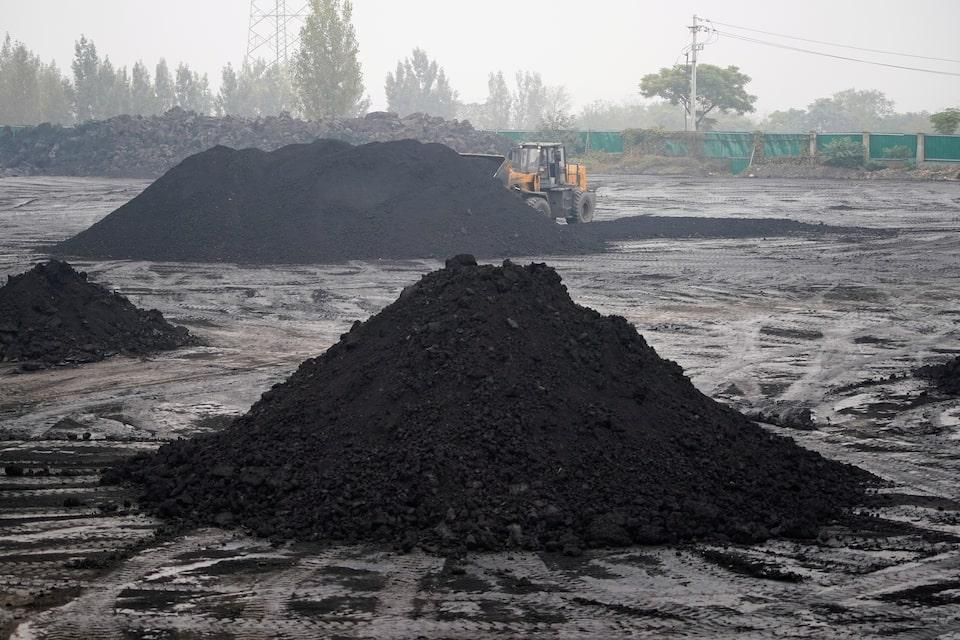
Renewables, nuclear, and natural gas to reduce coal's dominance by 2030 India's coal use declined due to intense monsoons boosting hydro power US coal consumption rose with higher gas prices and policy support China consumes 30% more coal than the rest of the world combined LONDON, Dec 17 (Reuters) - Global coal demand reached a record high in 2025 but is expected to decline by 2030 as renewables, nuclear power and abundant natural gas squeeze its dominance in power generation, the International Energy Agency said on Wednesday. Weaning the world off coal is considered vital to achieving global climate targets, but the fossil fuel remains the single biggest fuel to make electricity. Sign up here. Coal demand is forecast to rise 0.5% in 2025 to a record 8.85 billion metric tons, the IEA's Coal 2025 report showed. "Looking ahead, we observe that the global coal demand plateaus and will start a very slow and gradual decline through the end of the decade," Keisuke Sadamori, IEA director of Energy Markets and Security, said in a press briefing. The forecast was little changed from last year’s outlook despite observing different trends in 2025. India's coal use declined for only the third time in five decades due to intense monsoons which increased hydropower and depressed electricity demand. In the United States, consumption rose on higher gas prices and after President Donald Trump this year signed an executive order to save coal plants that were likely to be retired and to boost coal production. Demand in China, which is the world's largest coal consumer, was largely flat this year, and is expected to fall slightly by 2030 as renewable capacity increases. However, faster electricity demand growth, or slower renewable integration in China, could push global demand above forecasts, the report said. "China... which consumes 30% more coal than the rest of the world put together, is the main driver of global coal trends," Sadamori said. https://www.reuters.com/sustainability/boards-policy-regulation/global-coal-demand-hit-record-high-this-year-is-set-decline-by-2030-iea-says-2025-12-17/
2025-12-17 06:04
EU presses ahead with carbon border levy despite pushback Draft plans widen levy to cover imported car parts, washing machines First of its kind policy will impose CO2 costs from January BRUSSELS, Dec 17 - The European Union will expand its carbon border levy - a fee charged on imports of high-emission goods - to cover car parts and washing machines, according to draft European Commission proposals due to be published on Wednesday. The proposals also aim to tighten loopholes that the Commission worries could allow foreign firms to dodge the fee, which is currently in a pilot phase and will start imposing costs from January. Sign up here. The EU's Carbon Border Adjustment Mechanism - the world's first carbon border tariff - will impose fees on the CO2 emissions of imported goods including steel, aluminium, cement and fertilisers. The policy, known as CBAM, is designed to shield European industries against cheaper imports from countries with weaker climate rules. But it has irritated trading partners including China, India and South Africa, which say it unfairly penalises their economies. EU SEEKS TO AVERT WORKAROUNDS Despite these objections, draft EU legal proposals seen by Reuters on Tuesday showed the bloc will double down on the carbon border fee: expanding it to cover downstream products that use a high share of steel and aluminium, including construction products, power grid components and machinery. Leon de Graaf, acting president of the "Business for CBAM Coalition" of companies and industry groups, welcomed the EU plans, which he said targeted "products that face the highest risk of carbon leakage" - the risk that manufacturers relocate abroad to avoid Europe's strict climate policies. The EU also plans to clamp down on foreign companies if there is evidence they are under-reporting their emissions to dodge the levy. In this scenario, the EU could impose "default" emissions values on that country's products, resulting in a higher CBAM bill, according to sources familiar with the plans, which could still change before they are published. That aims to address concerns among EU officials that foreign companies - in particular those in China - could strategically adjust by sending low-carbon products to Europe, while continuing to produce high-carbon goods for other markets. This would allow them to dodge the EU levy without making their overall production any greener. A Commission spokesperson declined to comment on the draft plans. While CBAM will charge importers for the emissions associated with their imports from 2026, companies will have until September 2027 to buy and surrender CBAM certificates to the EU to comply. Since Brussels announced its carbon border levy in 2021, China, India and Brazil - while criticising the EU policy - have begun developing or expanding their own carbon pricing systems. "They have changed behaviour. That is the success of CBAM in my book already," said Totis Kotsonis, a partner at law firm Pinsent Masons who advises on trade issues. Brussels also plans to use 25% of the revenue from the border levy to compensate European manufacturers for higher costs associated with the carbon border levy. This support would only go to industries that invest in lower-carbon manufacturing. https://www.reuters.com/sustainability/climate-energy/eu-strengthen-carbon-levy-high-emission-imports-crack-down-attempts-dodge-it-2025-12-17/