2025-12-17 06:01
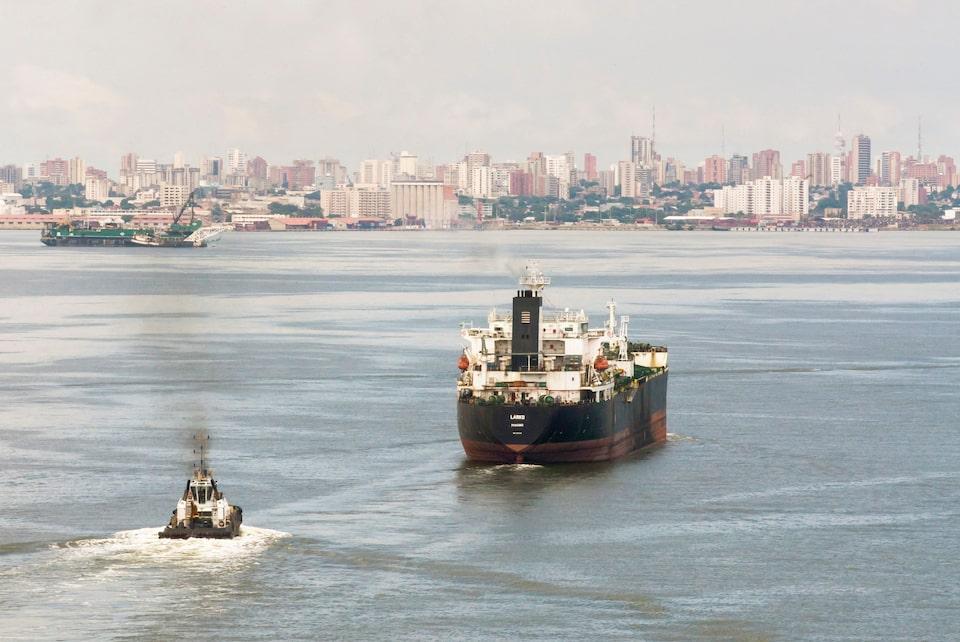
Oil prices rise over 1% following blockade announcement Trump labels Venezuelan "regime" a foreign terrorist organization Venezuela rejects Trump's "grotesque threat" Maduro claims US aims to control Venezuela's vast oil reserves WASHINGTON, Dec 16 (Reuters) - U.S. President Donald Trump ordered on Tuesday a "blockade" of all sanctioned oil tankers entering and leaving Venezuela, in Washington's latest move to increase pressure on Nicolas Maduro's government, targeting its main source of income. It is unclear how Trump will impose the move against the sanctioned vessels, and whether he will turn to the Coast Guard to interdict vessels like he did last week. The administration has moved thousands of troops and nearly a dozen warships - including an aircraft carrier - to the region. Sign up here. "For the theft of our Assets, and many other reasons, including Terrorism, Drug Smuggling, and Human Trafficking, the Venezuelan Regime has been designated a FOREIGN TERRORIST ORGANIZATION," Trump wrote on Truth Social. "Therefore, today, I am ordering A TOTAL AND COMPLETE BLOCKADE OF ALL SANCTIONED OIL TANKERS going into, and out of, Venezuela." In a statement, Venezuela's government said it rejected Trump's "grotesque threat." Oil prices rose more than 1% in Asian trade on Wednesday. Brent crude futures LCOc1 were up 70 cents, or 1.2%, at $59.62 a barrel at 0245 GMT, while U.S. West Texas Intermediate crude CLc1 rose 73 cents, or 1.3%, to $56.00 a barrel. U.S. crude futures climbed over 1% to $55.96 a barrel in Asian trading after Trump's announcement. Oil prices settled at $55.27 a barrel on Tuesday, the lowest close since February 2021. Oil market participants said prices were rising in anticipation of a potential reduction in Venezuelan exports, although they were still waiting to see how Trump’s blockade would be enforced and whether it would extend to include non-sanctioned vessels. LEGAL QUESTIONS. American presidents have broad discretion to deploy U.S. forces abroad, but Trump’s asserted blockade marks a new test of presidential authority, said international law scholar Elena Chachko of UC Berkeley Law School. Blockades have traditionally been treated as permissible “instruments of war,” but only under strict conditions, Chachko said. “There are serious questions on both the domestic law front and international law front,” she added. U.S. Representative Joaquin Castro, a Texas Democrat, called the blockade "unquestionably an act of war." "A war that the Congress never authorized and the American people do not want," Castro added on X. There has been an effective embargo in place after the U.S. seized a sanctioned oil tanker off the coast of Venezuela last week, with loaded vessels carrying millions of barrels of oil staying in Venezuelan waters rather than risk seizure. Since the seizure, Venezuelan crude exports have fallen sharply, a situation worsened by a cyberattack that knocked down state-run PDVSA's administrative systems this week. While many vessels picking up oil in Venezuela are under sanctions, others transporting the country's oil and crude from Iran and Russia have not been sanctioned, and some companies, particularly the U.S.' Chevron (CVX.N) , opens new tab, transport Venezuelan oil in their own authorized ships. China is the biggest buyer of Venezuelan crude, which accounts for roughly 4% of its imports, with shipments in December on track to average more than 600,000 barrels per day, analysts have said. For now, the oil market is well supplied and there are millions of barrels of oil on tankers off the coast of China waiting to offload. If the embargo stays in place for some time, then the loss of nearly a million barrels a day of crude supply is likely to push oil prices higher. Two U.S. officials said the new policy, if implemented fully, could have a major impact on Maduro. David Goldwyn, a former State Department energy diplomat, said if Venezuela's affected exports are not replaced by increased OPEC spare capacity, the impact on oil prices could be in the range of five to eight dollars a barrel. "I would expect inflation to skyrocket, and massive and immediate migration from Venezuela to neighboring countries," Goldwyn said. Since the U.S. imposed energy sanctions on Venezuela in 2019, traders and refiners buying Venezuelan oil have resorted to a "shadow fleet" of tankers that disguise their location and to vessels sanctioned for transporting Iranian or Russian oil. As of last week, more than 30 of the 80 ships in Venezuelan waters or approaching the country were under U.S. sanctions, according to data compiled by TankerTrackers.com. INCREASED TENSIONS Trump's pressure campaign on Maduro has included a ramped-up military presence in the region and more than two dozen military strikes on vessels in the Pacific Ocean and Caribbean Sea near Venezuela, which have killed at least 90 people. Trump has also said that U.S. land strikes on the South American country will soon start. Maduro has alleged that the U.S. military build-up is aimed at overthrowing him and gaining control of the OPEC nation's oil resources, which are the world's largest crude reserves. In wide-ranging interviews with Vanity Fair, Susie Wiles, Trump's chief of staff, said Trump "wants to keep on blowing boats up until Maduro cries uncle." The Pentagon and Coast Guard referred questions to the White House. The Trump administration has formally designated Venezuela's Cartel de los Soles as a foreign terrorist organization, saying the group includes Maduro and other high-ranking officials. Maduro, speaking Tuesday before Trump's post, said, "Imperialism and the fascist right want to colonize Venezuela to take over its wealth of oil, gas, gold, among other minerals. We have sworn absolutely to defend our homeland and in Venezuela peace will triumph." https://www.reuters.com/world/americas/trump-orders-blockade-sanctioned-oil-tankers-leaving-entering-venezuela-2025-12-16/
2025-12-17 05:34
All eyes in the European session will be on British inflation figures due early on Wednesday, just a day ahead of the Bank of England's rate outcome which is likely to come down to a knife-edge vote. Expectations are for the headline and core consumer prices to have slowed on a monthly basis, which would give policymakers further comfort to lower rates on Thursday. Sign up here. In October, the headline inflation rate eased to an annual 3.6% - still a long way above the BoE's 2% target but its first fall since May. But with Britain's inflation rate still the highest among the Group of Seven economies, that has kept policymakers divided on whether job losses or inflation pressures pose the biggest risk to the economy. Data on Tuesday showed Britain's unemployment rate hit its highest since the start of 2021 and private sector pay growth was the weakest in nearly five years in the three months to October. Still, with markets convinced the BoE will cut this week, any major surprise in Wednesday's inflation print is more likely to influence policymakers' guidance on the future rate outlook. Investors will be scrutinising the data for hints on whether another cut could be on the cards, and when it might come. Elsewhere, oil prices jumped on Wednesday after U.S. President Donald Trump ordered "a total and complete" blockade of all sanctioned oil tankers entering and leaving Venezuela, raising fresh geopolitical tensions at a time of concerns over demand. The move marks Washington's latest step to increase pressure on Nicolas Maduro's government, targeting its main source of income. In the broader market, stocks were adrift as a long-awaited U.S. jobs report passed with little impact, with focus now on rate decisions from the BoE as well as the European Central Bank and the Bank of Japan later in the week, alongside a reading on U.S. inflation. Over in China, it was a tale of diverging fortunes, as shares of AI chipmaker MetaX Integrated Circuits (688802.SS) , opens new tab soared 700% in their market debut, with investors eager to capitalise on a government push to reduce reliance on AI chips from U.S. majors. Meanwhile, property developer China Vanke (000002.SZ) , opens new tab is seeking to extend the grace period for a 2 billion yuan ($283.6 million) bond payment to 30 trading days from the current five, underscoring the persistent headwinds facing the nation's ailing property sector. Key developments that could influence markets on Wednesday: - UK inflation (November) - Fed's Waller, Williams, Bostic speak https://www.reuters.com/world/china/global-markets-view-europe-2025-12-17/
2025-12-17 04:51
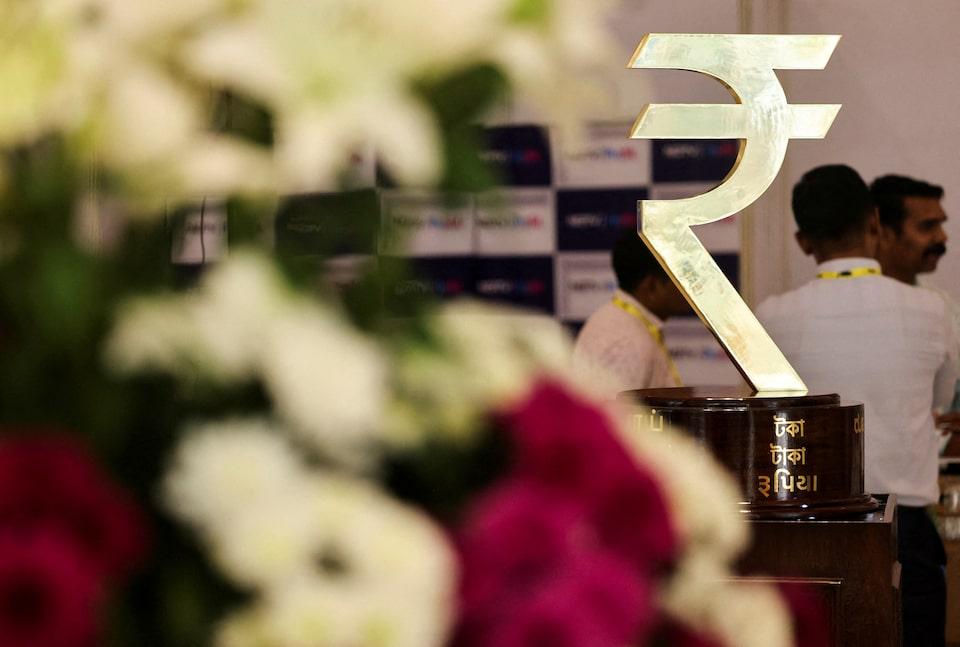
MUMBAI, Dec 17 (Reuters) - India's central bank intervened aggressively in currency markets on Wednesday, selling dollars to prop up the rupee, bankers said, echoing its earlier heavy-handed efforts to stem a one-way decline in the currency. The rupee rallied to an intraday high of 89.75 against the U.S. dollar on the interbank order matching system, from near 91.00 seen prior to the intervention. It was last trading at 90.28. Sign up here. "At about 91, the rupee appears overly depreciated. The central bank had stayed relatively light on FX management in December (until now)," said VRC Reddy, treasury head at Karur Vysya Bank. The intervention on Wednesday matched Reserve Bank of India's actions in October and November, when it stepped in aggressively on three occasions to disrupt persistent one-way moves in the rupee. In each instance, the RBI sold dollars heavily in both the spot and non-deliverable forward (NDF) markets, triggering intraday reversals. Unlike previous episodes, when intervention occurred before the local market opened, dollar sales on Wednesday came shortly after onshore trading began, said a banker, who requested anonymity as he is not authorised to speak to the media. The intervention followed a more than 1% slide over the previous four sessions, during which the rupee hit fresh lifetime lows each day The period was marked by sustained dollar demand and the rupee's disconnect from broader Asian currency movements, with traders citing rising interest in speculative short positions. Given the rupee's recent price action, the risk of a decisive RBI intervention was high, a currency trader at a bank said. The central bank wants to prevent one-way moves that can encourage speculative runs and intensify importer hedging, he added. Reuters had reported on Tuesday that bankers had begun flagging the risk of a repeat of the RBI's heavy-handed intervention. Prior to the RBI's action on Wednesday, the rupee had underperformed its Asian peers, weakening 1.8% in December through Tuesday, while most regional currencies were flat or slightly higher. https://www.reuters.com/world/india/indias-rbi-returns-with-decisive-hand-halt-rupees-one-way-slide-2025-12-17/
2025-12-17 04:03
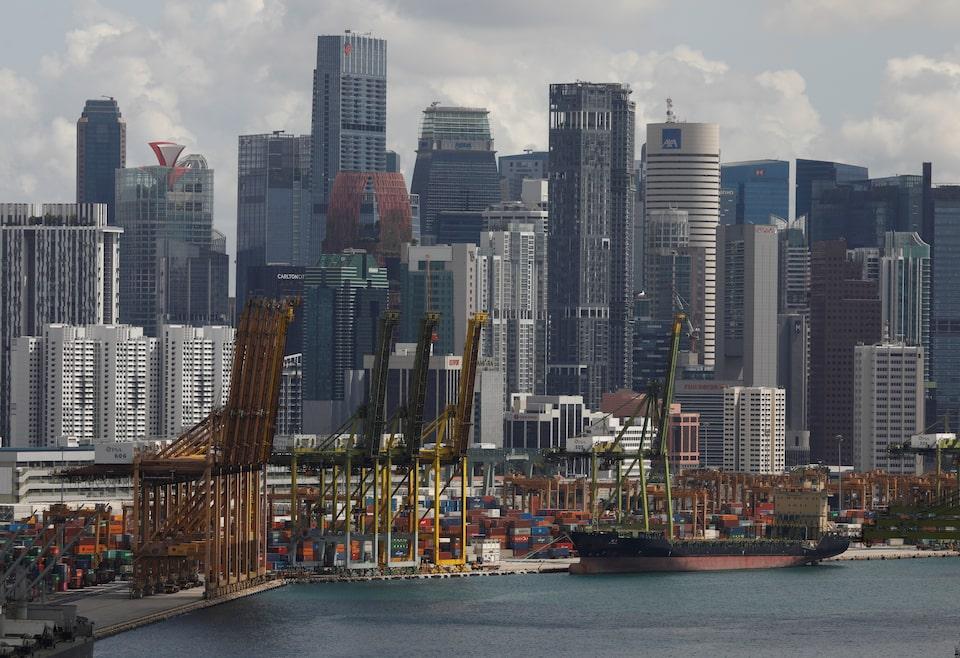
SINGAPORE, Dec 17 (Reuters) - Economists have raised their forecasts for Singapore's growth in 2025 but see the pace moderating next year, with monetary policy expected to be held steady at a review next month, a survey of forecasters by the Monetary Authority of Singapore showed on Wednesday. Most respondents in the December quarter survey cited geopolitical tensions as a top downside risk for the city-state, while four in 10 economists flagged the potential of the artificial intelligence bubble bursting, a risk that was not highlighted in the September quarter survey. Sign up here. Meanwhile, a sustained AI-led tech cycle upturn and resilient global growth were seen as potential upside risks. The median forecast for growth this year was raised to 4.1% from 2.4% in the previous survey, with growth in 2026 seen moderating to 2.3%. In November, the trade ministry raised its GDP growth forecast for 2025 to "around 4.0%" from a previous range of 1.5% to 2.5%. Economists expected year-on-year growth of 3.6% in the fourth quarter, the survey found. The MAS kept monetary policy unchanged at a review in October. The survey found that all economists expected no change to policy at the upcoming review in January, and most expected no change at the April review either. For the July 2026 policy review, 11% of economists expected a tightening of policy, the survey found. The median forecasts for core inflation and headline inflation were at 0.7% and 0.9% respectively, unchanged from September, the survey showed. Economists see inflation picking up next year, with core inflation seen at 1.3% and headline at 1.5%, the survey showed. At a policy review in October, the MAS said that core inflation should "average around 0.5%" for 2025, while headline inflation should "average 0.5% to 1.0%" this year. The survey, which was based on responses from 20 economists, was sent out on November 21, the day that data showed the economy grew 4.2% in the third quarter from a year earlier, beating market expectations and initial estimates. https://www.reuters.com/world/asia-pacific/singapore-mas-survey-shows-economists-raising-2025-growth-forecast-2025-12-17/
2025-12-17 03:53
MUMBAI, Dec 17 (Reuters) - The Indian central bank intervened aggressively on Wednesday to boost a struggling rupee after the currency hit record lows for four consecutive trading sessions, dragged down by portfolio outflows and an ongoing U.S.-India trade stalemate. The rupee rallied 0.7% to 90.25 in early trading after opening a tad lower on the day at 91.07. Sign up here. State-run banks were spotted offering dollars aggressively, most likely on behalf of the Reserve Bank of India, three traders told Reuters. https://www.reuters.com/world/india/indian-central-bank-steps-aggressively-boost-struggling-rupee-traders-say-2025-12-17/

2025-12-17 03:32
Rupee has declined 6% against US dollar in 2025 Weak rupee may boost nominal GDP growth but erodes dollar returns Investors remain wary of dipping back into Indian markets U.S.-India trade negotiations remain key overhang for Indian assets MUMBAI/SINGAPORE, Dec 17 (Reuters) - No currency has been hit harder by U.S. tariffs than India's rupee - and there may yet be more downside as investors pull out of the country until they see a trade deal struck with Washington. The rupee is among the worst-performing currencies globally this year, sliding 6% against the dollar as a widening trade deficit, punitive 50% U.S. tariffs and investment outflows have dragged it to a record low of 91.075 per dollar. Sign up here. Measured against a basket of trading-partner currencies, the real effective exchange rate of 96 is the lowest in more than a decade, according to Citi. That is well below a decade average of 103, and a usually reliable signal that it is overdue for a rebound. But this time is different, according to money managers who have driven pressure on the currency by pulling a record $18 billion from Indian equities this year and say the mood is unlikely to reverse quickly, even though the rupee looks cheap. "I think the market's patience in general is running thin," said Vivek Rajpal, Asia macro strategist at investment advisory firm JB Drax Honore, as months of trade talks with the U.S. have so far yielded no deal or tariff relief. It is a good entry point for Indian assets, he said, but first the market needs confidence that the tariffs are only temporary. India and the U.S. have been engaged in negotiations through much of 2025, although India's Chief Economic Advisor said in a Bloomberg interview , opens new tab last week that he expects an agreement to be reached by March 2026. Still, much of Asia already has agreements or at least moratoriums in place with the U.S., leaving India especially exposed and the rupee as the shock absorber. RUPEE WEAKNESS HERE TO STAY A falling currency can soften the blow of tariffs by reducing dollar prices for exports. But at 50% the U.S. levies are so high that economists expect more weakness in the rupee is needed to offset them, plus there is extra pressure on the currency from a relatively wide trade deficit and portfolio outflows. Absent a trade deal, none of those factors are seen reversing in the near term and a Reuters report that the central bank does not plan on standing in the way of fundamentals has reinforced expectations of further weakness. HSBC analysts said the sharp rupee depreciation is a significant risk to an otherwise encouraging setup for Indian stocks, which they argued are worth revisiting thanks to improving valuations and economics. They also see Indian markets as a hedge against the AI rally. Other brokerages including Citi, Goldman Sachs and JP Morgan have also upgraded Indian equities in recent weeks, expecting a turn in the Indian market's fortunes in 2026 with a boost from rate cuts and, to be sure, some eye a rebound in the rupee. "The recent pace of depreciation has been driven partly by geopolitical risk and its influence on current account expectations," said London-based Jean‑Charles Sambor, head of emerging markets debt at TT International Asset Management, with over $5 billion in assets under management. "We believe some of this risk may be now overstated," Sambor said. He declined to disclose positioning and neither performance nor flows suggest investors are snapping up rupees. DILEMMA FOR GLOBAL INVESTORS Indian equity markets, dominated by banks and IT outsourcing firms, have also lagged peers in 2025, with the benchmark Nifty 50 (.NSEI) , opens new tab up about 10% so far compared to a 26% gain in the MSCI Emerging Market Index (.MSCIEF) , opens new tab, hurt by a lack of clear AI bets. In dollar terms, comparisons are even more unfavourable with MSCI's India equities index (.dMIIN00000PUS) , opens new tab rising less than 2% this year against a near 30% rise in MSCI's China index (.dMICN00000PUS) , opens new tab, a rival for foreign investors' allocations. Investors are also turning to China's experience in U.S. President Donald Trump's first term in office, for a guide on how far the rupee could fall. Jitania Kandhari, deputy chief investment officer of the solutions and multi-asset group at Morgan Stanley Investment Management likened the fall in rupee to the Chinese yuan's depreciation due to the U.S.-China trade tensions during Trump's first term, and said the rupee may need to keep weakening if the tariffs stay in place. The yuan declined about 12% between March 2018 and May 2020 due to a series of tit-for-tat tariff announcements. Her firm, which manages $1.8 trillion in client assets, maintains an overweight position on Indian stocks even though it has trimmed holdings, finding value elsewhere. "Depreciation of the rupee is necessary to improve the competitiveness of the Indian exports," said Kunjal Gala, head of global emerging markets at Federated Hermes, who has been underweight on India since the start of 2024. "However, a depreciating rupee creates a dilemma for global investors who are indexed to the dollar." https://www.reuters.com/world/india/indias-trade-impasse-with-trump-keeps-rupee-cold-2025-12-17/