2025-12-16 22:13
PDVSA struggles with stuck cargoes and rising price discounts Customers request relaxed payment terms, demurrage reimbursements Cyberattack disrupts PDVSA's administrative systems, halting oil deliveries HOUSTON, Dec 16 (Reuters) - Venezuela's oil customers, including Chinese refiners, are demanding deeper discounts and changes to spot contracts from state-run company PDVSA, following the U.S. seizure of a ship carrying the OPEC country's crude, traders and sources said. As Washington's pressure on President Nicolas Maduro intensifies, the U.S. Coast Guard last week intercepted the vessel Skipper near Venezuela's coast in its first seizure of an oil tanker or cargo from the South American country. The U.S. also imposed sanctions against six ships and their linked companies. Sign up here. By the time the U.S. moved to seize the vessel, which had carried oil under sanctions from Venezuela and Iran, PDVSA was already struggling to allocate its crude close to contract prices due to a growing flood of oil under sanctions to its main market, China. The company is dealing with oil cargoes stuck in Venezuelan waters and tankers making U-turns at the vessel owners' request. PRICE DISCOUNTS TO CHINA WIDEN Discounts on prices of Venezuela's flagship Merey heavy crude bound for China have widened to up to $21 per barrel below benchmark Brent prices from between $14 and $15 per barrel last week, two traders and a company source said. They spoke on condition of anonymity due to commercial sensitivity. Most of the discount increase reflects the rising cost of a "war clause" requested by vessel owners to protect themselves from interceptions, delays or diverted flows due to the ongoing U.S. military presence in the Caribbean. Since PDVSA was first hit with sanctions in 2019, which deprived it of its traditional customers, including U.S. Gulf refiners, the company has had to agree to steep price discounts. But PDVSA is now facing immense competition to sell to Chinese buyers, who have access to abundant supplies of crude from Russia and Iran that is under sanctions. Many customers are asking PDVSA to relax trading requirements, especially the company's demand that oil cargoes must be prepaid in digital currency to authorize departure. Other clients want to be reimbursed for demurrage, a fee charged for shipping delays, the sources said. If trading terms are unchanged amid increased risks for customers and shippers to carry oil out of Venezuela, PDVSA could face a flurry of requests for cargo returns, a company source said. PDVSA did not reply to a request for comment. Venezuela's Oil Minister Delcy Rodriguez said the company's operations would not be interrupted by the U.S. actions, according to the ministry and PDVSA. PDVSA's main joint venture partner, U.S.-based Chevron (CVX.N) , opens new tab, remains the only company exporting crude without delays from Venezuela, while shippers working with sanctioned vessels have been setting sail in "dark mode," or with their transponders off, to avoid interceptions. A tanker chartered by Chevron, the Ionic Anax, set sail on Tuesday bound for the U.S., while another, the Minerva Astra, was set to load at the Bajo Grande port, LSEG data showed. STUCK OR DISCOUNTED Washington has been trying to cut the economic lifeline of Maduro's administration, which relies on oil revenue to fund government spending. This year, China has been the destination of between 55% and 90% of Venezuela's monthly oil exports, compared with 40%-60% last year. In November, the country exported 952,000 barrels per day of oil, of which 778,000 bpd went to China, according to ship monitoring data. Independent Chinese refiners, already well-supplied with rising offers of Russian and Iranian oil at discounts, have not been worried about immediate supply from Venezuela. But analysts have warned that Venezuelan supplies in China could be reduced in February if tankers currently loaded and waiting in Venezuelan waters are unable to depart. As of this week, more than 11 million barrels of Venezuelan oil were stuck on vessels waiting to leave as traders tried to negotiate further discounts, the sources said. Adding to PDVSA's troubles, a cyberattack this week took administrative systems out of service, forcing a temporary suspension of oil deliveries at its terminals. https://www.reuters.com/business/energy/venezuela-faces-big-oil-discounts-pressure-contract-changes-after-tanker-seizure-2025-12-16/

2025-12-16 22:08
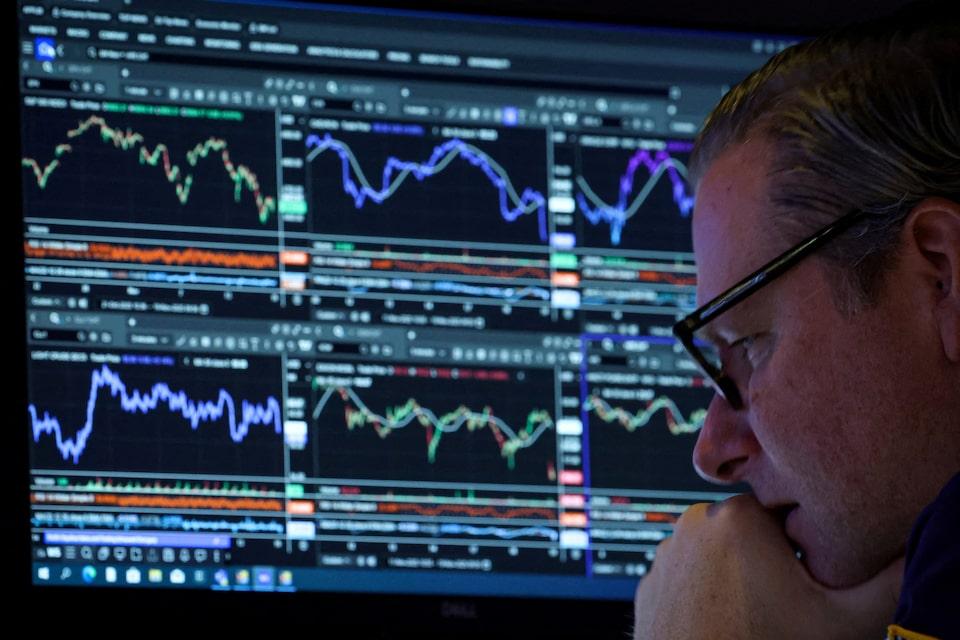
ORLANDO, Florida, Dec 16 (Reuters) - Wall Street mostly fell on Tuesday - the Nasdaq bucked the trend and rose - while the dollar and Treasury yields slid after figures showed the U.S. unemployment rate in November rose to 4.6%, the highest in more than four years. More on that below. In my column today, I look at China's pledge to prioritize boosting domestic demand next year. One can't argue with the aim, but investors are skeptical Beijing will deliver the fiscal stimulus needed to make a real difference. Sign up here. If you have more time to read, here are a few articles I recommend to help you make sense of what happened in markets today. Today's Key Market Moves Today's Talking Points * U.S. job market softening, but how badly? Tuesday's U.S. employment figures painted a pretty clear picture - the labor market continues to soften. But due to the government shutdown, data collection issues, and fog around immigration, it is unclear exactly how these numbers should be interpreted. Dovish policymakers have numbers to justify further easing, Fed hawks can reasonably argue persistent uncertainty around the data warrants holding off. Traders aren't fully pricing another rate cut until June. Will that be brought forward if unemployment gets closer to 5% in the coming months? * Not so eco-friendly autos The U.S. and European auto industries are turning less green. On Tuesday, the European Commission proposed dropping the EU's effective ban on new combustion-engine cars from 2035, which comes a day after Ford took a $19.5 billion writedown and axed several EV models. Europe's move follows intense pressure by the continent's carmakers struggling to compete against Tesla and Chinese electric vehicle makers, while Ford's announcement was in response to the Trump administration's policies and weakening EV demand. The big winners in all this? China's auto industry. * Markets mull Ukraine peace potential There have been several false dawns over the past four years, but a peace deal between Russia and Ukraine could be close at hand. Certainly, investors are beginning to price in what one might look like from a markets perspective. European defense stocks slumped on Tuesday - Rheinmetall fell 4.5%, and the broader index fell 2%, dragging U.S. defense stocks down 0.8%. More importantly for the wider economy, oil is tumbling - down 3% on Tuesday to a 4-year low, and now down 22% from a year ago. That's a bit of welcome disinflationary relief. China data dives, but Beijing balks at fiscal splurge Chinese authorities last week pledged to prioritize domestic consumption in 2026, but these promises are already being met with skepticism that the massive fiscal support needed will actually be forthcoming – even as more dour economic data rolls in. The world's second-largest economy could very well grow by roughly 5% next year, in line with the government's recent targets, but that will probably be thanks to booming exports and a trade surplus exceeding $1 trillion - not domestic consumption. At last week's Central Economic Work Conference (CEWC), a key gathering of Communist Party leaders to set the 2026 policy agenda, officials said they will take action to spur spending and fight deflation. However, they also indicated that there will be no "aggressive" fiscal easing next year, with authorities prepared to rely on existing support and "incremental" measures, noted economists at Societe Generale. "Our concern is that policymakers are too complacent," SocGen economists wrote on Monday. Barclays had a similar take. The bank's economists expect policy support next year to be "measured and reactive" rather than forceful and proactive. Authorities signaled this by dropping the word "unfavorable" from their description of the global environment, Barclays argued, and by committing to maintain only a "necessary" budget deficit. Beijing is, therefore, likely to stick to an overall budget deficit target next year of around this year's record 4% of GDP. That's high for China, but likely to be insufficient. The International Monetary Fund last week said China will need to spend 5% of GDP to bring an end to the property crisis within three years – and that's before tackling other factors weighing on consumption. HEADING IN THE WRONG DIRECTION In some ways, Beijing's reluctance to slam on the fiscal accelerator is understandable. Authorities front-loaded stimulus this year - year-on-year fiscal spending growth rose to around 10% in July, the highest in nearly three years - so officials may wish to wait and see how that splurge plays out. Yet the domestic consumption numbers aren't improving, they're worsening. Chinese business investment and retail sales in November were significantly weaker than expected, according to figures published on Monday. Fixed asset investment is down 2.6% year-to-date and on track for the steepest annual contraction on record, while persistently soft consumption and a seemingly endless slide in property prices threaten to cement a deflationary feedback loop next year, economists warn. With every passing month of lackluster domestic activity, the need for bold stimulus – far more than measures taken earlier this year – becomes all the more pressing. And with Chinese bond yields hovering around their lowest levels on record, Beijing can borrow to help address this issue. That makes the smoke signals from last week's CEWC all the more confusing. EXTERNAL STRENGTH MASKS DOMESTIC FRAGILITY The latest wave of sub-par economic figures and renewed gloom around China's domestic economy comes as its external performance goes from strength to strength, to the increasing irritation of global trading rivals frustrated with China dumping goods on their markets. This year's Sino-U.S. trade war has caused a slump in the shipment of goods to the U.S., but China has more than made up for that by ramping up exports to Europe, Australia, and fast-growing countries in Southeast Asia. China's total trade surplus is now more than $1 trillion, and some estimates put its manufactured goods surplus at $2 trillion. What's more, these surpluses are heavily concentrated at the high end of the value chain in sectors such as computers, cell phones, chips, electric batteries, and autos. Channeling investment into these and other strategically important industries isn't doing much to stimulate domestic spending. Yet Beijing might be fine with this, as booming exports are offsetting domestic weakness while also expanding China's footprint in key global sectors. The huge trade surplus is also helping lift the yuan to its highest level against the dollar in over a year, which Beijing can point to when accused of keeping the exchange rate artificially low. Critics will argue, with reason, that the yuan is still significantly undervalued given the size of the surplus, but the nominal exchange rate affords Beijing some breathing room with the U.S. and other trade rivals. The latest economic indicators suggest Beijing has less breathing room at home, however. Bigger and bolder fiscal steps would give it some, but authorities seem reluctant to take them. What could move markets tomorrow? Want to receive Trading Day in your inbox every weekday morning? Sign up for my newsletter here. Opinions expressed are those of the author. They do not reflect the views of Reuters News, which, under the Trust Principles , opens new tab, is committed to integrity, independence, and freedom from bias. https://www.reuters.com/world/china/global-markets-trading-day-graphic-2025-12-16/
2025-12-16 21:56
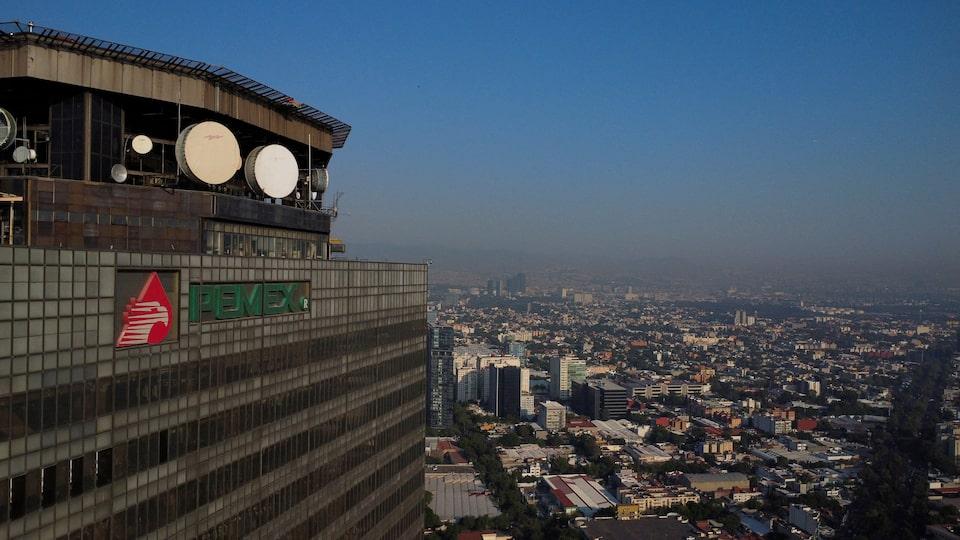
Pemex awards five of 11 planned joint venture contracts Contracts part of joint ventures aimed at adding 450,000 bpd Local companies primarily involved, Pemex holds 40%-85% stakes MEXICO CITY, Dec 16 (Reuters) - Mexican state oil company Pemex has awarded five of the 11 new joint venture contracts it had planned to ink before the end of the year, according to four sources familiar with the matter and a document seen by Reuters. But Pemex was unable to attract major companies, and the production the ventures may add looks too small to significantly help reverse Mexico's declining crude oil output. Pemex has been trying to persuade reluctant investors to join a total of 21 new joint venture contracts that could add up to 450,000 barrels per day of crude oil, or a quarter of its forecast output by 2033. Sign up here. "So far it hasn't been successful at all, as anticipated," said one source, adding that the contract model has not attracted the big players. "The production from those projects isn't going to make a difference for Pemex." Known as mixed contracts, they are due to be signed on December 19 and would be the first of their kind in Mexico. STATUS OF 6 OTHER CONTRACTS UNCLEAR Bearing logos of the Mexican government and Pemex, the undated document lists the companies that bid for the contracts and the winners for each of the following onshore projects: Tupilco Terciario; Sini-Caparroso; Cuervito; Agua Fria; and Tamaulipas Constituciones. The four sources confirmed the document's authenticity. The document did not say what had happened with the other six contracts that Pemex had previously said it expected to secure. Pemex declined to comment on the matter. It said earlier it expected the 11 contracts to add almost 70,000 bpd this year. Pemex's partners in the first five contracts would be primarily local companies, the document showed, and the state company would have stakes of between 40% and 85%. Details of the contracts, including the values and Pemex's participation, have not been previously reported. Consorcio Petrolero 5M del Golfo won two contracts in the bidding process while Geolis, Petrolera Miahuapan and Cesigsa won one each, the document showed. Pemex would receive a total of $50 million from these companies as a signing bonus. Reuters was unable to find a website for Consorcio Petrolero 5M del Golfo and a message sent on LinkedIn to the company was unanswered. Geolis, Petrolera Miahuapan and Cesigsa did not respond to requests for comment. It was unclear what services each of the companies would provide, but at the core of the contract model is the idea that the companies develop fields together with Pemex. Under the laws governing the new contract model, Pemex would usually be responsible for commercializing the hydrocarbon products. PEMEX PRODUCTION FALLS In recent years, the heavily indebted company has struggled to maintain its production of 1.6 million bpd of crude oil and condensate, a steep fall from the 3.4 million bpd it produced two decades ago. Mexican President Claudia Sheinbaum has said she expects national production, which Pemex dominates, to reach 1.8 million bpd during her term that ends in 2030. Pemex could try to award other contracts this week, said one of the sources, who, like others, spoke on the condition of anonymity because the information is not public. The modest results are a stark contrast to the strong interest from some of the world's largest oil companies that Mexico's exploration and production projects drew during the government of former President Enrique Pena Nieto. Reuters recently reported how Pemex's heavy debt burden and some conditions attached to the contract model could be an obstacle to achieving production goals. Even so, Pemex has said the conditions were important for it and the revenue it contributes to state coffers. "This contribution is relevant both to stabilize base production and to compensate for the decline of mature fields and ensure compliance with the country's energy supply commitments," states the strategic plan for Pemex, presented in August. https://www.reuters.com/business/energy/mexicos-pemex-awards-five-contracts-boost-oil-output-fails-draw-big-players-2025-12-16/
2025-12-16 21:01
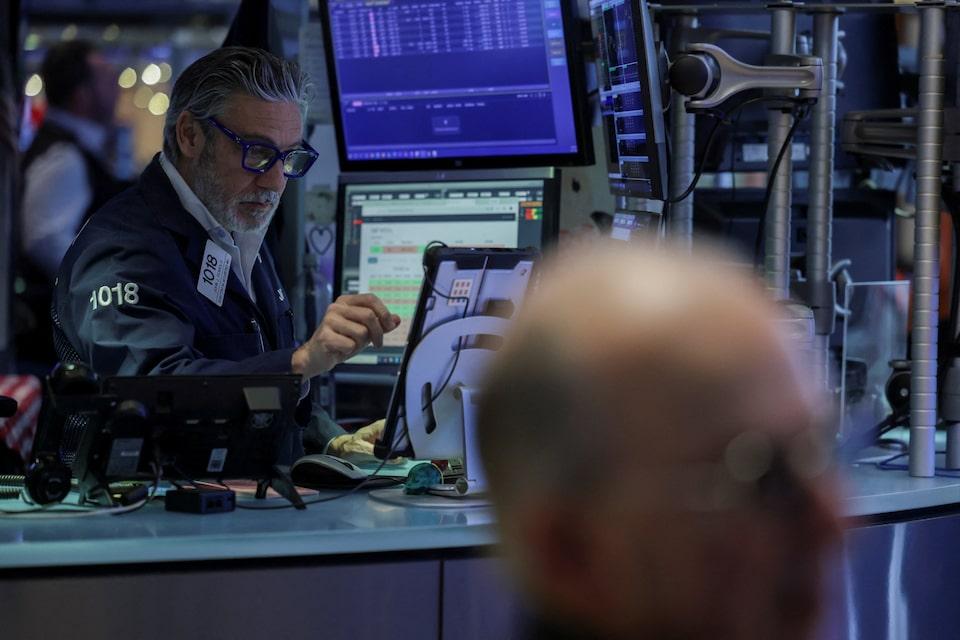
Healthcare sector slides; Pfizer's forecast disappoints US job growth rebounded in November; unemployment rate at 4.6% Indexes: Dow down 0.62%, S&P down 0.24%, Nasdaq up 0.23% Dec 16 (Reuters) - The Nasdaq recovered on Tuesday to close higher while the S&P 500 and the Dow closed lower, impacted by declines in healthcare and energy stocks. Investors evaluated delayed economic data to gauge the Federal Reserve's monetary policy outlook for next year. A Labor Department report showed nonfarm payrolls increased by 64,000 jobs in November following a decline in October because of government spending cuts. But the unemployment rate rose to 4.6% in November against the backdrop of economic uncertainty stemming from President Donald Trump's aggressive trade policy. Sign up here. A separate report on Tuesday showed retail sales were flat in October, just below an estimate of economists polled by Reuters calling for a rise of 0.1%. Analysts flagged the likelihood of the figures being distorted by slow data collection due to a recent government shutdown. "This is all fairly old news at this point. Most data points are being viewed in the lens of what they are going to do to the Fed, and the data you got today isn’t likely to move the needle," said Mark Hackett, chief market strategist at Nationwide. After Tuesday's data, investors are pricing in interest rate cuts of at least 58 basis points next year — more than double the 25 bps signaled by the Fed last week. Trump is set to interview Fed Governor Christopher Waller on Wednesday for the Federal Reserve chair position, the Wall Street Journal reported Tuesday afternoon. The Dow Jones Industrial Average (.DJI) , opens new tab fell 302.30 points, or 0.62%, to 48,114.26, the S&P 500 (.SPX) , opens new tab lost 16.25 points, or 0.24%, to 6,800.26 and the Nasdaq Composite (.IXIC) , opens new tab gained 54.05 points, or 0.23%, to 23,111.46. Eight of the 11 S&P 500 major industry sectors closed down, with energy stocks (.SPNY) , opens new tab leading declines, falling nearly 3%. Crude prices hit their lowest level since 2021. Health stocks (.SPXHC) , opens new tab fell 1.28%. Pfizer (PFE.N) , opens new tab slipped 3.4% after the drugmaker forecast a challenging 2026 due to weaker sales of COVID-19 products and squeezed margins. Humana (HUM.N) , opens new tab fell 6% after the health insurer announced unspecified leadership changes. Among other stocks, B. Riley (RILY.O) , opens new tab jumped 53.8% after the investment bank reported a profit for the second quarter, compared with a year-ago loss in an overdue quarterly filing. Comcast (CMCSA.O) , opens new tab rose 5.4% after CNBC financial journalist David Faber speculated about potential involvement by an activist investor. Separately, a Reuters report said Nasdaq (NDAQ.O) , opens new tab submitted paperwork with the U.S. Securities and Exchange Commission to roll out round-the-clock trading of stocks, months after the New York Stock Exchange and Cboe Global Markets announced similar plans. Declining issues outnumbered advancers by a 1.63-to-1 ratio on the NYSE. There were 127 new highs and 88 new lows on the NYSE. On the Nasdaq, 2,064 stocks rose and 2,596 fell as declining issues outnumbered advancers by a 1.26-to-1 ratio. The S&P 500 posted 14 new 52-week highs and five new lows while the Nasdaq Composite recorded 86 new highs and 196 new lows. Volume on U.S. exchanges was 16.70 billion shares, compared with the 16.99 billion average for the full session over the last 20 trading days. https://www.reuters.com/business/wall-st-futures-slip-investors-brace-key-jobs-report-2025-12-16/
2025-12-16 20:55
LONDON, Dec 16 (Reuters) - Copper prices retreated on Tuesday as investors assessed the latest U.S. jobs data while thin year-end liquidity exacerbates price swings. Benchmark three-month copper on the London Metal Exchange lost 0.3% to $11,624.50 a metric ton by 1720 GMT. It hit a record of $11,952 on Friday on concern over tight supply. Sign up here. The U.S. data showed the November unemployment at more than a four-year high, though the recent government shutdown created some uncertainty over what this report means for the economy and the Federal Reserve's policy outlook. With thin liquidity, price swings in base metals are becoming increasingly exaggerated, leaving the complex vulnerable to abrupt moves into year-end, Sucden Financial analysts said. Copper is up 33% this year, on track for its most annual growth since 2009 after several mine disruptions, outflows to stocks in the U.S. and expectations of future soaring demand from AI data centres and energy transition. "We expect this year's surplus to swing to a market deficit next year," said WisdomTree commodities strategist Nitesh Shah. "Demand may be muted now, but it is more about the expectations that copper is going to benefit as the world electrifies." Among other LME metals, aluminium rose 0.5% to $2,879 a ton. Daily LME data showed that on-warrant aluminium stocks in LME-registered warehouses fell to 452,600 tons after cancellation of 32,025 tons in Malaysia. Adding further support, Australia's South32 (S32.AX) , opens new tab said it would place the Mozal aluminium smelter in Mozambique under care and maintenance by March after failing to secure a power deal with the government. LME zinc dropped 1.9% to $3,035.50 while lead gained 0.1% to $1,943 after hitting $1,937.50 for its lowest since May. Both metals had major deliveries to LME stocks, mainly in Singapore. , Nickel was down 0.6% at $14,270, having touched an eight-month low of $14,235 on Monday, while tin eased by 0.1% to $40,875. https://www.reuters.com/world/china/copper-dips-after-us-jobs-data-2025-12-16/

2025-12-16 20:53
Injunction sought to block $1.9 billion share sale Korea Zinc shares drop 14% Top shareholders argue board had insufficient time to review the plan SEOUL, Dec 16 (Reuters) - Two major Korea Zinc (000670.KS) , opens new tab shareholders asked a court on Tuesday to block the company's plan to sell new shares - part of a scheme to help fund a $7.4 billion U.S. smelter which would be built in partnership with the U.S. government. The filing for an injunction with the Seoul Central District Court threw doubt over the project and sent shares in the world's largest zinc smelting company plummeting 14%. Sign up here. A day earlier, Korea Zinc unveiled a plan to build a U.S.-based refinery for zinc and other critical minerals - an effort that would help the United States cut reliance on China for key materials used in manufacturing electronics and weapons. The shareholders, Young Poong (010130.KS) , opens new tab conglomerate and private equity firm MBK Partners, said on Tuesday they were not opposed to the construction of a U.S. smelter per se. But they object to the proposed issuance of new shares worth $1.9 billion to a joint venture backed by the U.S. government and unnamed U.S.-based strategic investors that would give the investors 10% of Korea Zinc. That, in turn, would dilute their holdings and help Korea Zinc's chairman cement control of the firm. BIG STAKES, FEW BOARD MEMBERS The legal action deepens a bitter feud between the founding families of Young Poong over control of Korea Zinc. Young Poong owns roughly 37% of Korea Zinc and MBK has about 9%, while the company's Chairman Yun B. Choi and his backers have a smaller 32%. But the two allies only have 4 board members on the 15-member board between them compared to the 11 backing Choi. Young Poong and MBK, which have been trying to wrest control of the company from current management, argue that the share issue plan severely infringes on shareholder rights and undermines governance standards. The company did not provide sufficient time and information to its board members before a meeting on Monday that approved the plan, they added. "Governance risks were always there and now the situation is worsening," said Kim Yong-jin, a management professor at Sogang University. US PARTNERSHIP HELPS MANAGEMENT Korea Zinc said in a statement that it gave board members sufficient time and documents to review the plan, and that the project was in accordance with laws and regulations. The refinery is needed "to establish a critical minerals supply chain in line with U.S. government policy and to strengthen global competitiveness," it said. The partnership with the U.S. government helps current management justify their case for maintaining control, as they can argue the plan supports the U.S.-South Korea alliance and broader economic security, analysts at Seoul-based Shinhan Securities said in a client note on Tuesday. U.S. Commerce Secretary Howard Lutnick on Monday hailed Korea Zinc's plan as a "big win for America," saying the essential minerals will power key technologies such as defense systems, semiconductors, artificial intelligence and data centers. https://www.reuters.com/world/asia-pacific/mbk-youngpoong-seek-court-injunction-block-korea-zincs-share-sale-plan-2025-12-16/