2025-12-16 12:18
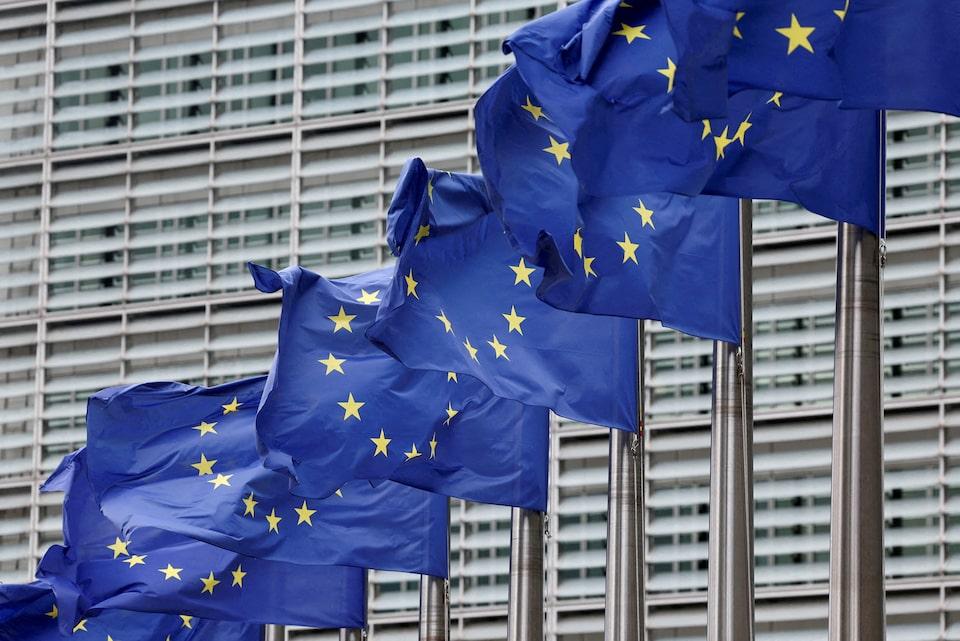
BRUSSELS, Dec 16 (Reuters) - The European Parliament gave its formal approval on Tuesday to scale back the EU's corporate sustainability laws, clearing one of the final legal hurdles before the changes can pass into law. The European Parliament voted to approve the changes, with 428 lawmakers in favour, 218 against and 17 abstentions. Sign up here. EU countries will give their final approval to the deal in early 2026 - a formality that is expected to wave through the amendments so they can pass into law. https://www.reuters.com/sustainability/climate-energy/eu-parliament-approves-deal-weaken-corporate-sustainability-laws-2025-12-16/

2025-12-16 12:08
NEW DELHI, Dec 16 (Reuters) - India has proposed a law that ends six decades of state monopoly over nuclear power, allowing private companies and even individuals to build and operate reactors. The new bill must be approved by the lower and upper houses of parliament to become law. Sign up here. Here's what you need to know: WHAT IS THE REGULATION AROUND CIVIL NUCLEAR LAW? Since 1962, nuclear projects were restricted to firms under the Department of Atomic Energy, mainly Nuclear Power Corporation of India. A 2015 amendment allowed other state-run companies to form joint ventures with NPCIL to develop plants. Since then NPCIL has teamed up with three state-run companies NTPC, IOC and NALCO, but none of those ventures completed their proposed plants. WHAT ARE THE PROPOSED CHANGES? The Sustainable Harnessing and Advancement of Nuclear Energy for Transforming India Bill, 2025, ends the government's monopoly by allowing private players to fully own and operate nuclear plants. Sensitive activities such as fuel enrichment, spent-fuel reprocessing and heavy water production will remain under government control. WHY IS IT A BIG DEAL? India aims to grow its nuclear capacity to 100 gigawatts in 20 years from 8.2 GW at present, making atomic energy a key part of its clean energy plan. The proposed legislation could attract billions of dollars from private companies such as Tata Power (TTPW.NS) , opens new tab, Adani Power (ADAN.NS) , opens new tab and Reliance Industries (RELI.NS) , opens new tab, which have announced plans to invest in nuclear power. Private firms can also import and process uranium, while foreign companies can partner with Indian firms. FOREIGN PARTICIPATION? Global suppliers, including Westinghouse Electric and GE‑Hitachi from the United States, France's EDF (EDFBE.UL) and Russia's Rosatom have expressed interest in providing technology and equipment for India's nuclear projects. The bill proposes foreign direct investment in joint ventures with Indian firms. HOW HAS IT EASED LIABILITY LAWS? The bill drops a clause that let operators sue equipment suppliers over defects - a hurdle for foreign vendors. The change cuts legal risk, makes insurance for vendors viable and is expected to draw global technology and investment. WHAT ARE THE SAFEGUARDS? Operators will need government licences and safety authorisation from the Atomic Energy Regulatory Board. Foreign-controlled firms cannot hold licences. Operators must set aside liability funds between $10.99 million to $330 million, depending on reactor size. WHAT HAPPENS IN CASE OF AN ACCIDENT? Compensation will come from operators' insurance liability funds, capped at 300 million Special Drawing Rights - an International Monetary Fund reserve unit - in line with global norms. A nuclear liability fund will cover excess claims and the government will step in if damages exceed these limits. ($1 = 90.9620 Indian rupees) https://www.reuters.com/sustainability/boards-policy-regulation/what-are-changes-indias-proposed-civil-nuclear-law-2025-12-16/

2025-12-16 12:06
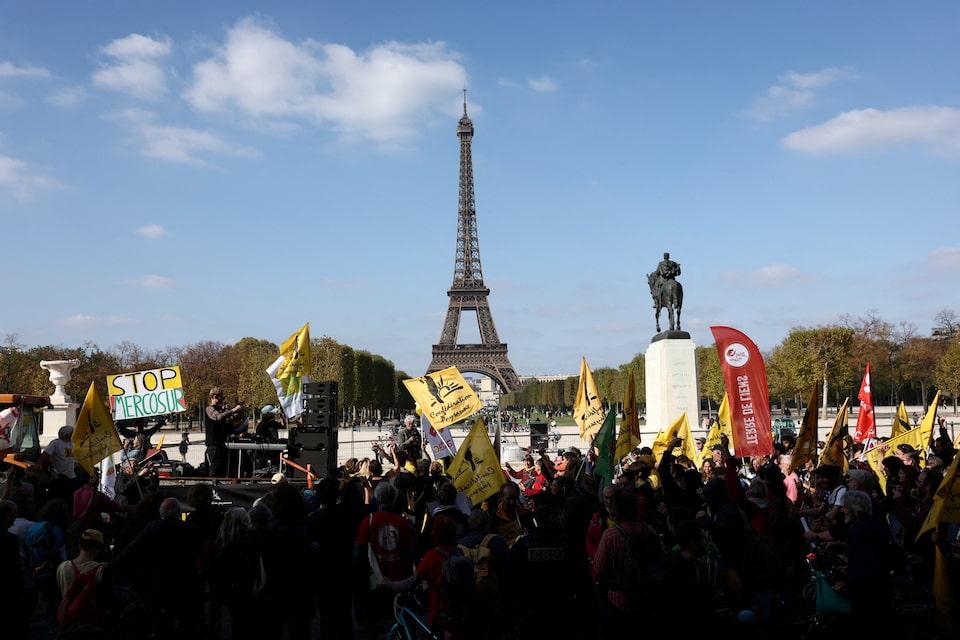
STRASBOURG, Dec 16 (Reuters) - EU lawmakers backed on Tuesday tighter controls on imports of agricultural products resulting from a potential trade agreement with South American bloc Mercosur, potentially meeting the complaints of critics of the deal. The vote comes a day after France teamed up with Italy to push for a vote on the deal to be delayed. European Commission President Ursula von der Leyen had intended to fly to Brazil on Saturday to sign the agreement, but this requires backing by EU members. Sign up here. The European Union and the bloc of Argentina, Brazil, Paraguay and Uruguay reached agreement last December to create the EU's largest ever trade accord, some 25 years after negotiations were launched. The European Commission presented the accord for approval in September and sought to soften opposition by adding a mechanism that would allow Mercosur preferential access for some farm products, such as beef, poultry and sugar, to be suspended. It said the trigger for launching an investigation should be if the import volumes rose by more than 10% per year or prices fell by that amount in one or more EU members. However, the European Parliament voted on Tuesday for a lower trigger level of 5%, compared with a three-year average of imports, as well as for shorter investigations to introduce safeguards sooner. They also want safeguards to apply if Mercosur farm imports do not comply with EU production standards, something France has demanded. The changes mean representatives from the parliament will have to negotiate a compromise with counterparts from the Council, the grouping of EU governments, which had backed the 10% figure. These are expected to start as early as Wednesday. https://www.reuters.com/business/eu-lawmakers-seek-tighten-controls-mercosur-farm-imports-2025-12-16/
2025-12-16 11:43
STOCKHOLM, Dec 16 (Reuters) - The sinking of the Estonia ferry in 1994 was caused by the failure of its bow section, not an explosion or collision as claimed by some, authorities said on Tuesday in a report aimed at finally closing the case on Europe's worst civil maritime disaster since World War Two. "The MV Estonia sank as a result of the collapse of its bow construction," Estonian, Swedish and Finnish investigators said. "There is, therefore, no reason to start a new full-scale... investigation of the accident." Sign up here. On the night of September 28, 1994, the roll-on, roll-off ferry sank in the Baltic Sea during a storm, claiming the lives of 852 people. An official investigation in 1997 concluded that the ferry's bow shield had failed, causing rapid flooding and sending the vessel to the bottom. But alternative theories have continued to flourish and in 2020, video from a television documentary showed hitherto unseen holes in the ship's hull, prompting authorities to take a new look at the wreck. The report, which was based on six separate examinations of the wreck site, interviews with survivors, modelling and technical analysis, concluded that the damage to the hull was caused by rocks on the sea bottom. "The inspections do not reveal any signs that the MV Estonia collided with any other vessel or object during its voyage," the investigators said. "Nor are there any signs that an explosion occurred on the ship." A preliminary report in 2023 blamed rocks for the holes in the hull. It also concluded that the ferry was not seaworthy at the time of its final voyage. https://www.reuters.com/world/bow-failure-caused-1994-estonia-ferry-disaster-final-report-shows-2025-12-16/

2025-12-16 11:38
EU to widen carbon border levy to car parts and appliances, draft shows World-first climate policy starts in January Criticism from trading partners, including India, China EU plans to use levy revenues to support domestic industry, draft says BRUSSELS, Dec 16 (Reuters) - The European Union plans to extend its carbon border levy to cover car parts, refrigerators and washing machines, draft documents seen by Reuters on Tuesday showed, in a bid to close loopholes that the bloc feared would allow foreign manufacturers to dodge climate costs. The proposal marks a major expansion of the Carbon Border Adjustment Mechanism, which from January will start charging importers for the emissions embedded in steel, cement and other high-carbon products brought into the EU. Sign up here. "The proposal will extend the scope of the Carbon Border Adjustment Mechanism to address the risk of carbon leakage for products further down the value chain of the steel and aluminium products currently in CBAM’s scope," said the draft European Commission proposal, due for publication on Wednesday. Construction products for bridges, power transformers and cables and farming machinery would also be covered by the levy, the draft plans showed. The EU chose the new products based on their exposure to "carbon leakage", or the risk that industries would relocate outside Europe to avoid the region's strict climate policies. EXPANSION AIMS TO STOP CLIMATE POLICY EVASION The EU carbon border levy aims to shield Europe's industries from cheaper, high-emission imports and push manufacturers worldwide toward cleaner production. The existing policy has prompted criticism from trading partners including China, India and South Africa, who say it unfairly penalises emerging economies' industries. A second draft Commission proposal, seen by Reuters, showed the EU plans to use 25% of the revenue collected by the carbon border levy to compensate European manufacturers over 2028-2029 for higher costs they face as a result of the carbon border fee on imports. The EU expects the carbon border tariff to generate 2.1 billion euros ($2.47 billion) in revenue by 2030. Industries would only be eligible for this support if they are investing in cleaning up the carbon footprint of their manufacturing, the draft said. The proposal responds to demands from industries that the EU compensate European exporters to help them compete in foreign markets where rivals do not pay CO2 costs. However, the draft proposal did not specify that the fund will target exporters. Some EU officials have expressed concern that a rebate or subsidy for exporters would flout WTO rules. The EU has said its CBAM is fully WTO-compliant. A Commission spokesperson declined to comment on the draft, which could still change before it is published. ($1 = 0.8505 euros) https://www.reuters.com/sustainability/boards-policy-regulation/eu-extend-carbon-border-levy-new-products-drafts-show-2025-12-16/
2025-12-16 11:38
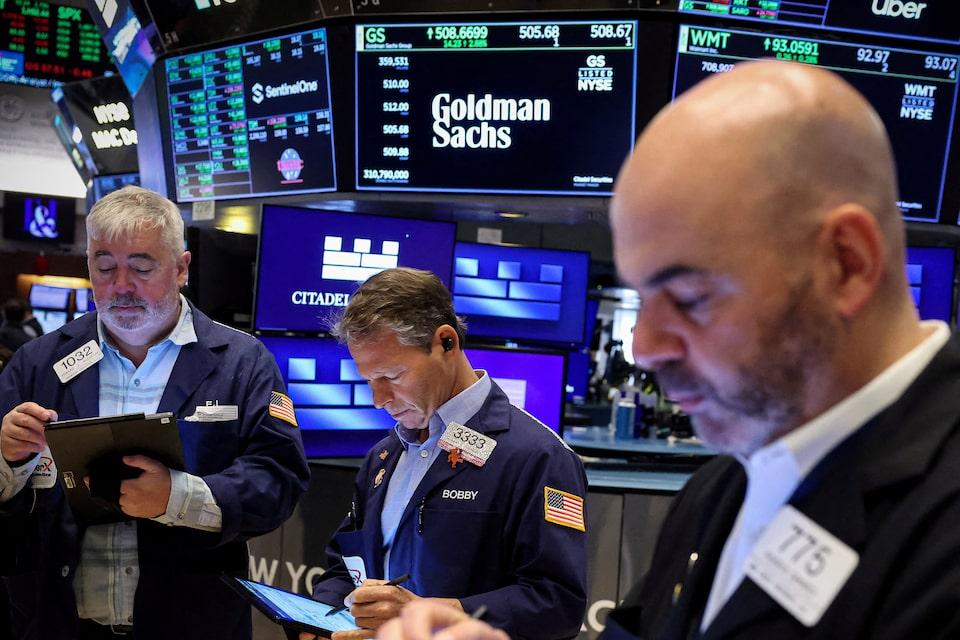
Dec 16 - What matters in U.S. and global markets today By Mike Dolan , opens new tab, Editor-At-Large, Finance and Markets Sign up here. The rare occurrence of a Tuesday U.S. payrolls , opens new tab report focuses markets' attention back on the labor market against a backdrop of an ongoing retreat from top artificial intelligence stocks and hopes for a breakthrough in Ukraine talks , opens new tab. A long-absent readout on the national employment picture is due for release later, with payrolls updates from both October and November and an unemployment rate just for the latter - with a hole in the jobless rate series for the first time since 1948. A one-two on payrolls tallies - a hit to October from the government shutdown and a recovery last month - is the consensus forecast, with the jobless rate expected to emerge steady at 4.4% for November. The likely noisy data will fill in most gaps in the Federal Reserve's and investors' view of the jobs market but also leave enough questions to keep markets guessing on next year's interest rate trajectory. Retail sales updates for October are also due. As it stands, futures markets price just a one-in-four chance of another Fed rate cut next month and another quarter point move is not fully priced until June. Going into the report, long-dated Treasuries remain on the back foot - with the two-to-30-year yield curve steepening to its widest since the April tariff shock. The dollar probed lower, most notably against China's yuan - which strengthened to new 14-month highs despite local stock market losses and Monday's sweep of downbeat Chinese economic data. The yen also firmed ahead of Friday's expected Bank of Japan interest rate rise. Wall Street stocks clocked another down day on Monday, with considerable rotation of stock sectors marking the year-end and AI-related stocks continuing to beat a retreat. Broadcom and Oracle both fell for the third day following last week's earnings-day shakeouts and Oracle hit its lowest since June. Tech-heavy stock markets in Tokyo and Seoul had another bad day on Tuesday, with South Korea's Kospi losing more than 2%. And Wall Street futures were still in the red ahead of today's bell. Signs of some movement in Ukraine peace talks saw oil prices sink to their lowest since May - a relief for inflation expectations as the year-on-year crude price is now down more than 21%. European defense stocks slid after the U.S. offered to provide NATO-style security guarantees for Kyiv and European negotiators reported progress in talks on Monday to end Russia's war in Ukraine. Rheinmetall fell almost 5%, Hensoldt was off 3.6%, Leonardo shed 4.5% and the broader defense index was down 2% - its biggest one-day decline in more than two weeks. The European Commission, meantime, is set to backtrack on the EU's planned ban on new combustion-engine cars from 2035 by allowing continued sales of some non-electric vehicles following intense pressure from Germany, Italy and Europe's auto sector. In Britain, data showed the jobs market and private-sector pay growth weakening ahead of an expected Bank of England rate cut this week - although business surveys showed a pickup in activity this month. In today's column, I look at how term risk premia are rebuilding within the U.S. Treasury market going into 2026. Today's Market Minute Chart of the day European aerospace and defense stocks retreated 2% on Tuesday after the U.S. offered to provide NATO-style security guarantees for Kyiv and European negotiators reported progress in talks on Monday to end Russia's war in Ukraine. The sector has more than tripled in value since Russia's invasion of Ukraine in 2022. Today's events to watch (all times EDT) * U.S. October and November employment reports (8:30), U.S. October retail sales (8:30), U.S. December flash business surveys from S&PGlobal (9:45) * Bank of Canada Governor Tiff Macklem speaks; European Central Bank Board Member Pedro Machado speaks * U.S. corporate earnings: Lennar Want to receive the Morning Bid in your inbox every weekday morning? Sign up for the newsletter here. You can find ROI on the Reuters website , opens new tab, and you can follow us on LinkedIn , opens new tab and X. , opens new tab And listen to the latest episode of the Morning Bid , opens new tab daily podcast. Subscribe to hear Reuters journalists discuss the biggest news in markets and finance seven days a week. Opinions expressed are those of the author. They do not reflect the views of Reuters News, which, under the Trust Principles , opens new tab, is committed to integrity, independence, and freedom from bias. https://www.reuters.com/business/finance/global-markets-view-usa-2025-12-16/